You booked the shore excursion for the easy part of the cruise: hop on the bus, snap the photos, be back on the ship in time for dinner. That’s the dream, anyway. The real day runs on mismatched clocks, invisible queues, contract clauses and weather calls that nobody mentions at the booking desk.
And the scariest surprise isn’t a late bus. It’s that two tours in the same port can come with completely different protection, depending on where you clicked “book.” Some of what follows will save you money, and one of the later items could save your sailing.
#16 – Your Phone Is Secretly Running on the Wrong Clock
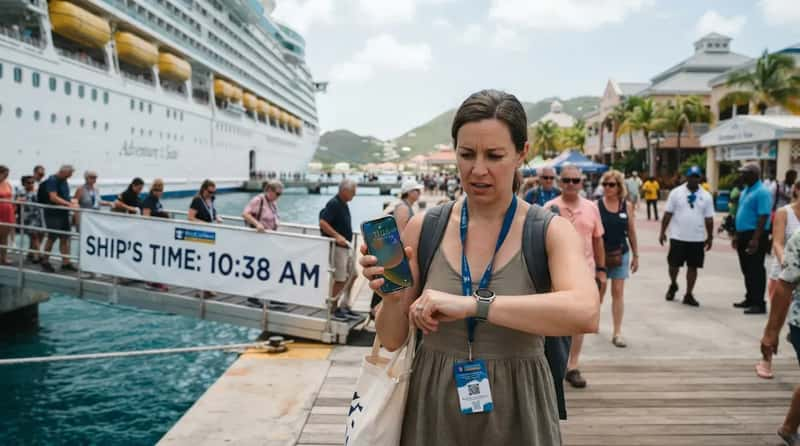
Your phone may be wrong the moment you step off the gangway. Ships don’t always adjust their clocks when crossing time zones, but your phone or watch might update on its own. Ship’s time is the official time on board, and it doesn’t always match local port time.
Royal Caribbean says its excursion times are based on ship time, though travelers should follow the instructions for their specific sailing. So the time on your ticket and the time on your lock screen can disagree, sometimes by an hour or more. If your guide runs on local time, that gap gets risky fast.
That’s only the first clock problem. The next deadline is printed right on your daily program, and plenty of people misread it.
#15 – “All Aboard” Is Not the Time the Ship Sails
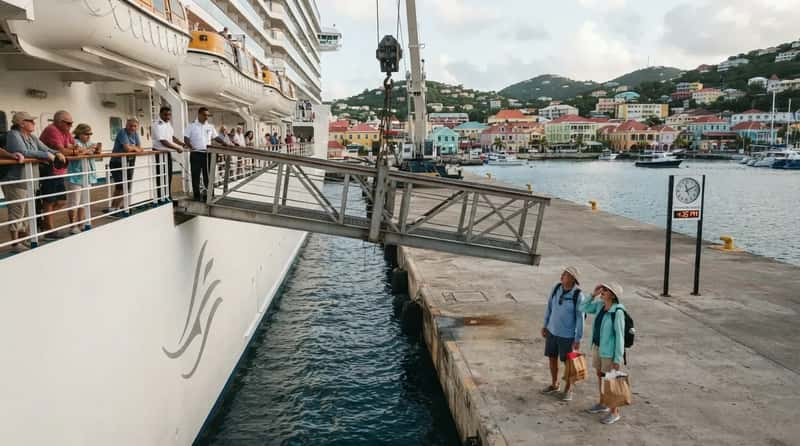
The departure time on your itinerary isn’t your real deadline. All aboard falls 30 to 60 minutes before the ship sails, and Royal Caribbean says its all-aboard time is generally about 30 minutes before departure. Treating sail-away time as the deadline is a classic mistake.
Picture a traveler who sees a 5 p.m. sailing and plans a relaxed stroll back at 4:45. That is how people end up on the pier watching the gangway close. Confirm the official all-aboard time in the ship’s app, the daily program and the sign posted where you exit the ship, and listen for the cruise director’s announcements.
At a Glance
- Sail-away time is when the ship leaves, not when you must be back.
- All aboard usually lands 30 to 60 minutes earlier.
- Royal Caribbean says its all-aboard is generally about 30 minutes before departure.
- Check three places: the ship’s app, the daily program and the gangway sign.
But the bigger question is who has to wait for you if the day goes sideways. The answer depends on where you booked.
#14 – The Ship Waits for Its Own Tours, and Only Its Own Tours
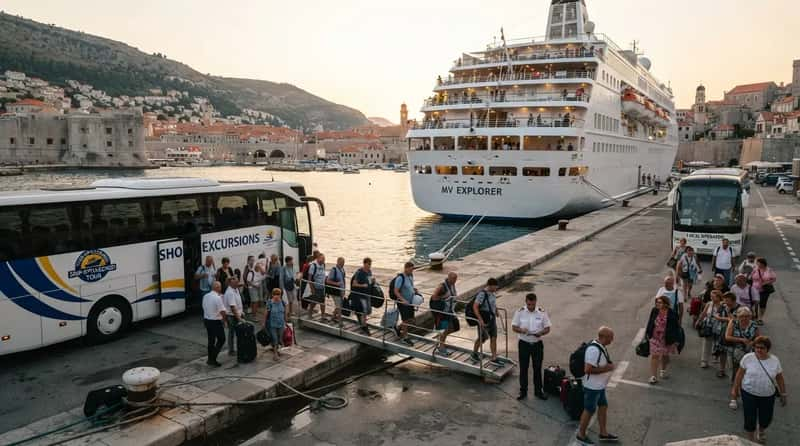
The most important rule of shore days is also the least advertised. If you buy a tour through the cruise line, the ship is guaranteed to wait if the tour bus isn’t back by all-aboard. The line controls its own excursions, which is why it generally waits for them.
If you book independently or explore alone, getting back before all-aboard is your responsibility. Experienced cruisers note that the guarantee only applies to bookings made through the cruise line itself.
Plenty of travelers still choose independent tours to save money, and cruisers argue constantly about whether the savings are worth giving up that protection. Even among tours that promise a safe return, the wording isn’t always the same.
#13 – The “Guarantee” That Comes With Fine Print
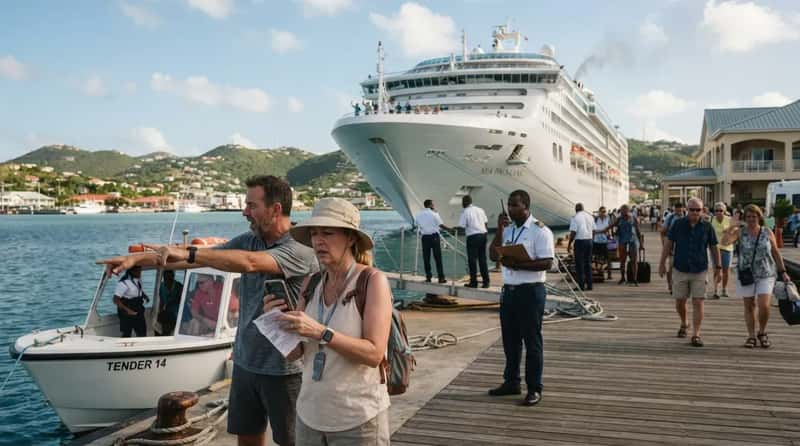
Not every promise to get you back is built the same way. NCL says the ship will wait if a Norwegian tour is delayed, but on its unguided Antigua On Your Own page, anyone who misses the return transport must get back to the ship on time themselves. Princess’s excursion list advertises guaranteed return to the ship. Same industry, different rules.
Outside the cruise lines, some operators guarantee you’ll reach the ship on time or pay for you to get to the next port of call. That sounds like peace of mind, so read the wording closely. Look for a commitment tied to your specific sailing, and ask what happens if the guarantee fails.
Quick Compare
- NCL: The ship waits for delayed Norwegian tours, but unguided options leave the return to you.
- Princess: Its excursion list advertises guaranteed return to the ship.
- Outside operators: Some promise on-time arrival or pay to reach the next port, so the wording is everything.
Meanwhile, some of the longest lines of the whole trip form before you even touch land.
#12 – The Tender Ticket Scramble Most Passengers Never See Coming
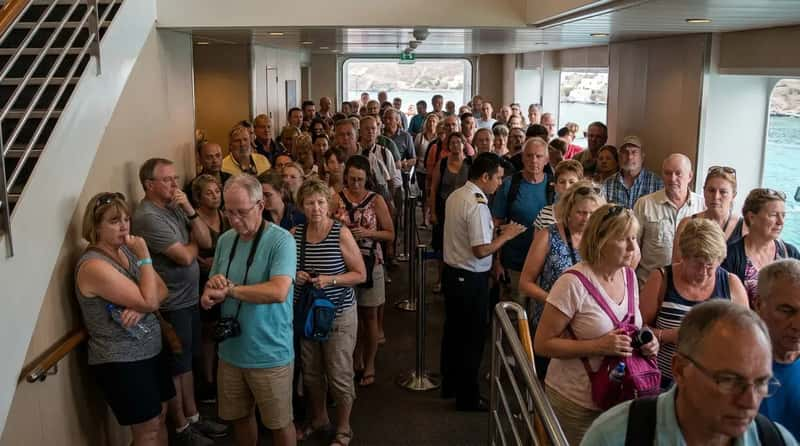
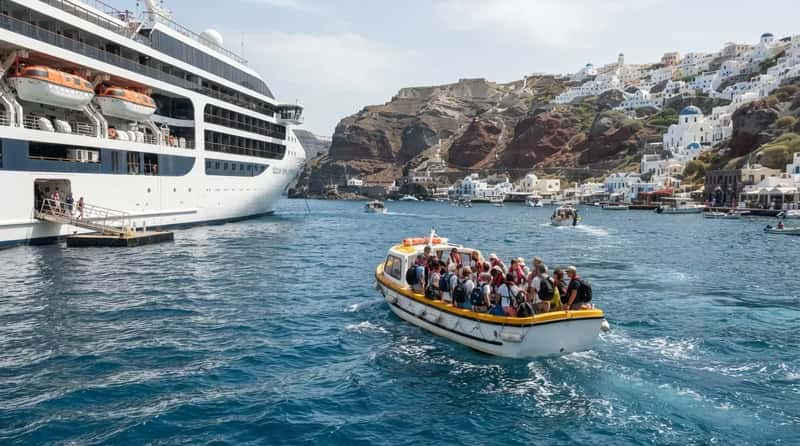
At tender ports, the queue can eat your morning. Guests on ship-sponsored tours don’t need a tender ticket. They go to a designated departure area and are escorted to a tender as a group. Everyone else waits their turn.
Popular excursions sell out fast, and cruise lines don’t always open booking to everyone at once. Without priority tendering, an early-start excursion can slip away before you even get off the ship.
Santorini is the textbook example of a tender port where timing and crowds matter a lot. And even with a ticket in hand, the water gets a vote.
#11 – A Calm Deck Doesn’t Mean the Pier Is Open
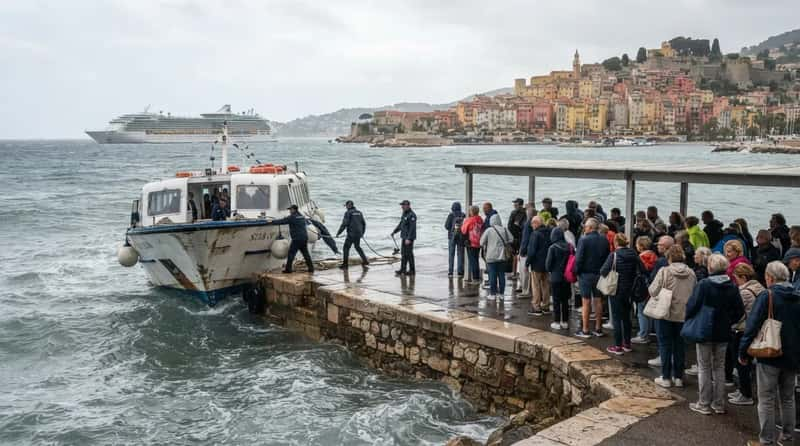
You can wake up to flat water and still not go ashore. Wind, swell and poor visibility can each pause tender runs, and a calm view from the balcony says little about conditions at the tender pier. Excursion teams usually don’t cancel on the spot. They wait and watch.
In one Villefranche case, the tender port was closed under an extreme weather alert, and guests waited until tender operations resumed around noon. A tour with an early start gets squeezed hard when that happens.
The wait is the part nobody can control, and some ports are tender-only no matter what.
#10 – Three Caribbean Ports Still Make Every Ship Tender
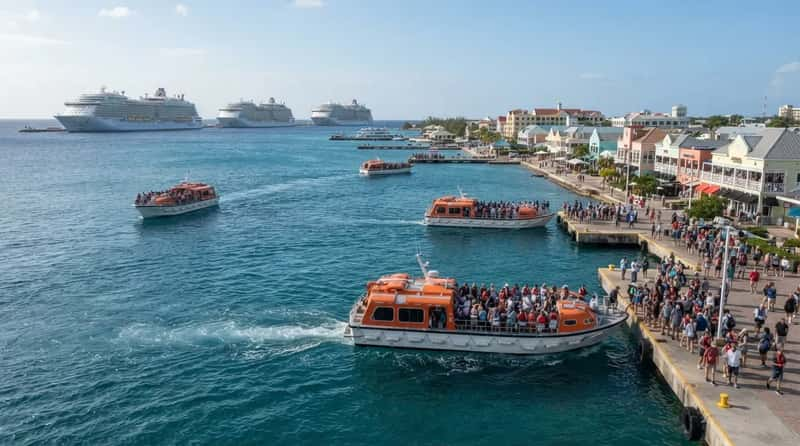
A pier, or the lack of one, shapes your whole port day. Grand Cayman, Belize City and Princess Cays are still tender-only for every ship in 2026. In Grand Cayman, 64% of voters rejected a pier on April 30, 2025, so the ships keep anchoring offshore.
Half Moon Cay is now split. Carnival ships have docked at a new pier since June 1, 2026, while Holland America ships still tender. A private pier at Port Coral has been promised since 2021 and still wasn’t in regular use on Oct. 26, 2026 itineraries.
Fast Facts
- Tender-only for every ship in 2026: Grand Cayman, Belize City and Princess Cays.
- Grand Cayman voters rejected a pier by 64% on April 30, 2025.
- Carnival ships have docked at Half Moon Cay’s new pier since June 1, 2026.
- Holland America ships still tender at Half Moon Cay.
Tender ports carry a higher cancellation risk than a straightforward docking day. Then there’s the assumption that the attraction on your itinerary is somewhere close.
#9 – “Near the Port” Can Mean a Long Ride

The famous name on your itinerary isn’t always at the end of the gangway. One of the biggest mistakes is assuming the named destination is right next to the ship. Before booking, find out the meeting point, return time, cancellation rules and how far the tour is from the cruise port.
Buffer matters most in ports with traffic, tenders, ferries or long transfers. One Iceland operator, for example, plans its Golden Circle route backwards from your specific all-aboard time rather than from a fixed daily schedule. That is the right way to think about every long tour.
Distance isn’t the only extra cost lurking in some ports, either.
#8 – Venice Charged Cruise Passengers Just to Walk Around
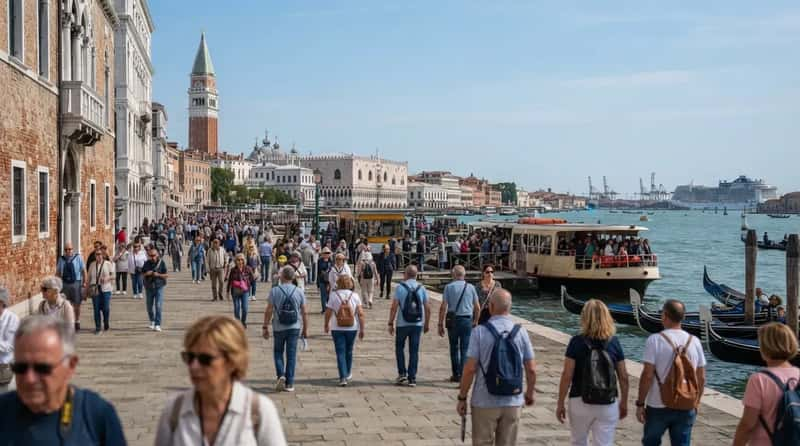
Some port-day costs never appear on your excursion receipt. Day-visiting cruise passengers are treated as day-trippers and must pay Venice’s fee on applicable days. In 2026 it applied on around 60 peak days between roughly April 3 and July 26, from 8:30 to 16:00. The price was €5 online in advance or €10 on the day.
Large cruise ships have been pushed out of the Giudecca Canal and redirected to a terminal at Marghera on the mainland. The official portal says the 2026 trial period has ended, and any measures after 2026 are for the municipality to approve.
Check the current rules before you book a Venice call. Fees are predictable, though, and the next surprise isn’t.
#7 – Strikes Can Cancel a Port Before the Weather Gets a Vote
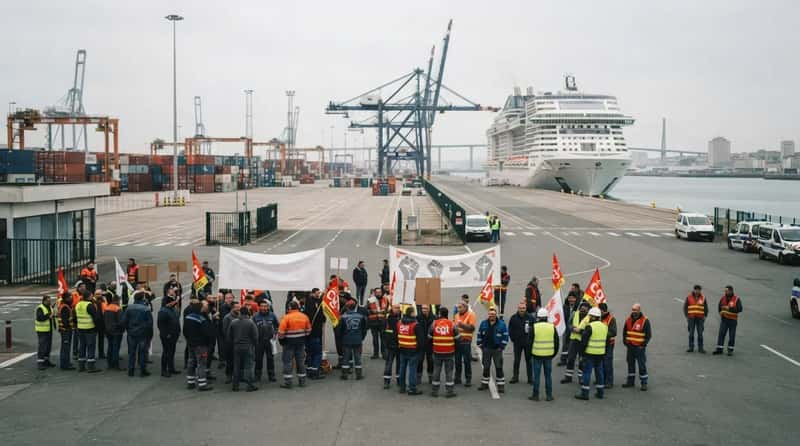
Not every skipped stop is about storms. MSC cancelled a Le Havre visit for MSC Preziosa on Nov. 5, 2026, and the ship spent an extra night in Belgium as industrial action threatened port operations. On Oct. 30, MSC Virtuosa also cancelled a Le Havre visit because of dockworker strike action.
That same Virtuosa sailing lost a separate stop at La Rochelle to poor weather. Two different causes hit one trip within days, and your prepaid tour in that port becomes the casualty.
Excursions cancelled because the ship won’t call are commonly handled differently for line-booked and independent tours. The cruise contract explains why so few passengers get a say in any of this.
#6 – Your Ticket Contract Lets the Line Skip the Port “For Any Reason”
The cruise contract gives the line wide power to rewrite your day. Carnival’s wording lets it omit or change port calls and times, with or without notice, “for any reason whatsoever,” and other lines are similar. A skipped tender port earns you a small port-fee credit and nothing else from the line.
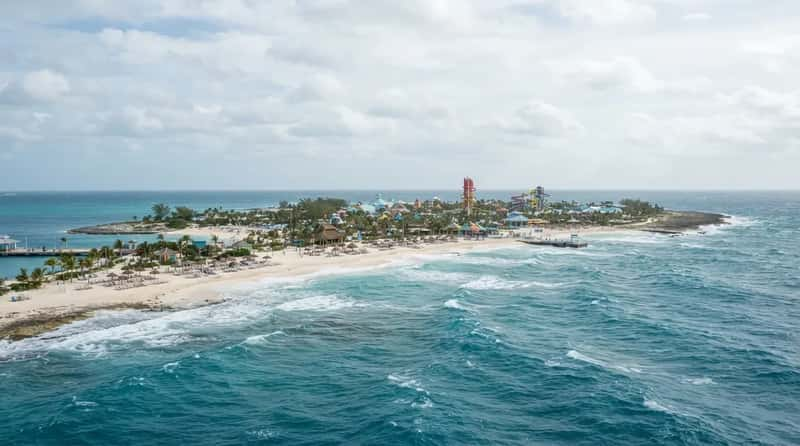
October 2026 gave plenty of examples. Star of the Seas cancelled its Perfect Day CocoCay call on Oct. 26 because of high winds and swells. A day later, Mein Schiff 1 cancelled its Miami call because of gale-force winds.
A missed port doesn’t automatically create a partial cruise-fare refund. Whether your tour money comes back is a separate question.
#5 – Who Refunds Your Tour Depends on Who You Booked With
Pay the cruise line and a cancelled port usually means money back. If the tender is cancelled, a cruise-line excursion refunds automatically. Carnival’s guidance says a line-cancelled, pre-purchased excursion is refunded, with the payment route depending on when the cancellation happens.
That convenience is part of what the higher price buys. Independent bookings are different, so check that operator’s own terms before you pay.
Travel insurance isn’t a guaranteed rescue either. Standard cruise insurance does not reimburse travelers simply because a port was skipped and the day felt wasted. A non-refundable excursion lost to a skip is often covered if the vendor won’t refund, though documentation is required.
Worth Knowing
- Line-booked tours are refunded automatically when the line cancels them.
- Independent operators set their own refund terms, so read them first.
- A skipped port alone doesn’t trigger standard insurance payouts.
- A non-refundable tour is often covered if the vendor won’t pay, with paperwork.
Then comes the question that quietly decides who gets stranded: how early is early enough?
#4 – “Plenty of Time” Is Smaller Than It Sounds
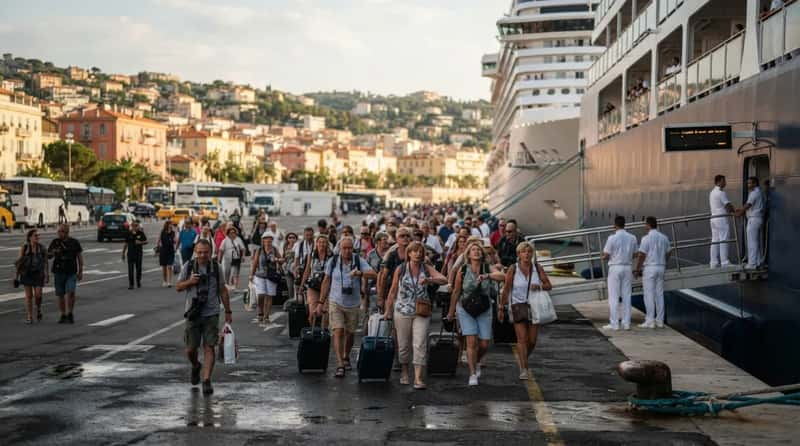
Even the experts don’t agree on how big your cushion should be. One guide says to be back at least 30 minutes before the official all-aboard time. Another recommends 60 to 90 minutes of buffer. A third advises one to two hours, especially when touring independently.
Booking an independent tour that returns close to all-aboard time is a common mistake. A morning excursion that gets you back a few hours early gives you real peace of mind. Choose a schedule that leaves room for traffic, weather, tender delays and navigation mistakes.
Run out of cushion, though, and the ship’s staff are already watching the clock.
#3 – Security Is Counting Heads While You Sit in Traffic
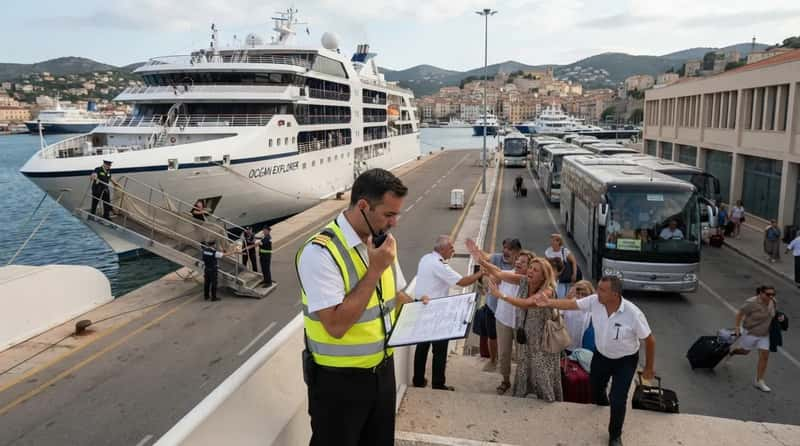
The ship notices you’re missing before you do. As all-aboard nears, security staff monitor who hasn’t returned. As the time approaches or passes, guest services will try to locate you on board by calling your cabin. That call comes while you may still be stuck miles away.
The sympathy has limits. If travelers aren’t back by all-aboard, the ship will typically sail on its published schedule. The crew has procedures to help passengers left behind, but the ship still leaves, and nobody holds the gangway because the bus was slow.
What you do in the minutes after you realize you’re late matters more than most people think.
#2 – One Early Phone Call Can Change How a Missed Ship Ends
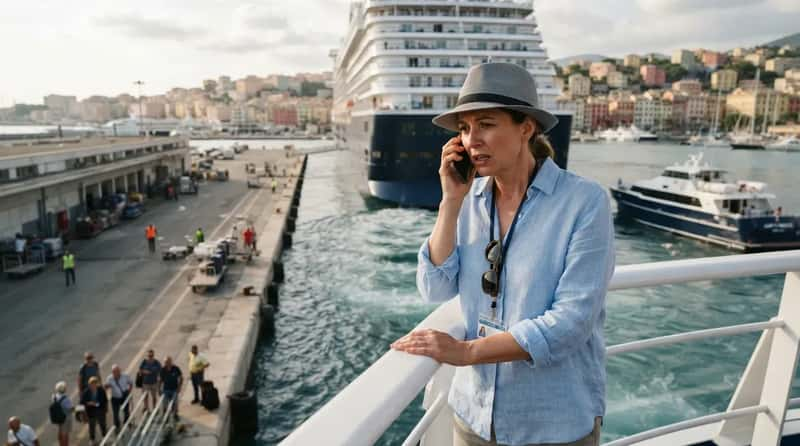
Silence is the worst possible response. If you are genuinely going to miss all-aboard, say so early. Don’t wait until you’re at the pier and the ship is pulling away. Early contact gives everyone more options.
Even a booking through the cruise line can need a nudge. One account describes a tour booked through the line where the ship didn’t initially know to wait, until a frantic call to the reception desk brought it back.
It’s a single story, but the lesson holds: don’t assume every department is talking to every other. The costliest surprise of all, though, shows up in the paperwork.
#1 – Missing the Ship Becomes Your Bill, Not the Cruise Line’s
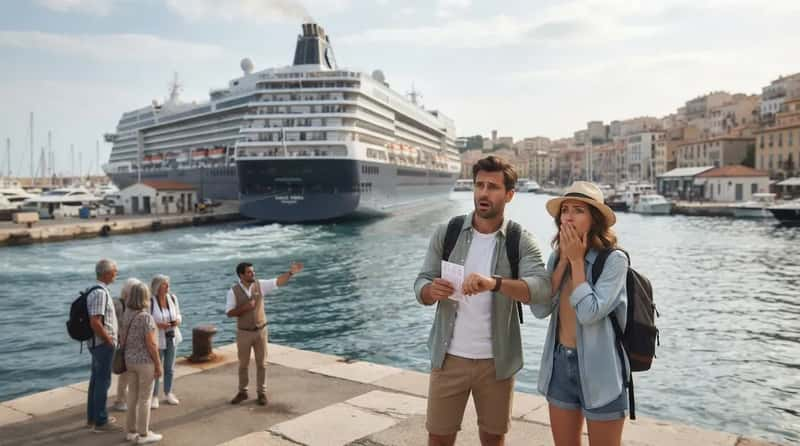
The biggest shock isn’t a skipped tour or a sold-out slot. Miscalculating the return to port on an independent tour can leave travelers stranded in a foreign country with significant bills to get home or rejoin the ship. Ticket contracts and excursion terms say that when you choose a vendor not sold or endorsed through the cruise line, a missed departure is your responsibility.
Once you leave the cruise bubble and arrange things yourself, the responsibility to be back before all-aboard sits with you, not the ship. That can mean steep costs to catch up with the vessel.
A cheaper tour saves very little against a last-minute flight or ferry to the next port. The fine print is dull to read, but an empty berth is worse.
The tour itself is rarely what goes wrong. It’s the clocks that disagree, the deadline that arrives earlier than expected, the port that vanishes by contract, and the guarantee that only covers some bookings.
The cruise line looks after its own tours, and everything else is on you. Which of these would have changed how you booked your last port day?