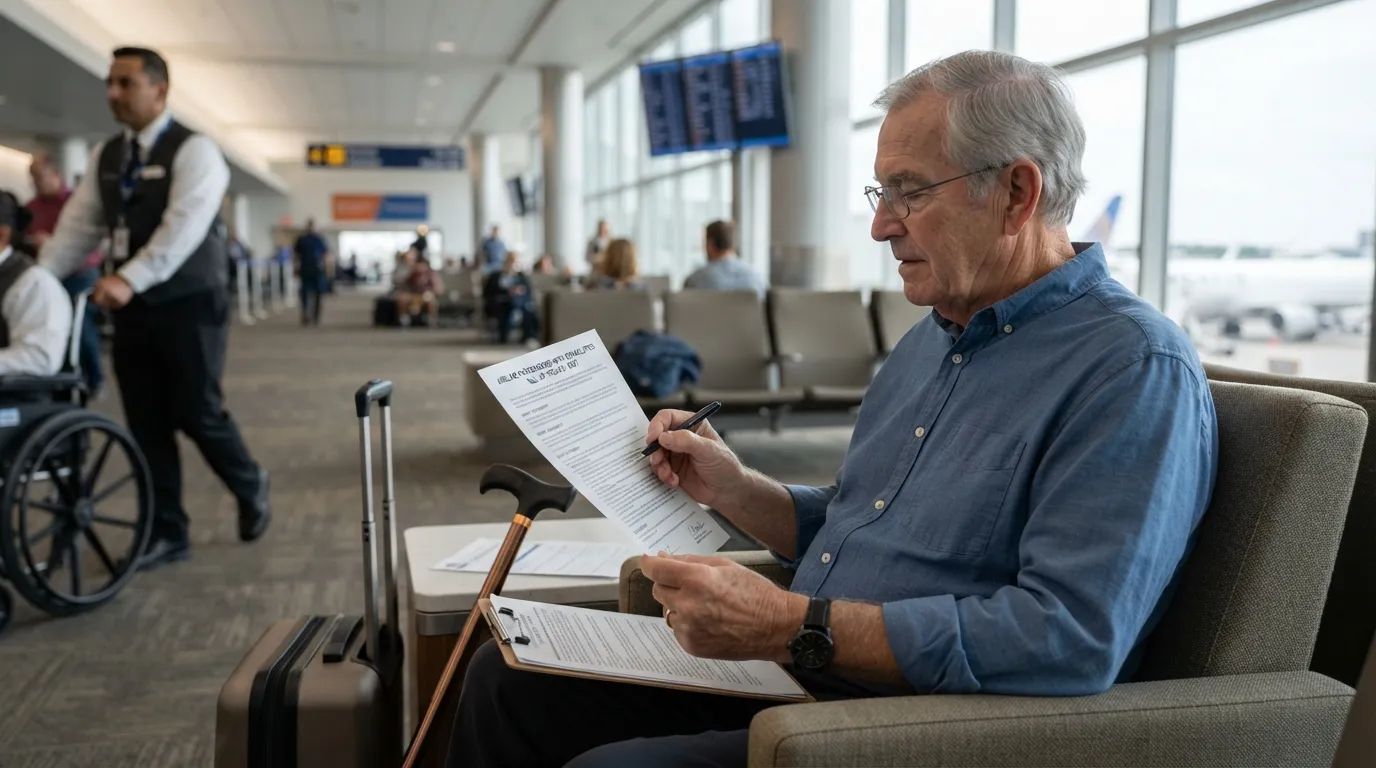
Most people assume the airport quietly gets easier at some magic birthday. A senior lane appears, an agent waves you through, and somebody offers you a cart. It doesn’t work that way. The only age-based screening perk TSA documents doesn’t start until 75, and nearly everything else depends on you speaking up first.
But age was never the real story. A stack of protections tied to need, not birthdays, goes unused at terminals every day, and several got stronger in 2024. Some can save you real money, and some can spare you a miserable hour on your feet. Let’s count down from the one that trips people up first.
#15 – The “Senior Perk” That Starts at 75, Not 60, and Just Got Weaker
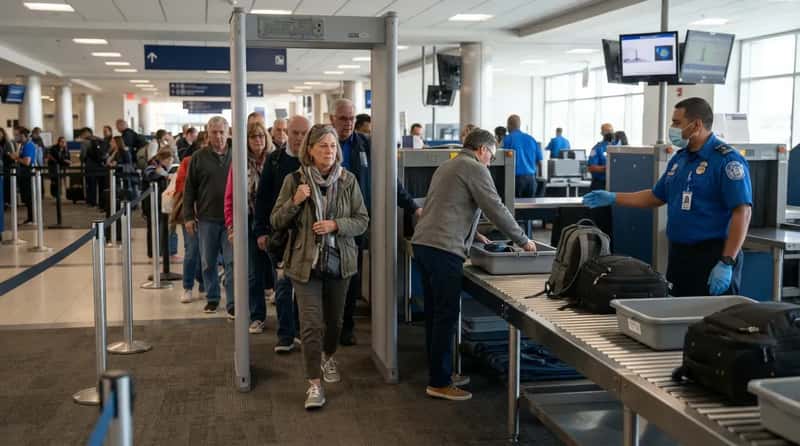
Many travelers believe a senior lane kicks in at 62 or 65. It doesn’t. TSA says passengers 75 and older can receive some form of expedited screening, and they may keep their shoes on. There is no official perk for the 60-to-74 crowd.
Then the rules shifted for everybody. Reports say that since July 8, 2025, travelers of every age generally keep their shoes on at checkpoints nationwide, which erased much of the one age-based advantage. And if you hoped PreCheck came with a senior discount, it doesn’t. The fee is the same at every age.
But that’s nothing compared to what TSA lets you do when an alarm goes off in #14…
#14 – The Right to Sit Down Mid-Screening
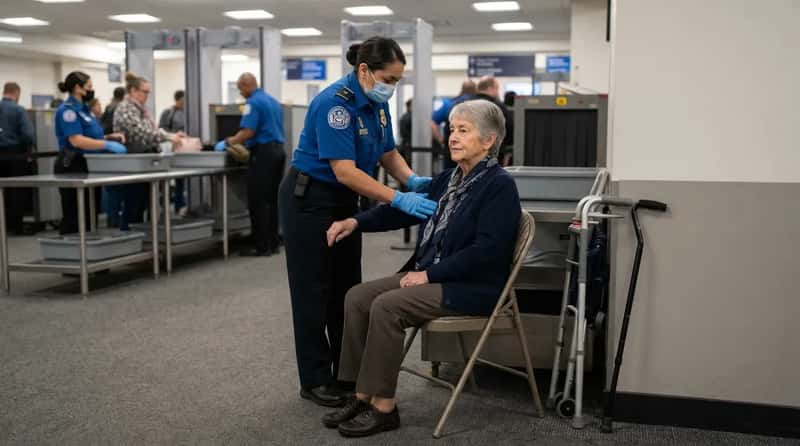
Nobody has to stand through a pat-down on tired knees. If an alarm sounds and you need extra screening, you can ask to be seated for that part. Picture the person in front of you gripping a bin and swaying for five minutes. Most of them never knew to ask.
The checkpoint is built to bend. If a medical condition keeps you from standing or walking, TSA has alternate screening procedures, and shoes may stay on while being inspected by hand. Walkers, canes and crutches are X-rayed or hand-inspected. You just have to say what you need.
At a Glance
- Extra screening can be done with you seated if you ask.
- Alternate procedures exist for anyone who can’t stand or walk.
- Walkers, canes and crutches are X-rayed or checked by hand.
- No paperwork needed. Saying it out loud is enough.
Next up is an option that matters if you’d rather not have strangers watching in #13…
#13 – Private Screening Is One Sentence Away
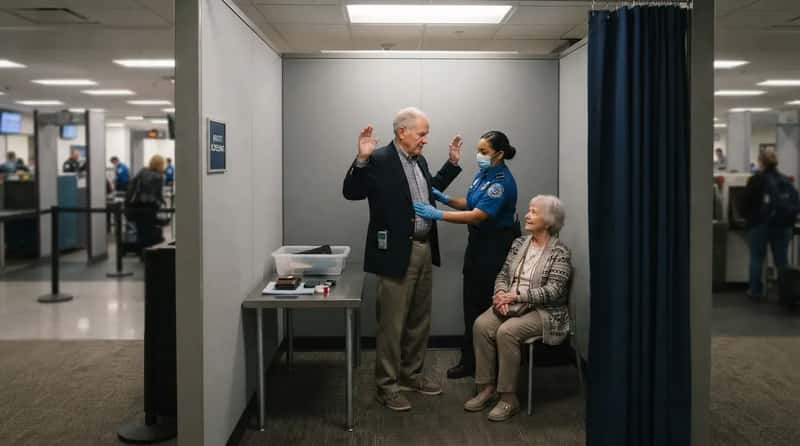
You can ask for a pat-down away from the crowd. TSA’s general practice is to offer a private screening area on request, and you can usually have a companion with you. Most travelers never ask because they assume the line decides everything.
The wording is simple. Tell the officer you’d like a private screening before the pat-down begins. That matters most for anyone with a medical device, since pacemakers, cochlear implants and insulin pumps can raise alarms or require extra steps. Being embarrassed in front of a hundred strangers is optional.
But there’s a free phone call that can arrange all of this ahead of time in #12…
#12 – The TSA Cares Hotline Almost Nobody Calls
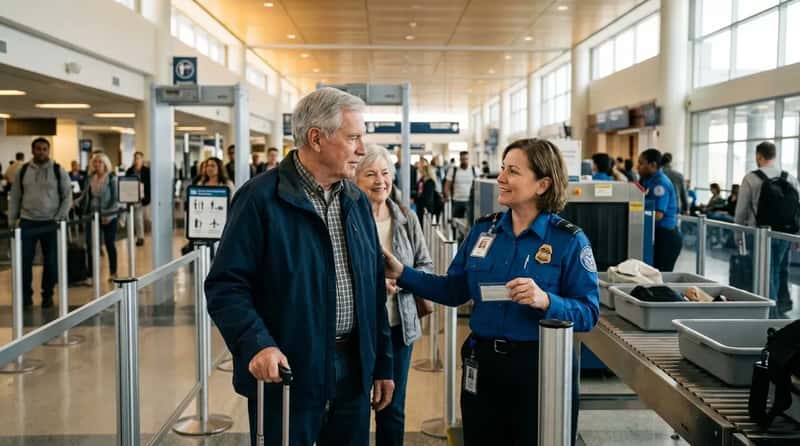
You can line up a helper before you even leave home. Starting about 72 hours before your flight, you can call TSA Cares at 855-787-2227 to request a Passenger Support Specialist. There’s also an online request form on the TSA website. It’s free.
Here’s the catch people miss. TSA Cares does not provide wheelchair help from curb to aircraft. That service comes from your airline. Think of TSA Cares as your guide through the checkpoint, not your ride to the gate.
And if you’d rather not explain anything out loud, #11 solves that quietly…
#11 – A Pocket-Sized Card That Speaks for You
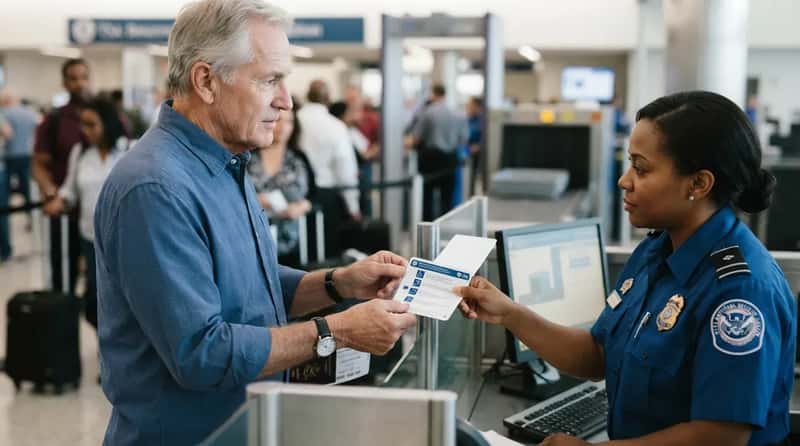
Not everyone wants to announce a medical condition at a crowded checkpoint. That’s what the TSA Disability Notification Card is for. You hand it to the officer, and it lets you share your needs without saying a word.
It’s optional, and that’s the point. Print it at home, tuck it in with your boarding pass, and let it do the talking. It covers things like mobility issues and medical devices, so you can stay calm while the officer reads.
Where things get really practical is what you can pack in your carry-on in #10…
#10 – Liquid Medications Skip the 3.4-Ounce Rule
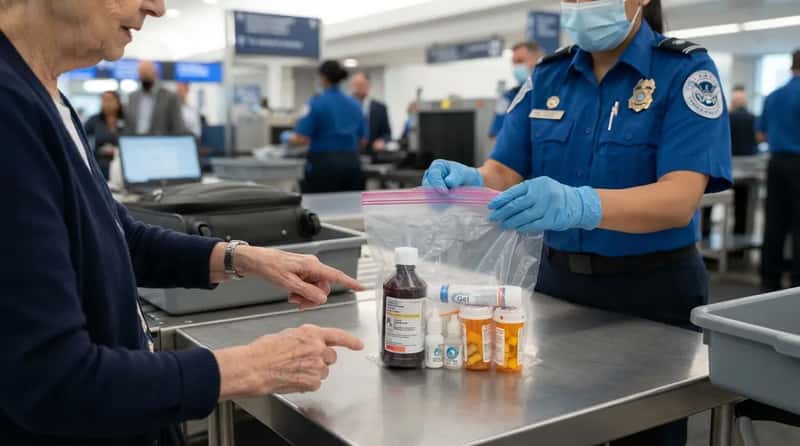
That tiny quart bag doesn’t apply to your prescriptions. TSA says medically necessary liquids can go in carry-ons in quantities larger than 3.4 ounces. Ice packs, gel packs, syringes and pumps needed to administer them are covered too.
Pills are simpler still. Solid medication has no quantity cap and doesn’t need a separate bag. Liquids come with a catch, though. TSA’s language allows “reasonable quantities for the flight,” which isn’t a fixed number. Original labels aren’t required, but they can speed things up.
But there’s a trade-off hiding behind this exemption in #9…
#9 – You Can Say No to the X-Ray, but It Costs You Time
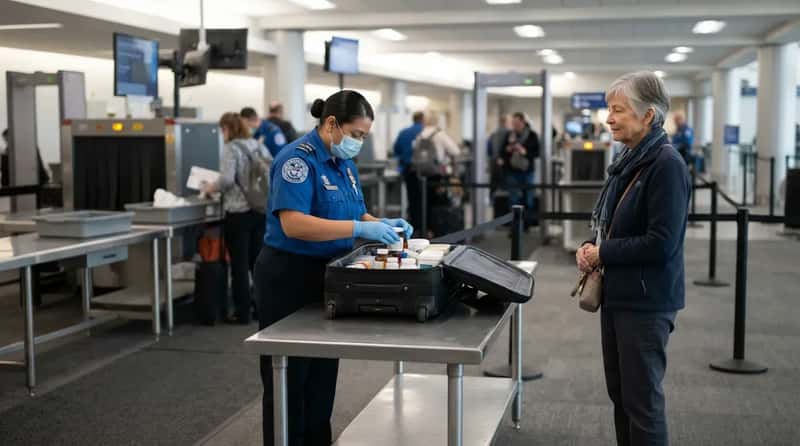
Worried about X-rays and your medication? You can opt out. Travelers who don’t want their medication X-rayed may request a visual inspection instead. It sounds like a free pass, but it isn’t.
TSA says additional screening can follow, which may include Advanced Imaging Technology, a pat-down and a closer look at your carry-on. So this right comes with a longer trip through security. Whether it’s worth it is a judgment call, and reasonable travelers disagree.
Now for the entitlement most people think is only for others, in #8…
#8 – Free Wheelchair and Cart Help, Even If You Can Walk
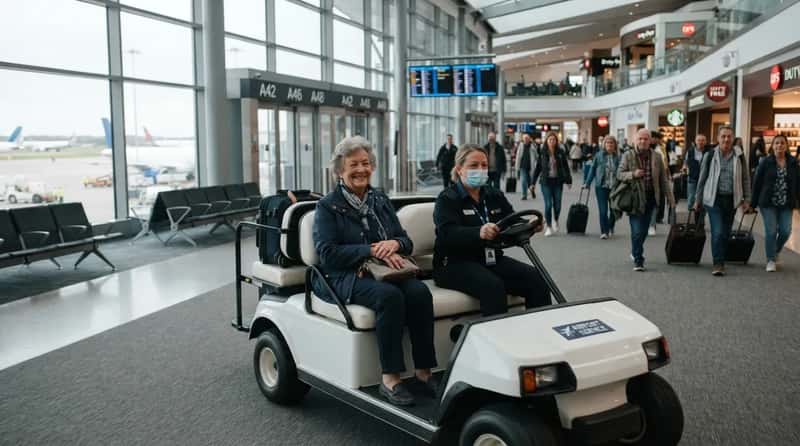
Plenty of older travelers treat asking for a cart as admitting defeat. The rules treat it as ordinary service. Airlines and airports must provide personnel and equipment as needed, including ground wheelchairs, accessible motorized carts, boarding wheelchairs and lifts.
It goes beyond the terminal. Airlines must assist with boarding, deplaning and making connections, and these services are free. Tell the airline when you book, or ask at check-in. A long hike between gates with a tight connection is a perfectly good reason to speak up.
And if you bring your own mobility gear, #7 might surprise you…
#7 – Your Own Chair or Scooter Flies Free
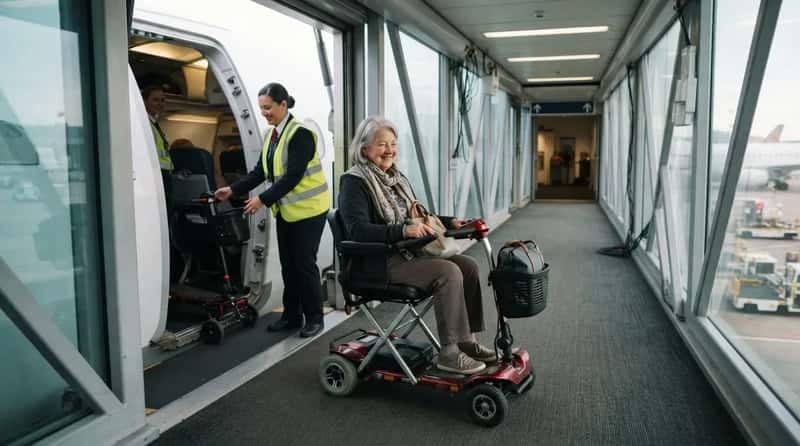
You don’t pay extra to bring your own mobility device. Airlines must transport it at no charge and let you use it until you reach the aircraft door. It travels free in addition to your other bags.
It also gets priority treatment. Devices are generally returned as close as possible to the aircraft door, often on the jet bridge, and they get priority over other luggage in the cargo hold. Battery-powered wheelchairs are accepted as long as the aircraft’s compartment can accommodate them.
But what happens when that chair comes back broken? That’s #6…
#6 – The 2024 Rule That Made Broken Wheelchairs a Violation
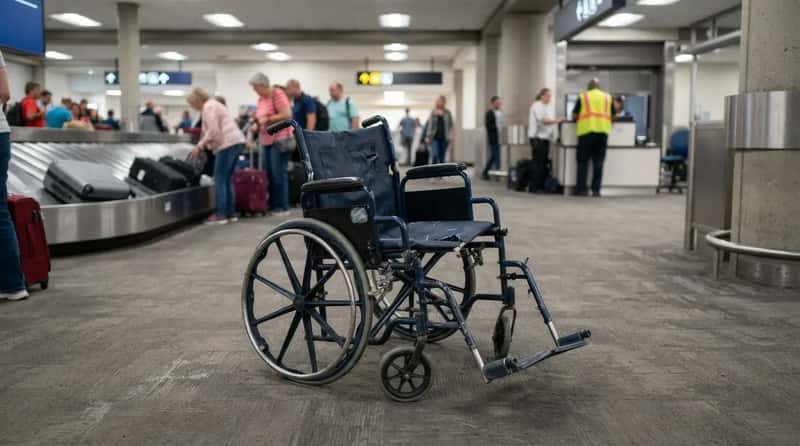
This one is recent, and it’s a big deal. On December 17, 2024, the Department of Transportation issued a final rule called “Ensuring Safe Accommodations for Air Travelers With Disabilities Using Wheelchairs.” It targets mishandled wheelchairs and scooters, plus unsafe transfers to and from aircraft seats.
Mishandling used to be a gray area. The rule made it an automatic violation of the Air Carrier Access Act, and it requires airlines to pay to repair or replace damaged equipment. Reports say airlines challenged the rule in court in 2025, so check DOT for its current status before you fly.
Fast Facts
- Issued by DOT on December 17, 2024.
- Covers damaged wheelchairs and scooters, plus unsafe seat transfers.
- Mishandling counts as an automatic Air Carrier Access Act violation.
- Airlines must pay to repair or replace damaged equipment.
- Court challenges were reported in 2025, so check DOT’s current status.
Next, a seating right most people never ask about in #5…
#5 – Seat Accommodations You Don’t Have to Beg For
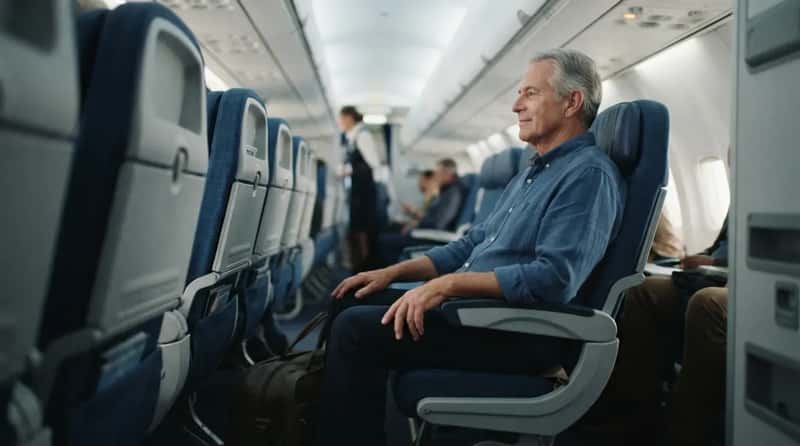
The aisle seat isn’t just a perk. For some travelers it’s a protected request. The Air Carrier Access Act covers seating accommodations, including aisle seats when you need them. On aircraft with 30 or more passenger seats, at least half of all aisle seats must have movable armrests.
Information is part of the deal too. Airlines must tell you about any limits on how they can accommodate you on your specific aircraft. Ask before you pick a seat, not after you’re wedged into one with a bad hip and a four-hour flight ahead.
Then there’s gear that has to come into the cabin with you, covered in #4…
#4 – Your Own Breathing Equipment Can Come Aboard
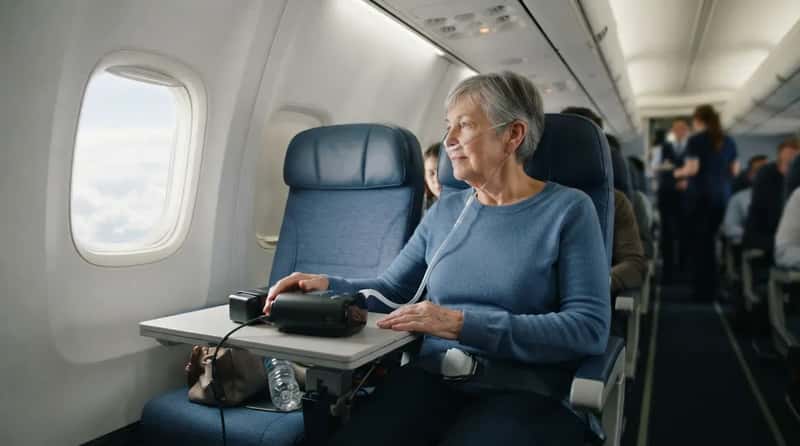
Some older travelers worry they’ll have to leave essential medical equipment behind. Under federal rules, passengers who use personal ventilators, respirators or continuous positive airway pressure machines are permitted to bring and use their own equipment on board.
The protection has limits. It covers flights within the U.S. and foreign carrier flights to or from the United States, but it doesn’t apply to every flight in the world. Rules for other devices, including portable oxygen concentrators, are separate, so confirm with your airline well before departure. And tell the TSA officer about medical devices at the checkpoint.
Worth Knowing
- Personal ventilators, respirators and CPAP machines are permitted on board.
- Coverage includes U.S. flights and foreign carriers flying to or from the U.S.
- Portable oxygen concentrators follow separate rules.
- Mention any medical device to the TSA officer at the checkpoint.
But the biggest money-saver on this list is still ahead in #3…
#3 – Cash Refunds Instead of That Voucher
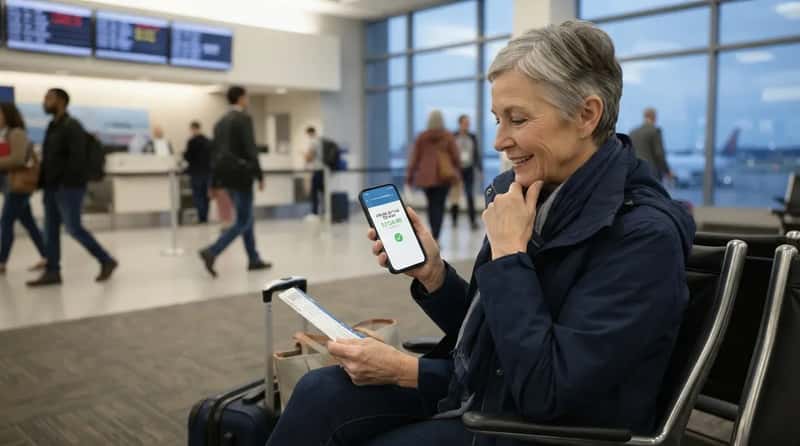
The airline can’t just hand you a credit anymore. DOT’s automatic refund rules took effect on October 28, 2024. If your flight is canceled or significantly changed and you don’t accept the alternative, you’re owed money back. Significant delays count too: three hours or more domestically, or six hours or more internationally.
Before this, airlines could push vouchers and slow-walk refunds, and many travelers simply gave up. Still, there’s a gap. Airlines don’t have to pay cash compensation just for a delay. A refund isn’t the same as being made whole, but it’s a lot better than a credit you may never use.
And refunds don’t stop at the ticket price. See #2…
#2 – Your Checked Bag Fee Comes Back if the Bag Doesn’t

Lost your luggage for the day? You may be owed more than an apology. Passengers whose checked bag is significantly delayed are entitled to a refund of the bag fee. The window is 12 hours after a domestic flight lands, and 15 to 30 hours for international flights, depending on the length of the flight.
Other add-ons count too. Extra-legroom seats and onboard Wi-Fi qualify for refunds if you paid and they turned out to be unavailable or not working. Refunds must be automatic, prompt, and returned in the original form of payment. That includes fees you never thought to chase.
But the single most overlooked entitlement isn’t about money at all. It’s #1…
#1 – The Right to Be Treated With Dignity, in Writing
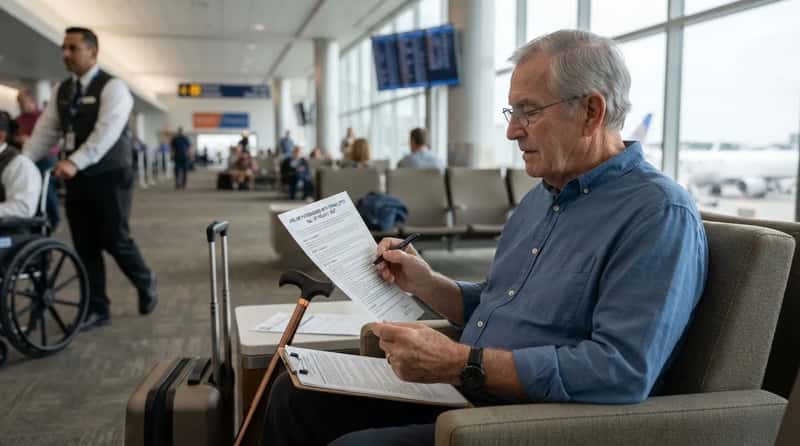
The first item on DOT’s Airline Passengers with Disabilities Bill of Rights is a promise of respect. It says you have the right to be treated with dignity and respect. That’s not just a slogan. The 2024 wheelchair rule formally defines what “safe” and “dignified” assistance means.
You also have a way to fight back when it fails. Airlines aren’t required to respond to complaints sent more than 45 days after an incident, and DOT generally handles disability-related complaints it receives within six months. So write it down, and file it quickly. That’s the entitlement that backs up all the others.
Quick Compare
- Age-based: expedited screening for travelers 75 and older.
- Need-based: seated screening, private pat-downs, free cart and wheelchair help, seat accommodations.
- Ticket-based: automatic cash refunds, bag fee refunds, and refunds for add-ons that didn’t work.
Here’s the truth. Almost none of these rights start at 60. Most are tied to need, disability or the ticket you bought, and you usually have to ask. The one documented age perk starts at 75, and it’s smaller than it used to be.
The real wins are the quiet ones: a seat during screening, medications through the checkpoint, free mobility help, automatic cash refunds, and a written right to dignity. Which of these did you not know about?