Most first-time cruisers assume the dining room runs the exact same way for every guest: same menu, same rules, same pace, no exceptions. That’s not how it actually works. Staff quietly adjust service, offer workarounds, and drop hints to guests they recognize, especially older repeat sailors who know how to ask the right question at the right moment.
The gap between what a first-timer experiences and what a seasoned regular gets isn’t about money. It’s about knowing which quiet requests actually get honored, and which ones nobody bothers to mention out loud. Here’s what dining staff actually tell their favorite returning guests.
#15 – The $5 Charge Nobody Warns You About Anymore
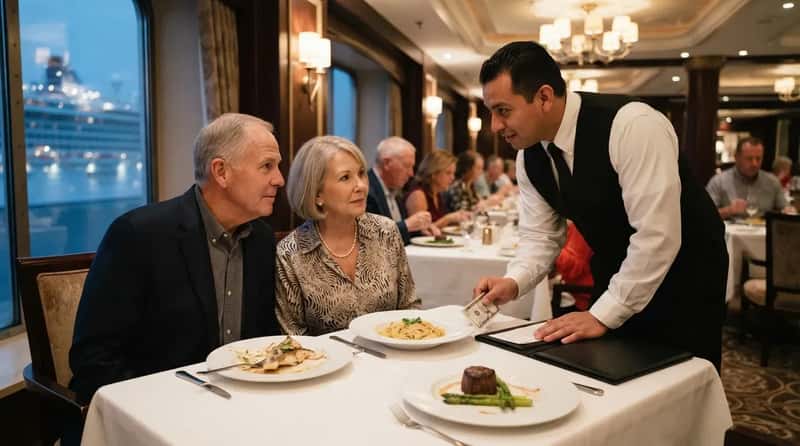
For decades, ordering a second or third entree in the main dining room cost nothing. That changed. As of 2026, Carnival charges $5 for a third main dish, while MSC Cruises and Norwegian Cruise Line include one main dish and charge $5 for a second one. Right now, those are the only three major lines with this policy in place.
The lines frame it as a food-waste measure, and there’s some truth to that. But repeat guests already know the quiet workaround waiters rarely announce out loud, and it makes the fee almost avoidable if you know when to ask. That’s nothing compared to what we found about #14.
Fast Facts
- Carnival still includes two entrees free; the $5 charge only kicks in on the third dish or beyond.
- MSC and Norwegian include just one free entree, with $5 added for any additional order.
- More than half of Carnival cruisers admit to ordering two entrees, but only about 5% ever go for a third.
- Appetizers and desserts are untouched by the new fee and remain fully unlimited.
#14 – Appetizers and Desserts Are Still a Free-For-All
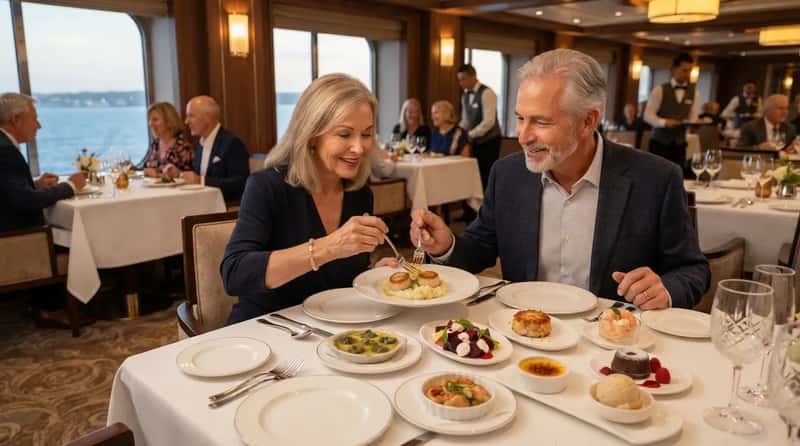
While entrees got restricted, one category stayed wide open. Appetizers and desserts remain unlimited and free across every major cruise line as of 2026, and staff rarely discourage anyone from taking advantage of it.
Seasoned cruisers treat the appetizer list like a tasting menu, ordering three or four small plates instead of committing to a single entree. It’s the easiest way to sample the whole menu without touching the new surcharge. But #13 is where things get genuinely surprising for anyone who’s ever paid steakhouse prices.
#13 – The Steakhouse Cut Hiding on the Regular Menu
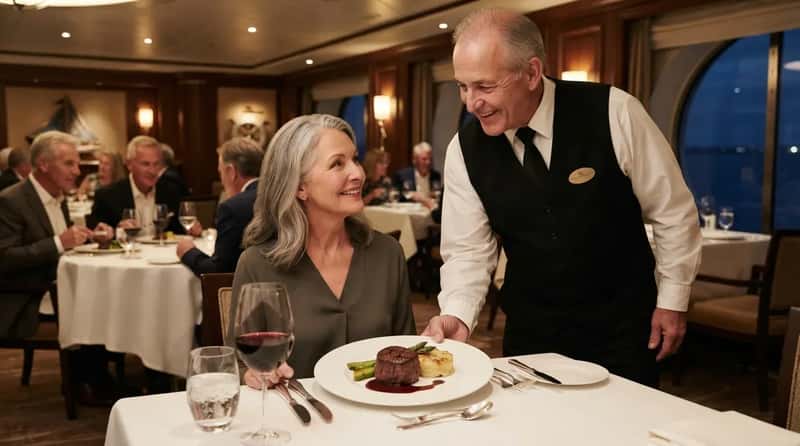
Specialty steakhouse dinners can run $50 or more per person, but the same quality cut sometimes sits quietly on the main dining room menu. A filet mignon that might cost $50 or more at the specialty venue can occasionally be found one deck away for a fraction of that price.
It’s never printed anywhere. It’s a workaround experienced waiters mention only when asked directly, and diners who’ve built rapport with their server are simply more likely to hear, “would you like to try the steak instead?” New guests who never engage beyond ordering rarely get the offer at all. That’s the quiet reward for showing up night after night and actually talking to your server.
#12 – The Captain’s Table Invite Isn’t Random
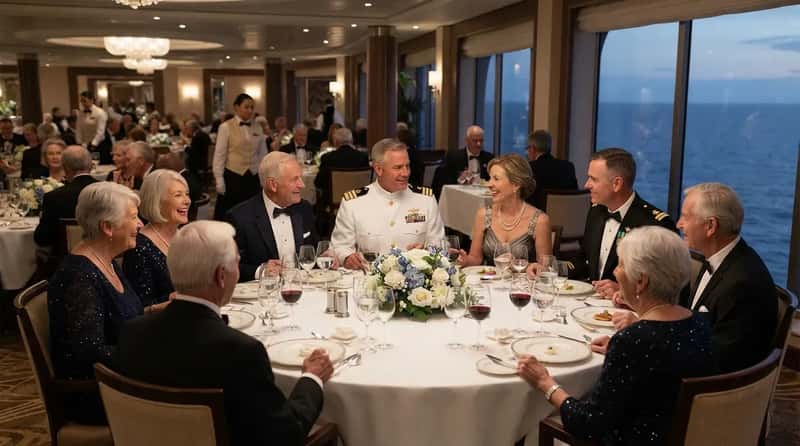
Getting invited to dine with the captain feels like winning a lottery, but it’s not luck. Invitations to that formal dinner tend to go first to frequent repeaters of the cruise line, occupants of pricier suites, and couples celebrating a special occasion.
Staff quietly flag names from the loyalty database days before the invitations go out. Some loyalty programs even fold this perk directly into their tier structure, alongside free cabin upgrades or a complimentary meal for two at a specialty restaurant. But #11 is a trick almost nobody outside repeat cruisers knows about.
#11 – The Wine Bottle That Follows You Around the Ship
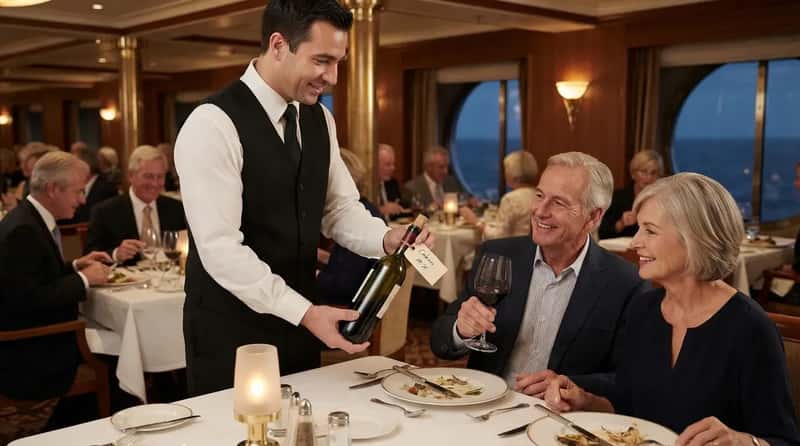
Buying a bottle of wine instead of individual glasses already saves money, but most people assume any leftover gets tossed. It doesn’t have to. Waiters can mark the bottle with your room number and save it for another night, or even for dinner at a different onboard venue.
Repeat guests use this constantly, ordering a full bottle on night one and stretching it across three or four dinners without paying twice. Staff rarely mention this option to unfamiliar guests, since it requires trusting the waiter to track and store it correctly. But #10 shows the same loophole applies to beer, and the rule is even looser than you’d expect.
#10 – Beer Buckets Have No Boundaries
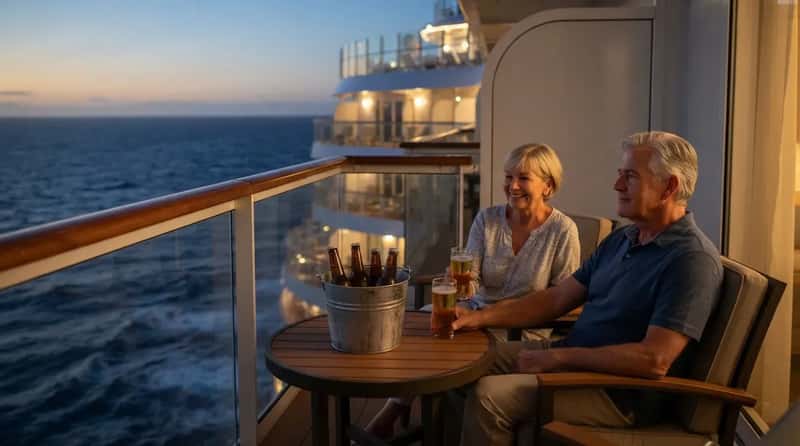
Ordering by the bucket already saves money over single beers, but the real secret is where you’re allowed to take them. Nobody says you have to drink those beers all at once or at the location where you bought them.
Most first-time cruisers assume drinks stay tied to whichever bar sold them. Regulars know better and routinely carry buckets straight from the dining room to their balcony for a nightcap. Staff won’t stop you, and most won’t even blink. But #9 takes this same freedom even further than most guests realize.
#9 – Your Cocktail Can Legally Follow You Anywhere
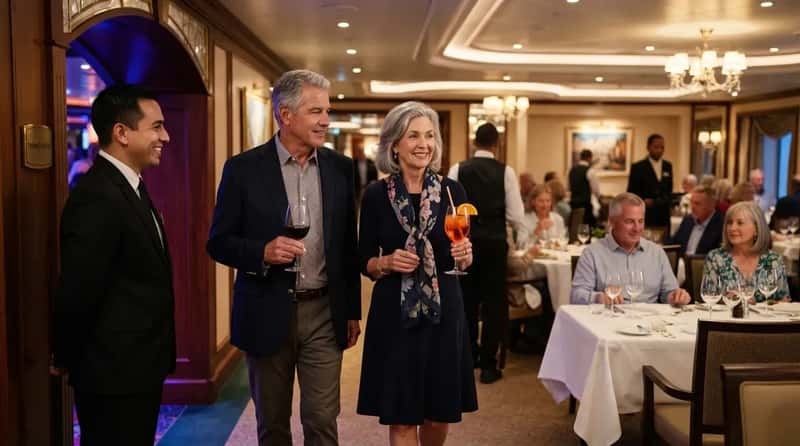
Land-based restaurants make you finish your drink before leaving. Cruise ships don’t. You’re free to roam the ship with any beverage from any venue, so it’s perfectly normal to carry your pre-dinner cocktail into the dining room or take an unfinished glass of wine to the evening show.
Most passengers never test this rule because nobody tells them it exists. Repeat cruisers treat the ship like one continuous lounge, carrying a drink from the pool deck straight into dinner without a second thought. It’s a small freedom, but it changes how relaxed an entire evening feels. But #8 is a seating request that quietly favors one specific group of guests.
#8 – The Early Seating Nudge Reserved for Longtime Sailors
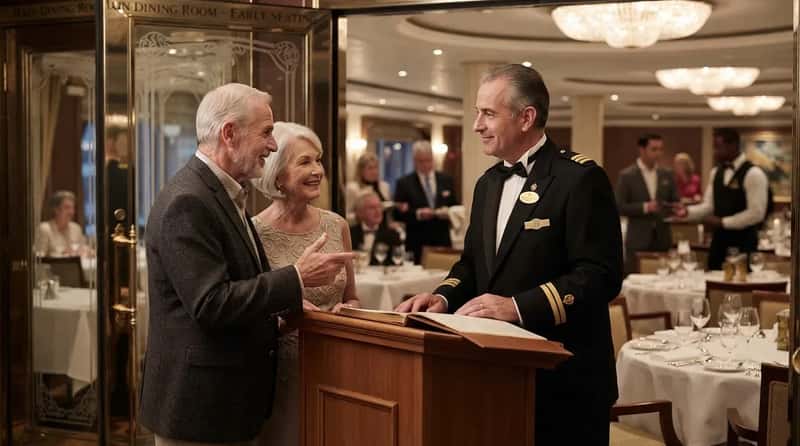
Dinner timing sounds trivial until you’re stuck waiting in line every single night. Early seating is often favored by families with kids and some seniors since it lines up better with earlier bedtimes, and when seating charts fill up fast, maitre d’s have some flexibility over who gets bumped toward that earlier, calmer slot.
That flexibility rarely goes to strangers. It goes to guests the maitre d’ already recognizes from previous nights or previous cruises. A quiet request on day two, paired with a familiar face, often gets slotted in ahead of guests who never bothered to ask. But #7 is the move seasoned cruisers make before they even board.
#7 – Meeting the Maitre d’ Before Dinner Even Starts
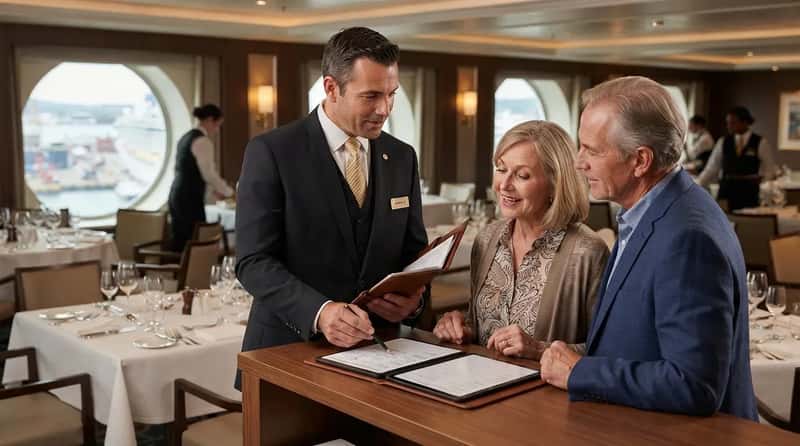
Most guests wait until they’re seated to mention dietary needs. Experienced cruisers do it before the ship even leaves port. Cruise lines have extensive systems for managing food allergies, gluten-free diets, and vegan meals, and your server can arrange almost anything if you flag it on night one.
The real insider move is contacting the cruise line before you sail and requesting a meeting with the maitre d’ on embarkation day. That single conversation lets the kitchen plan ahead instead of scrambling table-side each night. Repeat guests treat it as routine. First-timers rarely know to ask for it at all.
Worth Knowing
- Contact the cruise line’s special-needs or guest services desk before sailing, not after boarding.
- Ask specifically for a maitre d’ meeting on embarkation day, before the first dinner seating.
- Bring any documentation for medical dietary restrictions if you have it handy.
- Repeat cruisers treat this step as routine, not as a special favor they’re asking for.
#6 – Separate Kitchens Exist for Severe Allergies

Most guests assume “gluten-free” or “allergy-friendly” just means a different label on the same plate. For serious allergies, it’s far more involved than that. The head waiter can coordinate with the kitchen to prepare meals in a separate area using dedicated equipment.
On luxury cruise lines, you can eat whatever you want whenever you want.
Common insider advice among veteran cruisers
With enough notice, most luxury lines can arrange almost anything. Complicated requests are best made 90 days before embarking, while 24 to 48 hours is usually enough for simpler ones, and special meal requests are generally free unless the ask is extravagant. But #5 is a scheduling trick that has nothing to do with food and everything to do with timing.
#5 – Skip the Show Line by Eating Backwards
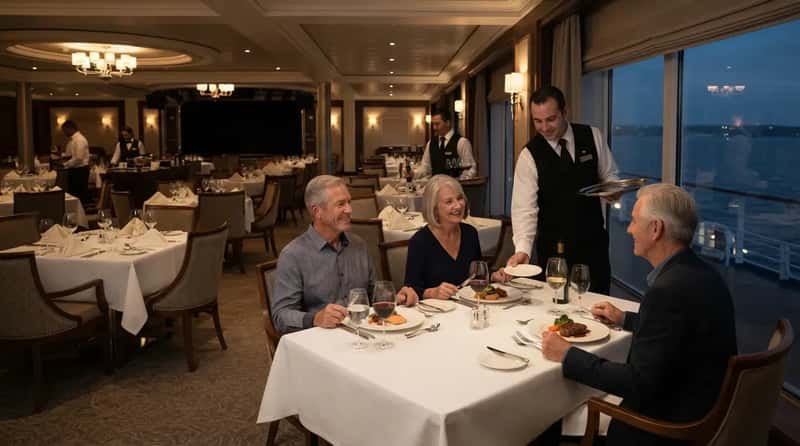
Most guests rush dinner to catch the evening show, then fight the crowd leaving the theater afterward. Repeat cruisers flip the order entirely, and it’s a simple switch that makes a surprisingly big difference.
If you like to linger over dinner, which can easily take an hour and a half in the main dining room or a specialty restaurant, catching the first show and heading to dinner afterward avoids the worst crowds entirely. Dining rooms empty out considerably once the first show crowd clears the theater, giving late diners quieter service and more attentive waiters. It’s a trick regulars swear by and rarely explain unless asked directly.
Quick Compare
- Dinner first, show second: faster-paced meal, but you’re rushing to beat theater crowds.
- Show first, dinner second: quieter dining room, more relaxed pacing, and noticeably more attentive service.
- Bonus perk: late diners often get first pick of tables near the window or the wait staff’s favorite corner.
#4 – “Anytime Dining” Still Lets You Reserve a Table
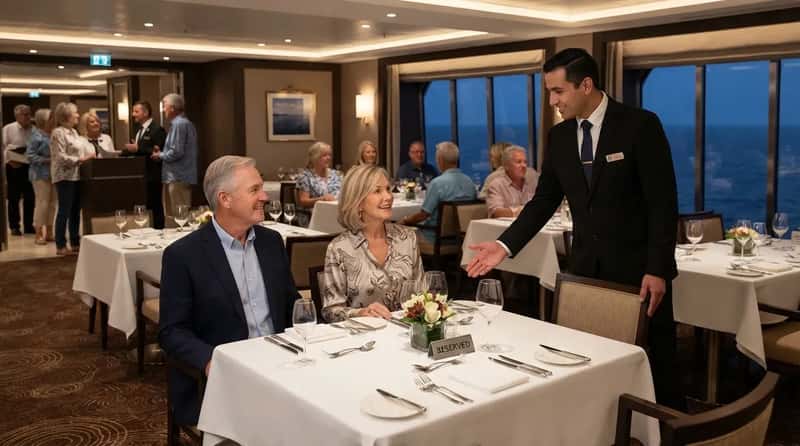
Most guests think flexible dining means showing up and hoping for the best. That’s only half true. Open or flexible dining lets you eat when you want, but it does come with the possibility of a wait if you haven’t made a reservation.
The key thing most people don’t realize is that you can reserve a table within flexible dining. Repeat cruisers book through the app on day one, skipping the wait entirely while newer guests stand in line wondering why. Play it by ear instead, and just know wait times run longer during peak hours, especially on sea days. But #3 rewards loyalty in a much more direct, financial way.
#3 – Free Specialty Dinners Show Up at Higher Loyalty Tiers
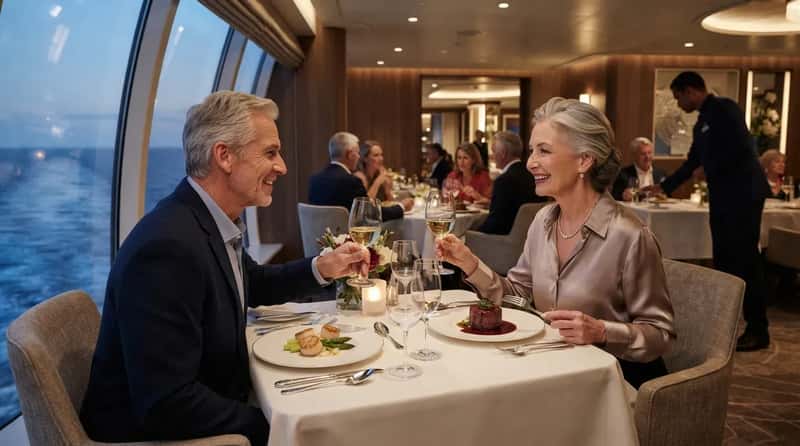
Climbing a cruise line’s loyalty ladder pays off at dinner in a very literal sense. A complimentary meal for two at the restaurant of your choice is one of the milestone rewards several major lines quietly build into their upper tiers.
That benefit travels with your loyalty account, not your booking method. Your points, tier level, and perks, from priority boarding to free specialty dining, are tied to your cruise line account, not where you made the reservation. Guests who book through third-party sites sometimes assume they’ve lost these perks entirely. They haven’t, and repeat cruisers know it.
#2 – Status Matching Skips the Entire Loyalty Line
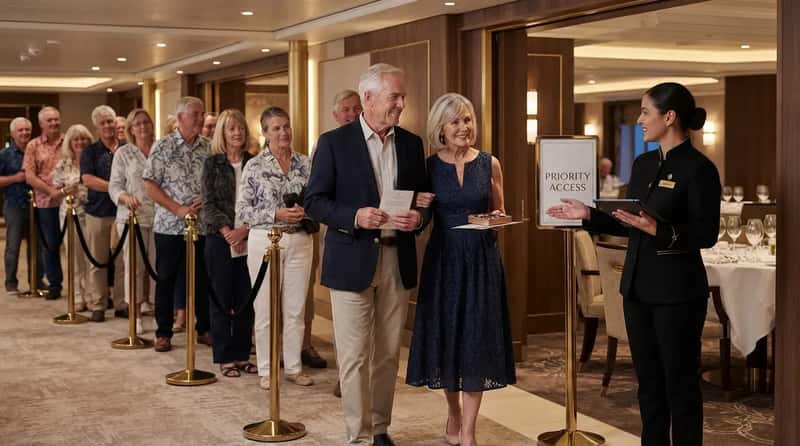
Building loyalty status the slow way takes years of sailing. There’s a faster route almost nobody advertises loudly: the status match, where you take existing elite status from one travel brand and instantly convert it into a similar tier with another cruise line.
Whether you’re new to cruising or switching brands for better itineraries, a status match lets you skip the entry-level tiers and jump straight into the perks that matter, including free drinks, priority boarding, and welcome amenities. Dining staff notice status-matched guests immediately, since their account already shows elite privileges from day one. It’s a quiet shortcut that can turn a first-time sailing into a top-tier dining experience overnight. But #1 is the secret that actually matters most, and it costs nothing at all.
At a Glance
- MSC Cruises: free, open application matching many outside cruise and hotel programs, with Diamond as the highest tier reachable this way.
- Royal Caribbean Group: one-for-one tier matching across Crown & Anchor Society, Captain’s Club, and Venetian Society.
- Virgin Voyages: periodic status-match windows that fast-track eligible travelers into Blue Extras perks.
- Carnival: a new rewards program is expected to bring its own matching options later in 2026.
#1 – Staff Remember You Better Than You’d Ever Guess
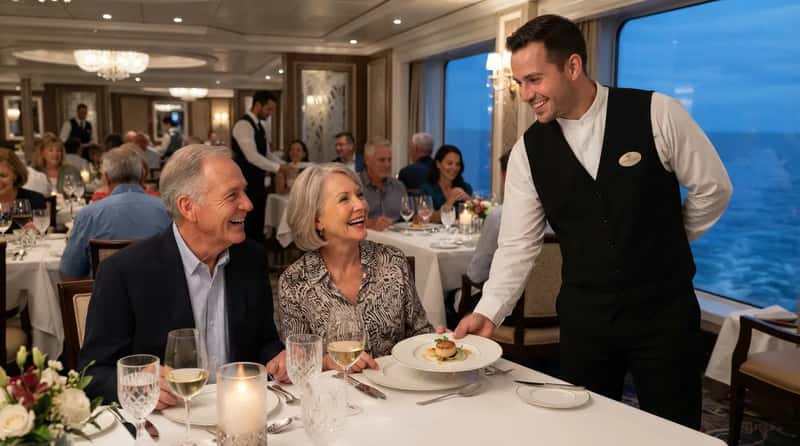
This is the one insiders bring up more than any other, and it has nothing to do with money or status. Crew remember repeat passengers with almost supernatural precision, down to a preferred towel arrangement or which side of the bed a guest sleeps on. That same memory carries straight into the dining room.
Walk into almost any cruise ship dining room and you’ll spot it within minutes: one table gets a little extra attention, a slightly warmer greeting, maybe a discreet upgrade nobody else at the table receives. For diners over 60 traveling solo or as couples, that small gesture of concern often ranks among the most meaningful moments of the entire cruise. It costs nothing to earn, it just requires showing up, using your server’s name, and treating the table like a relationship instead of a transaction.
None of these secrets require elite status, a suite upgrade, or a huge bar tab. Most cost nothing beyond a little curiosity and a willingness to ask a direct question on night one. The biggest surprise isn’t the steakhouse workaround or the free wine trick, it’s how much of this comes down to simply being recognized as a familiar, friendly face at the table.
Cruise dining rooms reward attention far more than money. The guests who get quietly upgraded aren’t the ones spending the most, they’re the ones who show up, ask questions, and treat their waiter like a person instead of a vending machine. Which one of these secrets surprised you most? Drop it in the comments.