Most people remember the 1980s road trip as endless hours trapped in a station wagon with no air conditioning and a sibling’s elbow in their ribs. But ask anyone who actually lived it, and they’ll tell you the real memory is the sudden jolt of excitement when a billboard promised something strange was coming up on the right. There was no GPS, no streaming, no way to know what waited ahead except a hand-painted sign and a parent willing to pull over.
What most families never realized back then was how fragile these places already were. Many of the stops that felt permanent, almost mythical, were quietly dying even as kids pressed their faces to the car window to see them. Here’s what actually happened to the roadside legends everyone assumed would be there forever.
#15 – The Drive-In Movie Theater That Almost Didn’t Survive the Decade
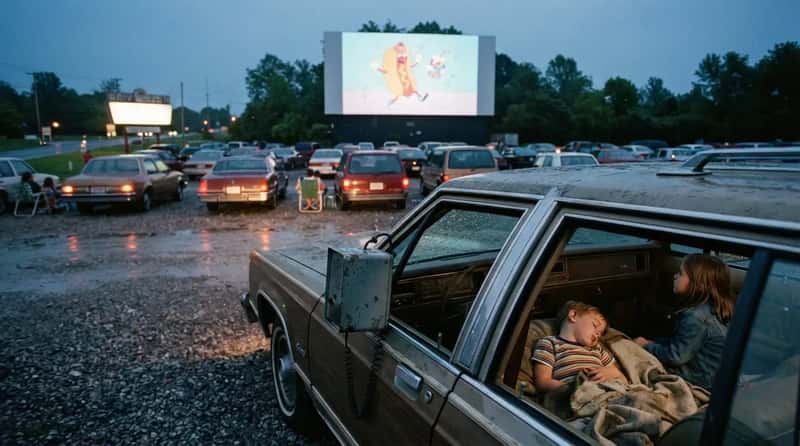
Nearly every family thinks of the drive-in as a timeless summer ritual, but the 1980s were secretly the industry’s near-death experience. There were still 2,129 drive-ins standing in 1982, and that number had dropped to 999 by 1987. Rising land values, VCRs, and cable television were quietly gutting an entire category of American entertainment while families still packed the car for double features.
Kids didn’t notice any of this. They just remembered the crackly speaker box hooked to the window, the animated hot dog dancing across the screen during intermission, and falling asleep in the back seat before the second movie even started. Most people don’t realize the land these theaters sat on eventually became worth more than the business itself, which is why so many vanished into shopping centers almost overnight.
Fast Facts
- 2,129 drive-ins were operating nationwide in 1982
- By 1987, only 999 remained open
- Rising land values and the home VCR boom drove the sharp decline
- Many shuttered theaters were quietly redeveloped into shopping centers
#14 – The Wigwam Motels That Let Kids Sleep Inside a “Teepee”
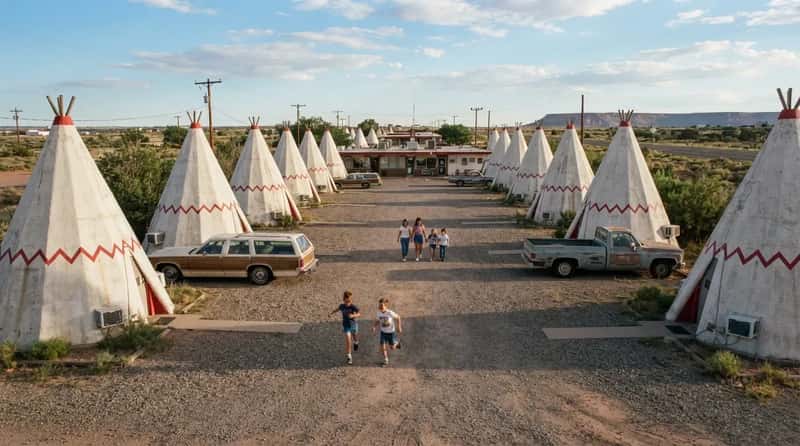
Long before theme hotels were a marketing gimmick, families were secretly obsessed with sleeping inside concrete teepees along old highways like Route 66. Each unit was shaped like a giant tipi, painted white with a red zigzag pattern, and arranged in a horseshoe around a gravel courtyard where kids ran wild after dinner.
The appeal wasn’t luxury. Most rooms were tiny, with a single bed and a rattling window unit, but that was the entire point. The novelty of “sleeping in a wigwam” mattered more to 1980s kids than the actual comfort of the room, and parents knew it, using the promise of a teepee bed as a bribe to survive one more hour of highway driving.
#13 – The Fiberglass Giants Standing Guard Over Route 66
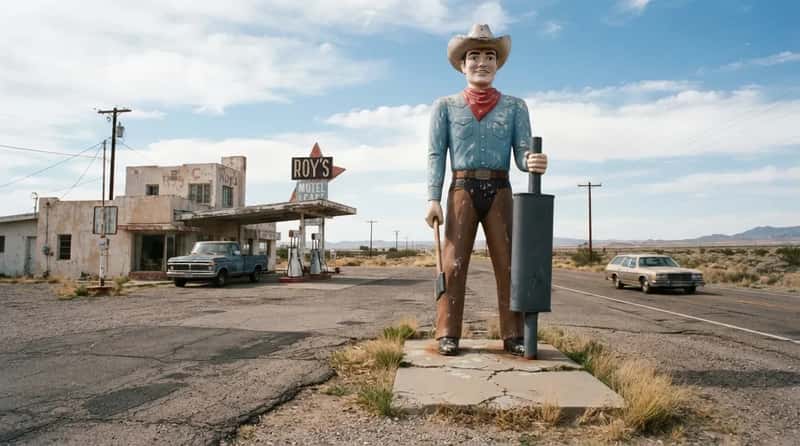
Every family swears they remember “the giant” from a specific stretch of highway, and there’s a reason that memory feels so universal. Towering fiberglass men, some dressed as lumberjacks, some as cowboys, some holding oversized mufflers, were stationed outside gas stations and diners specifically to be seen from a moving car at 55 miles per hour.
These figures were mass-produced from the same molds, which explains why a “cowboy” in Texas sometimes looked suspiciously like a “spaceman” three states over with a new coat of paint. Most of these giants weren’t built to last decades, yet dozens somehow survived into the 1980s purely because removing them cost more than leaving them standing.
#12 – The Barn Roofs Begging You to “See Rock City”
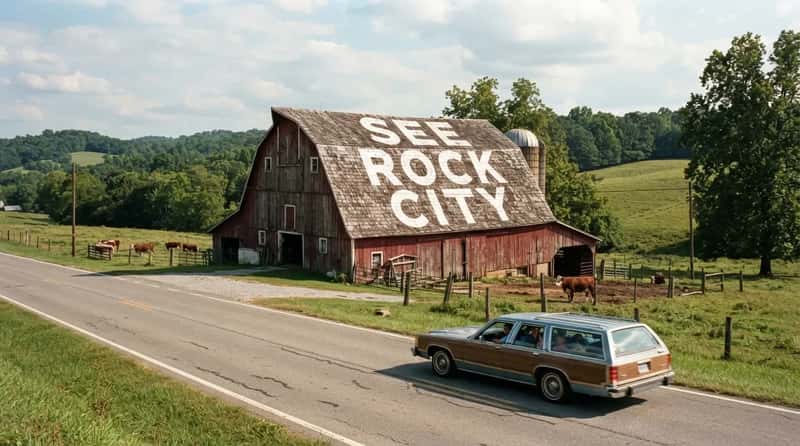
If your family drove anywhere in the South during the 1980s, you passed a barn with bright block letters painted across its roof, and you knew exactly what it meant without ever seeing an actual advertisement. This wasn’t an accident. It was one of the most aggressive grassroots ad campaigns in American history, painted directly onto the barns of farmers who agreed to the deal for a fresh coat of paint.
Kids in the back seat would spot the barns for hundreds of miles before ever reaching the destination, turning the drive itself into a scavenger hunt. Farmers were often paid nothing but the paint job itself, a trade some considered a bargain and others considered highway robbery in reverse.
#11 – The Roadside Stands Selling Jackalopes as if They Were Real
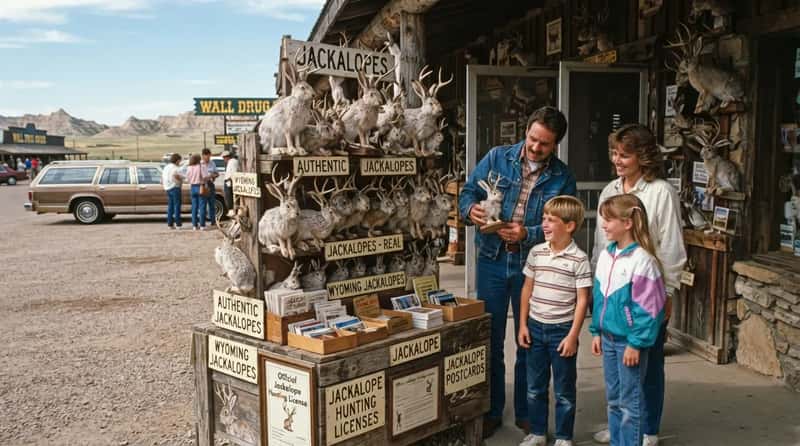
Somewhere between South Dakota and Wyoming, an entire generation of kids became convinced that a horned, jackrabbit-sized creature actually roamed the plains. Roadside gift shops sold “authentic” jackalope postcards, taxidermy mounts, and hunting licenses as a running joke that most tourists were happy to play along with.
The gag worked because it never fully broke character. Store clerks would answer questions about jackalope habits with a straight face, and plenty of 1980s kids went home genuinely convinced the animal was real. The legend became such good business that stores built entire backyards and photo booths around a creature that never existed.
#10 – The Mystery Spots Where the Laws of Gravity Seemed to Break
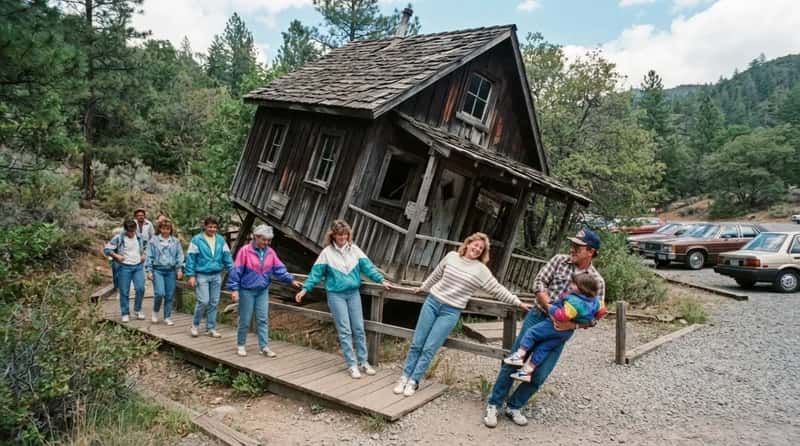
Every region seemed to have one: a rickety wooden cabin built on a tilt, where balls appeared to roll uphill and grown adults looked shorter standing next to their own children. Families would pile out of the car specifically to feel dizzy for ten minutes and buy a bumper sticker on the way out.
The trick was never actual magic, just clever construction and forced perspective, but almost nobody in the tour group wanted to hear the explanation. Most visitors left more convinced by the optical illusion than by the tour guide’s warning that it was all just a tilted building, which is exactly why these roadside oddities kept lines forming all summer long.
#9 – The Roadside Alligator Farms Every Kid Begged to Visit
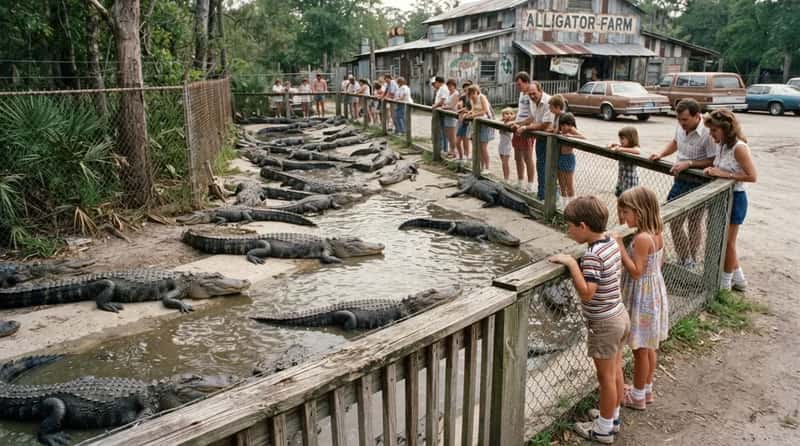
Long before zoos worried about accreditation and safety glass, family road trips through the South often included a stop at a roadside reptile farm where you could get uncomfortably close to a live alligator. Hand-painted signs promised “See Live Gators!” for miles before you ever reached the parking lot.
These attractions ran on pure spectacle: feeding shows, wrestling demonstrations, and gift shops selling alligator-head coin purses that horrified parents and delighted kids in equal measure. The appeal wasn’t education so much as the thrill of standing a few feet from something that could genuinely bite, a level of risk tolerance that would look very different on a modern liability waiver.
#8 – Stuckey’s and the Pecan Log Roll That Ruled the Interstate
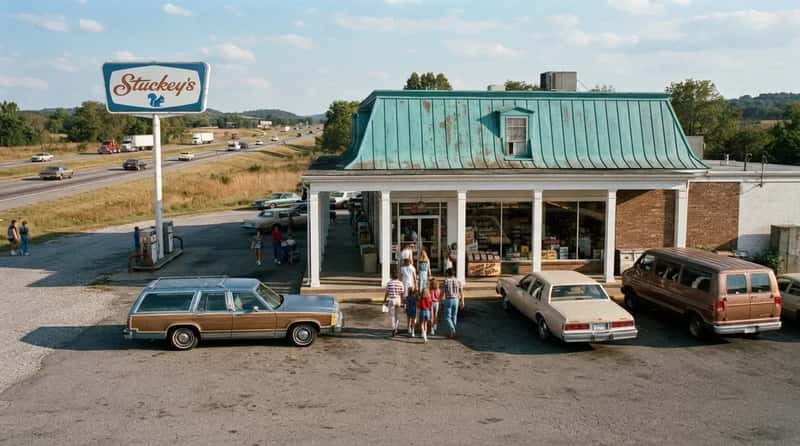
The teal roof was practically a beacon for 1980s families desperate for a bathroom break and a sugar fix. Stuckey’s had grown from a single Georgia pecan stand into 370 stores across more than 40 states at its peak in the early seventies, turning a homemade candy recipe into a nationwide road trip ritual.
By the time kids of the 1980s were begging their parents to stop, the empire was already quietly shrinking behind the scenes. Corporate ownership changes had drained so much of the original charm that by the early eighties, fewer than 70 stores remained standing, a steep fall most families in the back seat never noticed while unwrapping another log roll.
Quick Compare
- Peak (early 1970s): 370 stores across more than 40 states
- Early 1980s: fewer than 70 stores remained standing
- Signature product families still remember: the pecan log roll
#7 – The “World’s Largest” Everything Craze That Swallowed Small Towns
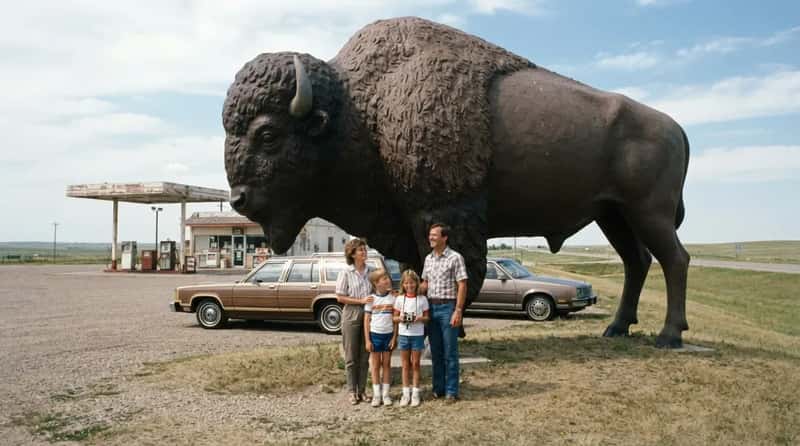
At some point, nearly every small town along a major highway decided the fastest way to get noticed was to build the world’s largest something. A ball of twine, a rocking chair, a frying pan, a buffalo statue towering over a gas station parking lot: the specific object rarely mattered as much as the bragging rights.
Families would detour miles off the interstate specifically to stand next to these oversized objects for a photo, then drive away without ever really understanding why the thing existed in the first place. Many of these “world’s largest” claims were self-declared, with no official body ever verifying the title, which didn’t stop a single town from putting it on their welcome sign anyway.
#6 – The Corn Palace That Rebuilt Itself Every Single Year
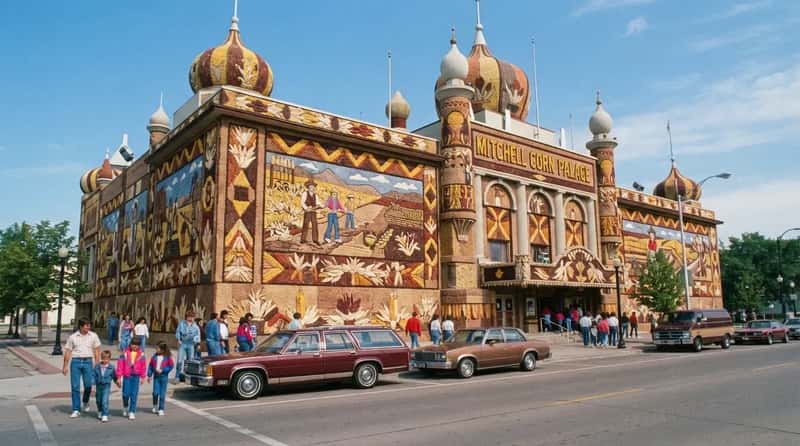
Driving through South Dakota, families would encounter a building that looked like a Moorish palace decorated entirely in corn, and for once, the description was not an exaggeration. The murals covering its exterior were made from actual corn cobs and grains, arranged into elaborate designs that changed with a fresh harvest theme annually.
This wasn’t a one-time gimmick; it was a genuine yearly rebuild, requiring the town to strip and redecorate the entire facade before it faded or rotted. The murals had to be completely redone each year because actual corn does not hold up as permanent siding, a maintenance commitment that turned a strange idea into a genuine local tradition families planned summer trips around.
#5 – The North Pole Theme Parks That Made Christmas Last All Summer
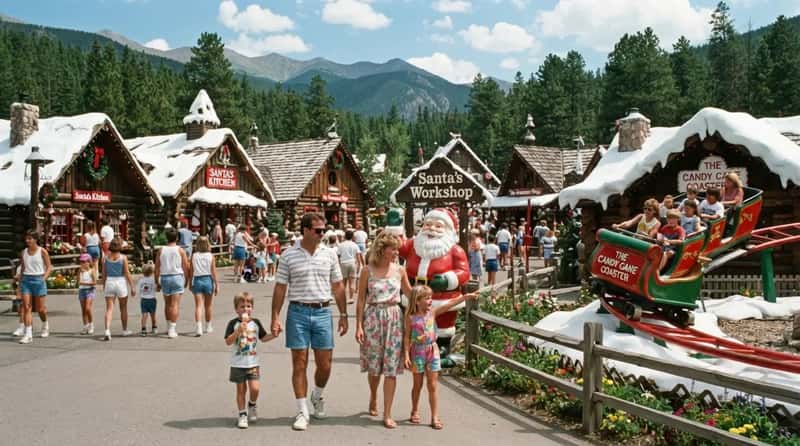
For families driving through mountain towns in July, spotting a theme park dedicated entirely to Christmas felt like stumbling into a fever dream. These small parks let kids visit Santa in the middle of summer, ride a sleigh-themed coaster, and buy ornaments while wearing shorts and flip-flops.
The concept worked because it leaned fully into the absurdity rather than apologizing for it, complete with fake snow machines running in ninety-degree heat. Many of these parks stayed open specifically because summer tourist traffic outpaced actual December visitors, proving that novelty could outsell the calendar every time.
#4 – Cadillac Ranch, the Junkyard Art That Became a Texas Icon
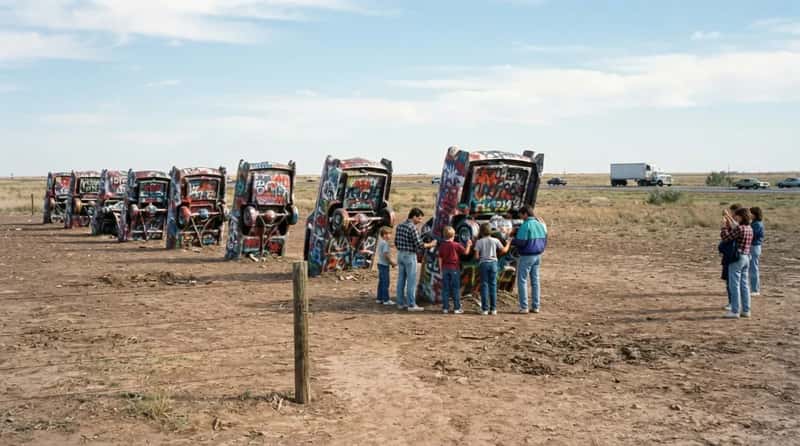
Somewhere along I-40 in Texas, families slowed down for a field that made absolutely no sense at first glance: ten Cadillacs buried nose-first in the dirt. Created in 1974 by Chip Lord, Hudson Marquez, and Doug Michels, the installation lines up cars ranging from 1949 through 1963, all planted at the same tilted angle.
By the 1980s, the tradition of spray-painting the cars had already taken hold, and families would pull cans out of the trunk before even reaching the site. The cars were reportedly aligned at the same angle as the pyramids of Giza, a detail most tourists only learned after they’d already climbed the fence to take a photo. By 2024, the site was drawing more than 1.4 million visitors a year, proof the joke never got old.
Worth Knowing
- Installed in 1974 by artists Chip Lord, Hudson Marquez, and Doug Michels
- Ten Cadillacs, model years 1949 through 1963, buried nose-first
- Cars reportedly tilted at the same angle as the pyramids of Giza
- More than 1.4 million visitors a year as of 2024
#3 – The Blue Whale of Catoosa and Route 66’s Strangest Swimming Hole
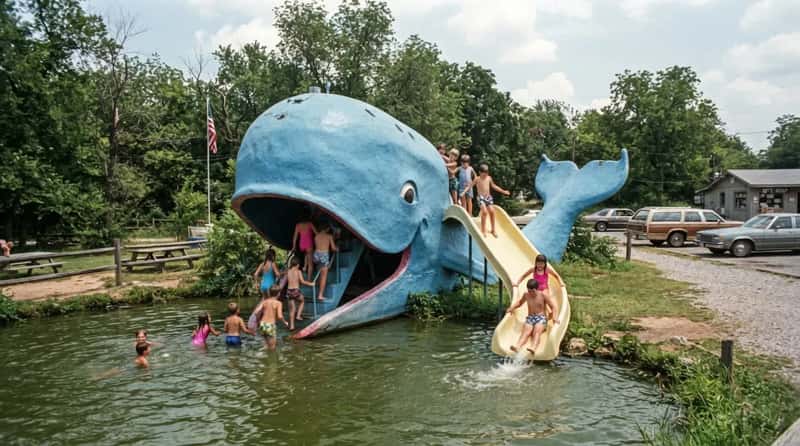
Nothing prepared 1980s kids for rounding a bend on Route 66 and finding an eighty-foot smiling blue whale rising out of a pond in the middle of Oklahoma. It wasn’t a mirage or an amusement park ride; it was a swimming hole built by a retired man as an anniversary gift, and it had somehow become a full-blown roadside stop.
Kids could climb into the whale’s mouth, slide down its tail, and swim in the pond surrounding it, all for free. The entire attraction started as a private gift for one family and only became a public destination almost by accident, which is part of why it felt so charmingly homemade compared to anything corporate.
#2 – Wall Drug, the Middle-of-Nowhere Store That Conquered the World
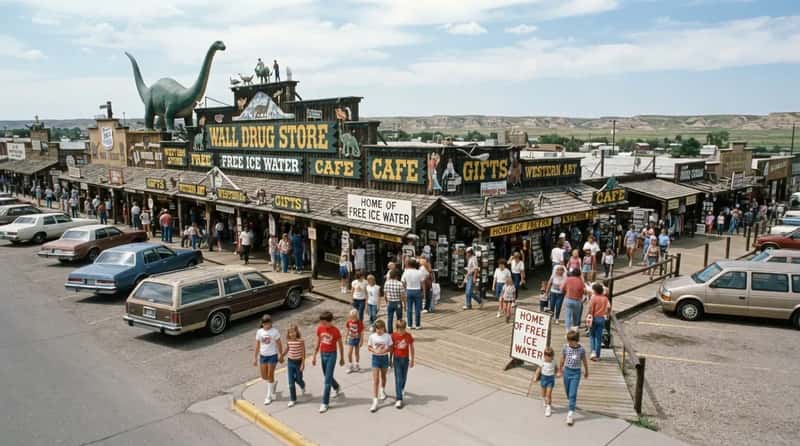
Every family driving through South Dakota in the 1980s had already seen the billboards long before reaching the store, because there was almost no way to avoid them. At its peak in the 1960s, Wall Drug had over 3,000 highway signs scattered across the country, all promoting one simple offer: free ice water.
That single idea, born during the Great Depression when the drugstore was nearly failing, turned a tiny pharmacy into a sprawling tourist empire. The whole phenomenon started because the owner’s wife suggested giving away something for free with no expectation of anything in return, and by the time 1980s families arrived, more than two million visitors a year were stopping for a meal, five-cent coffee, and ice water that was still free.
At a Glance
- Over 3,000 highway billboards at its peak in the 1960s
- Free ice water offer dates back to the Great Depression
- More than two million visitors a year by the 1980s
- Located in Wall, South Dakota, near the entrance to Badlands National Park
#1 – South of the Border, the Wildest Pit Stop on I-95
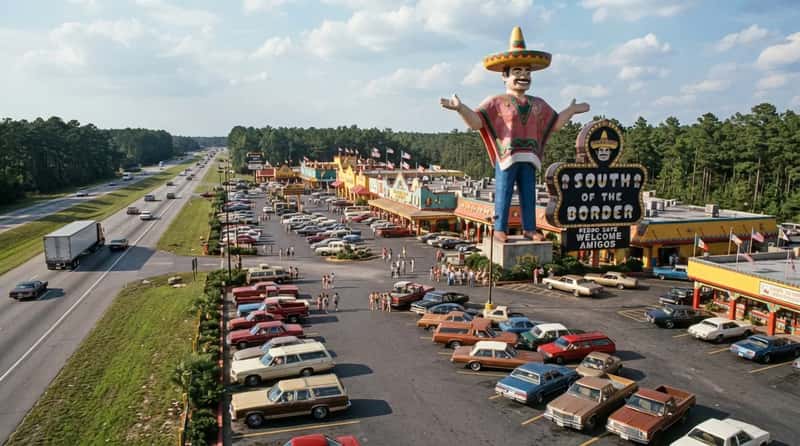
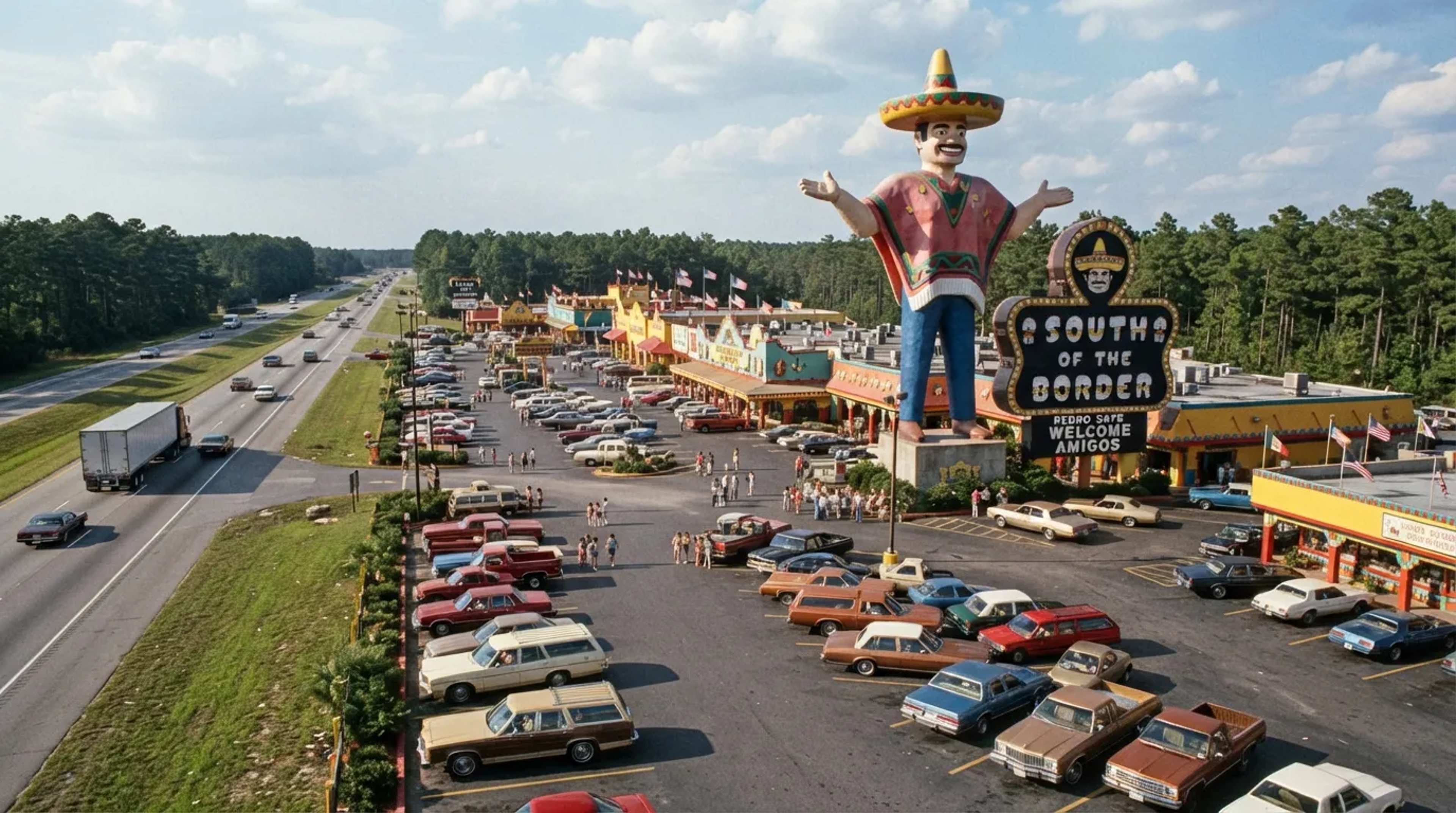
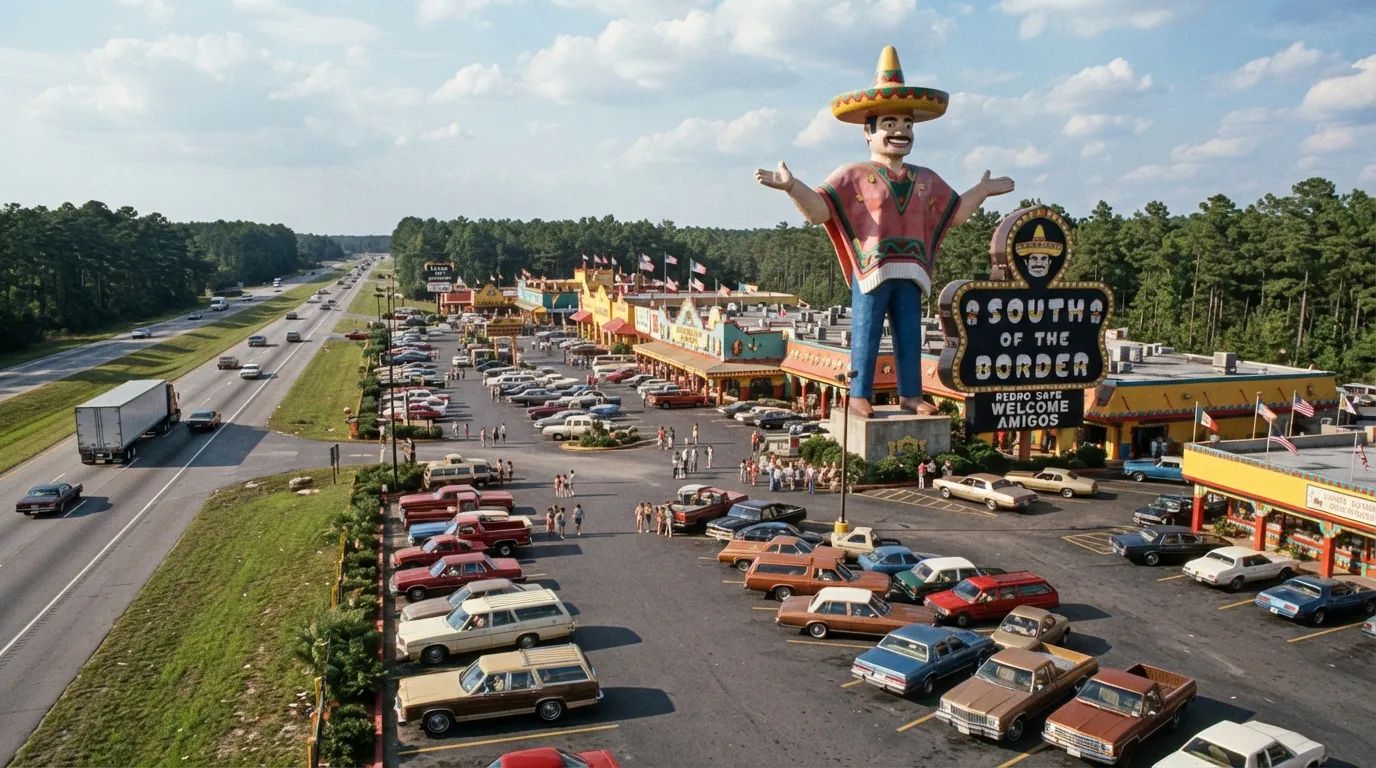
No roadside attraction hit families harder than the moment a hundred-foot neon sombrero appeared over the tree line on I-95. Every traveler knew South of the Border was approaching thanks to its relentless run of nearly 200 billboards strung along 500 miles of interstate, counting down the miles until kids in the back seat were begging to stop.
What started in 1949 as a simple beer stand for travelers dodging North Carolina’s dry counties exploded into a sprawling complex of fireworks stores, mini golf, a motel, and a mascot named Pedro towering over the parking lot. The Pedro statue itself stands 104 feet tall and was once billed as the largest neon sign east of the Mississippi, a claim wild enough that most 1980s families believed it without question. Even in 2026 the place made headlines again after a fire tore through one of its restaurant buildings, proof this strange pit stop refuses to fade quietly into roadside history.
Looking back, the wildest part isn’t that these places existed. It’s how close so many of them came to disappearing entirely without anyone in the back seat ever noticing. Drive-ins lost more than half their locations in a single decade, Stuckey’s shrank from hundreds of stores to a mere handful, and even giants like South of the Border have had to fight for relevance every year since.
What survived did so through pure stubbornness, a good billboard, and families who were still willing to pull over for something strange.