You walk up to the front desk, slide over your ID, sign the folio, and head for the elevator. Nothing feels missing, and that is exactly the problem.
Hotels keep a surprising stash of free extras behind the counter and in back storerooms that never make it into the room by default. Guests over 65 tend to pack light and hate being a bother, so they are the ones most likely to walk right past them.
A few of these items will change how you sleep tonight. One of them can save real money, and the last one is not even an object.
#15 – The Free Toiletry Stash Behind the Counter
Most guests figure the tiny shampoo bottle in the shower tray is the whole toiletry menu. It isn’t, not even close.
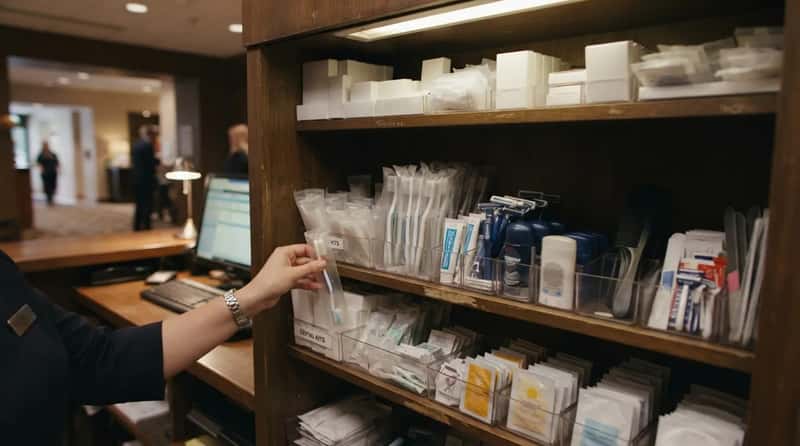
Hotels often keep a backup shelf with toothbrushes, toothpaste, razors, shaving cream, deodorant, combs, and nail files. Many also have sewing kits, and some higher-end properties add lotion, sunscreen, or makeup remover pads.
None of it is advertised. It exists for the guest who realizes at 9 p.m. that the razor is still sitting on the bathroom counter at home.
Travelers over 65 often pack lean to keep luggage manageable, so a forgotten item stings more. Ask at check-in rather than late at night, when the desk is running on skeleton staff.
Forgotten toiletries are the obvious miss. The next one is a modern-day panic button that hotels quietly keep ready.
#14 – Loaner Chargers and Plug Adapters
You packed everything except the one cable that keeps your whole trip connected. Suddenly your phone is at 9%, your boarding pass is on it, and the nearest electronics store is a cab ride away.
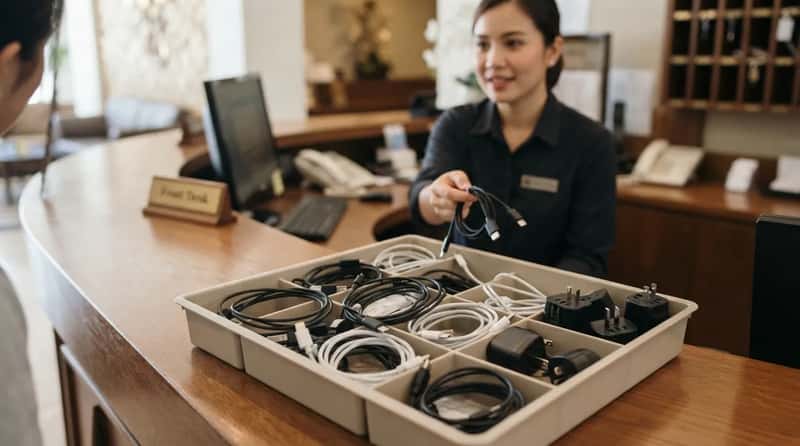
Here is the good news. Guests forget chargers in hotel rooms all the time, so many front desks end up with a box of them and lend them out for free.
Many properties also keep universal plug adapters for travelers coming from overseas. If you are heading abroad, or arriving from another country, that can save a frantic store run on day one.
Most people do not think to ask until the battery is nearly dead. By then the trip already feels a little more stressful than it needed to.
That one is fairly predictable. The next one is aimed squarely at a bad night’s sleep, and hardly anyone thinks to ask for it.
#13 – Extra Blankets and Foam Mattress Toppers
The room is freezing, the blanket is paper-thin, and the thermostat seems to be for decoration. Plenty of travelers lie awake under that exact setup and never say a word.
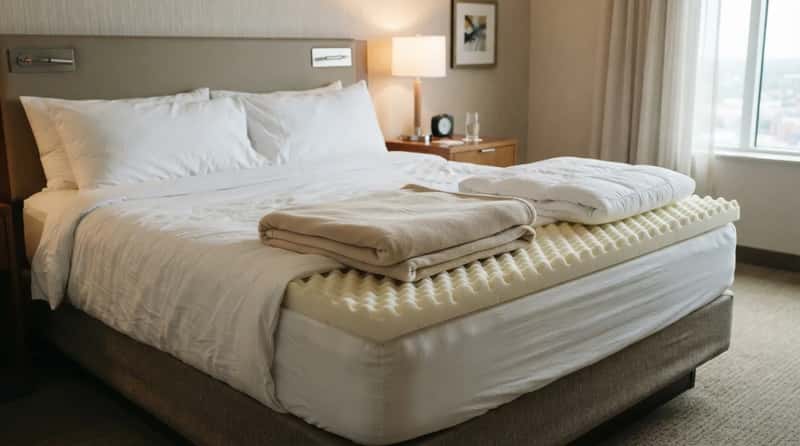
Housekeeping can usually bring extra blankets on request, and many properties stock cotton, fleece, and down-alternative options. You get to choose what feels right instead of shivering through it.
Then there is the item almost nobody knows about. Many full-service hotels keep foam mattress toppers in storage for guests who find the bed too firm.
If you have a sore back or aching hips, that request can turn a stiff, restless night into a real one. It is worth asking for by name when you check in.
Blankets and toppers handle the bed itself. The next item goes after the one thing that decides whether you wake up rested or wrecked.
#12 – The Pillow Menu
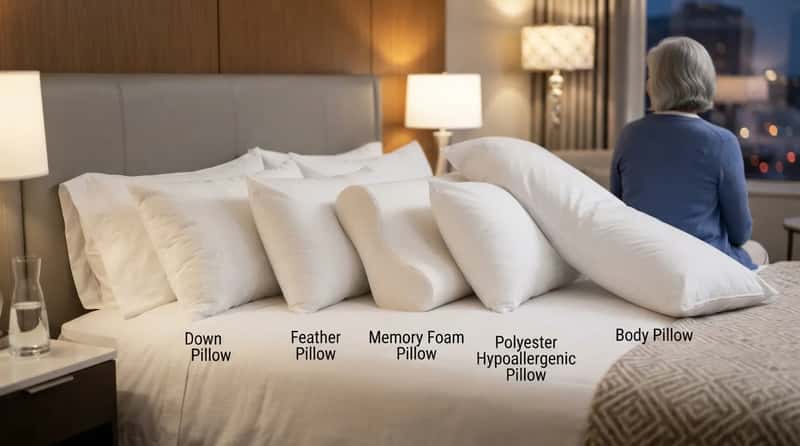
Yes, some hotels really do have a pillow menu. The options can run from ultra-soft to extra-firm, memory foam, down, hypoallergenic, and even body pillows.
Even hotels without a printed menu often have more than one pillow type tucked away. A call to the front desk or housekeeping can get a different one delivered to your room.
Some places even offer lavender-scented pillows for extra relaxation. It sounds fancy, but it is really just a smarter way to sleep away from home.
If you have neck trouble, shoulder pain, or allergies, the right pillow can decide how the whole next day feels. Many travelers simply accept whatever is already on the bed, and pay for it in the morning.
Pillows are personal. The next item fixes something that has nothing to do with comfort and everything to do with noise.
#11 – A White Noise Machine or Small Fan
You are exhausted, the bed is fine, and then the ice machine down the hall starts up. Or the street outside never quite goes quiet.
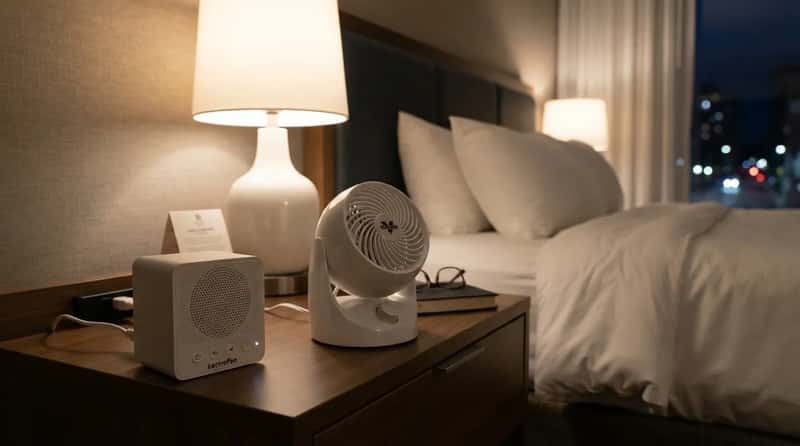
Many hotels will bring a white noise machine straight to your room. Some chains even bundle them into sleep kits with eye masks, lavender pillow spray, and earplugs.
Other properties can send up a small fan, a humidifier, or an air purifier. A fan does double duty, moving air while creating steady background sound that drowns out corridor thuds and slamming doors.
Quick Compare
- White noise machine: steady sound built to mask hallway and street noise.
- Small fan: moves stale air and adds a constant hum.
- Sleep kit: some chains pair the machine with an eye mask, pillow spray, and earplugs.
Plenty of travelers tough out a noisy night rather than pick up the phone. It takes one short call to change that.
The next item is one that many travelers quietly need and are far too shy to mention.
#10 – A Mini Fridge for Medication
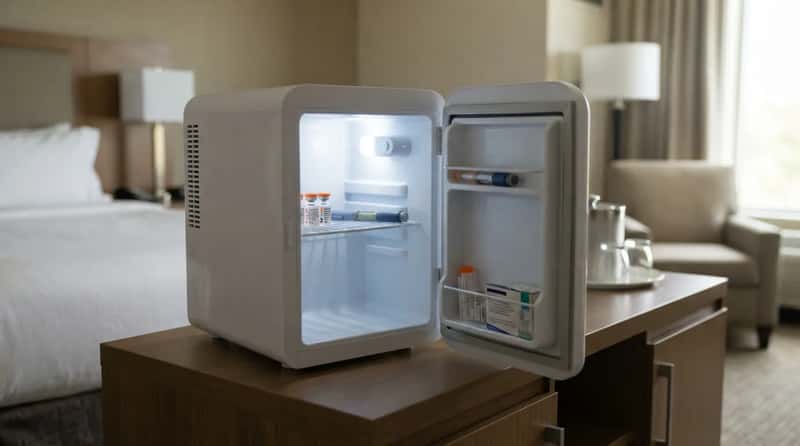
Imagine standing at the front desk with a pen of insulin in your bag and no idea where to keep it cold. That moment of low-level dread is more common than most people admit.
Many hotels keep extra mini refrigerators in storage and will deliver one to your room, often at no charge. They are especially willing when the fridge is needed to store medicine.
The trick is timing. Call two or three days ahead and say: “I travel with medication that needs refrigeration. Can you arrange that before I arrive?”
At a full-service hotel this is a routine request. It just needs to reach the right person before you are standing in the lobby with a suitcase.
That request is practical, even essential. The next one is about the weather, and the pricey mistake most people make when it turns.
#9 – A Loaner Umbrella
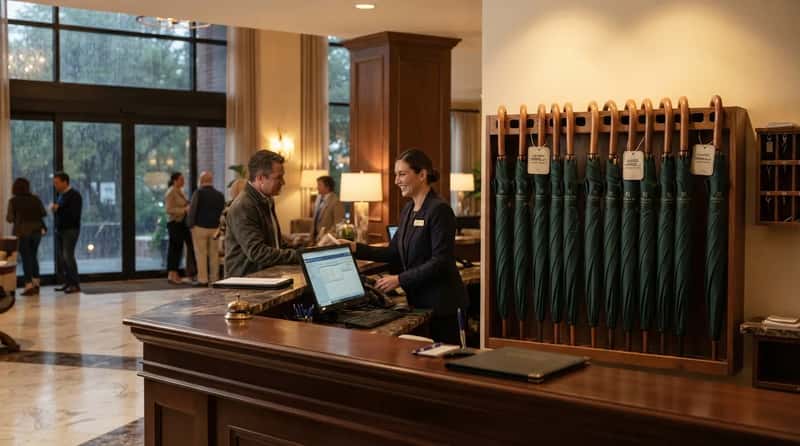
The sky opens up just as you step out for dinner. Most people sprint to the nearest convenience store and pay for an umbrella they do not want.
Meanwhile, many front desks and concierge stands keep a rack of loaner umbrellas for exactly this moment. The catch is easy: bring it back when the weather clears.
A sudden downpour is especially annoying when you are dressed for a nice restaurant, a museum, or a family event. Getting soaked, or waiting it out in the lobby, is not the only option.
The umbrella has probably been sitting behind the desk the whole time. It is waiting for someone to ask.
That one is almost too simple. The next one is easy to overlook, yet it can decide whether you sneeze your way through the night.
#8 – Hypoallergenic Bedding
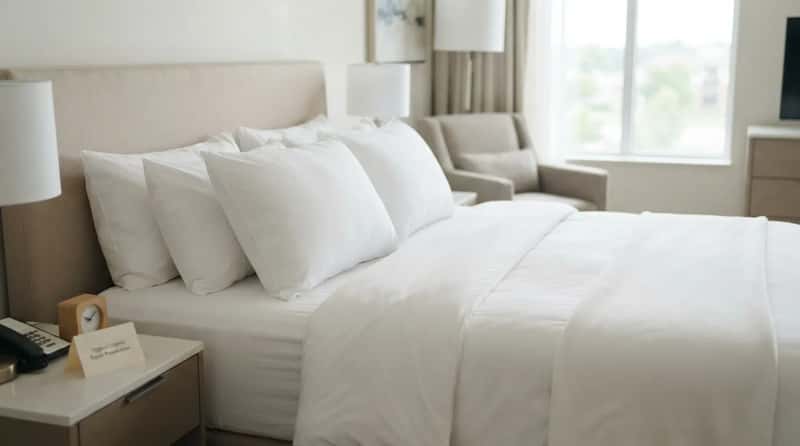
You climb into a fresh hotel bed, and twenty minutes later your nose is running. It is easy to blame a cold, or the air, or just being away from home.
Dust mites, feather sensitivities, and skin reactions to standard bedding are common problems. Many mid-range and upscale hotels stock hypoallergenic pillows, pillowcases, and blankets, but rarely advertise them.
One call before or at check-in is usually all it takes. If the request is made early, the room can be ready before you arrive.
Worth Knowing
- Ask for pillows, pillowcases, and blankets, not just one of the three.
- Mid-range and upscale hotels are the likeliest to have them in stock.
- Calling before arrival gives housekeeping time to prep the room.
- If you are sensitive to feathers, say so plainly when you ask.
Many travelers never make that call. They take an antihistamine, wake up sneezing, and assume that is just how hotels are.
The fix has often been sitting in a linen closet down the hall. Next up is a wardrobe emergency that has ruined more than one evening out.
#7 – A Sewing Kit and Clothing Rescue Items
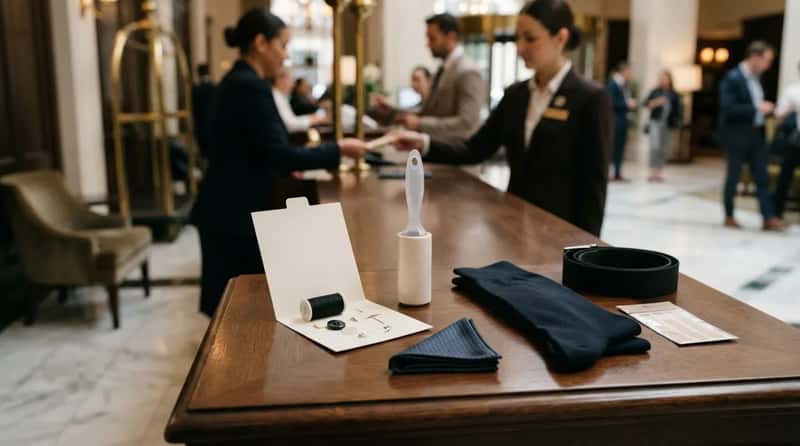
You are dressed for a wedding, a milestone dinner, or a cruise embarkation, and a button pops off. Ten minutes before you have to leave, that tiny thread becomes a very big deal.
Many hotels keep “wardrobe rescue” supplies for exactly this. Sewing kits and lint rollers are the most common, and some properties can also lend ties, dark socks, belts, or fashion tape.
Some concierge teams will even help with a bow tie or discreetly reattach a button. It is old-school service that still quietly exists.
Most guests safety-pin their way through the night instead. Or they skip the occasion altogether when a two-minute request would have solved it.
Clothing sorted. The next item is about safety, not comfort, and it is easy to miss until you are standing in a slippery tub.
#6 – Non-Slip Bath Mats and Bathroom Safety Gear
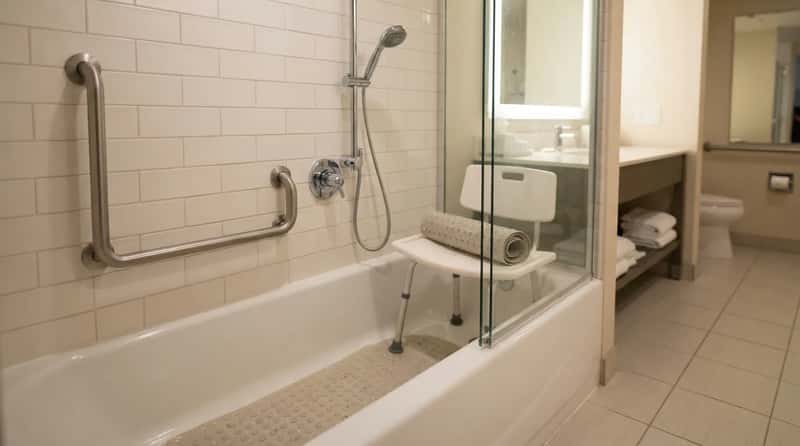
Nothing feels riskier than stepping into an unfamiliar tub with wet feet. Slippery surfaces are a well-known fall risk for older adults.
Many full-service hotels keep extra non-slip mats and rubberized tub liners in storage, available to any guest who asks. Depending on the property, staff may also be able to offer things like a handheld shower head or a shower chair.
Federal ADA rules require hotels to give travelers with disabilities enough information about accessible rooms and features to decide whether a room meets their needs. So it is reasonable to ask about bathroom features at booking, not just at the desk.
The reluctance is understandable, because nobody wants to feel vulnerable at the start of a trip. Framing it as a preference, like “I would like a non-slip mat in the tub,” usually gets the same result without any awkwardness.
Safety covered. The next item is one most people never connect to their morning misery.
#5 – A Humidifier
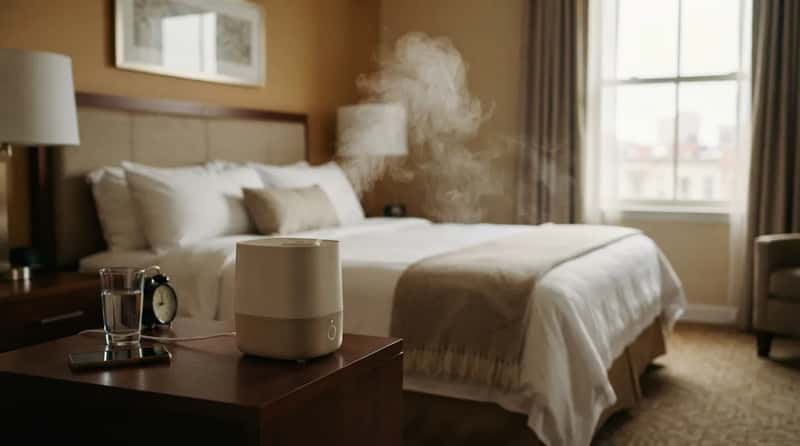
You wake up with a scratchy throat, a stuffy nose, and a vague sense that you are coming down with something. Odds are it is the air, not a cold.
Hotel rooms with forced-air heating, or in high-altitude and dry climates, can get very dry overnight. Dry air can irritate the nose and throat, aggravate asthma, and leave you feeling dehydrated.
Some hotel brands, Kimpton and Omni among them, list humidifiers, noise machines, or sleep kits as items guests can request. Even at other hotels, it is worth asking whether one is in storage.
Most travelers reach for a decongestant or another glass of water instead. They never connect the symptom to the room, so the humidifier just sits there.
That is a health item with real consequences. The next one is about your feet, and the long walk they are quietly dreading.
#4 – A Room Close to the Elevator
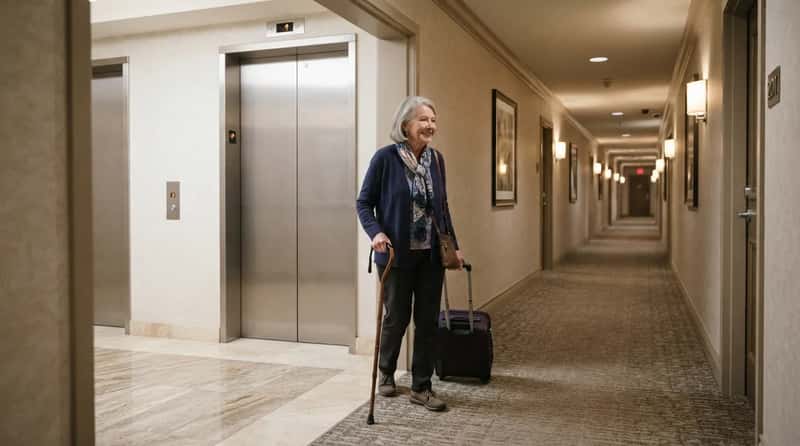
Picture the walk: a long corridor, a rolling suitcase with one wobbly wheel, and a knee that has already had enough. Now picture the same trip with a room just steps from the elevator.
You do not have to wait for a staff member to notice you limping. You can simply ask for a room near the elevator at check-in, and in many cases the request can be granted.
Room location is usually just a matter of what is open in the system. Many hotels can accommodate it without an upcharge, though it depends on availability.
Guests with a cane, a bad hip, or simply a preference for shorter walks are exactly who benefits. Yet many never ask because they do not want to draw attention to a limitation.
Location matters. The next item solves a problem that has grown quietly in recent years, and almost nobody thinks to ask about it.
#3 – A Hand-Marked Paper Map of the Neighborhood

Hotel technology has gotten complicated for everyone. Digital room keys, app-controlled thermostats, QR-code menus, keypad safes, and TVs with four remotes are not exactly intuitive.
Navigation has gone the same way. Many hotels have shifted to concierge apps and QR-linked city guides.
But plenty of front desks still keep printed maps and will mark them up by hand with restaurants, transit stops, and walking distances. It is one of the oldest forms of hotel service, and it still exists for anyone who asks.
A paper map never runs out of battery or loses signal in a strange neighborhood. That can save you an anxious hour of being turned around after dark.
At a Glance
- Staff can mark restaurants, transit stops, and walking distances by hand.
- No battery, no signal, and no app to download.
- Best requested at check-in, before you head out for the first time.
- Ask which streets to skip after dark, too.
The front desk already has it. You just have to ask.
The next two slots are the ones that matter most. The first one affects your wallet.
#2 – The Senior Rate Nobody Mentions
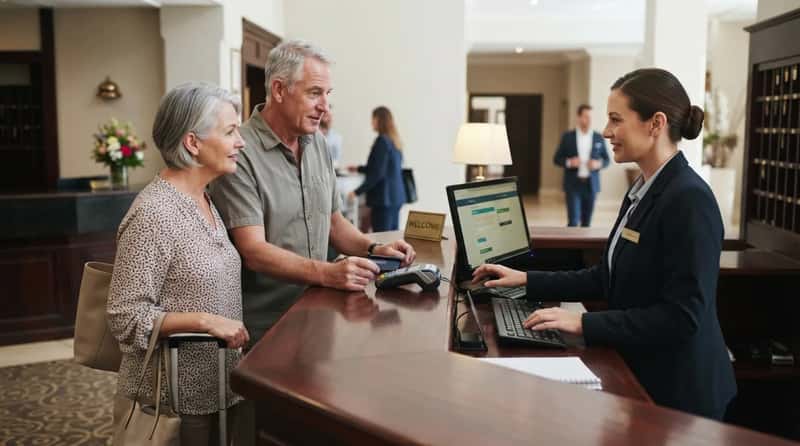
Here is the one that makes hotel insiders shake their heads. A discount can exist, be loaded into the system, and still never be offered to the person who qualifies.
Wyndham, for example, has offered senior discounts for guests 60 and older. AARP members also get hotel discounts at several major chains, though age cutoffs, percentages, and participating properties vary.
Many senior and member rates do not show up front and center on public booking pages. A guest who does not ask may simply pay the standard rate and walk to the room without knowing there was a cheaper option.
Fast Facts
- Wyndham has offered senior discounts to guests 60 and older.
- AARP membership is open to anyone 50 or older.
- Percentages and participating hotels differ from chain to chain.
- Some rates must be booked through a specific channel.
The fix is one sentence at check-in or booking: “Do you have a senior rate or an AARP discount available?” Sometimes the adjustment happens on the spot, and sometimes the rate has to be booked through a specific channel.
Either way, not asking guarantees you will not get it.
That is money. But the last item is the one front desk staff would love every solo older traveler to request, because it changes how the whole stay feels.
#1 – A Named Person to Call

The most valuable thing on this list is not an object. It is a person.
When you arrive, ask who you should contact if you need something after hours. A good front desk or concierge will give you a name, and you will suddenly have a familiar face instead of a faceless building.
It matters in practical ways, too. When you have a late-night question about medication storage, need an extra blanket, or cannot get the thermostat to cooperate, one person who knows your name makes it easier to ask.
For someone traveling alone, perhaps for the first time in years, that small connection can matter more than any pillow or umbrella. It turns “stranger in a building” into “guest who is being looked after.”
No amount of packing or googling can replace it, and it exists only if you ask.
The Bottom Line
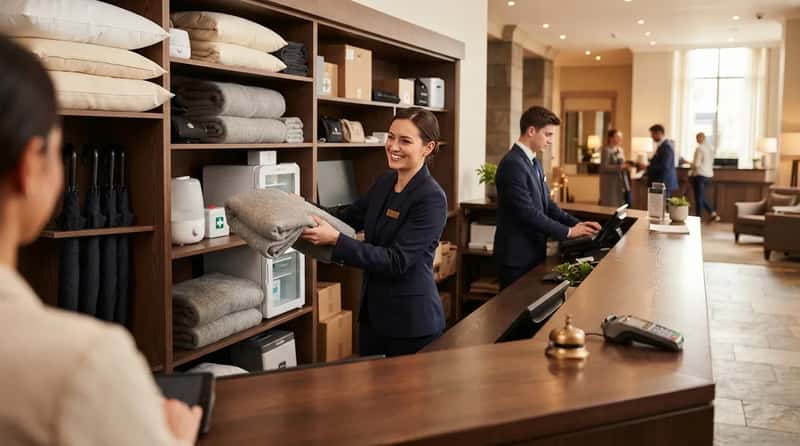
Behind almost every hotel desk sits a quiet collection of small comforts: blankets, pillows, humidifiers, hypoallergenic bedding, umbrellas, sewing kits, medication fridges, and senior rates. Most of them are free, and all of them are easy to miss.
These are not secret loopholes or clever hacks. They are ordinary requests that front desk teams handle every day, when someone thinks to make them.
Next time you check in, do not just hand over your ID and head for the elevator. Say one sentence out loud, and you may be surprised how much was waiting behind that counter.
#16 – The Bonus Tip Nobody Shares

Make the request before you arrive, and make it to the hotel itself. A note typed into a third-party booking site does not always reach the people who can act on it.
Here is the simple routine that gives every item above its best chance of being ready when you walk in:
- Call the hotel’s local front desk number. Skip the toll-free reservation line, since that agent usually cannot see what is in the storeroom.
- Call two or three days before arrival, mid-morning. The desk is generally calmer then than during the afternoon check-in rush.
- Bundle your asks into one short script. For example: “I am arriving Friday. Could you note a room near the elevator, a firm pillow, a non-slip tub mat, and ask whether a senior or AARP rate applies?”
- Get a name and confirm by email. Ask who took the request, and send a two-line email so it is in writing.
At check-in, greet that person by name and say, “We spoke on the phone about a few requests.” Staff who already know what you need tend to handle it faster, and you never have to ask a stranger twice.
Bonus rule: if a request cannot be met, ask what the hotel can offer instead. A polite, specific alternative often works.