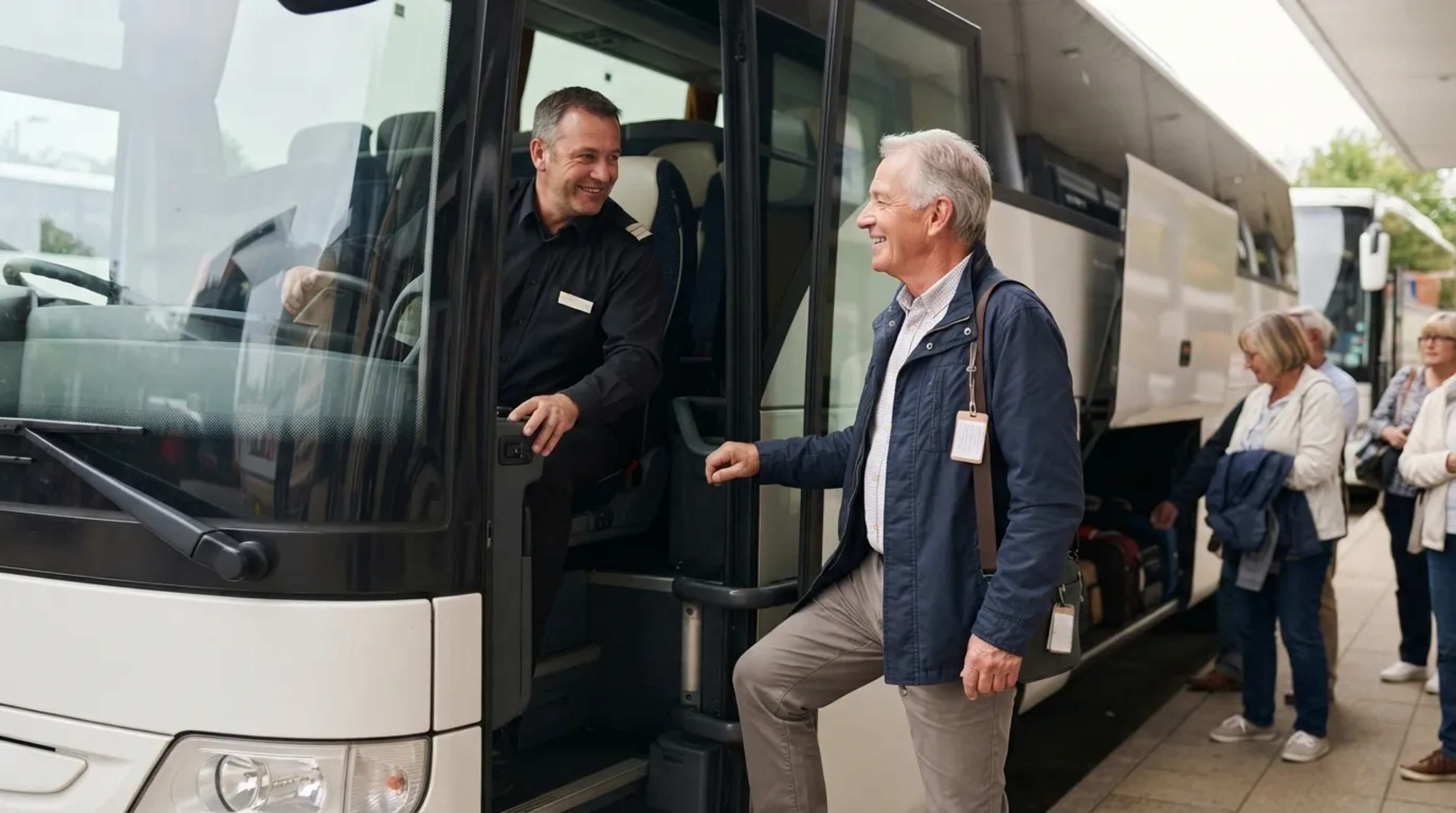
You probably think the driver is just watching the road. In reality, the first twenty minutes of a coach trip are when many drivers quietly size up the whole group, and the older passengers often get a kinder read than you’d expect.
Nobody hands drivers a rulebook for this. These are patterns drivers often describe, not hard research. But they explain strange little things you’ve seen on a bus, like why the driver repeats the return time three times, or why a hand appears at the bottom step. The verdicts are more practical, and more flattering, than most people guess.
#15 – The Doorway Scan Starts Before Anyone Boards

The driver’s read begins while you’re still on the curb. A driver loading luggage can pick up a group’s pace, patience, and packing habits within minutes. They notice who is hauling a heavy bag alone, who is helping a spouse, and who already has a ticket in hand.
This isn’t about age as a label. It’s about workload. A coach driver has a schedule, a headcount, and a cargo bay to fill, so a calm group makes the whole morning feel lighter. A lot of that first impression is just logistics in disguise.
The very next judgment happens even earlier, and it’s usually a compliment…
#14 – Showing Up Early Earns Instant Goodwill
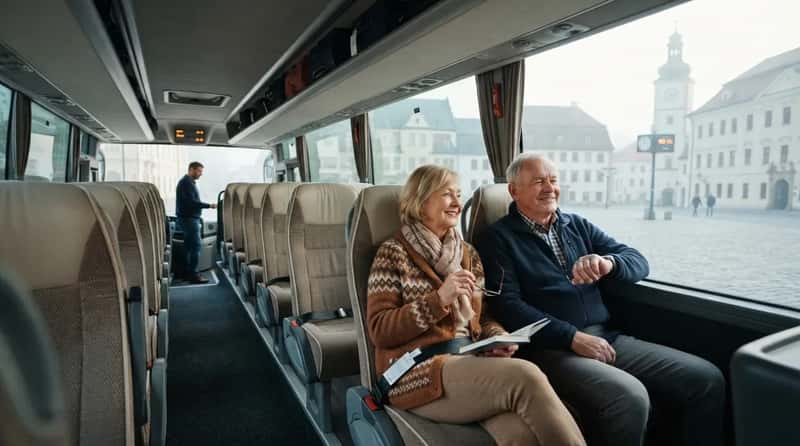
Here’s the verdict that surprises people: drivers often notice that older travelers are among the first at the pickup point. Being early is one of the cheapest ways to win over a driver. It means the departure clock isn’t already ticking against them before the engine starts.
Drivers work to tight schedules, and one late group can ripple through the whole day. The early arrival gets a mental gold star. Many drivers say they remember exactly who made their morning easier.
But that goodwill can wobble over one thing at the luggage bay…
#13 – The Suitcase Verdict Is Made in Seconds
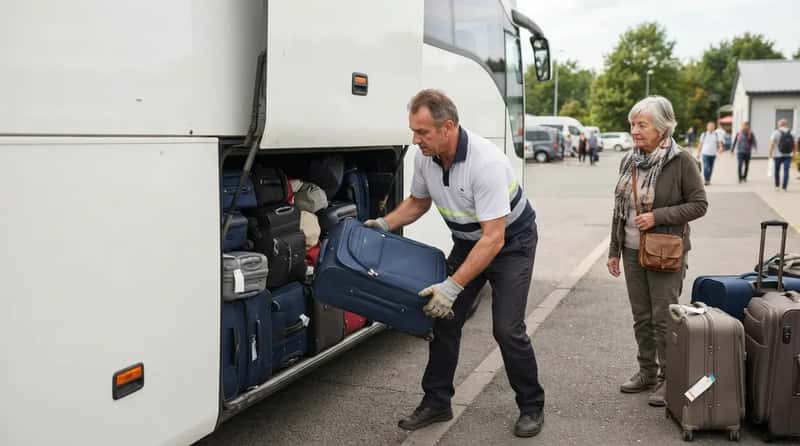
Drivers grade luggage the way pilots grade weather. A single oversized bag can slow the loading of an entire coach. The cargo bay under the floor only holds so much, and the driver has to make everyone’s bags fit like a puzzle.
A clearly tagged, sensible bag gets a nod. Five bags per person gets a sigh. Drivers also notice travelers who carry a small day bag with medications, glasses, and snacks. To a driver, that says this passenger has done this before.
Wait until you see what the driver reads from where people choose to sit…
#12 – The Front-Seat Rush Tells Drivers a Lot
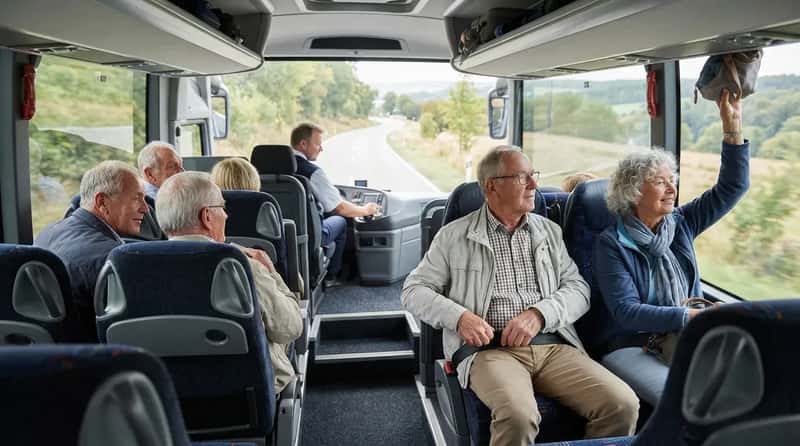
Many older travelers head straight for the front rows, and drivers have a theory about why. Most people assume it’s about being first off the coach. Often it’s about the ride. The front can feel smoother for anyone prone to motion sickness, and it’s closer to the steps.
The front also makes it easier to hear the guide and see the road ahead. A passenger who picks a seat on purpose usually gets read as someone who knows their own needs. Some drivers even joke that the back-row crowd causes more trouble than the front-row crowd.
At a Glance
- Front rows: shorter walk to the steps and a clearer view of the road.
- Middle rows: often a calmer feel, though the sound from the speakers can be uneven.
- Back rows: usually closest to the restroom, and the ride can feel bouncier.
- The driver’s read: a seat chosen with purpose looks like experience.
Still, not everyone in the front row can hear what’s being said, and drivers know it…
#11 – Drivers Test Who Can Hear the Microphone
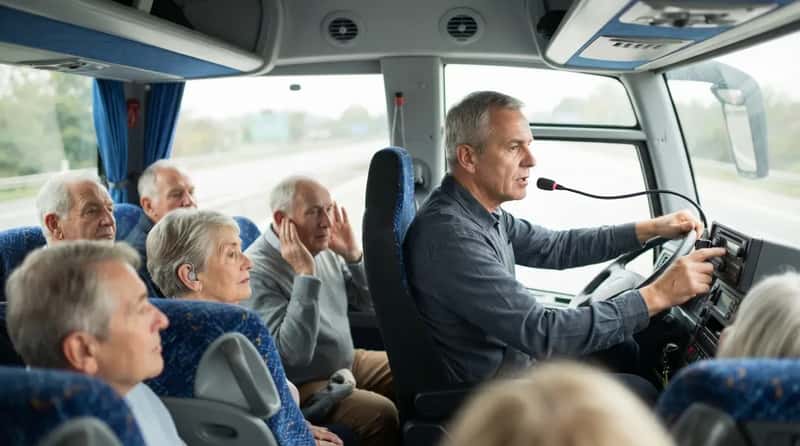
During the very first announcement, drivers watch faces. A blank look usually means the sound didn’t carry, not that the passenger wasn’t listening. Coach speakers are uneven, and engine noise swallows the low tones.
Experienced drivers often repeat the key details, like the return time and the bus number, then say them again at the stop. Some write them on a card or board by the door. That one habit prevents more missed departures than any alarm.
Next comes the moment drivers hold their breath, and it’s physical…
#10 – The First Step Is Where Drivers Decide to Hover
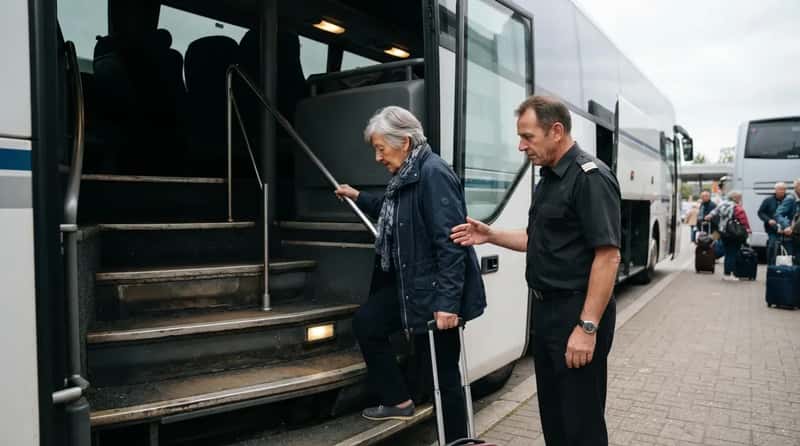
Coach steps are tall and narrow, and drivers know it. The first step into a motorcoach is something many drivers watch like a hawk. They aren’t judging anyone. They’re picturing the fall they hope never happens.
A driver who steps off to offer a hand isn’t assuming you can’t manage. Rails get slick in the rain, and a bag in one hand changes everything. Under U.S. Department of Transportation rules, large over-the-road bus operators must provide wheelchair lift service with advance notice, generally 48 hours. Drivers say the travelers who plan ahead are the easiest to help.
Fast Facts
- Coach steps are steeper than most home staircases, so drivers watch the first one closely.
- A wet rail or a bag in one hand is what usually prompts the offered hand.
- Lift service on large coaches generally needs about 48 hours of notice.
- Handing your bag to the driver first leaves a hand free for the rail.
The next judgment has nothing to do with legs, and it often gets the stereotype backward…
#9 – The Smartphone Assumption Gets It Wrong

Some drivers walk up expecting trouble with digital tickets and boarding apps. Then plenty of older passengers pull up a QR code before the driver finishes asking. The idea that seniors can’t handle tech is one many drivers say they’ve had to drop.
Here’s the part that stirs debate: some drivers argue the real tech struggles come from younger travelers with dead phones. Others say a paper backup still saves the day for everyone. Either way, the stereotype tends to fade within a few boardings.
The next forecast is the one drivers plan their whole route around…
#8 – Drivers Quietly Count Restroom Stops Before You Ask
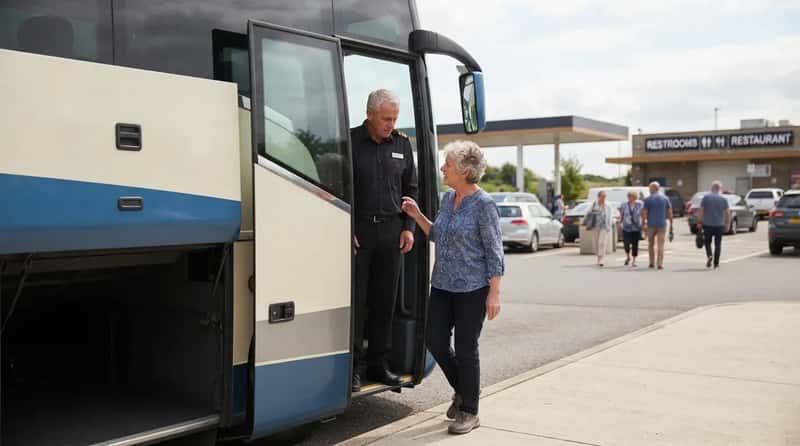
Ask a veteran driver and they’ll tell you the day’s schedule is really a restroom schedule. Many coaches have an onboard restroom, but drivers still plan regular stops for comfort. Older groups often appreciate a steadier rhythm of them, and good drivers build that in without making it a big deal.
The ones who get it right earn quiet loyalty. The ones who rush it hear about it all day. Most travelers never see this planning, which is why a stop sometimes appears right when you start to wonder.
And that leads to a small object that says more than you’d think…
#7 – The Water Bottle Is a Clue Drivers Read

A passenger holding a refillable bottle gets a thumbs-up in a driver’s head. Some travelers skip drinking on bus days to avoid restroom stops. Drivers know that’s a bad trade, especially in summer heat.
The National Institute on Aging notes that the sense of thirst can fade with age, so feeling thirsty isn’t a reliable signal. Drivers who’ve watched someone go dizzy at a rest area tend to remember it. A steady sip habit tells them the passenger plans to arrive in good shape.
But hydration is only half of the body-care story…
#6 – Walking Laps at the Rest Stop Earns Respect
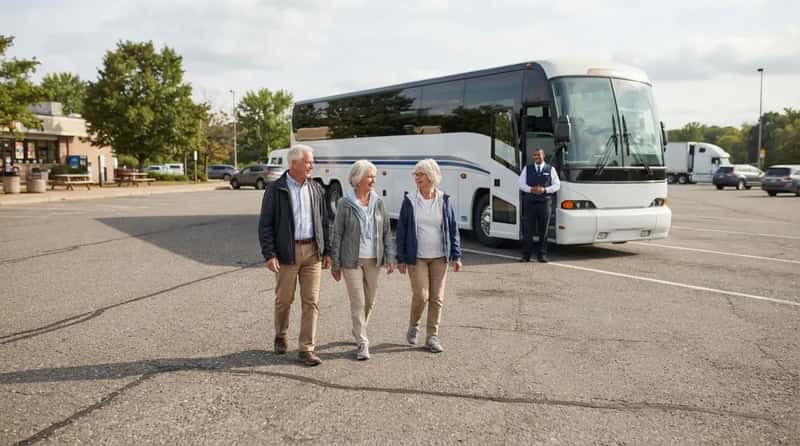
When a few older passengers hop off and walk a lap of the parking lot, drivers notice. CDC travel guidance on blood clots suggests getting up and moving around every two to three hours on long trips. Sitting for hours is exactly what that advice is meant to counter.
Drivers often point out that the walkers are the ones who step back on looking fresher. They also tend to return on time, which matters more than anything. Some drivers see a lap-walking group as the sign of a trip that will go smoothly.
Worth Knowing
- The CDC’s advice is to move every two to three hours on a long trip.
- A lap of the parking lot counts, and so does a slow walk to the restroom and back.
- Flexing your ankles and calves in your seat helps between stops.
- Setting a phone alarm for the return time makes a lap easy to fit in.
That punctuality is the next verdict, and it can make or break the day…
#5 – The Return-Time Reputation Gets Set at the First Break
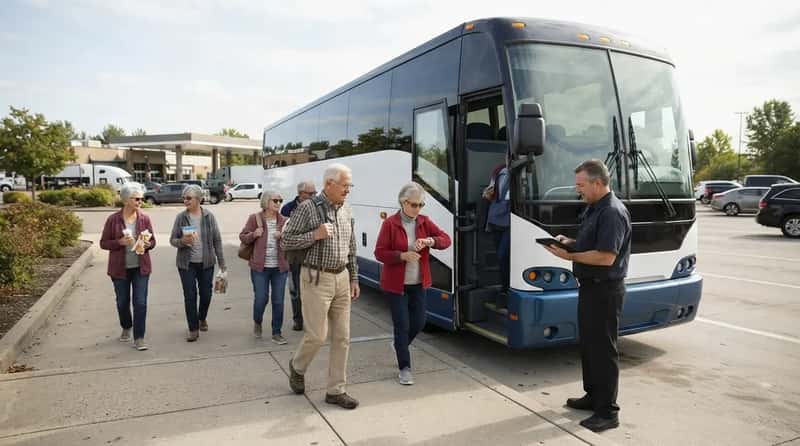
The first rest stop is a pop quiz, and drivers know it. A group that’s back on board early at the first stop often stays on schedule all day. A group that drifts back late sets a very different pattern.
Drivers aren’t being picky. Their hours are regulated, and delays eat into legal driving time. Many tour drivers say older travelers are often the most reliable about return times. They’ve learned the hard way what a missed departure costs.
Right behind the clock comes the one fight no driver can win…
#4 – The Thermostat Is the Real Test of Patience
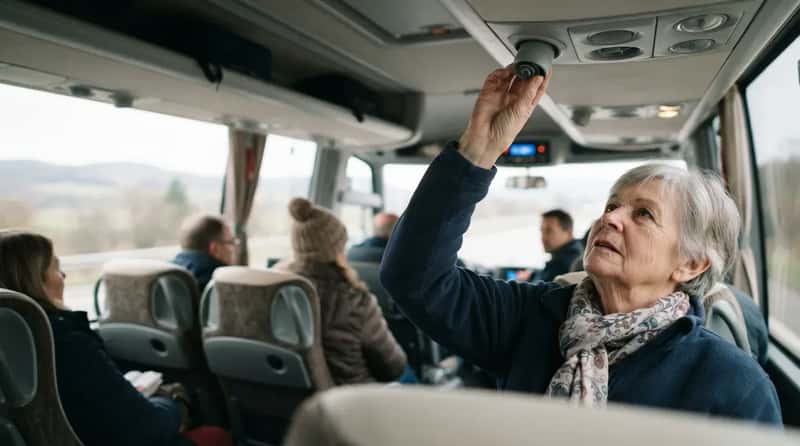
Every driver can predict the first complaint. It’s almost never about the route. It’s about the temperature. One person is freezing, the next is sweating, and the driver is stuck in the middle with a single dial.
Drivers tend to spot early who the thermostat captain will be. Here’s a take that starts arguments: many say the best fix is blankets and layers, not a cabin-wide change. Some older travelers do feel the cold more, and good drivers listen without taking sides.
Quick Compare
- Changing the dial: fixes it for one person and often annoys the next row.
- Adding layers: a light jacket or scarf solves it without bothering anyone.
- Asking the driver: works best early, before the cabin has settled into a mood.
But the quiet safety habit at #3 might be the one that matters most…
#3 – Drivers Notice Who Clicks the Seat Belt
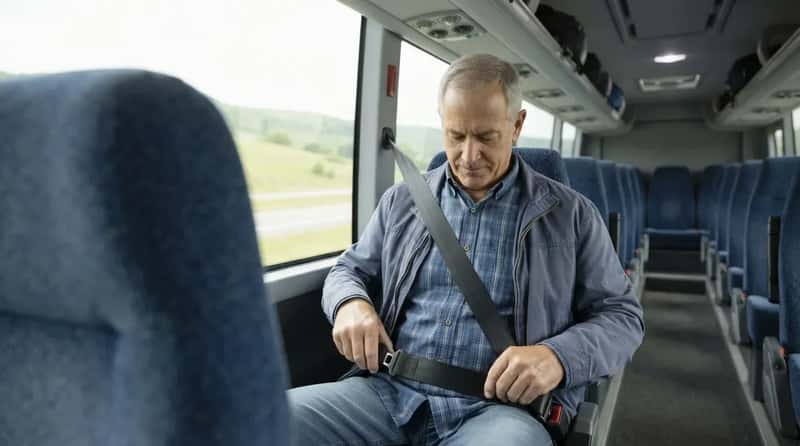
It’s a small sound, and many drivers listen for it. Motorcoaches built after November 2016 are required to have lap-shoulder belts at every seat. Drivers know belts matter, and they notice who buckles up without being told.
Plenty of travelers still treat coach belts as optional, because older buses didn’t have them. Drivers who see someone buckle right away tend to read that person as careful. It’s a tiny habit that cuts through the noise of a big group.
Next, drivers form a judgment about money, and it’s the one nobody talks about…
#2 – The Tip Envelope Is Judged Quietly and Fairly

On group tours, tipping the driver is customary, and drivers do notice. Many say they remember the person who handed over an envelope with a handwritten thank-you. The gesture often counts for more than the amount.
Here’s an opinion that draws heat: some drivers say older travelers tip more thoughtfully, with notes and eye contact. Others say tipping habits have nothing to do with age. Both camps agree that tour companies should make the custom clearer so no one has to guess.
But the judgment drivers hold onto longest has nothing to do with money…
#1 – The Hello at the Door Is the Verdict That Lasts
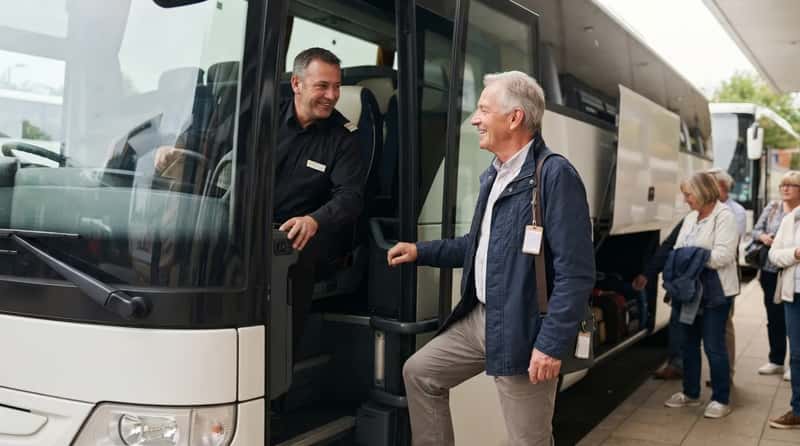
The strongest judgment drivers form is the simplest one. Many say the passengers they remember best are the ones who looked them in the eye and said hello. A driver spends hours with their back to the group, carrying everyone’s safety.
Older travelers are often the ones who ask the driver’s name, say good morning, and thank them at the end. It’s a small thing. Drivers say it changes the mood of the entire coach, which is why a first impression can last a whole trip.
The shocking part isn’t that drivers judge. It’s how practical the judgments are. Early arrival, a tagged bag, an ear for announcements, and a steady step all signal a smooth day.
These impressions aren’t a scientific survey, but they point to the same habits again and again. The stereotype that drivers dread older passengers is one many drivers push back on themselves. In the end, they’re reading logistics, comfort, and courtesy, and a simple good morning still beats all three.