You’d think a cruise sommelier would need a bottle in hand to form an opinion about your table. Not even close. By the time the bread basket lands, the person pouring your wine has often noticed who sat down first, who reached for the list, and who suddenly got very interested in the napkin.
None of it is cruel, and a good sommelier isn’t keeping score. Wine staff are reading the room so they can set the pace and guess how much guidance you want. Some of these tells you’d predict. A few are the exact opposite of what you’d expect, and one near the end changes how you’ll look at a half-empty bottle forever.
#15 – The Drink Order That Lands Before Anyone Opens the Menu
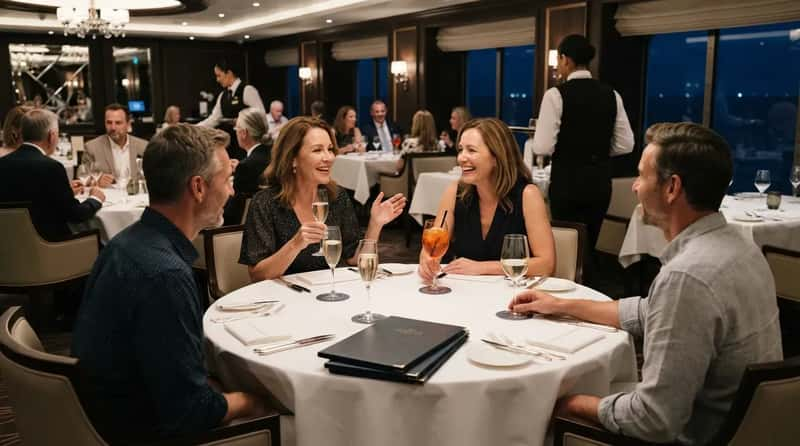
The order of your first requests tells staff a lot. A table that calls for drinks before anyone has opened a menu is usually after a relaxed, social night. The steward keeps things easy and flowing, and nobody launches into a three-course pairing speech at people who just want to catch up.
The opposite table gets read too. Guests who go straight to the menu are often building the meal around a bottle, which is the cue to offer pairing ideas before the food order locks in. Same dining room, same wine list, two very different evenings. And what’s in someone’s hand a minute later says even more.
#14 – Stem or Fist: What the Way You Hold the Glass Secretly Signals
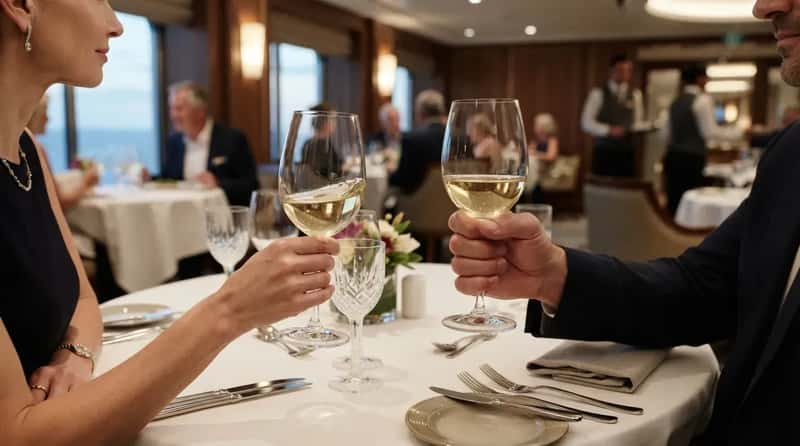
Hands tell a story. A guest who holds the glass by the stem usually has some wine experience, while someone wrapping a fist around the bowl is probably relaxed about the whole ritual. Staff register it in half a second, and it nudges how much explaining they do.
Here’s the part most people don’t realize. Neither grip is a mistake, and good sommeliers don’t judge you for either one. The glance is about calibrating service, not grading you. The bigger tell comes when the wine list hits the table and everyone’s eyes start to wander.
#13 – The Person the Whole Table Quietly Looks At When the Wine List Arrives
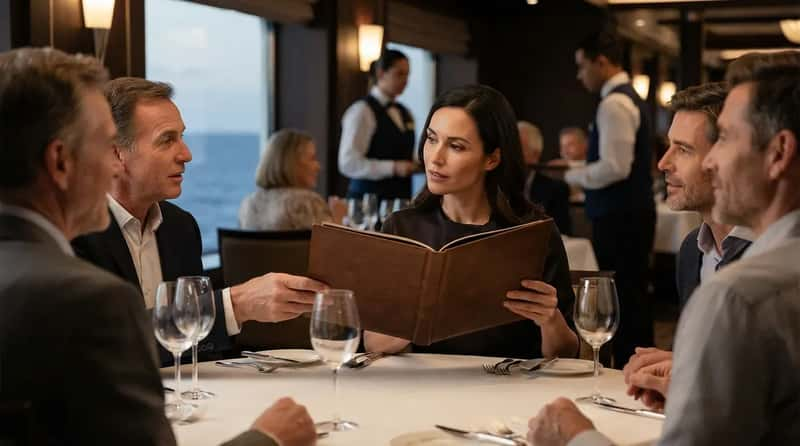
Every party has an unofficial wine person. Sometimes it’s the loudest guest at the table. Sometimes it’s the quiet one who gets handed the list without a word, as if the job was assigned years ago.
Worth Knowing
- The person holding the list isn’t always the person paying.
- The host and the true wine lover can be two different guests.
- Experienced staff often speak to both so nobody feels skipped.
- A quick question like “Who’s choosing tonight?” can settle it gracefully.
Sommeliers watch for that handoff because it tells them who to talk to. But the designated expert isn’t always the real decision-maker. Then there’s the question of whether the party already did its homework before sitting down.
#12 – The Wine Package Question Everyone Waits Too Long to Ask
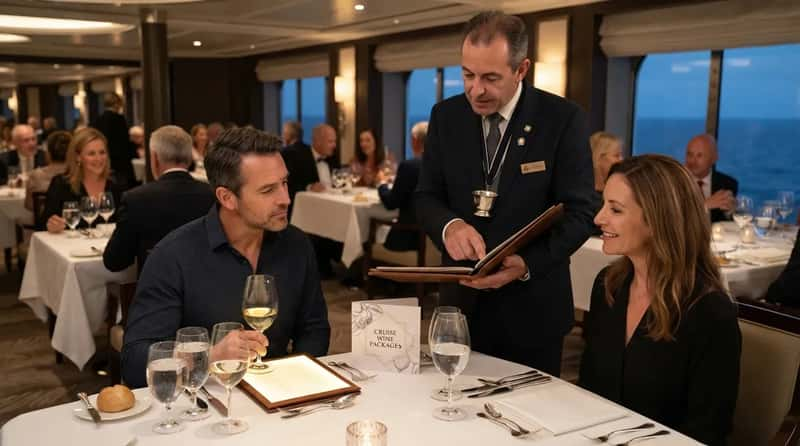
Some parties announce early that they’ve bought a wine package. Others never mention it until the bill arrives and the math gets painful. Some cruise lines offer set-price wine packages, and Cruise Critic advises asking the dining room sommelier about them at embarkation or the first dinner.
A table that asks on night one tells the sommelier it plans ahead. Staff can then build a rhythm across the week instead of treating every dinner as a one-off. It’s a small signal with a long payoff. But how a party shows up says even more than the questions it asks.
#11 – Whether the Party Walks In Together or Trickles In One by One
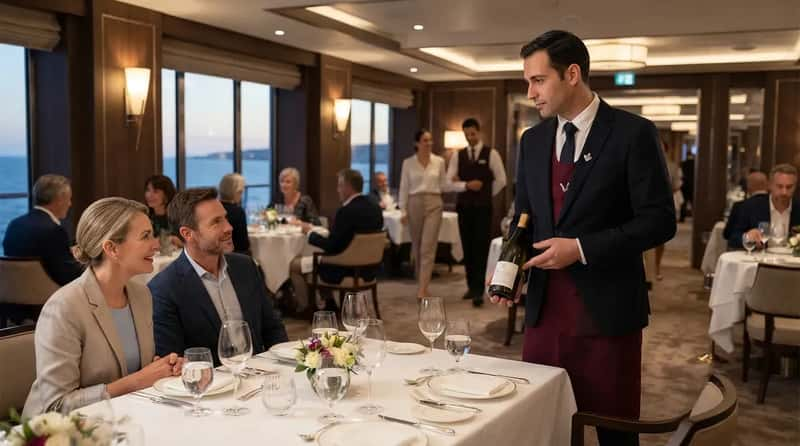
A full table that arrives at once is easy to serve. Wine can be poured while the group is still settling in, and everyone’s glass fills at the same time. A party that trickles in over twenty minutes creates a different problem, because staff can’t tell when to start.
Quick Compare
- Everyone arrives together: the bottle is opened and poured while the mood is high.
- Guests drift in one by one: staff may wait, so nothing sits open and going flat.
- Someone texts “five more minutes”: a smart table orders water or a first round of glasses to bridge the gap.
That’s why some sommeliers hold off opening anything for a half-seated table. Nobody wants a bottle sitting open while three guests are still finishing a last lap on the lido deck. The wait can look like slow service, but it’s usually staff protecting your wine and your money. Once everyone is finally seated, the next signal is hiding in the menu.
#10 – The Table That Asks About the Headliner Entrée
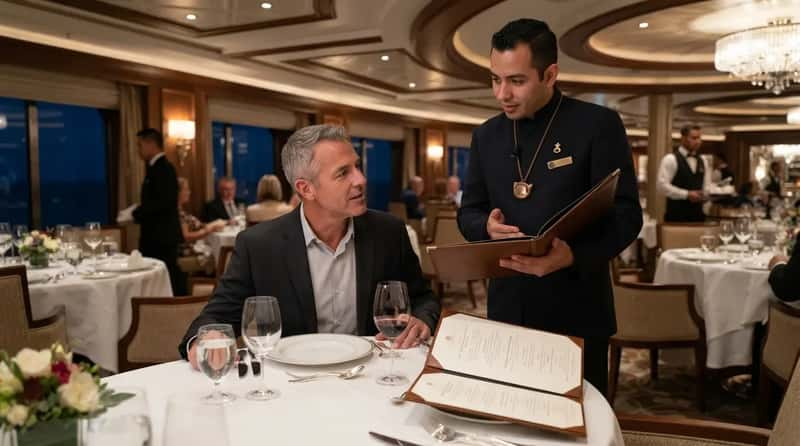
On many cruises, the dining room menu has one star dish that a big share of the room ends up ordering. Cruise insiders suggest asking what’s planned for dinner ahead of time, because there’s usually a headliner entrée. A table that asks is already ahead of the game.
To a sommelier, that question says you care about the match, not just the label. Staff can suggest a bottle that actually works with the food instead of defaulting to the best seller. Few guests bother, and the ones who do tend to get the most attention. Money signals come next, and they’re sneakier than you’d think.
#9 – The Bottle-Versus-Glass Math Staff Can Watch You Doing
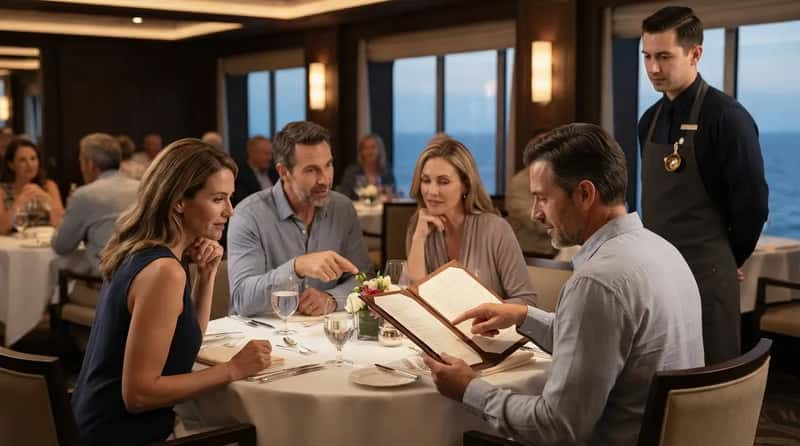
You can almost see the calculation happen. A party of four that pauses on the list, then glances around the table, is working out whether a bottle beats a round of glasses. With enough drinkers, a bottle is often the cheaper route. The pause itself tells staff how to pitch the options.
Good staff don’t turn it into a sales pitch. They point toward the value bottles, and some ships may have special selections worth asking about. Asking what’s a great value tonight is a quiet sign of a savvy table. And the most predictable order on any ship is coming up next.
#8 – The Napa Cabernet Reflex That Staff Spot From Across the Room
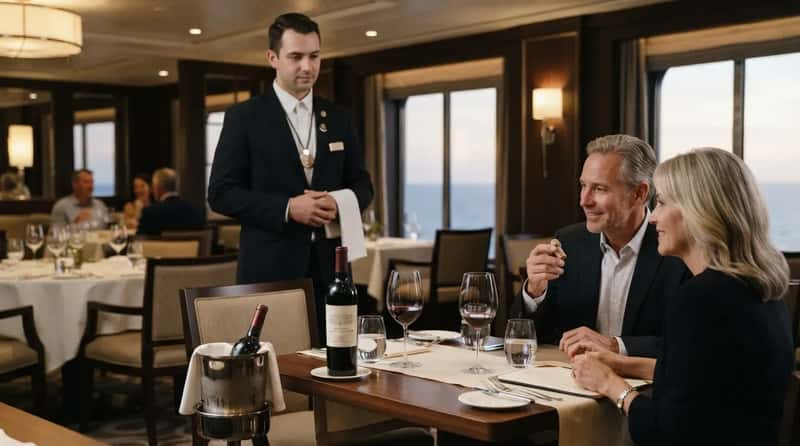
Here’s a take that will annoy plenty of readers: the famous California cab is often the safest, least surprising order on a cruise wine list. Many people feel on solid ground with a California cabernet sauvignon, ideally from Napa Valley. Sommeliers watch for that move and quietly note that the table wants no surprises.
That comfort can come with a premium, because a famous name often carries a famous price. A less famous bottle can sometimes match the dish better for less. Whether it’s the right call depends on your table, and nobody should feel bad about loving their cab. What the party says about its own wine knowledge reveals even more.
#7 – The Honest “We Know Nothing About Wine” Confession
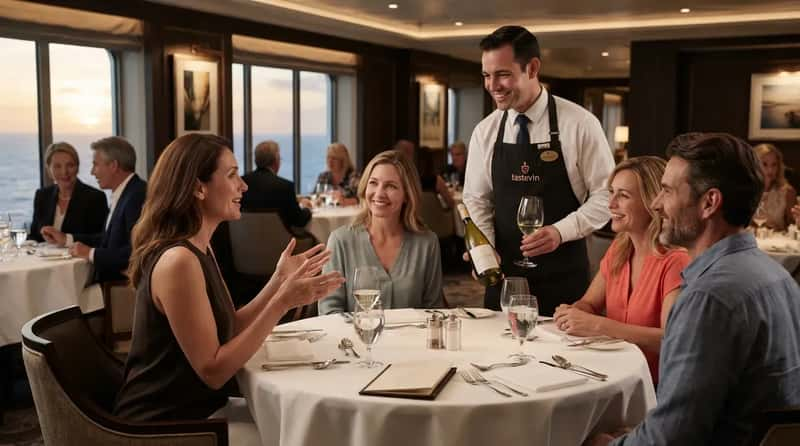
This line makes sommeliers happier than you’d guess. A table that admits it’s winging it gives staff permission to simplify. They can skip the jargon and ask plain questions about what you usually drink at home.
Why It Stands Out
- Plain answers like “we like sweeter whites” are easier to work with than vague wine-speak.
- Staff can skip the lecture and go straight to a useful suggestion.
- Honesty often leads to a better bottle for the money.
- It sets a friendly tone for the rest of the week.
The surprise is that the confident bluffer is often the harder guest to help. Someone who names a region they can’t pronounce leaves staff guessing what they actually like. The honest table tends to get better recommendations. Most people believe admitting ignorance makes them look bad, and it usually does the opposite. Then comes the table that can’t agree on anything.
#6 – The Mixed-Taste Table That Can’t Agree on One Bottle
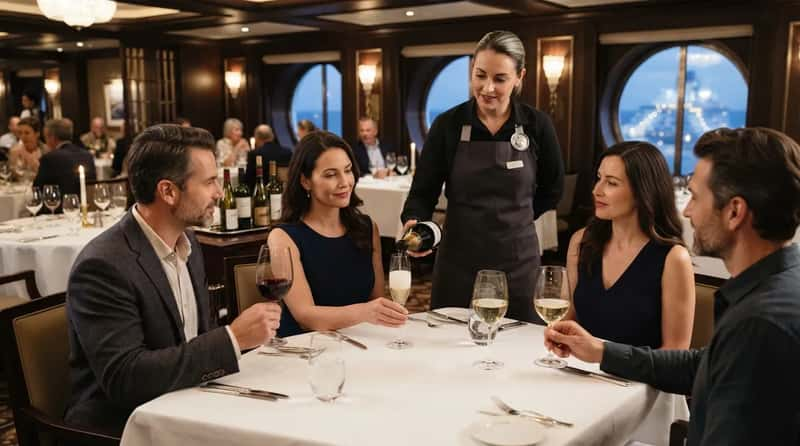
Every group has a red drinker, a white drinker and someone who only wants bubbles. Staff spot this split within a minute of the first order. A smart sommelier steers the table away from forcing one bottle on everyone.
Cruise Critic’s wine writer notes that a good sommelier is often willing to pair wines by the glass with your dinner courses. That can rescue a divided party from the dreaded compromise bottle. The tradeoff is cost, since glasses add up quickly. And the moment the first pour reaches the table tells staff something too.
#5 – Who Gets the First Taste Pour, and What They Do With It
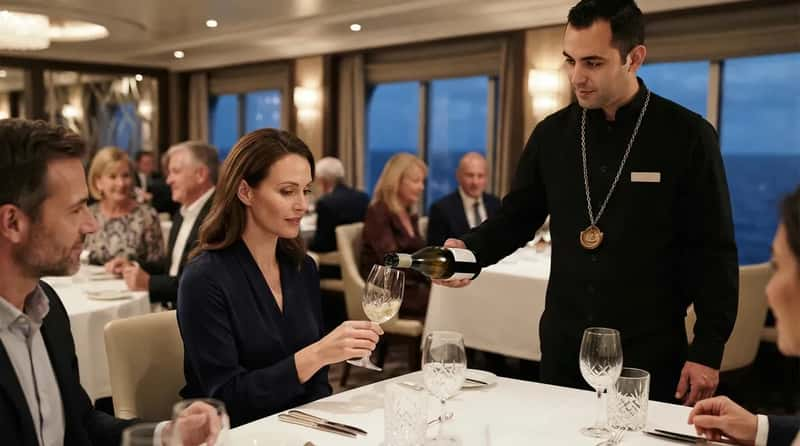
The tasting pour is a small ritual with a lot of body language. Some guests sip and nod instantly. Others swirl, sniff and make a show of it. A few wave the sommelier on without trying it at all.
Staff aren’t grading your technique. They’re watching for whether you feel confident about the bottle. If you speak up about a problem, a good sommelier will take it seriously. The table that never tastes can miss its only chance to flag a bad bottle. Then there’s the news some tables keep to themselves.
#4 – The Birthday Nobody Mentioned Until the Second Course
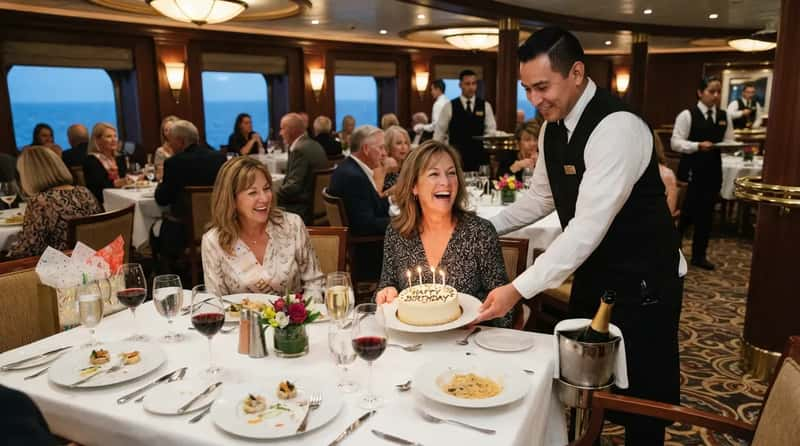
Celebrations show up early if you know where to look. Matching outfits, a gift bag, or someone who says “we’re here for a milestone” changes how the night is handled. Staff may time a toast or pour something special.
Fast Facts
- Visible clues like matching shirts, balloons or gift bags often tip staff off.
- A heads-up at the start of the meal gives the team time to plan a toast.
- A mid-meal reveal can still work, but it’s harder to pull off smoothly.
- Mentioning it to the dining room team beats assuming the ship already knows.
The catch is that service can only respond to what it knows. A party that tells the dining room team up front gives staff time to plan. Plenty of guests assume the ship already knows, and often it doesn’t. How you treat the team once the night is rolling matters just as much.
#3 – How the Party Treats the Assistant Waiter Who Does Half the Pouring
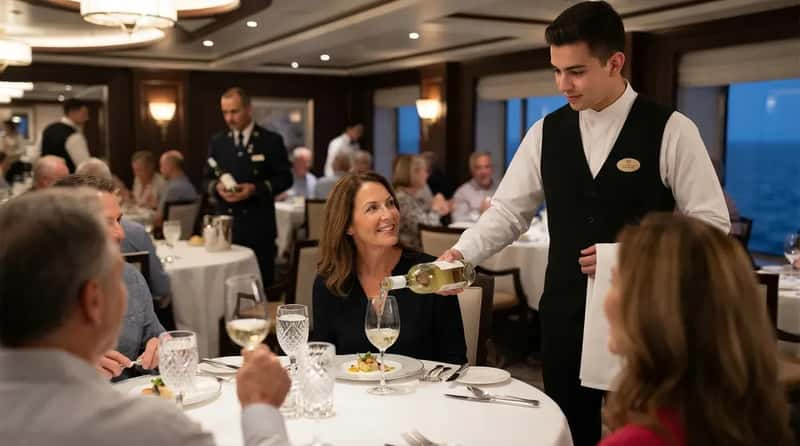
Most guests picture one sommelier hovering over the table. In practice, wine service in the main dining room is often shared between sommeliers and trained assistant waiters. The person topping up your glass may not be the person who sold you the bottle.
When a sommelier has guided you, Cruise Critic suggests $10 to $15 extra for exceptional service on top of that charge. What matters more is plain courtesy. Staff remember the tables that say thank you, and they remember the ones that snap fingers. One more habit makes a sommelier want to come back to your table.
#2 – The Table That Actually Asks the Sommelier a Real Question
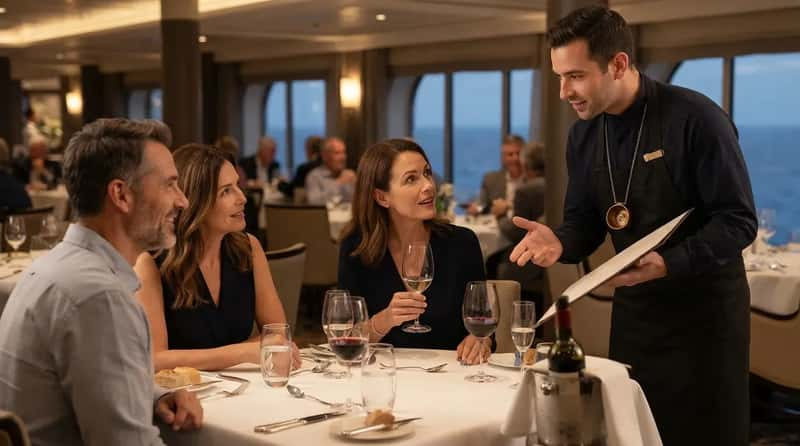
This one sets some tables apart. Cruise Critic’s wine writer says you’d be surprised how few cruisers go out of their way to get to know the wine professionals onboard. The table that asks gets noticed, and usually gets better help.
Even mainstream ships have trained staff. Sommeliers on many ships have taken wine classes or certification programs, and asking about their recommendations and background often gets them talking. It turns a transaction into a conversation. But the strongest signal of all shows up after the plates are cleared.
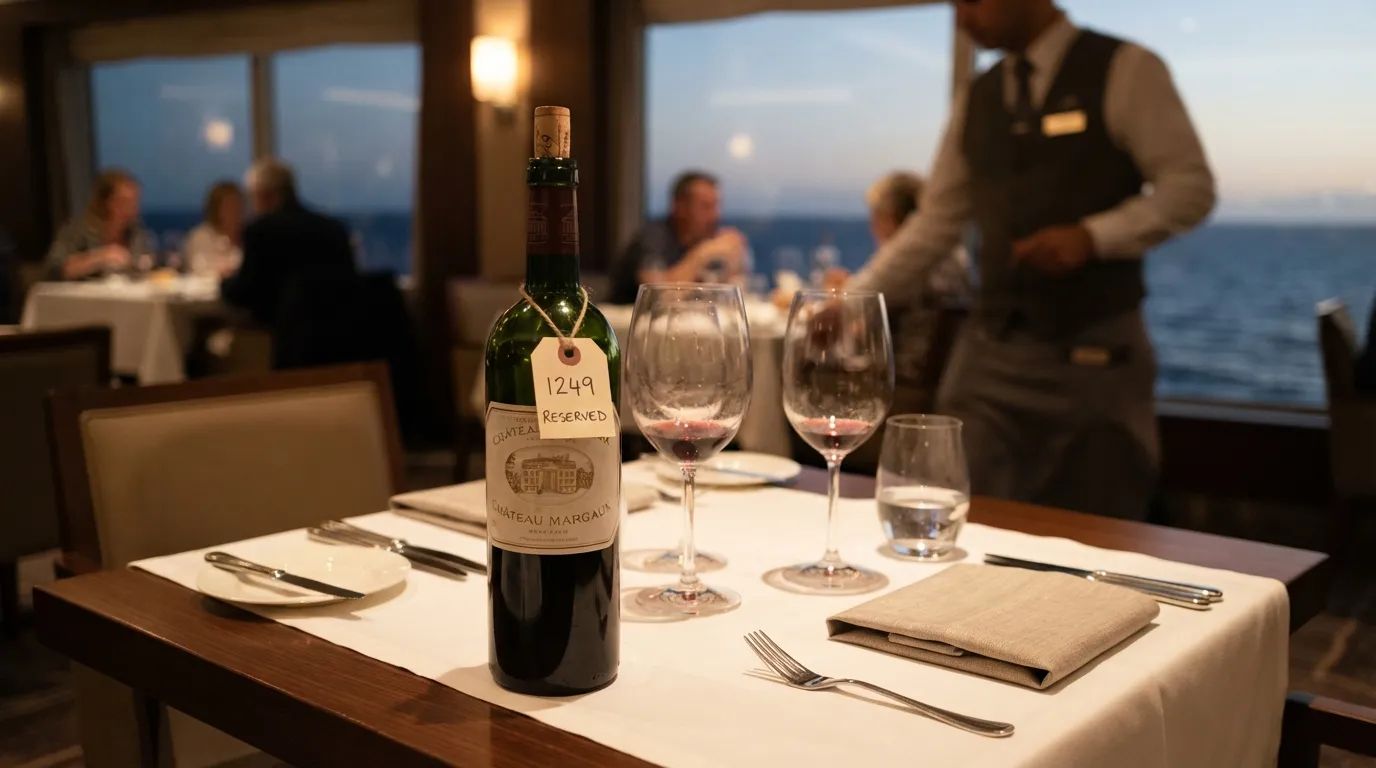
#1 – The Half-Finished Bottle That Says “We’ll Be Back Tomorrow”
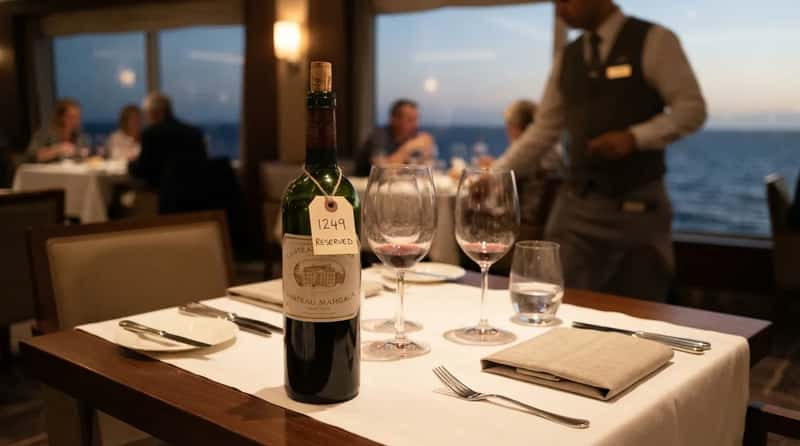
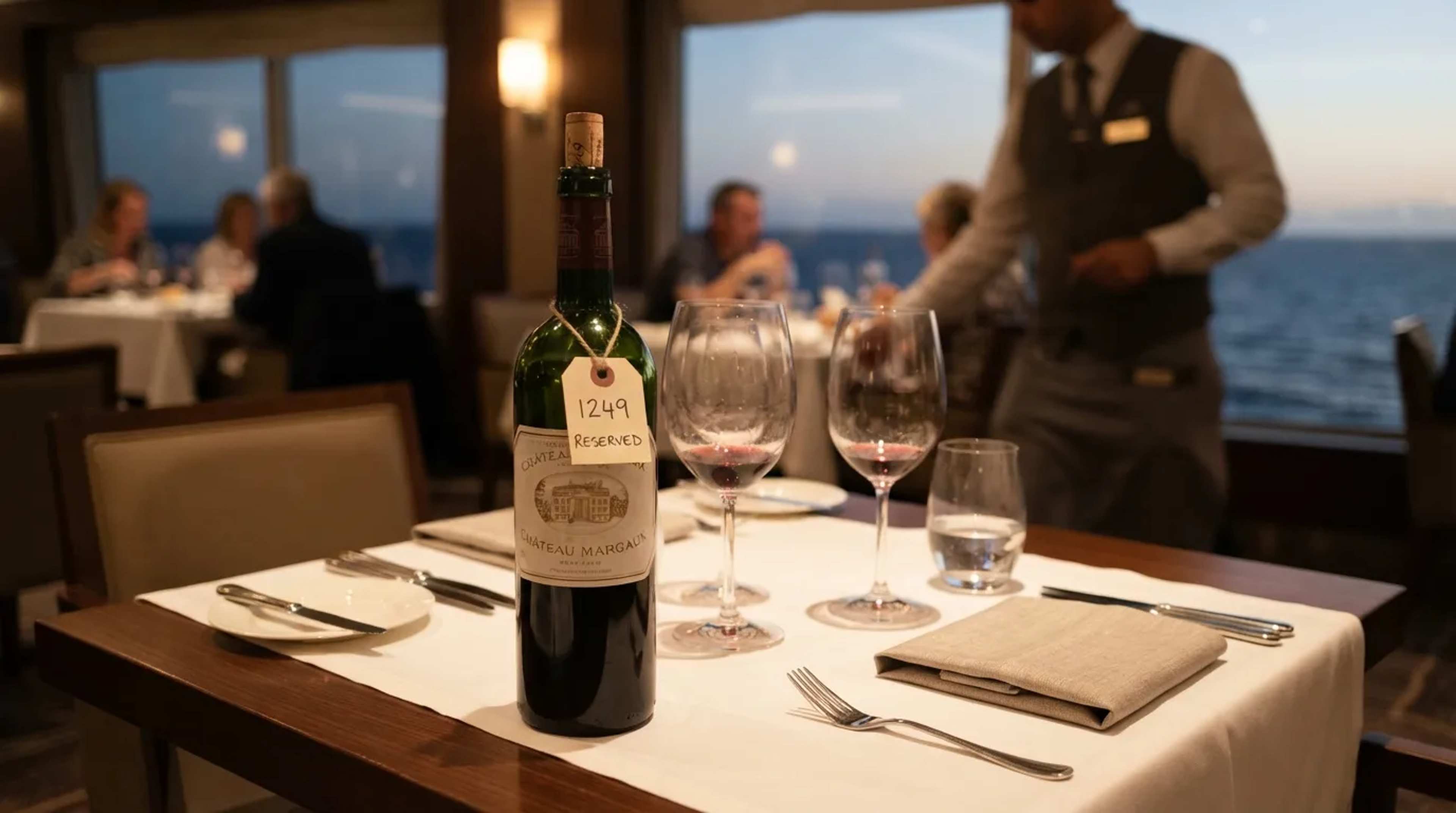
The clearest sign of a party that plans to enjoy the week is the bottle it doesn’t finish. On many ships, waiters can mark a bottle with your room number and save it for another night. Some will even carry it to dinner in another onboard venue. A table that asks for that has just told staff it has a plan.
Staff notice. A saved bottle means a return visit and a familiar face, and often a bit more care. Plenty of guests assume leftover wine is simply lost. It doesn’t have to be.
So the biggest judgment isn’t about what you know. Sommeliers are reading pace, comfort and plans, and those signals shape the service you get. The honest question, the saved bottle and the thank-you to the assistant waiter often matter more than any vintage you can name. Details vary by ship and cruise line, so treat these as common patterns rather than rules. The table that looks like it’s in no hurry to leave is usually the one that gets remembered.