You’d think packing gets easier with practice. Ask anyone over 60 who’s logged serious miles, and they’ll tell you the opposite is true – the more you fly, the more particular you get about every single item in that suitcase. These aren’t fussy habits picked up from a magazine. They’re rules built from missed connections, lost medication, swollen ankles, and one too many “I’ll just check it” regrets.
What separates a rookie flyer from someone who’s survived hundreds of flights isn’t the size of their bag. It’s a short list of non-negotiable habits they refuse to skip, even when they’re sprinting for a gate. Here’s what seasoned travelers over 60 actually swear by – and the ugly experiences that taught them.
15 – Medication Never Touches a Checked Bag, Period
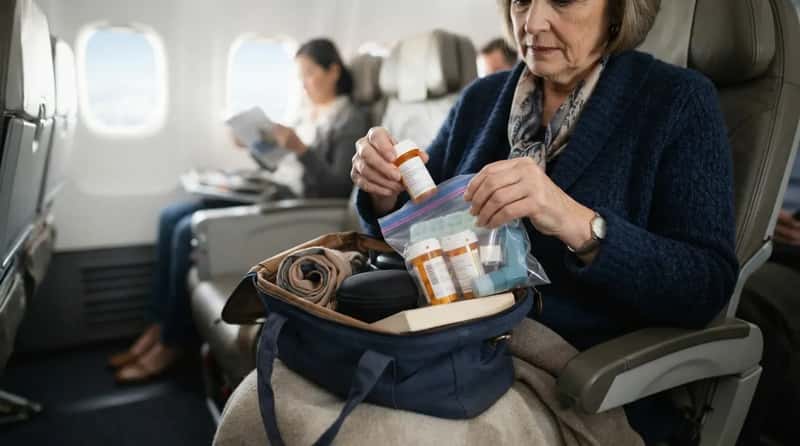
Ask any seasoned traveler over 60 what their single hardest rule is, and this is usually it. Checked bags get delayed, rerouted, or lost more often than airlines like to admit, and losing a suitcase full of clothes is annoying – losing your blood pressure medication for three days in a foreign city is a crisis. Every pill, patch, and inhaler goes in the carry-on, without exception.
The rule holds even on short domestic hops, because a two-hour delay can quietly turn into an overnight stay with zero warning. Frequent flyers over 60 also keep meds in their original labeled containers, since that small detail avoids awkward questions at security or customs. It’s a habit born from at least one bad experience, and nobody who’s lived through it ever goes back to checking pills.
14 – Extra Days of Every Medication, Always

Trip lengths are a suggestion, not a guarantee, and experienced travelers plan their medication supply accordingly. A five-day trip gets seven or eight days of pills packed, just in case a canceled flight turns a quick getaway into an unplanned week away from home.
This isn’t paranoia – it’s math learned the hard way after a missed connection or weather delay left someone rationing their last dose. Most veteran flyers keep a three-to-five-day buffer as an absolute minimum on every trip, long or short. It costs nothing to pack a few extra pills, but running out costs a frantic scramble through an unfamiliar pharmacy in a country where you don’t speak the language.
13 – A Written Medication List Rides in Every Bag
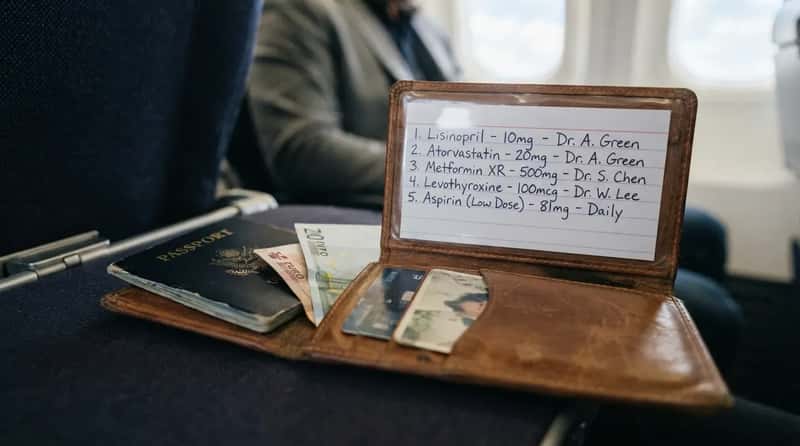
Phones die, apps glitch, and memory fails under stress – which is exactly why frequent flyers over 60 keep a physical, printed list of every medication, dosage, and prescribing doctor tucked into their carry-on. It sounds old-fashioned, but paper doesn’t need a charger or Wi-Fi signal in an emergency room.
This single index card has saved trips more than once, especially when a traveler needed care abroad and couldn’t easily explain their full medical history. Many keep a copy in their wallet and a second one in a travel companion’s bag, so there’s always a backup even if one bag goes missing. It’s a five-minute habit that removes hours of stress if something goes wrong overseas.
12 – Compression Socks Come Out for Anything Over Four Hours

This one triggers debate, but the data backs it up: a major Cochrane review found that wearing compression stockings reduced the risk of symptomless blood clots on flights longer than four hours, based on data from thousands of people in randomized trials. Frequent flyers over 60 don’t leave this to chance, because people over 40, along with those with obesity, recent surgery, or a history of blood clots, face higher risk – and that risk only climbs with age.
Medical guidance is more nuanced than “always wear them,” since American Society of Hematology guidelines don’t recommend compression socks for low-risk travelers on short flights, and reserve them for high-risk travelers on longer ones. Still, most experienced flyers over 60 treat them as cheap insurance on any long-haul flight. They pair the socks with regular aisle walks and ankle circles, because doctors agree movement matters just as much as the socks themselves.
Fast Facts
- Clot risk climbs on flights longer than four hours, per Cochrane trial data.
- Age 40+, obesity, recent surgery, and prior clots all raise personal risk.
- Guidelines reserve compression socks for higher-risk travelers on longer flights, not every short hop.
- Aisle walks and ankle circles matter just as much as the socks themselves.
11 – Slip-On Shoes Beat Laced-Up Ones Every Time
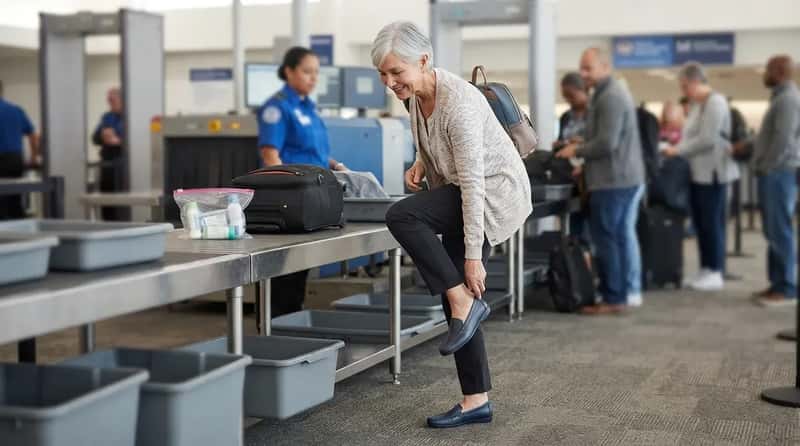
Security lines move fast, and nobody wants to be the person crouched down retying laces while a line builds behind them. Frequent flyers over 60 quietly switched to slip-on sneakers or loafers years ago, and they never looked back.
Beyond the security line, comfortable slip-ons matter for circulation on long flights, since swollen feet are common after hours in a pressurized cabin. Many travelers size up half a size for flights specifically, knowing their feet will expand mid-air. It’s a small wardrobe choice that quietly makes an entire travel day smoother, from curb to gate to landing.
10 – Essentials Get Split Across Two Different Bags

Putting all your eggs in one basket is a rookie mistake that seasoned travelers corrected decades ago. Medications, one change of clothes, chargers, and copies of important documents get divided between a carry-on and a personal item – never packed together in a single bag.
The logic is simple: if one bag is lost, stolen, or left behind at a layover, the other still has what you need to function. This habit has quietly saved countless trips when a rushed connection meant a backpack got left at a gate. It feels like overkill until the one time it isn’t, and by then the habit is already locked in for life.
9 – Batteries and Chargers Never Go in Checked Luggage
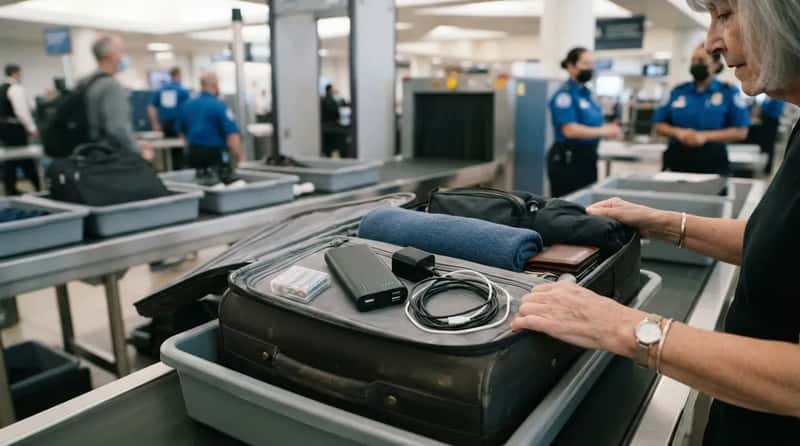
This rule sounds technical, but frequent flyers learn it fast after one too many warnings from gate agents. Loose lithium batteries, portable chargers, and power banks are supposed to stay in carry-on bags, not checked ones, because of fire risk in the cargo hold.
Beyond the safety angle, there’s a practical one too: a dead phone in an unfamiliar airport is its own kind of emergency for a traveler relying on it for maps, boarding passes, and contacting family. Veteran flyers keep a fully charged battery pack in their personal item at all times, treating it almost like a second wallet. It’s one of those habits that looks excessive until the moment it isn’t.
Worth Knowing
- Loose lithium batteries and power banks belong in carry-ons only, never checked bags.
- Spare battery terminals should be protected from contact with metal or other batteries.
- A dead phone means no boarding pass, no maps, and no easy way to reach family.
- Veteran flyers keep one battery pack fully charged in their personal item at all times.
8 – One Full Backup Outfit Always Rides in the Carry-On
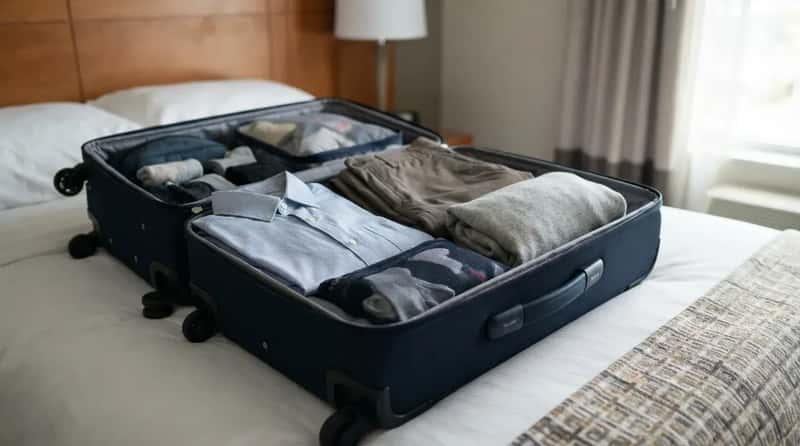
Checked bags vanish more often on connecting flights than anyone likes to admit, and frequent flyers over 60 have learned to plan for it rather than hope against it. A full outfit – top, bottom, and undergarments – goes in the carry-on on every single trip, no exceptions.
This isn’t about vanity. It’s about not showing up to a family wedding, a cruise departure, or an important meeting in the same clothes worn on a 14-hour travel day. Many travelers add a lightweight layer too, since arrival climates rarely match departure ones. It’s the kind of rule that seems unnecessary until a bag is sitting in the wrong city and you’re not.
7 – Toiletries Get Trimmed to the Bare Minimum

Overpacking toiletries is one of the most common rookie mistakes, and frequent flyers over 60 have corrected it through years of TSA lines. The federal rule is clear: each container must hold no more than 3.4 ounces, and all containers must fit into a single quart-sized, clear, resealable bag, with one bag allowed per passenger. Veteran flyers keep this bag pre-packed year-round, ready to grab at a moment’s notice.
What surprises newer travelers is how many everyday medications and liquids are actually exempt. Liquid prescription medications, including cough syrups, are exempt from the TSA 3-1-1 rule entirely, which means a much longer list of items can travel in full size than most people realize. Knowing this exemption by heart saves confused conversations at the checkpoint and keeps the line moving.
6 – TSA Cares Gets a Call Before Every Trip That Needs It
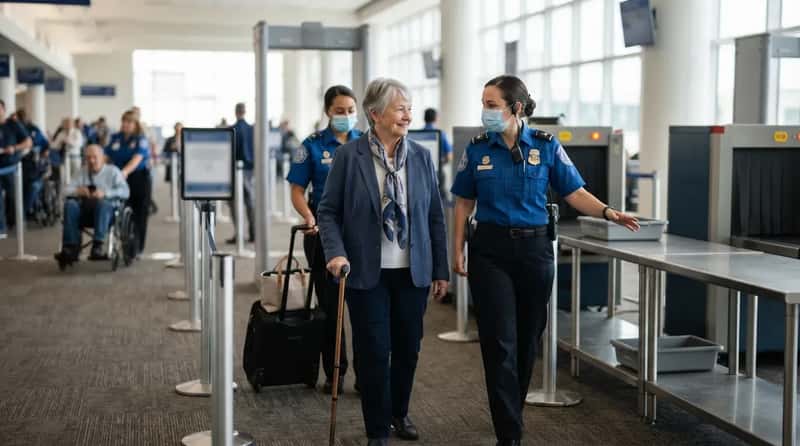
Most flyers under 60 have never heard of TSA Cares, but frequent travelers over 60 with joint replacements, mobility devices, or medical conditions use it religiously. A quick call ahead of time can arrange a security screening escort, extra time, or specific accommodations at the checkpoint.
It’s a free program that eliminates the anxiety of not knowing how a hip implant or an insulin pump will be handled by an unfamiliar agent. Booking it 72 hours in advance is the sweet spot most experienced flyers recommend, giving airports enough notice without cutting it too close. Skipping this step has turned smooth trips into stressful ones for travelers who didn’t know the option existed.
At a Glance
- TSA Cares is a free helpline for travelers with medical conditions, mobility devices, or hidden disabilities.
- Best used by calling ahead so an escort or accommodation can be arranged in advance.
- 72 hours before travel is the recommended window most flyers rely on.
- Covers joint replacements, insulin pumps, hearing aids, and similar medical equipment.
5 – Every Important Document Gets Photographed and Photocopied

Passports, ID cards, insurance information, and prescriptions all get a paper photocopy and a photo saved to the cloud before departure. This isn’t new advice, but frequent flyers over 60 treat it as sacred rather than optional, because losing an original document abroad is a nightmare that eats entire days of a trip.
The photocopy stays in a separate bag from the original, following the same split-bag logic used for essentials. A digital backup emailed to yourself works as a third layer, accessible from any device with internet, anywhere in the world. It’s a five-minute task before leaving home that can save an entire afternoon standing in a foreign embassy.
4 – Layers Replace One Heavy Coat, Every Time
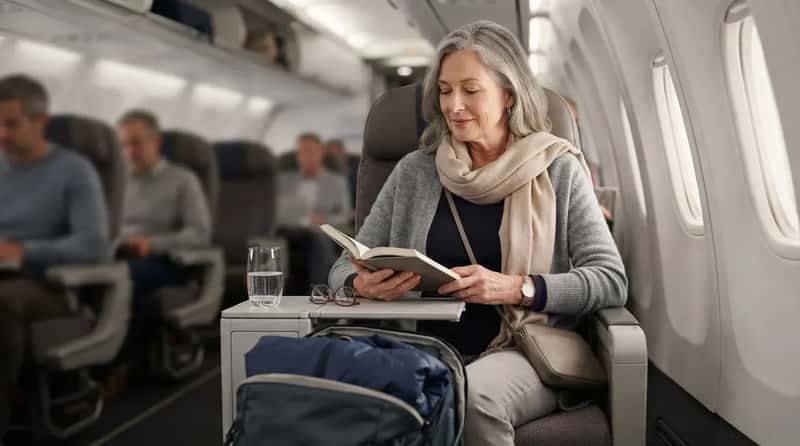
Packing a single bulky coat is a young traveler’s mistake, and frequent flyers over 60 gave it up years ago in favor of thin, stackable layers. A base layer, a light sweater, and a packable shell handle far more temperature swings than one heavy jacket ever could, and they take up a fraction of the suitcase space.
Layers also solve the classic airport-to-airplane temperature swing, where a warm terminal gives way to a chilly cabin within the hour. Many seasoned travelers keep a thin scarf or wrap specifically for cabin air conditioning, since it doubles as a blanket, a pillow, or a modesty layer depending on the moment. It’s a small system that quietly solves a dozen different comfort problems at once.
3 – Packing Cubes Get Organized by Urgency, Not Category
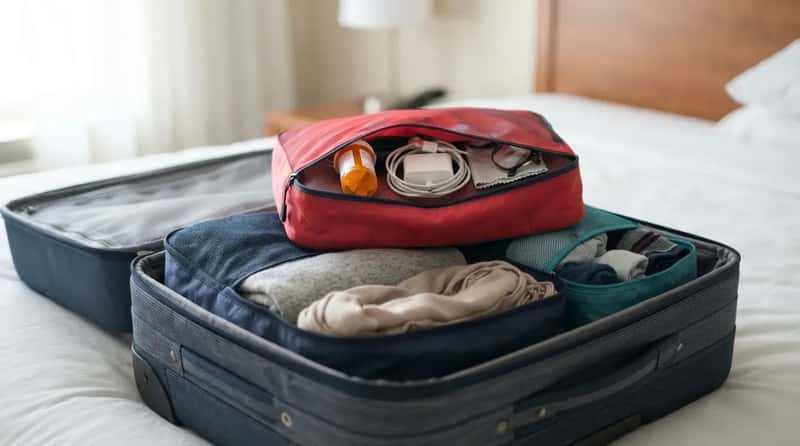
Newer travelers organize suitcases by clothing type. Frequent flyers over 60 organize by urgency – what they’ll need first, fastest, and most often gets the top cube, not the bottom of the bag. Medications, chargers, and a spare pair of glasses live in the most accessible cube every single time.
This isn’t just about tidiness. It’s about not unpacking an entire suitcase in a cramped airplane bathroom or a rushed hotel lobby just to find one item. Color-coded cubes are a favorite trick among frequent flyers, letting a partner or travel companion instantly know which cube holds what without asking. It turns chaotic bag-digging into a two-second grab.
Why It Stands Out
- Cubes are sorted by urgency and need, not by shirt-versus-sock logic.
- The most-used cube always sits on top: meds, chargers, glasses.
- Color-coding lets a travel partner grab the right cube without asking questions.
- Turns a rushed, cramped search into a two-second grab-and-go.
2 – The Suitcase Never Gets Packed to the Airline’s Actual Weight Limit

Here’s a slightly controversial one: many experienced travelers over 60 deliberately pack well under the airline’s weight limit, even when they could technically fit more. A 50-pound checked bag limit sounds generous until you’re the one lifting it onto a scale, off a carousel, or up three flights of stairs to a hotel room with no elevator.
Frequent flyers who’ve dealt with a shoulder strain or a bad knee know that a lighter bag is a safer bag, full stop. Most cap their own limit closer to 35 or 40 pounds, regardless of what the airline technically allows. It’s a rule that trades a little extra packing discipline for a lot less physical strain on travel day.
1 – An “In-Reach” Emergency Kit Never Leaves Arm’s Length
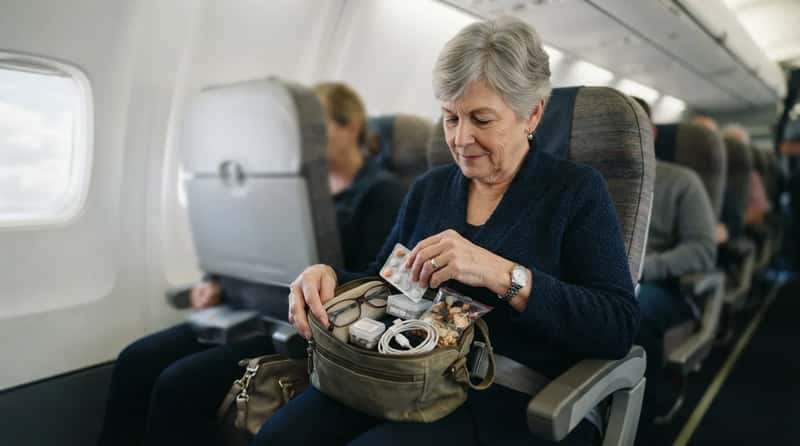
This is the rule every frequent flyer over 60 treats as sacred, and it’s usually the one that took the scariest experience to learn. A small pouch – glasses, hearing aid batteries, a phone charger, a snack, and critical medication – stays within arm’s reach at all times, never in the overhead bin, never in a checked bag, never even in the seatback pocket during turbulence.
The reasoning is simple and a little sobering: emergencies don’t wait for the seatbelt sign to turn off, and delays don’t always give you time to dig through an overhead bin. This single habit is the one most frequent flyers over 60 say they’d never travel without, calling it the difference between a manageable hiccup and a genuine crisis mid-flight. Everything else on this list is smart. This one is essential.
None of these rules are about being overly cautious for its own sake – they’re about experience talking. Every single one on this list was earned through a missed dose, a lost bag, a swollen ankle, or a stressful security line that could have gone differently with one small habit in place. That’s the real difference between a nervous flyer and a seasoned one: not fearlessness, but preparation.
Which of these rules do you already follow, and which one are you adding to your next trip? Drop your own hard-earned packing rule in the comments – the best travel advice usually comes from someone who’s lived through the mistake first.