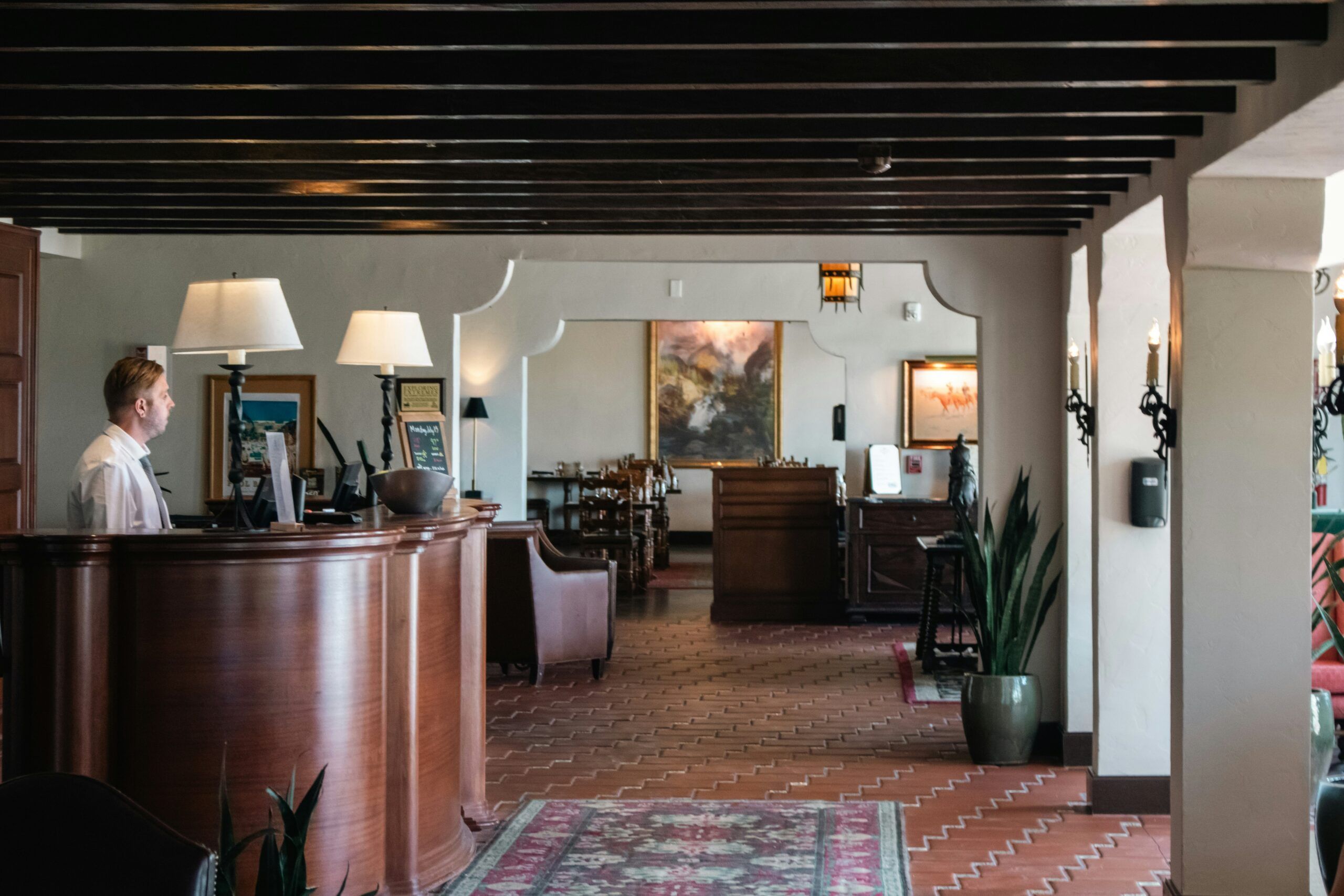
The AC rattles all night, the room smells faintly of smoke, and you decide the hotel will hear about it in a one-star review posted from your couch a week later. Managers say that is the exact moment they wish you’d done something else. These 15 requests are what they’d rather hear, and most take less than a minute.
Here’s the twist: the hotel often has no idea anything went wrong. Customer-service research has long suggested that most unhappy customers never complain directly, so the people who could have fixed it find out only after you’ve checked out. Some of the requests below are the opposite of what you’d expect, and the one managers wish for most is simpler than you’d think.
#15 – “Please Tell Us Who Made Your Stay” (The Request That Beats Any Five-Star Rating)

Managers say praise lands hardest when it names a person. Travel writers who have collected hotel-staff advice note that guests who name a specific employee in a positive review become something close to legends to the team. But the better move is to say it to the manager on the spot. A review gets read by strangers, while a face-to-face compliment gets passed to a supervisor and sometimes ends up in a staffer’s file.
Most guests skip this because it feels awkward. Managers say it takes ten seconds, and the employee may remember it for months. In a job where people mostly hear about what went wrong, that one sentence can be the best part of someone’s week.
#14 – Ask the Desk for Local Tips Before You Google Anything

Front desk staff often know the neighborhood better than any app. One hotel-industry writer says a guest who asks good questions signals trust in the staff’s expertise, and staff tend to respond in kind. The payoff can be a hidden diner, a quieter route, or a restaurant that never shows up on the first page of results.
Plenty of guests end up at an overpriced tourist spot and then blame the hotel in a review. Managers wish they’d just asked. Staff can also warn you about road closures, event weekends, and blocks that are better skipped after dark, and that kind of tip is rarely listed online.
Worth Knowing
- Ask where the staff actually eat on their days off, not just for “the best restaurant.”
- Ask whether any events or road closures could affect your plans.
- Ask which walking routes feel comfortable at night.
- Ask what the hotel’s own guests tend to regret skipping.
#13 – “My Rate Dropped After I Booked. Can You Match It?”

A front desk manager quoted by Fox News put it bluntly: if the rate goes down after you book, don’t expect the hotel to notify you. That means a lot of guests overpay and never find out. Others find out, say nothing, and complain in a review about “hidden” pricing.
The fix is simple. Check your rate before arrival, then ask politely whether it can be adjusted. It won’t always work, and policies vary by property. Still, managers say they’d far rather field that question than read an angry paragraph about price three weeks later.
#12 – Ask About Parking and Fees Before the Bill Surprises You

Billing confusion is one of the most common complaints hotels hear, and it usually shows up at the worst moment: checkout, with a line forming behind you. One hospitality-tech guide says hotels can send a pre-checkout folio by text or email the night before, so nothing on the bill is a shock. Many guests never ask for it.
Ask what parking costs, what the resort or destination fee actually covers, and whether the room carries a deposit. Managers say a two-minute question at check-in beats a long dispute at checkout. It’s also the cheapest way to avoid a surprise charge that turns into a one-star story.
#11 – “When Will My Room Be Ready?” Beats “Why Isn’t It Ready Yet?”

Showing up at noon and expecting a room is a classic front desk headache. One front office manager at a Marriott property explained that staff can’t go around waking up guests to free up a room, even for a top-tier member. Check-in time is really tied to how fast housekeeping works.
The better ask is to find out when the room will likely be ready, and say you’re happy to get a text. Then store your bags and go explore. Managers say guests who do this often land the first clean room, because the agent isn’t busy defending the policy.
Quick Compare
- “Why isn’t it ready?” The agent explains the policy again, and everyone gets a little more tense.
- “When will it likely be ready, and can you text me?” The agent gets a clear task and a friendly guest.
- Bags stored, you out exploring: Nobody hovers at the counter, and the room can be flagged the moment it’s clean.
#10 – Flag Your Special Request the Night Before You Arrive
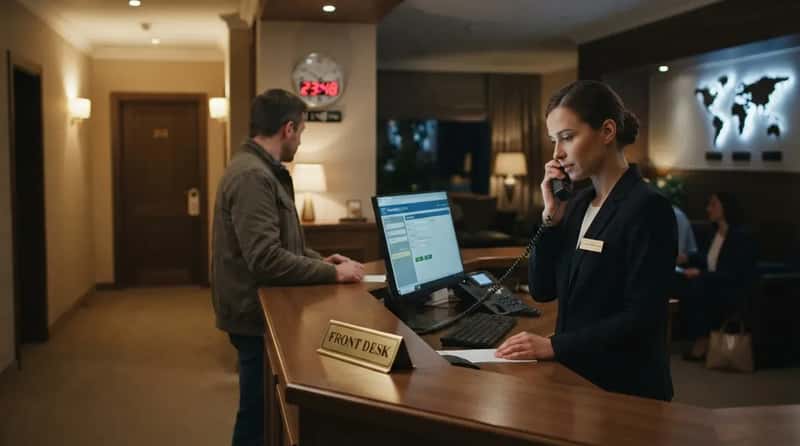
Hotels often lock in room assignments before you walk in. Front desk managers told Travel & Leisure that room assignments and housekeeping blocks are often finalized hours before check-in. By the time you’re at the counter asking for a quiet room, the best ones may already be spoken for.
Plenty of guests assume hotels can read minds, then end up in a room by the elevator and write a review about the noise. Managers say a short email to the front desk would have fixed it. It’s the cheapest fix in the building, and it only works before you arrive.
#9 – Ask for an Upgrade Like a Human, Not Like Someone Demanding a Refund

Front desk managers say many upgrade requests sound like entitlements, and that tone is what shuts the door. Another manager told Travel & Leisure that asking outright can feel transactional, and suggested giving the agent a reason to want to help.
Mention a real occasion, like an anniversary or a first trip in years. Industry guides say a special occasion can raise your chances of an upgrade. Nothing is guaranteed, but managers say the guest who accepts “no” gracefully is often the one remembered, and helped, on the next stay.
#8 – “Can We Talk Somewhere Quieter?” The Request That Changes the Answer

Ever try to solve a problem in a crowded lobby? A front office manager at a Colorado resort says that when other guests are nearby, it can limit the staff’s ability to accommodate special requests. An agent can’t discount or comp something in front of a line without every guest wanting the same thing.
So ask to step aside for a minute, or wait until the line clears. Managers say it’s the difference between “I’m sorry, we can’t” and “let me see what I can do.” Same problem, same agent, completely different outcome.
#7 – Describe the Problem. Skip the “I’ll Leave a Bad Review” Line.
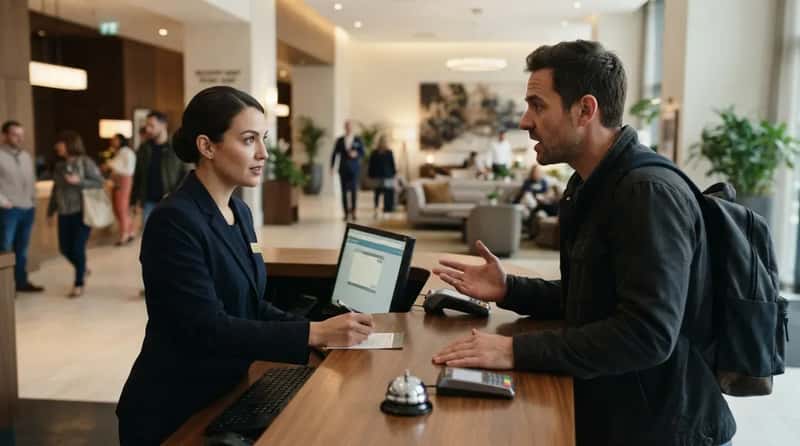
This one may surprise some readers, but many front desk veterans argue that mentioning reviews backfires. One longtime agent says phrases like that turn a service conversation into something closer to a negotiation under implied threat. The same writer says staff tend to work harder at solving real issues than at defusing a perceived threat.
Hotels do monitor review sites, and a Marriott revenue manager once told reporters that guests who post a complaint mid-stay will most likely get a call to see how things can be made better. But a calm sentence at the desk is faster, and it doesn’t leave the agent feeling cornered.
#6 – Answer the Text Message the Hotel Sends You
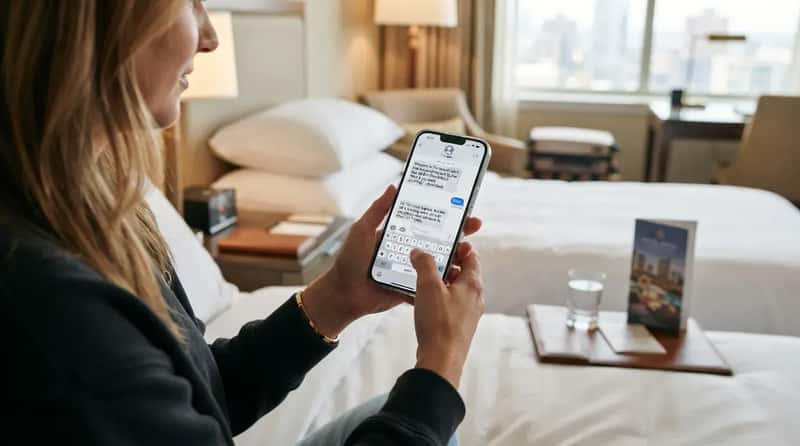
Many hotels now text guests mid-stay with a quick “How’s everything?” Most people ignore it. Hospitality-tech writers note that most guests won’t walk to the front desk over a minor inconvenience, but they will respond to a message. That tiny reply can bring a technician or a fresh set of towels within minutes.
Managers say a quick “the AC is warm” text is more useful than any survey. If you’d rather talk to a person, say so in the reply. Either way, the hotel hears about it while it can still do something.
#5 – “Could I Speak With the Manager?” Said Calmly, Not Like a Threat

Many guests wait until they’re furious to ask for the manager, and by then the tone is already wrecked. Industry guides say that when the person at the desk can’t approve something, you can ask for the manager in a friendly way. A calm request makes it easier for the agent to escalate without feeling bypassed.
Managers say they have more authority to fix things. Service-recovery guides describe empowered staff offering a complimentary dessert, a room move, or a credit to a loyalty account. That’s a lot cheaper for the hotel than a public hit to its reputation, and a lot better for you than a week of stewing.
At a Glance
- Tone: Friendly and steady, never a threat.
- Wording: Name the problem and the fix you’d like, such as a room move or a credit.
- Timing: Ask while you’re still staying, when the fix is still possible.
- Why it helps: Managers often can approve what a desk agent can’t.
#4 – Report the Noisy Neighbor While It’s Still Happening

A thin wall and a loud party at 1 a.m. produce some of the angriest reviews on the internet. But staff often don’t know until you tell them. One front desk veteran says reporting noise, smoking, or disruptive behavior from a neighboring room is legitimate, and staff want to hear it.
That privacy rule explains why guests often think nothing happened. Call the desk right away, give your room number, and ask for a callback if the noise continues. Managers say that’s the only way they can act while the problem is real.
#3 – “Can I See Another Room?” The Move Most Guests Never Try

Some rooms are simply worse. Maybe it smells like smoke, the view is a dumpster, or the bed sags in the middle. Travel writers advise that if you’re unhappy with your room, you can ask to see a few more, ideally with a real reason for the change.
Many guests stay in a room they dislike for three nights, then post about it. Managers say a room move is among the easiest fixes, as long as there’s inventory. Ask early in the day and be specific about the issue. It also helps to ask before you unpack, since that’s when a swap is easiest for housekeeping.
Fast Facts
- A room move depends on what’s available, so earlier in the day is better.
- Asking before you unpack makes the swap easier for housekeeping.
- A specific reason, like smoke odor or a broken fixture, works better than “I just don’t like it.”
- Asking to see a few options beats accepting the first replacement.
#2 – “My Door Lock Isn’t Working.” The Safety Report Managers Treat as an Emergency

Some complaints get fixed at once, and safety comes first. According to a hotel-manager roundup, issues like broken locks, suspicious activity, or missing belongings all get immediate escalation. These problems are handled separately and go straight to a manager.
Guests often don’t want to “make a fuss” over a lock that sticks or a door that won’t latch. Managers say that’s the worst time to be polite and quiet. A review the following week can’t make you safer tonight.
#1 – Tell Us the Problem Before Checkout, Not After You’ve Left

This is the one managers wish for most. A recent hotel-manager roundup puts it plainly: guests rarely tell the front desk in real time and save it for a post-stay review, when there’s nothing left to repair. Service-recovery experts agree that the recovery window is the stay itself.
Many managers argue the standard “Was everything okay?” at checkout is nearly useless, because guests reflexively say “fine.” One hospitality marketing firm suggests asking whether there was anything staff could have done better. If a manager asks, answer honestly. That single sentence is what they were hoping you’d say all along.
The pattern is hard to miss. Hotel managers don’t fear complaints, they fear the quiet nod at checkout followed by a stinging review from a guest they never got to help. The fixes are rarely dramatic: a text reply, a quiet word at the desk, a room swap, a note about a broken lock.
A review tells a hotel what went wrong after you’ve gone. One honest sentence at the right moment can change what goes wrong while you’re still there.