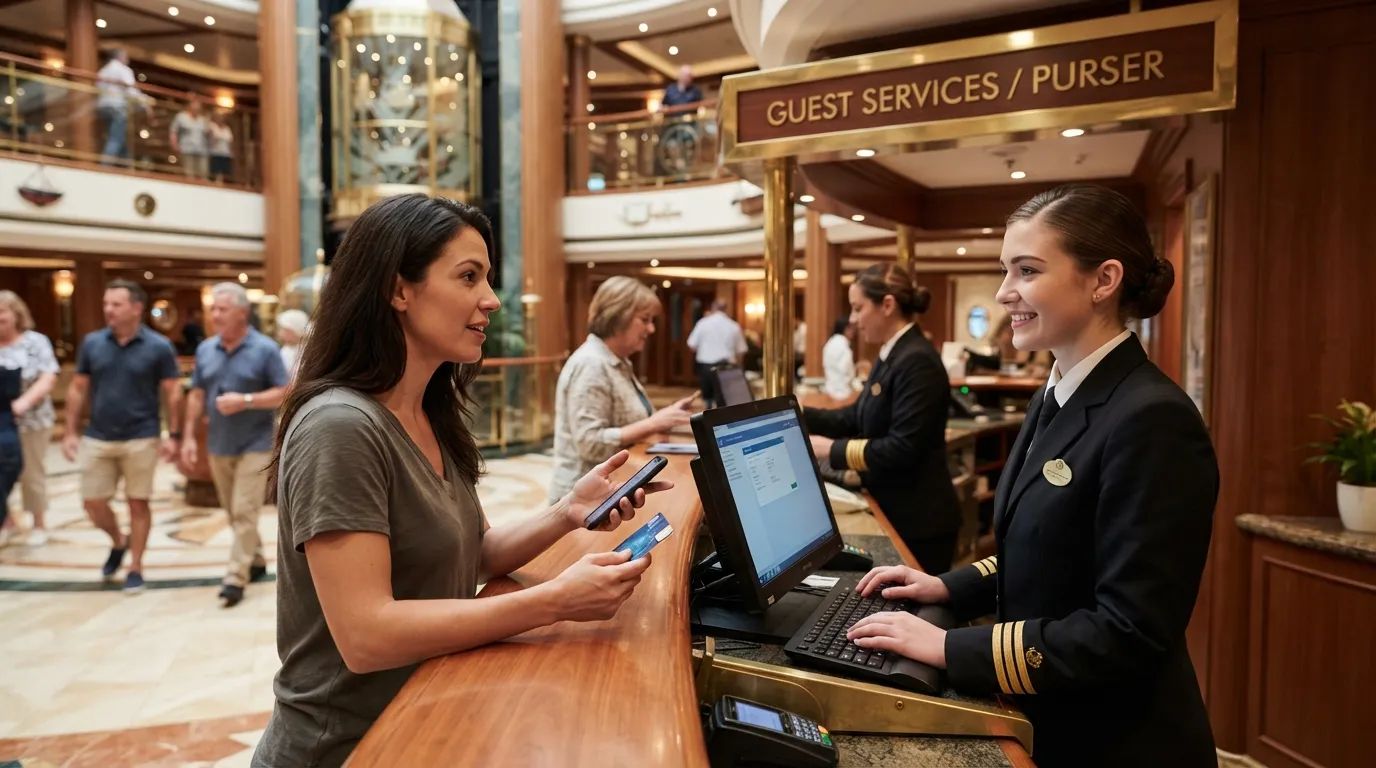
Most cruise passengers glance at the purser’s desk, see “reception,” and keep walking. That one habit quietly costs them free medicine, loyalty perks that never auto-load, and upgrades that vanish by day two.
A small slice of cruisers know exactly what to ask for – and exactly when to ask – and they walk off with a completely different cruise than everyone else. Here’s what insiders actually tell them.
#15 – The Desk Has a Different Name, But the Same Power
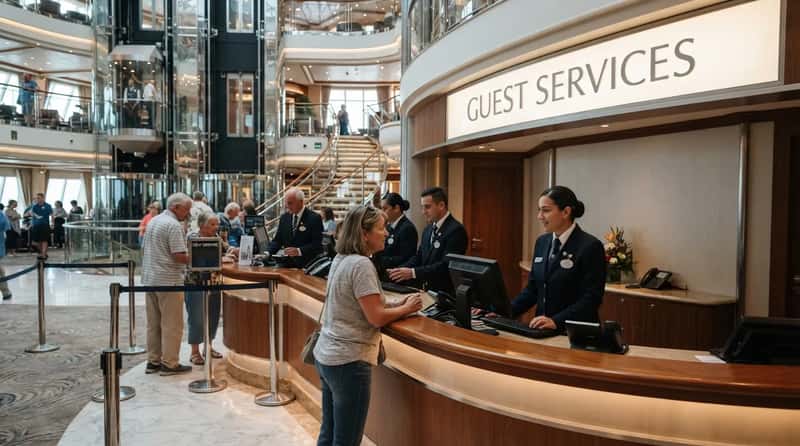
The purser’s desk goes by “guest services,” “guest relations,” or “reception,” depending on the ship. Most guests treat it like a lost-and-found window or a billing complaint counter.
That’s a massive underestimation. The purser oversees cabin accounts, daily operations, and guest assistance, and every department on the ship answers up the chain to someone the purser knows personally.
The purser is the single most connected person you can speak to as a passenger. Most guests never figure that out – and it’s the first secret that changes everything else on this list.
But knowing the desk exists is just the starting point. What you ask for on Day 1 determines everything after it, and #14 is where that starts.
#14 – Free Seasickness Meds Are Sitting Right Behind That Counter

Guest services often stocks individual packets of meclizine, the over-the-counter seasickness remedy, and normally you won’t be charged if you ask. Almost nobody asks.
Most guests suffer in silence – or pay spa prices – when the answer was free at the front desk the whole time. Ginger candies are often back there too, and none of this ever makes it into the welcome booklet.
This is one of the most commonly unknown freebies on any ship. Ask on embarkation day before you feel rough, especially if you’re sailing into open ocean on night one.
Fast Facts
- Most ships let you (cite index=”11-1″>contact Guest Services to purchase motion sickness pills like meclizine, and many still hand them out free.
- Policies vary by line – (cite index=”12-1,12-2″>one Holland America guest was charged $3.60 per packet after a new policy took effect, so always confirm the cost first.
- (cite index=”14-11″>Sliced green apples help reduce nausea, as does ginger ale, and (cite index=”14-12″>ginger candies like lollipops and chews work too.
- For rougher crossings, (cite index=”16-9″>scopolamine patches from the medical center can provide relief for up to 72 hours.
Don’t stop at the meds. The purser’s desk has a second layer of freebies most guests never think to request, and #13 involves something already sitting in your passenger profile.
#13 – Your Loyalty Perks Won’t Apply Automatically
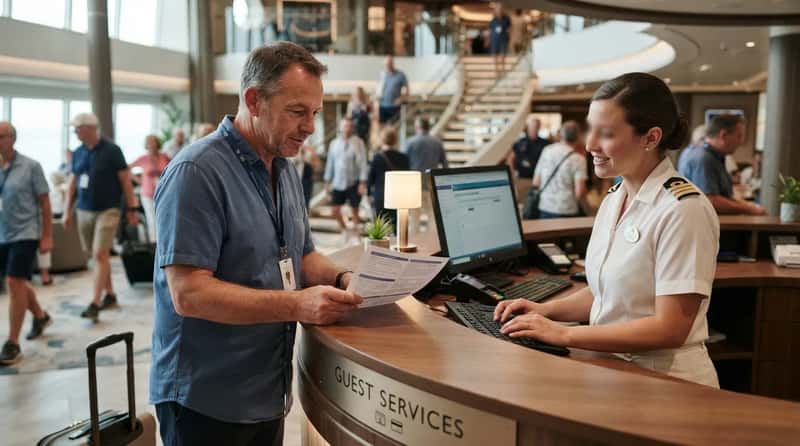
Cruise line loyalty programs have a dirty secret: many of their best perks are never applied automatically. You have to ask for them, and the purser’s desk is where those surprises actually materialize.
This catches even repeat cruisers off guard. Walk up on day one with your loyalty tier details and ask the purser to confirm every benefit is properly loaded to your cabin account.
None of that priority access or lounge privilege means anything if it never gets flagged on your account. Bring a printed copy of your benefits if you have to.
What loyalty status can quietly unlock leads straight into what a simple, well-timed question can unlock for everyone else – no status required. That’s #12.
#12 – Mentioning a Special Occasion Once Is a Legitimate Strategy

Let the cruise line know if you’re sailing for a birthday, honeymoon, graduation, or anniversary. Ask your travel agent to note it in the reservation – the cruise line does read these notes, and it can quietly influence who gets a small upgrade.
If you didn’t add it at booking, the purser’s desk is your second chance. Mention the occasion calmly and once, then let it go.
It costs the ship almost nothing and generates enormous goodwill from the guest. Stateroom attendants often add a card, a small decoration, or a sweet when it’s noted early.
The same desk that flags your celebration can also quietly move you to a different room. That’s the next secret, and timing matters enormously.
#11 – Cabin Relocation Requests Work Best Before the Ship Is Full
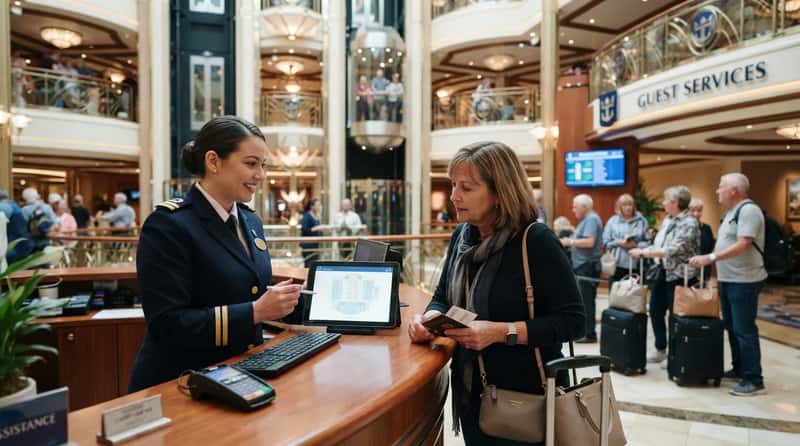
If the ship isn’t sold out, guest services may move you to a quieter location or one closer to elevators at no additional cost. This is separate from a category upgrade – it’s simply a location swap, and it’s one of the easiest asks on the ship.
Noisy hallway near the crew elevator? Cabin sitting right over the engine room? Ask the purser on embarkation day, before the ship finalizes its arrangements.
The window is narrowest right at embarkation, when unsold cabins are still empty and the purser has the most flexibility. Be polite, be specific, and ask early.
But there’s a harder version of this conversation – the actual category upgrade – and its timing is more nuanced than most people think. #10 explains exactly when that window opens.
#10 – The Real Upgrade Window Isn’t Where You Think It Is
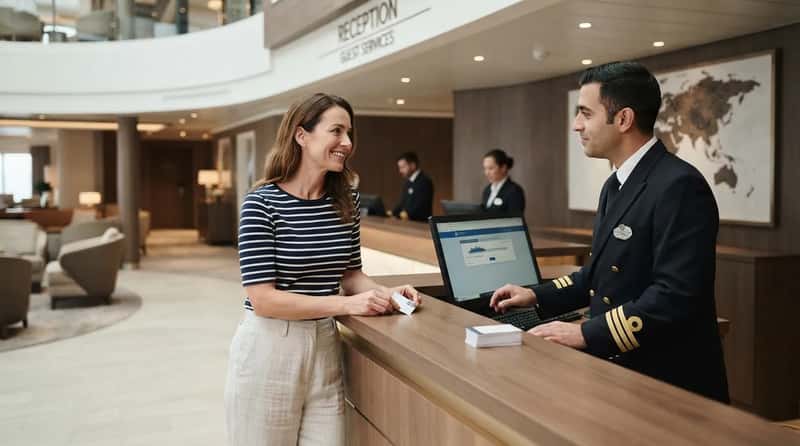
Most guests storm the desk on embarkation morning begging for an upgrade. That’s the worst possible timing, because the desk is swamped and everyone else has the same idea.
Wait until after the first port of call. By then, staff know which passengers were no-shows or left early, and no one else is competing for that empty cabin.
Shoulder and off-peak sailings raise your odds even further, since fewer passengers mean more unsold higher-category rooms sitting empty. Timing and sail date together are the two levers most passengers never pull at the same time.
Ask quietly, after the rush, with a smile. That’s the actual formula – and it leads directly into a financial edge the purser can offer that has nothing to do with upgrades.
#9 – The Desk Can Flag Billing Errors Before You Even Notice Them
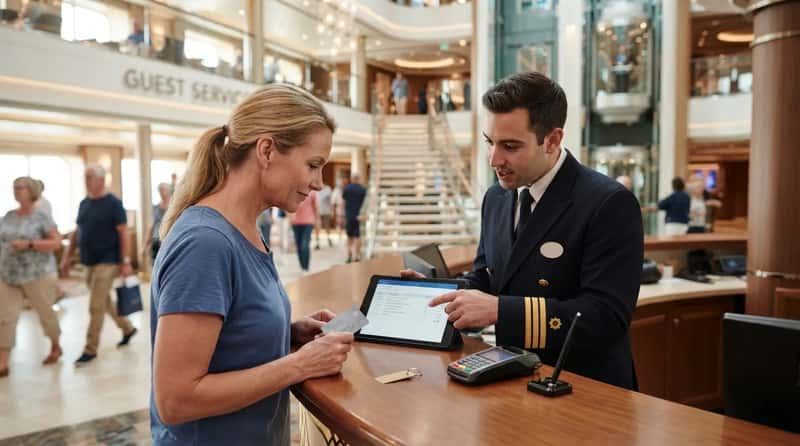
The purser helps settle disputes over charges, but the smarter move is skipping the dispute entirely. Ask the purser to pull up your onboard account on day two and scan it together.
Billing errors on cruise ships are more common than the industry likes to admit – duplicate charges, misapplied packages, gratuities stacked on things that were already covered. Catching one early saves you a fight later.
Catching an error on day two takes three minutes. Catching it on disembarkation morning takes three hours. Ask early, check often, and skip the chaos at the end.
Billing isn’t the only financial edge at that desk. The next one involves foreign currency in port.
#8 – Currency Exchange Through the Purser Can Beat Port ATMs
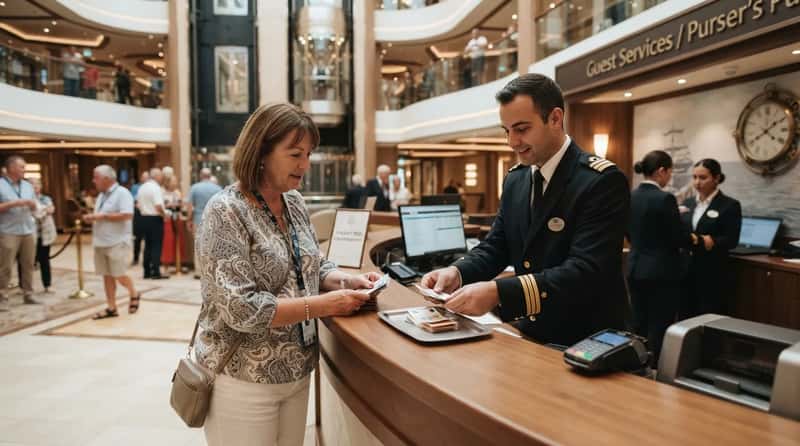
Pursers manage foreign currency exchange and monitor onboard revenue streams. Their rates and fees can sometimes beat the ATMs sitting right outside the port terminal.
Port ATMs often stack international withdrawal fees on top of currency conversion charges. The purser’s rates vary by cruise line, but they’re frequently just as good – or better.
Ask the purser the evening before a port day, not the morning rush. Some ships only exchange currency on sea days, so plan ahead.
Quick Compare
- Purser’s desk: No line, but (cite index=”24-1″>some lines add a service fee – Holland America adds 3% on cash advances – and the base rate is already marked up.
- Port ATM: (cite index=”23-2″>Fees can run $3 to $10 each time, on top of whatever your home bank charges.
- Either way: (cite index=”25-19″>always decline the “convert to home currency” prompt – it locks in a worse rate every time.
Currency isn’t the only thing this desk tracks that passengers overlook. There’s an entirely different category of lost value sitting in items guests misplace every single sailing.
#7 – Lost Items Go to the Purser First, Not the Crew
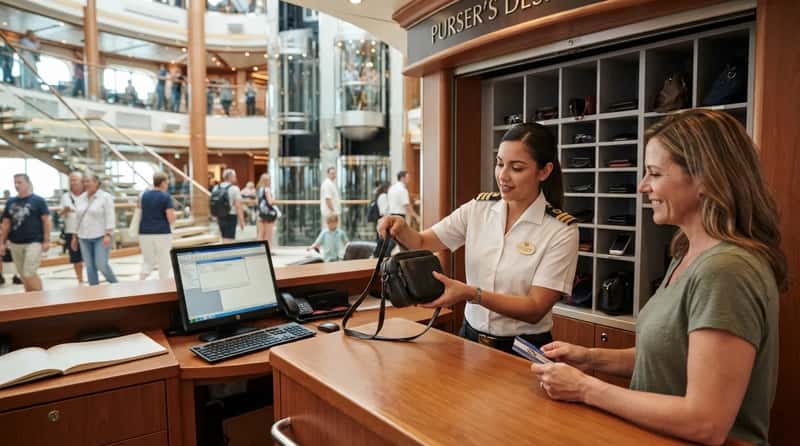
If you’ve lost something on the ship, the purser’s desk is your first call – not your cabin steward, not the excursion desk. The purser manages the lost-item process directly with housekeeping and security.
That coordination happens fast because the purser touches every department at once, in a way no single crew member can. Items retrieved quickly are almost always retrieved because the guest went to the purser within the hour, not at the end of the sailing when the trail has gone cold.
The purser also liaises constantly between guests and staff to keep small problems from becoming big ones. That’s exactly why going straight to them matters.
Losing an item is stressful, but there’s a proactive version of this same purser power – one that prevents problems before they start. It has to do with your passenger profile, and it’s #6.
#6 – The Purser Can Add Preferences to Your Passenger Profile
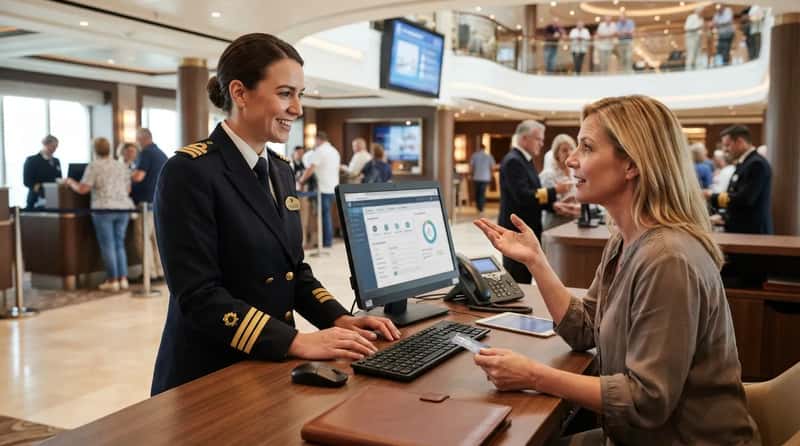
Here’s a little-known power move: the purser can note preferences on your passenger profile that ripple through every department on the ship. Dietary needs, pillow preferences, allergy flags, accessibility requirements – all of it, from one conversation.
Most guests assume these notes only happen at booking, or that they’ll need to repeat themselves to every department. They don’t – a single day-one visit can flag your preferences so dining, housekeeping, and excursions all see the same information.
This is the one conversation that scales across your entire cruise. Ask what they can add – the list is longer than most people expect.
Once your profile is sorted, there’s a completely different category of purser knowledge that has nothing to do with your cabin. It’s about the ports themselves.
#5 – Pursers Know Which Port Formalities Are Genuinely Flexible
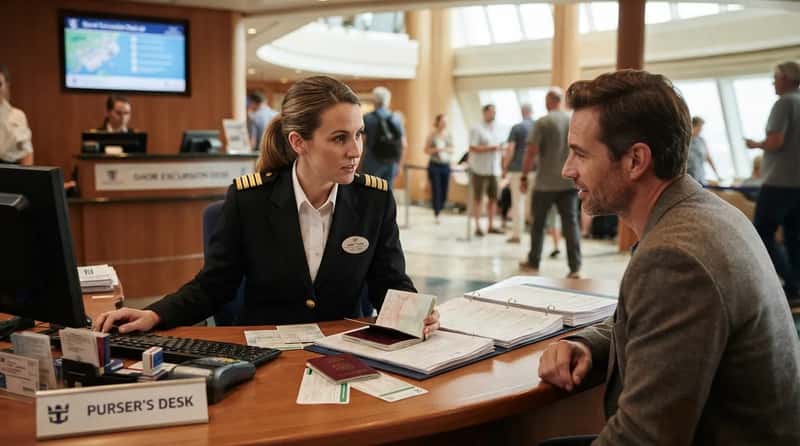
The purser handles visas and passports, prepares papers for every port, and works with immigration offices at each stop. That means they understand entry rules for dozens of nations most passengers never think about.
If you have a complicated travel document situation – an expired secondary ID, a passport nearing expiration, a visa question – the purser is the single best resource on that ship. Not Google, not the shore excursion desk.
Pursers handle legal compliance around travel documents as a core part of the job. Ask early – port-day morning is too late to fix a document problem.
Once you know the purser controls your travel document situation, the next piece of knowledge feels even more urgent – because it involves what happens when something actually goes wrong on the ship.
#4 – The Purser Can Escalate Complaints Faster Than Any Other Crew Member
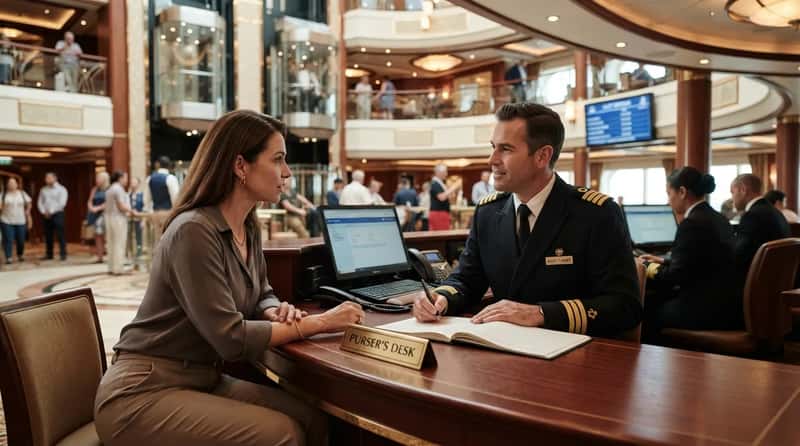
The purser is part hotel receptionist, part concierge, but the part most guests miss is the rank behind the title. The chief purser is often promoted to hotel manager – a rank equal to staff captain or chief engineer on many ships.
That means a formal complaint logged through the purser’s desk carries far more weight than a word to your cabin steward. Pursers often mediate sensitive situations directly.
The key is tone and timing. Arrive calm, specific, and early in the issue – not after three days of simmering frustration – because pursers respond to documentation and clarity.
Worth Knowing
- (cite index=”5-5″>The Hotel Manager oversees the entire Purser’s Department, from the Chief Purser down to Guest Services Officers.
- (cite index=”9-2″>The Chief Purser reports directly to the Hotel Manager, but (cite index=”9-3″>communicates straight with the Captain on ship-clearance matters.
- (cite index=”4-7″>Chief Pursers can earn up to $4,200 a month, and the role usually takes years of hotel or accounting experience to reach.
Use that desk strategically and your issue gets seen. Ignore it, and it disappears – which is exactly why the next secret matters, even though almost nobody talks about it.
#3 – Sports and Recreation Equipment Is Often Available Free – Just Ask
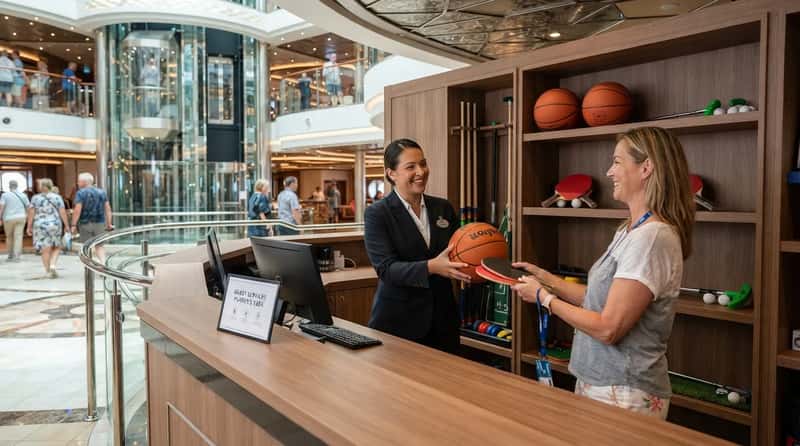
From basketballs to table tennis paddles, guest services is usually where to go for sports gear. Mini golf and shuffleboard equipment often live back there too, with no deposit required.
This is one of the most under-used perks on any mid-to-large ship. Equipment sits behind the desk across multiple cruise lines, and only the guests who ask are the ones actually using the courts and tables.
If your cabin or hallway is noisier than expected, ask guest services for earplugs too. The pattern is always the same: the purser’s desk has more than it displays.
There are two more secrets left, and they’re the ones that separate repeat cruisers from everyone else. #2 will change how you think about internet access on ships.
#2 – WiFi Problems Can Often Be Fixed Right at the Purser’s Desk
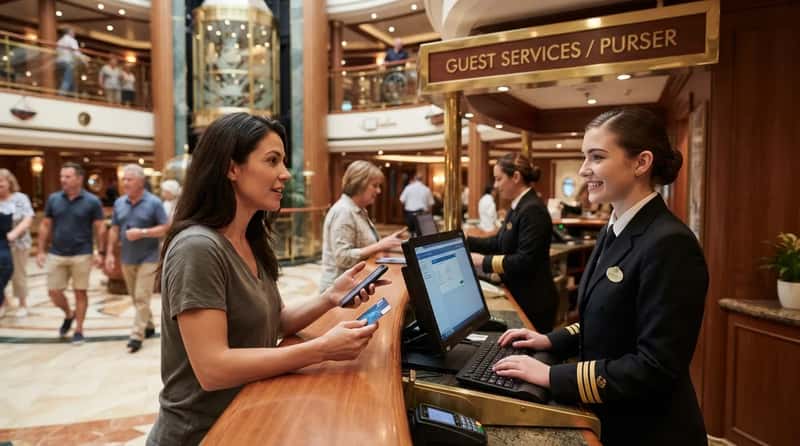
You don’t always need the long line at the internet desk. Guest services often has access to the same backend systems and can fix app and connectivity issues just as fast – sometimes faster.
Some cruise lines throw in free minutes if you sign up for a package on day one, and you can often get discounts by buying online in advance. If your package is already misbehaving, the purser can frequently reset it on the spot – no queue required.
Most passengers burn 45 minutes in the wrong line when the right line was five steps away. Ask the purser first, every time.
At a Glance
- Package pricing and speeds vary widely by cruise line, so compare before you sail.
- Booking WiFi online in advance is almost always cheaper than buying it once onboard.
- Guest services can often troubleshoot a stalled connection without a trip to the dedicated internet desk.
- Ask about multi-device or streaming-friendly tiers if you’re traveling with a family.
And if that’s not impressive enough, the #1 secret on this list is the one insiders quietly guard – because it touches nearly everything else on this list at once.
#1 – Printing, Document Help, and Behind-the-Scenes Requests Are All on the Table
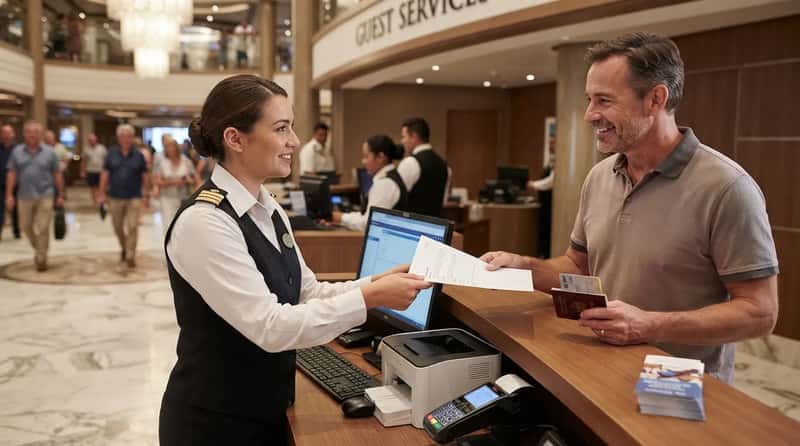
Got an email you need printed while you’re at sea? Forward it to guest services and they’ll usually print it for free, or for a small fee if it’s a big job.
That barely scratches the surface of what this desk will quietly do for guests who ask with confidence and courtesy. The real #1 secret is this: the purser’s desk runs on a “yes if possible, no if forced” culture – and most guests never ask anything at all.
Ask early, at the gangway or the desk during embarkation, when crew have the most flexibility. Be polite, friendly, and specific about what you want.
That’s the entire formula, across every secret on this list. Timing, politeness, specificity – that combination unlocks more of your cruise than any suite upgrade ever will.
The Bottom Line
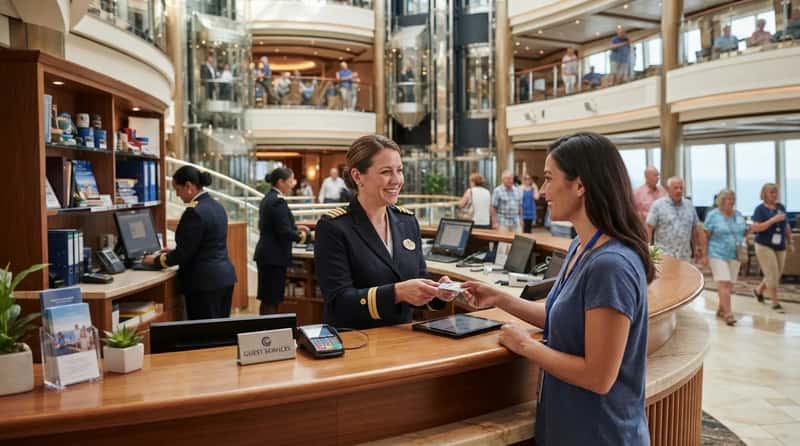
The purser’s desk is the most powerful, most ignored square metre on any cruise ship. Free seasickness meds, profile preference flags, loyalty perks that never auto-apply, billing checks, currency guidance, lost item recovery, sports gear, document help, WiFi fixes – it’s all sitting right there behind that counter.
The guests who know how to approach this desk on day one consistently leave the ship with things other passengers never even knew existed. Ask early, ask politely, ask specifically – that’s the whole formula, and it works every time.
Which of these surprised you most – or do you have a purser’s desk win we didn’t include? Drop it in the comments.
Bonus: The Insider Trick Pursers Save for Last
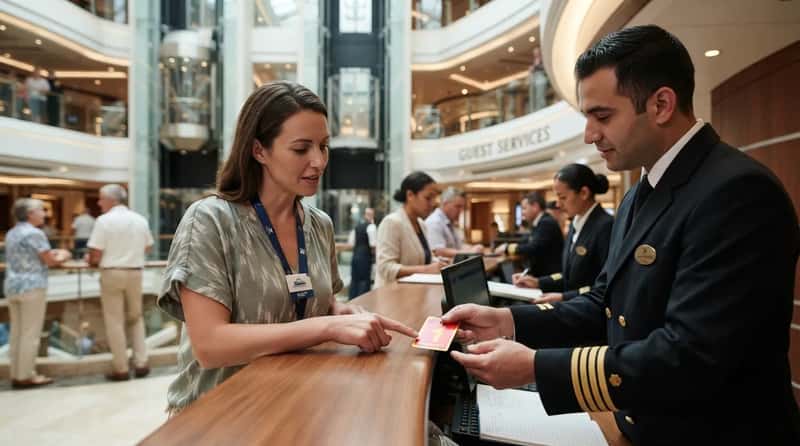
Here’s the one most travelers never think to ask for: a priority disembarkation tag for the final morning, secured directly through the purser’s desk within your first 24 hours onboard.
Most ships hold back a limited allotment of early walk-off slots for guests with tight flights or ground transport – but they’re rarely advertised, and they go to whoever asks first.
- Visit guest services on day one and ask specifically for an early or priority disembarkation tag.
- Mention your flight time or transfer time – staff prioritize documented time constraints.
- Get the tag or confirmation attached to your cabin account, not just a verbal promise.
- Confirm again two days before the end of the cruise, since allotments can shift as the sailing fills in.
Skip this step and you’re stuck in the last group off the ship, waiting an hour or more past guests who simply asked earlier. Ask on day one, and you walk off first instead of last.