Picture the cruise dinner you were promised: a quiet table for two, a view of the water, and nobody else in earshot. Now meet the real version. By the time you reach the host stand, the seating chart may already be settled, and nobody asked what you wanted.
Couples get squeezed in tight, solo travelers get steered toward bigger tables, and on some ships the same strangers sit beside you all week. Some cruisers say that’s the best part of the trip. Others call it the biggest mistake cruise lines keep making. The strangest part is why it happens, and the arrangement waiting at #1 isn’t what you’d expect.
#15 – The “Private” Table for Two That Sits Almost on Top of Its Neighbor
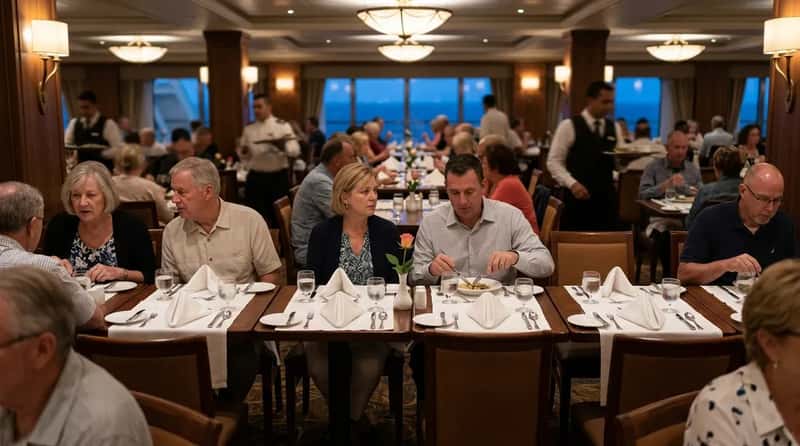
That cozy table for two you were handed? It may be part of a bigger puzzle. Some two-tops are placed so close together that dinner feels shared, even though it’s technically private. Nobody announces it, and nobody asked for it.
Cruisers describe it often. One Carnival passenger said that if you don’t opt in to sharing, you’ll probably get a two-top, and those tables sit close to others on both sides. Another solo sailor was given a two-top each night, always beside a couple, and said it led to easy conversation. You can get a “private” table and a built-in dinner companion at the same time.
But that’s nothing compared to what happens to groups of four or more at #14…
#14 – Why Foursomes Almost Never Meet a Stranger at Dinner
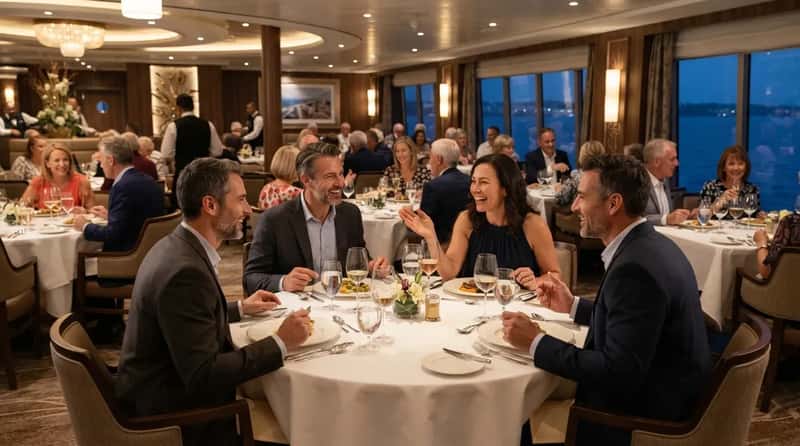
If you travel in a group of four or more, the table puzzle works in your favor. Solo travelers and couples are the most likely to be paired up with others, while groups of four or more are far more likely to get a table of their own.
Bigger parties are simply easier to seat together, so the host doesn’t have to match them with anyone. Nobody has to ask for a table to themselves, because the room’s math hands it over. Couples and solos become the flexible pieces that fill the gaps. Some cruisers say that feels unfair to people traveling as a pair.
Wait until you see what solo diners get quietly handed at #13…
#13 – The Larger Table Quietly Built for Solo Travelers
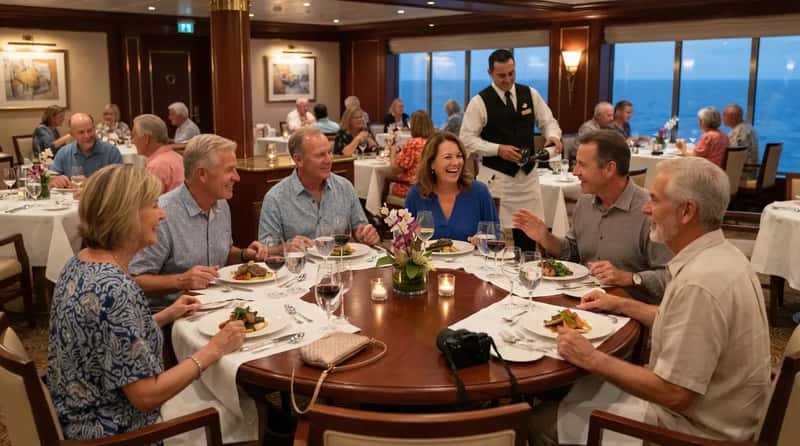
Dining alone at sea doesn’t always mean a lonely table for one. A solo traveler on a 2016 Azamara cruise raised her worries with the dining room manager. He told her the ship made up larger tables for singles, and she joined them several times.
Another solo cruiser described a host on a smaller ship who always asked whether she wanted a communal table or a single seating. The seating plan was often built around solo guests before they even asked. The Azamara traveler said her neighbors started conversations every time. That’s one traveler’s account, not a rule for every ship, but it shows the thinking behind the chart.
But asking for company doesn’t always work, as #12 shows…
#12 – The Solo Diner Who Asked for a Group Table and Got a Table for Two
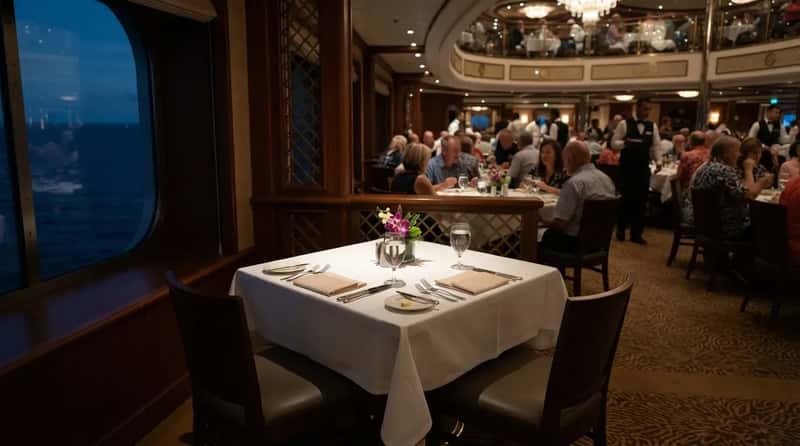
Sometimes the ship’s arrangement overrules your request. A solo cruiser wrote in 2024 that both times she sailed alone on Royal Caribbean and asked for group seating, her assigned table turned out to be for two, or the smallest one available.
Another solo traveler on a ship with assigned seating said she asked to sit with other travelers and ended up alone at a corner table. Asking for company is no guarantee you’ll get it. Her advice for traditional dining was blunt: scout out your table ahead of time. The outcome often comes down to how the room is laid out that night.
Table location can matter in a way most people never think about, as #11 reveals…
#11 – The Assigned Table With a Ship’s Rumble Underneath
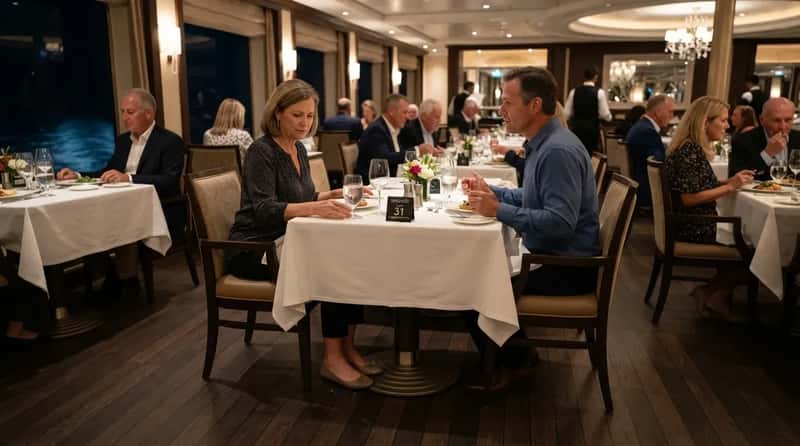
Where the headwaiter puts you can change your whole dinner. One cruiser said that on assigned dinner seating, the headwaiter set the seats at the start of each cruise. Then came an unexpected twist.
She and her travel partner changed tables because they disliked the rumble of the ship beneath their feet. They moved to a table with four other diners. A seat can be chosen for you without a word about noise, motion, or view. That’s one passenger’s experience, not a rule for every ship, but it shows table location is a real factor even when no one thinks to mention it.
Breakfast and lunch run on a different set of rules, and #10 is where it gets interesting…
#10 – The Breakfast Table Where the Head Waiter Decides You’re Social
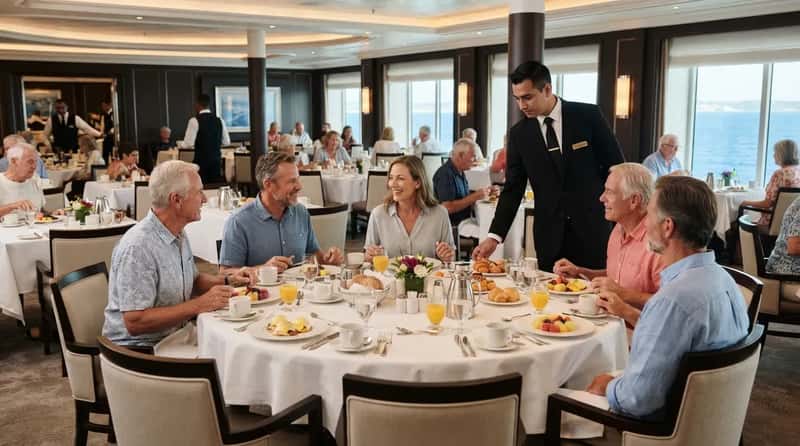
Dinner gets all the attention, but the quiet seating tricks start in the morning. One solo traveler said the head waiter in the formal dining room always asked if she wanted a community table at breakfast and lunch. She said yes every time.
That isn’t unusual. Even on larger ships, shared tables can still show up at breakfast or lunch in the main dining room, though those meals are more relaxed and less structured than dinner. The same ship that gives you a private dinner table may seat you with strangers over eggs. It’s often the loosest, friendliest meal for meeting people.
But the real reason behind all this seating isn’t friendship, as #9 shows…
#9 – The Real Reason Strangers Get Seated Together: A Packed Room
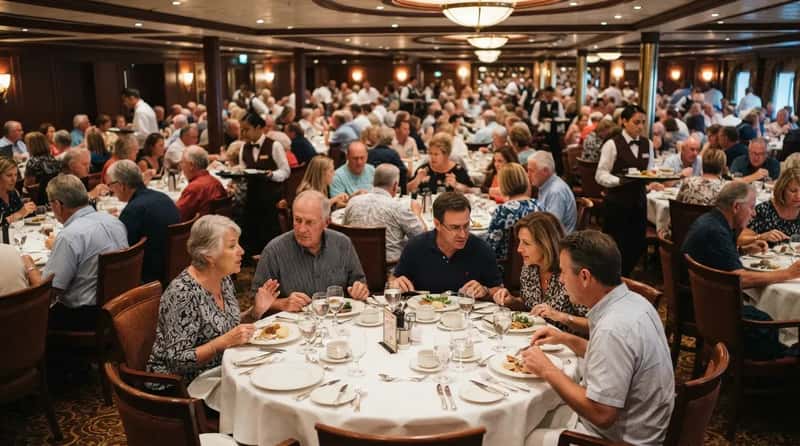
Here’s the unromantic truth about table sharing. One cruise guide says it can simply help manage space in busy dining rooms. The same guide adds that, from the cruise line’s side, it’s the easiest way to fill the room at peak times.
So it may be the floor plan doing the matchmaking, not the tradition. Friendly conversation can be a side effect of a space problem. Smaller or more traditional ships have less flexibility, which can make sharing more common, especially on busy sailings. Some cruisers argue it’s the cruise line’s convenience dressed up as charm.
Fast Facts
- Sharing can help a busy dining room manage its space.
- At peak times, it’s the easiest way for the line to fill every seat.
- Smaller, more traditional ships have less room to maneuver.
- Busy sailings make shared tables more likely.
Your cabin category can quietly shape your table too, and #8 reveals how…
#8 – The Cunard Rule Where a Suite Changes Your Seat
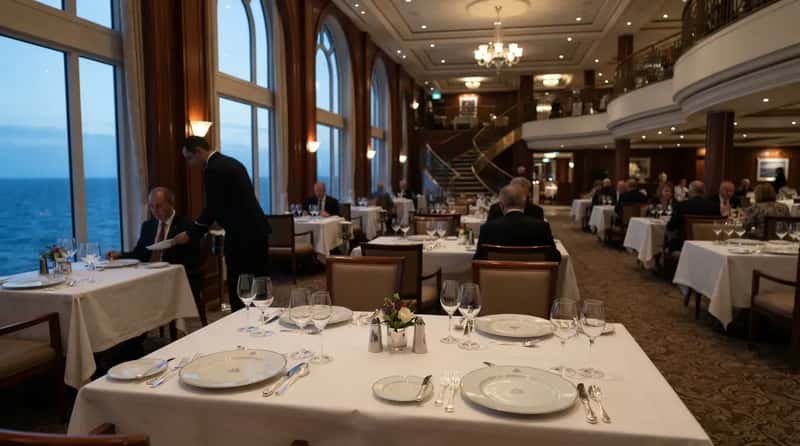
On the most traditional lines, your table can depend on where you sleep. One cruise guide says Cunard stays traditional: unless you’re staying in a suite, expect assigned tables and fixed dining. That shapes who ends up beside you.
Another guide adds that with a fixed dining time you may be expected to share, though you can request a table for one or two and they’ll try where possible. Your booking can quietly decide whether you share a table at all. Fans love the old-school sense of occasion. Critics call it an outdated way to sell a seat.
Another major line follows a similar pattern, and #7 is where it gets surprising…
#7 – The MSC Pattern Where Cabin Category Hints at Table Size
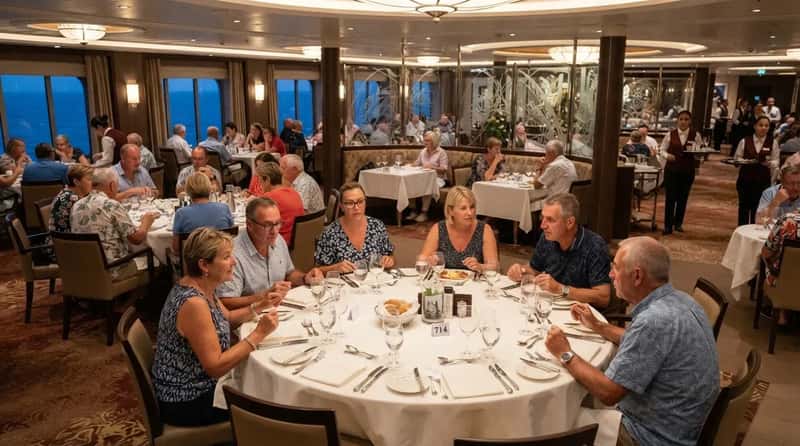
Cabin class can also influence who you sit with on mainstream ships. One cruise guide says that on MSC, table sharing is common in the main dining room, especially in lower cabin categories. That’s a pattern, not a promise.
In practice, a guest in a lower-priced room may find the dining room treats them differently from the person in a suite down the hall. Nobody tells you the seating chart has a pecking order. Policies change from ship to ship and sailing to sailing, so check the line’s current dining rules before you pay.
Quick Compare
- MSC: sharing is common in the main dining room, especially in lower cabin categories.
- Cunard: assigned tables and fixed dining unless you’re in a suite.
- Holland America: shared tables are still frequent, particularly with fixed-time dining.
- Norwegian Freestyle: no set times and no shared tables by design.
Some lines are famous for their fixed seating tradition, and #6 is next…
#6 – Holland America’s Fixed-Time Tables Full of New Faces
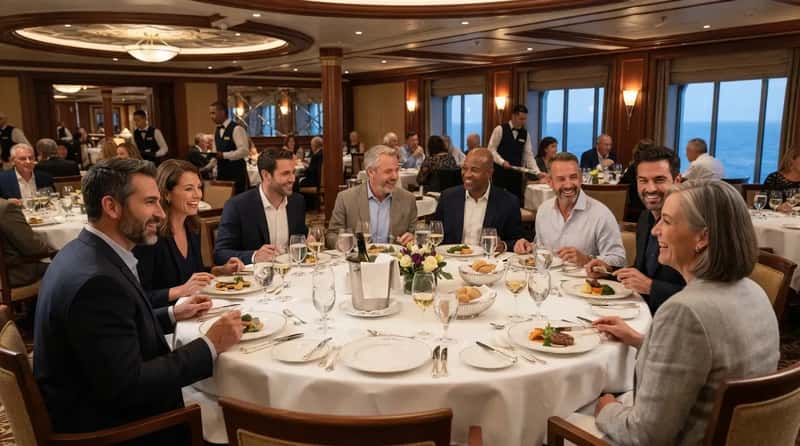
If you choose a fixed dining time, don’t be surprised by strangers. One cruise guide says that on Holland America, shared tables are still frequent, particularly for fixed-time dining. The setup is a throwback by design.
The old model worked like this: guests dressed up, arrived at the same time each night, and sat at a large shared table, often with complete strangers. You could spend a week with people you’d never have chosen. For some, those tablemates became lifelong friends. For others, it’s the main reason they avoid the main dining room entirely.
One small British line built its entire dining room around this idea, as #5 reveals…
#5 – The Dining Room Too Small for Everyone to Sit in Pairs
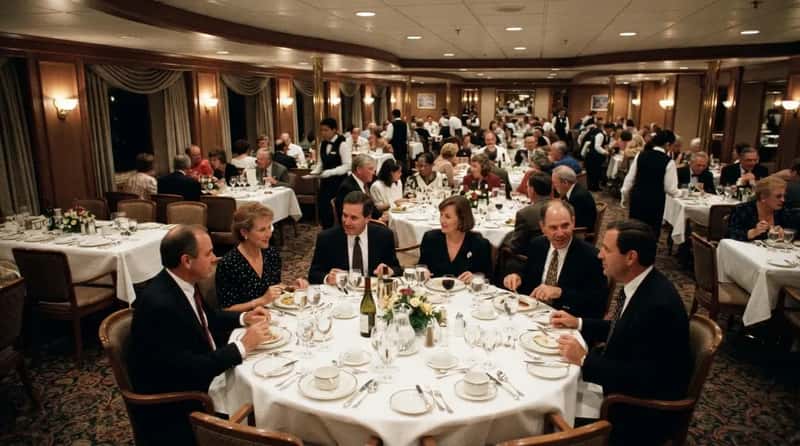
Sometimes the arrangement is simply a matter of a ship’s age and size. Ambassador is a traditional British line with a small fleet of older ships. A cruise writer explained that table sharing probably suits them, since there are few other dining venues and the main room isn’t big enough for lots of tables for two.
The same writer notes that their ships date to the 1990s, when table sharing on cruises was really the norm. The layout of the room basically makes the decision for you. Modern ships are designed with far more venues to spread diners across. A smaller, older ship simply doesn’t have that luxury.
Worth Knowing
- Ambassador runs a small fleet of older ships.
- Its ships date to the 1990s, when sharing was the norm.
- Few alternative venues means the main room carries the whole crowd.
- The main room can’t fit many tables for two.
One line takes this even further, and #4 might change how you picture a cruise dinner…
#4 – Fred. Olsen’s Same Table, Same Time, Same Companions
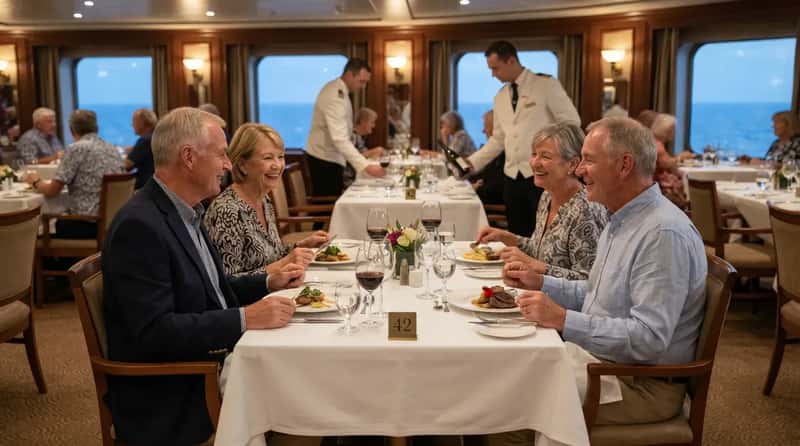
Few lines lean into tradition quite like Fred. Olsen. One cruise guide says you should expect the same table, time, and companions every evening. Another writer calls it a traditional line that still operates a shared table system.
That setup creates a rhythm. By day three you’re basically part of a dinner club you never joined. The waiter learns your table’s habits, and your tablemates know your stories. For people who love routine and conversation, that’s the appeal. For anyone who wanted a quiet dinner alone, it can feel like being cast in a show.
Still, the trend has swung hard the other way, and #3 shows just how far…
#3 – The Freestyle Revolution That Ditched Shared Tables
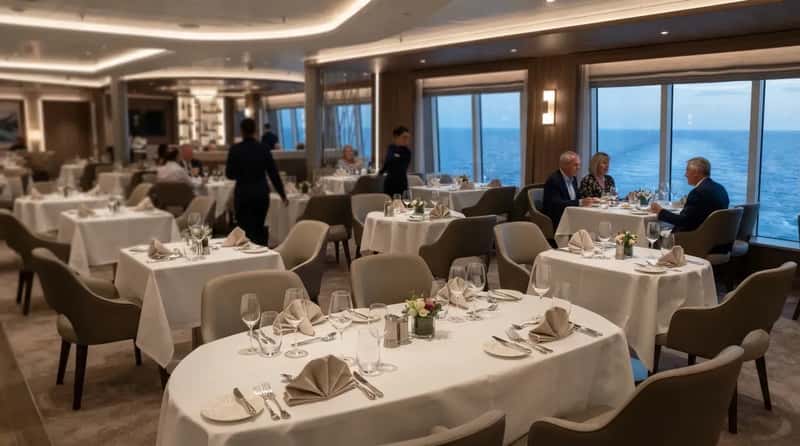
The shared-table era isn’t the whole story anymore. One cruise guide notes that Norwegian Cruise Line introduced “Freestyle Dining” years ago, dropping set times and shared tables for a dine-when-you-like model. That changed expectations across the industry.
Others followed. The same guide says private tables are now standard on newer P&O ships like Iona and Arvia, and that Celebrity’s Select Dining lets you request a private table. On many modern ships, the stranger at your table is now the exception. The shift shows how much newer ships are built around guests’ preferences.
Even “flexible” dining has a catch, and #2 might surprise you…
#2 – The Shared-Table Reservation That Can’t Be Guaranteed
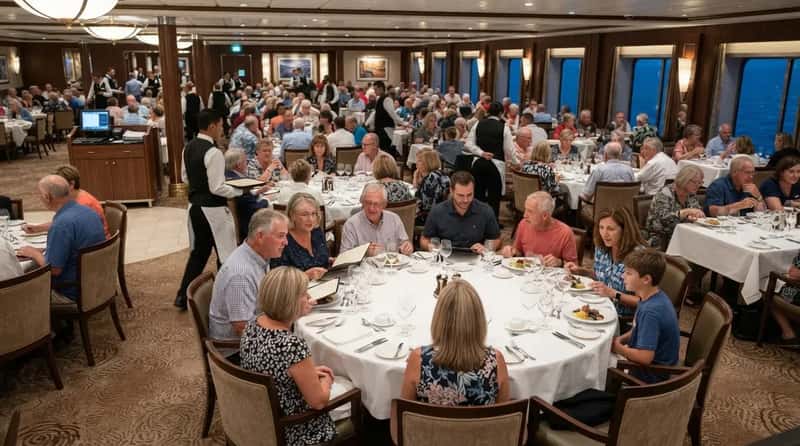
Flexible dining has a hidden catch. One forum commenter in 2023 argued that most lines are now at full capacity and are shifting everyone to “Anytime” dining, where even a reservation for a shared table can’t be guaranteed. That’s one diner’s view, but it fits a wider trend.
The same commenter noted that some people still love old-school fixed seating with the same large table, the same people, and the same waiter. Not many mainstream lines still offer it. The tradition many cruisers remember is fading from the mainstream. The table you picture from old cruise films may no longer be on the menu.
But the most unexpected table arrangement of all is the one waiting at #1…
#1 – The Printed Invitation to a Table You Never Asked For
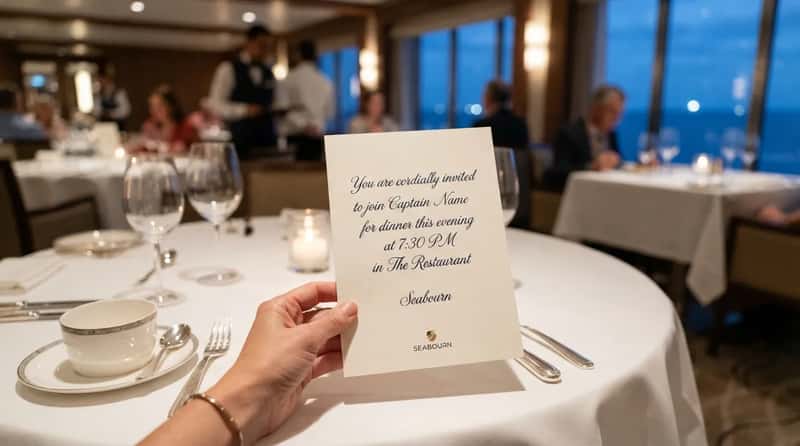
The best arrangement may be the one that arrives on paper. A writer on a 19-day Seabourn voyage said it’s common to receive printed invitations to dine with others on board. No request. No sign-up. Just a card.
The hosts aren’t random, either. Senior crew, entertainers, and other passengers use this retro ritual to make new friends and reconnect with old ones. A stranger’s table can turn into an invitation to a real dinner party. In an age of apps and reservations, it’s the rare seating arrangement that feels like an honor instead of a puzzle piece.