Most people assume airport help for older travelers means someone pushing a wheelchair and calling it a day. The reality is stranger and far more reassuring: trained greeters are quietly working the phones, the gate boards, and even the family group chat long before a traveler realizes anything was handled at all.
What actually happens behind that friendly “Mr. Johnson?” at the curb involves more coordination than almost anyone expects. Here’s what airport insiders actually do, item by item, starting with the basics and building to the parts families never see coming.
#15 – Quietly Requesting a Wheelchair Before You Even Ask
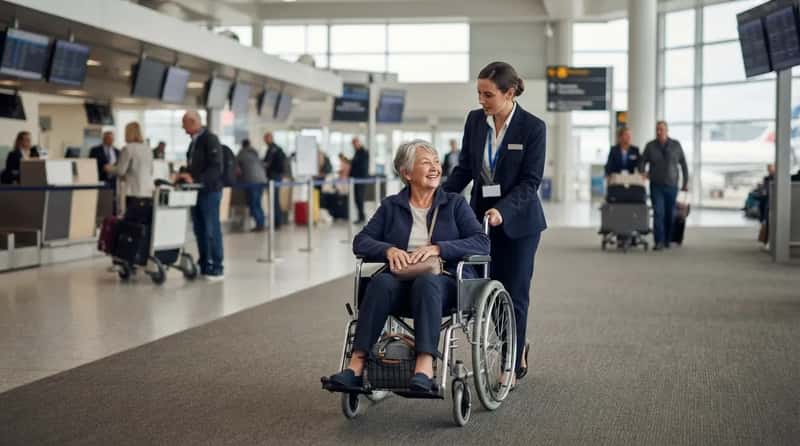
Meet-and-greet staff routinely arrange mobility support before a traveler ever says a word about needing it. Bookings get flagged for age and mobility needs in advance, so a wheelchair is often already rolling toward the gate before the passenger even reaches the counter.
Here’s the part most travelers don’t realize: basic wheelchair assistance is usually free through the airline itself. Meet-and-greet staff simply coordinate the request and the timing, then guide travelers along the fastest, least exhausting route to avoid unnecessary walking. Nobody has to ask twice.
#14 – Timing Your Curbside Arrival to Skip the Longest Lines
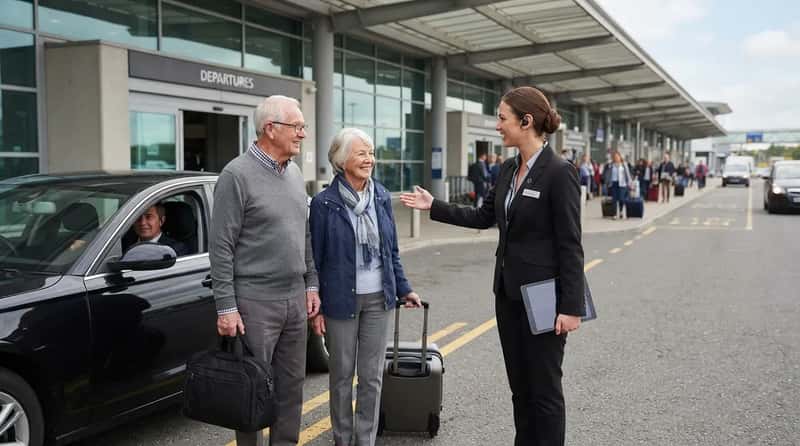
Greeters don’t just show up randomly – they track flight schedules and traffic patterns to time the pickup down to the minute. It isn’t guesswork.
Staff monitor terminal congestion in real time and adjust the meeting point so seniors avoid the worst crowd surges near check-in. That means less standing, less lifting, and less waiting before a single bag even touches the scale.
#13 – Watching Gate Changes So You Don’t Have To
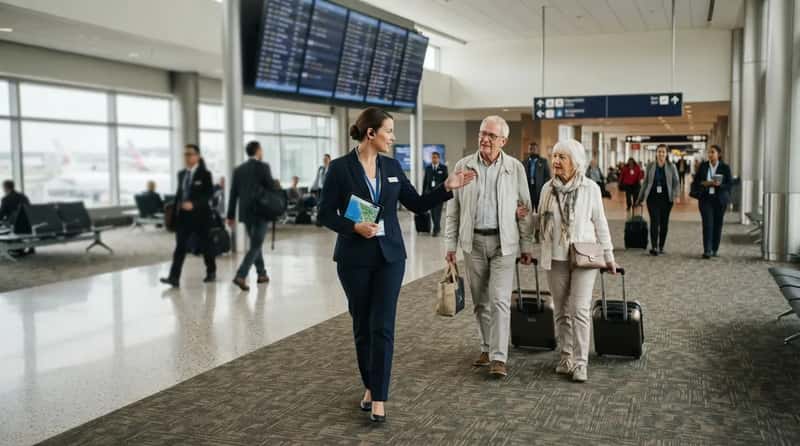
Nothing rattles an older traveler faster than a gate change mumbled over a garbled speaker system. It’s the kind of moment that turns a calm trip into a scramble.
That’s why greeters track flight schedules and terminal maps in real time, guiding travelers to the correct gate the moment it changes. Most people never notice this happening – they just feel their escort suddenly turn left instead of right, already rerouted before the overhead announcement even finishes.
#12 – Handling Heavy Bags From Curb to Counter
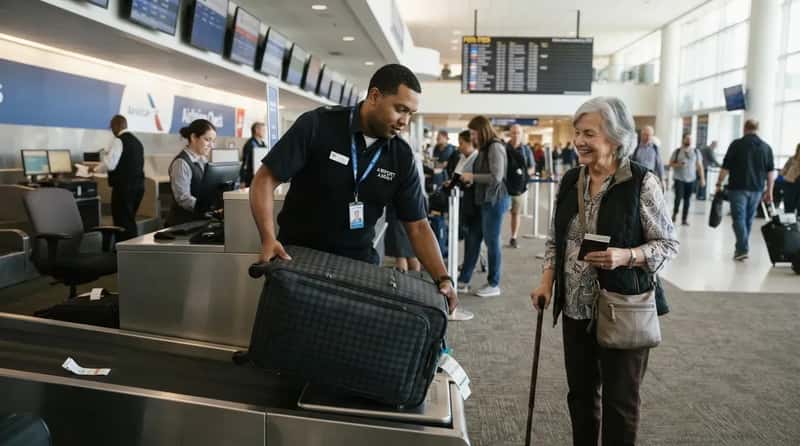
Lifting a 40-pound suitcase onto a scale sounds minor until you’re 72 with a bad shoulder. Most airports no longer offer automatic porter service, which leaves plenty of seniors wrestling with luggage alone.
With meet-and-greet support, a porter meets the traveler right at the curb and handles the bags from there. Many families booking this service don’t realize it’s the fatigue-and-injury prevention, not the convenience, that actually matters most.
#11 – Steering You Toward the Right Security Lane
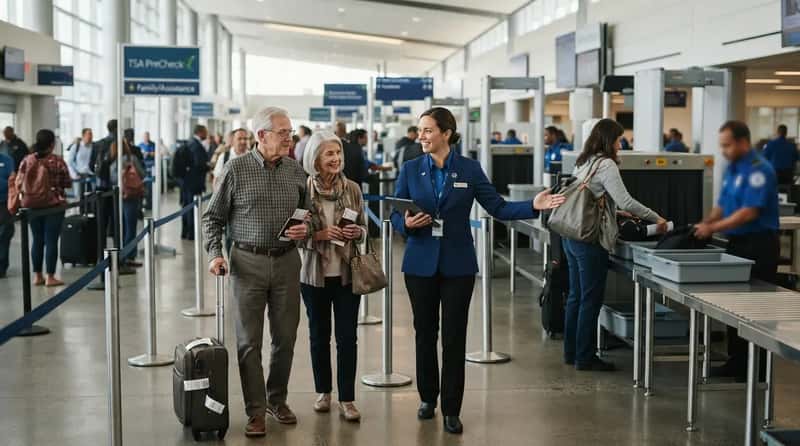
Not every security lane is created equal, and staff quietly know which ones move faster for older travelers. They also make sure documents are already in hand before reaching the checkpoint.
Greeters guide passengers toward the lane suited to their needs rather than whichever line simply looks shortest. It sounds simple, but it eliminates the single most common source of pre-flight panic: standing in the wrong line with ten minutes on the clock.
#10 – Coordinating TSA’s Discreet Extra Screening Support
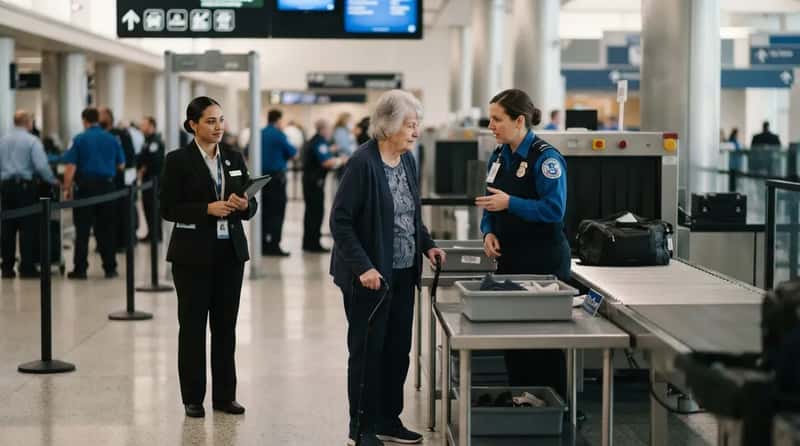
Here’s something most travelers over 60 have never heard of, and it costs nothing. TSA Cares offers free assistance to travelers with disabilities, medical conditions, and other special circumstances, and it specifically covers expedited screening for passengers 75 and older.
Meet-and-greet staff often quietly file this request on a traveler’s behalf. Passengers 75 and older can typically leave their shoes on during screening, and light jackets are the only outer layer usually required to come off. Most families never even know this exists until a greeter mentions it in passing.
Fast Facts
- TSA Cares assistance is free for any traveler who requests it
- Expedited screening applies to passengers age 75 and older
- Shoes can typically stay on during the screening process
- Light jackets are usually the only outer layer that needs to come off
#9 – Rebooking You Quietly When Flights Get Disrupted
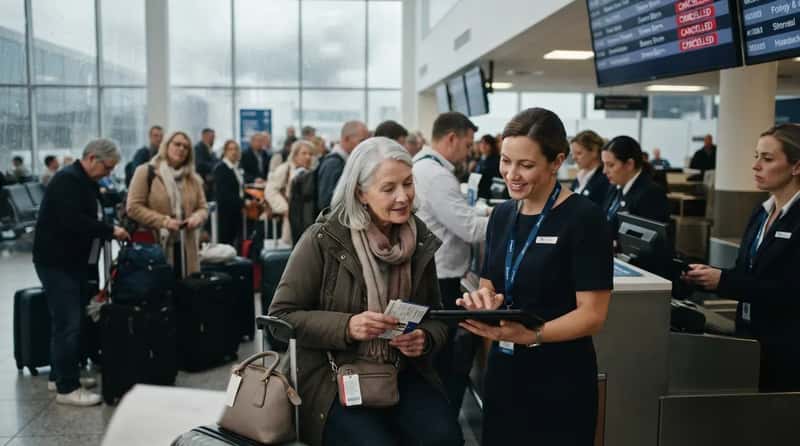
Flight cancellations can turn into full-blown crises for older travelers standing alone at a counter – so staff step in before that ever happens. Rebooking, rerouting, and dealing with airline agents get handled directly.
Some travelers view this as an unnecessary luxury, but plenty of frequent flyers now argue it’s the single most valuable part of the entire service. It’s the piece nobody thinks they need – until a storm rolls in and the whole terminal turns into chaos.
#8 – Finding a Quiet Corner When Crowds Get Overwhelming
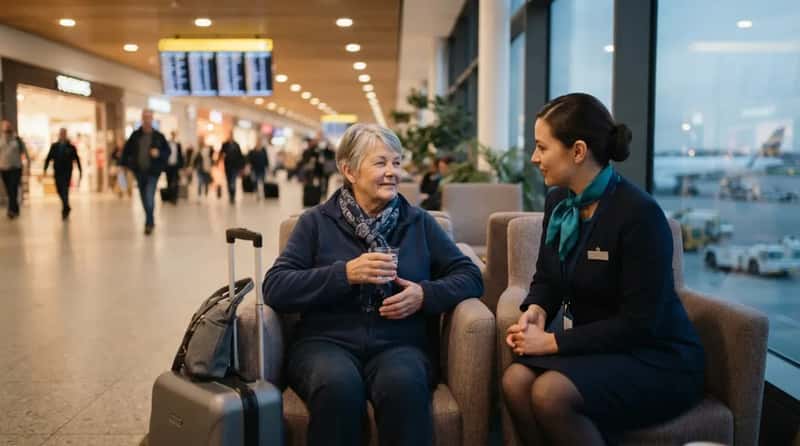
Loud terminals aren’t just annoying for older travelers – they can be genuinely disorienting. Flashing screens, overlapping announcements, and shoulder-to-shoulder crowds add up fast.
For travelers who get overstimulated easily, staff quietly steer them toward quieter corners, lounges, or waiting areas instead of the main concourse. Nobody announces this move; it just happens the moment a traveler seems overwhelmed.
Worth Knowing
- Bright screens and echoing PA systems can trigger sensory overload fast
- Quiet lounges or corner seating offer an easy reset before boarding
- Staff often notice body language cues before a traveler says anything
- A short pause in a calmer spot can prevent a bigger stress spiral later
#7 – Prepping Documents Before You Reach the Counter
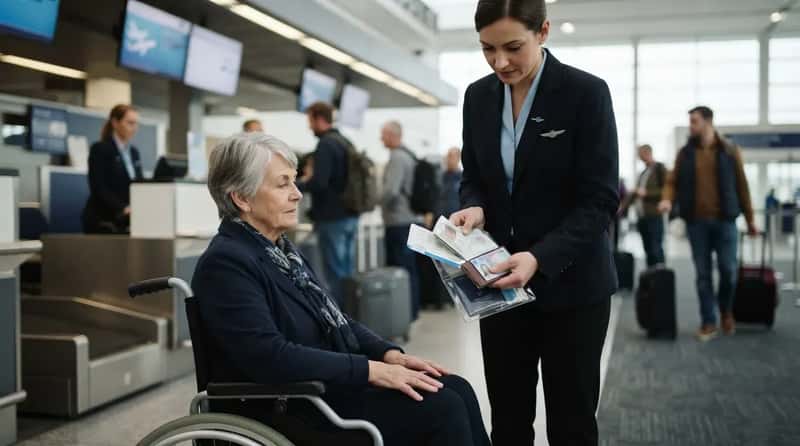
Fumbling for a boarding pass or ID while a line grows behind you is one of the most common airport stress points for seniors. It’s also one of the most visible.
Staff quietly organize passports, boarding passes, and IDs before an agent even asks for them. It’s a small detail, but it prevents the exact kind of public fumbling that makes people dread flying alone.
#6 – Escorting You Straight to the Gate, No Detours
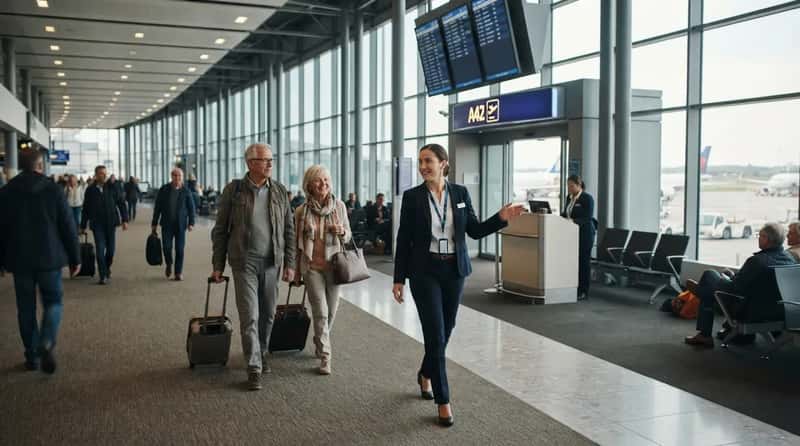
Confusing terminal maps and shifting signage seem almost designed to frustrate infrequent flyers. A wrong turn can eat up precious minutes before a flight.
Some argue this level of hand-holding feels excessive for able-bodied seniors, but staff quietly note it’s rarely about physical ability. It’s about avoiding the panic of getting lost in an unfamiliar terminal with a boarding time creeping closer.
#5 – Managing Tight Connections Behind the Scenes
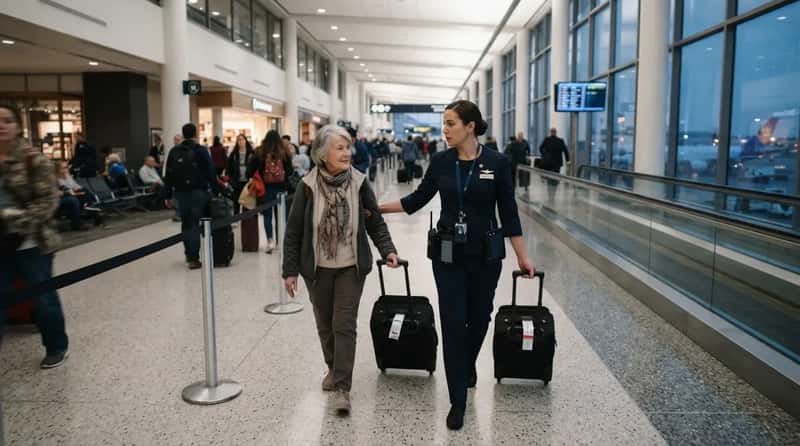
Tight layovers are stressful at any age, but they become genuinely risky for older travelers navigating massive international hubs. A ten-minute miscalculation can mean a missed flight entirely.
Agents personally escort travelers between terminals and navigate priority fast-track lanes to make sure they reach the correct gate safely. Most families never see the coordination happening in the background – just the relief on a parent’s face when they land on time anyway.
Quick Compare
- Solo traveler: navigates unfamiliar terminal maps alone, racing the clock
- Escorted traveler: walked directly toward the next gate via priority lanes
- Solo traveler: risks missing boarding by minutes in massive hub airports
- Escorted traveler: reaches the gate with time to spare, no guesswork involved
#4 – Watching for Memory Lapses and Confusion
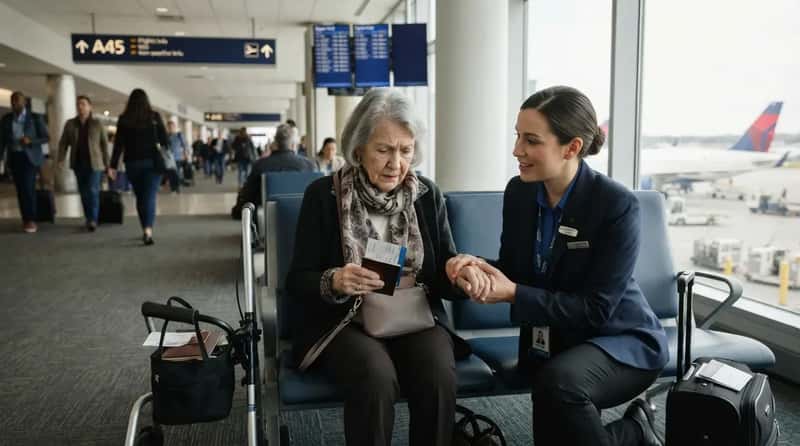
This one rarely gets talked about, but it’s quietly one of the most important things staff do. Conditions like early-stage dementia, anxiety, or memory difficulties often aren’t obvious, but they can cause real disorientation in busy airport settings.
Trained greeters are taught to notice subtle signs – repeated questions, hesitation at signage, a forgotten boarding pass – and respond with patience instead of urgency. In one documented case, an 85-year-old woman with limited mobility and early-stage dementia received wheelchair assistance, expedited security clearance, and steady emotional support from a staff member who stayed with her until she was comfortably seated on the plane.
#3 – Keeping Family Updated Without You Lifting a Phone
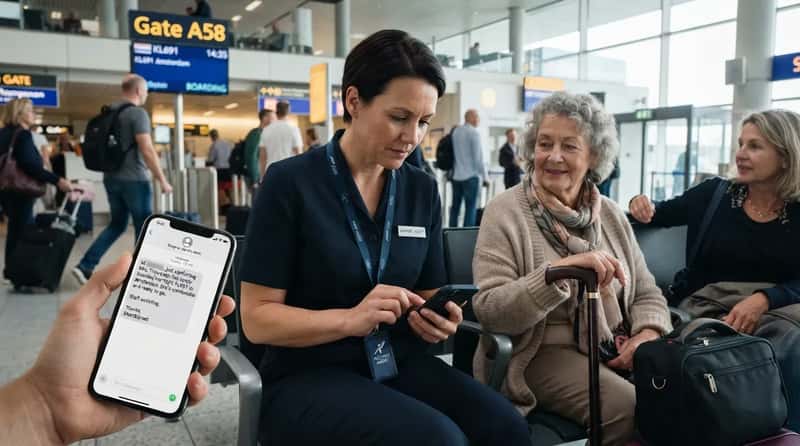
Adult children worrying from three time zones away is one of the quiet driving forces behind this entire industry. A missed text can spiral into a frantic phone call within minutes.
Behind the scenes, staff coordinate wheelchair services, baggage handling, transit connections, and immigration assistance so the traveler never has to manage it alone. Families rarely realize how much reassurance is baked into this service until they get one simple text: “boarded safely.”
#2 – Guiding You Through Customs Like a Personal Translator
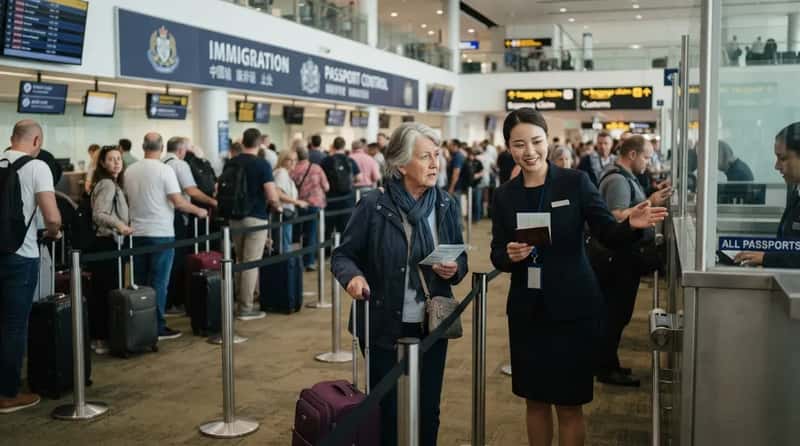
International arrivals halls are chaotic even for confident travelers – and downright bewildering for first-time senior flyers. Long immigration lines and unfamiliar forms only make it worse.
After landing, staff guide seniors through immigration and baggage claim, then help arrange ground transportation to their next destination. Language barriers and confusing paperwork get quietly smoothed over with the same calm, practiced patience – no drama, no rushing, just steady guidance through what can feel like a maze.
#1 – Staying by Your Side Until You’re Safely in Your Seat
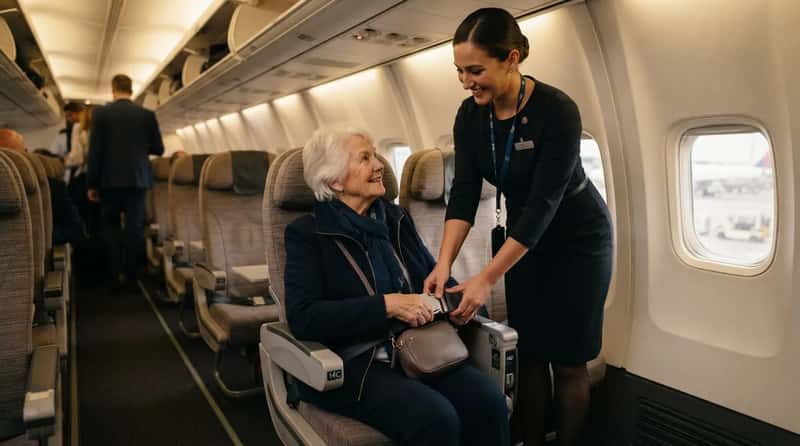
This is the detail almost nobody expects, and it’s exactly why families keep booking this service year after year. A trained representative stays with the traveler from the first meeting point all the way to the boarding gate.
It isn’t a single task – it’s a running thread of quiet supervision from curb to cabin door. For travelers who’ve spent decades navigating airports solo, having someone simply stay until the seatbelt clicks shut is often the most emotional part of the entire trip.
Why It Stands Out
- Continuous escort from curb to cabin door, not just a single handoff
- One familiar face throughout, instead of rotating staff members
- Peace of mind that lasts the whole terminal experience, not just check-in
- Often described by families as the most reassuring part of the whole trip
None of these fifteen things happen with fanfare. They happen quietly, in the gaps between announcements, while most travelers are busy hunting for their gate number.
As more older Americans take to the skies each year, these small, invisible handoffs are shifting from a rare luxury to something families increasingly expect. What surprised you most on this list – the memory-lapse watch, the customs escort, or something else entirely? Drop your own airport story in the comments.