Walk into any all-you-can-eat spot in America on a Tuesday afternoon, and the regulars over 60 aren’t just filling seats – they’re running an entire unofficial playbook that most staff have learned to read like a script. Managers will tell you these guests are quieter, steadier, and far more observant than the stereotype gives them credit for.
But scratch the surface, and a few of their habits are stranger, more loyal, and honestly more surprising than anyone expects walking in the door. Here’s what buffet managers actually say once the shift ends and the guard comes down.
#15 – The Doggy-Bag Habit That Never Left
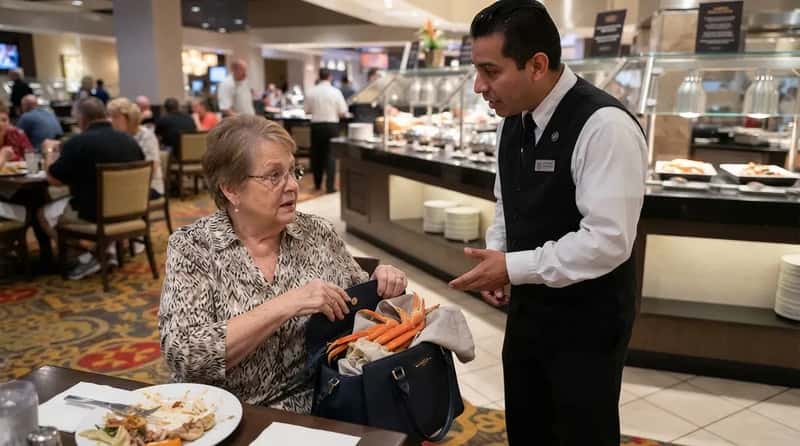
Ask any longtime buffet manager what surprises them most, and food-hoarding tops the list almost every time. It’s not about being cheap. It’s a habit built from decades of stretching a dollar, and it hasn’t faded just because the meal is already paid for.
Show me an old person and I’ll show you someone who has seven cookies in a napkin in her purse ‘for the ride home.’
A casino buffet manager
Sometimes it goes further than cookies. One particular woman was notorious for trying to smuggle crab legs out in her Louis Vuitton purse, and she regularly got caught red-handed. The kicker: each time she was busted, she’d calmly empty the crab legs back onto the tray, then speed off in her Mercedes. Managers say it’s rarely about need – it’s about principle.
#14 – The Same Table, Every Single Time
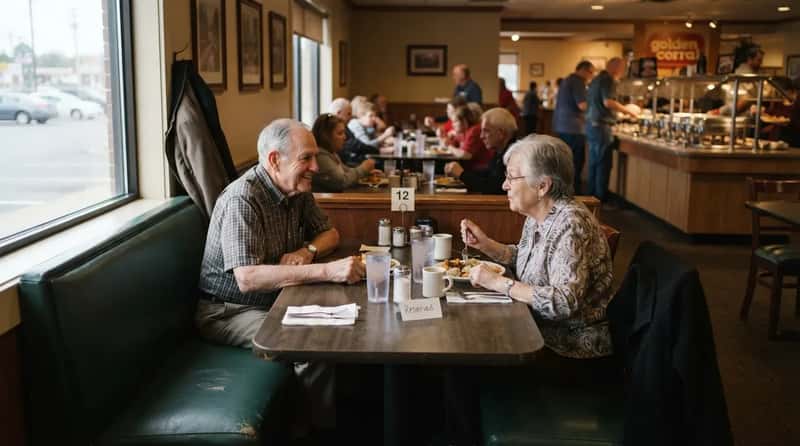
Ask a host to seat a regular over 60 somewhere new, and you’ll get a polite but firm “no thank you.” Staff at buffets nationwide describe a near-ritual attachment to one specific table, one specific seat, sometimes even one specific side of the booth. It’s not pickiness – it’s comfort, and it’s consistent enough that hosts often reserve the spot without being asked.
Researchers who study older diners have actually mapped this out. Studies identify two distinctive segments among mature diners: frequent and convenience restaurant patrons, and occasional and family restaurant patrons. The frequent group, unsurprisingly, is the one staff recognize on sight – same table, same order, same time of day, week after week.
#13 – The Paper Menu Standoff
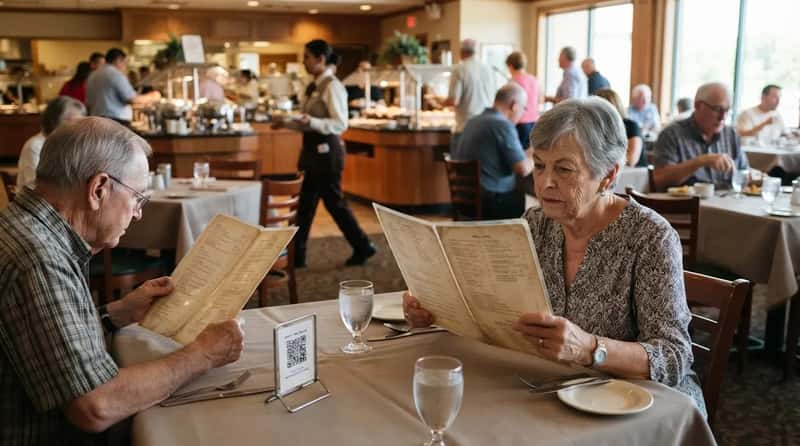
Hand a guest over 60 a QR code and watch what happens. Nothing. They’ll wait for an actual laminated menu, and most buffets have learned to keep a stack behind the host stand specifically for this crowd. It’s become such a predictable pattern that some restaurants never bothered phasing paper out completely.
The data backs up what managers already suspected. A 2024 Datassential survey found that 78% of boomers hadn’t accessed a menu via QR code, pointing to a strong preference for physical menus. That’s not stubbornness – it’s a generational trust gap that no app redesign has managed to close.
#12 – The Early-Bird Hour Everyone’s Fighting For Now
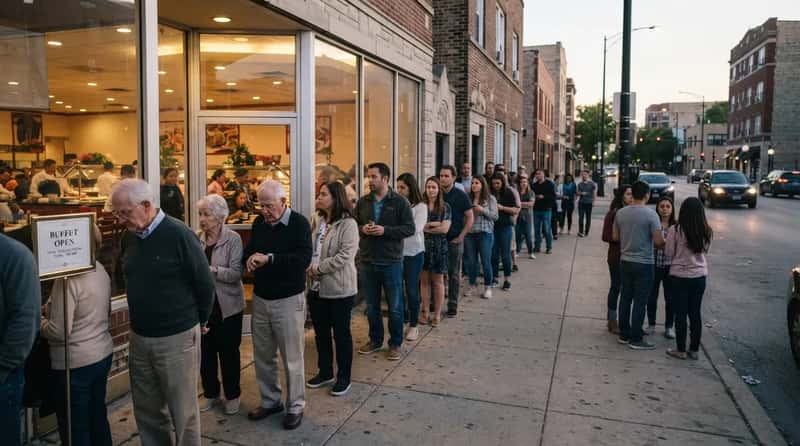
For decades, the 4:30 to 5:30 seating belonged almost entirely to guests over 60. Buffet managers built entire staffing schedules around it. That’s changing fast, and older regulars have noticed the shift before anyone printed a headline about it.
What used to be a time slot primarily favored by older guests or pre-theater diners has now become one of the most in-demand hours for a much younger demographic.
A Chicago restaurant partner
Managers say longtime early-bird guests have started grumbling about the wait – a table that was once guaranteed now sometimes has a line out the door before 5 p.m.
Fast Facts
- Classic early-bird window: 4:30 to 5:30 p.m.
- Long considered a near-exclusive slot for older diners
- Now increasingly booked by younger diners chasing the same deals
- Wait times before 5 p.m. are becoming common at popular spots
#11 – The Dessert Order That Breaks the Curve
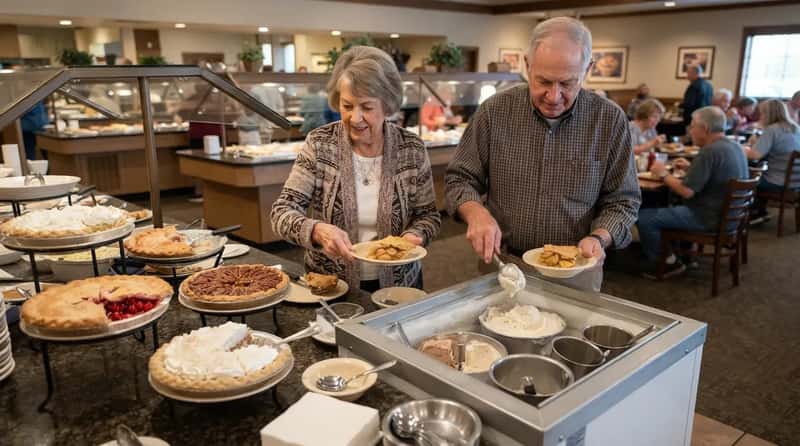
If there’s one station buffet managers watch most closely for guests over 60, it’s the dessert table. The numbers are lopsided in a way that shocks newer staff every time they see it firsthand.
Older diners are more likely to order dessert – roughly 75 percent, compared to less than a quarter of the average dining population – and when they do, pie and ice cream lead the way. It’s the single most predictable habit on the entire buffet floor, and staff plan restocking schedules around it accordingly.
#10 – The Seafood-and-Salad Pattern Staff Can Predict
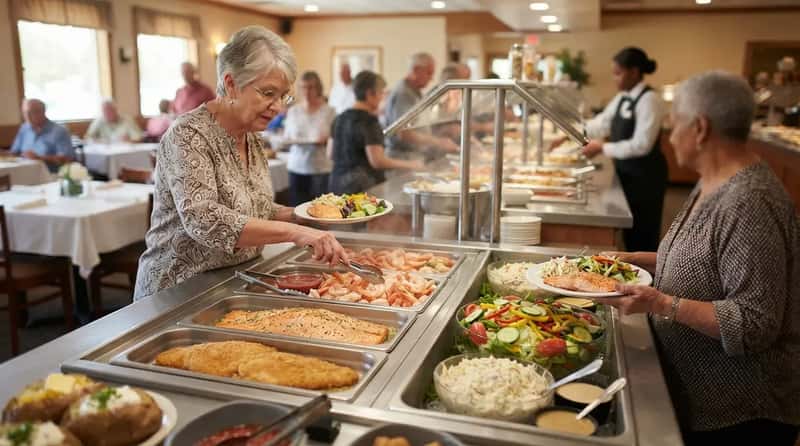
Watch a guest over 60 move through a buffet line, and the pattern repeats almost every visit. Fish and seafood top the list of choices, alongside sides like baked potatoes, coleslaw, and garden salads. Staff who restock the seafood station know exactly which hour it’ll run dry.
What they skip is just as telling. Seniors tend to pass on french fries, pizza, and Mexican fare, they’re roughly 19 percent more likely to order coffee than the average diner, they lean toward wine over beer, and they’re far less likely to order soda. It’s a menu pattern so consistent that managers use it to plan inventory weeks ahead.
At a Glance
- Favorites: fish and seafood, baked potatoes, coleslaw, garden salads
- Rarely touched: french fries, pizza, Mexican dishes
- Drink pattern: about 19% more coffee orders, wine over beer, far less soda
#9 – The Small-Plate Strategy Regulars Swear By
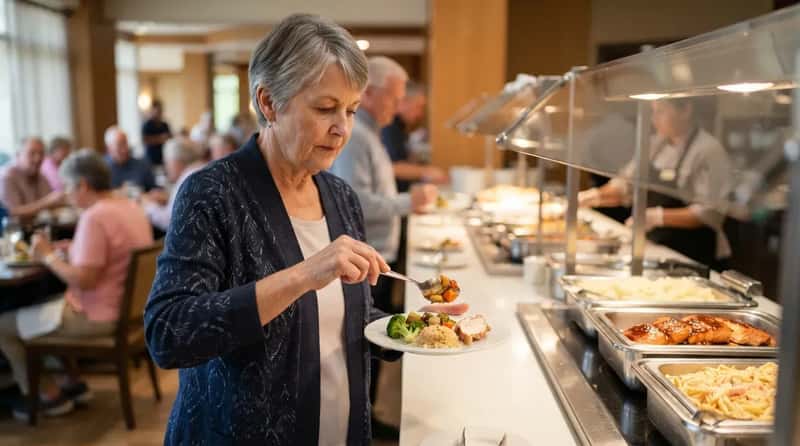
New hosts often assume a guest over 60 will pile a plate high on the first trip. Experienced staff know the opposite is true. Regulars tend to take small, deliberate first portions, then make several shorter trips instead of one big haul.
Managers say it’s rarely about appetite – it’s strategy. Multiple smaller trips mean everything arrives hot, nothing goes to waste on the plate, and there’s an excuse to get up and stretch between courses. It’s one of the most efficient habits on the entire floor, and younger diners could genuinely learn from it.
#8 – The Communal Table They Push Back Against
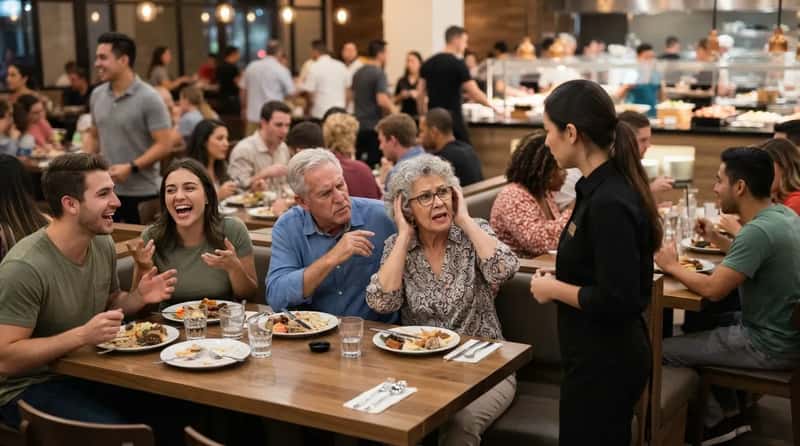
Long shared tables have made a comeback with younger diners chasing a social-dining trend. Guests over 60 are not on board, and they’re vocal about it. Industry coverage has flagged this exact divide, with one recent piece framed bluntly around how older guests push back on the “chaotic” communal dining trend.
Managers say the complaints are specific: too loud, too crowded, too hard to hear the person across the table. It’s one of the few areas where older and younger guests genuinely clash on the floor, and staff often end up mediating seating just to keep both sides happy.
#7 – The Value Complaint That Isn’t About Price
Here’s a myth managers wish would die: guests over 60 aren’t chasing the cheapest buffet in town. What they’re actually chasing is worth every dollar, and that’s a very different standard.
Diners 65 and over want to go out, sit down, and eat their meal in a pleasant environment, and they’re more likely to return to a restaurant where they perceive strong value for their money. That doesn’t mean bargain-basement pricing – it means excellent service, a varied menu, and a solid bang for their buck. Cut a menu item they liked, and expect to hear about it – loudly.
Worth Knowing
- Priority is atmosphere and service, not the lowest sticker price
- More likely to return when they feel they got real value
- Quick to speak up if a favorite menu item quietly disappears
#6 – The Separate-Check Request That Slows the Whole Floor
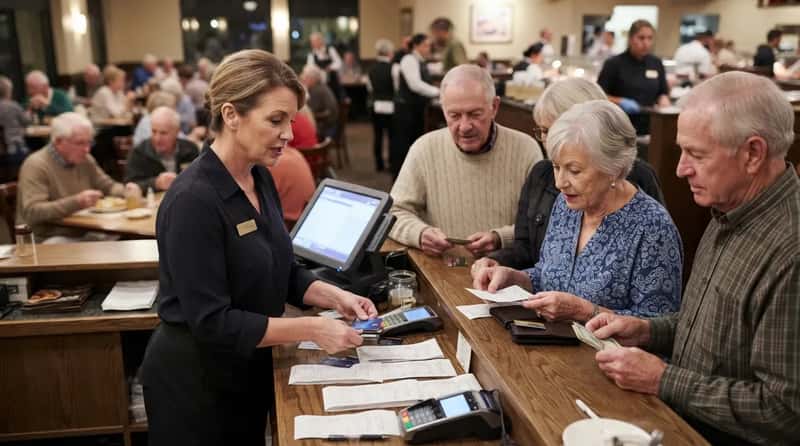
Large groups of guests over 60 dining together are some of the sweetest tables in the restaurant – and some of the slowest to close out. Splitting a flat buffet fee across a dozen drink orders is a math problem nobody wants during a rush.
A reservation was always met with a quiet groan when it involved separate checks, because dividing drinks on top of a flat buffet fee never works out as cleanly as it’s supposed to. Managers say it’s one of the most time-consuming parts of the entire shift, even though the tables themselves are almost always a pleasure to serve.
#5 – The Tipping Myth Managers Say Is Just Wrong
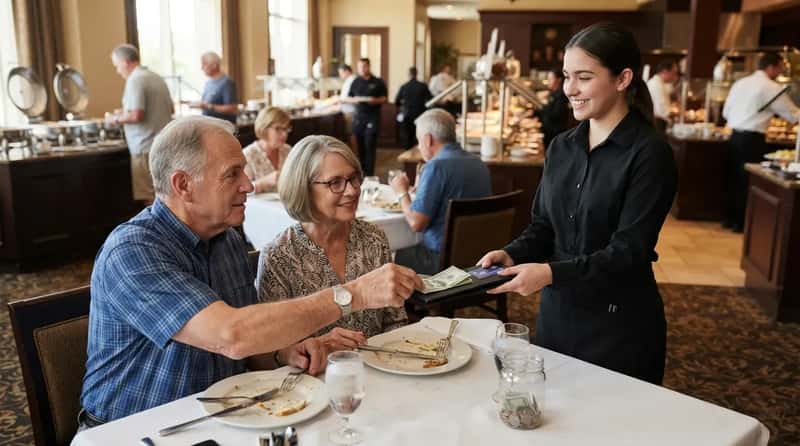
Ask younger staff who they think tips worse, and older guests usually get blamed first. The actual numbers tell a messier story than the stereotype suggests.
Adults 65 and older are more likely than younger adults to leave a 20% tip on average service – 46% versus 32% – and a 2025 survey found 84% of boomers always tip in sit-down restaurants, compared to 83% of Gen X, 61% of millennials, and only 43% of Gen Z. Yet a SpotOn study of restaurant workers rated boomers as only average tippers, and one broader poll found this generation leaves the lowest average tip percentage at roughly 16.4%, while millennials lead at nearly 19.5%. Consistency, it turns out, isn’t the same thing as generosity – and both stats are true at once.
Quick Compare
- Always tip at sit-down restaurants: Boomers 84%, Gen X 83%, Millennials 61%, Gen Z 43%
- Leave a 20%+ tip on average service: Adults 65+ 46% vs. younger adults 32%
- Lowest average tip percentage overall: Boomers at roughly 16.4%
- Highest average tip percentage overall: Millennials at nearly 19.5%
#4 – The Loyalty Number That Beats Every Other Age Group

Buffet managers will tell you the same thing without hesitation: nobody comes back like a guest over 60. It’s not a vague impression – it’s one of the most lopsided loyalty numbers in the entire restaurant industry.
A survey conducted by the National Family Opinion Institute found that 80% of mature retired couples were loyal to a particular restaurant, making them the most loyal age group by a wide margin. That number alone explains why so many buffets quietly build entire promotions around keeping this exact crowd happy – losing one regular over 60 can mean losing a decade of repeat visits.
#3 – The Small Details They Catch That Nobody Else Notices

Guests over 60 notice the things that slip past almost everyone else – a slightly dimmer light near the salad bar, a server who forgot to refill water, a dessert station that’s two minutes late getting restocked. They rarely make a scene about it, but they will mention it, politely and specifically, on the way out.
Managers say this feedback is often more useful than a formal comment card. It’s detailed, it’s calm, and it’s usually accurate. Staff who’ve worked the floor long enough learn to take these small corrections seriously, because they’re almost never wrong.
#2 – The Regulars Who Know the Staff by Name

Somewhere between the third and fourth visit, something shifts. A guest over 60 stops being a customer and starts being a name – sometimes even a birthday the staff remembers without checking a system.
This tracks with what researchers already know about this crowd: they tend to fall into the frequent and convenience restaurant patron category rather than the occasional visitor group. Managers say these are the guests who ask about a server’s day, remember a promotion, and notice immediately when a familiar face is missing from a shift.
Why It Stands Out
- Sits firmly in the “frequent and convenience” diner category, not the occasional-visit group
- Asks about staff by name and remembers personal details
- Notices right away when a regular server or host is missing
#1 – The Bond That Turns Guests Into Family
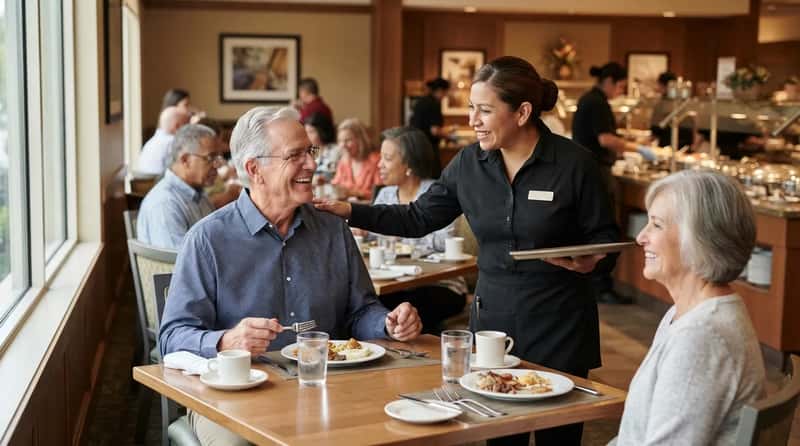
This is the one every long-time buffet manager brings up first, unprompted. Guests over 60 don’t just build loyalty to a restaurant – they build a relationship with the people inside it. Staff get invited to retirement parties. Managers get told about grandkids by name. A missed week gets noticed and asked about the second someone walks back through the door.
It’s the payoff behind that 80% loyalty number – not just repeat visits, but genuine familiarity that builds over years, sometimes decades. Buffet managers describe it as the single most rewarding part of the job, and the reason so many keep a regular’s favorite table open, just in case.
None of this fits the stereotype most people carry into a buffet line. Guests over 60 aren’t the cheapest, the fussiest, or the least generous – they’re often the most consistent, the most observant, and the most loyal customers a restaurant will ever have. The habits that look strange from the outside usually make perfect sense once you know the history behind them.
What’s the habit you’ve noticed most from the older regulars at your favorite buffet? Drop it in the comments – the stories are usually better than the list.