Most people assume the driver up front is only there to steer the bus and check tickets. But talk to anyone who’s spent a decade behind the wheel of a motorcoach, and a different picture emerges – one where dozens of small, unannounced accommodations happen every single trip for older riders.
None of it shows up in the ticket price or the safety briefing. It’s the kind of quiet care that only becomes visible once you know exactly what to watch for – and once you see it, you’ll never look at a long-haul bus ride the same way again.
#15 – They Save You The Seat Right Behind The Driver Without You Ever Asking
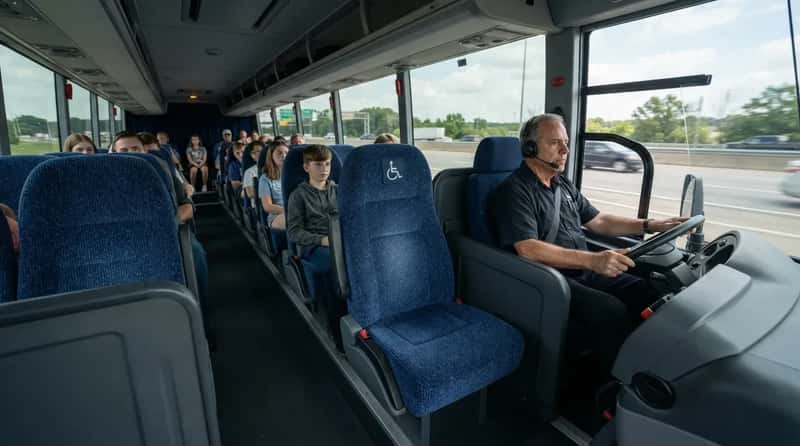
On most major carriers, the front rows aren’t first-come-first-served the way you’d think. Priority seating is reserved for elderly passengers and those with disabilities, with the seats directly behind the driver set aside specifically for that purpose. Drivers routinely steer younger, able-bodied travelers toward the back before an older passenger even boards.
It’s a small act, but it matters enormously on a bumpy interstate. Seats near the front absorb far less jolt than anything over the rear wheels. Most riders over 60 never realize this seating pattern was arranged in advance, not by luck.
#14 – They Quietly Clock Their Own Hours So You’re Never Driven By An Exhausted Stranger
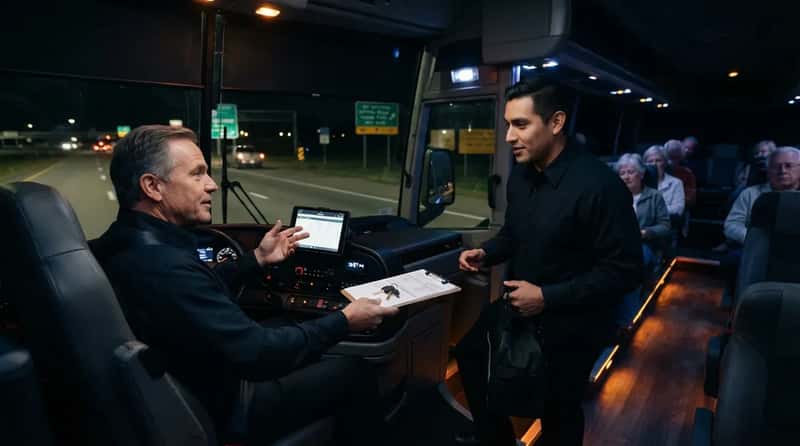
Federal rules aren’t just paperwork – they directly protect older passengers who can least afford a fatigued driver’s mistake. Interstate motorcoach drivers must comply with federal hours-of-service regulations, which cap consecutive driving at 10 hours. Experienced operators track this obsessively, often stopping earlier than the law even requires.
Many will hand off a route mid-journey rather than push into hour nine or ten on a night run. That quiet swap you barely notice at a random depot is often a safety decision, not a scheduling one. It’s one of the least talked-about protections built into long-distance bus travel.
Fast Facts
- Drivers can’t be permitted or required to drive more than 10 hours following 8 consecutive hours off duty, or for any period after having been on duty 15 hours following 8 consecutive hours off duty.
- Weekly duty is capped at 60 hours in any 7 consecutive days if the carrier doesn’t operate every day of the week.
- On long-distance trips requiring straight-through driving, motorcoach companies may send a relief driver ahead.
- Most passengers never notice the swap happening at a random rest stop.
#13 – They Time Restroom Breaks Around Your Body, Not The Clock
Bathroom access is the single biggest anxiety point for older travelers on multi-hour routes, and drivers know it. Passengers who can’t use the onboard lavatory typically wait for scheduled rest stops of 20 to 30 minutes, spaced every two to four hours depending on the route. Veteran drivers quietly shorten that gap the moment they notice an older rider looking uncomfortable.
Some will even radio ahead to confirm a stop has working, accessible facilities before committing to it. Turns out the “random” gas station stop is sometimes chosen specifically because of one passenger’s needs. Nobody announces this over the intercom.
#12 – They Personally Walk You On And Off The Bus At Every Single Stop
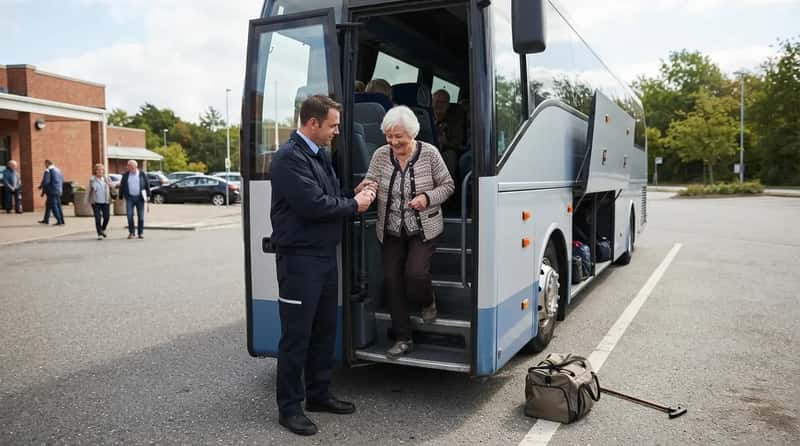
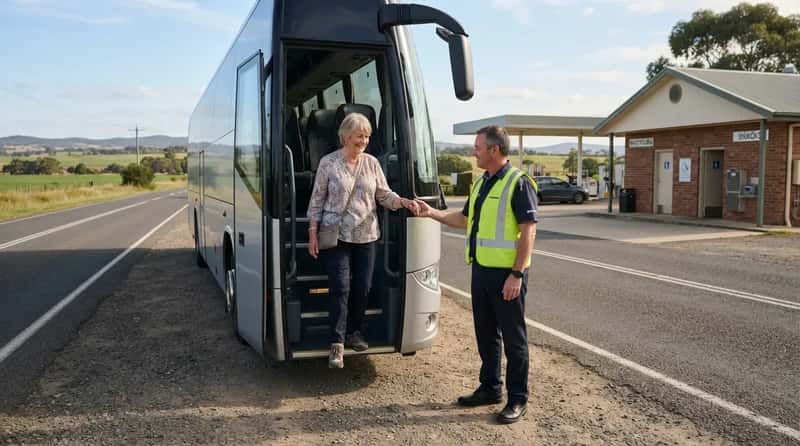
Boarding and disembarking sounds simple until your knees or balance aren’t cooperating on a steep step. Drivers are trained to help passengers get on and off, and to lend a hand with baggage, wheelchairs, or mobility scooters, whether or not it was requested in advance. Most riders don’t realize this help extends to every rest stop, not just the final destination.
Good operators offer this before being asked, watching body language at the door rather than waiting for a request. Quietly, this is one of the most-needed – and most smoothly delivered – accommodations on the entire route. It rarely gets mentioned in reviews because it happens so seamlessly.
#11 – They Radio Ahead So A Wheelchair Lift Is Already Waiting
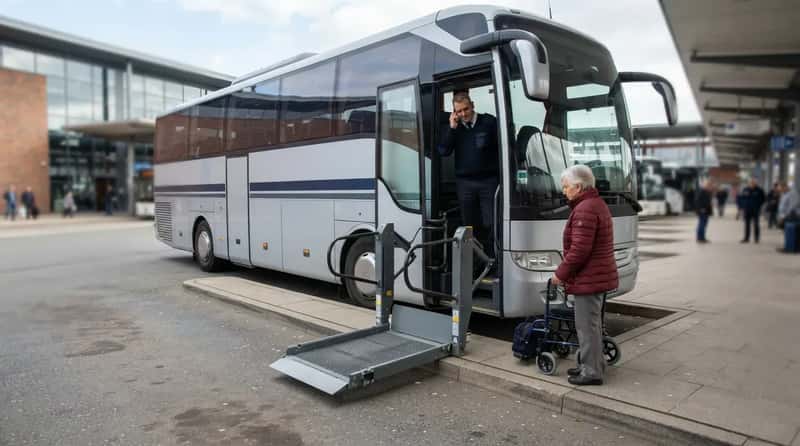
Nobody wants to sit stranded on a bus while station staff scramble for equipment. Experienced drivers coordinate this in advance. Passengers booking online can flag accessible seating and mobility assistance ahead of time, and drivers who see this noted on the manifest often call the next terminal directly.
That extra call means the lift is deployed and ready the second the bus pulls in, instead of everyone waiting ten awkward minutes at the curb. Most passengers over 60 assume this equipment is just “there” – they never realize a phone call made it happen on time. The coordination is invisible by design.
#10 – They Quietly Keep A Headcount So Nobody Gets Left Behind
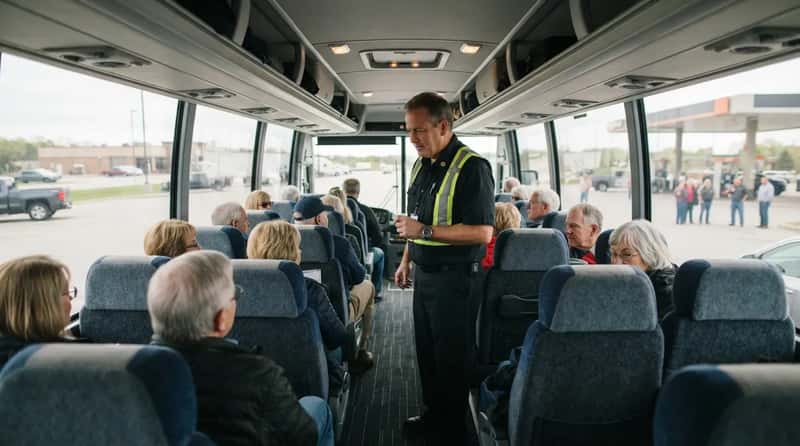
Rest stops at unfamiliar truck plazas are more disorienting than people admit, especially for older travelers walking slower than the crowd. Wandering too far from the bus is genuinely risky, because a driver might pull out without realizing someone is missing. Because of this, many drivers develop an informal mental roll call.
They’ll scan seats before pulling out, sometimes walking the aisle specifically to check on the slower-moving riders they clocked earlier in the trip. It’s not official policy – it’s a habit built from one bad experience early in a driver’s career. Ask any longtime operator and they’ll admit it’s happened to a colleague at least once.
#9 – They Soften Their Braking And Cornering Without Saying A Word
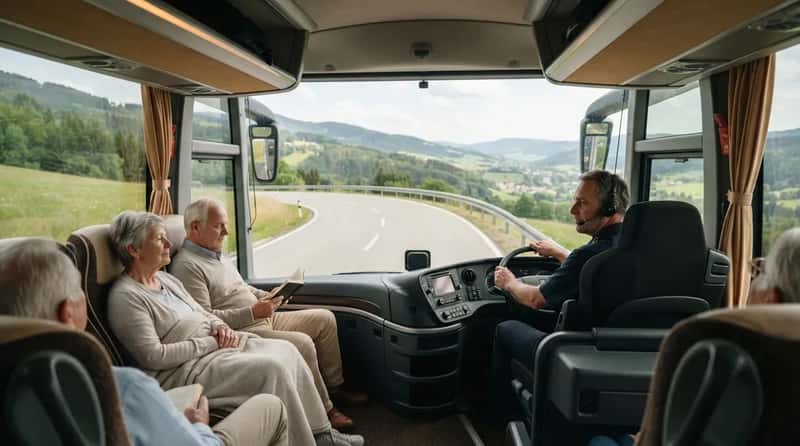
A jolt that barely registers for a 30-year-old can jar an arthritic hip or an inner ear condition badly. Coaches are already engineered to minimize this, offering a noticeably smoother ride than car travel thanks to their heavier suspension systems. But good drivers add their own layer of care on top of the engineering.
Many will consciously ease off the accelerator on curves and brake earlier than necessary once they’ve noticed an older passenger struggling to stay steady. It’s one of the most common quiet accommodations – and one of the least visible, since good driving just looks like good driving. Nobody claps for a smooth ride; they only notice a rough one.
#8 – They Mention The Senior Discount Before You Even Ask

A surprising number of older travelers pay full fare simply because nobody told them otherwise at the counter. Many carriers quietly knock a percentage off the standard fare for passengers 62 and older. Station staff and drivers who work the same routes repeatedly will often flag this proactively rather than let it slide.
It sounds minor, but on longer cross-country tickets it adds up fast. Most people don’t realize this discount applies even at the terminal window, not just online. It’s a courtesy that costs the company almost nothing and saves a regular rider real money over a year of trips.
At A Glance
- Greyhound offers 5% off the standard fare price for passengers aged 62 and older, applicable whether purchasing at the terminal or online.
- Amtrak offers a 10% discount for seniors aged 65 and over on most train services, a common backup for connecting trips.
- Proof of age, like a license or passport, is typically required at booking or boarding.
- Senior fares usually can’t be stacked with other promotional discounts.
#7 – They Stretch A “Ten-Minute” Stop Without Ever Announcing It

The posted stop time is rarely the real stop time when an older passenger needs a few extra minutes. Informal flexibility is common, even if it’s never advertised, and drivers use that built-in slack deliberately when they see someone moving slower than the group.
They’ll linger at the door, chat with station staff, or “double check the engine” – small stalling tactics that buy a passenger an extra two or three minutes without embarrassment. Turns out that “delay” you assumed was mechanical was often a courtesy. It’s one of the more controversial habits, since it can throw off the schedule for everyone else on board.
#6 – They Keep The Cabin Warmer Than Half The Bus Would Prefer

Circulation issues make older passengers far more sensitive to cold cabin air on long overnight runs. Modern coaches already come with climate-controlled interiors built for exactly this kind of comfort. But drivers who notice a cluster of older riders will often nudge the temperature up a degree or two above the default setting.
It’s a small friction point – younger travelers sometimes complain it’s stuffy – but experienced drivers prioritize the passengers most vulnerable to a chill. Comfort for the most vulnerable person on board usually wins the thermostat battle. Most riders never realize the temperature was ever adjusted on their behalf.
#5 – They Flag Restroom Problems Before A Passenger Has To Complain
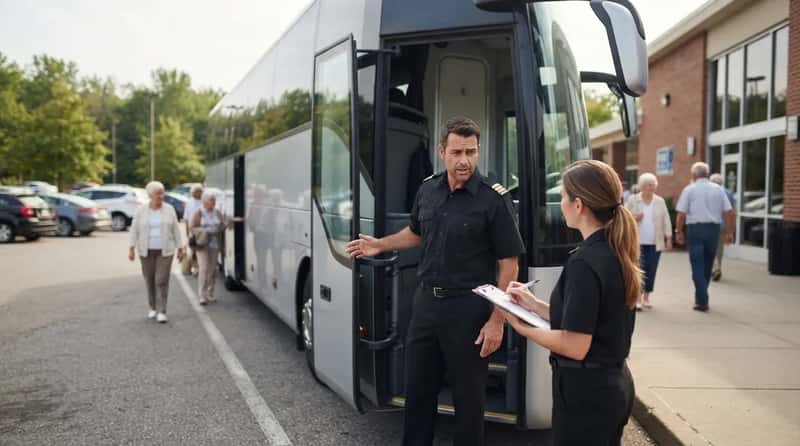
Nothing ruins a long trip faster than a broken or unpleasant onboard restroom, and older travelers rely on it more than anyone. It’s a real, recurring complaint on some routes, and conscientious drivers report these issues at the very next stop instead of waiting for someone to say something.
Some will personally request a supply restock or a maintenance check during a scheduled break, even if it costs them a few minutes. This small act of advocacy quietly prevents dozens of complaints that never reach corporate. It rarely gets credit because passengers assume maintenance “just happens” on schedule.
#4 – They Quietly Reseat You Away From The Smell And The Jolt
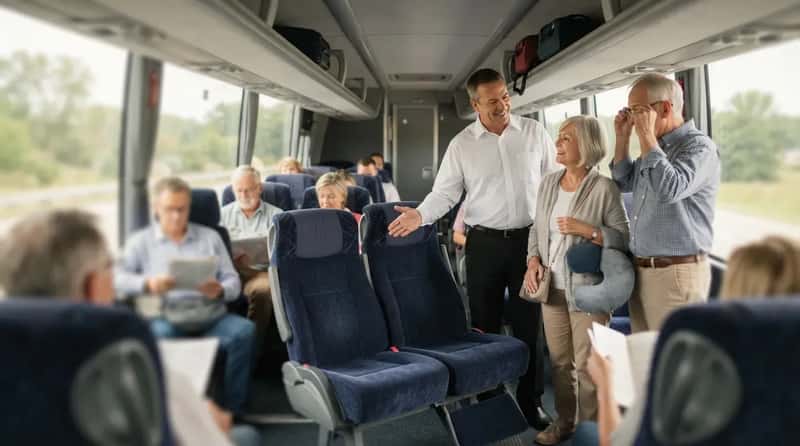
Two seating zones cause the most discomfort on long coaches: near the restroom, and directly over the wheel wells. Drivers with route experience steer older passengers away from both instinctively. Anyone who’s ridden a 50-plus seat coach knows exactly why this matters on a multi-hour trip.
The middle section offers a measurably smoother ride, and distance from the lavatory avoids the odor issue entirely. Most passengers think their seat assignment was random – it often wasn’t. A driver glancing at the manifest before boarding can adjust this in seconds, without ever mentioning why.
Quick Compare
- Middle rows: smoothest ride, farthest from engine noise and wheel-well vibration.
- Near the restroom: easy access, but exposed to odor and foot traffic the whole trip.
- Over the rear wheels: often the bumpiest seats on the entire coach.
- Front rows: reserved seating, least jolt, quickest access to the driver.
#3 – They Personally Call Ahead When Family Is Waiting At The Curb
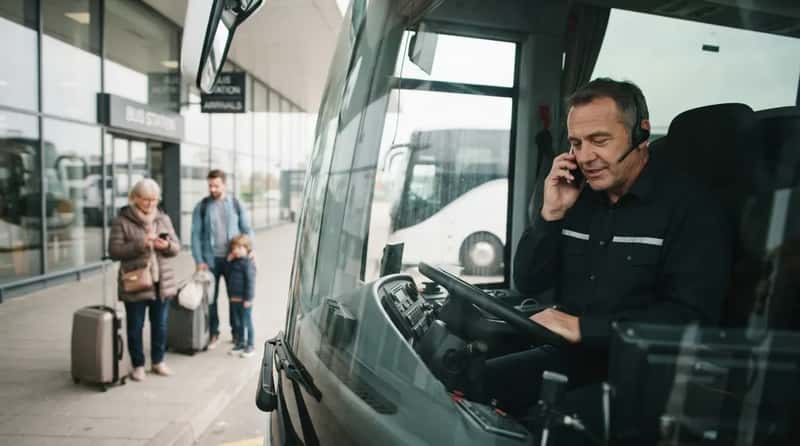
Coordinating a pickup used to mean guessing arrival times within an hour-wide window, which is stressful for anyone waiting on an older relative. Live tracking tools have helped, but drivers still add a human touch on top of the technology. Drivers who know a passenger has family waiting will sometimes call the terminal directly to confirm timing.
This bypasses the app entirely and gives real-time, human reassurance to a worried family member. It’s a small gesture that turns an anxious wait into a five-minute heads-up. Most passengers never know this call was made on their behalf.
#2 – They Memorize Faces At The First Stop So Nobody Gets Overlooked
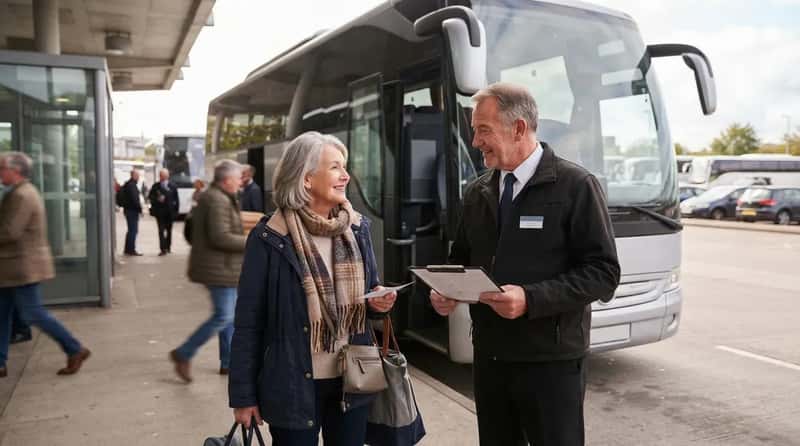
On a route with 40 or 50 passengers, it’s easy for any individual to blend into the crowd – except drivers who make a point not to let that happen. Long stretches with confusing terminals only raise the stakes, since unfamiliar layouts and rushed schedules can create real stress for older travelers.
By the second or third stop, attentive drivers know exactly which faces to check for before pulling away. This isn’t in any training manual – it’s a personal habit built purely from experience. It’s arguably the most human accommodation on this entire list, because it depends entirely on one person choosing to pay attention.
#1 – They Treat Every Rest Stop Like A Fragile Handoff, Not A Formality
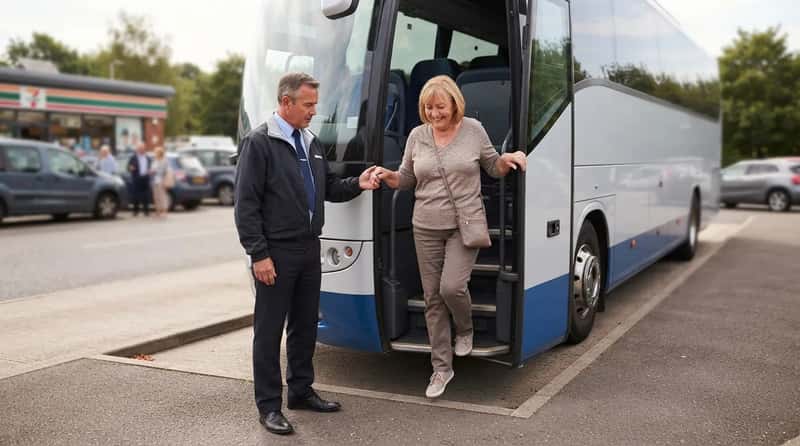
The single biggest thing separating a great long-route driver from an average one is how they handle the moment a passenger steps off the bus. Regulators have specifically flagged this exact moment as high-risk when it’s mishandled – failing to give someone with limited mobility enough time to board or exit safely is a documented accessibility failure. The best drivers treat that transition with real care every time, not just when a complaint is likely.
They watch the first step down, they wait an extra beat before closing the door, and they double-check a passenger has cleared the curb before the engine even starts. Most riders will never notice this happening – which is exactly the point. The quietest accommodations are usually the ones that matter most.
Worth Knowing
- Large motorcoach fleets are required to build accessibility features, like wheelchair lifts, into their vehicles.
- Rushing a passenger with limited mobility during boarding or exit is treated as a real compliance issue, not just an awkward moment.
- Much of this care is passed down informally, driver to driver, rather than taught in a classroom.
- The handoff at the curb is often the single moment that defines how safe a whole trip felt.
None of these fifteen habits show up on a brochure, and most passengers ride thousands of miles without ever clocking a single one. That’s the strange truth about long-distance coach travel: the best care is often the kind nobody’s supposed to notice.
If you’ve ridden a long route as an older traveler, chances are one of these already happened to you without a word being said. Which one caught you by surprise? Drop it in the comments.