Most cruise passengers over 60 assume the entertainment staff just runs the show – flip the lights, cue the band, keep things moving. That assumption is costing them more than they realize.
Guests who arrive early and speak up quietly get handed a completely different cruise, one built around held seats, early tip-offs, and small favors nobody else on the ship even knows exist. Here’s what entertainment staff are actually saving for the guests who ask first.
#15 – The Pre-Show Walk-Through Nobody Advertises
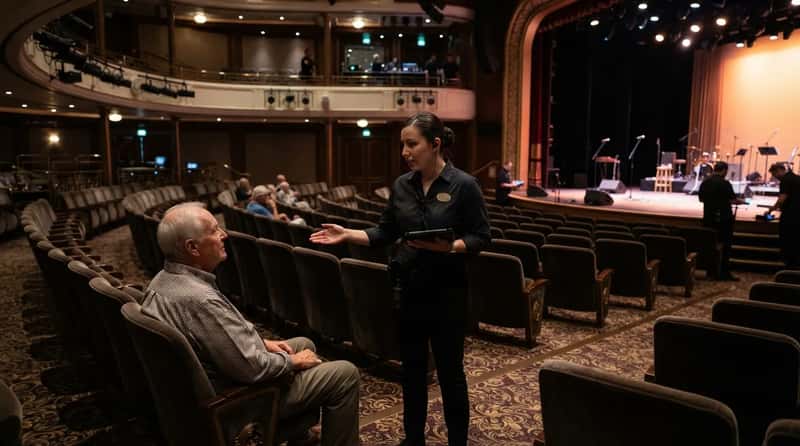
Entertainment staff often do a quiet walk-through of the main theater before doors open to the public. Guests who arrive early sometimes catch them mid-setup, tools still in hand.
That’s the moment to ask about sight lines, sound quality by section, and which seats have the clearest view of the stage. None of that information appears on any seating chart.
Staff who are still setting up are far more willing to answer specific questions than they will be once 800 people are filing past them. Ask before the crowd arrives, not during it.
Most guests assume every seat in a theater is equal. Entertainment staff know exactly which ones aren’t, and they’ll tell you – if you ask at the right moment.
The seating walk-through is just the opening move. What entertainment staff quietly handle for afternoon regulars in #14 is even more useful.
#14 – Reserved Aisle Seats Held Back From General Release
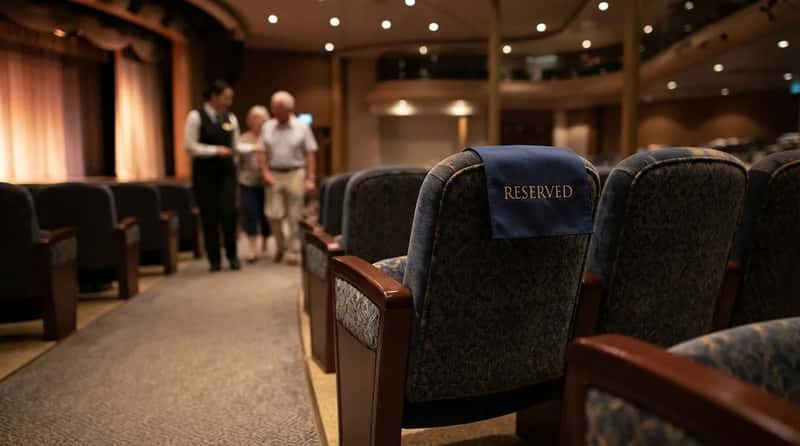
Theater teams learn early which guests move a little slower on the aisle steps. Staff are quietly told to seat them before the room fills, rather than let them struggle during a packed house.
The moment a maître d’ or entertainment host notices someone who needs extra time or an aisle seat, that preference tends to stick for the rest of the sailing. Guests rarely have to ask twice.
It compounds night after night – a held seat here, early entry there. The trick is mentioning it once, calmly, instead of re-explaining it every single evening.
The key word is “once.” Guests who state their preference clearly and kindly, then trust the staff to remember, almost always find that trust rewarded.
What’s even more surprising is how the entertainment team quietly reshapes sound and lighting for older crowds – and most guests never realize it’s happening at all.
#13 – Adjusted Volume and Lighting for Afternoon Shows
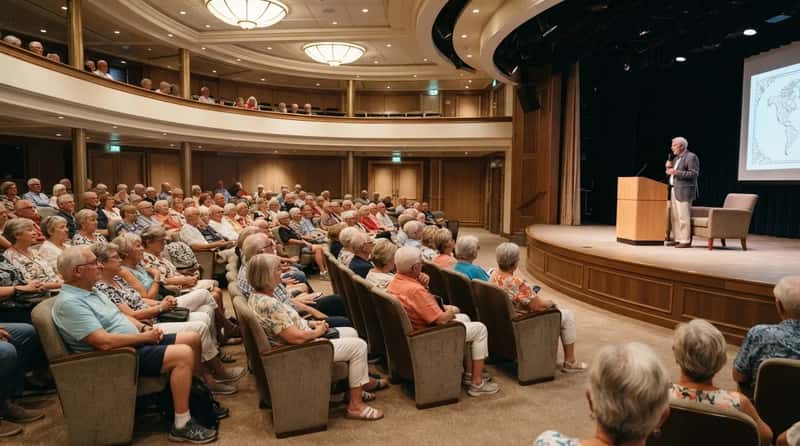
Cruise directors control the setup of every event, which means they also control the sensory experience of the room. Volume gets pulled back and house lights stay slightly brighter for events that draw an older crowd, especially afternoon lectures.
Most guests never realize the same theater sounds and looks noticeably different depending on who’s sitting in the seats that day. It’s a quiet adjustment that never makes it onto the printed daily program.
If evening shows feel uncomfortably loud, the entertainment team can flag your preference before you even sit down. But only if you’ve spoken to them first.
This adjustment is invisible when it works and miserable when it doesn’t. Guests over 60 who mention hearing sensitivity early often find the entire evening far more enjoyable than the same show at 10 p.m.
If you think adjusted audio is a quiet perk, wait until you see what staff hold back for the first guests through the lecture hall door.
#12 – Front-Row Lecture Seating Held Until Doors Open
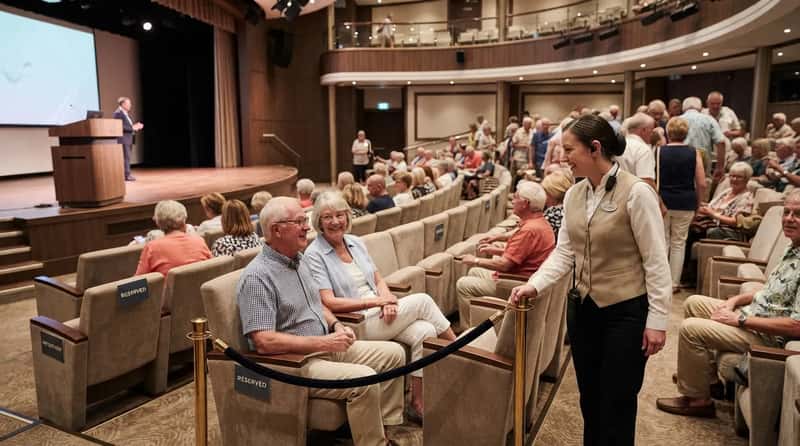
Experienced guests over 60 often report priority seating at popular shows and reserved front-row seats at lectures – none of it advertised, all of it earned simply by being known at the purser’s desk from day one.
Enrichment lectures – history talks, destination briefings, guest speakers – are some of the most popular daytime events on longer itineraries. They fill up fast.
Entertainment staff managing the lecture hall routinely hold the first two rows until about five minutes before start time, saving them for guests they recognize as regulars.
Show up once, introduce yourself, and you’ve put yourself on an informal shortlist that follows you to every lecture for the rest of the cruise.
Here’s where it gets genuinely interesting, because #11 involves something most guests don’t even know exists on the ship.
#11 – Early Access to the Daily Entertainment Schedule Before It’s Posted
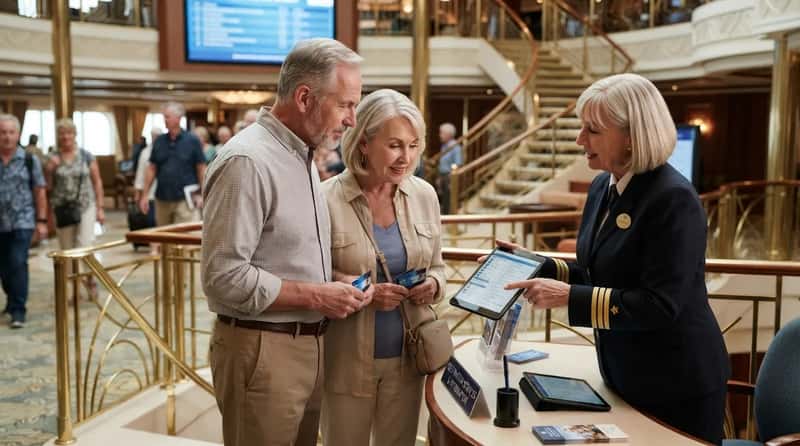
The purser’s desk knows the schedule before it’s ever printed in the daily newsletter. Ask on embarkation day and you’re first on the list, not last.
The entertainment team typically finalizes tomorrow’s schedule the evening before, well ahead of when it’s slipped under cabin doors or posted to the ship’s app.
Fast Facts
- Tomorrow’s entertainment lineup is usually locked in the night before, hours ahead of the printed newsletter or app update.
- Limited-capacity add-ons – small meet-the-cast sessions, intimate music sets – are frequently never listed publicly at all.
- A short chat with a senior entertainment host on embarkation day is often the only way to hear tomorrow’s plan early.
Guests who’ve introduced themselves to the entertainment director or a senior host can simply ask what’s happening tomorrow and get a verbal rundown – including events that never make the public listing due to limited capacity.
Some of the best onboard events – intimate music sessions, meet-the-cast gatherings, specialist talks – are never formally announced precisely because there isn’t room for everyone.
Next up is the kind of quiet perk veteran cruisers guard like a trade secret.
#10 – Complimentary or Discounted Thermal Spa Passes Arranged Through Entertainment

Loyalty tiers and suite bracelets aren’t always the reason behind a perk like a spa pass. Sometimes it happens because a guest showed up early and was kind.
One couple mentioned a minor cabin issue without making a fuss, thanked the staff who helped, and ended up with complimentary tickets to the thermal suite. Kindness paid off.
Entertainment staff occasionally hold a small allocation of thermal suite day passes they can distribute at their own discretion – not as a formal program, but as goodwill.
These passes don’t appear on any menu or request form. They’re triggered by crew noticing genuine friendliness, not by anyone filling out paperwork.
Most guests over 60 walk past #9 every single day without realizing they could have it reserved just for them.
#9 – A Standing Reservation at the Quietest Corner of the Lounge
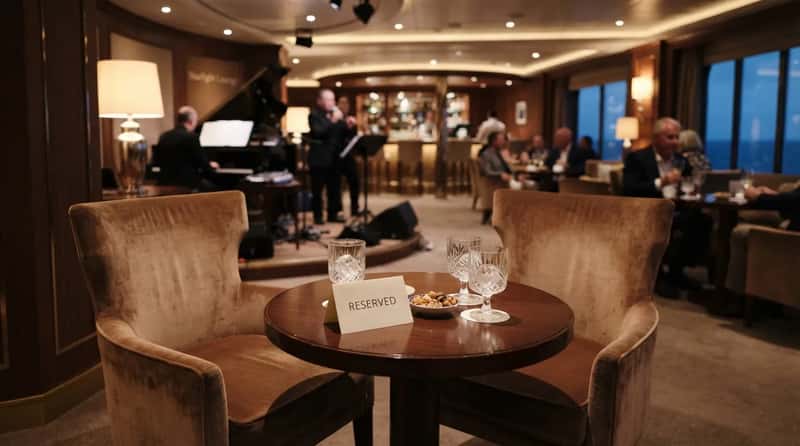
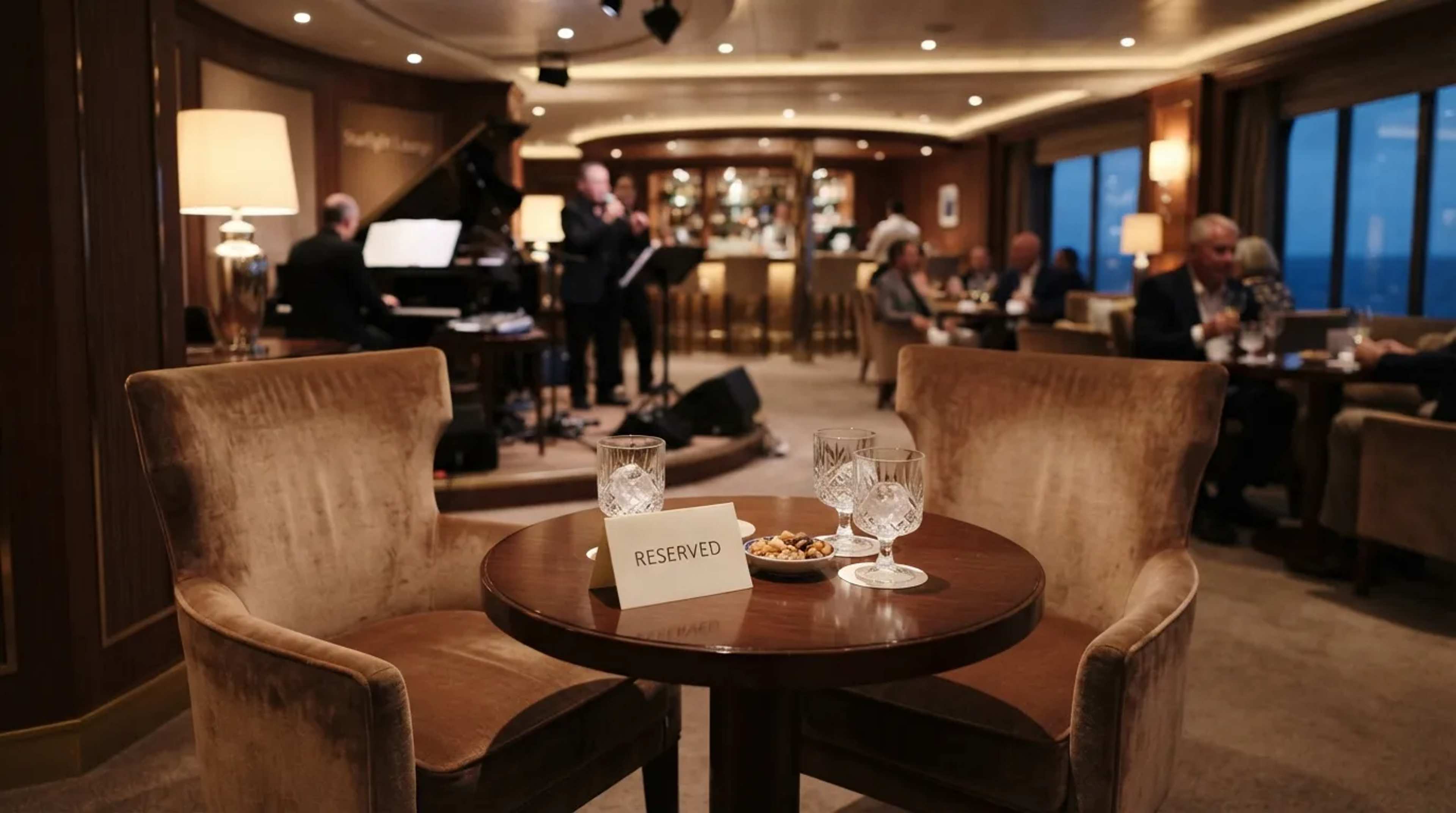
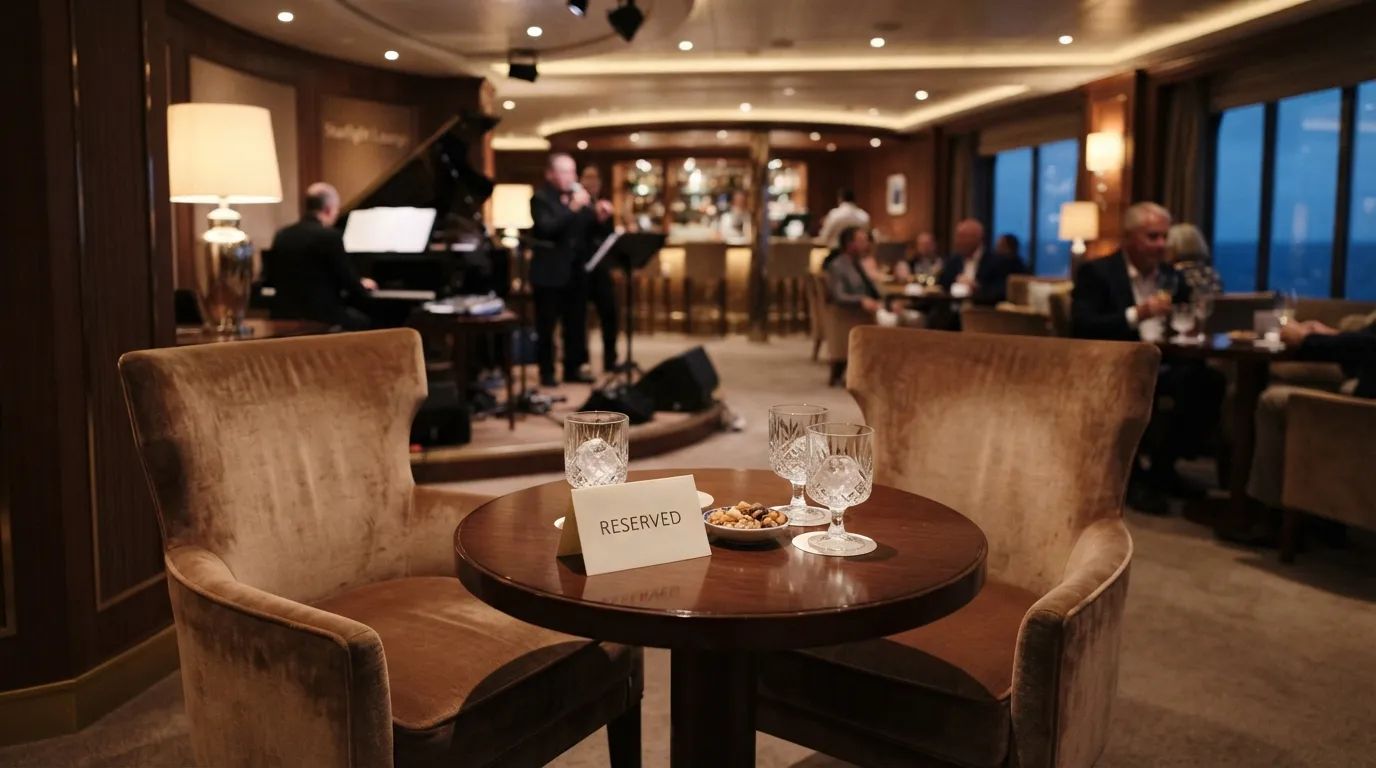
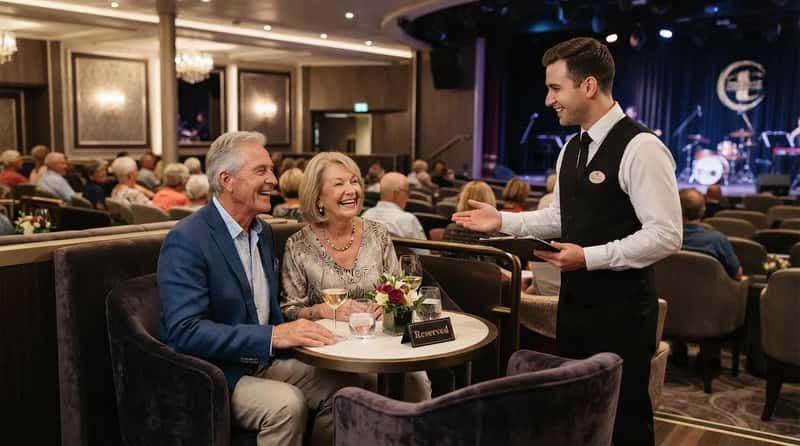
Most ships have a signature lounge where live music plays before and after dinner. The best seats – good sight lines, close to the music, away from bar traffic – go fast.
One woman shared that a staff member reserved her favorite table for the rest of the cruise, simply because she’d been kind on day one. No suite bracelet, no loyalty card – just a genuine connection worth protecting.
Entertainment staff managing the lounge often have the authority to informally flag a table as reserved for a regular guest. It’s never logged anywhere, but the whole team respects it.
These aren’t perks so much as small, human decisions crew members make on their own. For a guest who’s cruised for years, an unspoken table reservation can feel like being remembered by an old friend.
A perk involving the entertainment director personally is next – and most guests never even know it’s on offer.
#8 – A Personal Introduction to the Cruise Director
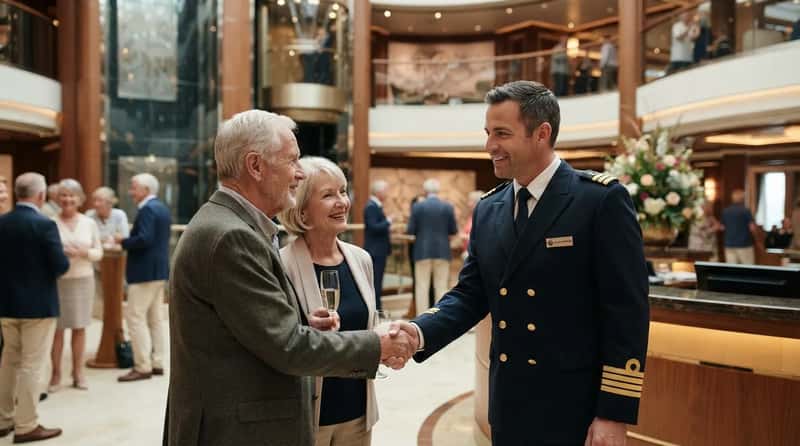
A cruise director is technically the senior officer in charge of all onboard hospitality and entertainment, and the public face of the cruise line. Learning names fast is part of the job, whether anyone admits it or not.
Someone on the entertainment team reviews the passenger manifest ahead of time, flagging loyalty members and repeat names. Older repeat cruisers get flagged more often simply because loyalty tiers skew heavily toward them.
Worth Knowing
- The cruise director oversees every entertainment and hospitality program running on the ship, from production shows to trivia.
- Passenger manifests are typically reviewed early in the sailing, with loyalty-tier and repeat guests flagged first.
- A brief introduction on embarkation day can lead to face time with the cruise director – and sometimes the captain – later in the cruise.
Guests who arrive at the entertainment desk early on embarkation day and simply ask to meet the cruise director are frequently accommodated with a brief, genuine introduction. That one moment often opens doors for the rest of the sailing.
Cruise directors host the big official events on board, including the captain’s cocktail party. During those events, they often make a visible point of introducing loyal, older guests to the captain rather than leaving it to chance.
What comes next might be the most practical thing on this entire list for anyone catching multiple shows per cruise.
#7 – Show Tickets Held at the Box Office for Early-Request Guests
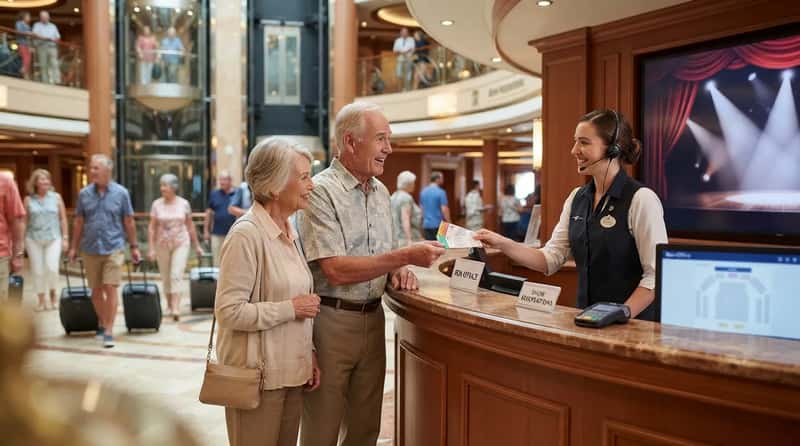
Guests can pre-reserve show tickets online through the cruise line’s app before sailing, with reservations typically opening on the first day of the month before departure.
But here’s what the app doesn’t tell you: once the online window closes, guests can still book onboard at the Box Office, subject to availability. And that availability is rarely as limited as it looks.
Entertainment staff at the box office routinely hold a small block of seats back from the online release, specifically for guests who show up in person on embarkation day and ask for help directly.
These held seats are often better positioned than what’s left online, because they’re pulled from the general pool before the app even opens. They disappear silently if nobody claims them.
Next is an event most guests over 60 would genuinely love – and almost none of them know they can access it.
#6 – An Invitation to the Invite-Only Captain’s Cocktail Reception
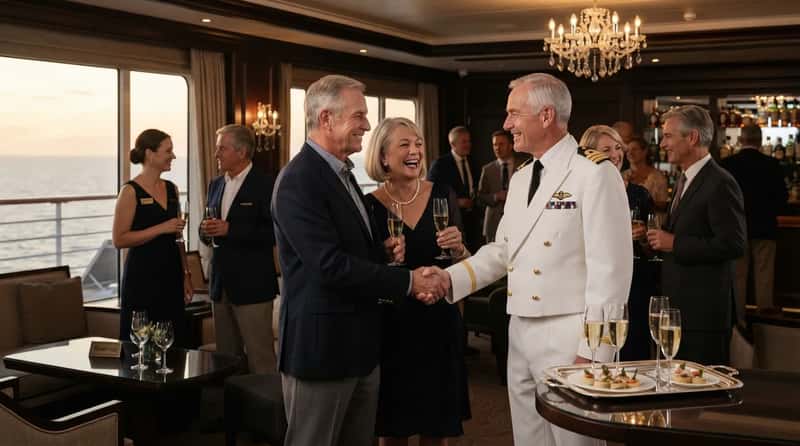
The captain’s reception is technically a loyalty event on many lines. But the entertainment team quietly controls the guest list for a smaller, informal version – a quieter cocktail gathering that happens separately and is never publicized.
Guests who’ve had genuine conversations with the entertainment director, the cruise director, or a senior entertainment host are the ones who tend to receive a quiet verbal invitation on day three or four.
It costs nothing and starts with a single short conversation on day one. That’s the entire barrier to entry.
A positive impression made with the entertainment team early on tends to travel further than most guests expect.
The early-arrival advantage becomes almost unfair from here on out – in the best possible way.
#5 – Access to Sold-Out Show Standby Lists Before They’re Officially Full

On larger ships running high-demand productions – Broadway-style musicals, ice shows, aerial acts – performances routinely reach full capacity days before they happen.
Show reservations have become standard on most large ships, especially those with big theaters or AquaTheaters, and high-demand productions fill fast.
What the app doesn’t show is a standby list that entertainment staff manage manually – one that fills with names from guests who spoke to staff directly, often days before a show sells out online.
Guests on the standby list who arrive 20 minutes early are almost always seated, because the no-show rate for reserved shows stays consistently high. Entertainment staff know this better than anyone.
Up next is a perk that has nothing to do with the theater and everything to do with who gets to meet the performers afterward.
#4 – Post-Show Meet-the-Cast Gatherings That Never Appear in the Daily Program
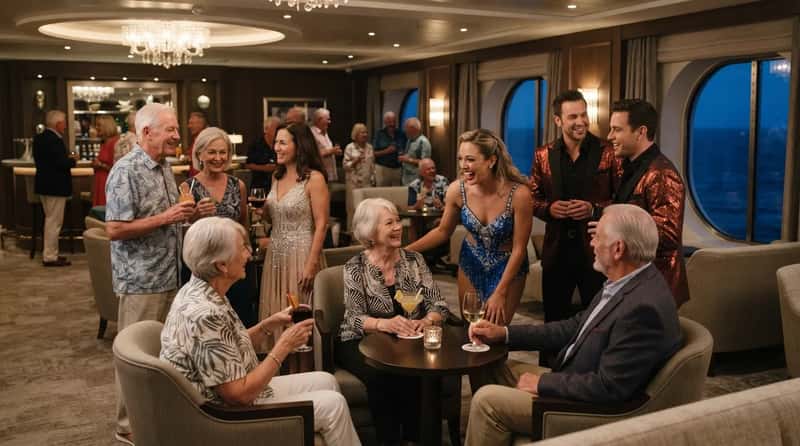
After headline shows on most major cruise lines, the cast gathers briefly in a side lounge or the atrium for an informal meet-and-greet. This is almost never advertised in the daily newsletter.
Art galleries and music venues on cruise ships frequently offer free guided tours and artist meet-and-greets that go completely unpublicized.
Entertainment staff routinely tip off guests they’ve connected with earlier in the cruise about these post-show gatherings, giving them a chance to show up while most passengers are already heading to the bar or back to their cabins.
The cast tends to be far more relaxed and available in these settings than at any formal event. The conversation ends up far more memorable than a rushed photo in the lobby.
What comes next completely changes how people over 60 experience the second half of their cruise, especially on longer itineraries.
#3 – A Dedicated Entertainment Host Quietly Assigned to Check In on You

Guests who’ve sailed the same line multiple times often get greeted by name within the first two days. It rarely happens by accident – someone reviewed the manifest ahead of time and flagged the repeat names.
On itineraries of ten nights or more, entertainment teams sometimes quietly designate one host as the primary contact for a handful of older guests. It’s not a formal service, just a way to make sure those guests find what they need without asking repeatedly.
If you miss a show, that host may mention something similar coming up. Mention you enjoy jazz once, and they’ll make sure you know about the late-night session on deck seven Thursday.
You don’t need elite status to feel looked after on a cruise. You just need to say the right thing once, and let the crew do what they do best.
Now we’ve arrived at the one longtime cruisers rarely share, because it genuinely gives them an edge every single sailing.
#2 – Priority Notification for Limited-Capacity Enrichment Events

Requesting entertainment opportunities is best done on embarkation day. Roughly 24 to 48 hours of advance notice is usually enough for dining and entertainment requests.
But there’s a tier above that: certain enrichment events – cooking demonstrations by the executive chef, wine-pairing sessions, behind-the-scenes galley tours – are limited to a small group and quietly filled by entertainment staff before any general announcement goes out.
The move here is polite persistence – ask to speak with a supervisor or contact guest services directly. Individual crew members don’t always know every complimentary event running that week, but managers usually do.
Guests who’ve made themselves known to the entertainment team on day one are typically the first to get a quiet knock on the cabin door when a coveted spot opens up.
None of what you’ve read so far quite compares to the single most powerful thing entertainment staff quietly save for guests who arrive early – the one almost no one outside the ship’s inner circle ever talks about.
#1 – A Standing Early-Entry Pass to Every Major Venue for the Entire Sailing
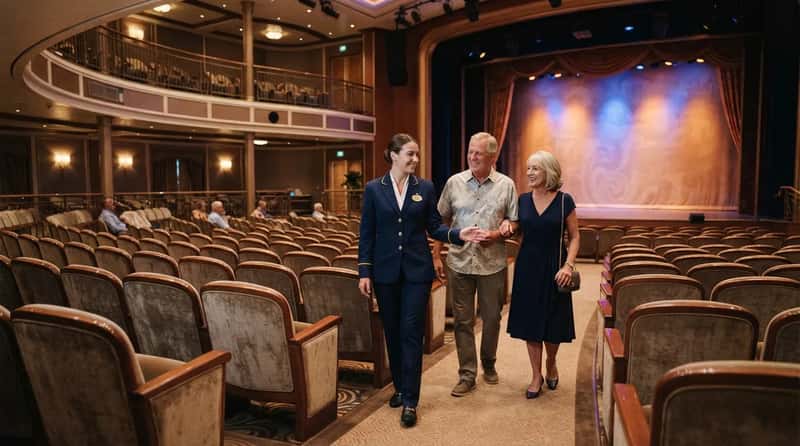
Cruise directors steer certain guests toward front-and-center seating at every major show, and it’s rarely random. Staff learn early which guests move slower on the aisle steps, and quietly seat them before the room fills rather than let them struggle during a packed house.
Nobody announces this system. It’s a habit passed from one activities staffer to the next, contract after contract, until it becomes invisible.
For guests who’ve made themselves known to the entertainment team on embarkation day, this informal early-entry privilege extends well beyond the main theater – to the lounge, the comedy club, the lecture hall, the poolside stage, and every secondary performance space on the ship.
None of it appears in any daily newsletter or app. It’s triggered by crew noticing genuine friendliness, and it costs nothing beyond one short conversation on day one.
The Bottom Line
Most guests over 60 spend their entire cruise assuming the entertainment team is just there to manage the crowd. Turns out, they’re the single most powerful department when it comes to quietly shaping a guest’s experience – and they respond almost entirely to guests who show up early and treat them like people, not service staff.
The pattern across every item on this list is the same: arrive before the crowd, introduce yourself, be specific about what you enjoy, and say thank you when it happens. That’s the entire playbook – no loyalty tier required, no suite upgrade needed.
Quick Compare
- Guests who introduce themselves on day one: often get held seats, standby-list priority, and quiet invitations to off-menu events.
- Guests who wait until mid-cruise: usually settle for whatever’s left in the app or the printed daily newsletter.
- Guests who say thank you and follow up: tend to keep the same small perks running for the rest of the sailing.
The guests who never discover any of this aren’t doing anything wrong. They’re just showing up at the same time as everyone else – and entertainment staff can only quietly save so much for so many people.
Did we miss one? If you’ve had an entertainment team go quietly above and beyond on a cruise, drop it in the comments – we read every one.
Bonus: The Embarkation-Day Script That Puts You on Every Host’s Radar
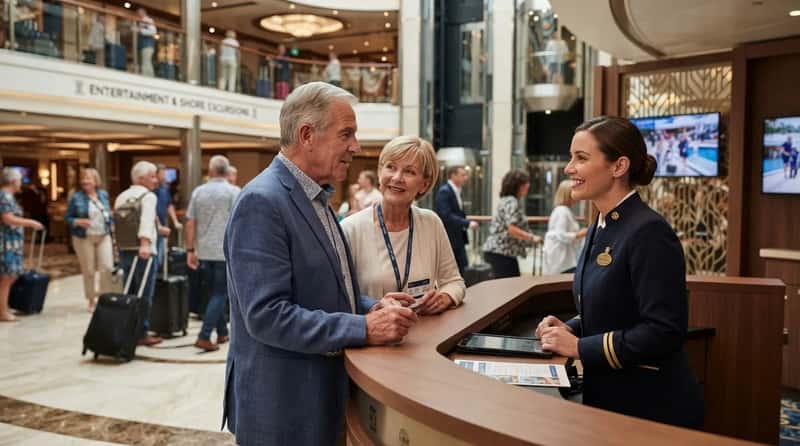
Every perk on this list traces back to one moment: the first short conversation a guest has with the entertainment desk on embarkation day.
Most guests waste that moment on small talk. The ones who get remembered use it differently, and you can copy exactly what they say.
- Go to the entertainment desk within the first two hours of boarding, before the muster drill crowd forms – it’s the quietest the desk will be all week.
- Give your name, cabin number, and one specific preference in a single sentence: what you love, what bothers you (loud comedy shows, cold theaters, aisle steps), and one thing you’re hoping to catch this sailing.
- Ask one direct question tied to that preference – for example, requesting an aisle seat or the quietest section for a specific show – so the host has something concrete to act on immediately, not just a vague impression.
- Close with a genuine thank-you by name, and repeat that same host’s name the next time you see them – staff remember guests who remember them back.
This whole exchange takes under three minutes, but it’s the difference between being one face in the crowd and being the guest a host quietly looks out for on every single night that follows.