You probably think cruise security is a bag on a belt, a beep, a smile, and then the buffet. In reality, the gangway is one of the most tightly controlled doorways in travel, and the checks that matter most are the ones nobody notices. That photo you posed for in a hurry? Part of it. The little beep when you walk back aboard? Also part of it.
Passengers are busy hunting for the pool deck, so almost all of this slides right past them. But once you know where to look, the gangway starts to feel very different. A few of the rules below might even make you rethink what’s sitting in your suitcase. Start with the one you probably smiled through.
#15 – The Check-In Photo You Rushed Through Is the Backbone of the System
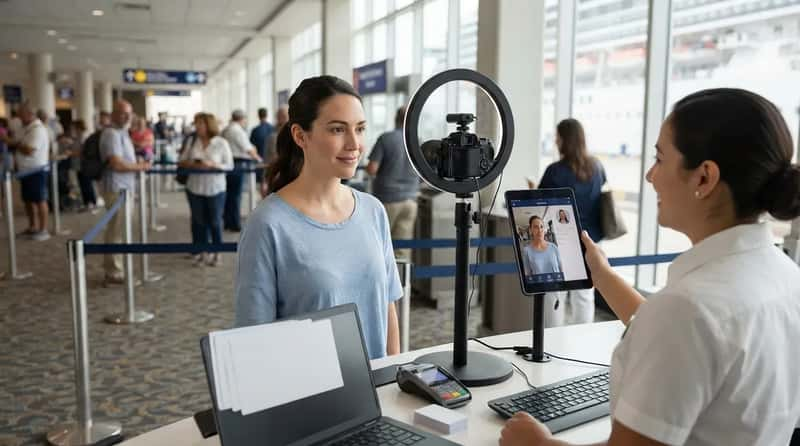
Most passengers treat the embarkation photo like a throwaway moment. Every passenger is photographed at check-in and issued a credential. Royal Caribbean calls its card a SeaPass, and other lines use wearable medallions or wristbands. That picture ties your face to your credential for the whole trip.
At a Glance
- Your photo is taken at check-in, usually in a few seconds.
- You get a credential: a card, wristband, or medallion, depending on the line.
- The credential is scanned whenever you board or leave.
- The stored image lets staff match the face to the card.
That setup is a big reason stowing away on a modern cruise ship is so hard. Nobody is supposed to be aboard without a photo and a scannable credential on file. So the awkward snapshot is a security record, not a souvenir. But that’s nothing compared to what happens each time you tap that card at #14…
#14 – The Card Scan That Happens Every Single Time You Step On or Off
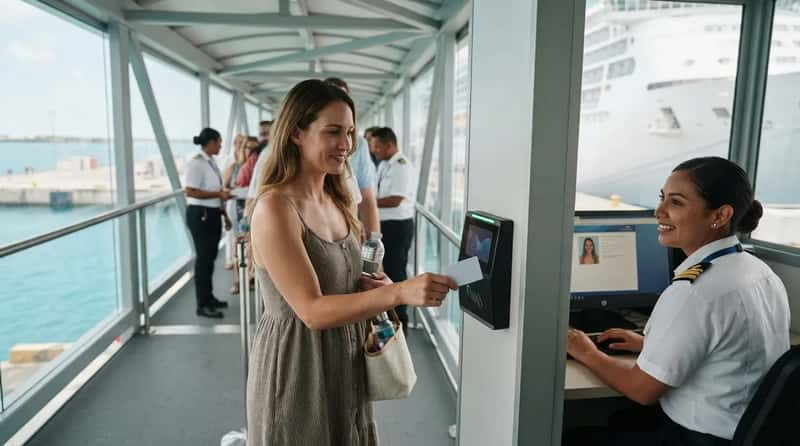
Walking back aboard after a beach day feels casual. It isn’t. Your key card must be scanned at the gangway each time you board or leave. Every tap tells the ship who is aboard and who is ashore.
That matters most when the ship is about to sail. The system lets the crew know exactly who has not come back, instead of guessing from a paper list. Most passengers hear a beep and see a smile. Security sees a live headcount. And the gangway has another layer that never shows on your screen, coming up at #13…
#13 – The Logbook Watch That International Rules Require at the Gangway
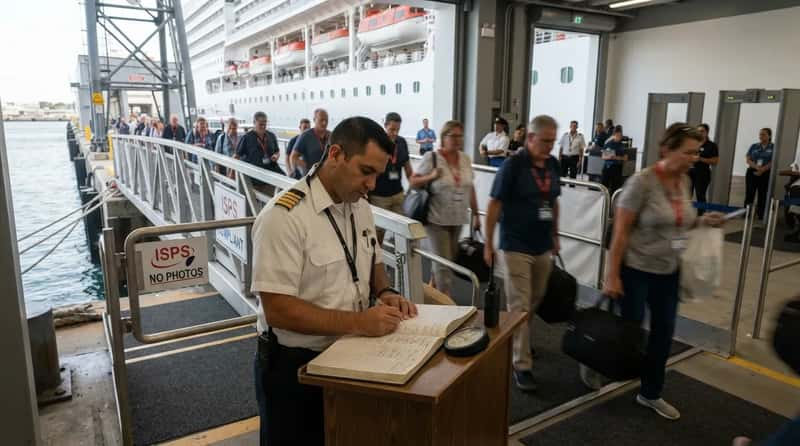
There is often a person standing at the gangway with one very specific job. Under the international ISPS Code, a watch must be posted at the gangway whenever it is lowered, logging every person who boards or disembarks. The code covers passenger ships of 500 gross tonnage and up, which takes in every modern cruise ship.
Cruise terminals are also set up for the job, with baggage X-ray machines, archway metal detectors, and card readers along the route to the ship. Embarkation is designed to feel a lot like airport security, and that is deliberate. Still, the screening most people grumble about isn’t the strangest part. The oddest surprise is hiding in your carry-on at #12…
#12 – The Carry-On X-Ray That Skips the Airport Ritual but Still Spots Your Drinks
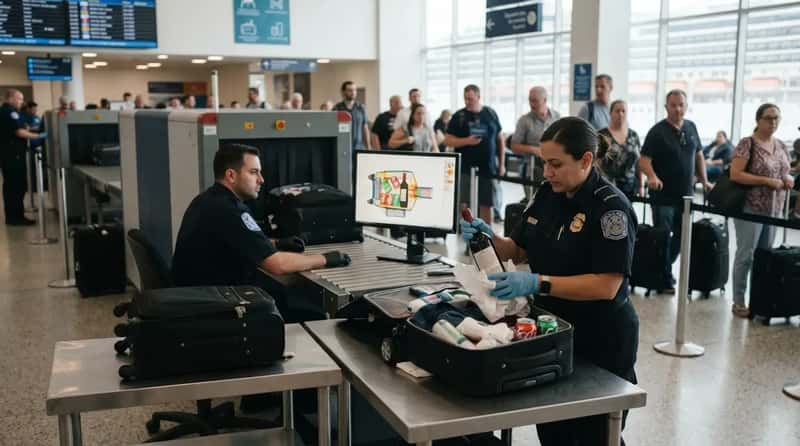
Here’s a twist for frequent flyers. On many cruise embarkations, you don’t have to pull liquids or laptops out of your bags. That makes the line feel looser than the airport. Don’t be fooled.
Quick Compare
- Airport: liquids in carry-ons are capped at 3.4 ounces each, and laptops usually come out.
- Cruise terminal: the process often feels easier, with fewer things to unpack.
- Both: someone is watching the monitor and flagged bags get opened by hand.
Screeners are still watching the monitor. A bottle of wine or a stash of soda cans can get flagged, and then the bag lands on a side table where an agent inspects it by hand. The easy-looking line is the one paying attention to what’s inside your bag. And one common habit makes that inspection harder than it needs to be, as #11 shows…
#11 – Why a Padlocked Suitcase Can Become the Slowest Bag on the Ship
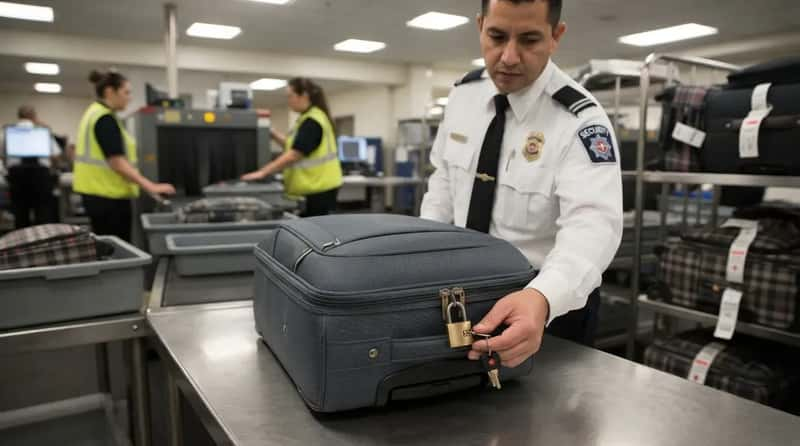
It feels responsible to lock your luggage. Cruise veterans say skip it. Bags are screened for prohibited items, and security may need to open yours if something looks off.
Once you hand over checked bags, they go through a scanner at the terminal, and staff pull those with suspicious-looking contents. A locked bag that gets flagged can slow everything down. Your suitcase gets opened on a stranger’s schedule, not yours. But the most commonly confiscated item has nothing to do with locks. It’s a household basic at #10…
#10 – The Clothes Iron That Gets More Passengers Stopped Than Weapons Do
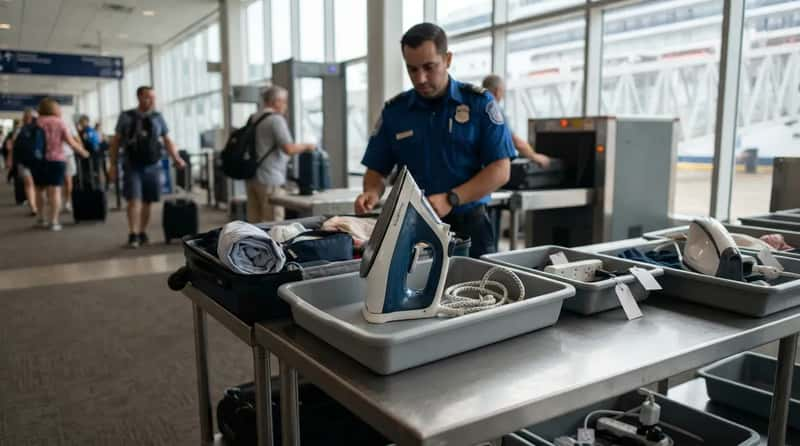
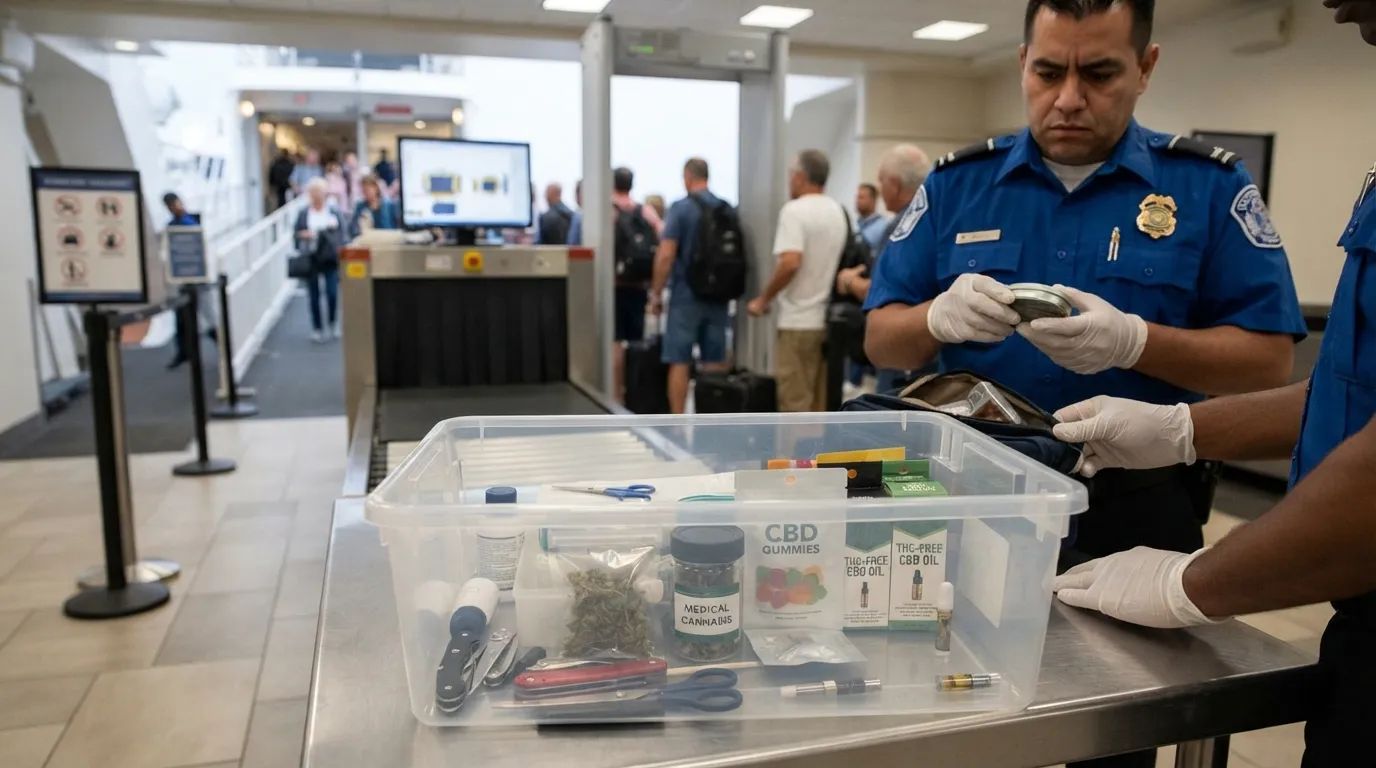
It sounds harmless, but one of the biggest embarkation tripwires is the packing list. Irons, steamers, and power strips that aren’t cruise approved are among the most commonly confiscated items. Hot plates and candles sit on the same list.
The reason is fire. Candles, clothes irons, surge protectors without built-in breakers, and hot plates top the fire-hazard list, and they catch plenty of first-time cruisers off guard. Wrinkle-free shirts turn out to be a bigger security issue than most people realize. That’s an ordinary mistake, but the next one takes a more creative approach, at #9…
#9 – The Sunscreen Bottle Trick Security Has Seen More Times Than You Can Count
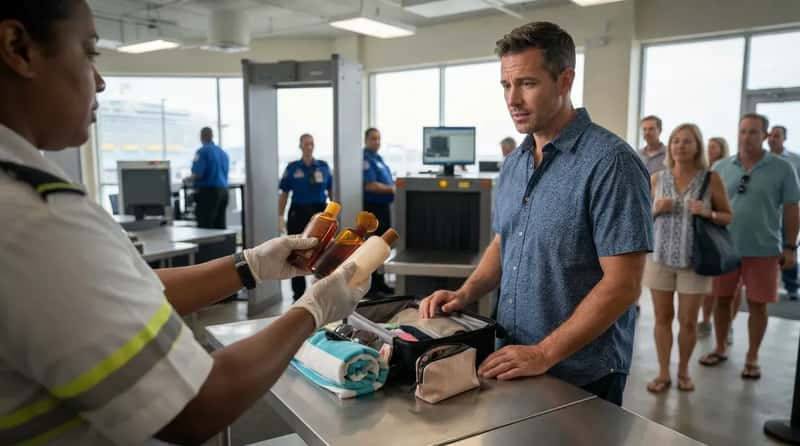
Everyone has heard the smuggling trick. Pour rum into a sunscreen bottle and stroll aboard. Cruise veterans say it rarely works, because security is well aware of fake sunscreen bottles and other familiar disguises.
Alcohol rules differ by line. Most lines allow a limited amount of wine or champagne, typically one or two bottles per person, on embarkation day, but hard liquor is almost universally prohibited. So the legal route is a bottle of wine, not a disguised flask. Some travelers insist the trick is a rite of passage, but the odds look poor. And the pattern behind these bad bets is more human than you’d guess, as #8 hints…
#8 – The Drone in the Bag That Looks Perfectly Innocent
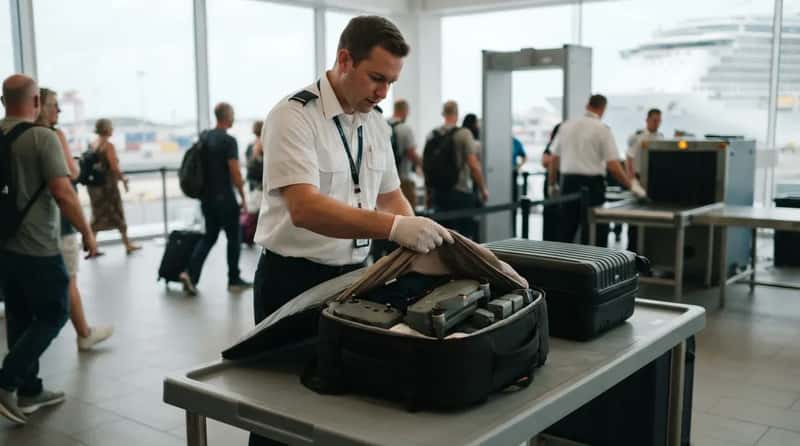
To the owner, a drone is just a flying camera. To a port, it’s a flagged item. Most confiscated cruise items fall into a few categories, including weapons, fire hazards, alcohol, and drones. The drone made that list for a reason.
Worth Knowing
- Drones show up on confiscation lists right next to weapons and fire hazards.
- Some ports give drones their own section in their security rules.
- One cruise line may refuse a drone that another line allows.
- A gadget that feels like a hobby to you can read as a flagged item to a screener.
Port authorities spell it out too. Port Everglades’s security page has a separate section for unmanned aerial vehicles alongside its list of banned items. Rules differ by cruise line, so a drone that’s fine on one ship may be refused on another. Passengers often assume gadgets get a free pass. Meanwhile, even a harmless-looking toy can cause trouble, as #7 shows…
#7 – The Fake Weapon That Gets Treated Like a Real One
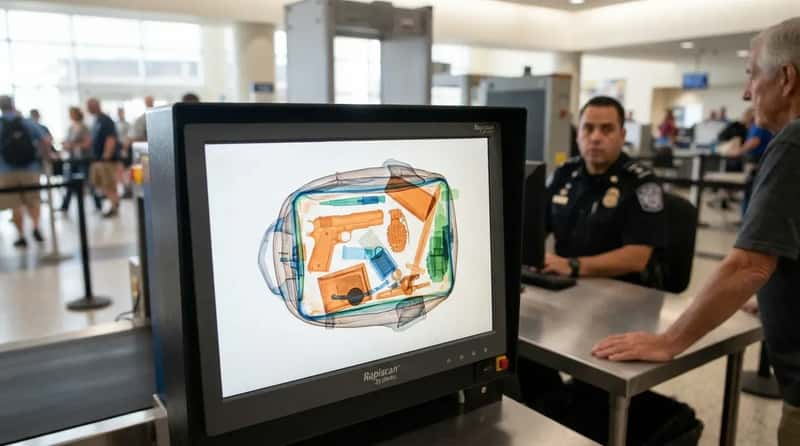
You might expect a prop to be fine. It isn’t. Princess prohibits all imitation or replica weapons, including decommissioned ones and realistic toy weapons. A costume accessory for the theme night can end up in the confiscation pile.
The Coast Guard list goes further than people expect. It includes realistic replicas of explosives. On an X-ray screen, a convincing replica can look a lot like the real thing. One line puts it simply: if it looks like a weapon or could function as one, it will be confiscated. The kitchen drawer has its own surprise at #6…
#6 – The Scissors Rule Most Packers Get Wrong
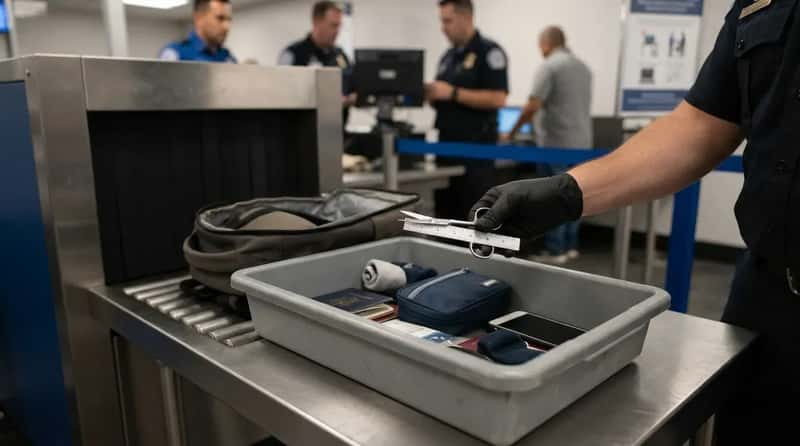
It isn’t only knives. Royal Caribbean’s list covers sharp objects, including all knives and scissors. That catches plenty of people who toss a sewing kit or a pocketknife into the bag on autopilot.
There is a small exception. Personal grooming items like safety razors, or scissors with blades under 4 inches, are allowed. The line between a grooming tool and a banned blade comes down to a few inches. Policies differ from line to line, so the printed list beats guesswork every time. The next rule surprises people in a different way, at #5…
#5 – Why Legal Marijuana at Home Doesn’t Count at the Gangway
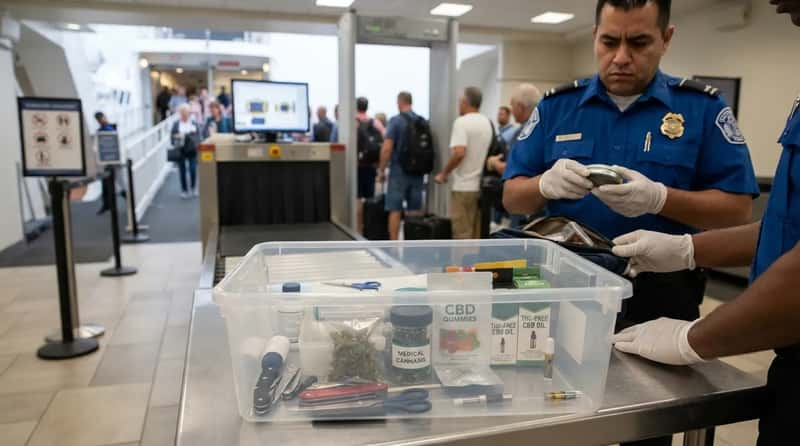
This is the one that startles Americans. Marijuana isn’t allowed even when you’re sailing from a state where it’s legal, because cruise ships follow federal law. Your state’s rules don’t travel with you up the gangway.
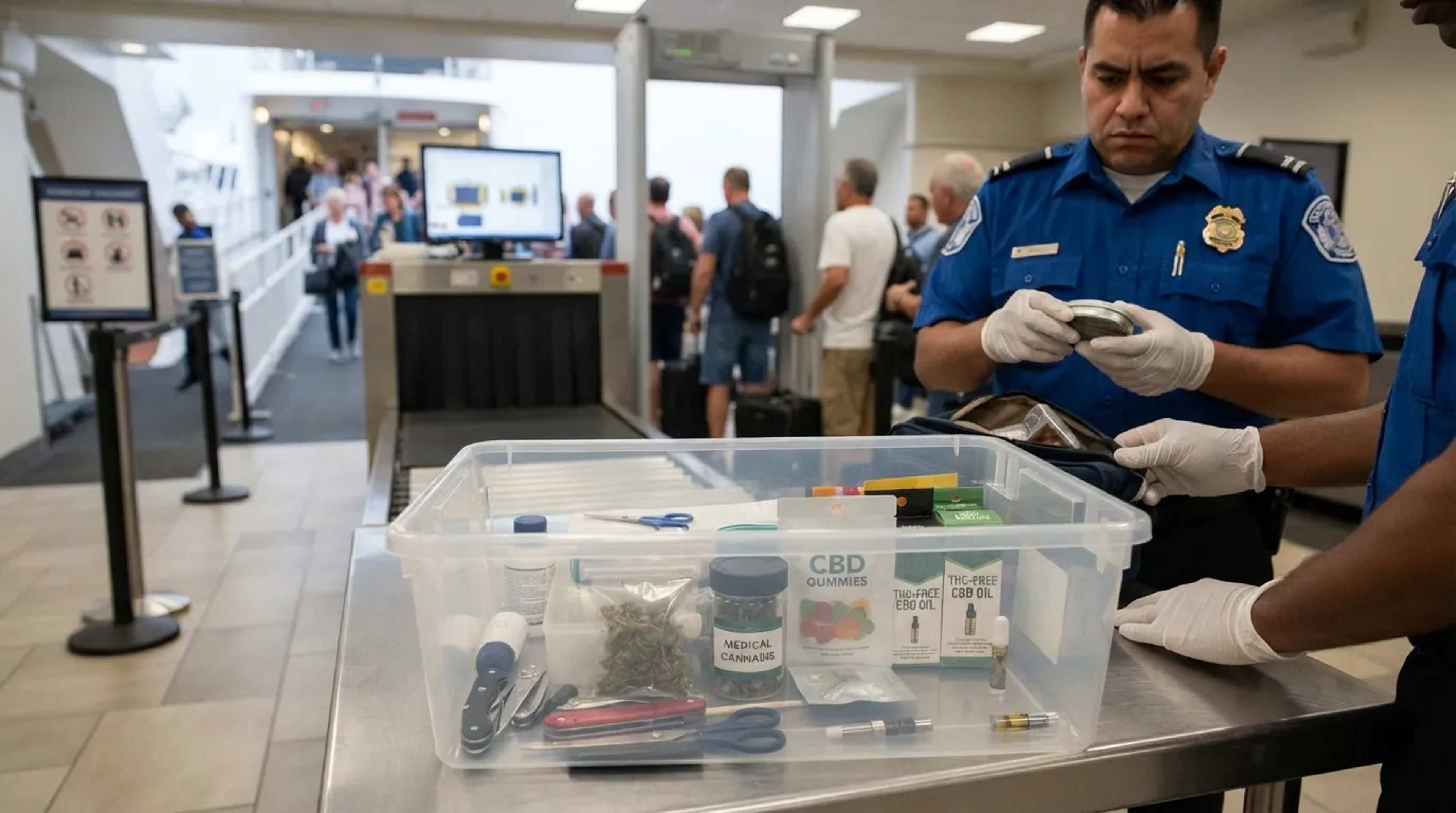
The policies reach further than marijuana alone. Princess bans all illegal drugs, including medications without proper prescriptions, and also lists medical marijuana. Royal Caribbean also lists CBD oil and CBD products. Even a wellness gummy can end up in the confiscation bin. Many travelers argue these rules feel outdated, but the ships aren’t changing them. Next, a four-legged checker shows up at #4…
#4 – The Dog Sniffing Down the Line Before You Even Reach the Ship
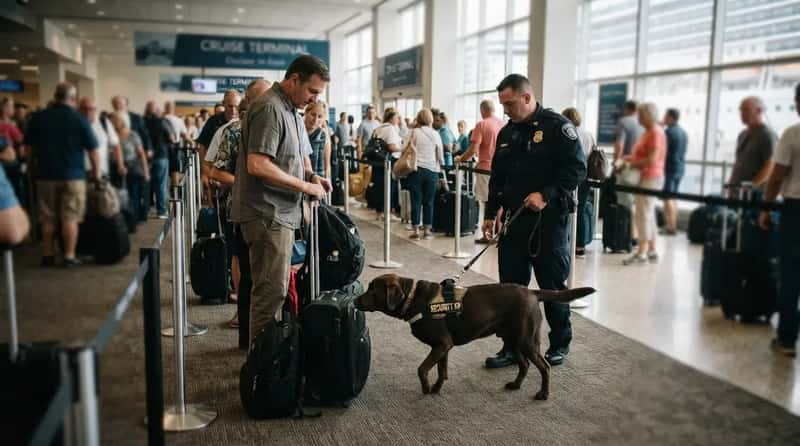
You might not notice it, but it can be there. Some cruise lines or customs authorities deploy drug-sniffing dogs at cruise terminals. It isn’t universal, so it depends on the port and the day.
Why It Stands Out
- There’s no special lane. It happens right inside the normal line.
- Bags go on the floor while the dog works its way past.
- It’s over in moments, so most people barely register it.
- Whether it happens at all depends on the port and the day.
When it happens, the routine is quick. Cruisers may be asked to line up and set their bags on the floor while a dog works its way down the line. To a passenger staring at a phone, it can pass for ordinary crowd management. That’s exactly why it works: it’s quiet, fast, and barely interrupts the line. Yet one check happens before you even reach the terminal, and it’s at #3…
#3 – The Government ID Check That Starts Before You Reach the Terminal Doors
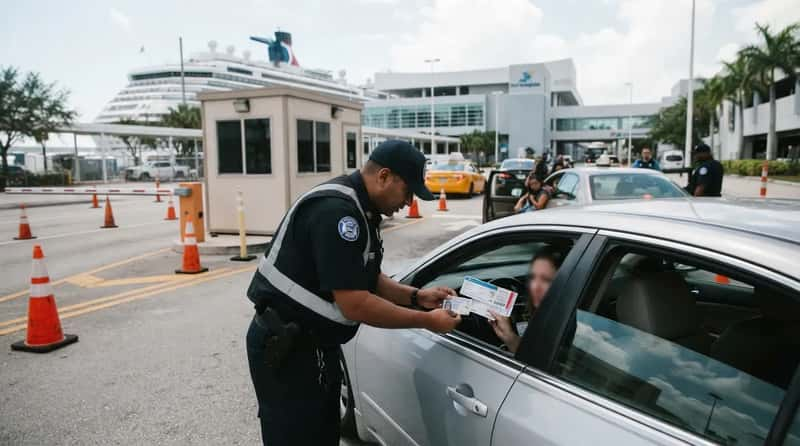
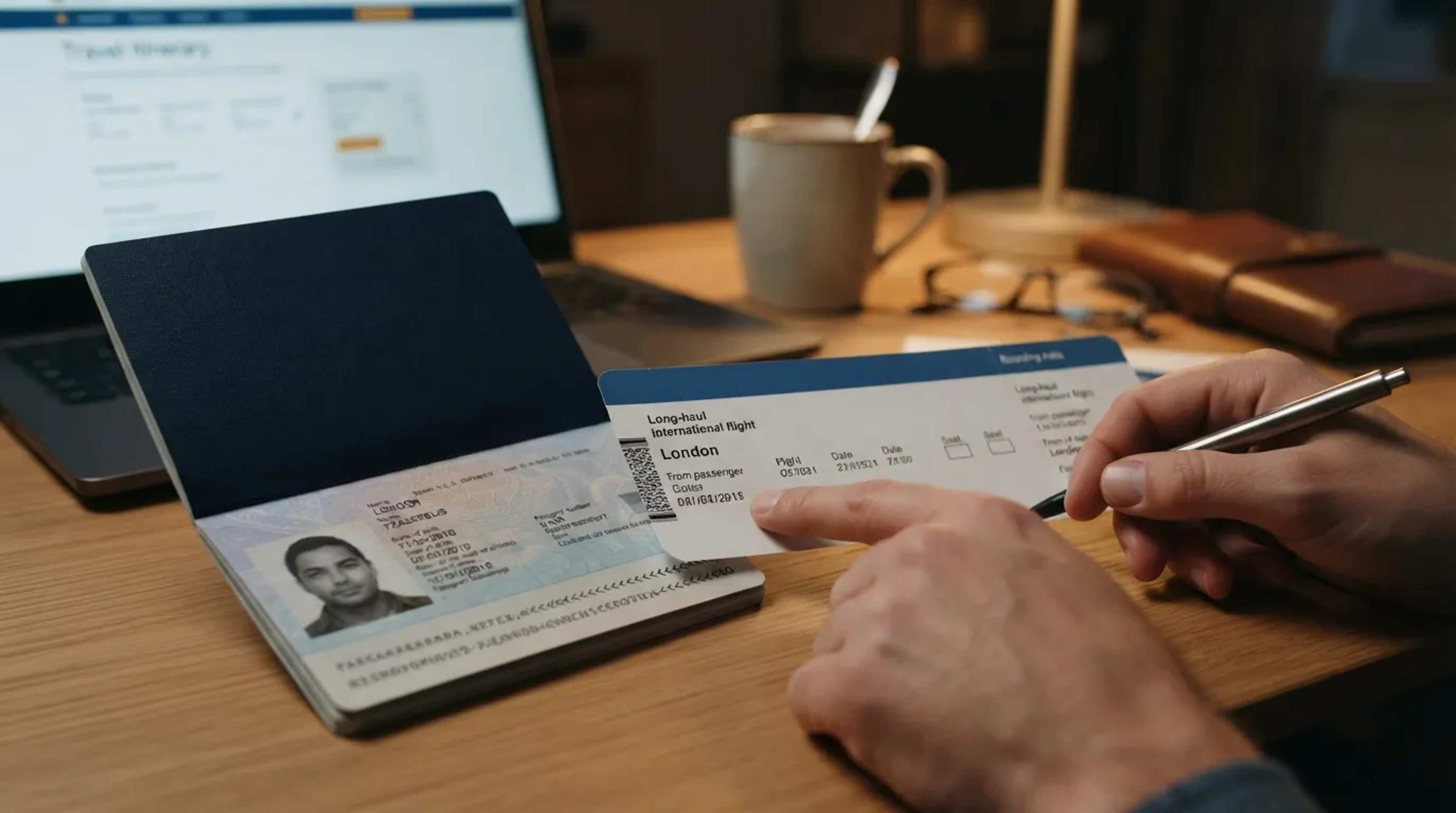
At some ports, security starts at the curb. At Port Everglades, cruise guests and visitors age 18 and older must show a government-issued photo ID at any port security checkpoint, along with their cruise documents.
Vehicles aren’t exempt either. Guests may be subject to periodic vehicle screening when they arrive at a checkpoint, under U.S. Coast Guard security rules for port facilities. The car or rideshare you arrive in may be screened before you’ve even found the baggage drop. Most people skip right past all of this, and what comes after a flagged bag is even stranger, as #2 shows…
#2 – The Stateroom Phone Call Nobody Wants to Get

The scariest moment isn’t at the gangway. It comes later. If a checked bag is flagged, you’ll get a call to your stateroom and be asked to head to a certain location to speak with security staff. You may be given a claim check to retrieve the item at disembarkation.
Not every case ends that way. Security teams document confiscated materials and either destroy them or hold banned items for return at the end of the voyage. Your item might be waiting at the end of the trip, or it might be gone for good. Which one depends on what it was. And one rule sits above all the others, coming up at #1…
#1 – The Final Call Belongs to Security, and There’s No Appeal
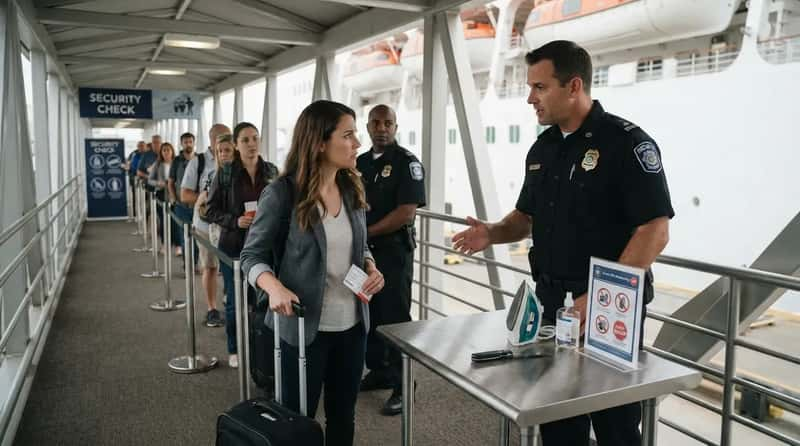
It’s the part almost nobody reads. The decision rests with the cruise line’s security team, and their judgment is final. Arguing at the gangway rarely changes that. Once officers remove prohibited belongings from luggage, the decision stands.
Gray areas exist, but the call is theirs. Princess notes that when there is doubt, an embarkation supervisor or shipboard personnel can make the decision. The prohibited item isn’t stored onboard for you either. Guests are responsible for storing items ashore or disposing of them. So the real check at the gangway isn’t only your bag. It’s whether you read the rulebook first.
The gangway isn’t a formality. It’s a stack of overlapping checks: a stored photo, a card scan, a logged watch, X-rays, sniffer dogs, and a security team with the last word. The most surprising parts aren’t the dramatic ones. They’re the irons, the sunscreen bottles, and the legal-at-home gummies that quietly get pulled aside. Rules differ by cruise line, so the printed list is the one that counts.
Next time you shuffle toward the ship with your head already on the pool deck, notice the beep, the camera, and the person with the logbook. The whole vacation starts with a door that’s watching you back.