Across 11 countries tested by Stiftung Warentest, every case where dynamic currency conversion was used raised the price, by 2.6% to 12.0%. That’s just one of 15 quiet charges , and the real numbers behind each one are coming up.
Most travelers assume the big money leaks are airfare and hotel rooms. Experienced travelers know the small, quiet charges do the real damage, and the worst offender is saved for last.
Some of these will make you nod. One or two might start an argument.
#15 – Bottled Water at the Airport
Nothing marks a rookie faster than paying airport prices for a bottle of water.
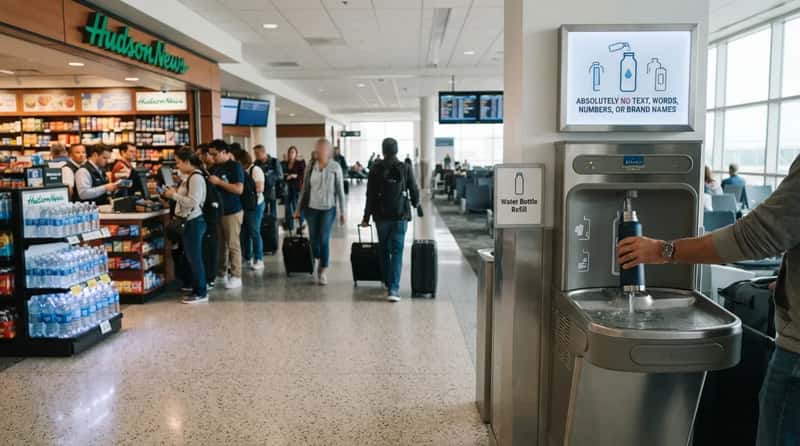
Experienced travelers pack an empty reusable bottle, carry it through security, and fill it on the other side. Many airports now offer refill stations past the checkpoint, so a quick look at the terminal map can save you a purchase.
The logic is simple: airports are a captive market, and retailers know you can’t walk out to a cheaper shop once you’ve cleared screening. Picture the line at the shop, then the free fountain thirty steps away that nobody is looking at.
An empty bottle is allowed through security, while a full one is not. Most people don’t realize how well that one rule works in their favor.
But water is pocket change next to the charge waiting inside your hotel room, which brings us to #14…
#14 – The Hotel Minibar
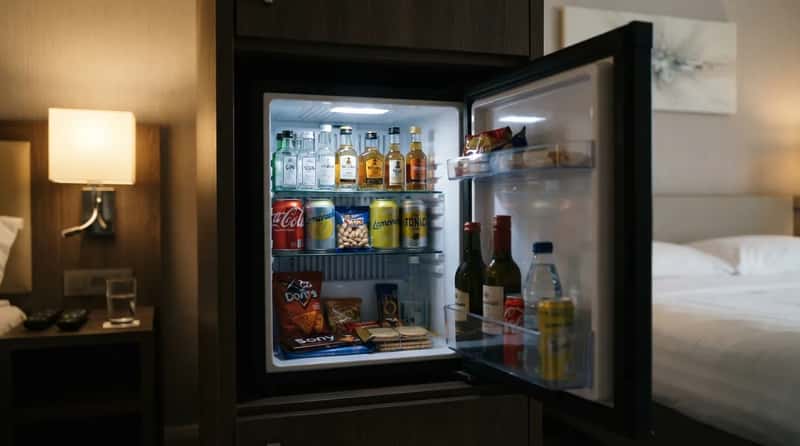
The hotel minibar is priced for guests who never read the price list.
Hotels stock those fridges as a convenience service, and the markup pays for the convenience rather than the snack. Experienced travelers walk to a nearby shop on day one and buy the same items for noticeably less.
Here’s the part most people miss: some minibars use sensors, so lifting an item to make room for your own drinks can trigger a charge. Not every hotel works this way, which is exactly why you should ask at check-in.
If you need cold storage for medication or baby food, ask the front desk for an empty fridge instead of clearing the minibar yourself. Then read the itemized bill at check-out and dispute anything you never touched.
A charge for a candy bar you never ate is a lousy souvenir.
Worth Knowing
- Ask at check-in whether the minibar is sensor-based.
- Snap a quick photo of the fridge contents when you arrive.
- Request an empty fridge for medication or baby food.
- Check the itemized bill before you sign off at check-out.
That bill is also where the next hotel surprise tends to hide, at #13…
#13 – Hotel Wi-Fi Fees
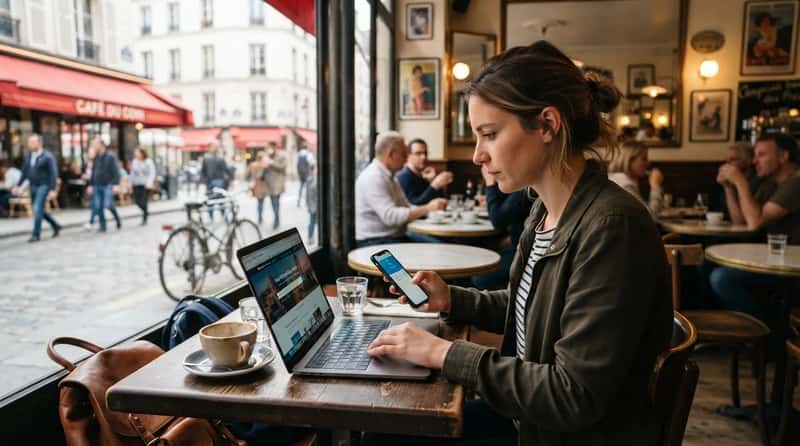
Paying for hotel Wi-Fi is one of the easiest charges to dodge, and plenty of travelers still don’t.
Policies differ by brand, but some chains give free Wi-Fi to guests who simply join their free loyalty program. Many independent and boutique properties include it in the room rate, so a quick check before booking tells you a lot.
When a hotel does charge, experienced travelers reach for a phone hotspot, a local data plan, or a café down the street. The café even throws in a coffee and a front-row seat to neighborhood life.
Signing up for a free loyalty account can unlock Wi-Fi that non-members pay for at some hotels. It takes two minutes and costs nothing.
Paying for a signal feels small, but the next fee splits travelers into two angry camps, at #12…
#12 – Advance Seat Selection
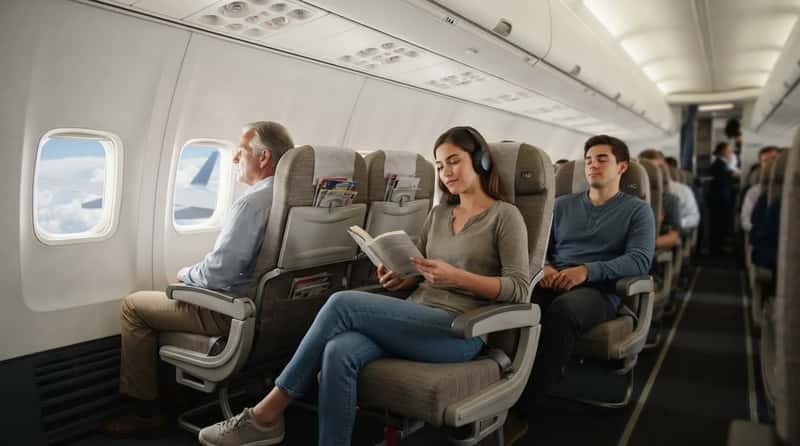
Paying extra to choose your seat is the most overrated upgrade in economy.
Basic fares on many airlines exclude seat choice, and the fee for picking one varies by airline, route, and seat location. That’s why there’s no single price to quote, and why airlines love it.
Here’s the contrarian take: on a short flight, paying to pick a seat is often wasted money. You may land a middle seat, but you’d survive a two-hour hop.
On many fares, the airline assigns you a seat at check-in for free if you decline to pay in advance. For a short hop, that’s a trade worth considering.
Long-haul flights and tight family logistics are different, and travelers will argue about that in the comments. But the next item cuts through all the arguing, at #11…
#11 – The Airport SIM Card Counter
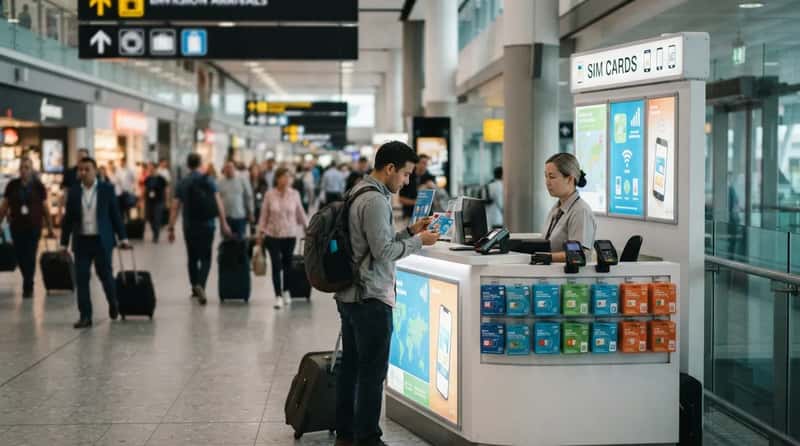
The shop at arrivals is rarely the cheapest way to get data in a new country.
Travelers who stay connected for less usually compare three options before leaving home: an eSIM, a local SIM, or a daily pass from their home carrier. Prices and coverage change often, so the comparison itself is the real money-saver.
Quick Compare
- eSIM: Set it up before departure, so data works the moment you land.
- Local SIM: Bought in-country, and your phone must accept a foreign SIM.
- Home carrier pass: The simplest route, but compare the daily cost first.
The one thing to check first is that your phone can take a foreign SIM at all. A carrier-locked phone may refuse a foreign SIM entirely.
Find that out at home, not in a terminal at midnight. Arriving tired, with no map and no data, is exactly when any price starts to look fine.
Connectivity is one thing, but the next mistake happens at the rental counter, at #10…
#10 – Prepaid Rental Car Fuel
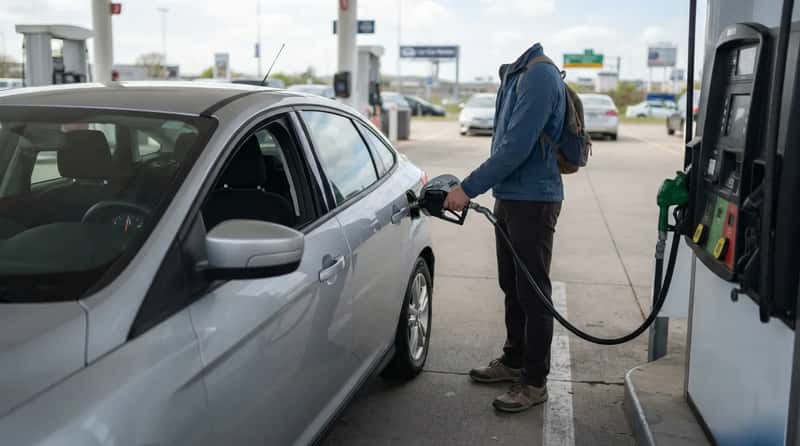
The prepaid fuel option sounds like a favor, but it usually works in the rental company’s favor.
The pitch is convenience: pay for a full tank upfront and return the car without stopping at a gas station. The catch is that you’re committing to buy a full tank before you know how much you’ll use.
Terms differ by company and country, so read your contract. At many rental companies, fuel you don’t use is not credited back.
Unless you truly expect to bring the car back nearly empty, refilling it yourself is the safer habit. Otherwise you’re buying a full tank and handing back whatever’s left as a gift.
Fuel is a single line item, but the next one can ruin an entire meal, and it’s sitting in front of every landmark, at #9…
#9 – Dinner Facing the Landmark
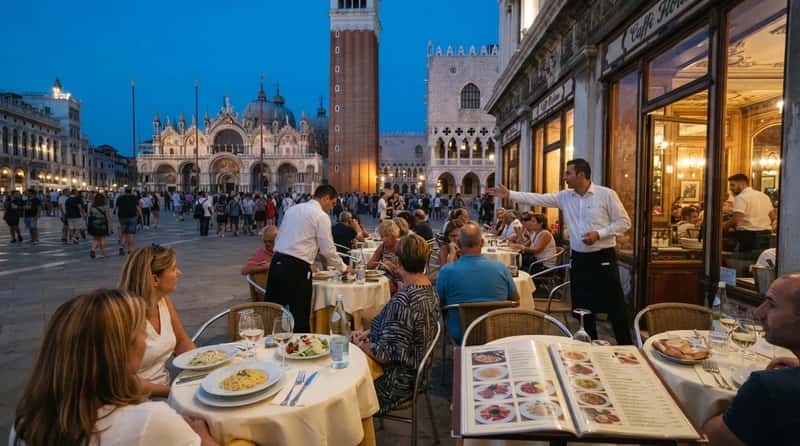
The restaurant with the perfect view of the famous square is often the one locals skip.
Places right beside major attractions know most of their customers will never return. That takes away the pressure to keep prices fair or food memorable.
Experienced travelers walk two or three streets away from the crowds before choosing a table. The food often gets better, and the prices friendlier, with every block.
A host who calls out to passersby is a classic tourist-trap sign. So is a laminated menu with photos in five languages.
Some travelers insist the view is worth the premium, and that’s fair. But the next trap starts the moment you step off the plane, at #8…
#8 – The Airport Taxi Tout
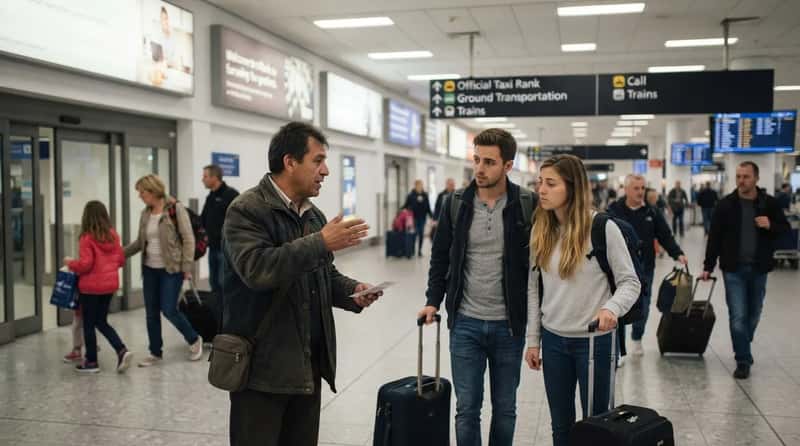
The friendly person offering a ride inside the arrivals hall is usually not your cheapest option.
Unofficial drivers often approach new arrivals who look tired and unsure where to go. Experienced travelers head straight for the official taxi rank, a pre-booked transfer, or the airport’s own rail or bus link.
Before any ride starts, agree on the method of payment and whether the fare is metered or fixed. Anyone who approaches you inside the arrivals hall is often not the official service.
At a Glance
- Official taxi rank: Ask whether the fare is metered or fixed.
- Pre-booked transfer: The price and pickup point are settled before you fly.
- Airport rail or bus link: Listed on the airport’s own website.
- Offer inside arrivals: Often not the official service, so politely decline.
Checking the airport’s website before you fly shows you the approved options. Ten minutes of homework beats a long argument at the curb.
Travelers who do this research rarely get caught out. But there’s a fee that can hit you before you even leave home, at #7…
#7 – The Airport Check-In Fee
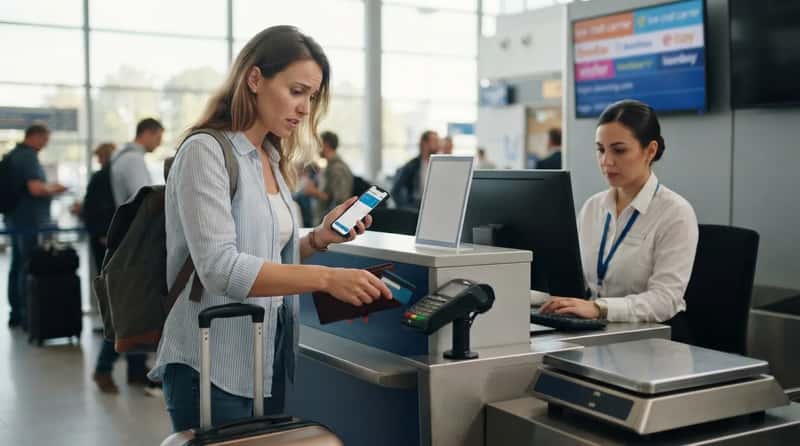
On some budget airlines, simply checking in the wrong way can cost you money.
Certain low-cost carriers charge for checking in at the airport desk or for printing a boarding pass there. Policies and amounts vary, so the airline’s own terms are the only source that counts.
Experienced travelers check in online as soon as the window opens. Missing the online check-in window on a budget carrier can turn a cheap fare into an expensive one.
They also save the boarding pass to their phone and screenshot it, in case signal fails. A dead connection at the gate is a bad moment to discover you have nothing to show.
The pattern here is clear: airlines and hotels profit from your inattention. And the next one is a perk you may be paying for without wanting it, at #6…
#6 – The Hotel Breakfast Add-On
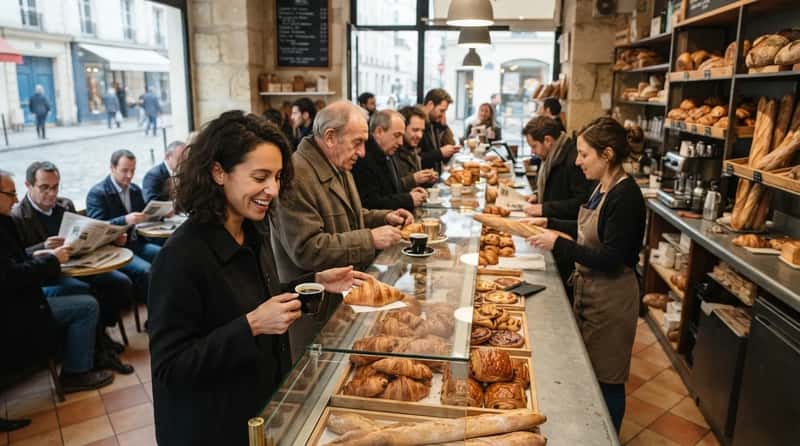
Hotel breakfast can be among the priciest ordinary meals of the trip.
The buffet is convenient, and sometimes it’s included in your rate, which changes the math. When it’s an add-on, though, you’re paying for speed rather than for food.
Experienced travelers usually head to the neighborhood bakery or café instead. The place locals eat breakfast is usually within a few minutes’ walk of the hotel.
You get a more authentic start to the day and often spend less. Fresh pastry at a counter full of locals beats a steam tray in a hotel dining room.
If you disagree, you’re not alone. But the next item is a bigger argument, and it involves a bus, at #5…
#5 – The Hotel-Desk Tour Package
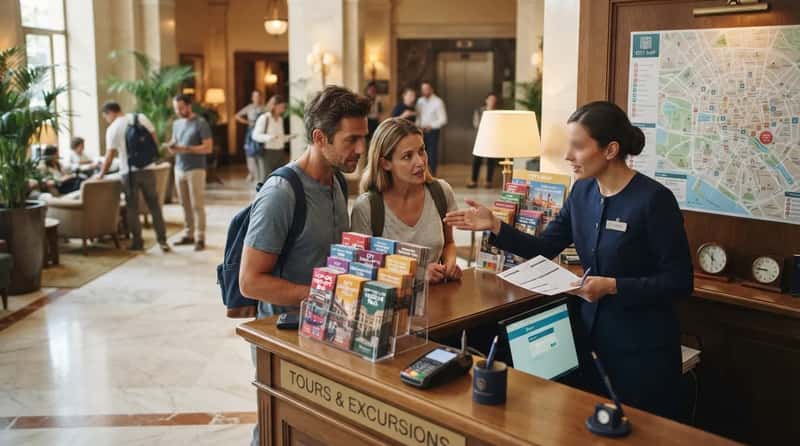
Booking tours through the lobby desk is convenient, and convenience rarely comes cheap.
Desks and resellers may add a commission or bundle extras you didn’t ask for. Booking directly with the attraction or operator can cost less, and you can read the cancellation terms yourself.
Why It Stands Out
- You see the operator’s cancellation terms for yourself.
- You skip bundled extras you never asked for.
- You can price the same outing against transit plus a walking route.
Here’s the opinion that starts arguments: for many cities, a hop-on hop-off bus is poor value compared with public transit and a walking route. Fans of the bus will say it saves energy, and sometimes they’re right.
A city pass can beat individual tickets only if you actually visit enough sights to use it. Do the math before you buy.
Tours are optional. The next charge, however, was built to feel unavoidable, and it’s climbing, at #4…
#4 – Checked Bag Fees
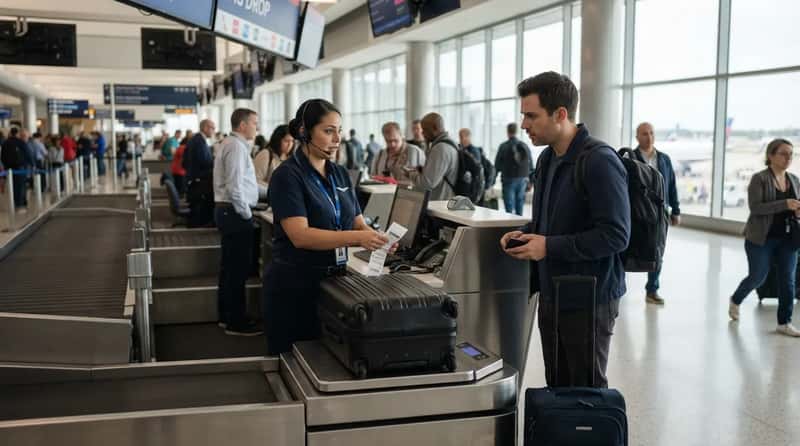
Checking a bag now costs about $45 each way on most major US airlines.
Standard first checked bag fees among major US airlines are generally around $45, and fees apply per bag, per direction, so a round trip doubles everything. Airlines point to fuel: US jet fuel prices were up roughly 85 percent after the war on Iran began in February, according to Argus data published by Airlines for America.
Southwest ended its “Bags Fly Free” policy in 2025 after 54 years. Paying online in advance can save $5 per bag.
Experienced travelers simply pack carry-on only. Rolling clothes and wearing the bulkiest shoes onto the plane does the rest.
One caveat: long-haul international routes on most major US carriers still include at least one free checked bag in standard economy, so check the fare rules for your route. But a hotel fee is far harder to avoid, and it’s next at #3…
#3 – The Resort Fee
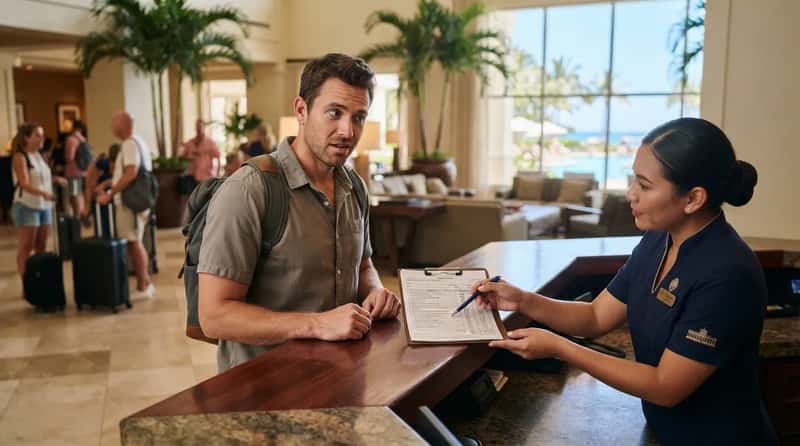
A hotel room advertised at $199 can quietly become $238 a night.
That’s the FTC’s own example: a resort charging a nightly rate of $199, plus a mandatory resort fee of $39 per day. Since the FTC’s Rule on Unfair or Deceptive Fees went into effect May 12, 2025, hotels must show that total price up front.
Here’s the catch: the rule does not prohibit resort fees themselves. It requires them to be disclosed upfront and accurately described.
One fee-tracking site puts typical charges at $25 to $55 a night. Multiply $39 by a five-night stay and that line item alone is $195.
The fix is simple: compare the all-in price before you book. But the next two money leaks are worse, and they start the moment you land, at #2…
#2 – Airport Currency Exchange
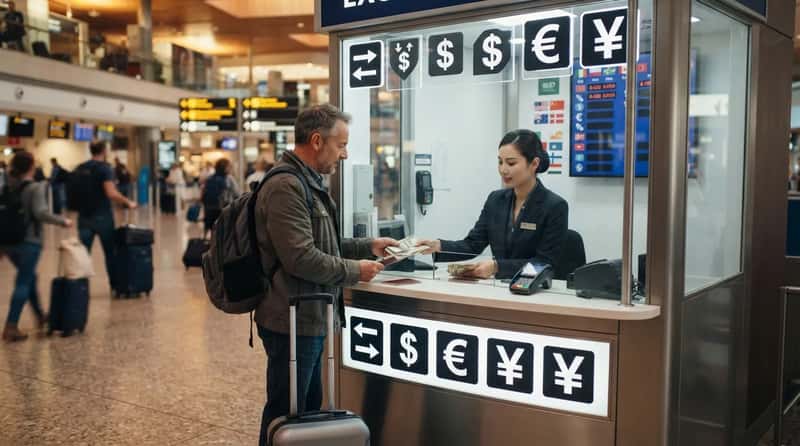
The kiosk advertising “no fees” is often the most expensive place to change money.
Airport kiosks make their profit on exchange rates marked up far above market prices. One estimate says they offer rates 5–10% worse than banks, costing an extra $25–65 on a $500 exchange.
NerdWallet has reported that airport booths can charge as much as 17% more than the going rate. Most people don’t realize that ordering cash from your home bank isn’t the fix either.
Major US banks’ foreign currency ordering services carry spreads typically 10–20% above the interbank rate. ATM networks use rates typically within 0.5 to 1 percent of the mid-market rate.
So where does the smart money go? An ATM at your destination is the usual answer, but one button on that machine can undo everything, and it’s our #1…
#1 – Paying in Your Home Currency
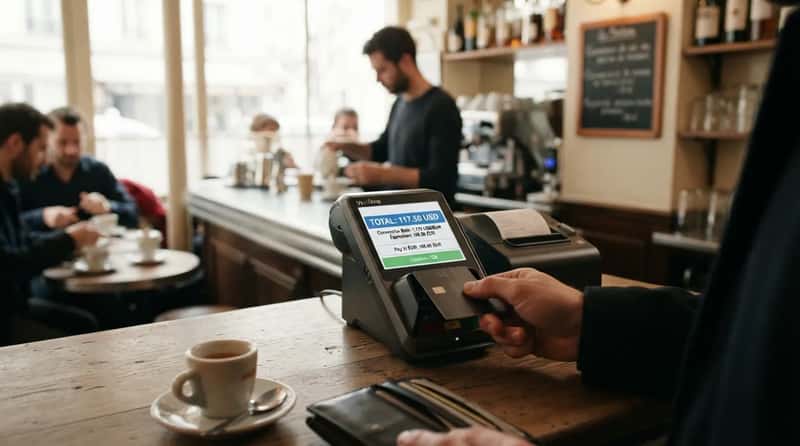
The most expensive button in travel says “Pay in your home currency.”
It’s called dynamic currency conversion, and a typical rate is 3–7% worse than the Visa or Mastercard wholesale rate. One guide’s example: a €100 bill in Paris could cost $115–118 via DCC versus $108–110 paid in euros.
It gets worse at ATMs, where markups can reach up to 12.95%. Some reports describe DCC rates as high as 18.0%.
On a two-week trip with $3,000 of card spending, falling for it on most transactions adds roughly $90–210 in markup. That’s a few good dinners handed to a card terminal.
The fix takes one second: always press “NO” and choose the local currency, and use a credit card with no foreign transaction fees. Turns out the smartest travelers aren’t cheap, they just refuse to pay for convenience that secretly costs them.
The Bottom Line
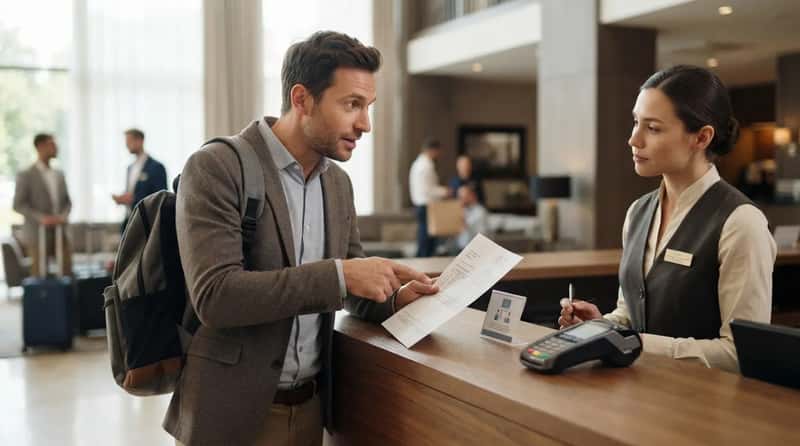
The pattern across all 15 is the same: travel businesses charge you for convenience, then count on you not checking the price. The biggest leaks are the quiet ones, like a 3 to 12 percent fee when you choose to pay in dollars abroad, or a $39 daily resort fee added to a $199 room.
Experienced travelers compare total prices, read the contract, and say no at the terminal. They also know a fee is only “unavoidable” until someone checks for an alternative.
Which of these 15 do you still pay for without thinking, and which one would you add to the list?
Bonus: The Insider Trick Nobody Tells You
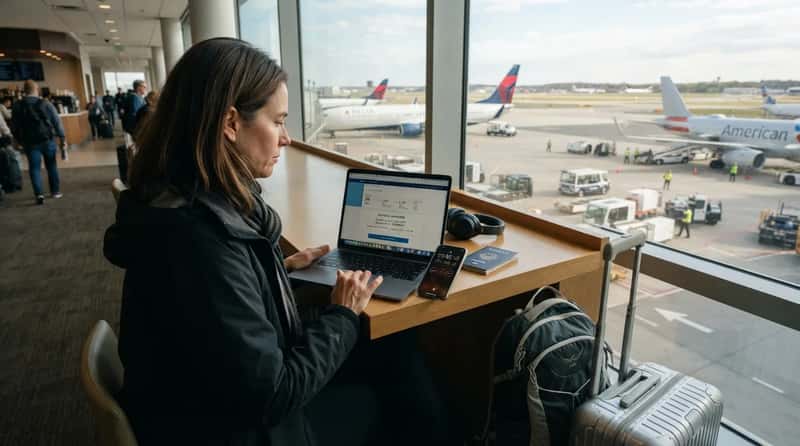
Use the U.S. Department of Transportation’s 24-hour rule as a free safety net on every flight you book.
For flights to or from the U.S., airlines must let you either hold a fare for 24 hours without paying or cancel within 24 hours of booking for a full refund. The rule applies when you book at least 7 days before departure.
- Book directly with the airline, not through a third-party site, since the airline’s own policy is what you can rely on.
- Before you confirm, read the fare rules for bag fees, seat selection, and change fees, then screenshot them.
- Set a phone alarm for a few hours before the 24-hour window closes. Re-check the fare, and cancel and rebook if a cheaper one has appeared or the fees add up to more than you expected.
Policies vary by airline and ticket type, so confirm the details on your airline’s website before you rely on it.