Everyone assumes the good stuff stays behind the curtain, reserved for passengers who paid four times the fare for a lie-flat seat and warm nuts on a plate. But talk to enough flight attendants and a different pattern shows up fast, one that has nothing to do with your boarding zone.
Age quietly changes how crews treat you, even in row 34, middle seat, basic economy. None of it is posted anywhere, none of it shows up on a receipt, and almost nobody over 60 realizes how much of it is already available to them. Here’s what actually happens once a crew clocks a passenger who might need a little extra grace.
#15 – The Extra Blanket That “Just Happened” to Be Spare
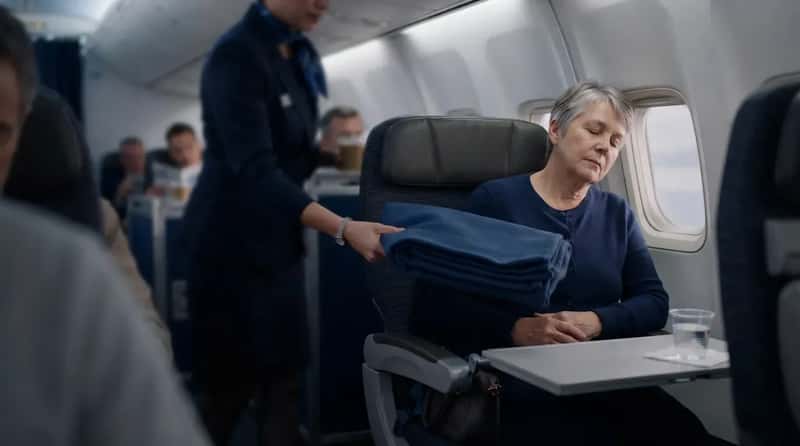
On flights where blankets are limited, crews often notice which passengers look cold, tired, or a little unsteady before anyone says a word. A folded blanket lands on the tray table during the same pass as drinks, no explanation offered. It looks random, but flight attendants say it almost never is.
Cabin crews are trained to scan rows constantly, and older passengers who seem uncomfortable get mentally flagged within the first twenty minutes of a flight. It’s a small gesture, but it’s also a quiet signal: somebody noticed you before you had to raise your hand.
#14 – A Second Pass With the Snack Basket
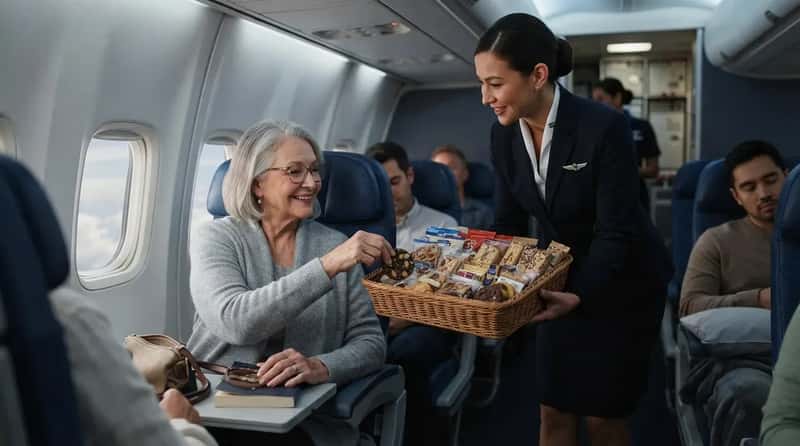
Flight attendants often keep extra snacks and drinks stashed away, especially on longer routes or flights that didn’t fully sell out. That stash never gets announced over the intercom, and it doesn’t circle back to every row. Crews say it tends to find the passengers who seemed to need a second cookie more than the guy in 12C.
Think you’re stuck with one tiny bag of pretzels? Think again. The trick isn’t asking louder, it’s asking at all. Most passengers over 60 don’t flag down a crew member twice, so the ones who do quietly get remembered for the rest of the flight.
#13 – Coffee Made the Way You Actually Drink It
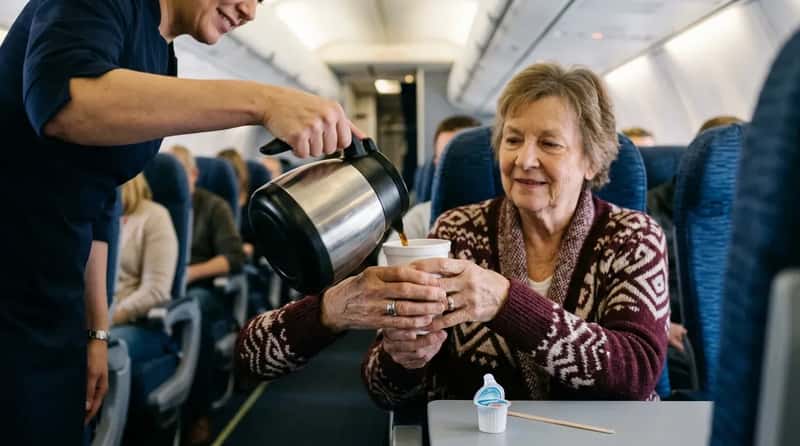
Specificity is the fastest way to earn goodwill from a beverage cart, and older travelers tend to know exactly how they take their coffee. Crews say a passenger who says “just a splash of cream, no sugar” gets remembered on the next pass, while a vague order gets forgotten somewhere around row 20.
It sounds minor, but a flight attendant repeating your exact order back to you, unprompted, is one of the clearest signs they’ve quietly decided to look out for you. It’s not in any training manual. It’s just what happens when someone treats the cart like a person instead of a vending machine.
#12 – Real Kindness Gets Repaid in Real Glasses
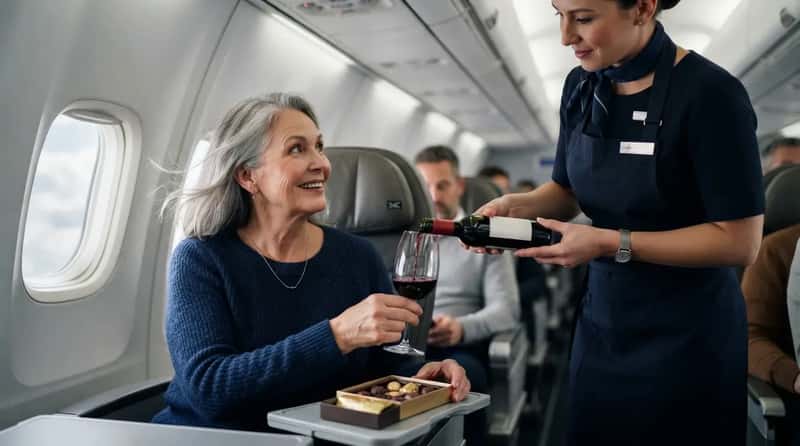
Passengers who show patience or generosity toward crew or fellow travelers get rewarded fast, and older flyers are disproportionately the ones who do it without even trying. One traveler said friends brought a box of chocolates on an international flight and ended up with first-class wine poured into a real glass, back in coach, twenty minutes later.
It’s a pattern crews reward constantly. Kindness toward other passengers gets noticed and quietly repaid, usually in the form of a drink nobody asked for. Grace under annoyance turns out to be its own currency at 35,000 feet, and older passengers cash in on it more than they realize.
Why It Stands Out
- Helping a nearby passenger lift a bag before a crew member even reaches the row
- Using a flight attendant’s first name off their badge instead of just waving a hand
- Staying easygoing through a delay instead of venting at the nearest uniform
- Simple, unscripted thank-yous that don’t come with a complaint attached
#11 – A Seat Swap That Puts You Closer to the Restroom
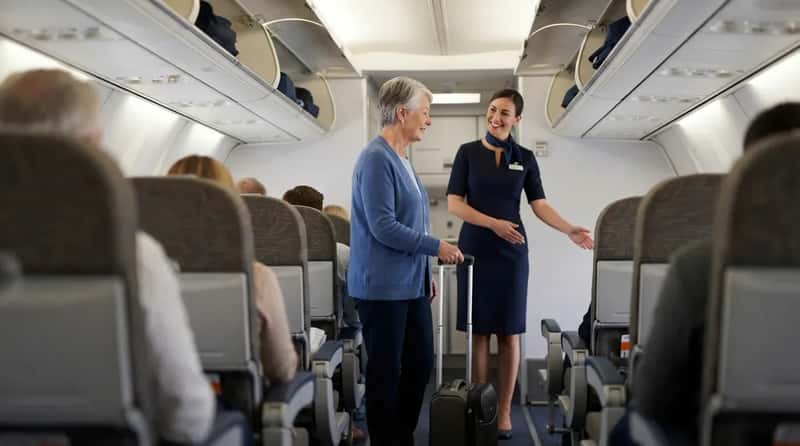
Crews can’t officially reassign seats mid-flight without a reason, but they’ll often quietly encourage an empty-row shuffle when they notice someone struggling to get up and down the aisle repeatedly. Many older travelers prefer sitting near the front of the plane, where the bathroom is closer and getting on and off the aircraft is easier.
Flight attendants pick up on this fast, and will sometimes point out an open aisle seat two rows up before boarding even finishes, especially on half-empty flights. It’s never advertised. For seniors recovering from surgery or managing circulation issues, an aisle seat also makes it easier to stand and stretch during a long flight without asking anyone to move.
#10 – Priority Boarding Nobody Announced Out Loud
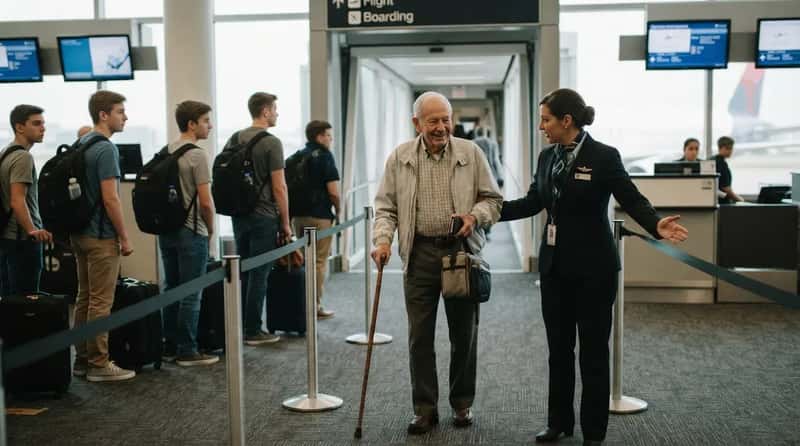
Airlines often allow early boarding for seniors at the gate, but it’s rarely shouted over the PA the way it is for military members or families with small kids. Gate agents will simply wave an older passenger through during the first boarding group if they look like they’d appreciate the extra time.
The payoff is real: no scramble for overhead space, no standing in a jet bridge line leaning on a cane. Many airlines let passengers who need extra time or assistance board before general boarding starts, and you can request this directly at the gate. Most flyers over 60 never even ask, and get it offered anyway.
#9 – A Note That Follows You Onto the Plane
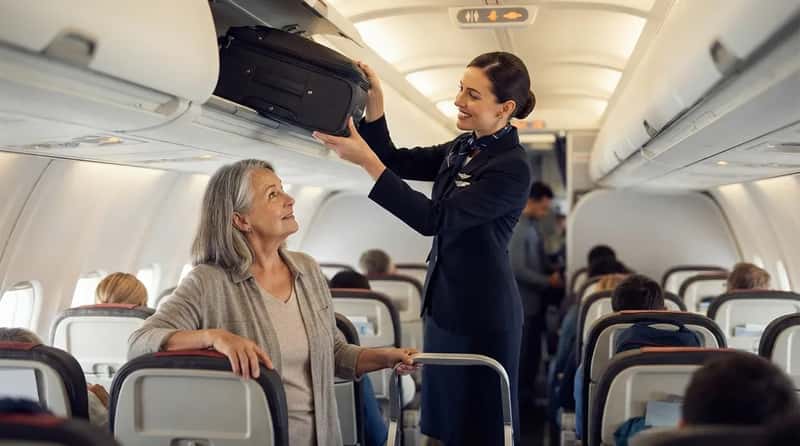
Here’s something almost nobody realizes: one sentence at the gate can change how an entire crew treats you for the whole flight. Flight attendants are trained to prioritize passengers who need help, but only if they know in advance. Telling the gate agent “I sometimes need a hand with my overhead bag” puts a note on your record that follows you onto the plane.
That single sentence is quietly one of the most powerful tools an older flyer has, and it costs nothing. Crews say passengers who mention it get checked on multiple times per flight without ever pressing the call button once.
At a Glance
- One spoken sentence at the gate is usually all it takes, no forms and no proof required
- The note tends to travel with your reservation, not just with the agent who heard it
- It works the same way in row 34 as it does in row 2
- Crews say it’s the single easiest request a flyer over 60 can make and almost never does
#8 – Braille and Large-Print Safety Cards, Ready Before You Ask
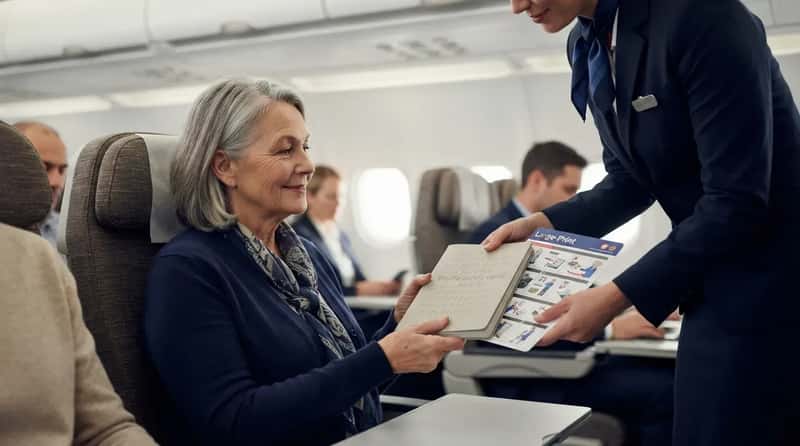
Most passengers never notice this exists, but it’s been standard for years. Flight attendants can provide sight-impaired passengers with safety information cards in large print or braille, and crews keep a small supply on hand specifically because vision changes are so common in older travelers.
Passengers with visual or hearing difficulties are encouraged to notify a flight attendant, and announcements will be personally relayed to anyone who might not have heard or seen them. Most people over 60 don’t think to ask for this, so crews often quietly offer it first, before takeoff even starts.
#7 – A Meal Built Around What Your Body Actually Needs
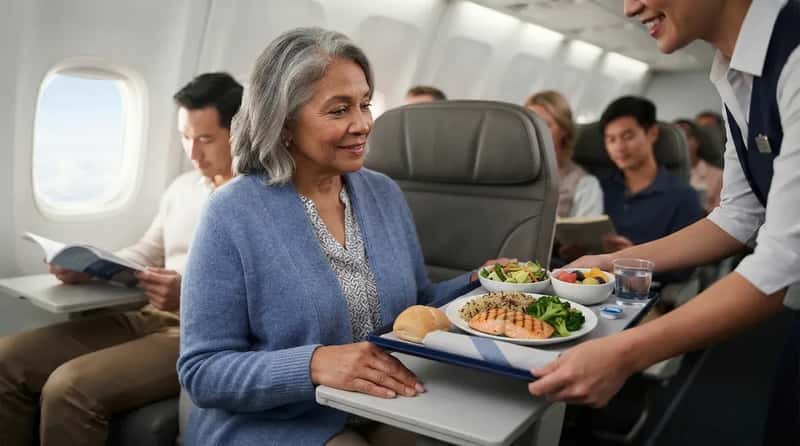
Regular coach meals are one-size-fits-all, but that’s not the whole story anymore. On longer flights, many airlines let senior passengers request specialty meals built around low-sodium, diabetic-friendly, or vegetarian needs.
The catch is almost nobody asks when booking, so almost nobody gets it. Requesting meal accommodations at the time of booking helps ensure the food actually supports your health for the length of the flight. Crews say when an older passenger has pre-arranged a specialty tray, it almost always arrives first, before the cart even starts its official run down the aisle.
#6 – An Onboard Wheelchair That’s Legally Required to Exist
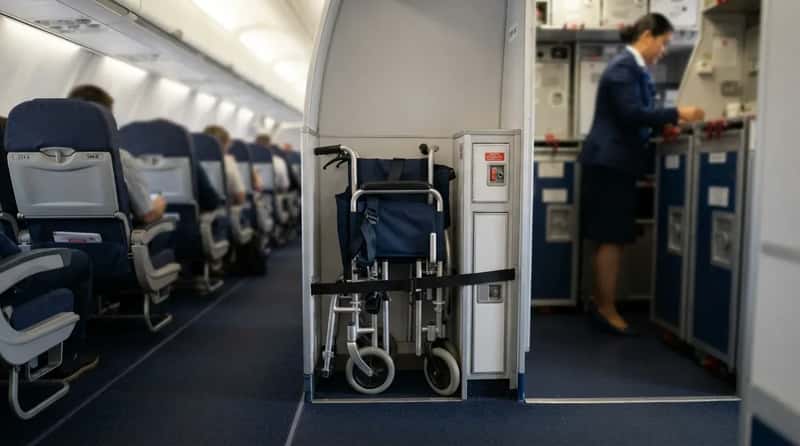
This one surprises people the most: it’s not a courtesy, it’s federal law. Any aircraft that seats more than 60 passengers is required to carry an onboard wheelchair for any disabled passenger who requests one, regardless of whether the lavatory is wheelchair accessible.
Flight attendants use it to move passengers to and from the restroom or their seat during boarding and deplaning, assisting with the transfer itself, though they generally won’t lift or carry someone. Most flyers over 60 have no idea this device has been sitting a few feet away the entire flight.
Fast Facts
- Carriers must equip aircraft that have more than 60 passenger seats, and that have an accessible lavatory, with an on-board wheelchair
- If a passenger asks for an on-board wheelchair on a particular flight, it must be provided even if the aircraft does not have an accessible lavatory
- Newer on-board wheelchairs obtained for use after October 2, 2026 must meet updated federal safety standards
- Crews assist with transfers but aren’t required to physically lift a passenger
#5 – Screening That Skips the Shoes-Off Shuffle
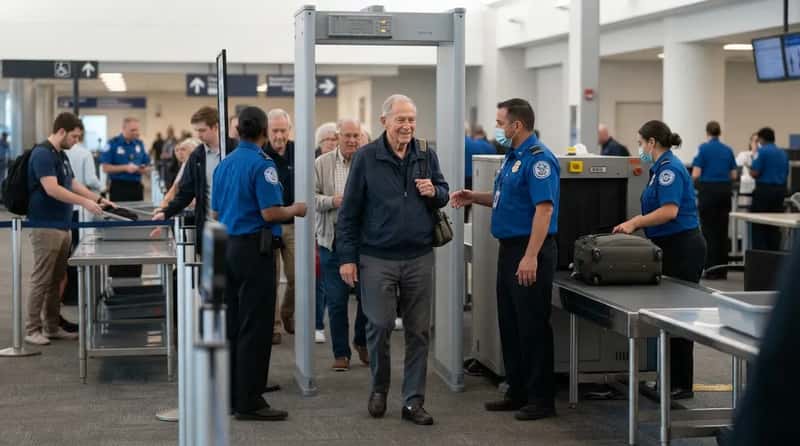
It starts before the plane even boards, but it shapes how relaxed a passenger is once they’re onboard. TSA offers modified screening for travelers 75 and older who can stand and walk without assistance, and it moves faster than standard screening lines.
Travelers in that age group can often keep their shoes and light jackets on, and if additional screening is needed, they can request to sit down for it. Crews notice the difference immediately: passengers who arrive at the gate less rattled tend to get settled faster, and settled passengers get more attention during the flight, not less.
#4 – A Personal Escort Through the Chaos of Security
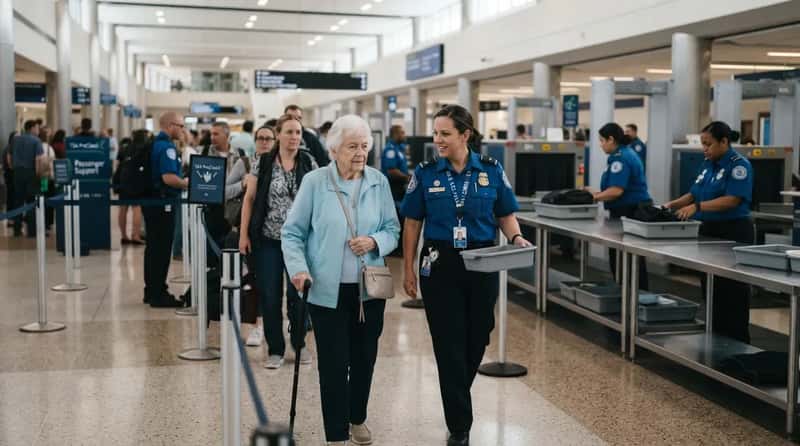
Few people realize this exists at all, let alone that it’s free. Travelers can request a passenger support specialist through TSA Cares to help them navigate security, a service especially useful for anyone over 75 or managing a medical condition.
The catch is timing. The request should go in at least 72 hours before departure. Passengers who plan ahead this way tend to reach the gate calmer, and that calm energy travels straight to the flight crew, who treat a relaxed senior passenger very differently than a frazzled one.
#3 – Federal Law That Forces the Airline to Carry Your Bag
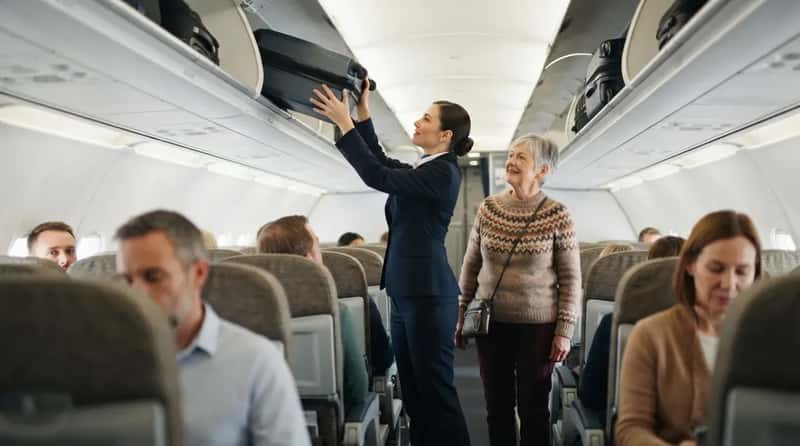
This is the one most flyers over 60 have never heard, and it changes everything about how boarding feels. Federal access rules require airlines to help passengers carry their carry-on or gate-checked luggage when a disability or physical limitation makes it hard to manage alone. This isn’t a favor a crew member does out of kindness. It’s the law.
Most older passengers quietly struggle with a rolling bag rather than ask, assuming it’s an inconvenience to someone. The Air Carrier Access Act entitles seniors to free wheelchair or ambulatory assistance through the entire airport journey, carry-on help included, whether they think to ask for it or not.
Worth Knowing
- Airlines generally cannot demand a doctor’s note before letting a passenger with a disability fly
- Even without an accessible lavatory, airlines must still provide an on-board wheelchair with 48 hours’ notice
- Airlines cannot limit the number of passengers with disabilities allowed on a single flight
- Crews assist with maneuvering the wheelchair but aren’t required to lift a passenger from seat to aisle chair
#2 – Pre-Boarding Time Nobody Rushes You Through
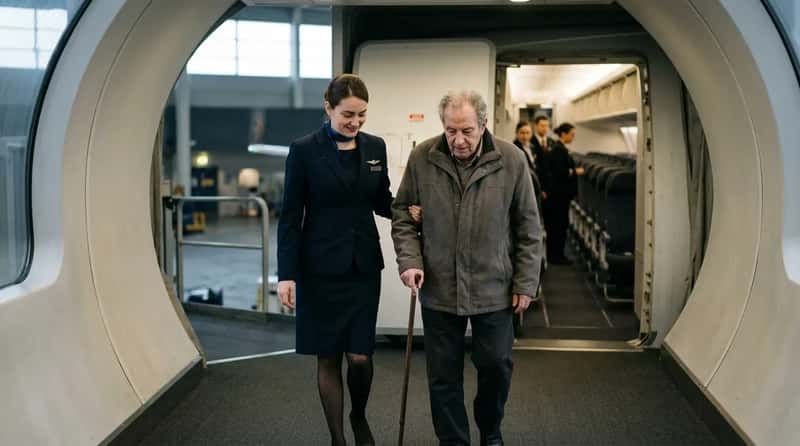
This is where crews quietly do the most, and passengers notice the least. Anyone who needs help boarding should ask a gate agent as soon as they arrive, since airlines are required to offer pre-boarding to travelers who request extra time.
In practice, that looks like an empty jet bridge, a crew member walking at your pace instead of trailing behind you, and a seat that’s already yours before the rest of the plane starts filing in. Flight attendants prioritize passengers who need assistance, but only if they know ahead of time, so telling the gate agent early lets the crew check in with you throughout the flight instead of waiting to be asked.
#1 – An Escort Already Waiting at the Jet Bridge When You Land
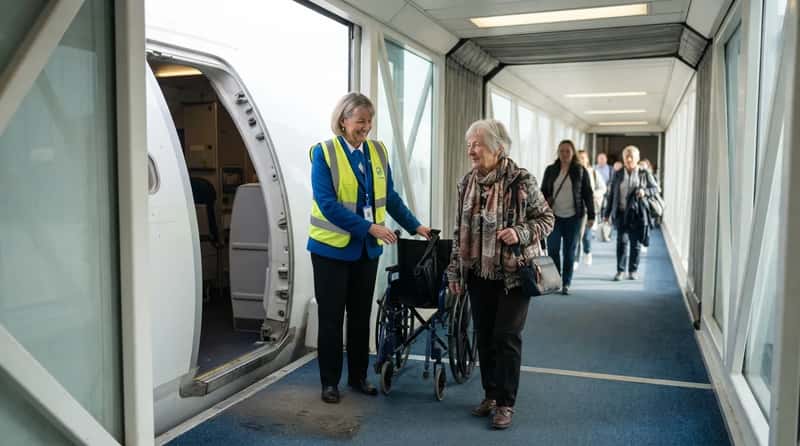
Of everything on this list, crews say this is the one that matters most, because it’s the moment families worry about hardest. Requesting a wheelchair for landing means an attendant is already waiting to help with deplaning and baggage claim, arranged quietly well before the descent even begins.
Special handling like this, priority lanes for check-in or baggage, means no standing in a crowded aisle waiting for the overhead bins to clear. Crews say this single arrangement, more than any drink or blanket, is the one that makes older passengers feel like the whole flight was actually looking out for them.
None of these fifteen things show up on a boarding pass, and none of them require first class. They require a sentence at the gate, a phone call 72 hours early, or sometimes nothing more than a flight attendant deciding you’re worth the extra trip down the aisle.
The uncomfortable truth is that most flyers over 60 qualify for at least half of this list and never ask. Which one on here did you not know about? Drop it in the comments.