Most people assume a fishing charter is one-size-fits-all: pay the fee, grab a rod, and hope for the best.
But if you’re over 60 and you’ve booked a trip with an experienced captain, something quieter has been happening the whole time – and you probably never noticed it.
Seasoned captains make dozens of small, deliberate adjustments for older anglers that never show up on the invoice. They don’t announce it. They just do it, trip after trip, until it becomes second nature.
Here’s what’s actually happening behind the scenes – starting the moment you step onto the dock, and building toward the one thing that keeps anglers coming back to the same captain for twenty years.
#15 – They Pre-Rig Every Rod Before You Step Aboard
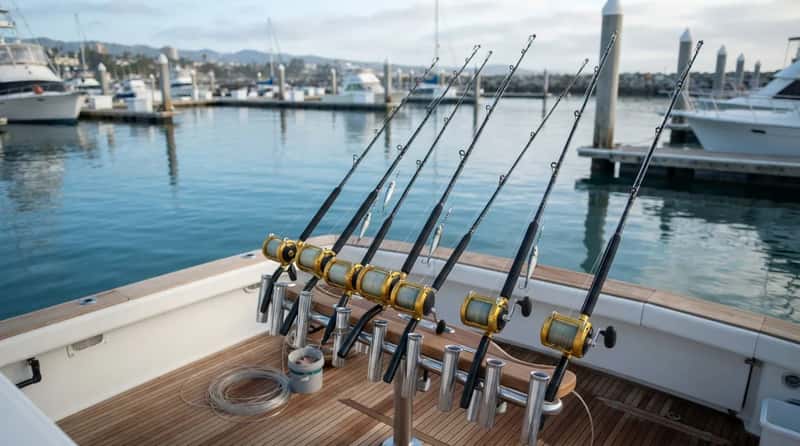
Most captains will have every rod fully rigged, baited, and ready to go long before their older clients ever set foot on the boat.
Tying knots and threading bait requires fine motor control that fades with age, especially for anglers managing arthritis in their hands. A good captain removes that friction entirely so the first minutes on the water feel effortless, not frustrating.
It’s a small thing, but it signals enormous respect. It means you spend your first moments fishing, not fumbling with cold fingers and stiff monofilament.
Ask any deckhand and they’ll tell you this is one of the first things they check before a senior group arrives. Nobody trains them to do it – it’s just what good crews do without being asked.
But that’s barely the beginning. Wait until you hear what happens before the boat even leaves the marina.
#14 – They Choose Calmer Water Without Being Asked
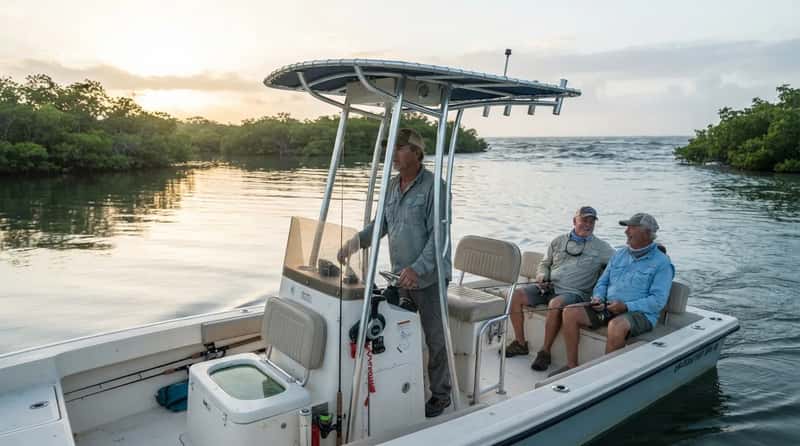
An experienced captain reads the sea conditions before the trip and quietly routes the boat toward protected inshore waters or calmer bays when older clients are aboard. This happens even if the original plan called for a rougher offshore run.
Rough water is physically taxing. Constant wave impact strains the joints, the lower back, and the core – parts of the body older anglers are already managing carefully.
Captains often make this call at 5 a.m., before clients even arrive at the dock. Most passengers never know an alternative route existed.
The captain simply produces a smooth ride and a productive spot, and lets the day speak for itself. No apology, no explanation – just a better day on the water.
That’s already a lot of quiet planning for one trip. But #13 might be the one you feel the most.
#13 – They Slow the Pace of the Whole Trip
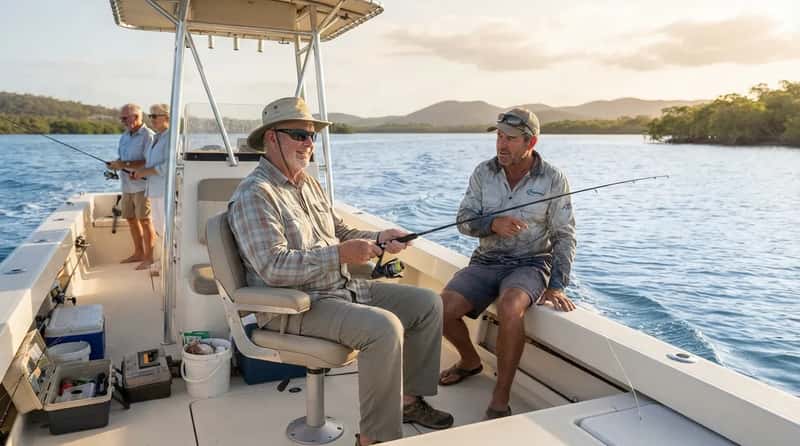
Many charter trips are designed with beginners, families with small kids, and older anglers in mind. But what that actually looks like in practice is a captain who keeps the whole day low-key and unhurried.
There’s no pressure to constantly cast. There’s no rushing between spots, and no competitive energy hanging over the boat.
The captain naturally sets a tempo that lets older anglers fish at their own rhythm, rather than keeping pace with younger, more aggressive clients aboard the same trip.
This is something the best captains do instinctively. They read the group in the first 20 minutes and quietly calibrate the entire energy of the day around it.
Fast Facts
- Good captains typically read a group’s energy and skill level within the first 20 minutes on the water.
- Unhurried trips reduce physical strain from constant repositioning and repeated casting.
- A relaxed pace usually means more actual fishing time, not more time moving between spots.
- Captains who calibrate speed to the group tend to see more repeat bookings from older clients.
It sounds simple. It isn’t – and #12 is proof that some of this care is downright mechanical.
#12 – They Offer Electric Reels Without Drawing Attention to It
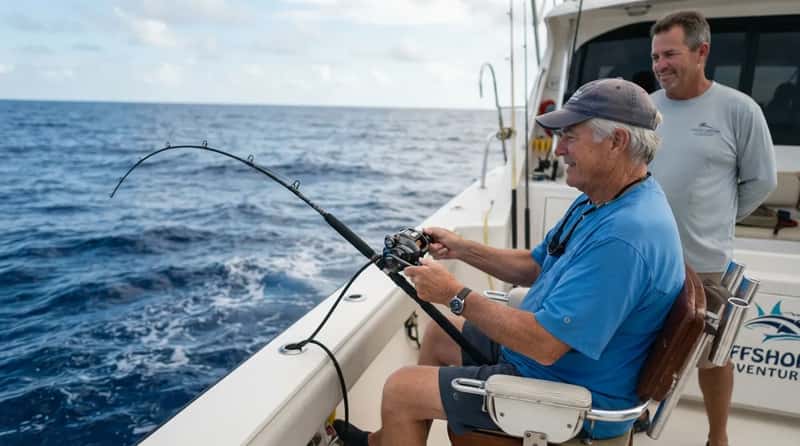
Reeling in a large fish from depth is one of the most physically demanding moments in charter fishing. For anglers over 60 dealing with shoulder injuries or reduced grip strength, it can go from exciting to painful in minutes.
Some boats carry electric reels that require minimal physical effort, letting anglers land fish without the mechanical strain of a traditional setup. Savvy captains offer these as a natural option, not a last resort.
The key is how they offer it – not as a concession to age, but as smart gear for deep-water fishing. That framing matters more than most captains realize.
Get the phrasing wrong, and it feels like pity. Get it right, and it feels like insider knowledge – which is exactly what it is.
Now here’s the one nobody talks about, and it happens dozens of times a day without anyone noticing.
#11 – They Quietly Bait the Hook Every Single Time
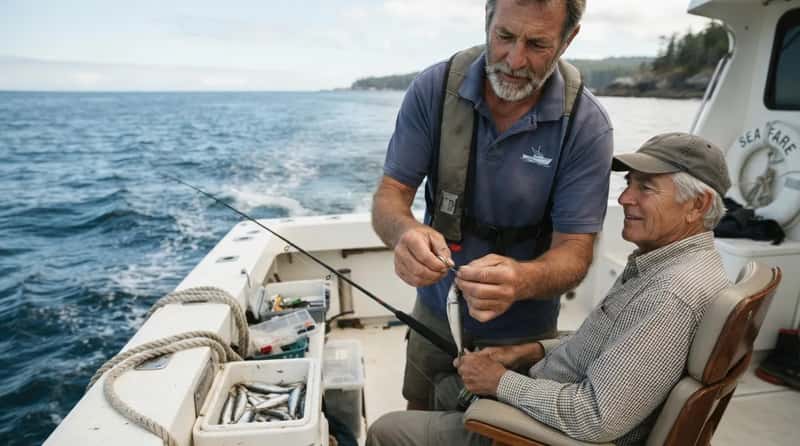
Captains and mates on well-run charters often handle all hook baiting for older clients throughout the entire trip, not just at the start. They do it as part of the natural flow, without ever suggesting the angler can’t do it themselves.
The crew is there to bait hooks, remove fish, and keep everything running smoothly. For anglers over 60, that hands-on support can be the difference between a tiring afternoon and a genuinely enjoyable one.
Some captains take it a step further. They quietly watch for lost bait and re-hook before the client even notices the hook has gone bare.
That level of attentiveness is what separates a good charter from a great one – and clients rarely realize how much of it is happening in real time.
Baiting the hook is easy compared to what comes next: the part most older anglers secretly dread.
#10 – They Handle the Fish So You Don’t Have To
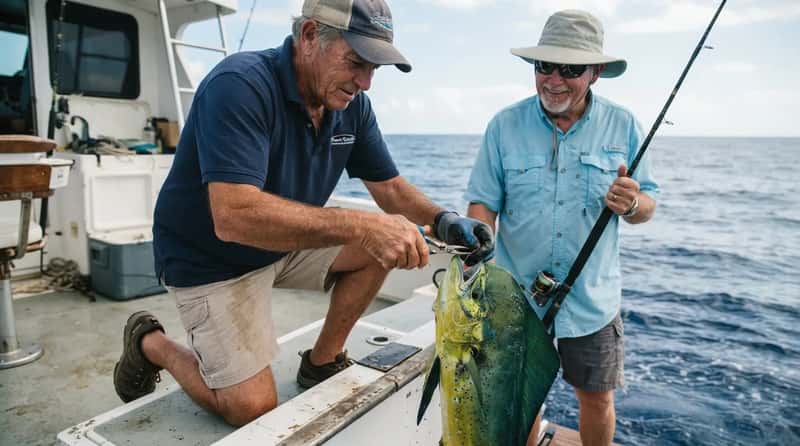
Landing a fish is exciting. Gripping a wet, thrashing fish and removing the hook is a different story entirely – and it’s one that many older anglers quietly dread, especially with species that have sharp fins or teeth.
Experienced captains and mates step in immediately. They handle the fish, remove the hook, hold the catch for photos, and return or ice it, all without making the angler feel like they didn’t fully earn the catch.
The angler gets the credit; the mate does the heavy lifting. It’s a small act of grace that the best crews perform dozens of times a day without any fanfare at all.
Nobody claps for it. But it’s often the single reason an older angler leaves the boat smiling instead of wincing.
Getting the fish off the hook is one thing. Getting an older angler safely onto the boat in the first place is a whole different challenge.
#9 – They Plan Boarding Carefully, Before You Even Arrive
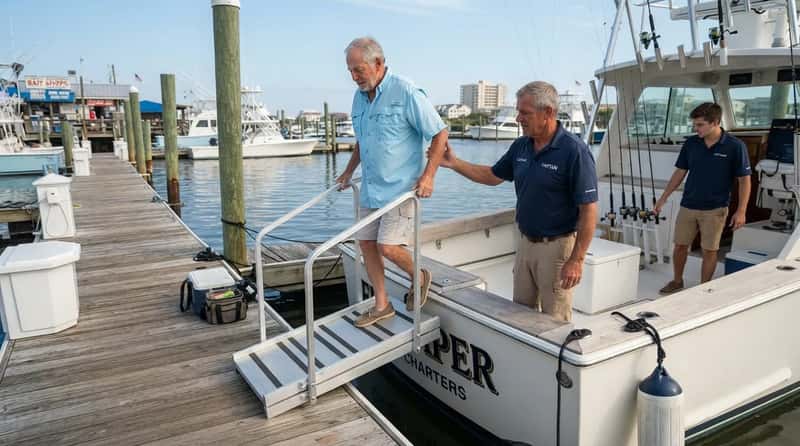
One of the biggest barriers keeping older anglers off the water isn’t stamina – it’s simply getting onto the boat safely. Captains who work regularly with older clients think about this long before departure.
They choose docking spots with lower freeboard, use boarding steps or assist handles, and position a crew member at the point of boarding to offer a steady hand without making a production of it.
Some captains specifically select vessels with minimal step height for groups with older clients. Certain boats are even noted for having no steps to board at all, built originally for wheelchair access.
That same low-step philosophy ends up benefiting every older angler aboard, not just those using mobility aids.
Once you’re safely aboard, the next question is where you’ll actually spend the day. The answer matters more than you’d think.
#8 – They Bring Extra Seating and Shade Options
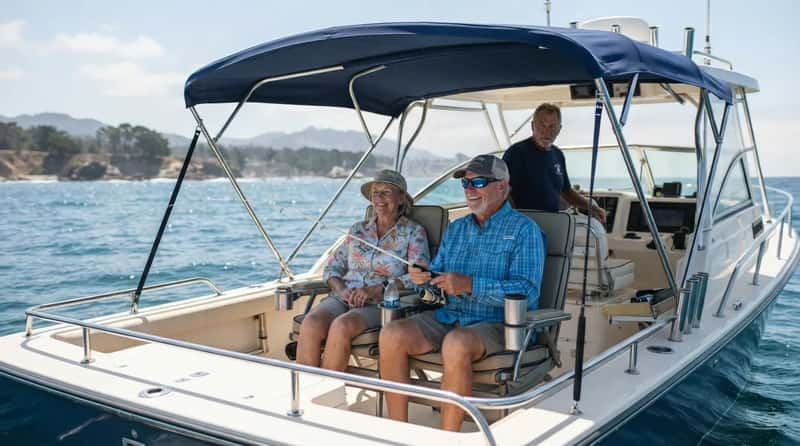
Standing at a rail for six hours is genuinely exhausting, and most older anglers know within the first hour that they’d rather be seated. Captains who work with senior clients make sure the boat has ample, comfortable seating positioned close to the actual fishing action.
That often means extra seats, handrails to keep occupants steady, and plenty of cup holders for cold and hot drinks alike.
Shade matters just as much. Prolonged sun exposure is a genuine health concern for older adults, so thoughtful captains position awnings or bimini tops so a shaded seat is always within reach.
Worth Knowing
- Heat-related illness risk rises with age, which makes shade access more than just a comfort feature.
- Marine-grade cushioned seating reduces joint strain during multi-hour trips.
- Bimini tops and T-tops provide shade without blocking casting room near the rail.
- Handrails near seating help steady older passengers when the boat rocks unexpectedly.
None of this gets mentioned in the brochure. It just quietly exists, waiting for you, the moment you step aboard.
Comfort is one kind of care. What happens next is something closer to friendship.
#7 – They Share Local Knowledge Freely, Like a Friend
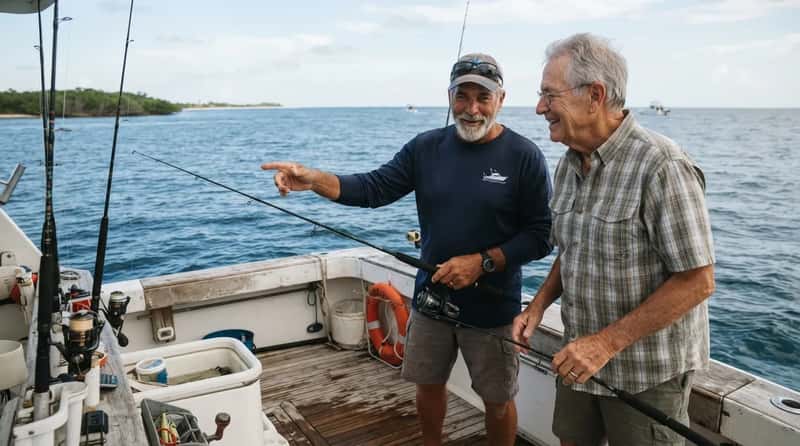
One of the most underrated things a great captain does for older, experienced anglers is treat them as equals on the water. Many clients over 60 carry decades of fishing experience, and a good captain recognizes that immediately.
Rather than giving generic instructions, experienced captains engage in real conversation – what species are running, why they chose a particular spot, what the tide is doing.
This mutual respect turns a charter from a transaction into a genuine experience. It’s the part no brochure ever mentions, and it’s often the real reason people book again.
Many older anglers say this one-on-one exchange is exactly what keeps them loyal to the same captain, year after year.
Respect is one thing. Knowing exactly when to call it a day is another skill entirely.
#6 – They Quietly Adjust Trip Length Mid-Day
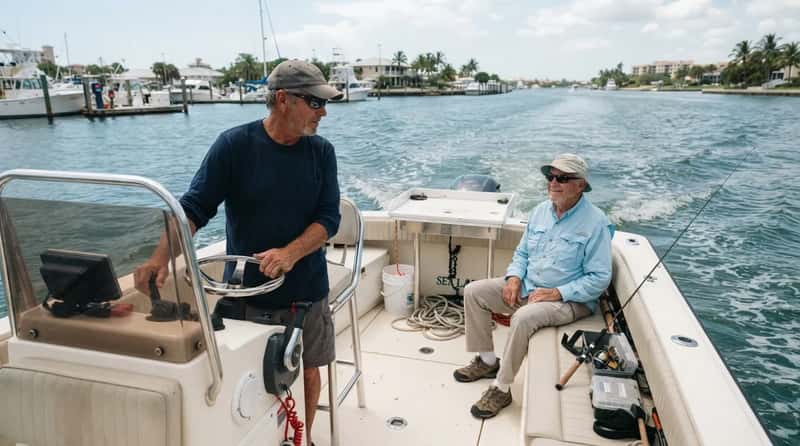
Most charters have a set half-day or full-day duration, but experienced captains read their clients constantly. If an older angler is visibly fatigued, dealing with back pain, or simply done after four hours, the best captains quietly wrap the trip early.
This isn’t advertised anywhere. It’s a judgment call made entirely in the client’s interest, not the schedule’s.
Quick Compare
- Half-day charter: typically 4 to 6 hours on the water.
- Full-day charter: typically 8 to 10 hours, sometimes longer for offshore species.
- For older anglers: captains often treat the posted length as a ceiling, ending early if fatigue sets in.
The worst captains push the clock regardless of how their clients feel. The best ones understand a comfortable, happy client is the one who books again – and brings friends.
Once the trip is over, though, there’s still one job left – and it’s messier than people expect.
#5 – They Handle All the Fish Cleaning
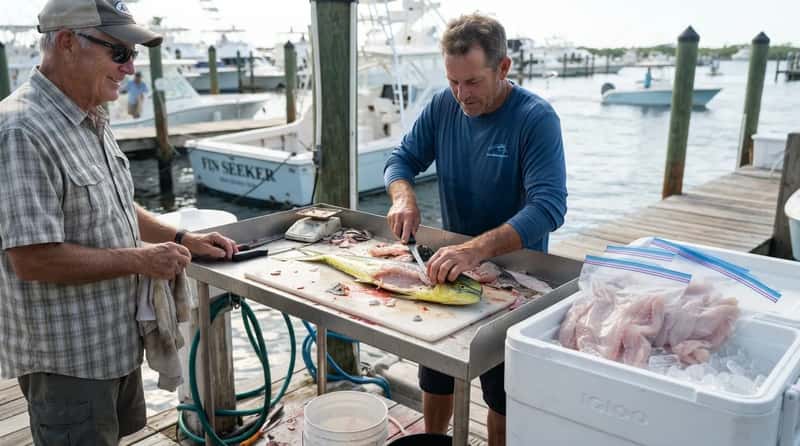
Most captains will filet and bag your catch, or offer it for a small fee. For older clients specifically, the best captains make this seamless – cleaning, packaging, and often icing the fish in labeled bags before anyone even thinks to ask.
Fish cleaning demands a sharp knife, a stable platform, and real physical dexterity. There’s usually no extra charge, though it’s customary to tip for the service – and a full cooler is a sign you had a great day.
For older anglers, being handed a neat bag of fillets at the dock is one of the most satisfying endings a charter can offer.
The captains who nail this small detail know exactly what it’s worth to a client who’s spent all day on their feet.
Now for the moment everyone actually wants to keep – and the captains who quietly make it better than you expect.
#4 – They Take the Photos – Really Good Ones
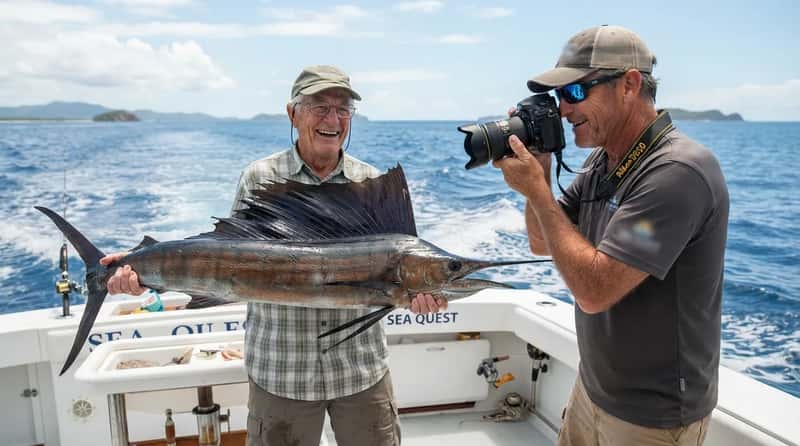
Landing a trophy fish is a moment older anglers want to remember properly. Once the catch is boated, the crew or captain will usually snap a few photos before it goes back or into the cooler.
But experienced captains go further than a quick snapshot. They direct the angler, hold the fish at the right angle, wait for the light, and make sure the photo actually looks the way the moment felt.
A blurry photo from a distracted mate is a common complaint on cheaper charters – but seasoned captains treat the photo as part of the service. For many anglers over 60, these trips mark real milestones: a retirement, a grandchild’s first big fish, a return to a lifelong passion.
A captain who understands that will frame every single photo accordingly, without ever being asked to.
The photo captures the moment. But the next thing on this list decides whether that moment happens at all.
#3 – They Target Species That Fight Hard but Land Quickly
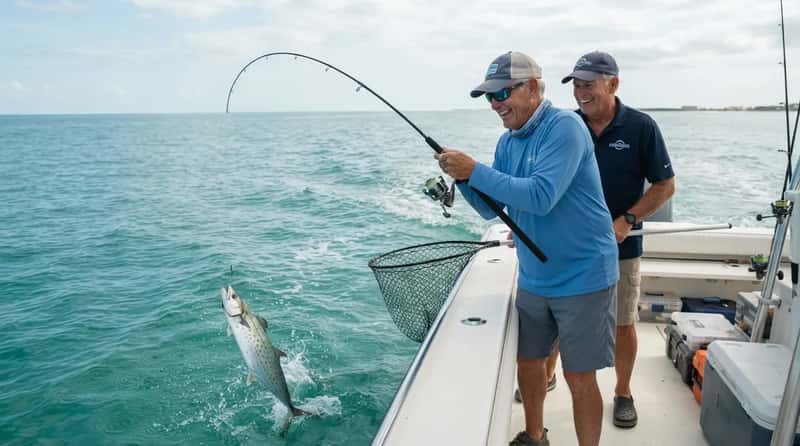
Here’s something most anglers don’t realize: the captain has enormous influence over what species you’re actually chasing on a given day, even when the “target” sounds predetermined.
For older anglers, the best captains steer toward fish that deliver a thrilling fight without demanding twenty minutes of exhausting endurance to boat. They look for species that are abundant, active, and land in a reasonable window.
That means more fish, more energy, and a client who leaves the boat feeling accomplished instead of wrecked. A captain who puts older clients on a slow troll for a fish that might bite once in six hours is prioritizing their own preferences.
A captain who puts them on steady action is prioritizing the client’s experience instead – and that distinction is everything.
Now for the two things almost nobody notices happening – and they’re arguably the most important on this entire list.
#2 – They Talk to the Doctor, Not the Patient
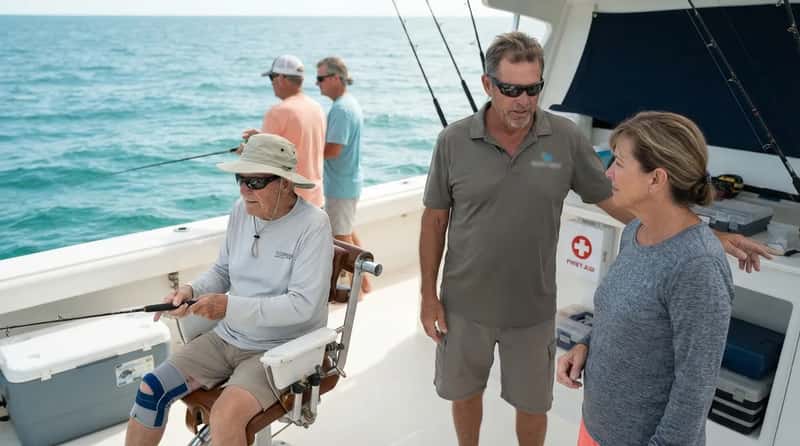
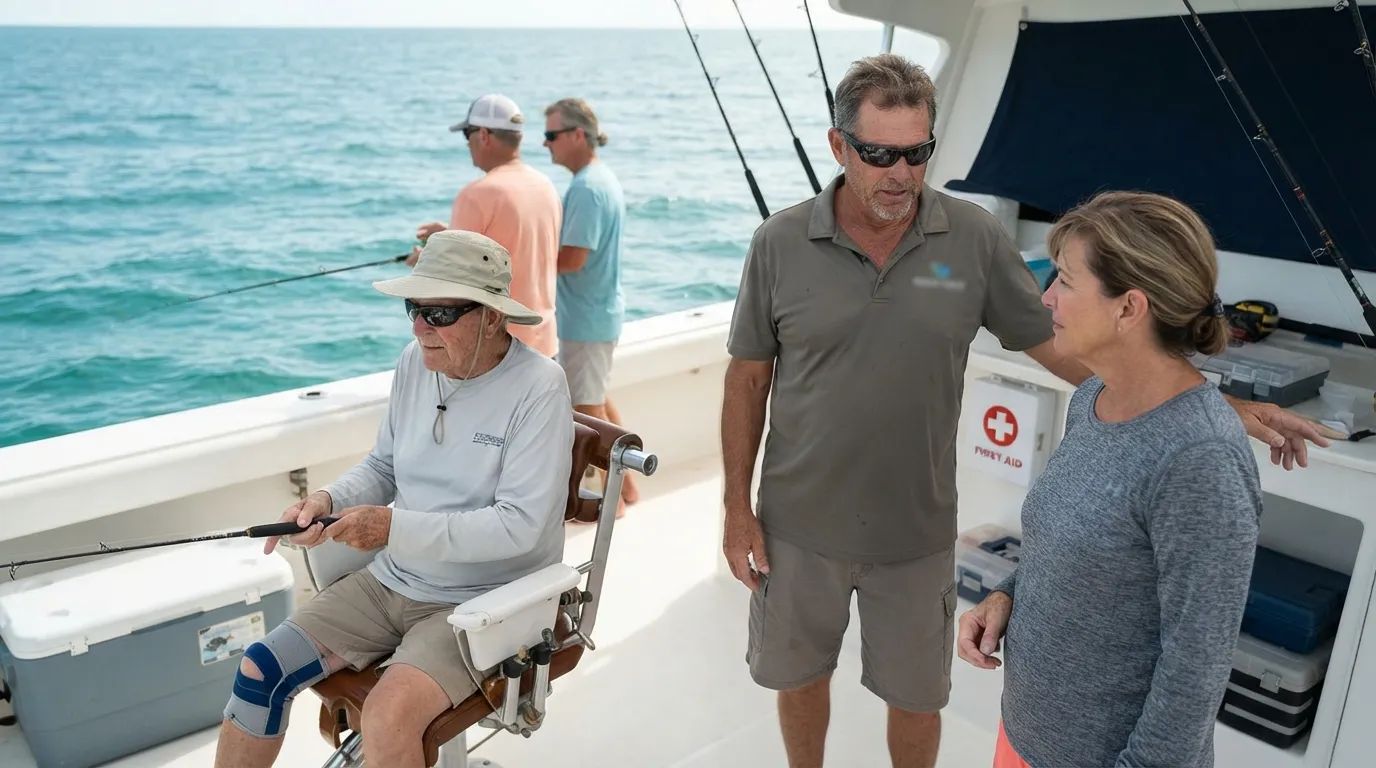
This one is subtle, and most captains would never frame it this way themselves. When an older angler books with a partner, adult child, or friend – especially if someone has mentioned a health concern – a good captain quietly makes sure the whole group knows what to watch for.
They’ll mention hydration without singling anyone out. They’ll note where the first aid kit is during the safety briefing, almost in passing.
They’ll position the boat so the angler with the bad knee always has somewhere solid to brace. None of it is announced. All of it is intentional.
This kind of quiet awareness – being the most safety-conscious person on the boat while making everyone feel completely at ease – is the hallmark of a truly experienced captain, and it matters more as clients age.
And finally, the one thing that ties every item on this list together – the reason some captains get booked again and again for decades.
#1 – They Remember You Next Time – and Prepare Differently
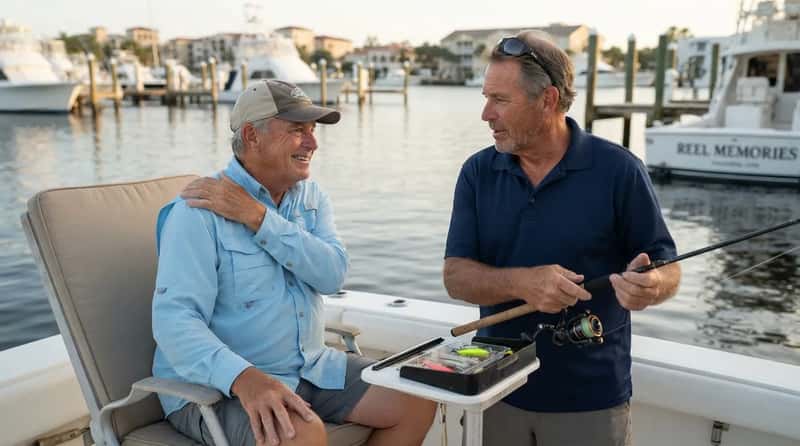
The most underrated thing a great charter captain does for an older angler happens before the trip even begins. If you’ve fished with them before, they remember – what species you loved, which spots produced, how you liked the pace.
They remember whether your shoulder was bothering you last season, and whether you prefer to net or lip-grip your fish. Serious anglers request the same captains again and again, and familiarity is only part of the reason why.
The real reason is that a captain who knows you can deliver a trip that feels personally engineered. They check in between seasons, communicate before you rebook, and quietly update the whole experience based on how you’ve changed.
This relationship, built over years of shared mornings on the water, is something no first-time charter can replicate. It’s why anglers over 60 often end up with a captain who feels less like a service provider and more like a trusted friend who happens to know exactly where the fish are.
For older anglers, this ongoing relationship can extend a fishing life by years. The right captain doesn’t just accommodate age – they push back against it, one great day on the water at a time.
The Bottom Line
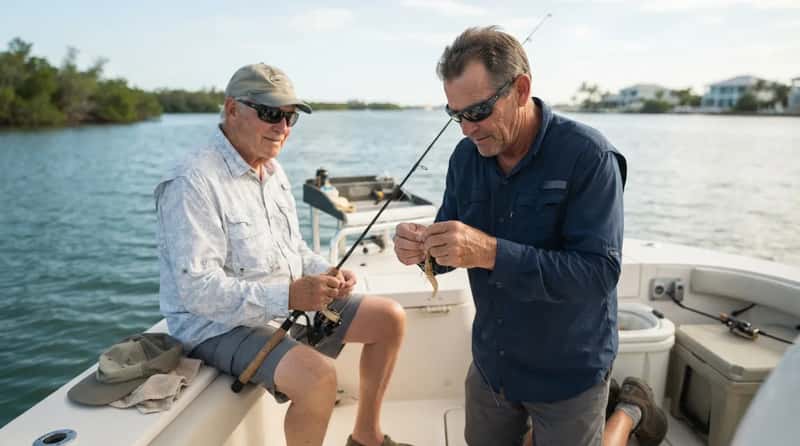
Most of what a great charter captain does for older anglers happens quietly, without commentary, and without ever making anyone feel less capable.
They rig the rods. They choose calmer water. They bait the hooks, read fatigue before anyone admits to it, and remember exactly who you are the moment you call to book again.
At a Glance
- Rods pre-rigged, hooks re-baited, and fish handled – so the focus stays on the moment, not the mechanics.
- Calmer routes, shorter trip lengths, and easier boarding whenever an older client is aboard.
- Local knowledge, real conversation, and photos taken like they actually matter.
- A captain who remembers you – and plans the next trip around exactly who you are.
None of this care gets advertised, because the best captains don’t think of it as a service upgrade. They think of it as simply doing the job right.
A truly great day of fishing was never just about what you caught. It’s about how you felt stepping back onto the dock – and if you’ve had a captain who quietly made all of this easier, drop their name in the comments. Someone else over 60 needs to know about them.