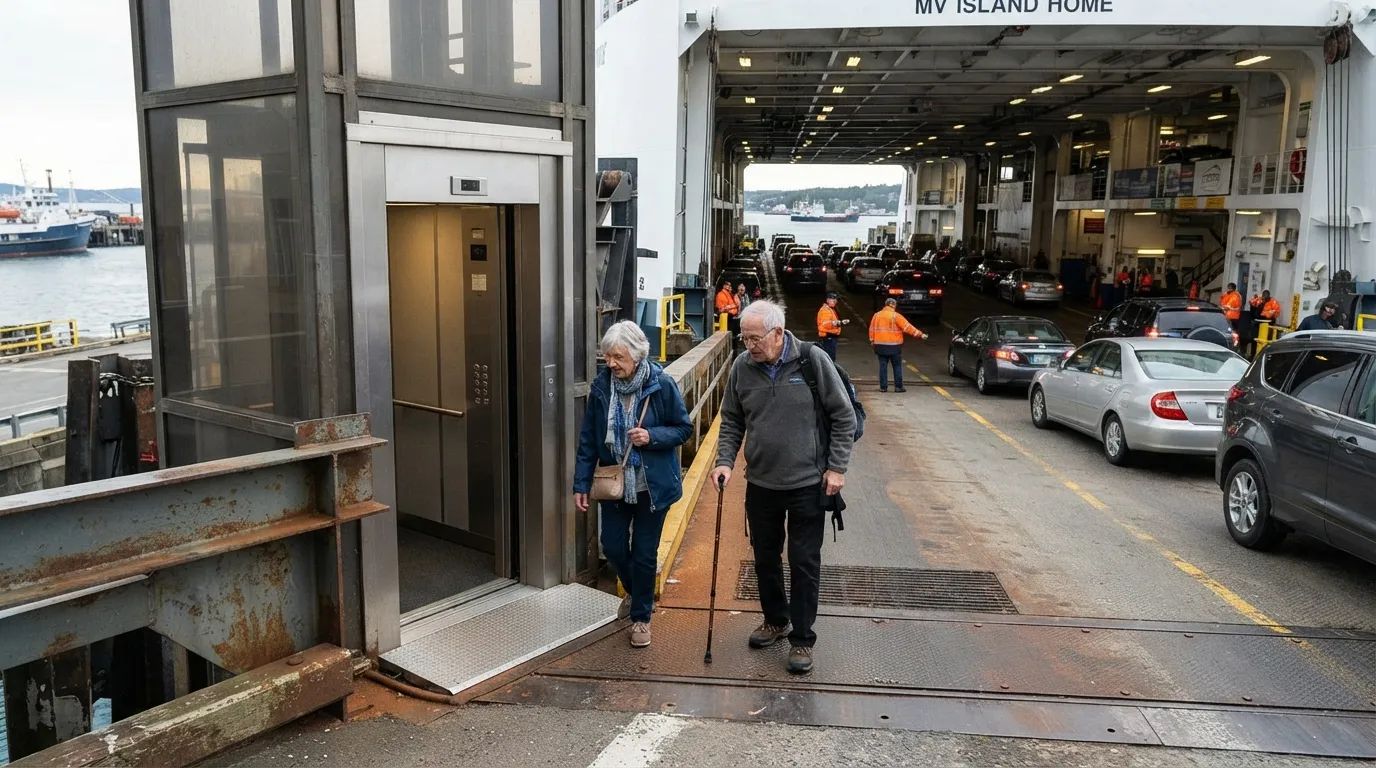
You’re 65, you’re standing at a ferry terminal, and everyone around you seems to know a system you were never told about. Harbour staff at several real operators do arrange things for older foot passengers: half-price tickets, cleared seats, elevator access, and a message passed ahead to the crew. In Washington state, for example, passengers 65 and over with proof of age can travel at half-fare passenger tolls on any route where passenger fares are collected.
Here’s the catch most riders miss. Almost none of it happens on its own. The perks sit in fine print, behind a counter, or behind one sentence you have to say out loud. And one of them can make your crossing completely free. These examples come from published policies at specific operators, so your own harbour may differ.
#15 – The Half-Price Walk-On Fare Nobody Announces at the Gate
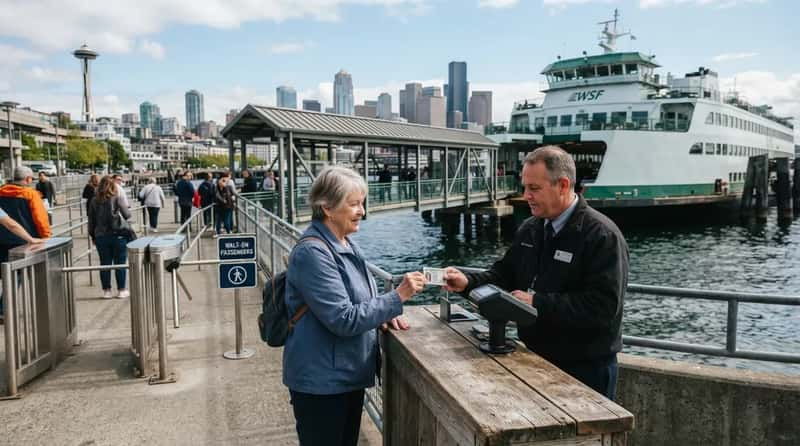
Full price is what everybody else pays on some of America’s busiest ferry routes. On Washington State Ferries’ May 2026 table, Seattle–Bainbridge Island is $11.35 full fare and $5.65 for seniors. On the Anacortes to San Juan Islands run, the senior fare is $9.00 against $18.00 for everyone else. That’s a real saving on a single crossing, and nobody at the gate is going to mention it.
The catch is that you have to ask for it. Proper identification establishing proof of age is required. Fares have also been creeping up, and one roundup reports increases of roughly 3% in October 2025 and again on May 1, 2026, so check the current number before you go.
But the way you buy that ticket trips up more riders than the price does, and that’s #14.
#14 – The Ticket Kiosk Trap That Can Cost Seniors Full Fare
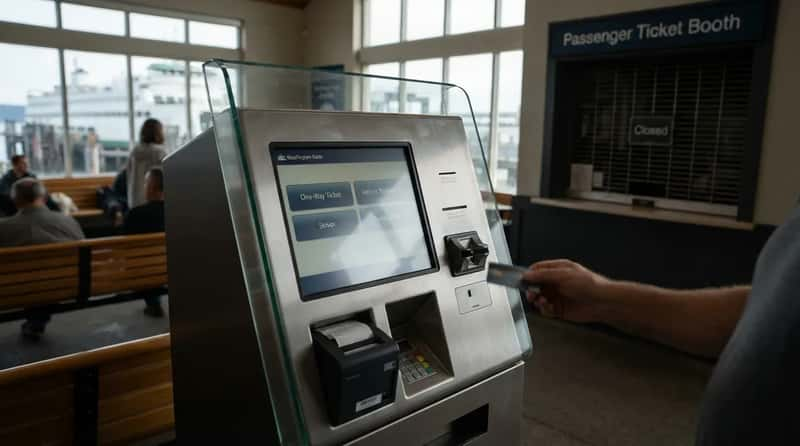
The shiny machine in the terminal can’t give you the senior price. When the passenger ticket booth is closed, full-fare walk-on tickets can be bought by credit card at the terminal kiosk. Senior and youth tickets are not available at the kiosk and must be bought at the Auto Toll Booth when the Passenger Booth is closed.
Washington State Ferries says seniors and riders with disabilities can receive reduced fares but must buy tickets in person and show proof of eligibility. Some riders call that a quiet barrier. The stated rule is simply in-person purchase with ID.
Walk-on passengers are also told to be aboard at least five minutes before sailing, so a detour to a different booth can eat your margin fast. And one deal in Canada ignores the usual weekday limits entirely, which is #13.
#13 – Northern BC Routes: A Senior Discount That Works Seven Days a Week
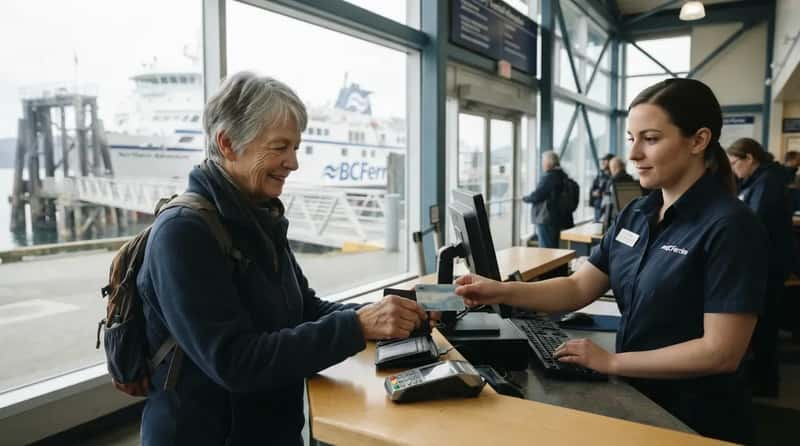
Most British Columbia senior deals stop on Friday, but one set of routes plays by different rules. The Monday-to-Thursday free passenger deal excludes the northern routes. On those routes, seniors get 33% off the passenger fare any day of the week.
Eligible riders are seniors 65 or older with a BC Gold CareCard or a valid BC Services Card. If you’re driving, a vehicle fare still applies. You present your card at the terminal to get the discount.
BC Ferries’ own fare calculator even lists a separate northern senior category for residents. Meanwhile, a tiny county ferry in Puget Sound posts a walk-on price that may surprise you, and that’s #12.
#12 – A Puget Sound County Ferry’s Sub-$5 Senior Walk-On Fare
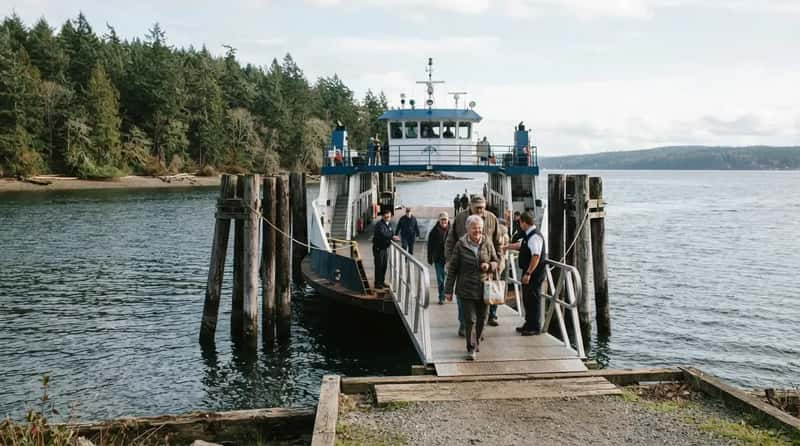
One small Washington run lists a senior walk-on fare under five dollars. A 2026 roundup says Pierce County’s table lists a senior (65 or older) or disability walk-on fare of $4.46, year-round. Seniors show a valid photo ID or a Regional Reduced Fare Permit when boarding.
It’s also a very small operation. There is no terminal on Ketron Island, so the boarding routine is different on that end. Both ferry vessels have elevator access from the auto deck to the passenger deck. That’s a county-run crossing with elevators on both boats.
Quick Compare: Senior Walk-On Fares
- Seattle–Bainbridge Island: $5.65 senior vs. $11.35 full fare
- Anacortes to San Juan Islands: $9.00 senior vs. $18.00 full fare
- Pierce County (Ketron Island run): $4.46 senior or disability walk-on, year-round
Fare tables change, so treat the number as a snapshot. Still, there’s a much bigger name where the discount takes a specific card, and that’s #11.
#11 – The Senior Clipper Card: Half Off in the Bay Area
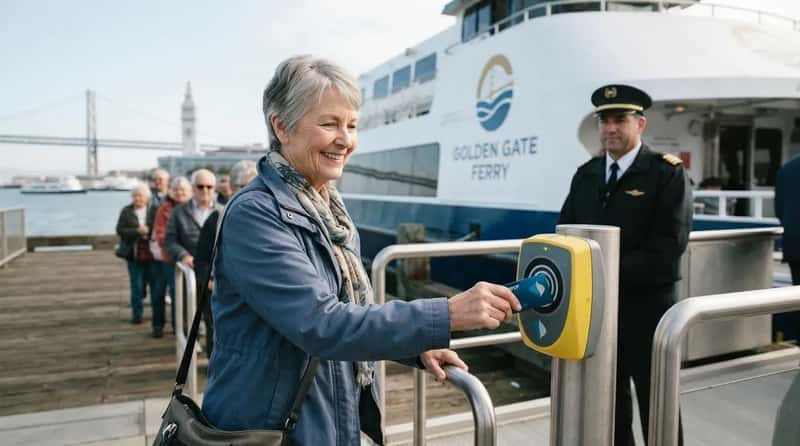
San Francisco Bay’s ferries expect a particular card, not just a birthday. Riders 65 and over can apply for a Senior Clipper Card and receive 50% off ferry fares. Golden Gate Ferry says all riders over 65 should ride with a Senior Clipper card.
There’s a second card, and the difference matters. The Clipper Access card is a photo ID card for riders under 65 with qualifying disabilities. Clipper is accepted on Golden Gate Transit buses, Golden Gate Ferry, and most other Bay Area transit agencies.
Over 65 means the Senior card, not the Access card. The same ferry also has a seating rule that can clear a seat for you, which is #10.
#10 – Priority Seats the Crew Will Actually Clear
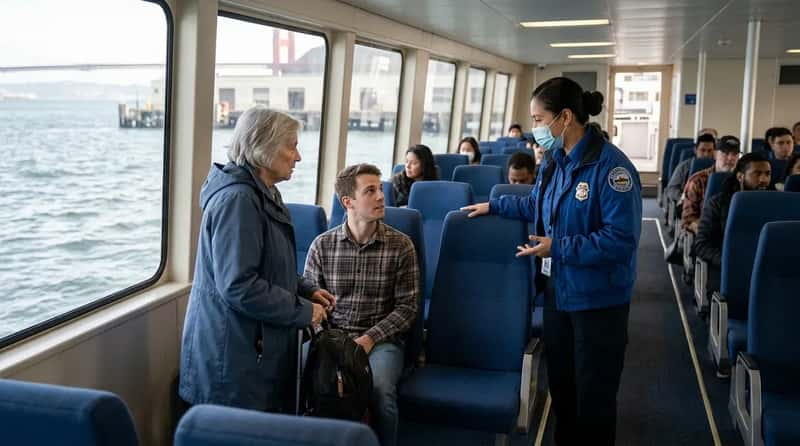
On some ferries, the crew can ask another passenger to give up their seat for you. Golden Gate Ferry designates certain seats as priority seating for passengers with disabilities and for seniors. Crews may ask a non-disabled passenger in a priority seat to move when a senior boards.
It’s the kind of rule that splits a deck. Some commuters see it as basic courtesy, and others find it an awkward public ask. Either way, it’s written policy and not a special favor.
If a seat is taken, the crew is the right person to ask. But there’s another quiet courtesy on the same ferry, and it works without any medical explanation. That’s #9.
#9 – Pre-Boarding Without Explaining Your Health
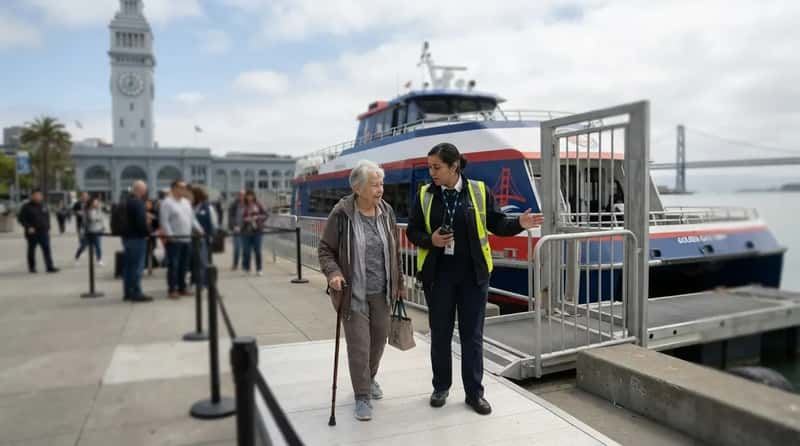
You never have to describe a diagnosis to board early. Golden Gate Ferry allows pre-boarding for individuals with disabilities, and you tell a terminal assistant or the supervisor on duty. Stating that you have a disability is enough, and you don’t need to discuss its nature.
Notice the wording. The pre-boarding policy is tied to disability, not age alone, while the seating policy in #10 is the one that names seniors directly. All Golden Gate Ferry vessels are accessible to passengers using wheelchairs, and all have accessible restrooms.
At a Glance: Golden Gate Ferry Pre-Boarding
- Who to tell: a terminal assistant or the supervisor on duty
- What to say: that you have a disability, with no details needed
- Age alone: the pre-boarding policy is tied to disability, not turning 65
- On board: every vessel is wheelchair accessible with accessible restrooms
If a crowded gangway is the problem, the person to find is a terminal assistant, before the line forms. A very different operator keeps a wheelchair waiting at the dock, and that’s #8.
#8 – Maine’s Island Ferries Keep a Wheelchair at the Dock
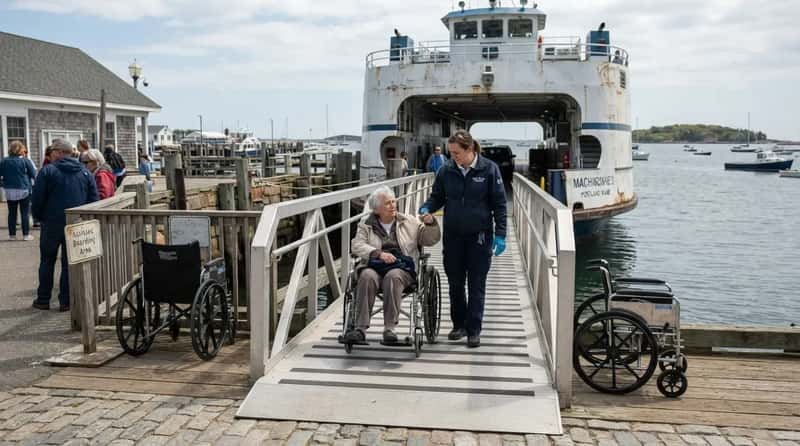
Casco Bay’s island boats keep mobility help on both sides of the gangway. The district’s policy is one wheelchair on each vessel and one at the Casco Bay ferry terminal for customer use. Assisted early boarding and wheelchairs are available on request.
Boats differ, though. Except for the car ferry Machigonne II, which boards on the main deck via transfer bridges, the district’s ferries have lifts or elevators between decks.
Tidal ramp slope is one of the factors the district says is beyond its control. Even a well-run operator can’t flatten the tide. Another terminal has a steep climb that staff know well, and that’s #7.
#7 – The Edmonds Ramp: Two Long Uphill Stages Staff Know Well
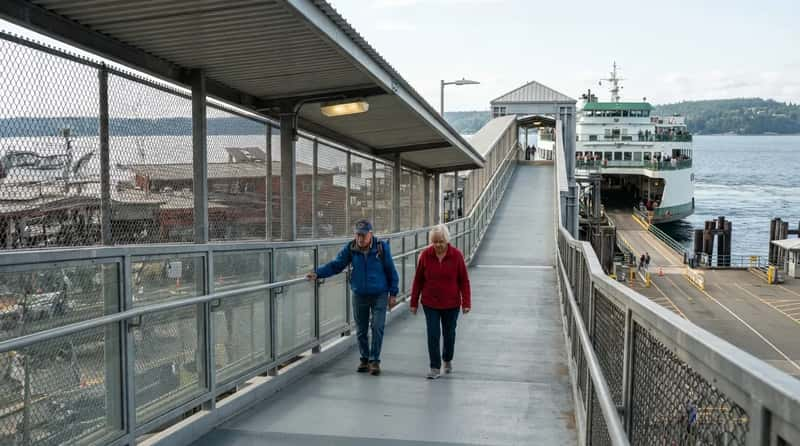
A walk-on at Edmonds covers a long incline. The terminal has overhead passenger loading, and the ramp can be steep, with two stages of about 200 feet each on a gradual uphill slope. That’s roughly 400 feet of uphill walking before you reach the boat.
Terminal staff can assist passengers with disabilities loading on and off, and the terminal asks you to arrive at least 20 minutes before sailing for boarding help. That timing is the whole trick. Showing up at the last minute means the staff who could help may not have time.
There’s also no charge in the terminal’s U-Park lot for customers displaying a valid disabled parking placard or plate. Next, an elevator tucked behind the car ramp, which is #6.
#6 – The Elevator Reached Through the Car Transfer Bridge
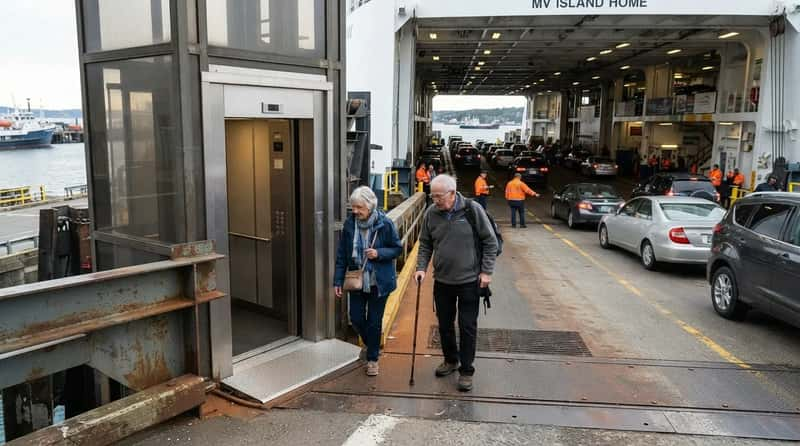
On some ferries, the elevator route runs through the same bridge the cars use. At the Steamship Authority, elevator access is by the transfer bridge used to load vehicles onto the ferry. You’re asked to arrive 30 minutes before departure and tell a terminal agent, or the employee checking you in, that you need the elevator.
Each ferry has elevators between the vehicle deck and all passenger decks, including the food and beverage area. The upper decks, and the snack bar, are part of the plan.
The 30-minute lead is the main thing to remember. And after you tell the agent, something happens that most riders never see, which is #5.
#5 – The Hand-Off: Terminal Staff Tell the Crew for You
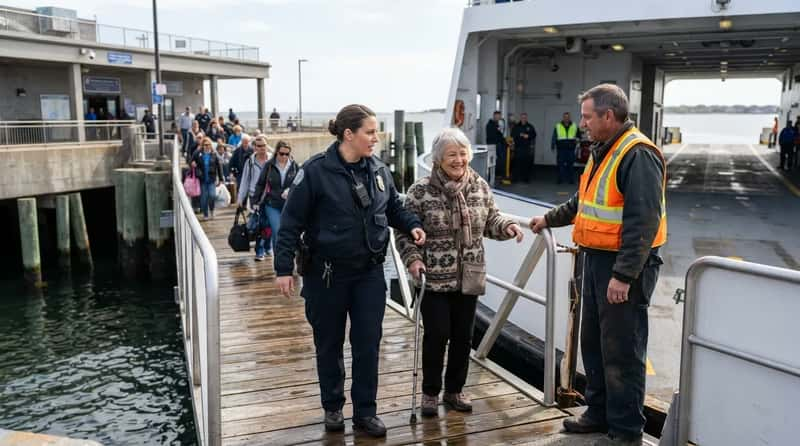
The person at the dock passes your request to the person on the boat. At the Steamship Authority, terminal employees inform the vessel’s crew of any assistance you’ll need while aboard. You shouldn’t have to repeat your request at every step.
Washington’s system invites asking on both ends. Walk-on passengers may ask terminal and vessel personnel for help, including getting on or off a ferry, using a WSF wheelchair if available, and notification when boarding begins.
Worth Knowing: How Much Lead Time Each Operator Wants
- Edmonds terminal: arrive at least 20 minutes before sailing
- Steamship Authority: arrive 30 minutes before departure for the elevator
- Pierce County Ferry: call the ticket office at least 60 minutes before boarding
- Washington State Ferries: 48 hours’ notice is suggested for staff help
Whether the message always makes it down the line is a fair debate among riders. A quick word to the crew onboard never hurts, and the policy explicitly allows it. But some operators ask for a lot more notice than a quick word, and that’s #4.
#4 – The County Ferry That Wants a Phone Call 60 Minutes Ahead
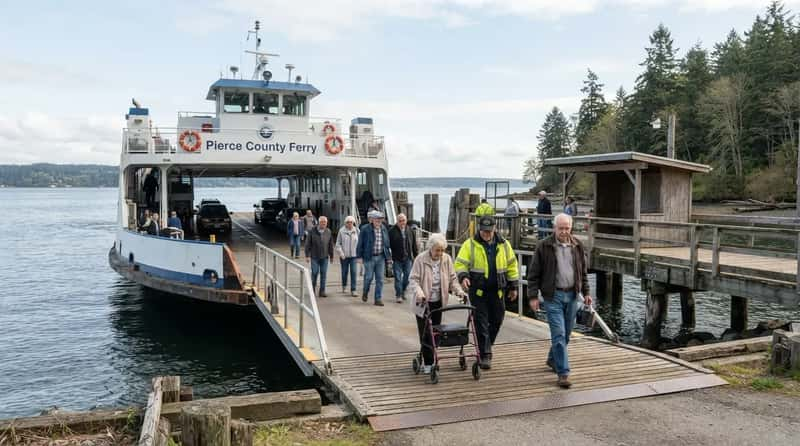
A phone call an hour earlier can change the whole crossing. Pierce County Ferry says passengers must call the ticket office at least 60 minutes before scheduled boarding to request ADA accommodation. The ticket office number is 253-588-1950.
All of the county’s facilities are accessible, but the level of accessibility varies by terminal and ferry. That’s why the call matters. It tells staff what to expect before you reach a dock that may not have a lot of equipment.
The rules get stricter at the largest system, where two days’ notice is the suggested norm, and that’s #3.
#3 – Washington’s 48-Hour Heads-Up, and the Wait That Comes Without It
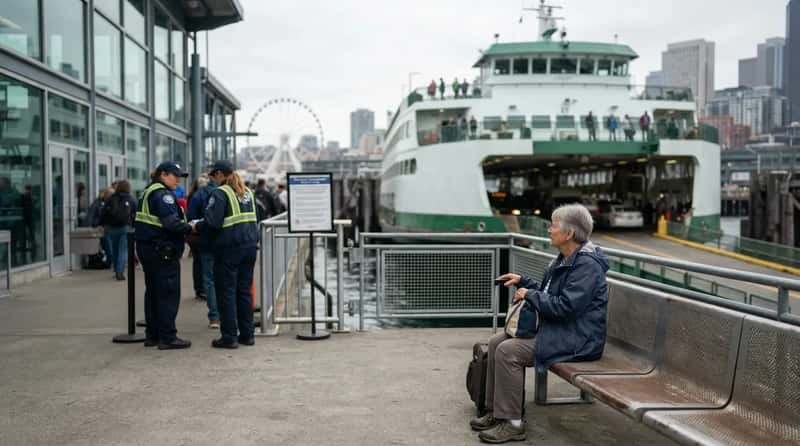
Two days’ notice is what the biggest U.S. ferry system suggests. WSF suggests notifying them 48 hours before travel for any passengers who will need help from ferry staff. Without it, passengers needing boarding help may have to wait for the next sailing, depending on staff availability.
WSF also states that its boarding assistance is not always available. Some terminals have a manual wheelchair on site for boarding.
The honest part of this policy is the list of limits. And those limits get blunter in the next entry, which is #2.
#2 – The Lines Staff Aren’t Allowed to Cross
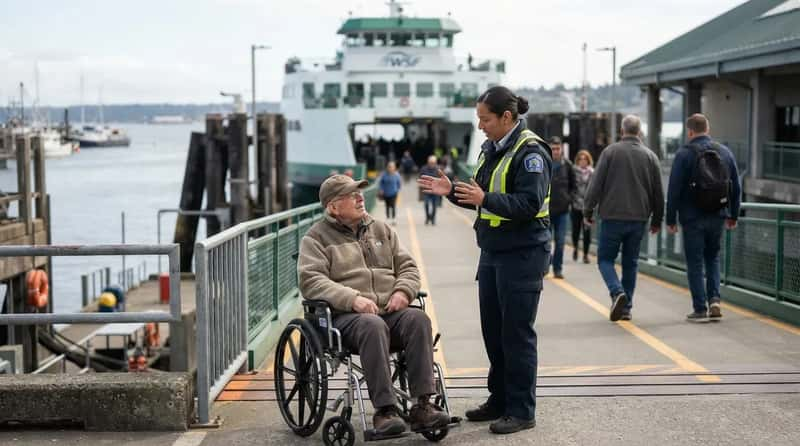
There are things harbour staff are told not to do, and the list may surprise you. WSF employees can’t physically move a person from a seat to a wheelchair, help in the restroom, or help with eating. For more help, WSF asks riders to bring an attendant.
It’s not unique to one system. A Caribbean ferry operator says that for safety reasons its staff are not permitted to lift guests or equipment. Casco Bay Lines promises reasonable modifications, as long as there’s no risk to the safety of passengers and employees.
Why It Stands Out
- The limits are published in plain language, not hidden
- Three hands-on tasks are named outright at WSF: transfers, restroom help, and eating
- Safety is the stated reason, from Washington to the Caribbean to Maine
- The practical workaround is simple: bring an attendant or travel companion
“Assistance” almost always means guidance and equipment, not hands-on lifting. So the most useful thing to bring may be a travel companion. But the biggest quiet perk of all costs nothing, and that’s #1.
#1 – Free Foot Passage Monday to Thursday in British Columbia
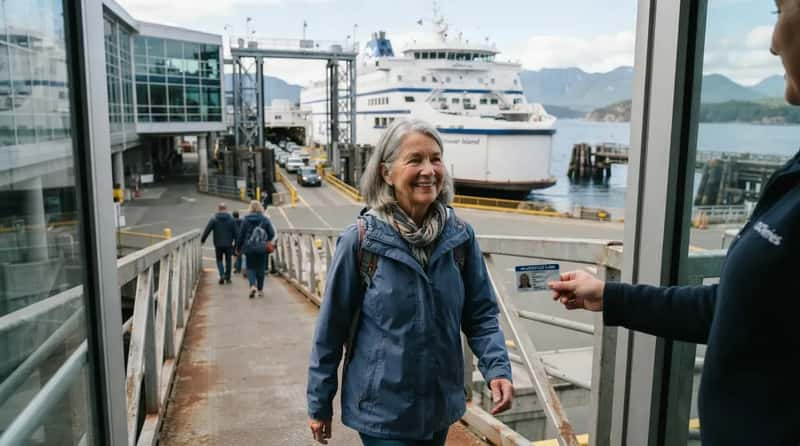
In British Columbia, turning 65 can mean a $0 passenger fare. BC seniors 65 or older with a BC Gold CareCard or valid BC Services Card get a 100% discount on passenger fares Monday to Thursday, excluding statutory holidays, on all routes except the northern ones. You show your card at the terminal to get the discount.
Read the fine print, though. The discount covers passengers only, so a vehicle fare still applies if you’re driving. Inland ferries in B.C. are free for passengers and their vehicles, and that’s free for everyone, not just seniors.
Some call the BC deal a deserved perk for residents, while visitors from elsewhere see a gap. Either way, the card in your wallet is what unlocks it.
Harbour staff do quietly arrange plenty for riders over 65: half-price tickets, early boarding, elevator access, priority seats, and a message passed to the crew. Almost all of it is request-based, and almost all of it depends on notice, ID, or one clear sentence at the right counter. The limits are real too. Staff won’t lift you, and assisted boarding can mean waiting for the next sailing.
The ferry won’t announce any of this over the loudspeaker. The rules are written down, though, and the only missing piece is usually the first sentence you say at the counter.