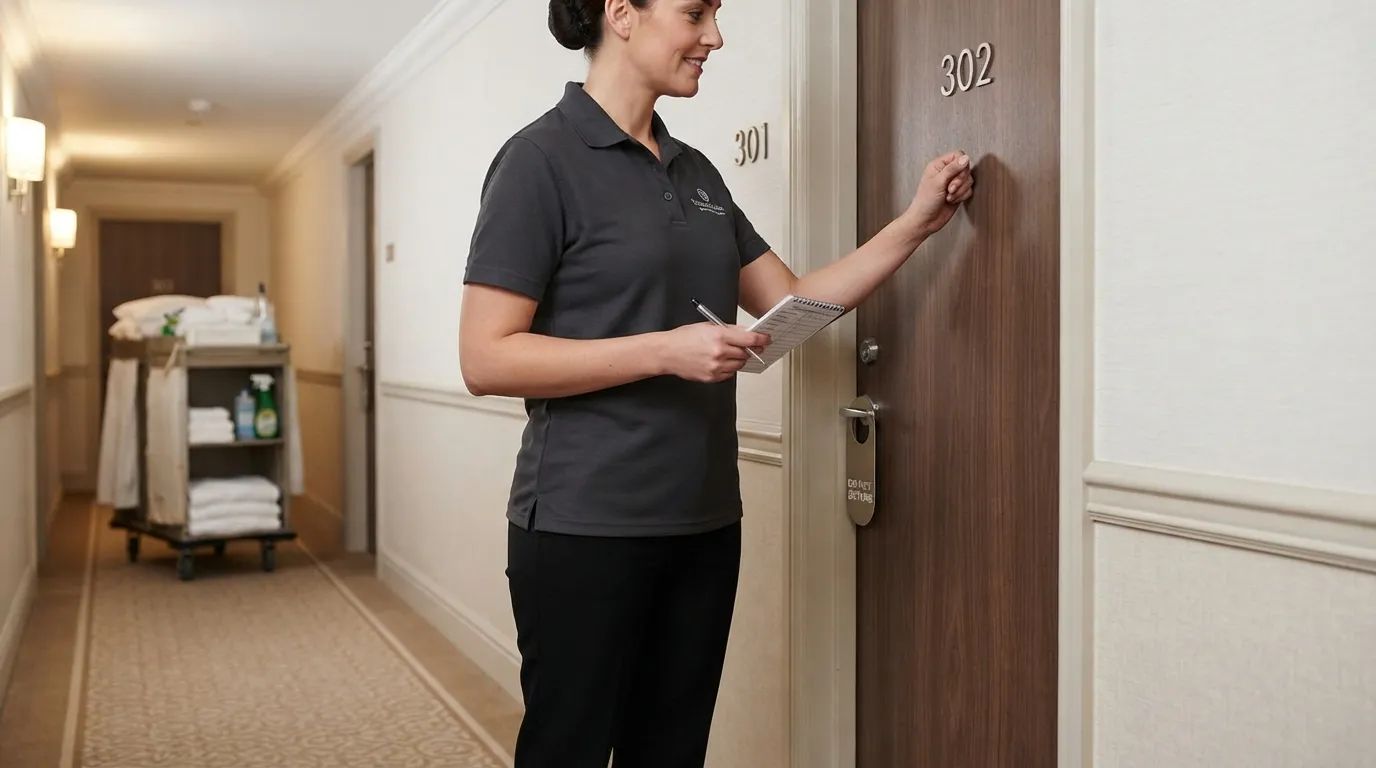
Long before a housekeeper touches anything, your room has already told them how tomorrow will go. A door sign, a pile of towels and a half-open suitcase each work as a tiny instruction. Most guests have no idea they’re giving orders.
Here’s the twist: it’s rarely about how messy you are. Some of the loudest signals are the quiet ones, and a few work against what guests assume. One small habit can decide whether anyone enters your room at all, and it isn’t the one you’d guess.
#15 – The Door Hanger That Overrules Everything Else
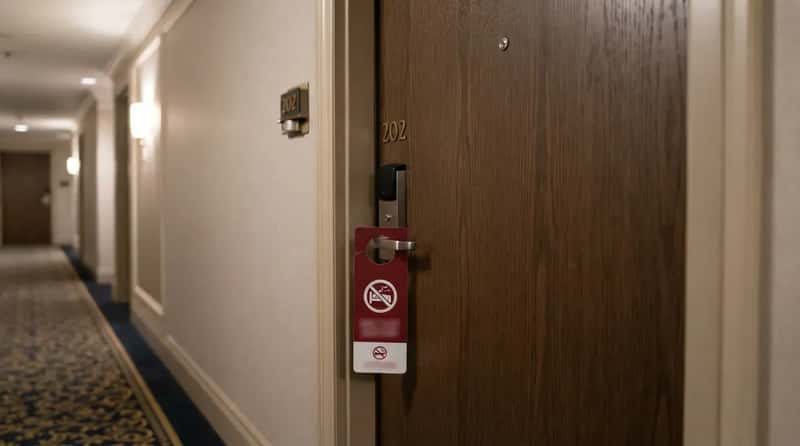
The Do Not Disturb sign is the loudest message in any hotel hallway. Housekeepers see it before they see the room number, and it usually pulls that room off the morning list on the spot. Many hotels also limit how long a sign can stay up before someone checks in.
A sign that hangs for several days can trigger a welfare check instead of being ignored. The exact window varies by property. And skipping a room doesn’t erase the work, so tomorrow that room often slides to the end of the list or gets a lighter pass. A plain pile of towels says even more than a sign, and #14 proves it.
#14 – The Towel Code Most Guests Misread
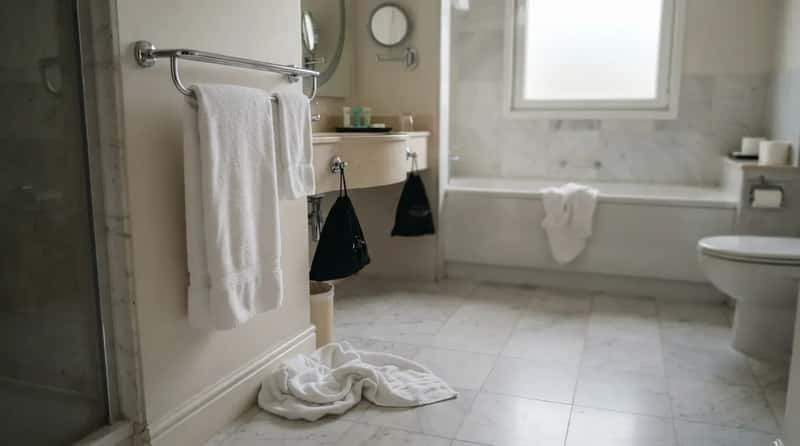
At many hotels, where a towel lands is treated as a message. Towels hung up or left on the rack usually mean “reuse.” Towels on the floor or in the tub usually mean “replace.” Housekeepers read that pattern like a restocking list for tomorrow.
The catch is that the code can’t read your mind. A towel dropped by accident usually gets treated exactly like one you meant to swap. Plenty of guests have lost their “green” choice that way without ever knowing. The bed sends an even more confusing message, which is #13.
#13 – Why a “Cleaned” Room May Never Have Had Its Sheets Changed
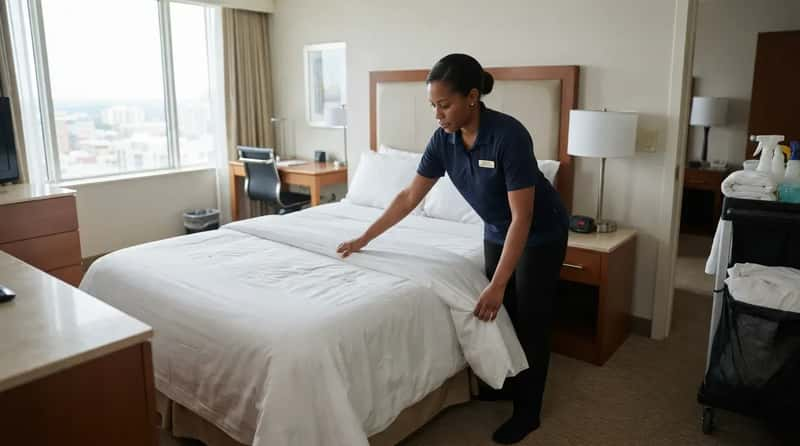
An unmade bed is one of the first things housekeepers scan, and it sets the tone for the whole visit. A daily stayover service often means making the bed without replacing the linens. Fresh sheets usually follow a schedule rather than a single day’s mood.
At a Glance
- A typical stayover covers the trash, a straightened bed, a vacuum pass and wiped surfaces.
- Fresh sheets tend to follow a schedule, not a daily reset.
- A checkout room usually gets the full turnover instead.
- A clear note or a saved preference is the easiest way to be understood.
One industry operator described the quick daily routine as taking out the trash, straightening the bed, vacuuming and wiping surfaces, with no sheet change. Some guests call that cost-cutting. Hotels call it a standard stayover. Either way, the state of your bed shapes which version you get, and the trash can matters just as much, as #12 shows.
#12 – The Trash Can That Sets the Stopwatch
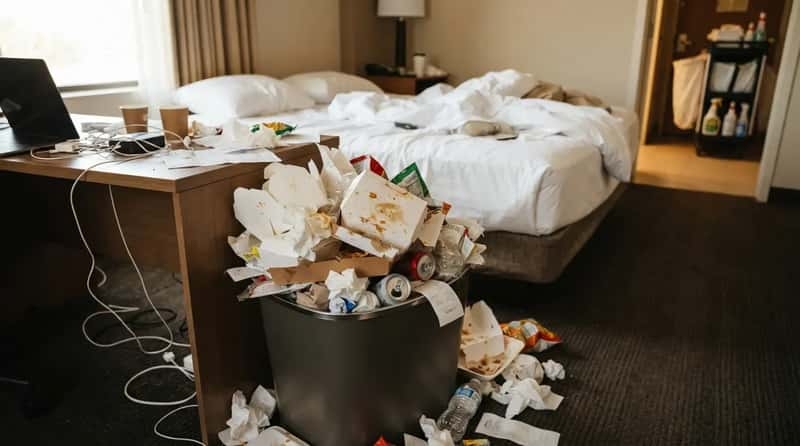
Housekeepers don’t judge your mess, but they do price it in minutes. Rooms are assigned with an expected time each, so a floor covered in takeout containers can throw off the whole schedule. Before the pandemic, one executive housekeeper was assigning 15 or 16 rooms per day, balanced between checkout and stayover rooms.
That’s a full day built around minutes, and one chaotic room can eat into the next one. A room that’s easy to turn around may get a quick pass early in the shift. A room that needs extra time may be pushed to a slot when the attendant can breathe. And rooms that are leaving get treated very differently, which is #11.
#11 – The Checkout Room That Jumps the Line
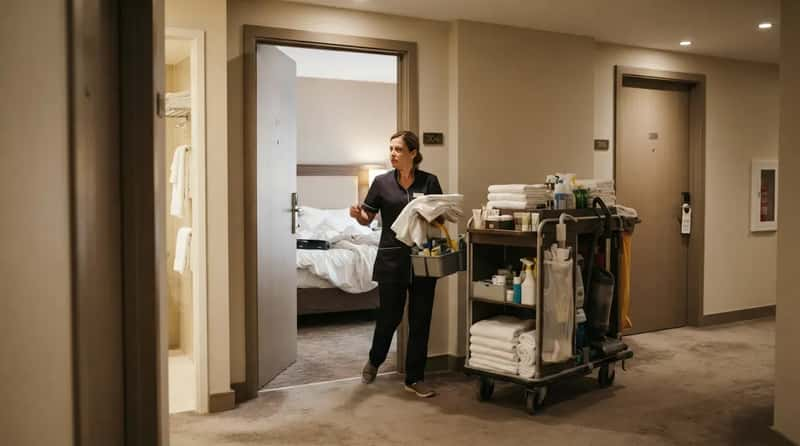
A room with a departing guest is a different animal from one with a guest staying another night. Checkout rooms usually get the full reset, because someone else may be arriving later that day. Stayovers are lighter and more flexible. Housekeepers often juggle both in one shift.
So whether you’re leaving or staying can decide when anyone shows up. If you check out in the morning, expect the room to be prioritized for the next arrival. If you’re staying, expect it to wait its turn. The clues that tell housekeeping which category you fall into might surprise you, and that brings us to #10.
#10 – The Suitcase That Tells Housekeeping Who’s Really Staying
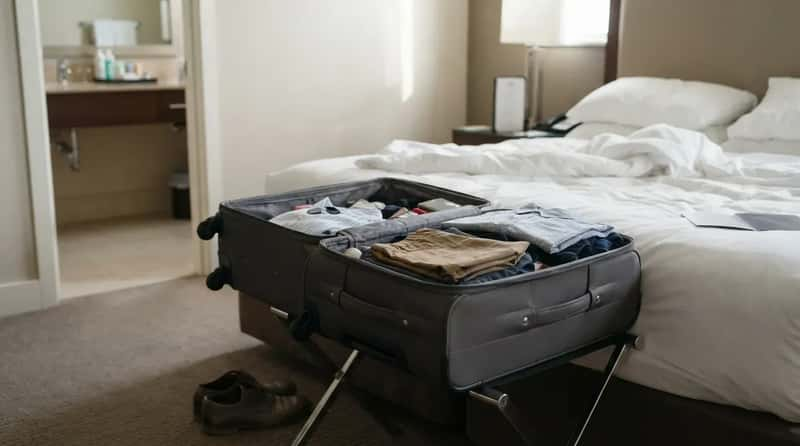
Luggage is the quiet witness in every room. An open bag, clothes in the closet and toiletries by the sink all say “occupied and staying.” A room that looks lived in but has no luggage anywhere can raise an eyebrow, and many hotels train staff to pass that along to the front desk.
Worth Knowing
- Open bags, hanging clothes and toiletries signal a guest who is staying.
- A lived-in room with no luggage can prompt a quiet note to the front desk.
- Possible outcomes include a stayover pass, a status check or a supervisor flag.
- Status checks are routine bookkeeping, not snooping.
It may simply mean the guest is out for the night. It can also mean the room was abandoned without a checkout. Either way, tomorrow’s plan changes. Housekeepers aren’t snooping, because status is part of how the building tracks its rooms. But one setting you chose before you even arrived may matter more than all of this, and that’s #9.
#9 – The Opt-Out Setting Hiding in Your Booking
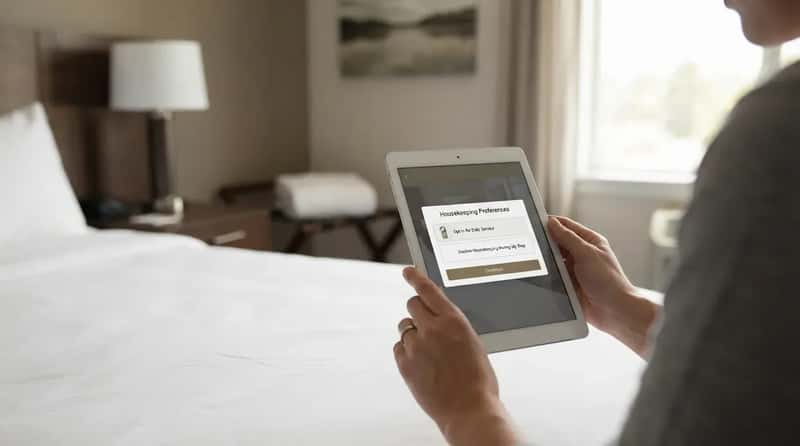
Whether you get a visit tomorrow may have been decided before you checked in. Marriott lets guests at participating hotels accept or decline housekeeping during booking, in the Marriott Bonvoy app, or at mobile check-in. Brands differ a lot. According to The Points Guy, Hilton now offers daily housekeeping at its luxury, full-service and lifestyle brands plus Embassy Suites, with other brands every other day.
Marriott once offered points in exchange for skipping housekeeping, though it has since stopped. Not everyone agrees on why service has shifted. Hilton said guests have varying levels of comfort with someone entering their rooms, but housekeepers were skeptical that consumer preference explains the reduced cleaning. Whoever’s right, the setting on file drives the schedule. What you leave on the desk can override it, and #8 shows how.
#8 – The Note on the Desk That Rewrites the Plan
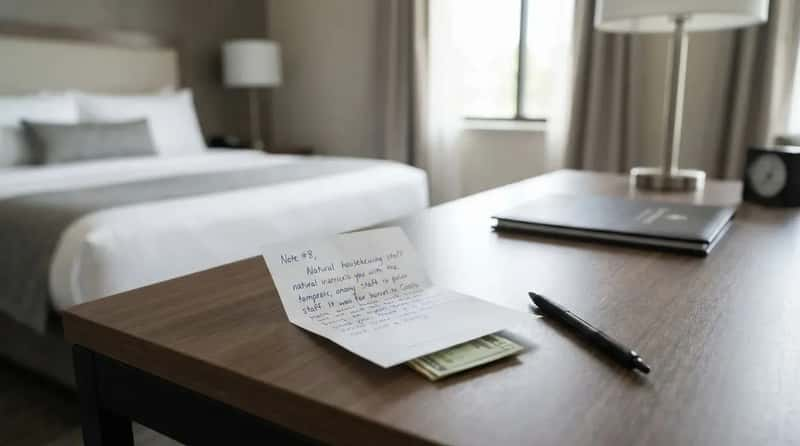
A handwritten note is the most direct tool a guest has. “Please skip tomorrow,” “extra towels, please” or “baby sleeping until noon” all hand the attendant exact instructions. Notes cut guesswork, and they usually get followed.
A tip left with a clear note about who it’s for travels the same way. The person who cleans on Tuesday may not be the person who cleans on Wednesday. That’s why leaving something each day, rather than one lump at the end, is often suggested. Housekeepers also keep a mental list of what’s broken in the room, which brings us to #7.
#7 – The Dead Bulb and Dripping Faucet They Spot First
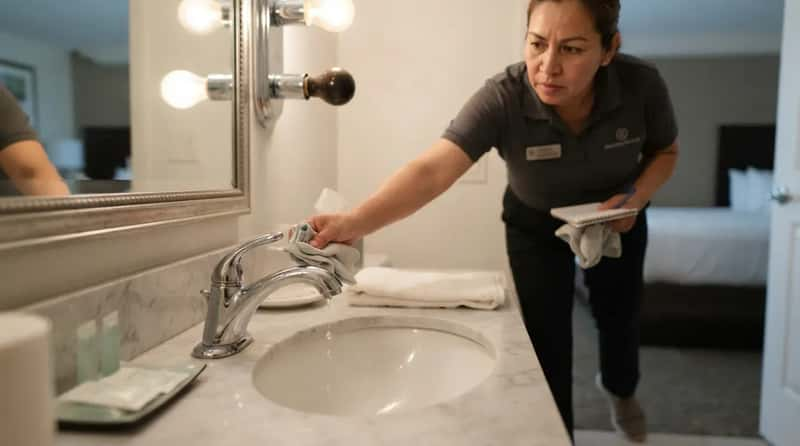
Housekeepers notice what’s broken before anyone else does. A dead bulb, a slow drain, a wobbly chair or a remote with no batteries gets reported to maintenance. In most hotels, they’re the building’s eyes.
Quick Compare
- Small fix: a dead bulb or dead remote gets reported, and the room can stay on the list.
- Serious problem: a room can be held out of service until it’s repaired.
- Either way: a quick heads-up to the front desk gets it moving sooner.
A serious issue can take an otherwise spotless room out of service until it’s fixed. That changes tomorrow, because the plan may shift from “clean” to “wait for engineering.” The room could get a quick repair, a swap to another room or an extra visit. The strongest warning sign of all doesn’t show up on any checklist, because you smell it. That’s #6.
#6 – The Smell That Can Land a Room on a Special List
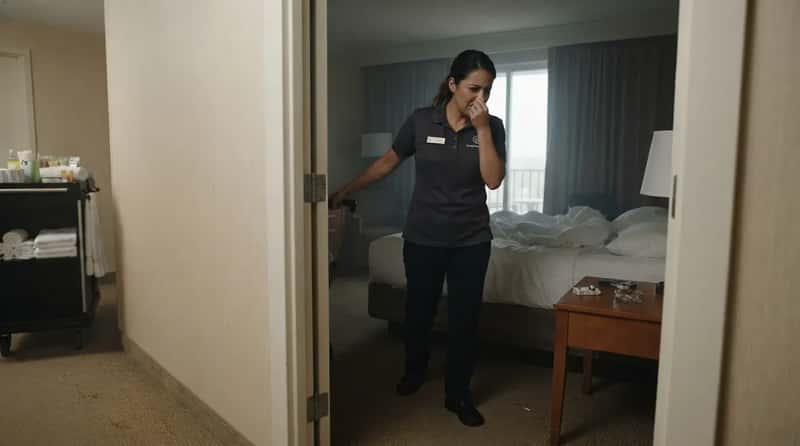
Housekeepers are trained to notice odor the moment the door opens. Stale smoke, mildew or a heavy food smell can single out a room for a different kind of cleaning. An odor problem can be a bigger deal than a visible mess.
Many hotels charge cleaning fees when a nonsmoking room smells of smoke. The reason is physical, not personal: smoke residue clings to fabrics and surfaces, so a room may need deeper treatment than a normal service. Tomorrow’s plan might include extra airing, a special cleaning or a maintenance check for moisture. Sometimes the clue is visible instead, like a stain, which is #5.
#5 – The Stain That Quietly Pulls a Sheet Out of Circulation
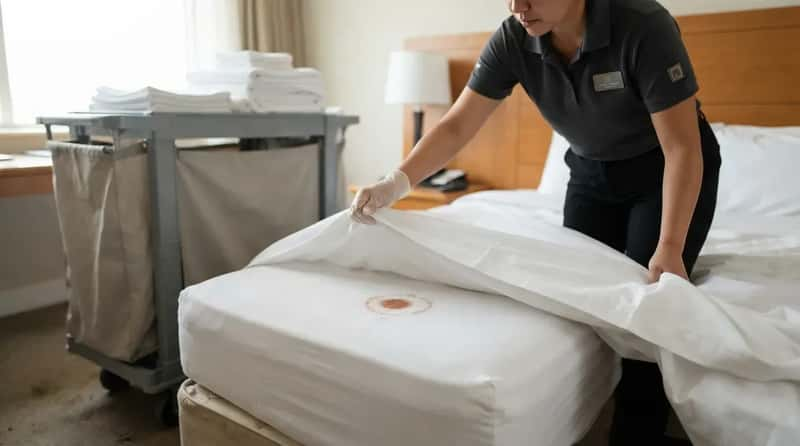
One stain can change what happens to an entire set of linens. Housekeepers check sheets, towels and the mattress edge as they strip a bed. A badly marked item may be set aside or flagged instead of going back on a bed. One stain can take a whole sheet out of rotation.
That ripples into tomorrow’s service, because replacement linens have to come from somewhere. Damage may also be logged for the supervisor or the front desk. Guests never see any of it, but it shapes how long the room takes. The personal things you leave out create a whole separate set of rules, and that’s #4.
#4 – The Cash, Pills and Valuables They’re Taught to Work Around
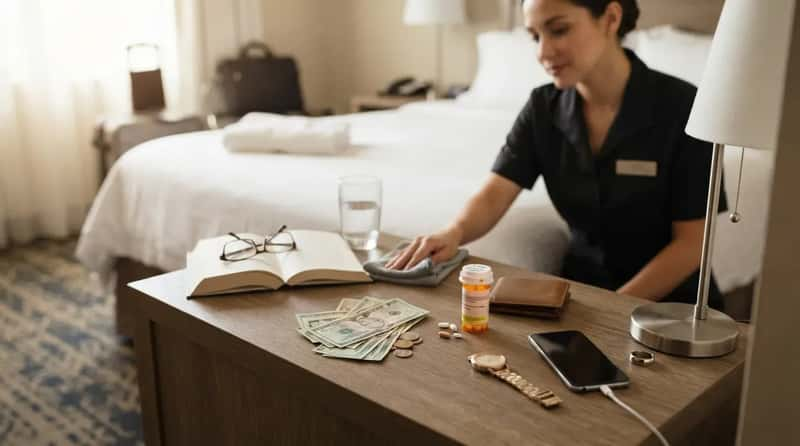
Housekeepers pass through rooms full of personal belongings every day. Cash, jewelry, laptops and medications are left in plain sight more often than guests admit. In general, staff are trained to leave valuables where they are and clean around them.
Why It Stands Out
- Staff are taught to respect your things, not rearrange them.
- Cash, jewelry, laptops and medications are all part of the everyday scenery.
- Loose sharps are typically reported, not handled.
- A crowded counter can mean a lighter wipe in that spot.
Cash on a nightstand usually gets cleaned around, not moved. That affects the service, too, because a crowded desk or a packed bathroom counter may mean a lighter wipe-down in some spots. Anything that looks unsafe is typically reported rather than handled. The things left behind completely are a different story, and that’s #3.
#3 – The Forgotten Charger That Starts a Paper Trail
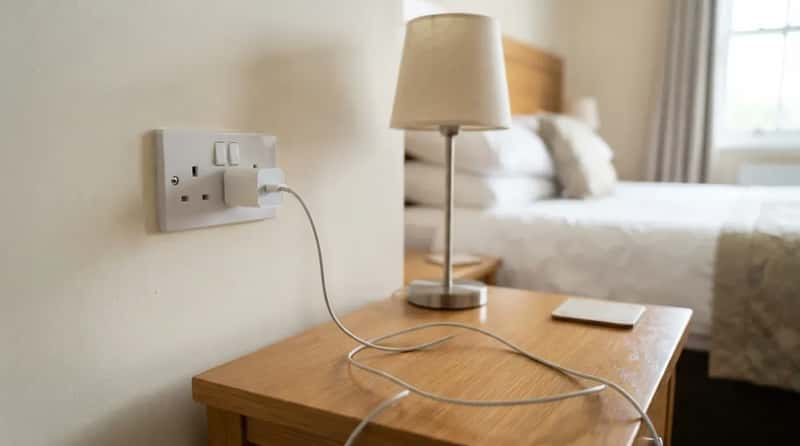
A phone charger still plugged into the wall is a classic left-behind item. When housekeepers find something after a guest leaves, it usually goes into a lost-and-found log with the room number and date. Most hotels hold items for a set time, and the policy varies.
Something as small as a charger can trigger a record that follows the room. Staff have to stop, log, bag and hand the item to the right department. That’s a few extra minutes in a schedule that’s already tight. And if housekeepers find a guest still inside, they follow a very different script, which is #2.
#2 – The Knock That Reveals Whether You’re Home
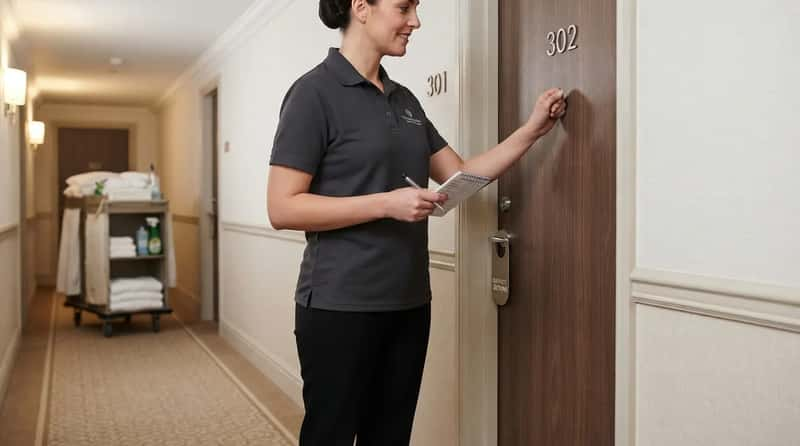
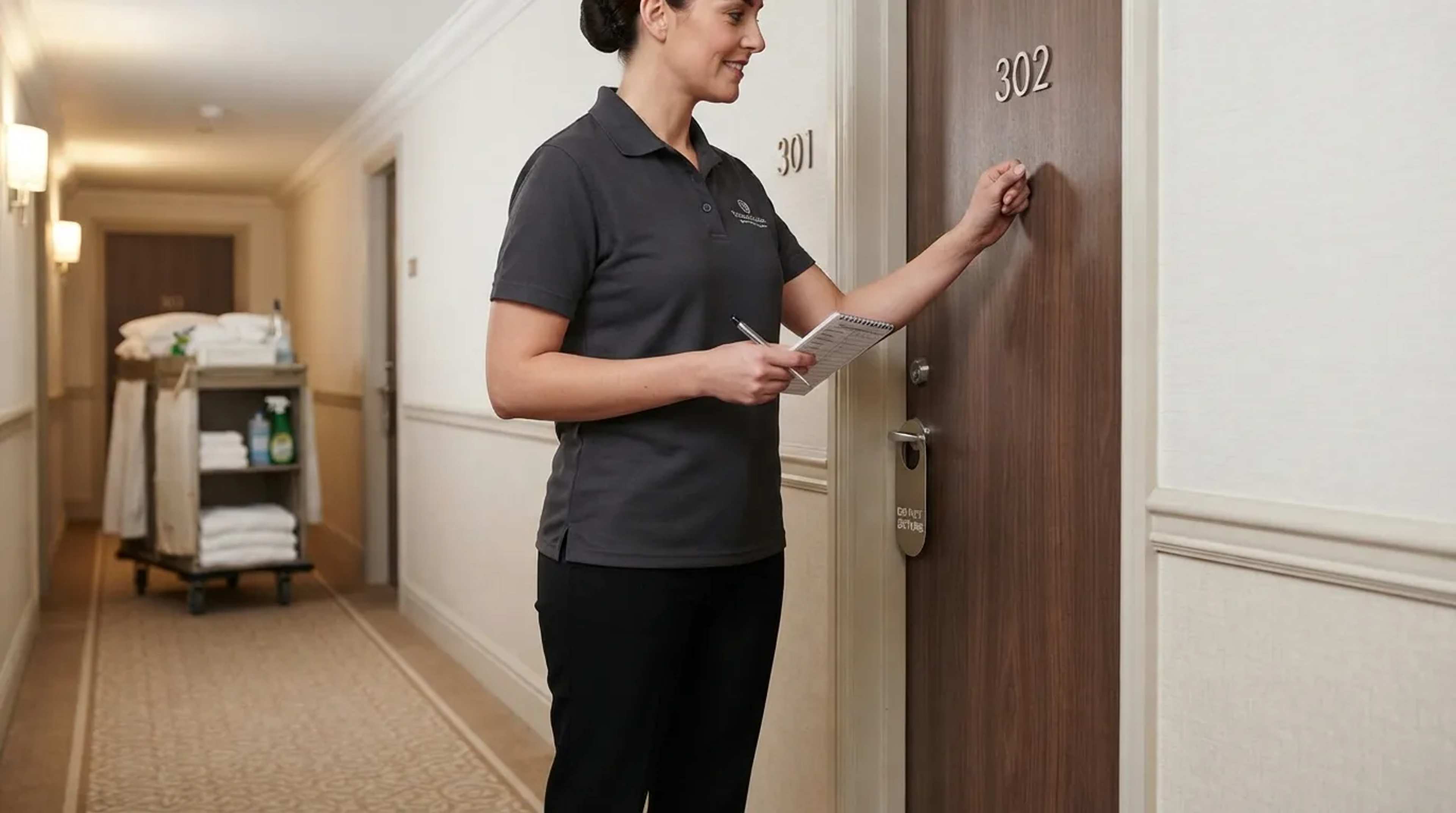
Housekeepers knock and announce themselves before they enter, and what happens next shapes your day. If you answer, they typically ask whether you want service now or later. A room with someone inside often goes onto a “come back” list. Answering the door can bump your service to the very end of the shift.
That matters more now that opt-in housekeeping is common. When daily cleaning isn’t automatic, guests can be caught off guard, and one Chicago housekeeper said guests ask her in the hallway why their room isn’t being cleaned. The honest answer is usually that the settings said so. One last factor decides all the others, and it’s the clock, which is #1.
#1 – The 12-Minute Clock Quietly Running Behind Every Door
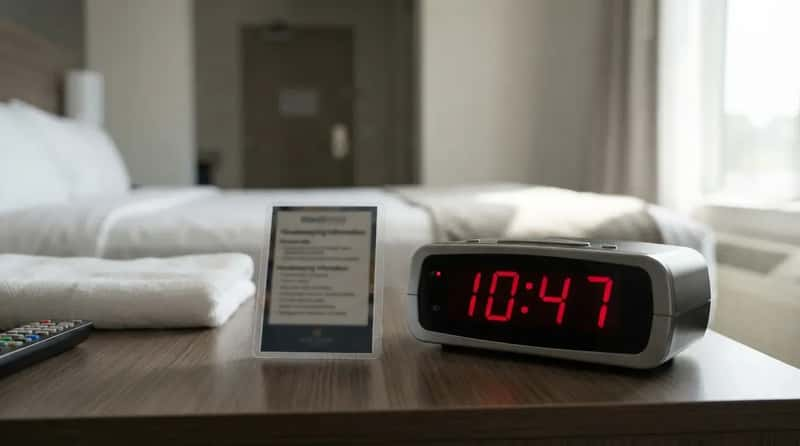
Everything above feeds one number: how many minutes your room is allowed to take. One operator described stayover cleaning as once taking 17 to 20 minutes and now taking about 12. A quick stayover now runs about 12 minutes.
Trash, a made bed, a vacuum pass and a surface wipe are about all that fits. So the signs, towels, notes and settings aren’t small talk. They tell the team whether your room gets a quick pass, a full reset or nothing at all. Hotels say it matches what guests want, and housekeepers aren’t always convinced.
Most guests think housekeeping reacts to a room. In reality, the room has been giving directions all along. A sign, a towel or a note can quietly decide whether anyone knocks tomorrow morning at all.
Which of these did you never realize was being read?