Ask most hikers what saves someone in trouble and they’ll say a GPS watch or a bulky first-aid kit. Park guidance actually points to a much humbler pile of gear. It includes pretzels, a whistle, a headlamp and a strip of duct tape.
For hikers over 65, longer days, heat, steep descents and slower recoveries make small oversights costly. Some items on this list sound too basic to matter. A few are the ones people regret leaving in the car, and one is the item many people quietly resist buying.
#15 – The Paper Map That Still Works When Your Phone Gives Up
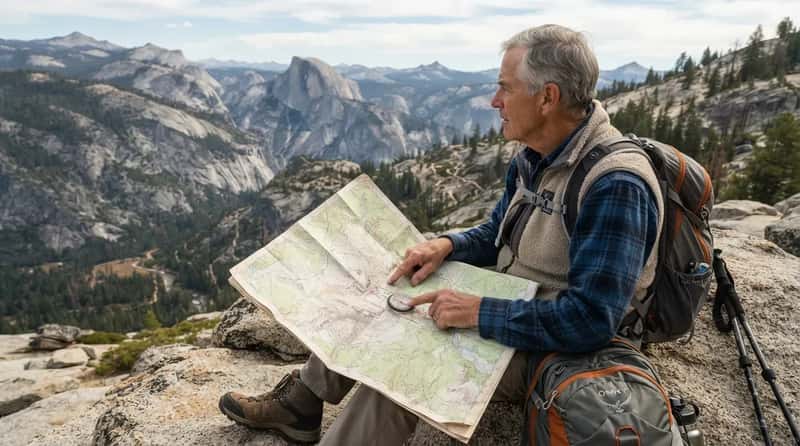
Your phone is a great backup and a poor primary plan. Deep canyons, thick forest and cold batteries can all take away the one screen you were counting on. The National Park Service’s own safety pages list navigation as a core system: map, compass and GPS. The phone is only one third of the set.
Here’s the part most people miss: a map is useless if you’ve never opened it before the trail. Park guidance says to learn how to use a topographic map and compass before you head out. Many hikers think paper maps are nostalgia for people who don’t trust technology. The park advice says the opposite. The map is the one item that never needs charging.
Fast Facts
- The NPS 10 Essentials are built around systems, not single gadgets. Navigation is the first one on the list.
- A full navigation system means a map, a compass and a GPS or phone.
- A paper map has no battery, no signal requirement and no screen to crack.
- Practice reading it at home, where a mistake costs nothing.
#14 – The Salty Snack Stash Rangers Quietly Swear By
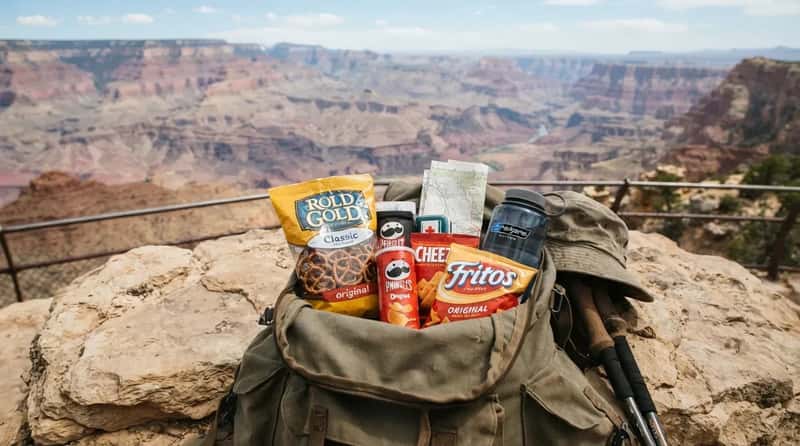
Granola bars are fine, but park staff keep recommending pretzels and chips. Grand Canyon guidance prefers salty foods such as pretzels, crackers and chips to balance water intake in hot weather. The park even lists its staff’s favorites, including pretzels, Pringles, chips and cheese crackers. The trail snack rangers like best may be the one a dietitian would roll their eyes at.
The reasoning is simple. Sweat carries out salt along with water. Grand Canyon rangers say to eat roughly twice as much as you normally would on a hot hike. They tell hikers to stop and eat often. A bag of salty crackers weighs almost nothing, and it may be the lightest protection in your pack.
#13 – Trekking Poles: The “Not For Me” Gear That Protects Your Knees
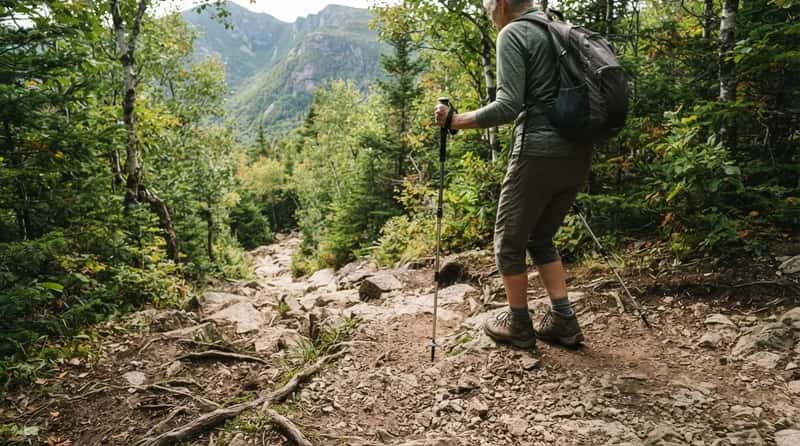
Many hikers over 65 treat poles as a sign of giving in. Plenty of experienced hikers argue the reverse: skipping poles on a long descent is pride, not toughness. One popular park packing guide calls them optional but recommended for descents. They add two more points of contact when your legs are tired and the trail gets loose.
Fatigue is a bigger deal than most people assume. A study of search and rescue in Maine’s Baxter State Park found that fatigue emerged as an important precipitant to rescue events. Its title also flags the “dangers of descent.” Poles won’t remove that risk, but they spread the load, and the way down is often where tired legs get caught out.
Quick Compare
- With poles: two extra points of contact on loose, steep ground.
- Without poles: your legs take the full load, and tired knees do most of the braking.
- On the flat: poles are optional, and they fold small enough to stow in your pack.
#12 – The Toilet Kit Even Park Staff Had to Add to the List
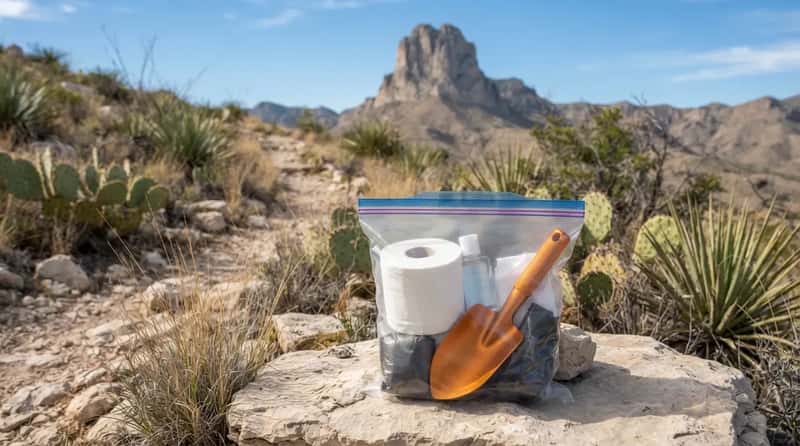
Nobody wants to talk about it, which is exactly why it ended up on an official list. Guadalupe Mountains staff said that nothing spoils a trip faster than finding human waste or toilet paper at a prime spot or along the trail. They added an eleventh essential: toiletries. It’s not glamorous, but it’s a real park concern.
The National Park Service’s 10 Essentials page agrees that a trowel and toilet paper may also be important. A small zip bag with tissue, hand sanitizer and a lightweight trowel is enough. Park staff treat this as a safety and resource-protection issue, not just a courtesy. Packing it means you can step off the trail without a second thought about what you’ll leave behind.
#11 – A Roll of Duct Tape That Fixes More Than You’d Think
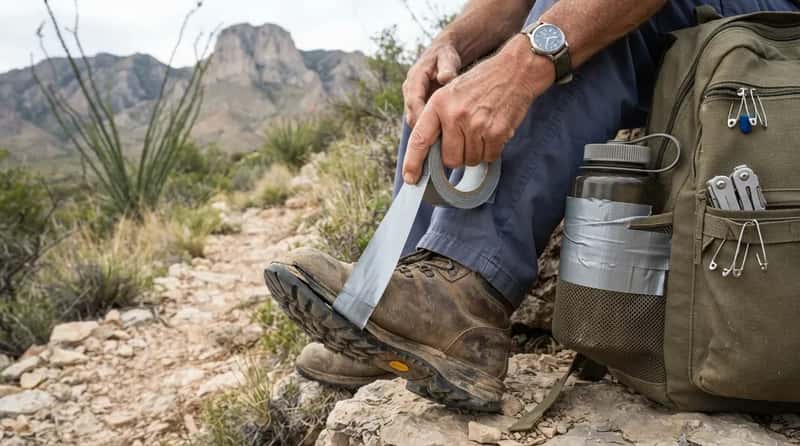
A busted boot sole or a snapped strap can turn a short walk into a long limp. That’s why repair tools are part of the standard list. The Guadalupe Mountains guidance suggests duct tape, a knife and scissors, and mentions a multi-tool as a compact option. It’s the cheapest insurance on this list.
Most people never think about repair until something fails. A few wraps of tape around a water bottle take up almost no room. Pair it with a few safety pins and you can handle most small breakdowns. A fixable problem shouldn’t force you to cut a trip short. When a problem can’t be fixed, you’ll want a way to make sure people can find you.
#10 – The Three-Blast Whistle That Carries Farther Than Your Voice
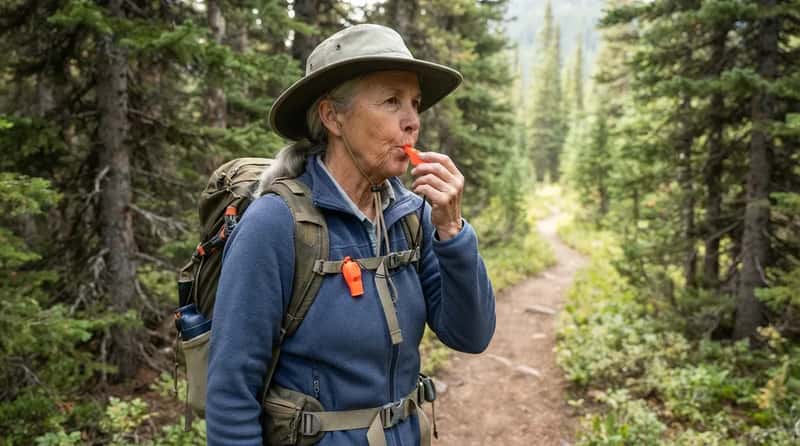
Shouting wears you out fast, and wind can swallow your voice. A whistle is light enough to clip to a pack strap and loud enough to cut through trees. Some modern guides now list a satellite messenger in place of a lone whistle. The whistle still earns its spot as a backup that never needs a battery.
Here’s what most people don’t know: three sharp blasts are widely treated as a distress signal. One packing guide notes this directly in its extended-hike list. Blow it in a repeating pattern, and save your energy for the moments when someone could actually hear it.
#9 – A Headlamp, Because “Short Hike” Is Where People Get Caught Out
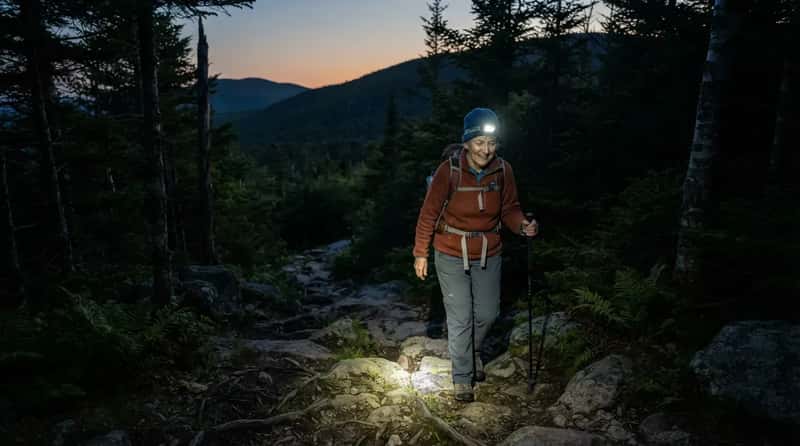
The sunset doesn’t care that you planned a two-hour loop. One park packing guide says to bring a headlamp even on a short hike, since people get caught out after dark every year. A phone flashlight drains the battery you may need for a call. It also takes up a hand you want free for poles or a railing.
In Baxter State Park, traumatic injuries prompted 51% of rescue incidents, and another 30% began with late or lost parties. Nearly one in three incidents there started because someone was simply overdue or lost. A headlamp with fresh spare batteries won’t prevent that, but it lets you keep walking safely. If you can’t keep walking, the next problem is staying warm.
Worth Knowing
- Test the headlamp at home before every season, not at the trailhead.
- Pack spare batteries in a small zip bag, separate from the lamp.
- Keep it in a top pocket so you can grab it before the light fades.
- Hands-free light means both hands stay on your poles or a railing.
#8 – The Four-Ounce Space Blanket That Rangers Treat Like Gold
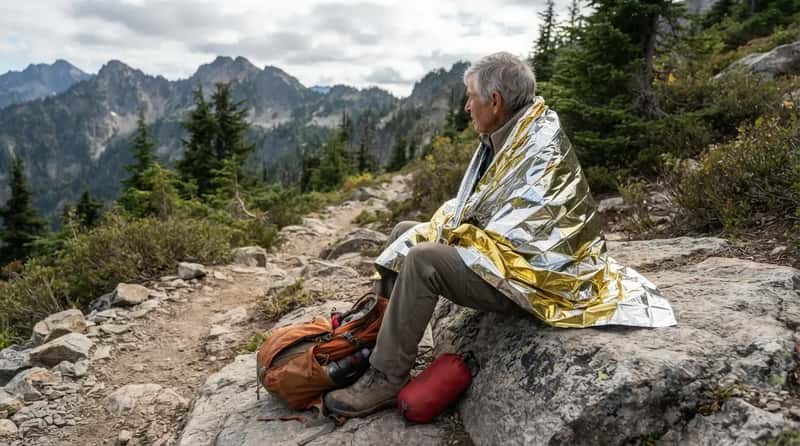
It looks like folded foil and costs about as much as lunch. One guide puts an emergency bivy or space blanket at about 4 ounces and $10. Nobody plans to use it, which is exactly the point. It earns its place the one time the day goes wrong.
Many people think shelter only matters on overnight trips. The NPS says the 10 Essentials exist for minor injuries, sudden weather changes or unexpected emergencies, and a daytime hike can run into any of those. It takes up less room than a sandwich. Wrapped around someone sitting still and waiting, it gives real protection.
#7 – Sun Gear That Treats the Trail Like a Frying Pan
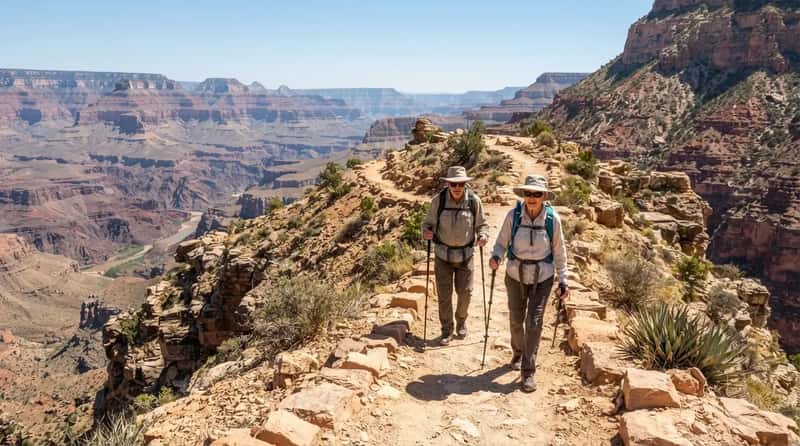
A hat and sunglasses feel optional until the trail has no shade. The NPS puts sun protection among its core systems: sunglasses, sunscreen and a hat. In open country, shade can be a long walk away. A wide brim does more work than most people give it credit for.
The Grand Canyon’s own warning is blunt. Hikers are told to avoid hiking in direct sunlight between 10 a.m. and 4 p.m. even if they’re eating and drinking correctly. The park says the sun’s real heat can run 15 to 20 degrees above posted shade temperatures. Gear helps, but timing helps more.
#6 – The Warm Layer That Lives in Your Pack All Summer
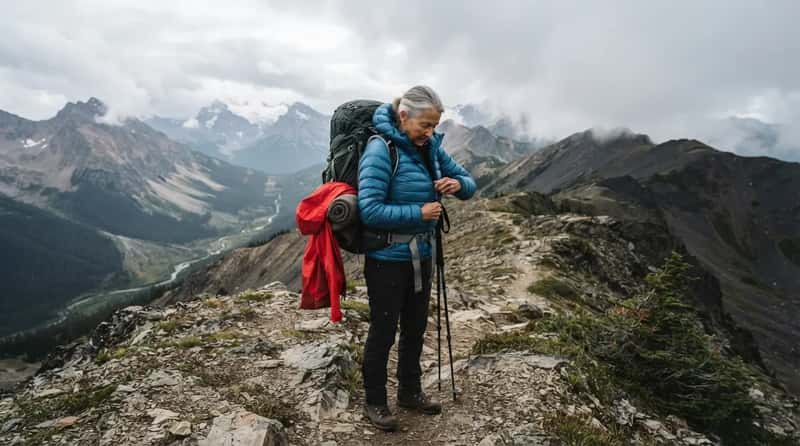
Summer tricks hikers every year. A mountain trail can turn cold, wet and windy while it’s still hot at the trailhead. One national park packing list tells visitors to keep an extra insulation layer in the pack for afternoon storms and the temperature drop up high. A thin fleece or packable puffy is plenty.
The same list adds a waterproof rain shell. Most people don’t realize that a wet, windy hour can be harder to handle than a cold one. A shell also doubles as a windbreaker on exposed ridges. Treat the layer as permanent pack weight, and you won’t be guessing at the trailhead.
#5 – The Medication Card Nobody Thinks of Until It’s Needed
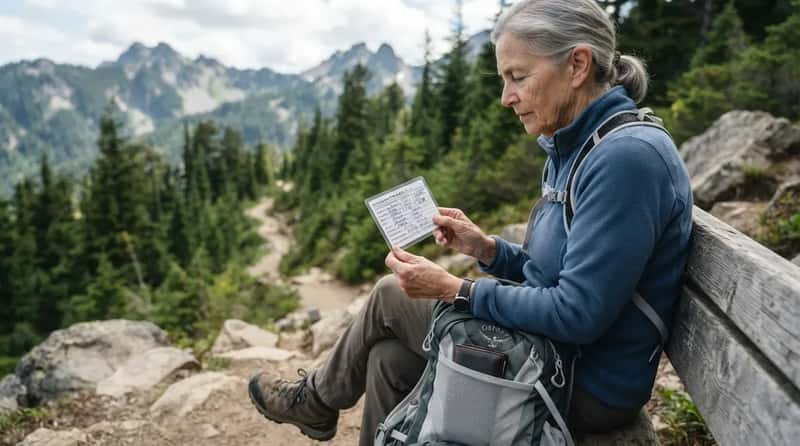
Think about what a rescuer would need to know if you couldn’t explain. Your medications, allergies and emergency contacts are the answer. A small laminated card in your pack or wallet holds all of it, and it works even when your phone is locked or dead.
Many hikers over 65 take daily medication, and most assume they’ll simply be able to say what they need. Under stress, even simple details like a drug name or dose can slip away. Write the names, doses, allergies and a contact number in large print. Add any heart condition, diabetes or blood thinners, and update the card once a year.
#4 – A First-Aid Kit Built Around Blisters, Not Bandages
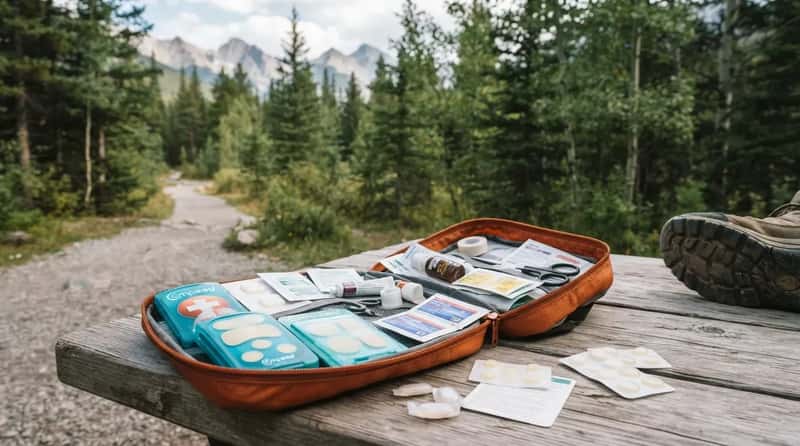
The thing most likely to end your hike early probably isn’t dramatic. It’s a hot spot on your heel. A guide to national park packing lists a first aid kit with blister kit, bandages, antiseptic, pain relievers and antihistamine. That covers the everyday trouble that actually derails a day.
Park guidance builds the full first-aid system into its 10 Essentials. The NPS describes the kit as protection for minor injuries before they become bigger ones. Add any personal items, such as medications you take daily, and check expiry dates before each season. A small, well-organized kit beats a large one you can’t find.
At a Glance
- Foot care: a blister kit comes first, since heels fail before anything else.
- Cuts and scrapes: bandages and antiseptic.
- Everyday relief: pain relievers and an antihistamine.
- Personal items: your daily medications, packed where you can find them fast.
- Season check: look at expiry dates before the first hike of the year.
#3 – A Power Bank and Offline Maps, Because Screens Die at the Worst Time
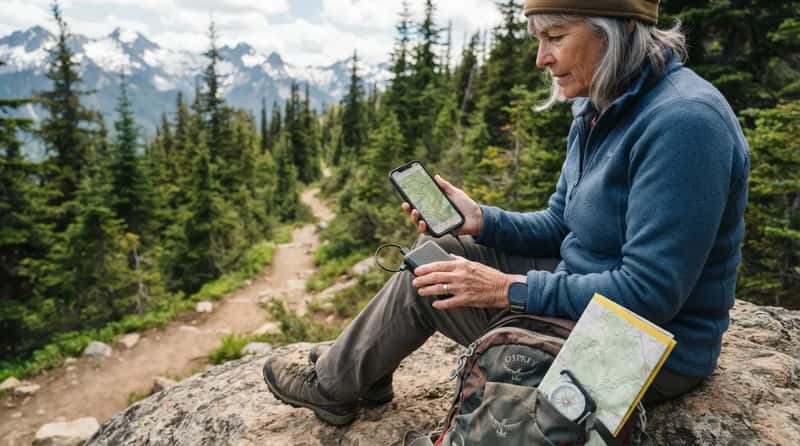
Cold air and a bright screen drain a phone fast. Park-focused packing lists suggest a phone with offline maps along with a paper map. That means downloading maps before you lose signal. A small power bank, charged and tucked in your pack, keeps the phone available for a photo or an emergency call.
Cell coverage can’t be assumed. One national park packing guide notes that cell service is unreliable or absent in most parks. That means the phone is only useful if you prepared it before you left. Charge it fully, switch on airplane mode to save power, and keep it in an inside pocket. Some people argue a battery pack is overkill for a short walk, until the screen goes dark.
#2 – More Water Than You Think, and a Rule About Turning Back
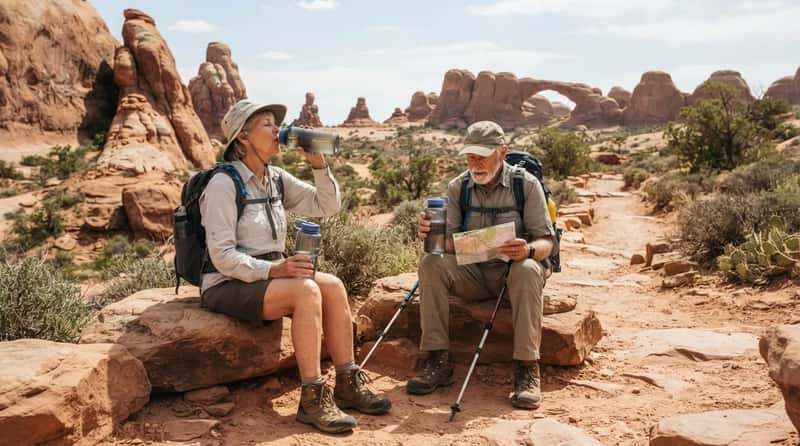
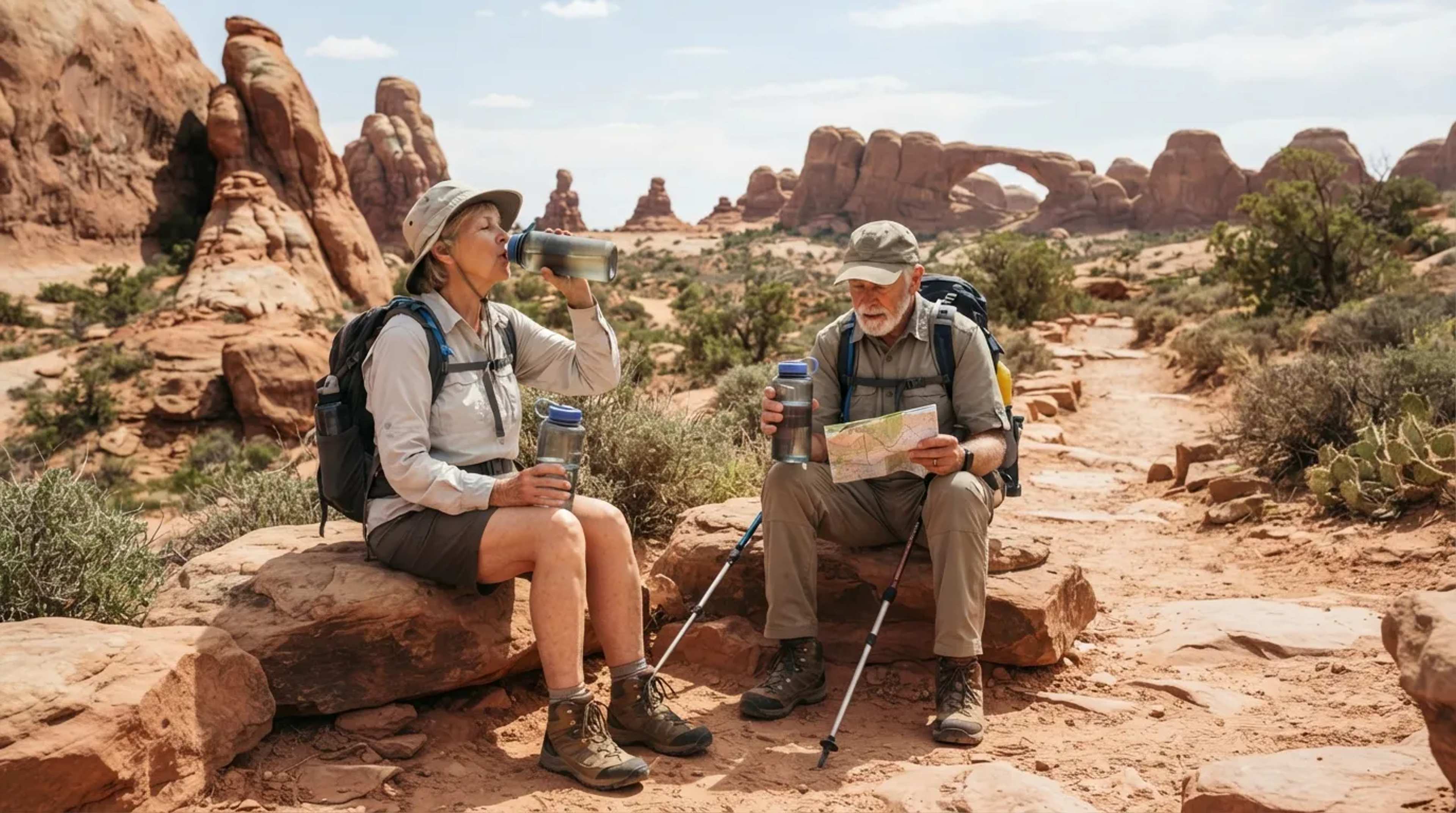
The most common mistake is also the easiest to fix. Arches National Park advises carrying at least 2 to 3 liters per person for front-country hikes, and 4 liters or more for the backcountry. Saguaro rangers say that on hot, dry days you should drink about a quart per hour of hiking. Dry air can hide how much you’re losing, because sweat evaporates before you feel it.
Rangers at Arches and Saguaro both pass along the same rule: halfway through your water, you’re halfway through your hike. Saguaro’s guidance says to turn back when half your supply is gone. In one Yosemite rescue report, a 77-year-old and a 64-year-old on the Panorama Trail felt exhausted and hot and didn’t think they could finish. Water is the one item people ration, and it’s the one that punishes rationing fastest.
#1 – The Satellite Messenger That Works Where Your Phone Doesn’t
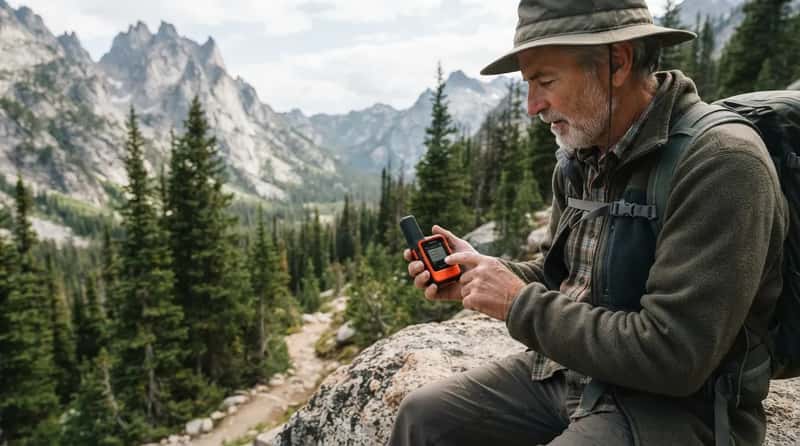
This is the item that changes the ending when everything else fails. The National Park Service’s own 10 Essentials page lists a 2-way satellite messaging device as an example of extra gear some activities require. When there’s no signal, it can still send a message to someone who can help. Some modern lists now put it ahead of the traditional whistle.
Most people don’t realize how much a phone with no bars can limit them. A satellite messenger doesn’t depend on cell towers, so it can matter most in exactly the places where phones fail. Pair it with a plan: tell someone your route and your return time. Check the battery and any subscription before you go. Some visitors resist the cost, but it’s the one item here that can still send a message when every bar is gone.
None of this is about doing less. It’s about staying on the trail longer, with fewer surprises. Park guidance says prevention rests primarily on visitors’ preparation, such as packing essential gear and planning ahead.
Which one of the fifteen would you have left behind?