You’d assume pilots spend those final minutes lost in cockpit checklists – and you’d be half right. The truth is, they’re also quietly scanning the entire cabin for red flags most passengers will never notice.
Years of training have taught pilots that a single missed detail back in economy can matter more than anything on the instrument panel. Here are the 15 things they’re actually watching before your wheels ever leave the ground.
#15 – Whether the Cabin Doors Are Properly Armed
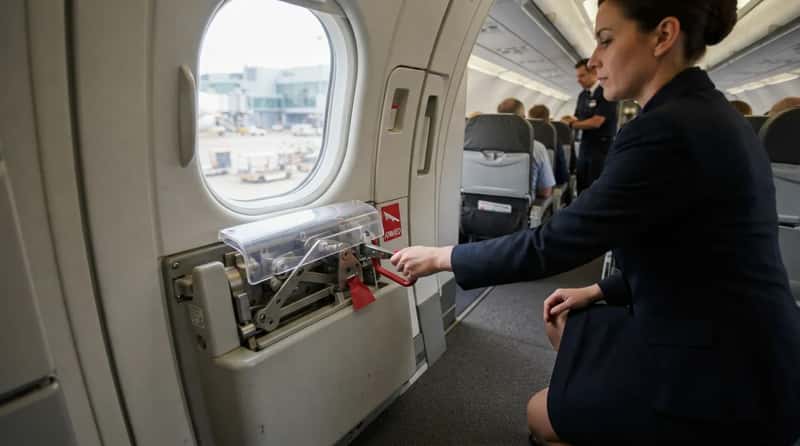
This is the first thing that can kill you – and most passengers have no idea it even exists. Flight attendants “arm” each door before departure, activating a mechanism that deploys emergency slides instantly if the aircraft ever needs a crash landing.
Once a door is armed, another crew member cross-checks it, then checks it again from the other side. Nothing moves until every single door is confirmed.
Pilots won’t even consider taxiing until every door is armed. An unarmed door in an evacuation means the slide never deploys – and passengers are trapped inside a burning aircraft.
The “cabin secure” call passes from crew to the senior cabin crew member, then straight to the flight deck. But door arming is only the opening move in a much longer chain of checks…
#14 – The “Cabin Secure” Report from the Senior Crew Member
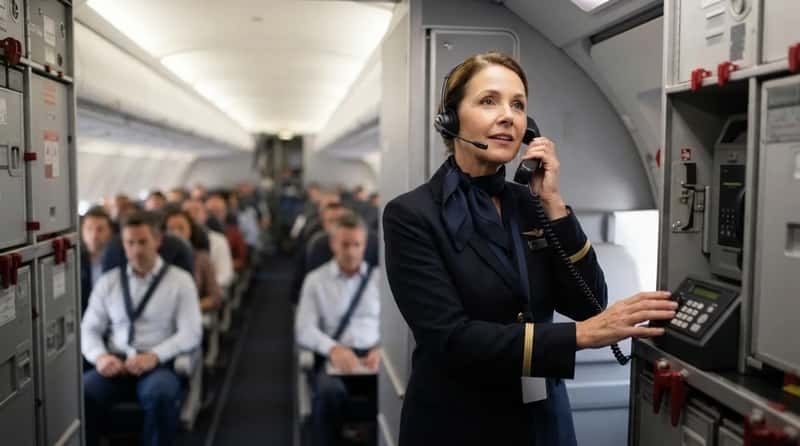
Pilots can’t see the cabin from the flight deck. So they rely on one voice, one call, over the interphone.
Before departure, the senior cabin crew member confirms everything: doors armed, headcount matched, passengers seated. Without that call, the aircraft simply does not move.
If that report doesn’t come – or sounds even slightly off – a pilot will hold the aircraft on the ground. Even a hesitant tone in the flight attendant’s voice can trigger a delay.
Once that call clears, pilots shift their attention to something passengers walk past without a second thought…
#13 – Whether the Overhead Bins Are Properly Latched
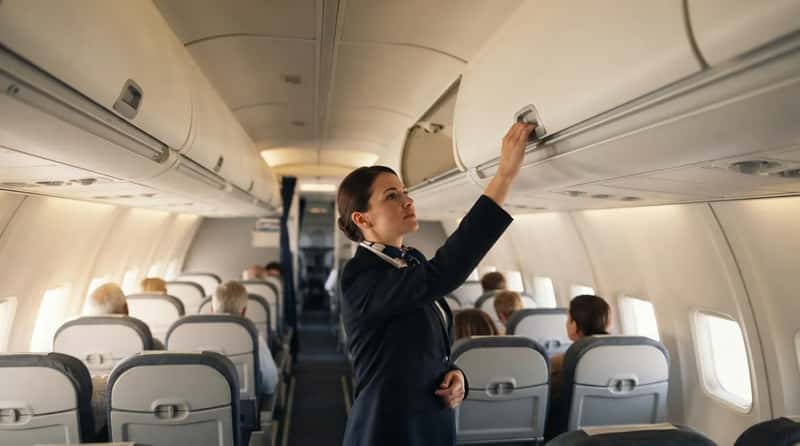
You’ve watched flight attendants slam bins shut right before pushback. That urgency isn’t about tidiness – it’s about physics.
Crew secure the entire cabin: bins latched, tray tables up, seat-backs forward, galley equipment locked down. Loose items become projectiles the moment turbulence or a hard landing hits.
An unlatched bin can swing open on rotation and send luggage flying down the aisle at takeoff speed. Pilots want confirmation those bins are secure before they apply full thrust.
There’s one more overlooked risk sitting just below those bins, and it’s easy to miss…
#12 – Whether the Aisles and Exit Rows Are Clear
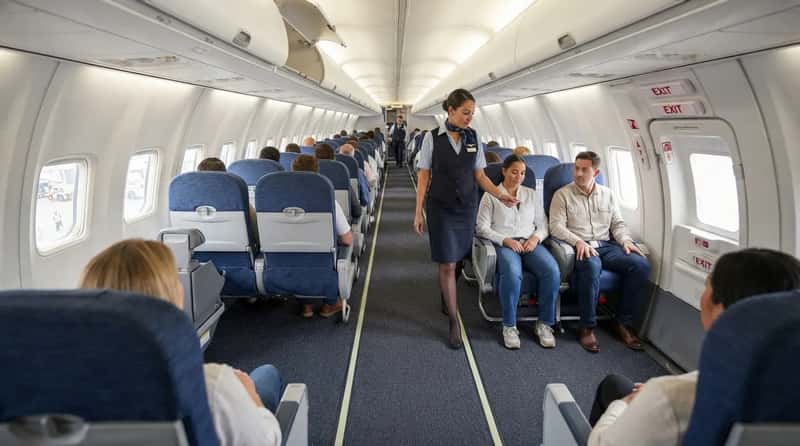
This isn’t about legroom. It’s about whether people can get off a burning aircraft in 90 seconds flat.
Every exit and aisle must be completely clear before a pilot accepts a “cabin secure” call. Regulations require passengers to evacuate in under 90 seconds, and a single bag in the aisle can wreck that timeline.
The FAA’s 90-second evacuation standard assumes a clear aisle, every single time. One misplaced roller bag is enough to delay departure.
Fast Facts
- The 90-second evacuation certification rule has been in force since Amendment 25-15, effective October 24, 1967.
- Certification testing assumes only half of an aircraft’s emergency exits are actually usable.
- The standard traces back to FAA crash tests on a Douglas DC-7 and a Lockheed L1649 in 1964.
What pilots watch for next is something passengers almost never think about at all…
#11 – The Passenger Headcount
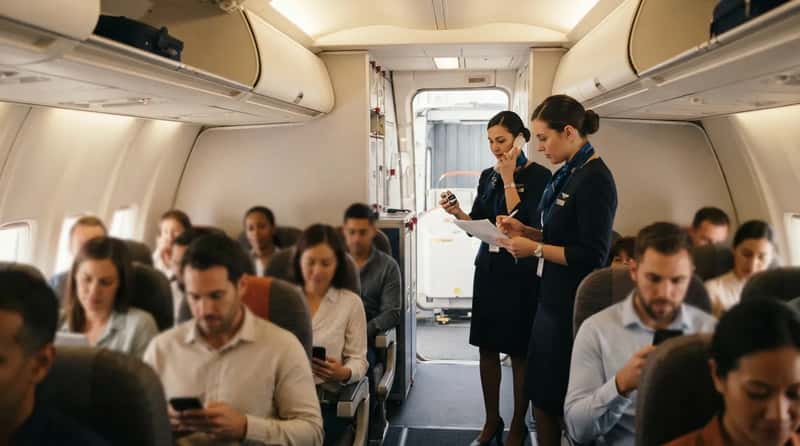
Before any pilot accepts clearance to taxi, the numbers have to match – exactly.
Crew count every head before the doors close, then compare it to the number the gate agent handed over. A mismatch keeps those doors shut, no exceptions.
Pilots need formal confirmation that the passenger count matches the manifest before departure. One wrong number could mean someone boarded the wrong flight, a child is unaccounted for, or a passenger is still in the lavatory.
One more human factor pilots track next – and it might genuinely surprise you…
#10 – Whether There Are Any “Able-Bodied Passengers” Near the Exits
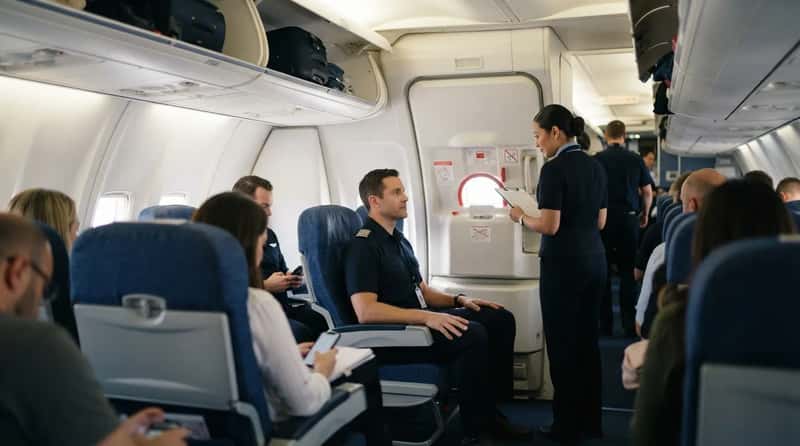
Pilots and flight attendants don’t just see passengers. They quietly sort them.
Crew scan for physically capable people – off-duty pilots, police officers, firefighters – who could help open an emergency exit or manage a crisis. These are known as able-bodied passengers, or ABPs.
ABPs are quietly noted on the passenger list before every single departure. Off-duty crew members are often seated at exit rows specifically so they can open doors if things go wrong.
That human intelligence feeds straight into the next thing pilots assess…
#9 – The Behavior of Individual Passengers During Boarding
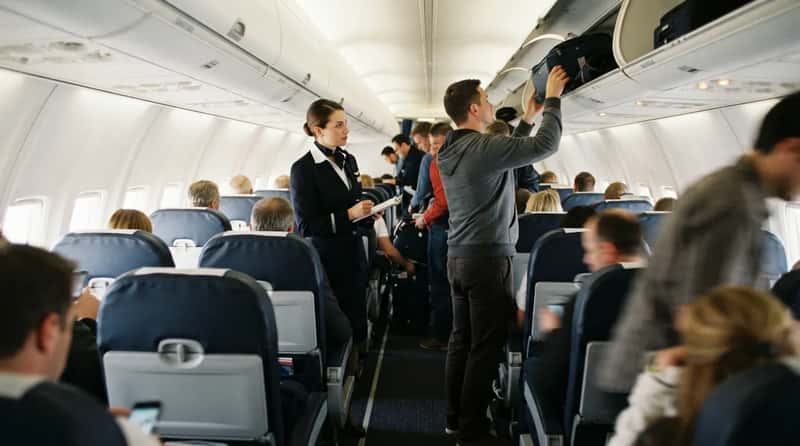
This is where aviation quietly meets behavioral profiling – and it happens on every flight you’ve ever taken.
Crew watch every passenger during boarding, looking for anyone who might pose a threat. Sometimes it’s obvious aggression; often it’s something far more subtle.
Any flagged behavior gets reported directly to the flight deck before departure. A pilot who receives that flag can – and will – make the call to pull someone off the aircraft entirely.
What pilots scan next is something almost no passenger ever pays attention to…
#8 – Whether Tray Tables Are Up and Seat Backs Are Forward
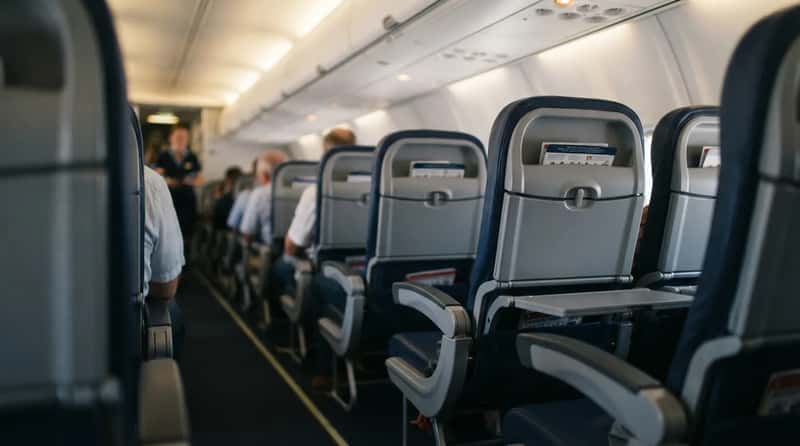
It sounds like airline bureaucracy. It’s actually biomechanics.
A deployed tray table in a hard landing pins a passenger against their seat, blocking the brace position entirely. A reclined seat-back does the same thing to the person sitting behind it.
Evacuation studies show seat-back and tray-table compliance directly affects survival odds in a crash. That status is baked directly into the “cabin secure” confirmation pilots wait for.
The next item pilots check is one of the most misunderstood pieces of equipment on the entire aircraft…
#7 – Whether Emergency Equipment Is On Board and Accounted For
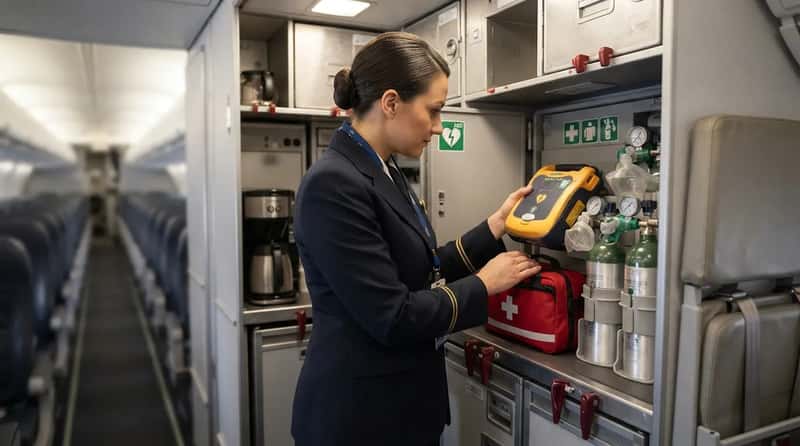
Most passengers assume this is handled somewhere off-site, long before boarding. It isn’t.
Flight attendants personally verify the defibrillator, first aid kit, and every oxygen bottle before passengers even step on board. Each oxygen bottle gets checked individually for pressure and expiration date.
A missing or expired oxygen bottle is an automatic no-go item. Running the Emergency Equipment Checklist is one of the heaviest responsibilities crew carry before every flight.
At a Glance
- Defibrillator, first aid kit, and multiple oxygen bottles: standard equipment on every commercial cabin.
- Each oxygen bottle is checked individually for pressure and expiration.
- One expired bottle is enough to ground the flight until it’s swapped out.
But there’s one item in the lavatory that catches a pilot’s attention more than almost anything else…
#6 – Whether the Lavatories Are Cleared and Smoke Detectors Are Functional
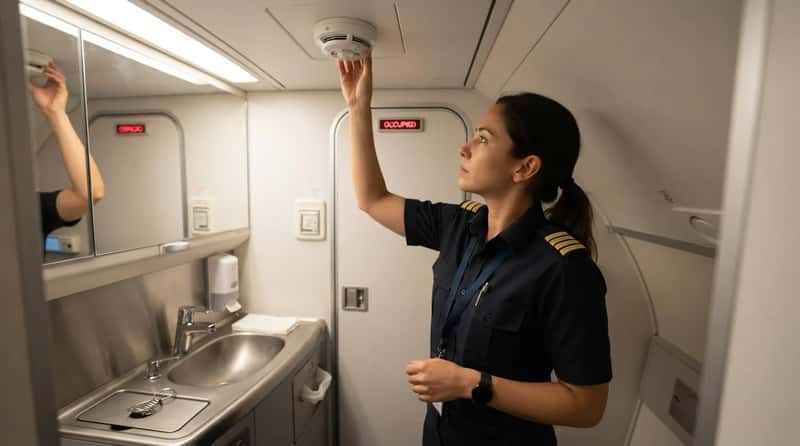
Most passengers never realize the lavatory is one of the highest-risk zones on the entire aircraft.
Crew check the water heater, the waste bin extinguisher, and confirm the smoke detector hasn’t been blocked or tampered with. Tampering with one is a federal offense, and pilots are informed immediately if it happens.
In-flight lavatory fires are among the fastest-developing emergencies in aviation. Paper waste, aerosols, and a sealed space can turn deadly within minutes.
What pilots check next is the difference between a routine takeoff and a catastrophic loss of control…
#5 – Whether Flight Controls Were Confirmed Free and Correct
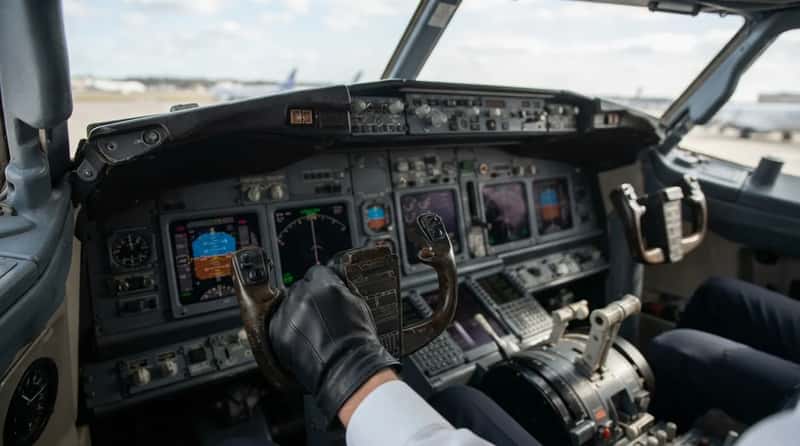
This isn’t a cabin item in the obvious sense. But pilots wait for internal confirmation that the controls are clear before they’ll even release the brakes.
The entire concept of a pre-flight checklist exists because of a single crash. In 1935, a prototype Boeing B-17 went down at Wright Field, killing both pilots, because they forgot to disengage the gust locks holding the control surfaces in place.
That single oversight killed two experienced pilots and reshaped aviation forever. Decades later, in 2001, a Cessna 340 crashed for the exact same reason – and the pilot had more than 6,200 flight hours.
The pilot’s failure to remove the control gust lock prior to takeoff.
National Transportation Safety Board
Testing that flight controls move freely is non-negotiable. What pilots track next is just as critical – and just as invisible to every passenger on board…
#4 – The Crew Briefing Confirmation and Interphone Check
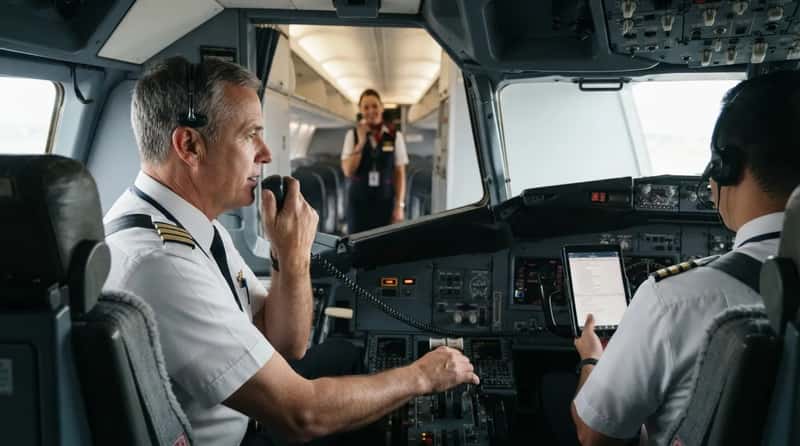
Before any aircraft departs, the cockpit and cabin have to be able to talk to each other. That link gets tested every single time.
Pilots brief the crew on turbulence expectations, unusual procedures, and emergency protocols before departure. The interphone system connecting cockpit and cabin is verified in the same breath.
A failed interphone system is a genuine ground-stop event. During any real crisis, that line is often the only connection between the cabin and the flight deck.
The next item is one pilots prioritize above almost everything else in the cabin scan…
#3 – Whether Seat Belts Are Fastened and Visible
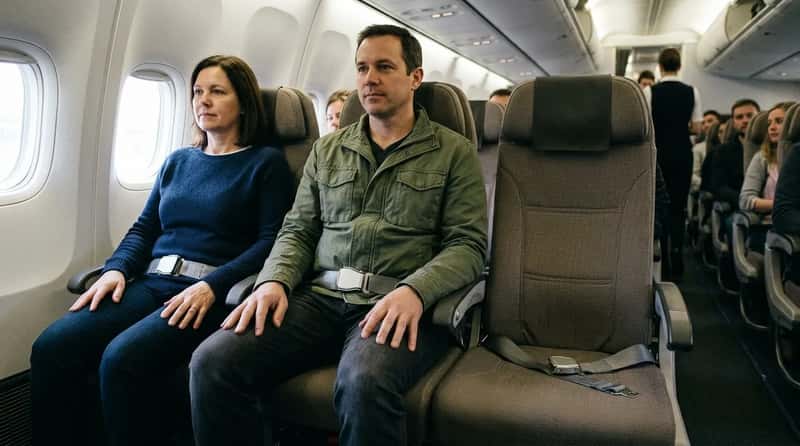
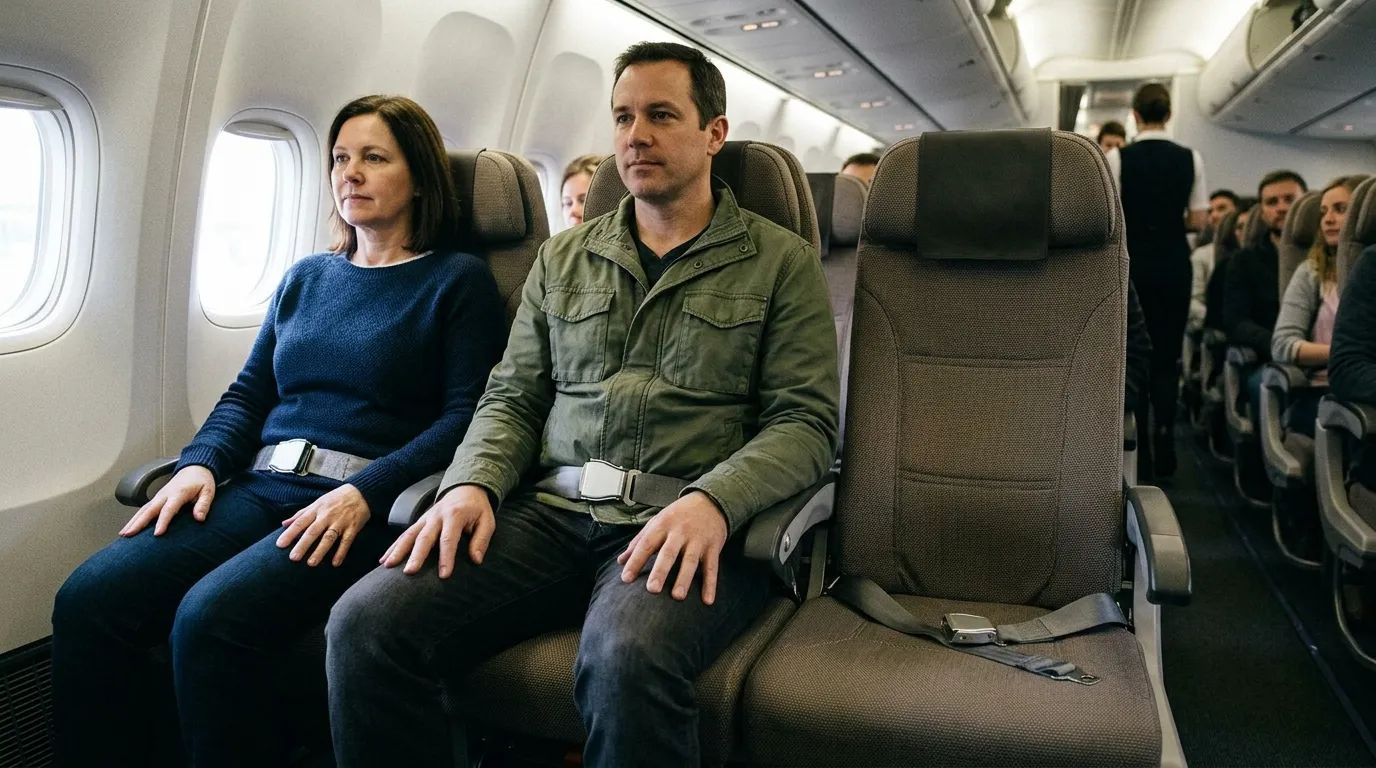
A pilot’s pre-departure scan always includes one non-negotiable item: seat belt compliance.
Crew confirm every passenger is buckled before the “cabin secure” call goes out. Anyone who refuses can legally be removed from the flight.
Unexpected turbulence right after takeoff is one of the most common causes of in-flight injury. Unbuckled passengers are almost always the ones who get hurt.
But the second most important thing pilots notice in the cabin isn’t about equipment at all…
#2 – Whether the Weight and Balance of the Cabin Load Is Right
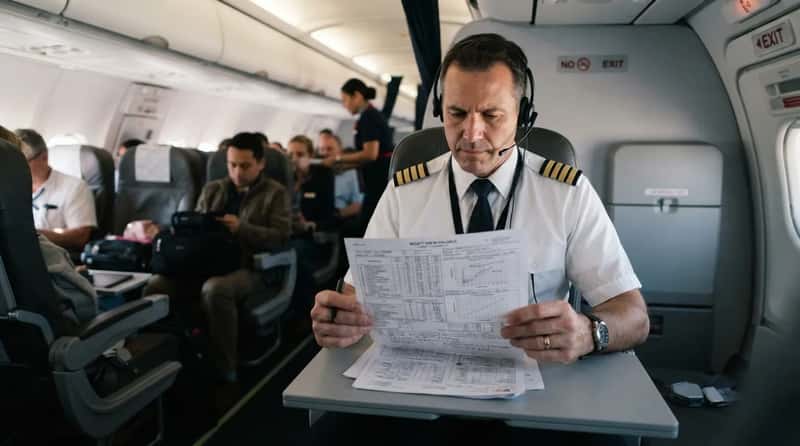
This one can decide whether the aircraft gets airborne safely at all – and passengers never see it happening.
Weight and balance documentation confirms cargo and passengers are distributed correctly. Load it wrong, and the center of gravity shifts enough to affect takeoff performance and control.
An aircraft that exceeds its weight-and-balance limits can become uncontrollable the moment the nose lifts off the runway. Pilots review this paperwork as part of the formal pre-flight package, right alongside weather and maintenance reports.
Which brings us to the one thing pilots notice in the cabin that will surprise you most…
#1 – Whether the Cabin Door Is Fully Latched and Sealed – Not Just “Closed”
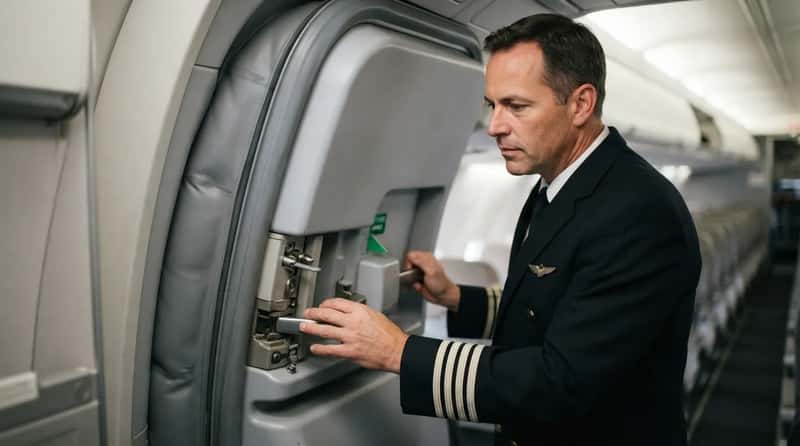
There’s a difference between a door that’s closed and a door that’s sealed. Pilots know it. Most passengers never will.
On commercial aircraft, a latched door means it’s structurally engaged with multiple locking pins and the pressurization seal is fully seated. A door that “looks closed” but isn’t latched is an invisible, catastrophic risk.
Cabin pressurization depends entirely on every door seal being airtight. Cargo door failures alone have caused multiple hull-loss accidents throughout aviation history.
Worth Knowing
- American Airlines Flight 96 (1972): a DC-10 cargo door blew open in flight, but the crew landed safely with no fatalities.
- Turkish Airlines Flight 981 (1974): the same design flaw caused a crash near Paris that killed all 346 people on board.
- United Airlines Flight 811 (1989): a cargo door failure near 22,000 feet swept nine passengers out of the aircraft.
It’s the final gate between a safe departure and a disaster no checklist can undo.
The Bottom Line
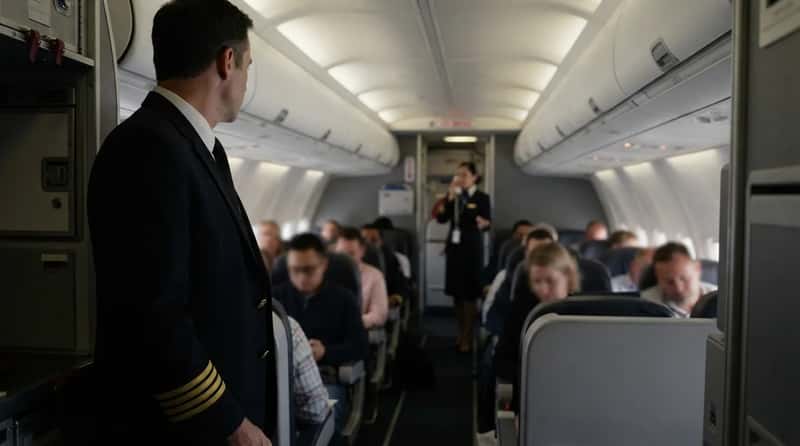
Pilots aren’t just flying the plane. From the moment they step aboard, they’re running a continuous safety assessment most passengers never notice.
Armed doors, latched bins, passenger behavior, interphone checks – the cabin is a constant stream of data, and experienced pilots read it fluently. The most surprising part? Almost everything on this list is something you could notice yourself, if you knew where to look.
Next time you board, watch what the crew is actually doing back there. You’ll never hear a “cabin secure” announcement the same way again.