The coach is idling at the curb at 8:00 sharp. Your suitcase is already waiting, the restaurant somehow knew about your allergy, and nobody is rushing. It all looks like good luck. It isn’t. Someone was still on the phone at 10 p.m. while the rest of the group was asleep, and these are the things they handled.
Some of these tasks are routine. Some are small rescues, and a few are the kind you’d want to thank someone for if you ever found out. The first ones explain why your mornings run so smoothly. The last few have nothing to do with logistics, and they’re the ones people remember longest.
#15 – The Wake-Up Call That Keeps Everyone’s Morning From Falling Apart

Nobody applauds a smooth 7 a.m. departure, which is why it’s so easy to miss the work behind it. Before bed, many tour managers confirm the group’s wake-up calls with the front desk and double-check the luggage-out time. They also make sure breakfast opens early enough for everyone to eat. A breakfast room that opens at 7:30 for a 7:45 departure can quietly wreck a morning.
If the hotel’s system looks shaky, they may line up a backup, like a second call or a knock on the door. One missed wake-up can shift lunch, entry tickets and the driver’s schedule all at once. The group just experiences a normal, easy morning. Only one person knows what it took.
#14 – The Dinner Headcount and the Allergy Notes You Never Saw

Group dinners look effortless, and they usually aren’t. Restaurants generally need a final headcount and a list of who can’t eat what. Tour managers often send those notes ahead, then confirm them again that evening or the next morning.
That covers allergies, vegetarian meals and religious dietary needs. A kitchen that gets the allergy list late can’t fix it at the table. Most travelers only notice when their plate arrives exactly right. Some veteran guides point to the “included set menu” as the spot where the most hidden work happens, and where things most often go sideways.
#13 – The Driver’s Clock That Quietly Shapes Your Whole Itinerary
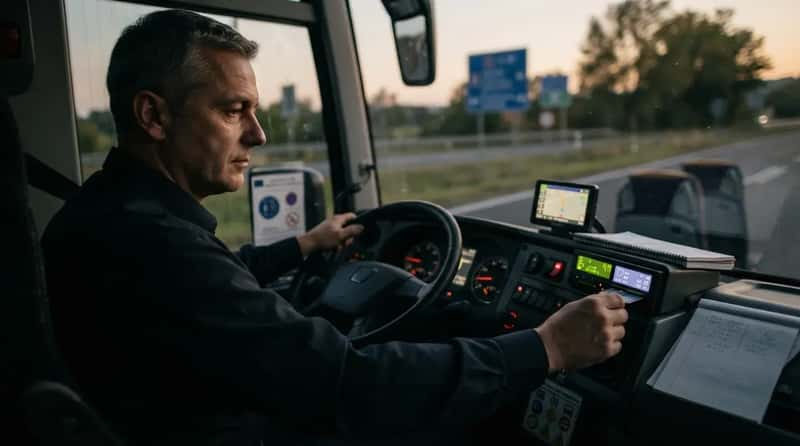
Coach drivers can’t just keep driving until the group is happy. Legal limits cap their hours behind the wheel, and tour managers plan around those limits every night. They check tomorrow’s total driving time against what the driver has left. In the U.S., federal rules for passenger-carrying drivers cap driving at 10 hours after 8 consecutive hours off duty.
In Europe, the usual daily limit is 9 hours of driving, with breaks required along the way. That “extra hour at the viewpoint” you wanted may be coming out of a legally limited window. The tour manager reworks the day, and the group never sees the math. It’s often the real reason a stop gets shortened.
#12 – The Plan B That’s Already Booked Before the Rain Starts

Most people picture a tour manager reacting to bad weather. In reality, they’re usually a step ahead of it. In the evening they check tomorrow’s forecast and picture the outdoor stop in a downpour or a heat wave. Then they line up an alternative.
That might be an indoor museum, a covered market or a later start time. Often the swap is arranged before anyone has seen a single cloud. If the day goes fine, nobody knows a backup existed. If it rains, the change feels like a lucky improvisation. Many guides say the best Plan B is the one that never feels like a downgrade.
Quick Compare
- Plan A, outdoor viewpoint walk: Plan B is a covered market or indoor museum when rain is forecast.
- Plan A, midday hilltop visit: Plan B is a later start when a heat wave hits.
- Plan A, long open-air tour: Plan B is a shorter loop with a café stop built in.
#11 – The Room Swap That Fixed a Problem You Never Complained About

Hotel rooms are not created equal. Some face a loud street, sit next to the ice machine or are a long hike from the elevator. In the evening, tour managers often work with the front desk to move people who need something quieter or more accessible. Sometimes the guest never asked.
A traveler with a cane, for example, may be quietly moved closer to the elevator. Many of these swaps happen with a simple key card exchange and no announcement. Not everyone agrees on how proactive a tour manager should be. Some say guests should speak up, while others believe a good manager notices first.
#10 – The Nearest Pharmacy and Hospital, Noted Before You Ever Need Them

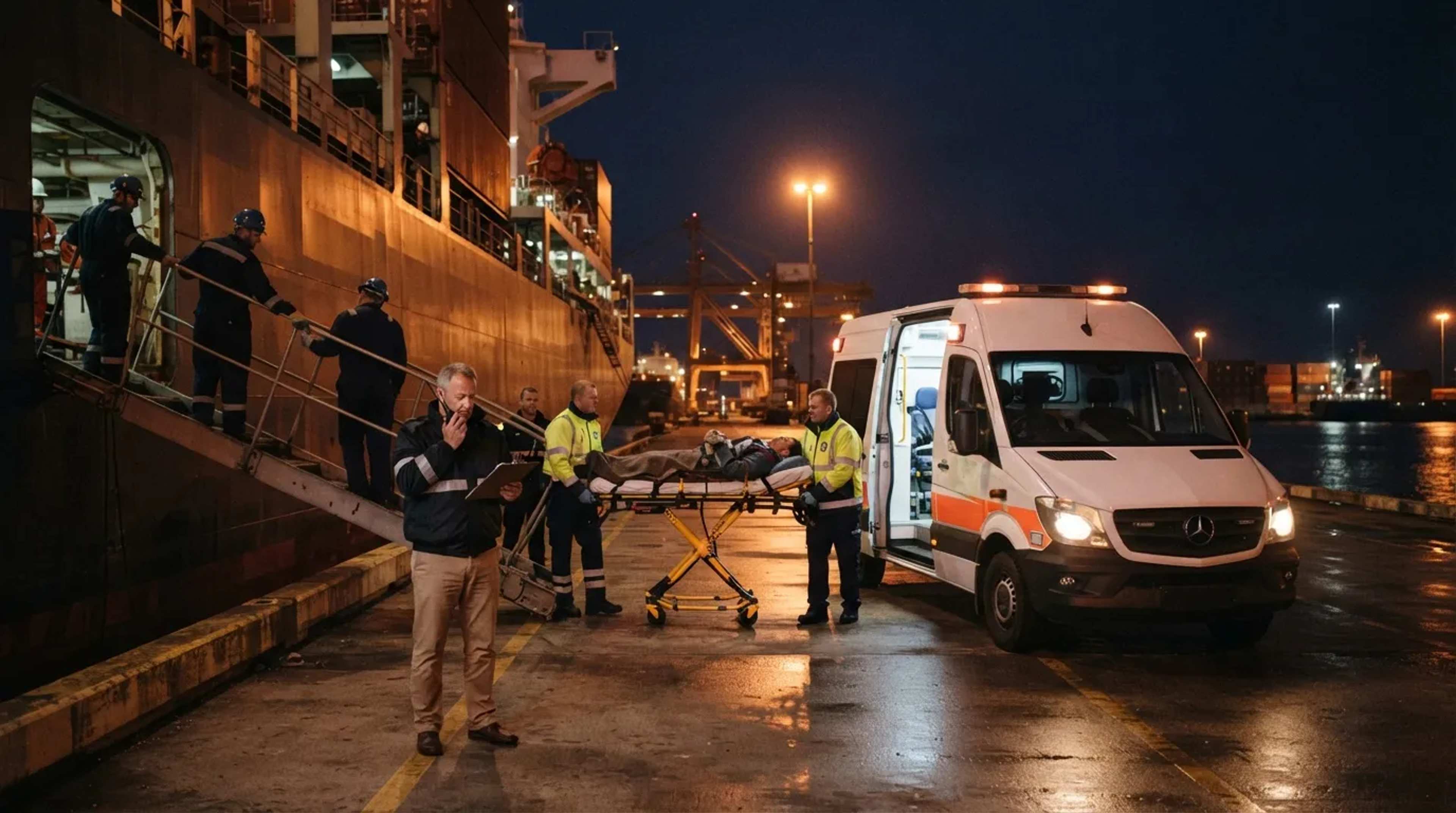
Nobody plans to get sick on vacation, but tour managers plan as if someone might. When they reach a new city, many note where the closest pharmacy and hospital are and how to get there. They also keep emergency contacts for the tour company and local services close at hand.
That matters most with older travelers, long travel days or high heat. Having the information ready can turn a frightening moment into a manageable one. Most people never realize the prep happened, and they never should have to. The best outcome is that nobody ever asks.
Fast Facts
- 112 is the single emergency number across European Union countries, while 911 covers the U.S. and Canada.
- Many European countries run rotating after-hours pharmacies, such as Spain’s “farmacia de guardia” and Germany’s Notdienst system.
- A closed pharmacy there often posts the nearest open one on its door.
- Tour managers often keep the hotel’s address in the local language handy for taxi rides.
#9 – The Timed Ticket Check That Saves Your Big Moment

Some of the world’s most popular sights use timed entry, including the Alhambra in Granada and the Sagrada Família in Barcelona. Show up late and the slot may not bend for you. So tour managers reconfirm entry times, meeting points and guide arrangements the night before.
They also work out how long the walk from the coach will really take. A 15-minute walk on the map can become 30 with a slow-moving group, a crowd and a security line. Then they build in a buffer and say nothing about it. The group just feels like they arrived calm and on time.
#8 – The Cash Float and Tipping Envelopes Handled After Hours
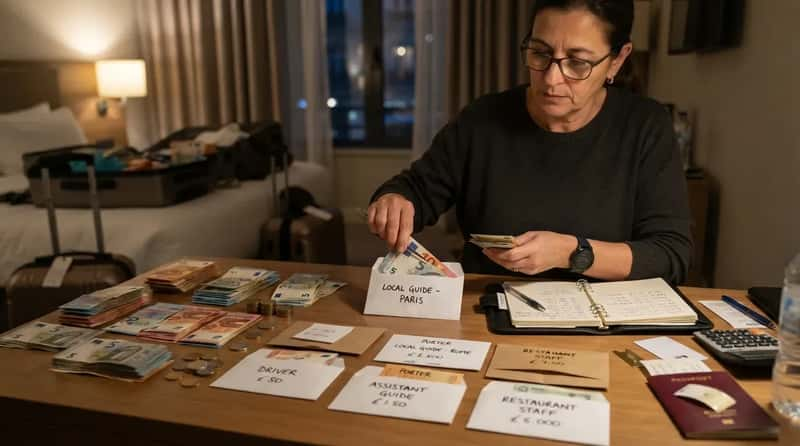
A surprising amount of money moves on a tour, and almost none of it happens in front of you. Many tour managers keep a small stash of local currency for porters, drivers, local guides and small tips. They often sort it in the evening so they aren’t counting bills in the lobby with thirty people watching.
Tipping customs also change a lot from country to country, so they check what’s expected next. What counts as polite in one country can look odd, or even rude, in the next. Some travelers feel tour tipping has become confusing and over-expected. Others say tour managers are the ones who keep it fair for everyone.
#7 – The Strike, Road Closure and Event Check That Reroutes You Silently

Before bed, many tour managers scroll through local news and transport updates. They’re looking for strikes, road closures, marathons, protests and big events. Any one of those can turn a 20-minute ride into a two-hour crawl. Strikes in particular are common enough in parts of Europe that experienced guides watch for them.
If something looks risky, they quietly reshuffle the day. You might visit the far site first simply because the road to the other one closes at noon. The group never hears about the mess that didn’t happen. Some guides say that’s the real skill of the job.
#6 – The Quiet Check on the Traveler Who Skipped Dinner

Every group has someone who went quiet. They skipped the meal, stayed in their room or looked worn out at the last stop. Good tour managers notice. That evening they may call, knock or ask the front desk to make sure the person is okay.
Often it’s nothing more than fatigue after a long day. Sometimes it’s a stomach bug, homesickness or a worry the traveler didn’t want to share with the group. Most people never realize this is part of the job. It’s also the part that never makes it into a brochure.
#5 – The Bathroom Stop Map That Decides Where the Coach Pulls Over
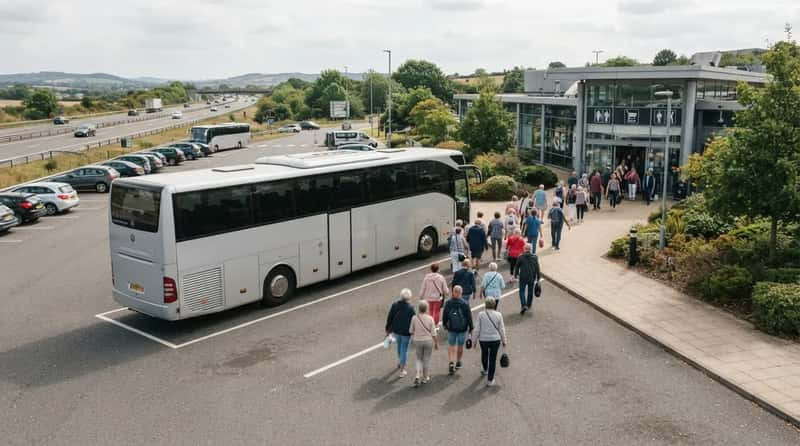
It sounds trivial, but anyone who has been stuck on a long drive knows it isn’t. On big driving days, tour managers plan where the group can stop for restrooms, food and a stretch. Roadside stops vary wildly in quality, and some come with long lines. So the plan is often hashed out the evening before, with the driver.
The goal is to skip the stop that looks fine on a map but turns out to have a single stall. One bad rest stop can easily cost a group 30 minutes. That’s enough to throw off a lunch reservation and everything after it. Most travelers never think about it, which means the plan worked.
Why It Stands Out
- A good stop has enough restrooms that a full coach isn’t stuck in line.
- Big vehicles can’t use every pull-off, so coach parking is part of the choice.
- One pause can double as the driver’s required rest break, so a single stop does two jobs.
- Food close to the restrooms keeps the stop short and the schedule intact.
#4 – The Luggage Count That Prevents the Missing Bag Panic
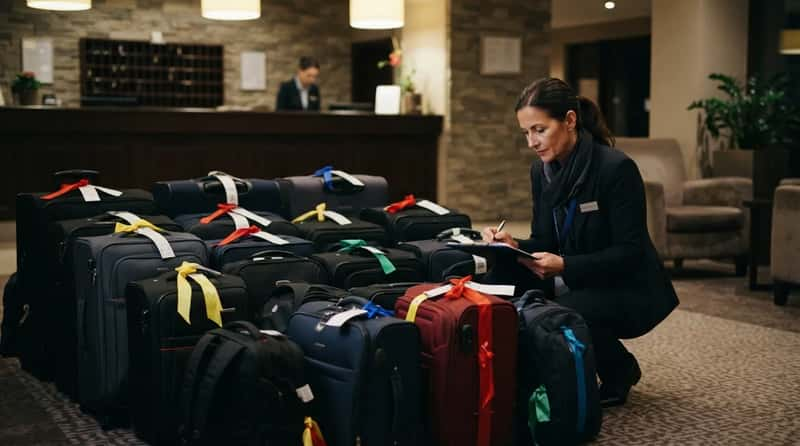
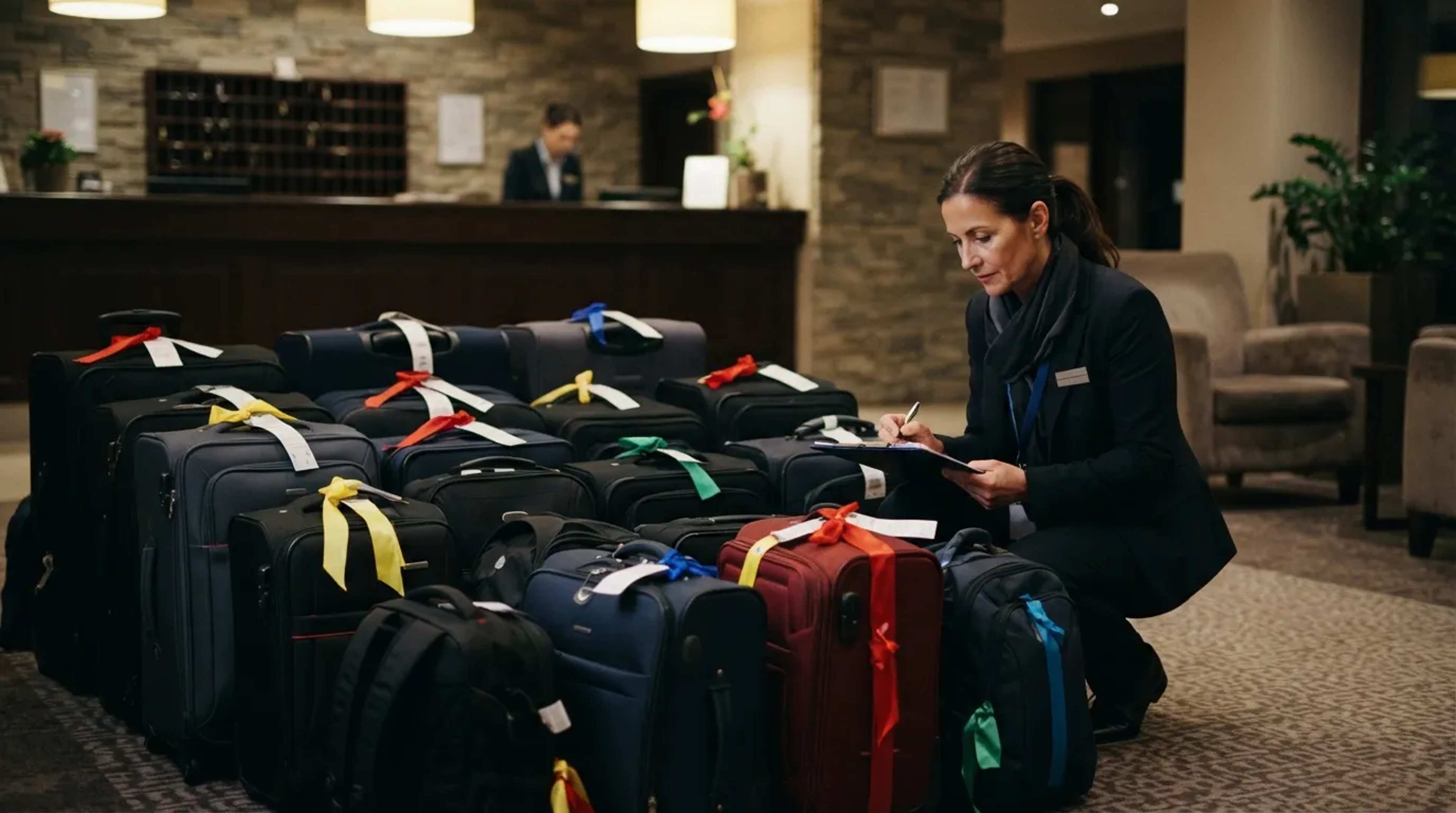
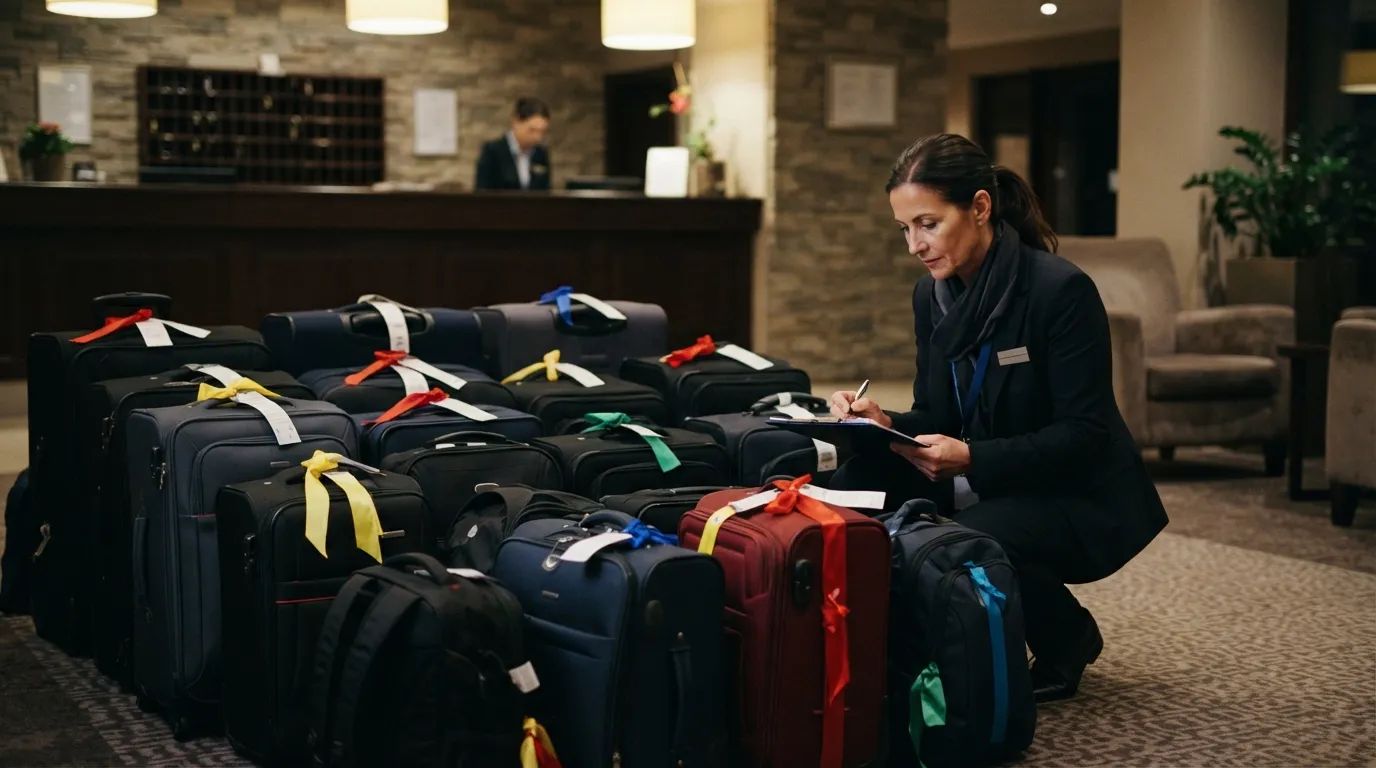
Few things ruin a morning faster than a lost suitcase. Tour managers often count the group’s bags and check the tags the night before. Then they coordinate with porters or the hotel about when the luggage will be moved. Matching that count again in the morning is part of the routine.
If one bag is missing, they want to know that evening, not at the next hotel. A bag missing at 9 p.m. is a small problem, but the same bag missing at 9 a.m. can delay the whole group. Many guides also encourage bright tags or ribbons on every bag. It’s a tiny trick that saves a lot of confusion.
#3 – The Private Conversation That Defused a Group Argument

Groups are made of strangers, and strangers sometimes clash. It might be over seat rotation, noise, a late arrival or someone’s habits. Tour managers often handle these tensions privately, in the evening, away from everyone else. They might talk to one person, then another, and then adjust the plan so nobody feels singled out.
The aim is to fix it without turning it into a public scene. A small complaint left alone can sour the mood of an entire coach by day three. Some guides argue that seat rotation should be mandatory, while others say it causes more fuss than it solves. Either way, the work stays invisible, and the group just notices that the vibe got better.
#2 – The Late-Night Call to Recover the Thing You Left Behind

It happens on almost every trip. Someone leaves a charger, a jacket or a pair of glasses in a hotel room or at a restaurant. Often the tour manager gets the call, or spots the problem first. That evening they may phone the previous hotel or venue and ask staff to check.
Sometimes the item can be held, shipped on or handed to the next group. A forgotten pair of prescription glasses can matter far more than any souvenir. Hotels handle lost property differently, so success isn’t guaranteed. But the effort usually goes completely unseen by the traveler who gets their belongings back.
#1 – The Surprise Celebration Arranged Behind Everyone’s Back

On many tours, someone is quietly celebrating something. It could be a birthday, an anniversary, a retirement or a trip taken after a hard year. Operators often ask about special occasions at booking, and tour managers then work out the details in the evening. They talk to the restaurant, order a small cake or make sure the table is ready.
The traveler often has no idea until dessert appears. Some of the most memorable moments on a tour were set up hours earlier by someone who barely mentioned it. Not every group gets one, and it’s never guaranteed. But when it happens, it shows what the job is really about.
Most of what a tour manager does at night is designed to go unnoticed. The wake-up calls, the driver’s clock, the room swaps and the check on a quiet traveler all point the same way. The better the work, the less the group ever sees of it.
So the next time a day runs perfectly, look around. Somewhere nearby is probably a person with a phone, a checklist and a tired smile, who made sure you’d never have to think about any of it.