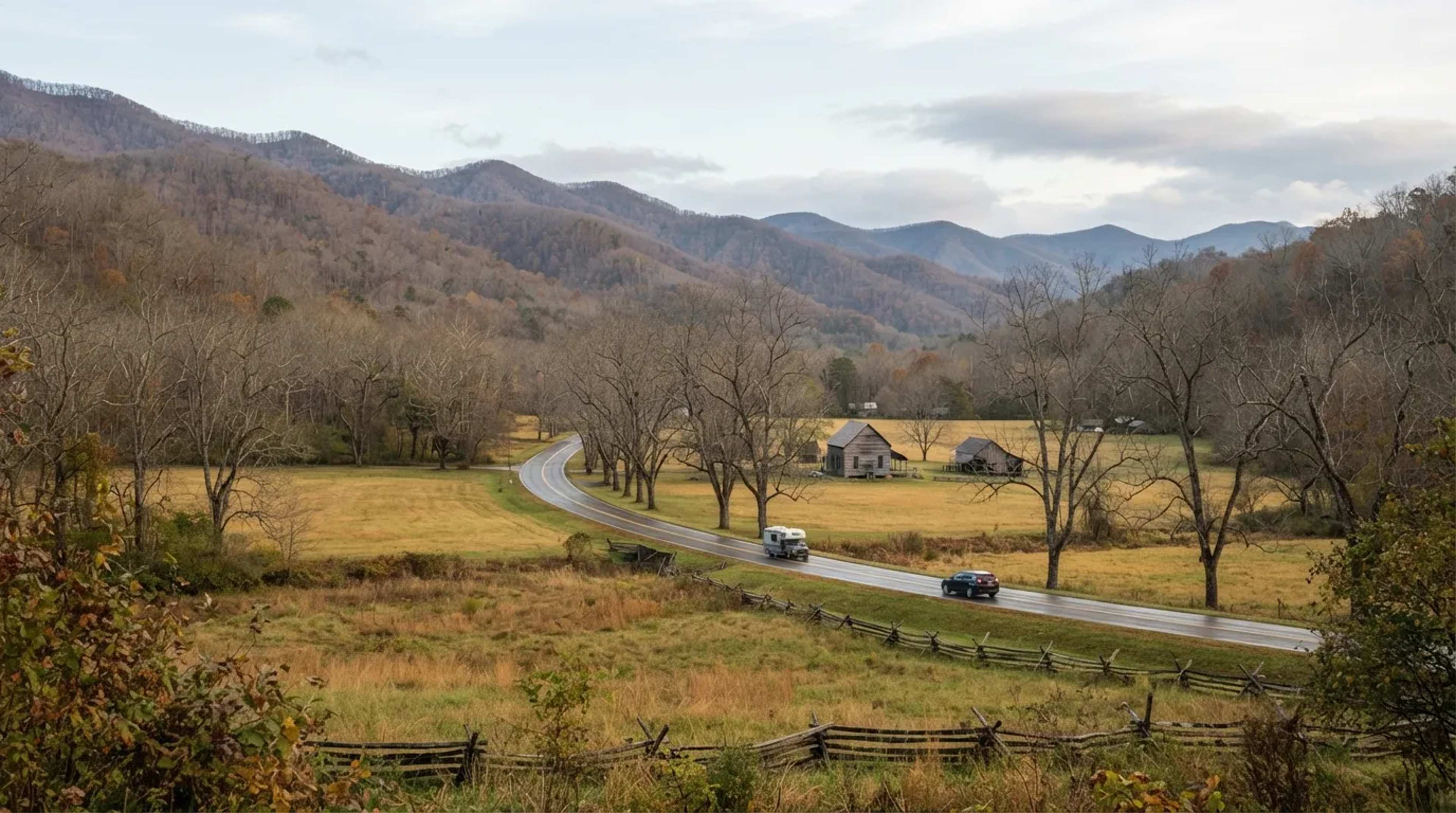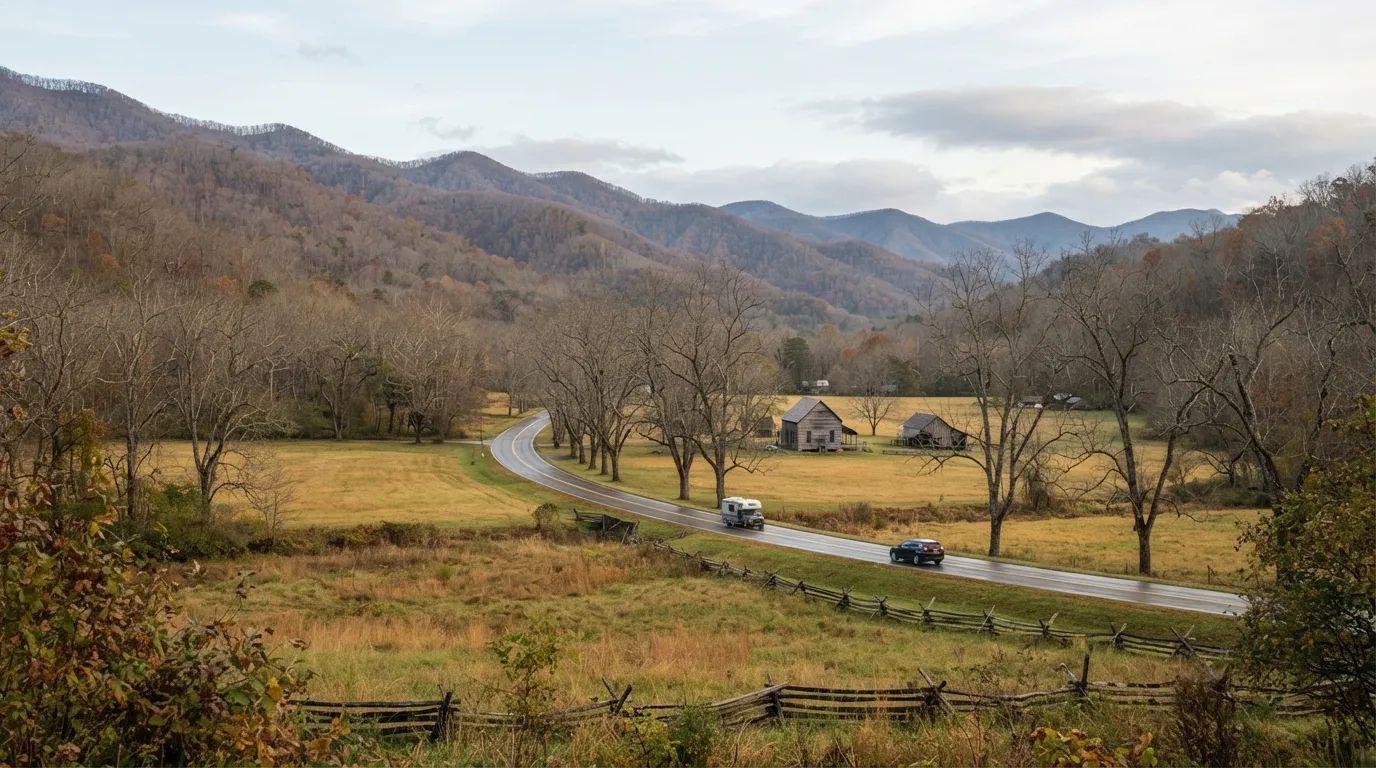
You’ve seen the photos: ridgelines blazing scarlet, mist curling through the valleys, one perfect fall weekend waiting for you. Here’s the catch. Great Smoky Mountains National Park is consistently the most visited national park in the country, October is one of its busiest months, and the trip people picture is rarely the trip they get. Travelers keep running into the same surprises, and each one quietly rearranges the plan.
Some of these discoveries are beautiful. Some are plain annoying. A few involve a renamed summit, a storm that is still closing trails, and one overlooked month that may beat the famous one. Wait until you see which surprise ended up reshaping the most trips.
#15 – The “Peak Weekend” Is a Myth, Because Color Moves Downhill for Weeks
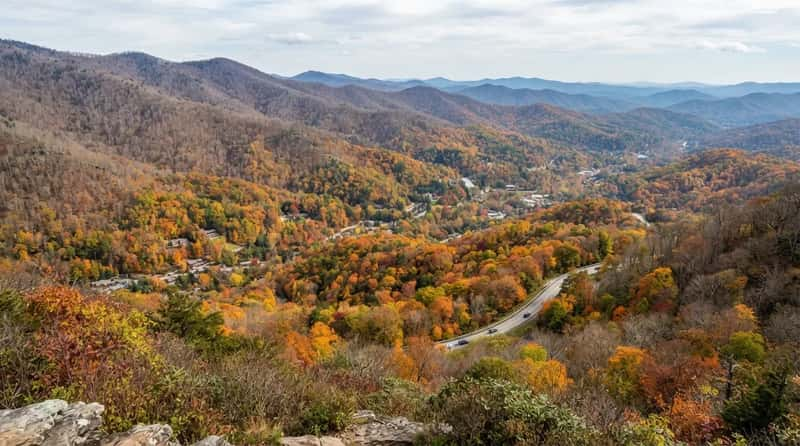
The one-weekend plan is the first thing to fall apart. There isn’t a single peak in the Smokies. Color slides down the mountains over a six-to-seven week span instead of switching on all at once, so two travelers who visit a week apart can come home describing two completely different parks.
High-elevation viewpoints usually peak in early October, and mid-elevation valleys follow in mid-to-late October. The Gatlinburg–Pigeon Forge corridor typically peaks from late October into the first week of November. Picking one date can mean arriving after the ridges have faded or before the valleys have turned.
But the first color you’ll see isn’t the one you’re picturing, as #14 reveals.
#14 – The First Color Isn’t Red. It’s Yellow, and It Starts Near the Sky
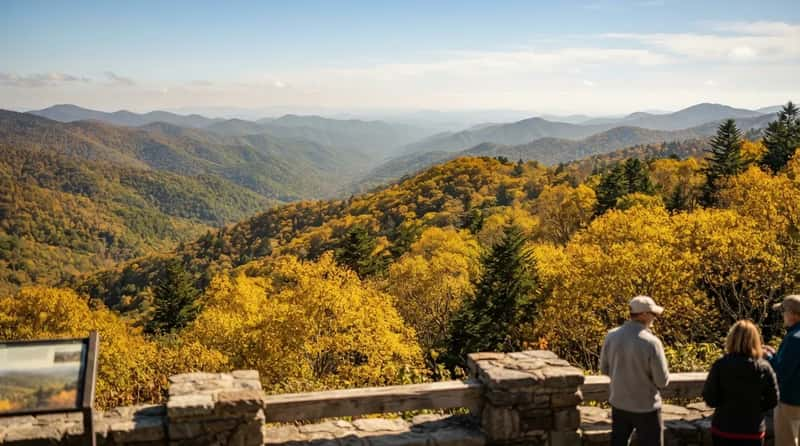
The famous scarlet hillsides are the finale, not the opening act. At higher elevations, the show begins with yellow birch, American beech, and mountain maple. Early-October visitors often find gold at the top instead of the red they saw online.
The deeper shades arrive later, as the season moves downhill. Sugar maple, scarlet oak, sweetgum, red maple, and hickories build the big display on the lower slopes. The reds and burnt oranges are the last chapter. A trip timed for “red” in the first week of October is aimed at the wrong chapter, and plenty of people only realize it while standing at an overlook, staring at yellow.
Quick Compare
- High elevations, early October: yellow birch, American beech, and mountain maple lead with gold.
- Lower slopes, later in the season: sugar maple, scarlet oak, sweetgum, red maple, and hickories bring the reds.
- The takeaway: gold opens the show, and the reds close it.
Then there’s the summit itself, and its name has changed. Check #13.
#13 – The Summit Everyone Still Calls Clingmans Dome Has a New Name
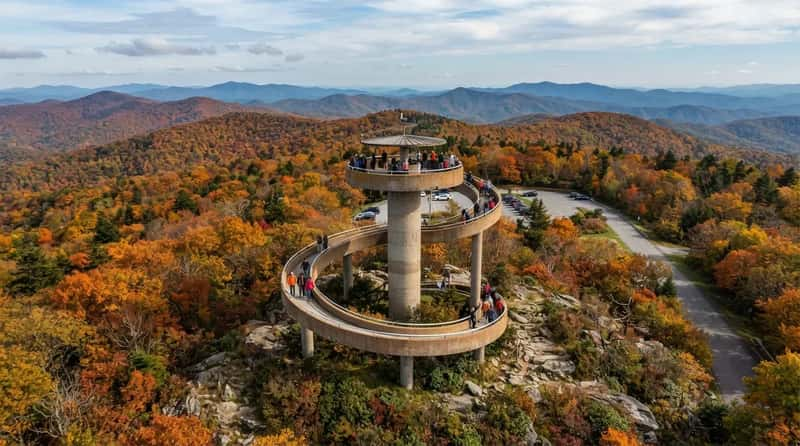
Look at a current map and the park’s best-known lookout carries a different name. It’s now listed as Kuwohi (formerly Clingmans Dome), and at 6,643 feet it’s the park’s highest point. Older guidebooks and GPS apps may still use the old name, which can send you searching for a sign that doesn’t match your screen.
The road up is seasonal. Kuwohi Road’s 2026 season runs April 1 to November 29, and it can close for snow, ice, and other hazardous weather. The road to the park’s highest point can close before the calendar says it should. Fall visitors who save the summit for “the last day” are taking a real gamble.
Next, a fee most visitors don’t see coming, in #12.
#12 – Entry Is Free, but Parking Isn’t
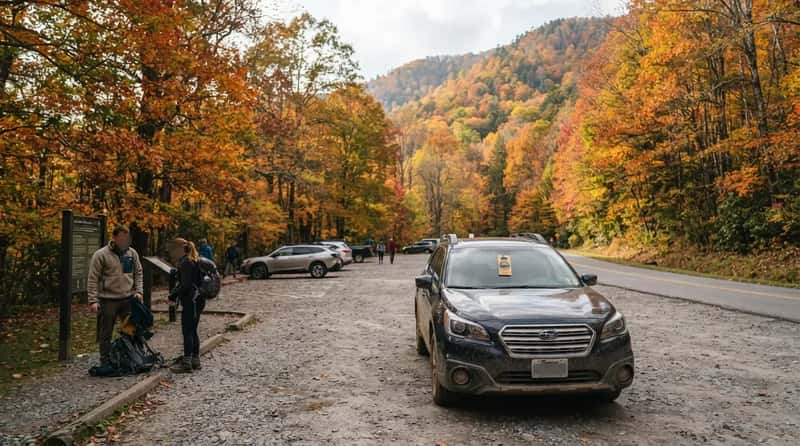
The Smokies have a quirk that surprises first-timers: the park charges no entrance fee. That’s rare for a park this famous, and plenty of people assume the whole visit is free. Then they pull over at a trailhead.
Since 2023, the park has required a paid parking tag for any vehicle parked longer than 15 minutes. Daily, weekly, and annual options exist, and rates can change, so confirm them on the park’s website. A park with free admission still bills you the moment you stop for a long photo. It’s a small cost, but it tends to catch people at the worst moment, right when they’re ready to hike.
Worth Knowing
- There is no entrance fee to the park.
- A parking tag is required if you park longer than 15 minutes.
- The requirement has been in place since 2023.
- Daily, weekly, and annual tags are offered, so pick the one that fits your trip length.
Fees are the quiet surprise. The crowds are the loud one, and #11 puts a number on them.
#11 – October Is the Busiest Month, and the Numbers Are Wild
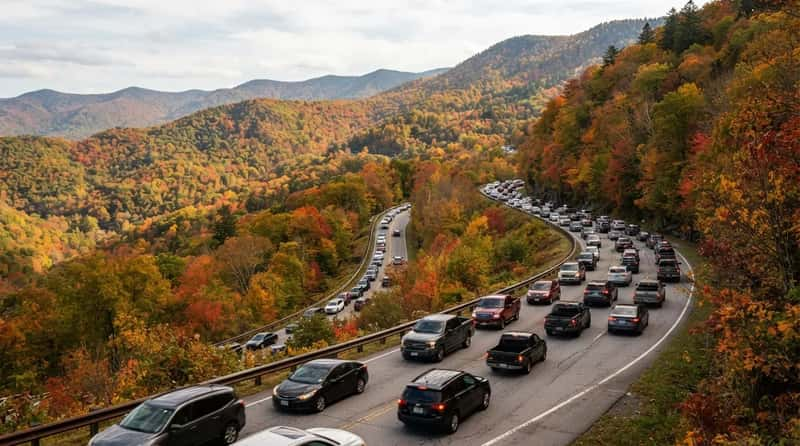
October is when the Smokies stop feeling like a quiet mountain escape. The park itself warns visitors to expect crowds, traffic congestion, and limited parking throughout the season. The numbers back that up.
In 2025, October was the park’s busiest month, with 1.56 million recreation visits. The park logged 11,527,939 visits for the full year, down 5.4% from 2024. That makes October roughly one in every seven visits all year. Fall isn’t a hidden season in the Smokies. It’s the main event.
Wait until you see which popular town turns last, in #10.
#10 – The Gatlinburg Strip Is Secretly the Last Place to Peak
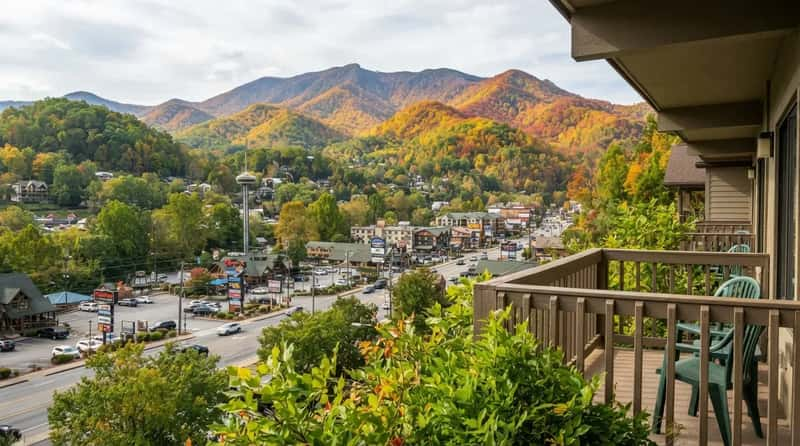
The town most travelers book is the slowest to change. In one early-October report, Gatlinburg’s valley floor was still green while color built above 5,000 feet. Picture a hotel balcony full of green and a ridge blazing gold just up the road.
The park says color typically develops above 4,000 feet in early to mid-October. That makes anchoring a leaf trip to the town itself a risky bet, because the best color is up the mountain. Valley color can arrive weeks after the high country has already peaked. Sleep low if you want, but spend your mornings climbing.
Ahead is the 11-mile drive that eats entire afternoons, in #9.
#9 – Cades Cove: The 11-Mile Loop That Can Swallow Half a Day
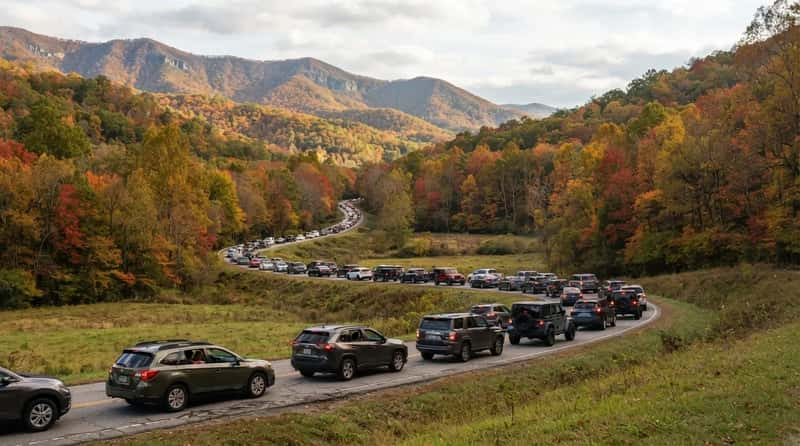
The most famous drive in the park is also its biggest traffic jam. The Cades Cove Loop is 11 miles long and is described as the park’s most congested road. On a peak weekend, that’s a very long 11 miles.
The loop can take 2 to 4 hours when it’s backed up. Vehicle-free Wednesdays run only through September 30 in 2026, which means fall drivers lose the best workaround. On a peak Saturday, the loop may be the most overrated way to spend a fall day in the park.
And the mountain weather has its own plot twist in #8.
#8 – Dress for Two Seasons, Because the Summit Plays by Different Rules
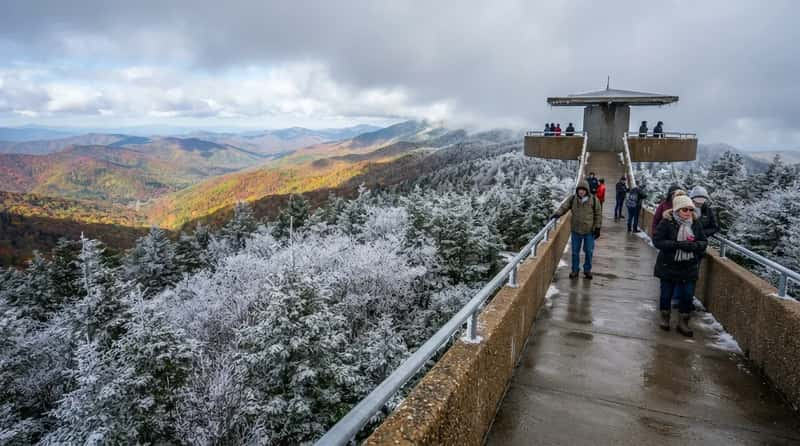
A warm afternoon in town can turn into a coat day at the top. The park cautions that fall weather can change quickly, particularly in the mountains. Air typically cools several degrees for every thousand feet you climb.
The gap between the towns and the summit is roughly 5,000 feet, and snow at high elevations can show up from November through April. The Smokies can feel like two different seasons within a single hour’s drive. Travelers who dress only for the valley often end up shivering at the overlook.
But nothing prepared visitors for what happened in 2025, as #7 shows.
#7 – Even a Federal Shutdown Couldn’t Fully Close the Smokies
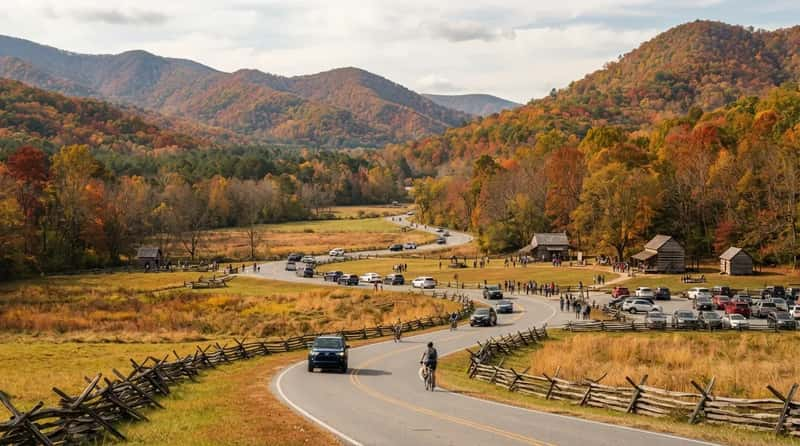
During the 2025 government shutdown, the park stayed open. Local and state governments, Friends of the Smokies, and the Eastern Band of Cherokee Indians provided enough financial support to keep it fully operational. That’s a rare outcome for a federal site, and a lot of fall travelers breathed a sigh of relief.
The picture was more complicated than “open.” Some areas were initially closed, including the Sugarlands and Cades Cove visitor centers and the Cades Cove Loop Road. The park’s open status shifted in days, not months. It’s a reminder that a trip plan is only as good as the last status update.
Fast Facts
- The park stayed open through the 2025 federal shutdown.
- Funding came from local and state governments, Friends of the Smokies, and the Eastern Band of Cherokee Indians.
- Early closures included the Sugarlands and Cades Cove visitor centers.
- The Cades Cove Loop Road was also shut at first.
Then there’s the storm that’s still changing the map, in #6.
#6 – Hurricane Helene’s Scars Are Still Rewriting the Map
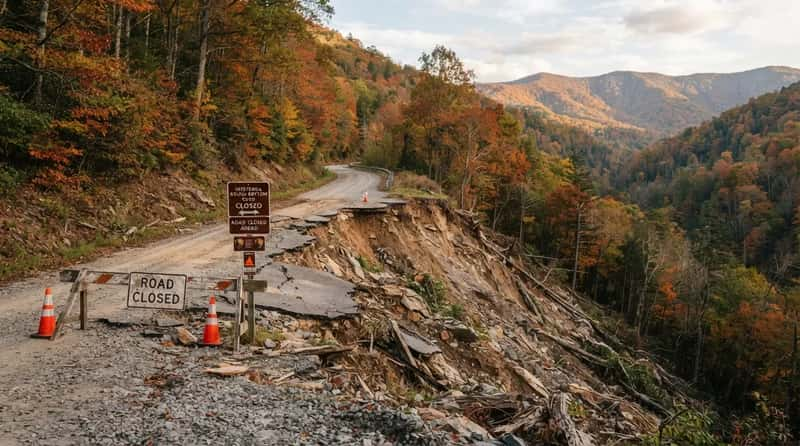
The storm from September 2024 hasn’t fully left the park. As of late October 2025, numerous trails in the Cataloochee area were still closed because of Helene damage. The park’s quieter corners took some of the hardest hits.
Heintooga Round Bottom Road and Straight Fork Road were also affected, and their 2026 open and close dates were listed as to be determined. Some roads carried no firm date at all. A favorite trail from an old blog post may simply not be there anymore.
But one valley still delivers something almost no one expects, as #5 reveals.
#5 – Elk Are the Fall Surprise Most Visitors Never Plan For
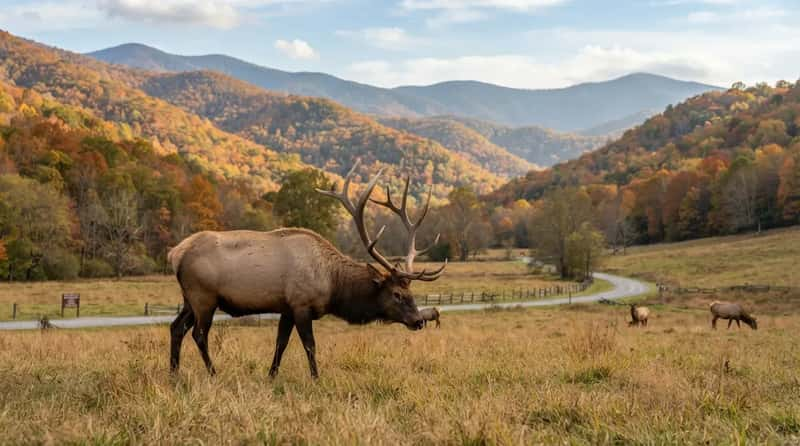
Most people come for leaves and leave talking about elk. The park lists fall as a prime time to spot both bears and elk, and the best-known place to look is the Cataloochee Valley. Seeing a bull in the open grass, with mountains stacked up behind him, is the kind of moment that ends up as a profile picture.
Elk vanished from the region in the 1800s before the park brought them back in 2001. Today they’re a fall highlight. Cataloochee Road can close for snow, ice, and other hazardous weather, so check before you head in. Keep at least 50 yards between you and any elk, because they’re huge and fall makes them unpredictable.
Why It Stands Out
- Elk disappeared from the region in the 1800s, and the park brought them back in 2001.
- Fall is listed as a prime time to spot them.
- Cataloochee Valley is the best-known place to look.
- The safe distance is at least 50 yards.
Another animal is just as busy this time of year. Learn why in #4.
#4 – Black Bears Are Busiest Right When the Leaves Are Brightest
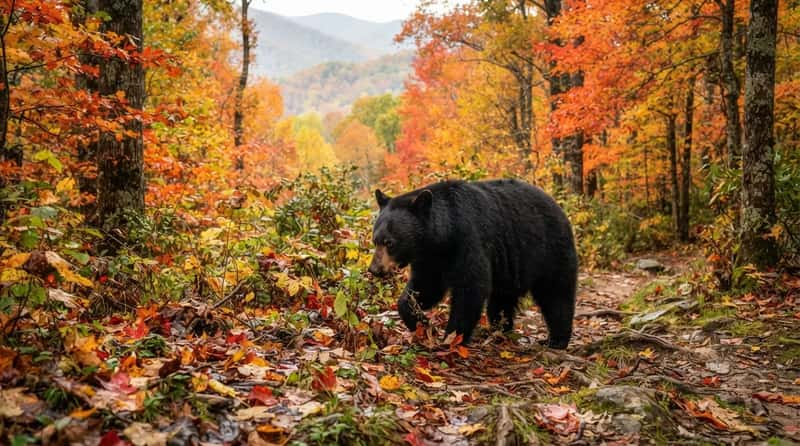
Autumn is a deadline for bears. They’re feeding almost nonstop, and the park notes that fall is a prime time to spot them. That’s a big reason sightings pick up just as the color peaks.
The park’s rules don’t change: keep your distance, never feed them, and store food properly. Stay at least 50 yards (150 feet) away. A bear in fall is on a mission, and a close-up photo is never worth interrupting it. A calm roadside moment can turn tense fast.
Now for the real reason these mountains have the name they do, in #3.
#3 – The “Smoke” Is Real: The Haze Behind the Name
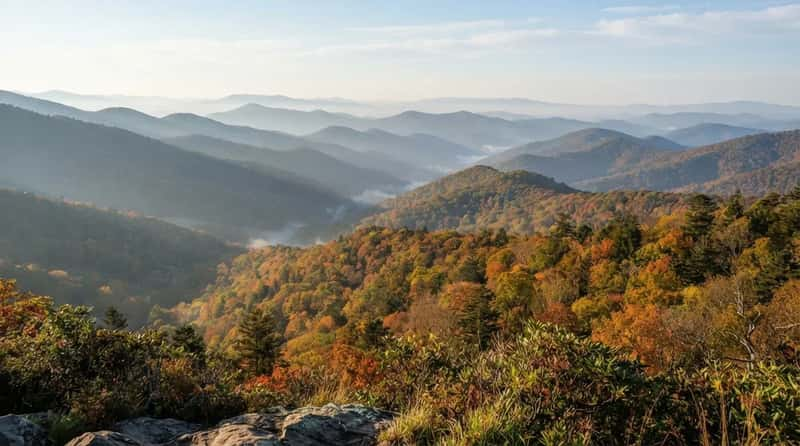
The name isn’t poetic marketing. It’s a weather effect. Forests release vapors that scatter light, and the result is a bluish haze that hangs over the ridgelines. The Smokies are named for what you can see from the overlooks.
The story is more mixed today. Air pollution has also cut long-range visibility in the region over the decades. The “smoke” is partly natural and partly human-made. It’s why the layers of mountain ridges look stacked like paper cutouts on a clear morning, and early light and valley fog make the effect even more dramatic.
But the best view of the whole range may be somewhere you wouldn’t think to look, in #2.
#2 – The Best Smokies View Might Actually Be Outside the Park
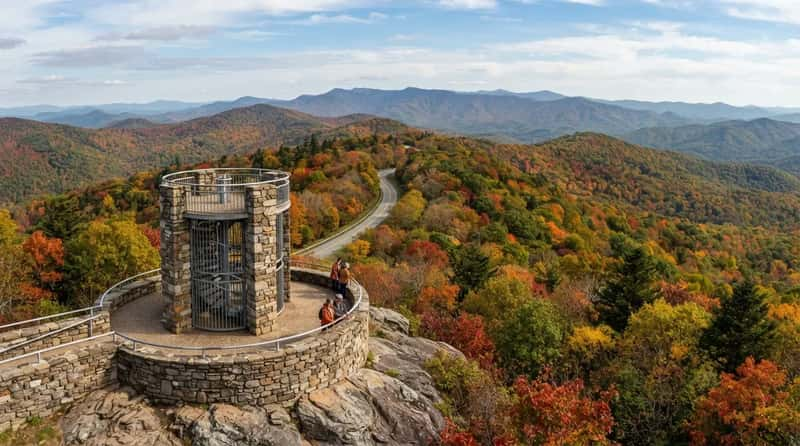
Sometimes you see the mountains better from a distance. Waterrock Knob on the Blue Ridge Parkway offers a view of the entire Smokies range. From inside the park, you only ever see a slice.
Look Rock Observation Tower on Foothills Parkway West gives a 360-degree view over the surrounding mountains and valleys in Tennessee. One viewpoint shows the whole range, which makes the color-by-elevation pattern easy to spot. It’s also a way to step away from the busiest roads. Parkway sections can close, so check conditions before you go.
The strongest surprise of all comes after the leaves drop, and #1 explains why.
#1 – November Is When the Smokies Finally Go Quiet, and Secretly Win
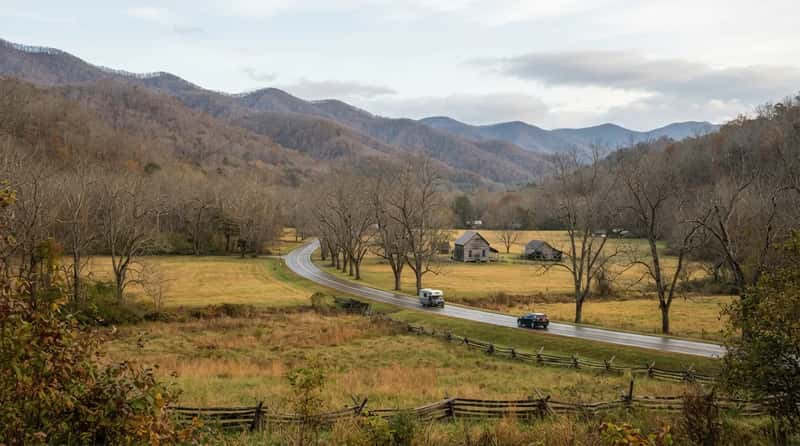
The best-kept secret isn’t a trail. It’s a month. October is the busiest stretch, while November is the quiet shoulder month. By early November, most of the color is spent, and the crowds fade right along with it.
Bare trees open up long views that summer foliage hides, and the Cades Cove and Smokemont campgrounds stay open year-round. Some seasonal roads, including Rich Mountain Road and Parson Branch Road, do close for the season in November, so check dates first. Even so, the weeks after peak may be the better trip.
The Smokies in fall aren’t one event. They’re a staircase of color, a crowd problem, a weather swing, and a landscape still healing from a storm. The biggest discovery is that timing by elevation beats timing by date.
The summit has a new name, the parking isn’t free, and some trails are still closed. But the elk, the bears, and the quiet weeks of November reward the people who stay flexible. The travelers who come home happiest usually aren’t the ones who hit the perfect weekend. They’re the ones who stopped chasing it.