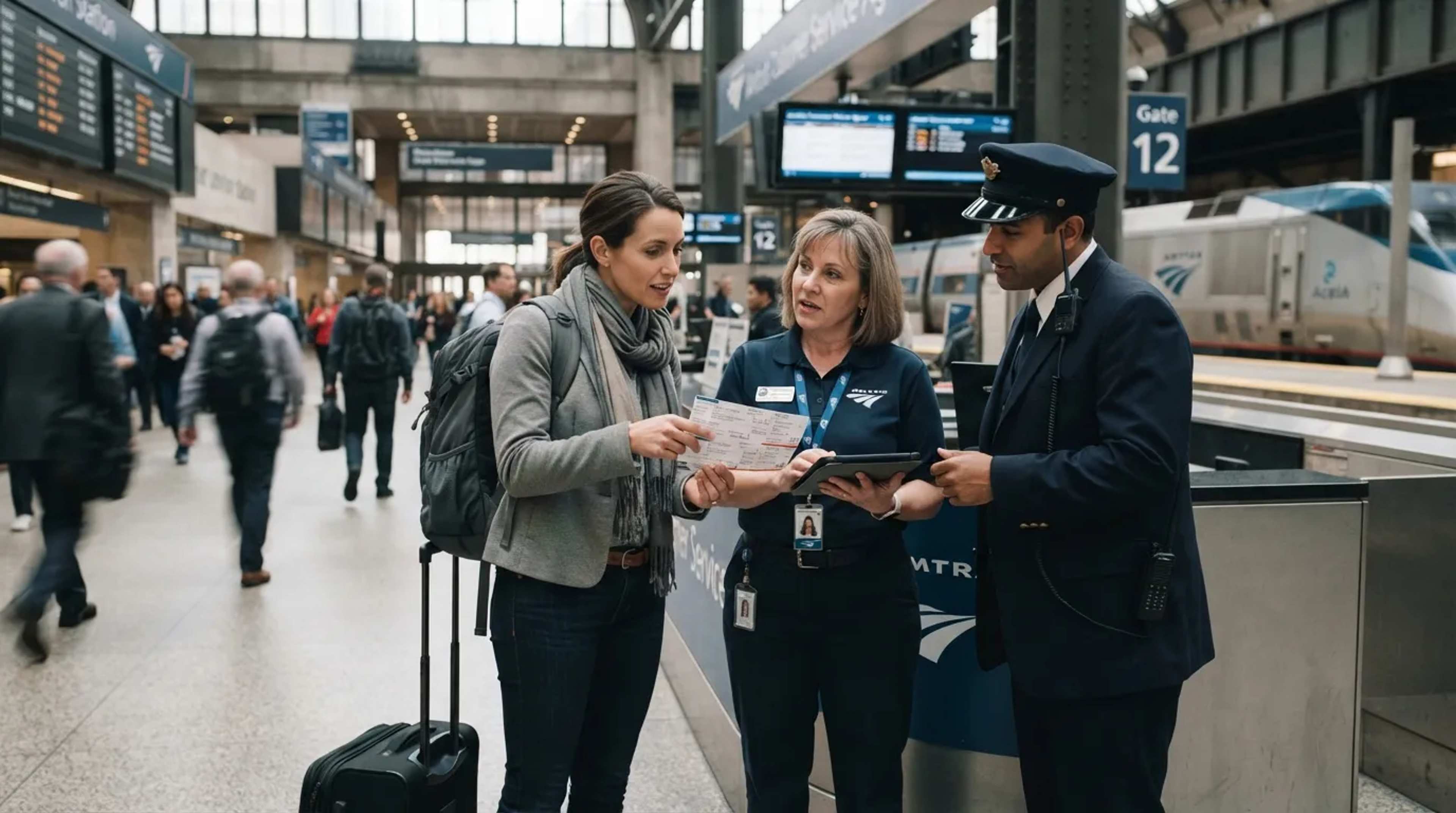
Most people picture older travelers as slow, cautious and a little lost without a smartphone. The numbers tell a different story. AARP’s tracking shows adults 50 and older planned about 3.6 trips for 2025 and ended up taking 4.2. That’s a crowd that overshoots its own plans, and the front desk sees it first.
Behind every visitor center counter, there’s a pattern staff learn to spot within seconds. It’s not about walking speed or gray hair. It’s in what’s in their hands, what they ask first and what they already know that everyone else in line doesn’t. Start at #15, because the first clue is usually sitting in a wallet.
#15 – The Pass Is Out Before the Question Is Finished
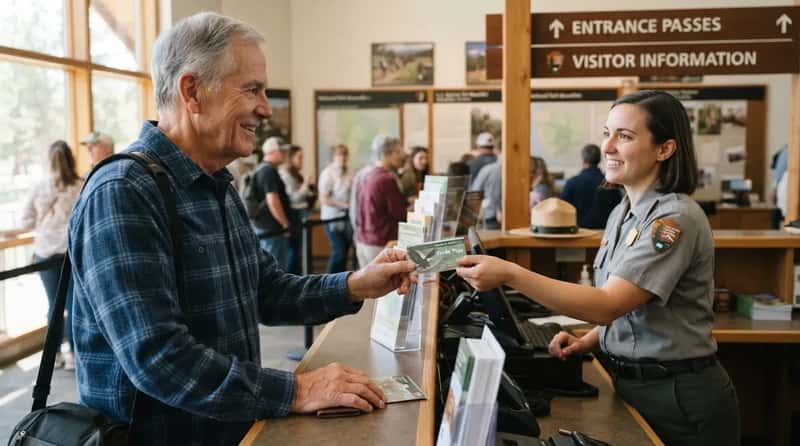
Some travelers over 65 walk up with the card already in hand. Under the federal Senior Pass, U.S. citizens and permanent residents ages 62 and older can buy an annual pass for $20 or a lifetime version for $80. Many have used it for years, so the routine is automatic.
The pass does more than most people realize. It admits the pass holder plus passengers in one vehicle at per-vehicle fee sites. That means one small card can cover a whole car of grandkids. Staff often call it the fastest transaction of the day.
- Age threshold: 62, not 65
- Covers: 2,000+ federal recreation sites
But the people who carry the pass aren’t always the ones who know it best, as #14 shows.
#14 – The $10 Mistake Nobody Warns Them About
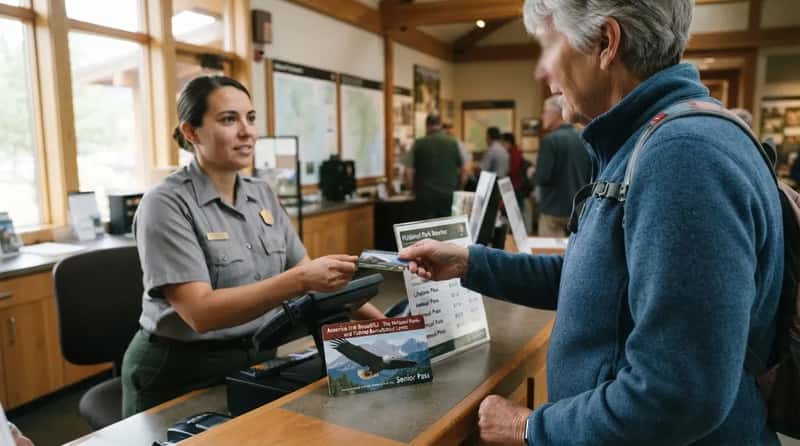
The in-person route is the cheap one. The USGS online store charges a $10 processing fee on top of the pass price, while buying at a federal recreation site carries no processing fee. So the same lifetime card can cost $80 at the window or $90 online.
Quick Compare
- Lifetime Senior Pass at a federal site: $80, no processing fee
- Lifetime Senior Pass online: $90 with the $10 processing fee
- Annual Senior Pass: $20 before any online fee
There’s also a trade-up trick that circulates in senior travel guides. Annual passes can reportedly be applied toward a lifetime pass. Policies change, so confirm it at the counter before you count on it. The people who ask are usually the ones who’ve compared prices at home.
And the next question catches even confident pass-holders off guard.
#13 – The “50% Off” Question That Gets a Complicated Answer

Many seniors ask about the half-price discounts. They’re real. The Senior and Access passes also provide a 50% discount on some amenity fees, such as camping, swimming, boat launching and specialized interpretive services at some sites. The key word is “some.”
The catch is who is charging. The pass doesn’t cover fees charged by concessionaires, the private companies operating inside a park, like guided tours or lodges. A traveler can walk in expecting a discount on a lodge stay and learn it doesn’t apply. That’s the moment the counter conversation gets awkward.
What they carry to avoid surprises like this is even more telling.
#12 – The Folder, the Printouts and the Real Paper Map
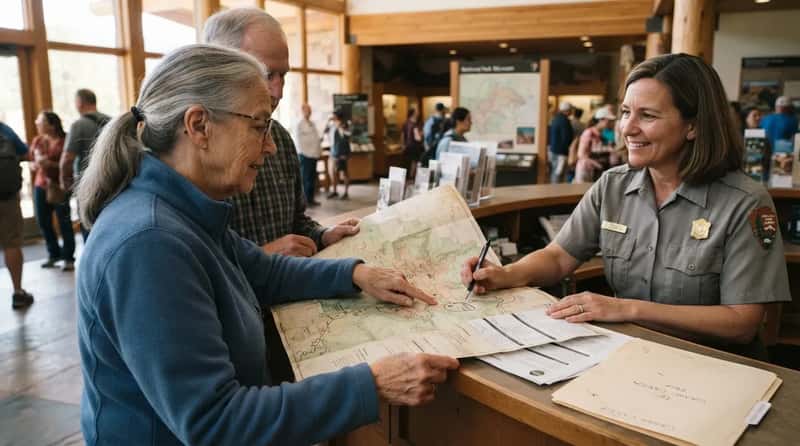
You can spot them by what’s in their hands. A lot of older travelers still arrive with a paper itinerary, printed confirmations and an actual folded map. Travel writers describe the same pattern on cruises, where printed itineraries and laminated port maps show up even when the same information sits in an app.
Younger travelers sometimes roll their eyes. Then the signal drops. A paper map doesn’t lose service in a canyon, and plenty of park areas have patchy coverage. Staff often end up circling things on that map with a pen.
Paper isn’t the only thing they’ve prepared, and #11 might surprise you.
#11 – They Booked Before You Even Thought About Going

The “spontaneous retiree” is mostly a myth. In AARP’s late-2025 survey, more than half of older travelers’ domestic trips for 2026 were already booked or being planned. By the time they reach a visitor center, the hotel and the route are usually locked in.
They’re also hunting for value. AARP found that 89% of adults 50 and older bargain shop for travel at least sometimes. So the question isn’t “what should we do?” It’s “which of these is actually worth it?” That’s a sharper conversation than most staff expect.
Planning ahead also explains when they show up, which is the next surprise.
#10 – They’re the Ones Who Beat the Crowds

The busiest weekend of the summer is rarely when this group appears. Booking.com’s 2026 global survey found 63% of boomers planned to travel outside peak season, compared with 36% of Gen Z. They aren’t tied to school calendars, and they know it.
That shifts the whole mood at the counter. Off-peak visitors get shorter lines, easier parking and more time to chat. Some of the happiest travelers in a visitor center are the ones who showed up on a Tuesday in October. Staff often have more time to share local tips with them.
All that timing adds up to something staff notice by the end of the day: these travelers have been here before. A lot.
#9 – They’ve Seen More Parks Than the Staff Expect
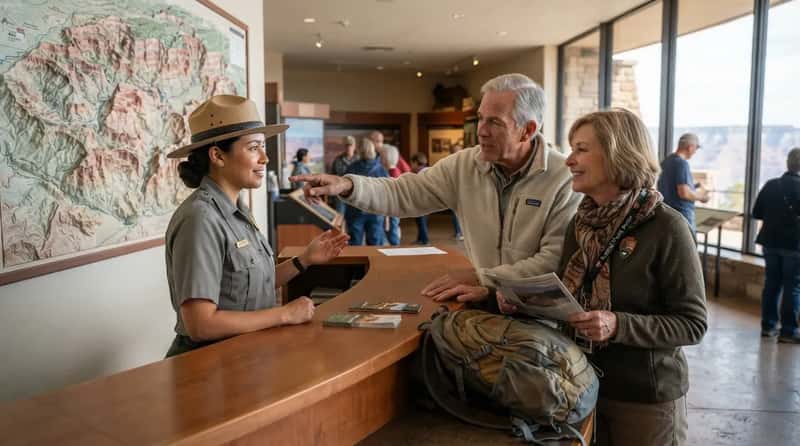
This one humbles a lot of first-time visitors. AARP’s national park research found that baby boomers had seen an average of 14 parks, compared with 7 for Gen Xers and 5 for millennials. The research is older, but the pattern makes sense. More decades means more road trips.
That experience changes the questions. They don’t ask where the bathrooms are. They compare what’s in front of them to the last park they visited, and sometimes the one before that. Staff learn quickly that “have you been here before?” is a question with a long answer.
At a Glance
- Baby boomers: 14 parks visited on average
- Gen Xers: 7 parks
- Millennials: 5 parks
Their choice of transportation says even more, as #8 shows.
#8 – They Drove, and They’re Proud of It
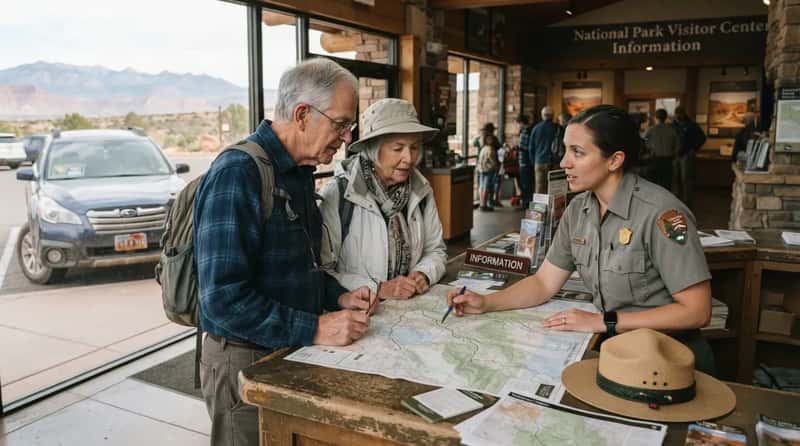
Forget the stereotype of the tour-bus crowd. In AARP’s 2025 survey, 50 percent of travelers 70-plus said they would travel by personal vehicle, while 42 percent would travel by plane. Road trips are still king.
That shows up at the counter as route questions. Which road is the scenic one? Where’s the last gas before the next 60 miles? A ranger’s local tip about a closed road beats any app that hasn’t updated yet, and these travelers know it.
But the weather is quietly rewriting their road trips too, as #7 explains.
#7 – The Heat Question Comes Up First

Climate is changing the calendar. One 2025 survey of travelers 35 and older found that 53% said extreme summer heat was influencing their international travel plans. That survey covered more than just seniors, but it mirrors what many older travelers say about heat.
Disruption worries are rising too. In another survey, concern about flight cancellations among older travelers rose from 24% in 2025 to 36% in 2026. So when they ask about shade, water and cooler hours, they aren’t being fussy. They’re managing real risk.
And worry doesn’t stop them from going, which brings us to #6.
#6 – They Travel More Than They Admit
Ask an older traveler how many trips they’ll take and they’ll lowball it. For the first time in AARP’s tracking history, the number of trips taken in 2024 (3.9) surpassed the number anticipated (3.6). Then 2025 came in at 4.2.
Even the definition of a trip is modest. AARP counts at least two nights spent 50 miles from home. That means a lot of those trips are weekend visits, family stops and quick escapes. Visitor centers see them not as grand tours but as repeat customers.
But the trips they plan once in a lifetime hit differently, as #5 shows.
#5 – Somebody in the Group Is Checking Off a Bucket List

You can see it on their faces. Some visitors are here for one thing they’ve wanted to see for decades. AARP’s 2025 release put numbers on it, with bucket list (22%) and family or multi-generational trips (11%) as the top motivators for international travel.
That emotional weight changes the counter conversation. They want the exact overlook, the exact trail, the exact photo. A missed viewpoint can feel like a missed promise. Staff who pick up on that tend to slow down and get specific.
Many of these trips involve younger relatives, which is where #4 gets interesting.
#4 – Grandkids Are Usually the Real Reason They’re Here
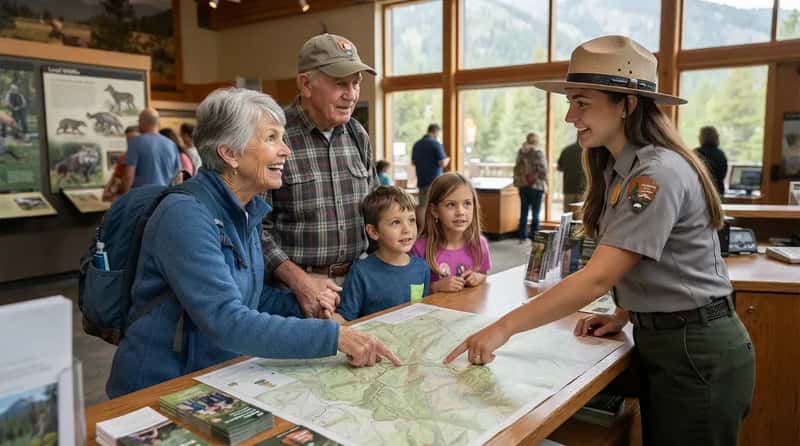
Watch the group dynamic. AARP’s national park research found that baby boomers were most likely to have taken children on park trips (77%), compared with Gen Xers (54%) and millennials (19%). Part of the reason is simply time and opportunity.
That research is more than a decade old, so treat the exact figure with caution. The pattern still fits what travel surveys keep finding. One roundup reports that 67% of boomers prioritize visiting family when they travel. The grandparent is often the planner, the driver and the one asking staff what the kids can do.
Worth Knowing
- Boomers who took kids on park trips: 77%
- Gen Xers: 54%
- Millennials: 19%
- Boomers who prioritize visiting family: 67%, per one travel roundup
Behind the family smiles, though, there’s often a quieter concern that #3 brings out.
#3 – The Accessibility Question Gets Asked Quietly
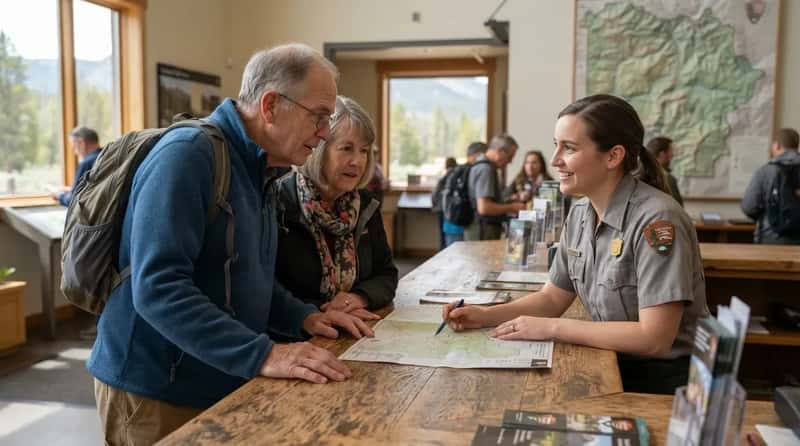
It’s rarely loud. A traveler will lean in and ask about the trail grade, the benches or how far the parking is from the overlook. AARP’s 2025 travel survey found that mobility accommodations are the top concern for travelers who need assistance for a disability or health condition.
There’s a federal option many people miss. The Access Pass is a free lifetime pass for U.S. citizens or permanent residents with permanent disabilities. Some travelers who qualify have never heard of it. The counter is often where they find out.
Even with limits to work around, many of them leave happier than everybody else, as #2 reveals.
#2 – They Leave Happier Than Anyone Else in the Lobby
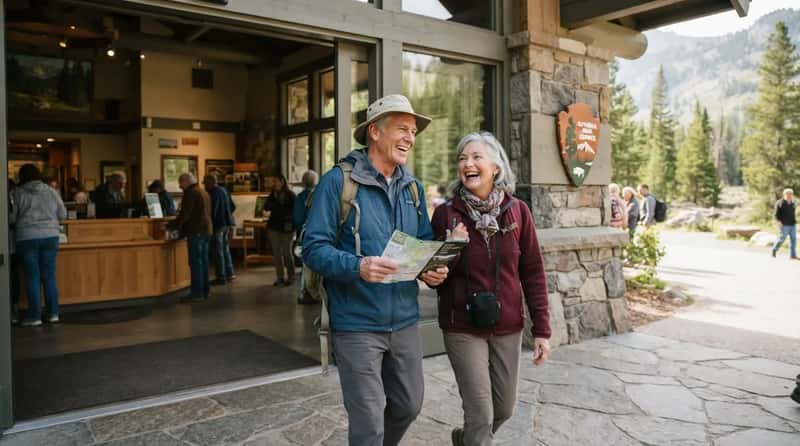
This is the part that gets overlooked. In AARP’s research, baby boomers (90%) and Gen Xers (89%) reported higher satisfaction with their most recent national park trip than millennials (84%). It’s a small gap, but it’s consistent.
Part of it may be expectations. Part of it is pace. They’re less likely to rush, and more likely to stop and read the exhibit. And the majority of recent visitors (83%), regardless of age, said they planned to visit another park within two years. Satisfied visitors turn into repeat visitors fast.
Why It Stands Out
- Boomers: 90% satisfied with their latest park trip
- Gen Xers: 89%
- Millennials: 84%
- All recent visitors: 83% planned another park visit within two years
The final item might be the most emotional one, and it comes out of a wallet.
#1 – The Faded Card That Still Works
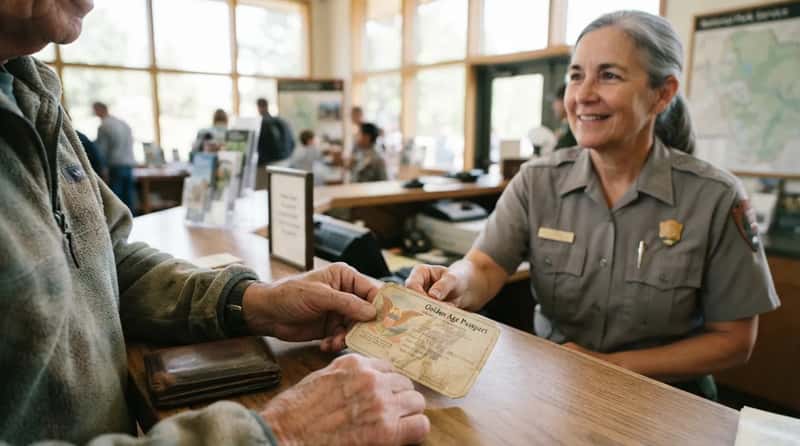
Every so often, a visitor slides over an old, worn pass. It’s a Golden Age Passport, the predecessor to today’s Senior Pass. The Senior Pass replaced it, but the old card is still valid for those who hold one.
Think about that. A card bought years ago, kept through moves, retirements and decades of road trips, still gets the holder through the gate. It’s a piece of travel history sitting in a wallet. Staff often remember the small moment when a visitor hands it over with a quiet grin.
The stereotype says older travelers are hesitant. The data says they take more trips than planned, book early, dodge peak crowds and head home happier than most. The front desk figured that out long ago, one paper map and one worn pass at a time.
So the next time you’re in line behind someone with gray hair and a folded map, pay attention. They probably know exactly where they’re going.