You’ve seen it a hundred times. A roller bag the size of a small refrigerator glides past the gate agent, and a crowd ignores the group number printed on their passes. Boarding rules are posted on tickets, apps, and gate screens, but a surprising number of them run on something closer to an honor system.
Two rules are different, and neither one is about your suitcase. This countdown starts with the rules that get bent every day. It ends with the two that can cost you a flight, or a lot more. Here’s what airline policies, FAA notices, and industry reporting actually say.
#16 – The Metal Bag Sizer Is Quietly Vanishing From the Gate
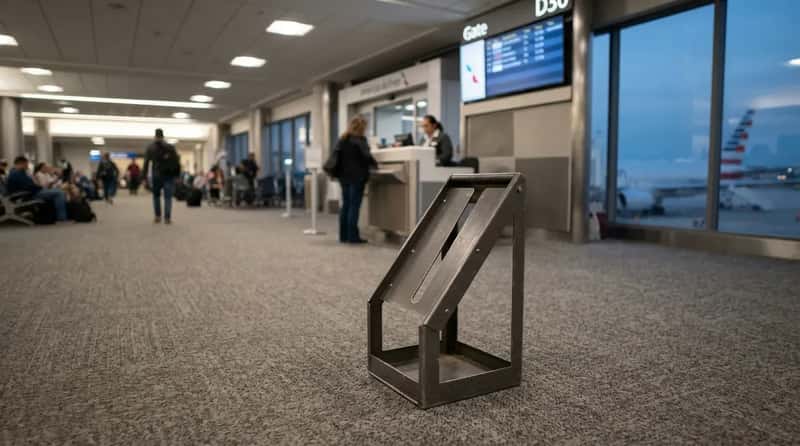
That metal cage at the gate used to be the symbol of carry-on enforcement. American Airlines told employees its bag sizers would be removed from all gates systemwide starting October 6, 2025. United Airlines had already pulled its gate sizers back in 2020 and told agents to assess bags by sight.
The size rules did not disappear. The metal frames now sit in airport lobbies and at check-in counters, while gate agents are told to use judgment and err toward the customer on close calls. Two of the biggest U.S. airlines have taken the most visible enforcement tool out of the exact spot where the arguments used to happen.
But the “official” size limit turns out to be just as loosely applied as the cage was…
#15 – The 22x14x9 Rule Has an Asterisk Most Flyers Ignore
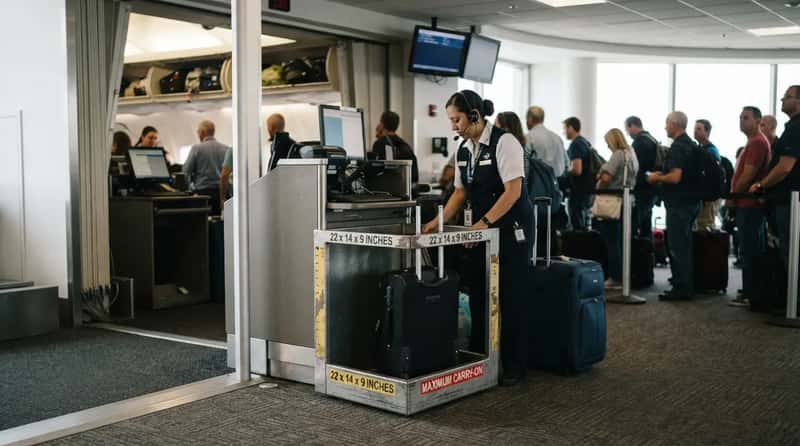
The standard carry-on limit is a number most people can recite. It’s 22 by 14 by 9 inches at American, Delta, United, JetBlue, and Alaska. Wheels and handles count toward those dimensions. Plenty of travelers measure the bare shell and call it a day.
Southwest is the outlier. It allows bags up to 24 by 16 by 10 inches. Gate agents still enforce the limits, especially when overhead bins start filling up. In other words, your bag’s legality can depend on how crowded the plane is.
And if you think the bag limit is loose, wait until you see how the bag count gets treated…
#14 – “One Bag Plus One Personal Item” Is Getting Counted Now
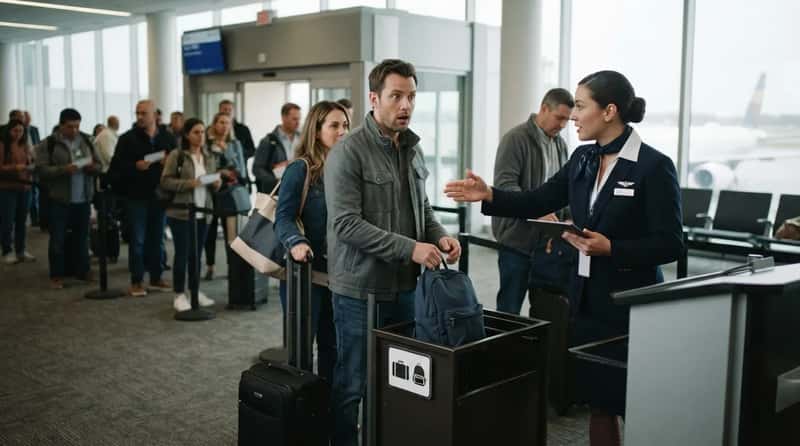
The allowance sounds simple: one carry-on and one small personal item. For years, plenty of people boarded with a roller, a backpack, and a tote. Gate agents mostly eyeballed bags and waved people through.
That is shifting. Gate agents are increasingly counting bags and scrutinizing dimensions, and many airlines have installed bag sizers at check-in and security areas. Some travelers say the extra scrutiny is overdue. Others say it punishes families who need extra gear. Either way, the quiet “extra tote” pass is no longer guaranteed.
Still, nothing causes more quiet chaos than the next one on the list…
#13 – Boarding Group Order Was Basically an Honor System
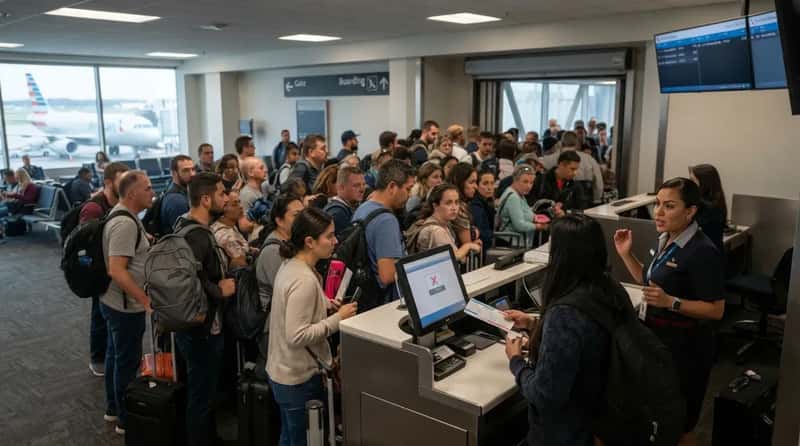
Your ticket says Group 6. The crowd at the gate says otherwise. Passengers hover near the podium long before their number is called, a habit travelers call “gate lice.”
American decided to push back. In 2024 it introduced technology so that scanning a boarding pass before your group is called creates an audible alert, and the agent sends you to the back of the line. That fix implies the old system relied on agents noticing the offenders by sight. Many flyers argue that crowding is a rational response to shrinking bin space, not rudeness.
Next up is a deadline airlines print on tickets that they rarely police until it’s too late…
#12 – “Be at the Gate 30 Minutes Early” Is a Suggestion Until It Isn’t
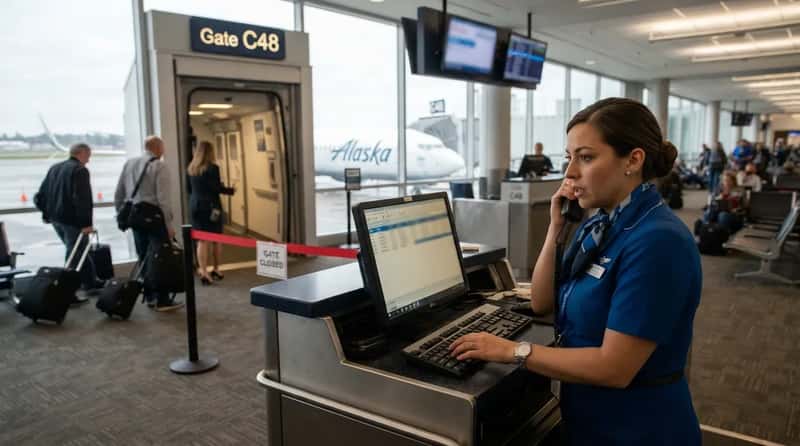
Airlines tell you to be at the gate well before departure. Alaska says flyers should be ready to board no later than 30 minutes before the flight, and warns that being late may cancel reserved seats or the whole reservation. Even Southwest, known for lenient boarding, suggests arriving at the gate 30 minutes before departure.
In practice, most people stroll up much later and board fine. Nobody checks until the flight is about to close out. The warning only becomes real at the moment you’re missing. Then the airline can reassign your seat, as Alaska’s policy says.
Meanwhile, the seat number on your pass gets ignored even more casually…
#11 – Sitting in the Wrong Seat Rarely Gets Caught Until Someone Shows Up
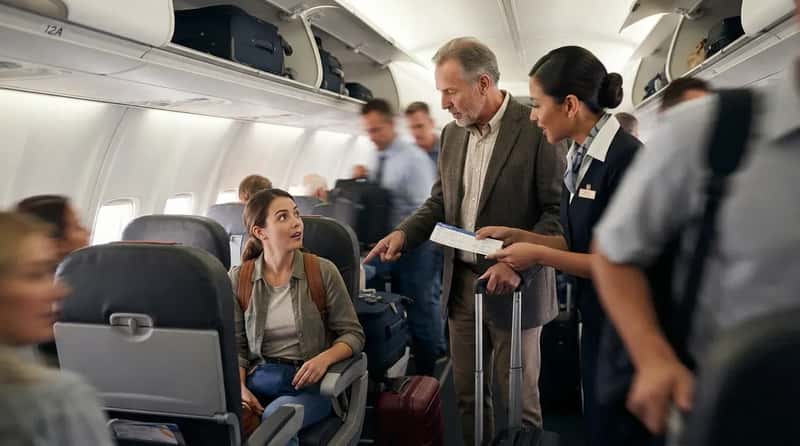
Your assigned seat is part of your ticket. Yet crews don’t walk the aisle checking seat numbers during boarding. They have a plane to load and a clock to beat.
The swap usually surfaces only when the rightful passenger arrives. Then the crew steps in. That’s why people drift toward empty rows or extra-legroom seats and hope for the best. The gamble works until the person who paid for that seat appears. Many flyers call it harmless. Plenty of paying customers disagree.
Then there’s a stowing rule that crews mention constantly and almost never check…
#10 – Bags Go in Wheels-First, but Few People Follow
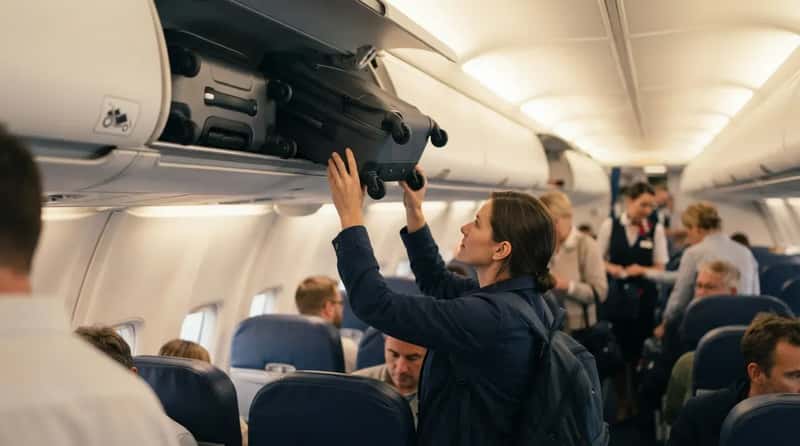
Flight attendants often ask for roller bags to go into bins wheels-first or on their side. The reason is simple. More bags fit when they’re packed tightly and neatly.
Most passengers shove their bag in however it lands. Crews rarely stop the line to rearrange it. One badly placed bag can cost a later passenger their bin space and send their bag to the cargo hold. It’s a small habit with a visible consequence for whoever boards after you.
Worth Knowing
- Crews usually ask for roller bags to go in wheels-first or on their side.
- Tight, neat packing lets more bags fit in each bin.
- Late boarding groups are the ones who feel the squeeze first.
- A bag with no room left is typically gate-checked, even if it’s legal.
But that shortage of bin space creates a bigger problem for people who did everything right…
#9 – Your Perfectly Legal Bag Can Still Get Tagged
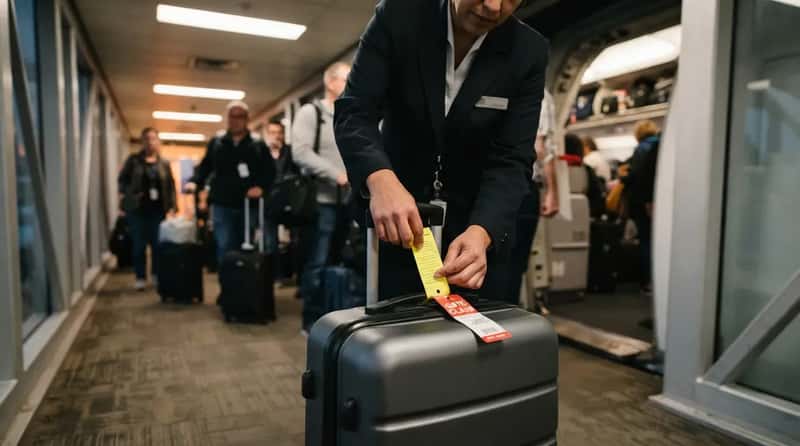
Here’s a rule airlines rarely spell out. A bag that meets the size limit can still be gate-checked. The plane may simply have run out of room.
Many bags are gate-checked because of limited overhead space rather than size violations. That is why boarding order and aircraft type matter as much as your bag’s dimensions. You can follow the rule perfectly and still lose the argument.
And then there’s a rule that nearly everyone breaks without a second thought…
#8 – Airplane Mode Is Required, but Nobody Checks Your Screen
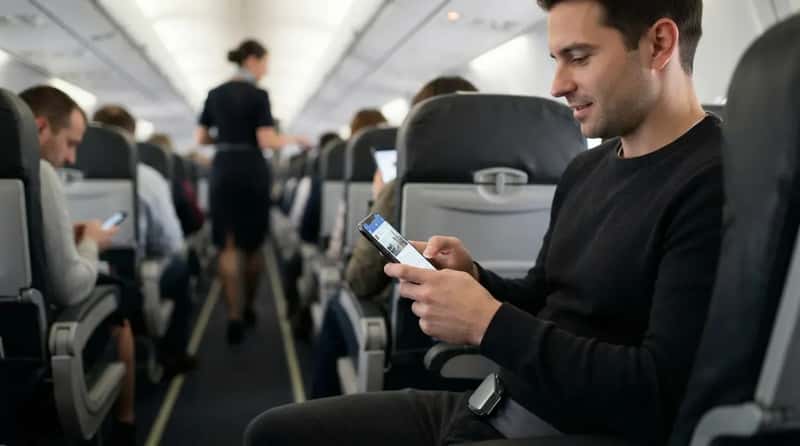
Airlines still ask passengers to put phones in airplane mode. Crews make the announcement. Then they go back to their duties.
Almost no one walks the aisle inspecting screens. Enforcement mostly happens when someone is visibly on a call. In one set of FAA allegations, a passenger drank his own alcohol after being told it was prohibited, and also talked on his cell phone during the flight. The phone was a side note. The bigger problem was ignoring the crew.
Fast Facts
- Since 2013, the FAA has let passengers use small electronic devices in airplane mode from gate to gate.
- Airplane mode switches off the cellular radio, but Wi-Fi and Bluetooth can usually be turned back on.
- The FCC has long restricted cellular service use on airborne planes, which is why in-flight voice calls stand out.
- A visible phone call is far more likely to draw crew attention than a screen left on.
Another set of takeoff reminders gets even less attention…
#7 – Shades Up, Trays Stowed, Seats Upright: The Takeoff Checklist Nobody Audits
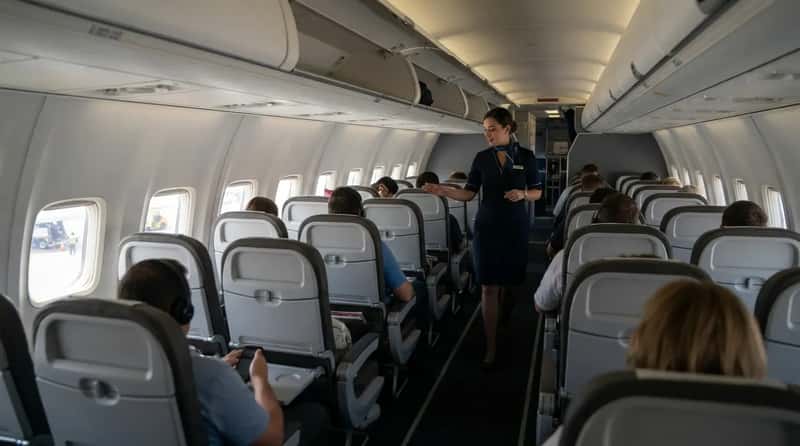
Before takeoff and landing, crews ask for tray tables stowed, seatbacks upright, and window shades up. Passengers usually comply only when someone points at them. Many people never look up from their screens.
Crews do check, but loosely. They scan the cabin rather than confront each seat. Most people don’t realize these requests exist for emergency readiness, not comfort. A reclined seat or open tray can slow someone trying to get out of the row.
Landing brings its own rule, and the whole cabin breaks it on cue…
#6 – Everyone Stands Before the Seatbelt Sign Goes Off
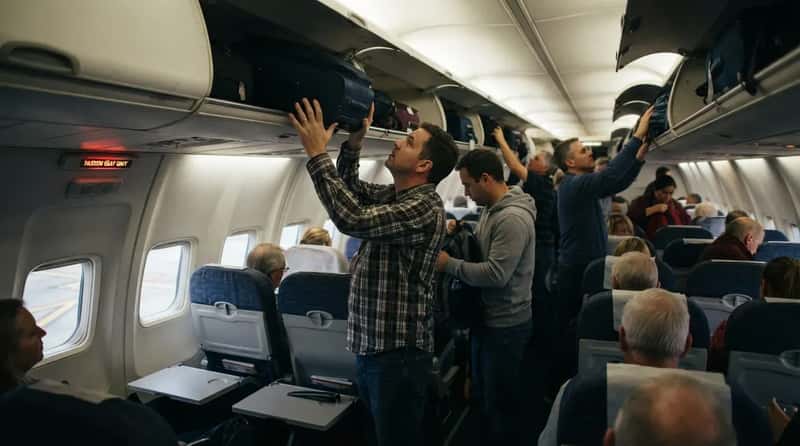
The wheels touch down, and a chorus of seatbelt clicks follows. Passengers jump up and start grabbing bags while the plane is still taxiing. Crews announce the same instruction every flight: stay seated until the sign is off.
Most of the time, nothing happens. A flight attendant repeats the message. People sit for a moment, then stand again. It’s one of the most visibly ignored instructions in aviation. Crew members can step in, though, and ignoring a direct crew instruction is where the stakes change (more on that at #1).
Now for a technology twist that could end the era of “I thought it would fit”…
#5 – Robot Bag Scanners Could End the Friendly Gate Agent
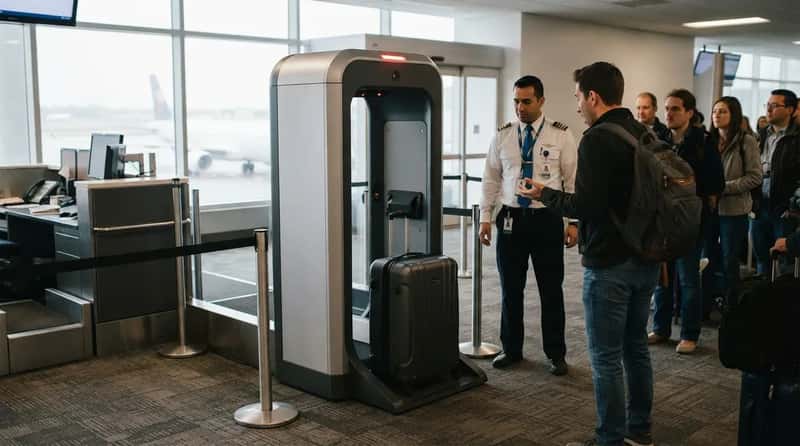
Automated bag scanners are the next step. United has been rolling out automated bag sizers that measure bags before boarding and flag oversized ones for gate-checking.
Reports differ on how far this has gone. Some describe a broad airport rollout, while others describe a limited test at a small number of gates rather than a network standard. The gap between “deployed” and “testing” is worth watching. The more airlines automate, the less room the old “just this once” wave-through has.
Not every gate agent waits for a machine, though. One got creative…
#4 – A Gate Agent Went Off Script With a Bag Threat
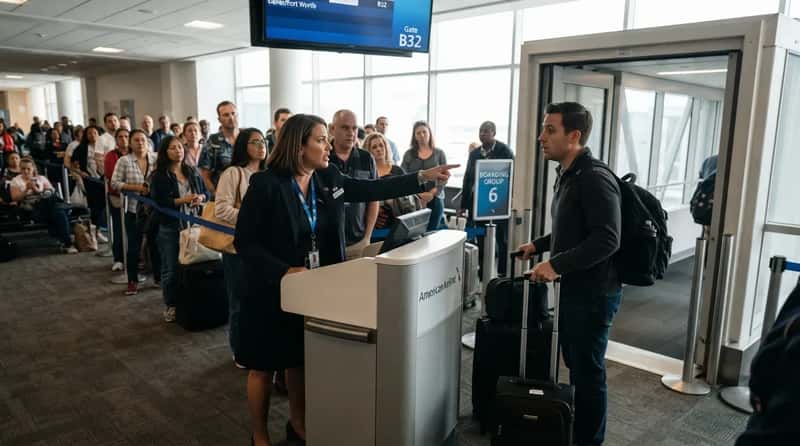
Sometimes enforcement comes from a single agent’s attitude. In March 2025, an American Airlines gate agent in Dallas warned that passengers who tried to board ahead of their group would have their carry-on confiscated and placed in the cargo hold. The aviation blog that reported it described the agent as going off script.
That detail matters. It wasn’t announced as policy. It was one person’s attempt to keep a crowd in line. Travelers will recognize the move. Some will say it’s exactly what gates need, while others will say it’s overreach. Either way, the loose boarding rules leave room for exactly this kind of improvisation.
The next rule is where “rarely enforced” starts to cost real money…
#3 – Sipping Your Own Mini Bottle Can Trigger Five-Figure Fines
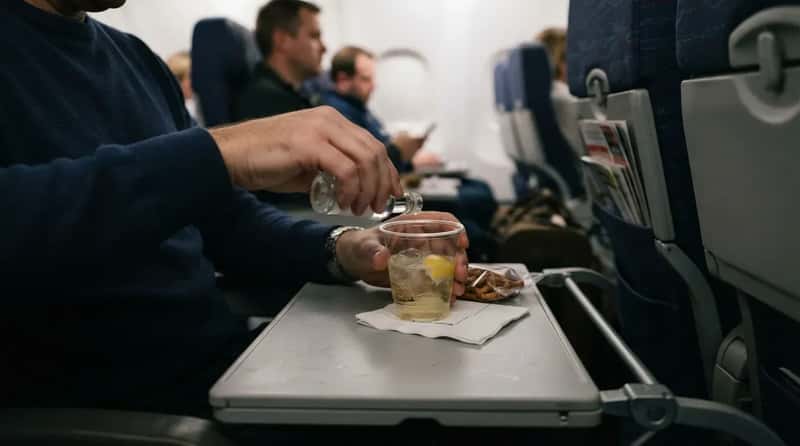
Plenty of travelers pour a drink from a bottle they bought at the airport. Crews often don’t notice. But the rule is clear in FAA enforcement announcements. They describe passengers drinking alcohol that the airline had not served.
Those 2021 announcements were tied to disruptive behavior, not quiet sips. Even so, the numbers are striking. One release proposed penalties ranging from $9,000 to $32,750 against four passengers. Another proposed penalties up to $52,500. That’s a lot to risk over a drink you could have bought from the cart.
Now for the first of the two rules airlines truly don’t bend on…
#2 – Miss the Door Closing, and Your Seat Can Go to a Standby
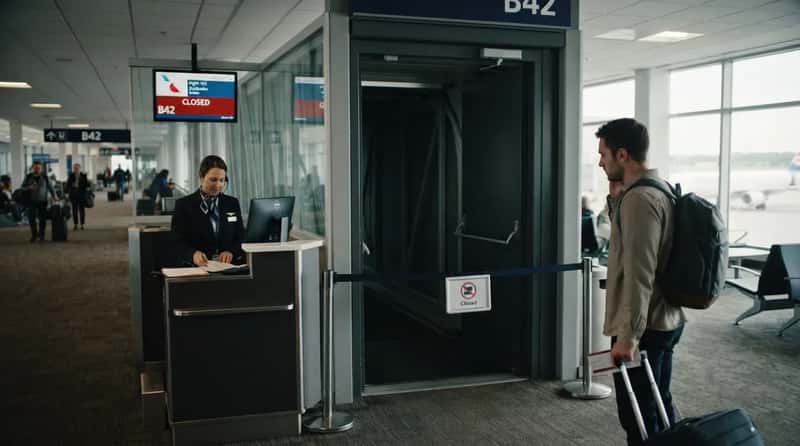
Here is a rule that’s enforced hard. Depending on the airline, boarding closes about 10 to 15 minutes before scheduled departure. Once the door is closed, it generally stays closed. Missing passengers’ seats can be canceled and given to standby travelers.
The jet can still be sitting at the gate. That’s what makes it so frustrating. When boarding is closed, passengers aren’t allowed on, whether or not the plane has left. The reasons are practical. The passenger manifest has to be finalized, and baggage handlers and ground crews are already moving. Exact cutoffs vary by airline and gate agent, but a closed door is the end of the conversation.
At a Glance
- Typical cutoff: about 10 to 15 minutes before scheduled departure.
- A closed boarding door means closed, even with the jet still parked at the gate.
- Your seat can be canceled and offered to a standby traveler.
- The manifest is finalized while ground crews are already moving.
But the single most enforced rule in aviation isn’t about time at all…
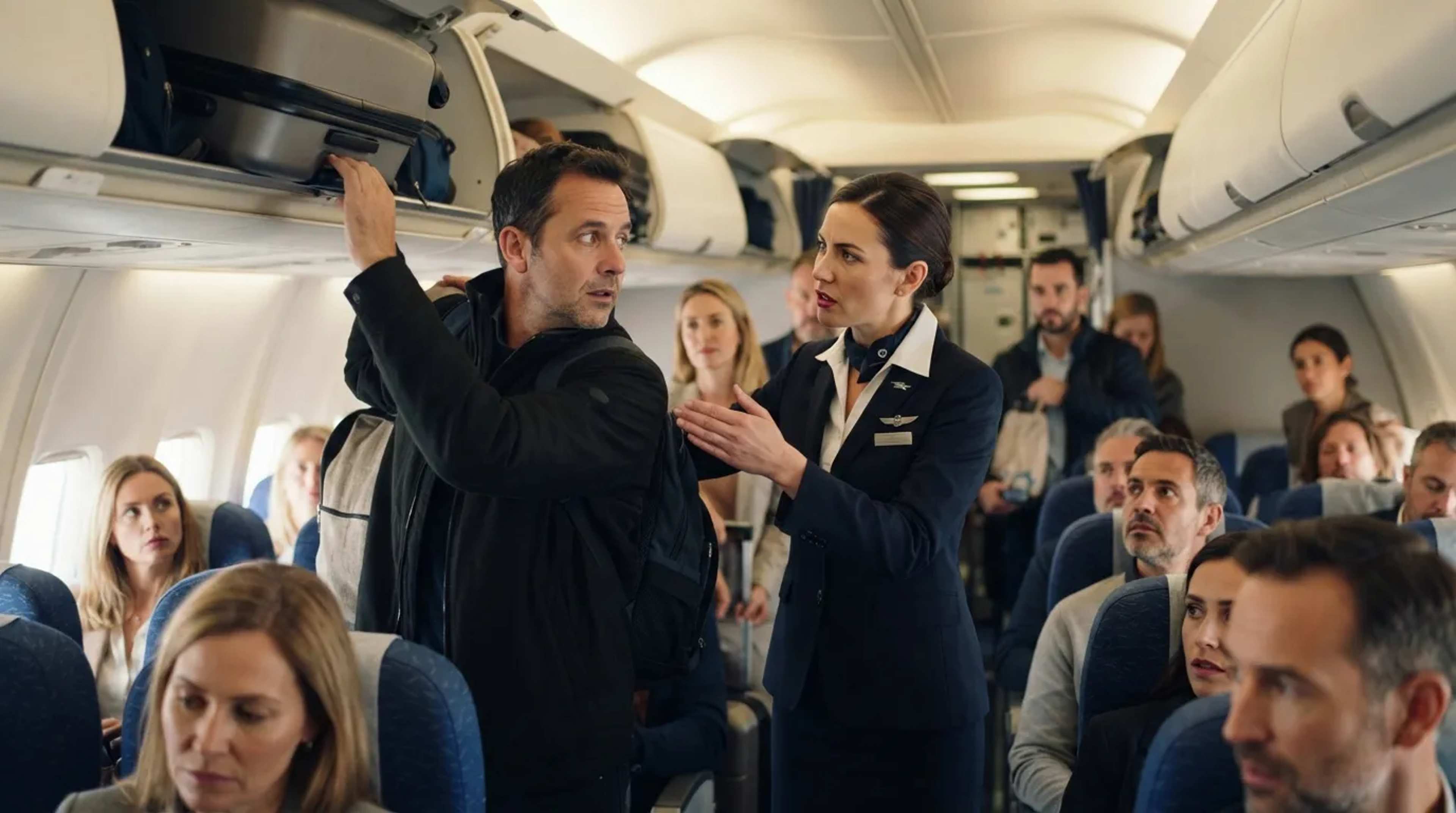
#1 – Ignore a Crew Member, and It Stops Being a Boarding Issue
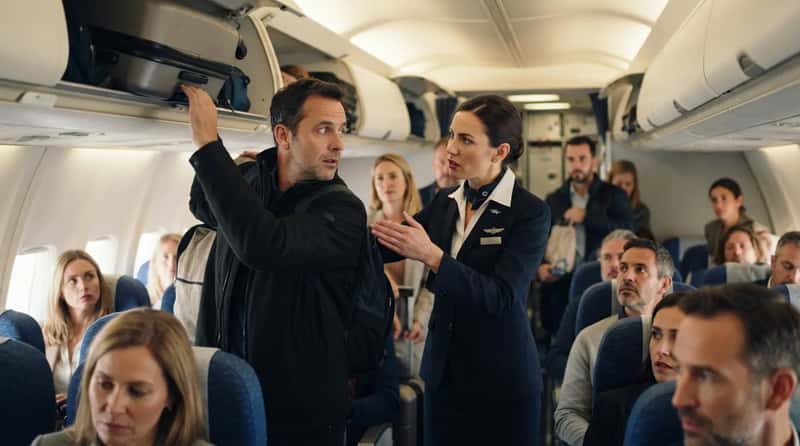
Every other rule on this list gives you wiggle room. This one doesn’t. Delta says federal regulations require customers to follow all crewmember instructions and prohibit interference with crew duties. That applies to bags, seats, seatbelts, and everything in between.
The FAA says such misconduct can threaten flight safety by distracting cabin crew from their safety duties. Crew can also ask local law enforcement to meet the plane at the gate. Assaulting or intimidating a crew member can lead to a felony conviction. Every “rarely enforced” rule above becomes enforceable the moment a crew member gives you a direct instruction. That’s the real lesson of boarding.
Bag cages are disappearing, group numbers are treated as suggestions, and seat swaps often slide by. Even the 30-minute gate rule bends until the airline needs your seat.
But a closed boarding door and a crew member’s direct instruction don’t bend. One costs you a flight. The other can cost you thousands of dollars, or far more. Everything else is just the crowd at the gate hoping nobody is looking.