For most guests, the hotel breakfast room is the most relaxed 45 minutes of the trip: free food, messy hair, zero rules. For the people running it, it’s the same show every morning, with the same few habits on repeat. Some are tiny. Some cost properties real money. A few are things you’ve probably done without a second thought.
The surprising part isn’t that staff notice. It’s which habits actually bother them, and which ones they quietly forgive. A couple on this list will make you rethink your last buffet run, and the one at #1 isn’t about food at all.
#16 – The Tower Plate That Never Gets Finished
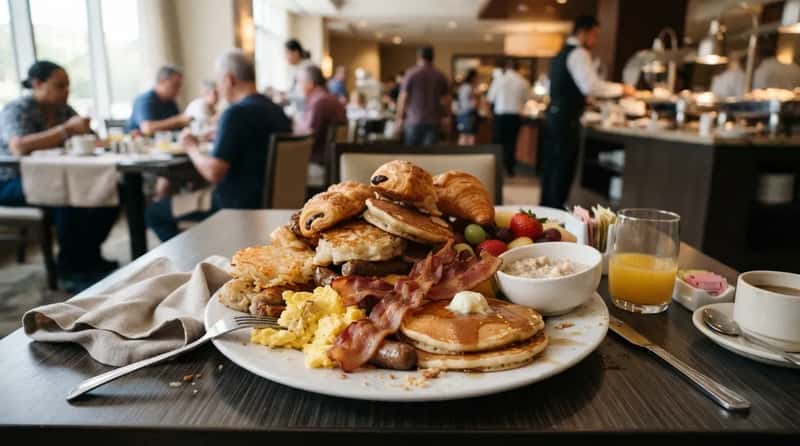
Servers wince at plates stacked so high that food starts sliding before the guest even reaches the table. It’s an instant giveaway. Research on hotel buffets shows guests often take more food than they actually eat, which creates waste and cost the property never planned for.
Anthony DiGregorio, an executive chef at the JW Marriott Reston Station, has said he hates it when people fill a plate and eat half, because his team’s hard work ends up in the trash. To the people who cooked it, a half-eaten mountain feels personal. And the next habit comes from a place most guests never think about.
#15 – The “I Paid for This” Math
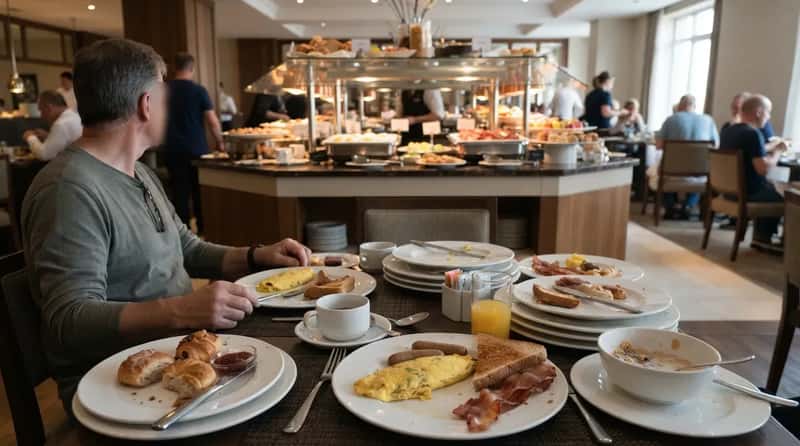
Breakfast is rarely free in a guest’s head. It’s usually baked into the room rate, so plenty of travelers try to get their money’s worth and take more than they can finish. It feels like smart travel.
Researchers heard a different story from the staff. In a recent study of hotel managers, staff named guest behavior as the primary cause of buffet food waste. The authors even coined a term, “pay riders,” for local guests who aim to maximize value for money. Plenty of travelers call that savvy. The researchers called it non-environmental behavior.
Still, that’s mild compared to what staff say about #14.
#14 – Grabbing a Used Plate for Round Two
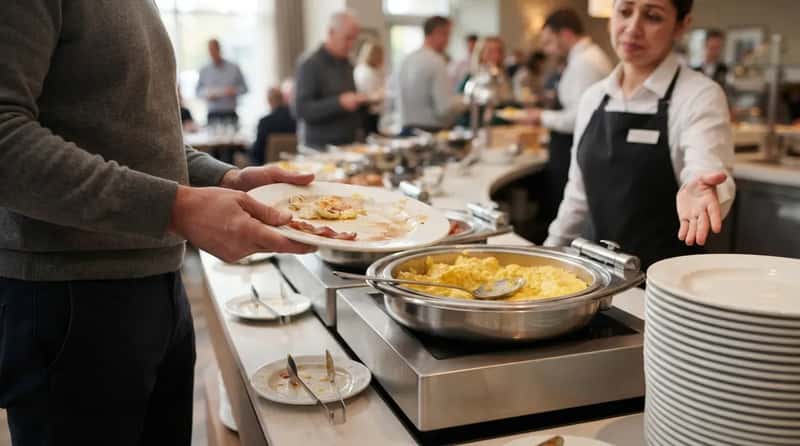
It looks harmless, but it’s actually a hygiene issue. Etiquette guides call reusing plates and bowls during a buffet meal poor form. Most guests have no idea there’s a reason behind it.
The use-it-once rule exists to prevent foodborne illness and cross-contamination. A plate that has touched your eggs has no business near the shared fruit. When staff hand you a clean one, they aren’t being fussy. They’re protecting the whole line.
Worth Knowing
- A fresh plate for every trip keeps your leftovers away from shared food.
- Cross-contamination is the main concern, not manners for their own sake.
- A swapped plate is routine hygiene, not a hint that you ate too much.
- Each dish should keep its own utensil, which sets up the next habit.
#13 – Skipping the Tongs Entirely
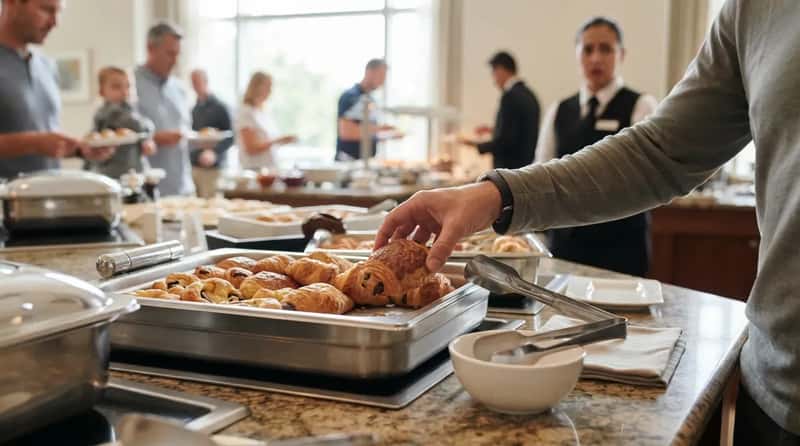
Every buffet dish comes with a utensil for a reason, and skipping it is the mistake staff spot first. One staff-focused roundup says fingers instead of tongs happens more often than hotel employees would like.
It sounds trivial until you picture 200 guests touching the same pastry tray. Nobody on the dining team wants to explain that scene to a manager. The fix takes about one second.
Next up is a habit that has nothing to do with the food itself.
#12 – Hovering Inches Behind the Waffle Iron

A slow line is genuinely maddening when you’re hungry. Still, standing right behind a slower guest is one of the fastest ways to spark tension in a crowded breakfast room. Etiquette experts warn against it.
The advice is simple and rarely followed: step away, grab something else, and circle back. Staff sometimes get pulled in to referee two grown adults arguing over waffle batter. It’s one of the stranger jobs on a hotel dining team.
#11 – Repeating the Order Louder, as If That Speeds Up the Pan

Made-to-order stations exist because guests want fresh food. Yet plenty of guests treat the wait like a personal insult, and the chef at the pan hears all of it.
Chefs at omelet and waffle stations say people hover, sigh loudly, or repeat their order as if shouting will speed up the pan. The eggs cook at exactly the same speed either way. The only thing it changes is the mood of the person holding the spatula.
Now for a habit that has staff comparing notes.
#10 – Wearing Pajamas to the Waffle Station

Sleepwear at the breakfast station is more common than most guests realize, and staff clock it every morning. Some travelers call it a vacation perk. Others see something else entirely.
A roundup of hotel managers’ gripes reports that a recent hospitality etiquette poll found 76 percent of respondents consider pajamas at breakfast a genuine no-no. That’s roughly three out of four people. The debate is real, and it’s likely to split your comment section.
At a Glance
- The poll figure: 76 percent call pajamas at breakfast a no-no.
- The flip side: a sizable minority see it as a harmless vacation perk.
- Easy middle ground: pull a sweatshirt or pants over your sleepwear before heading down.
The next habit splits the room in a different way.
#9 – Rolling In After Breakfast Has Ended
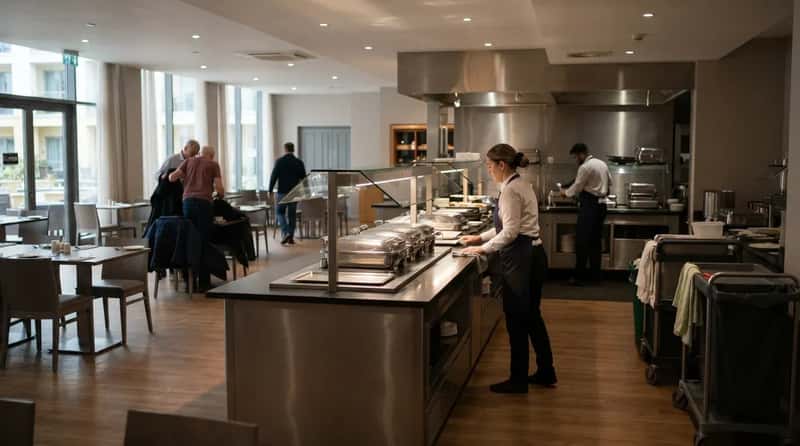
Posted hours aren’t a suggestion. When breakfast runs from 7 a.m. to 10 a.m., staff would like guests to arrive during those hours. Late arrivals tend to cause the most trouble.
Staff get peeved dealing with tardy guests who missed breakfast and expect service to be extended because they’re paying customers. The kitchen has often started breaking down long before the clock hits closing. Showing up at the last minute just guarantees a thinner spread.
The next one involves your pockets.
#8 – Smuggling an Entire Second Meal
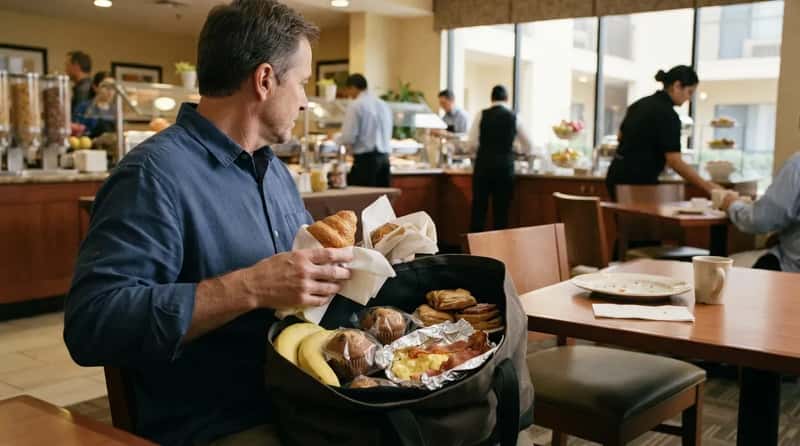
Everyone has pocketed a banana. Bananas, muffins, and granola bars are the most commonly smuggled items, and staff say they mostly look the other way for small snacks. That’s the part nobody expects.
The real problem starts when smuggling turns into stockpiling a whole second meal, which hits the property’s food budget very differently. One roundup says many hotels have “no leftovers” policies, and some charge extra for taking food out of the dining area. A snack is one thing. A packed lunch is another.
But the next mistake happens before you’ve even picked up a fork.
#7 – Filling Your Plate Before You’ve Seen the Spread

The first station always looks tempting, and that’s exactly the trap. Jeffrey Morgan, a chef concierge, advises scoping out the full spread before you commit, since the best thing on the buffet is rarely the first thing you see.
An overloaded plate from the very first station almost always leads to waste later, because there’s no room left for the good stuff two tables down. So you end up with a cold plate of the wrong thing and a longing glance at the right one. One lap with an empty plate fixes it.
Quick Compare
- Plate-first approach: Load up at station one, run out of room, and leave the best dishes untouched.
- Lap-first approach: Walk the whole spread empty-handed, then pick your favorites on the second pass.
- The payoff: Hotter food, less waste, and no regret staring at a better tray.
#6 – Assuming the Buffet Is the Whole Menu
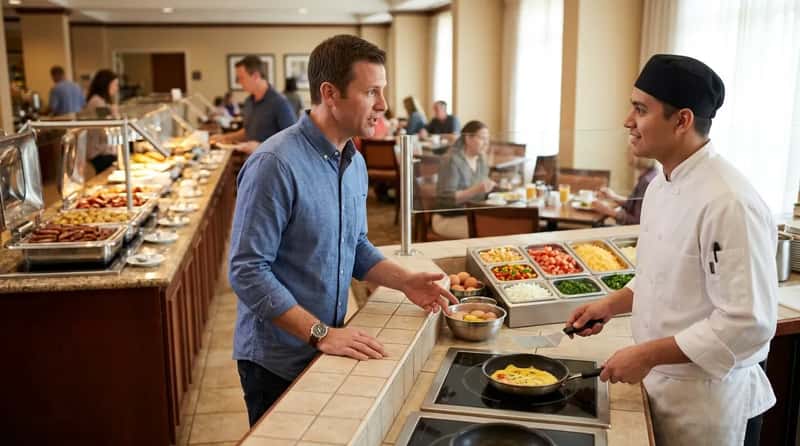
Many guests never ask the one question that gets them a better breakfast. One guide says many hotel kitchens will quietly make a fresh omelet, oatmeal bowl, or plate of eggs if the ingredients are already on hand. Nobody advertises it.
Here’s a hot take: some travel writers argue luxury hotels shouldn’t routinely offer buffets as the free breakfast benefit at 4- and 5-star properties. Others say the buffet is the whole reason they pick a hotel. Industry advice does point to cook-to-order stations as a way to manage waste.
Staff say the habit at #5 is far less polite.
#5 – Letting Food Hit the Floor and Walking Away
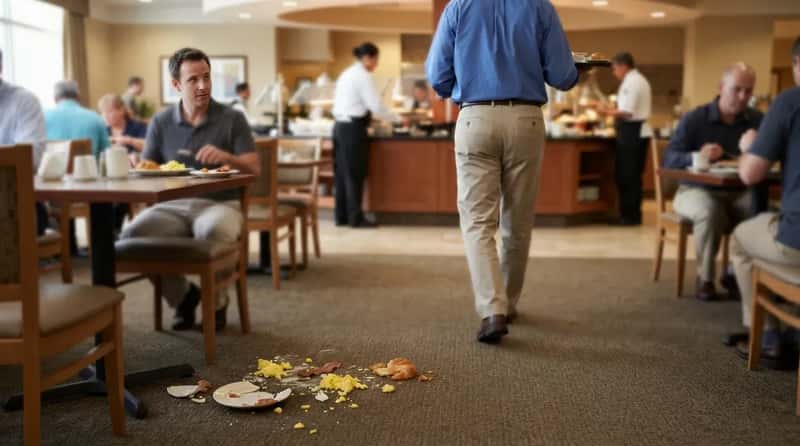
It happens in every breakfast room. Some guests stack plates so high that food tumbles to the floor, then act as if they never noticed. The room carries on as usual.
The dropped food just sits there until a staff member quietly sweeps it up, with no apology offered. Staff rarely say anything. They just remember. It’s one small example of a bigger problem: leaving a mess for someone else to deal with.
The next habit is less about food and more about attitude.
#4 – Turning a Cold Coffee Into a Campaign for Free Stuff

Hotel staff separate real problems from tactics. Genuine grievances can happen at any hotel, but complaining about every minor issue to gain upgrades or comp nights is one of the biggest pet peeves for staff. That’s according to a survey of people with industry experience.
Picture a lukewarm coffee becoming the opening argument for a comped night. Some guests complain about things like noise in the heart of Times Square before requesting an upgrade. Some guests call that smart negotiating. Staff call it a pattern.
Worth Knowing
- Real problems get real attention at any hotel, and staff don’t mind hearing them.
- The pet peeve is the stacked complaint: many small gripes leading to a request for an upgrade or comp night.
- The source is a survey of people with hospitality industry experience.
- Timing matters: a complaint followed by an ask looks different from a complaint on its own.
#3 – Walking Away From 300 Grams of Food
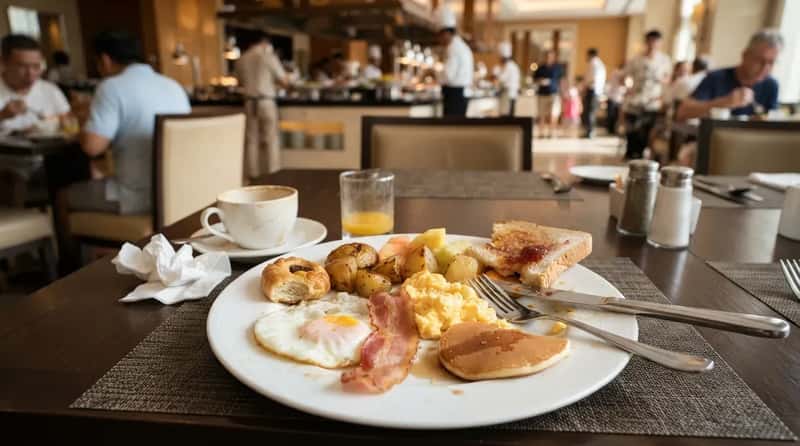
The numbers are bigger than most guests would guess. At one five-star hotel in Malaysia, each guest left behind an average of 300 grams of food at breakfast, and 92 percent of it was considered avoidable. That’s per person.
Buffet-style breakfasts typically produce more than twice as much food waste per customer as breakfasts ordered from a menu. So the problem is partly built into the format. Still, guests control what lands on the plate, and staff see where it ends up an hour later.
What drives all that waste is even more surprising, and it’s #2.
#2 – Trying a Little of Everything Because It’s There

Abundance is a trap. A vast array of foods can create a fear of missing out, so guests want to sample as much as possible. Few of them think they’re doing it.
Guests overestimate their appetite or try a little of everything, which leads to waste. Some hotels now fight back with smaller plates, and ibis is one of the many that use them at their buffets. The idea is that you go back in stages instead of piling it all on at once.
And now, the one staff say they can’t forgive.
#1 – Acting Like Nobody Else Shares the Room
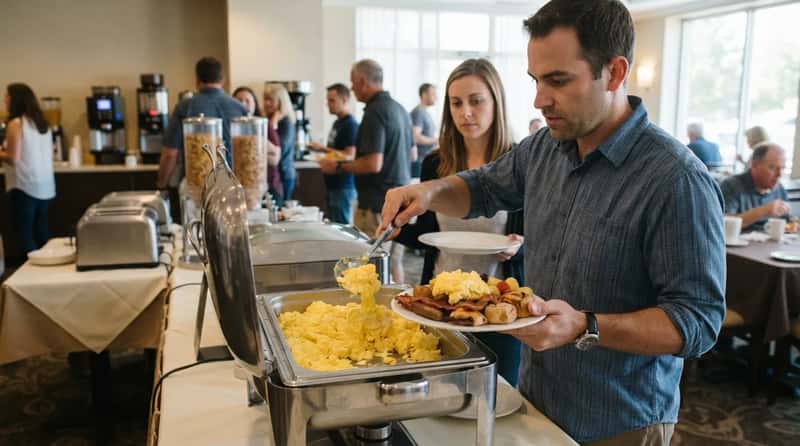
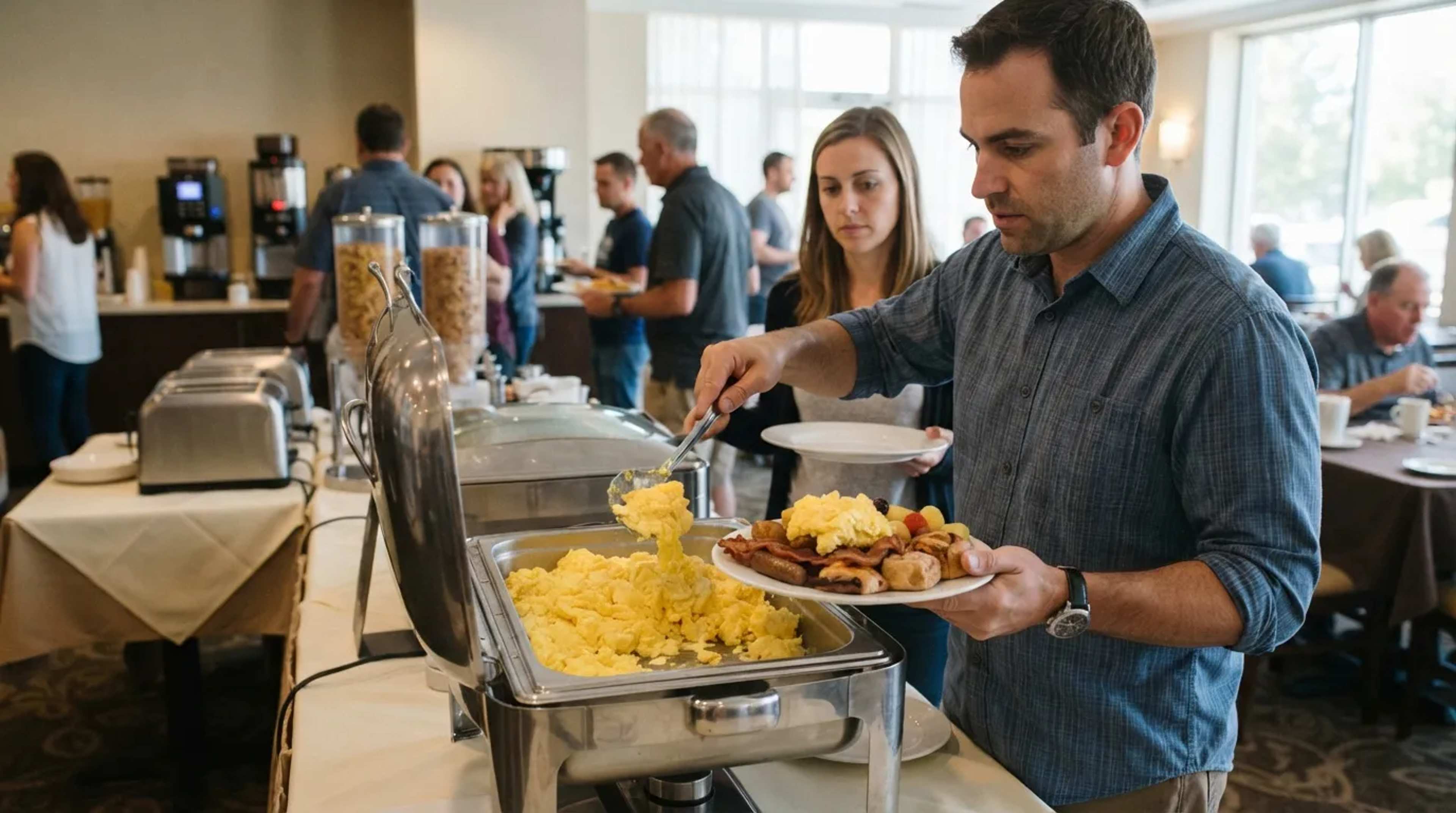
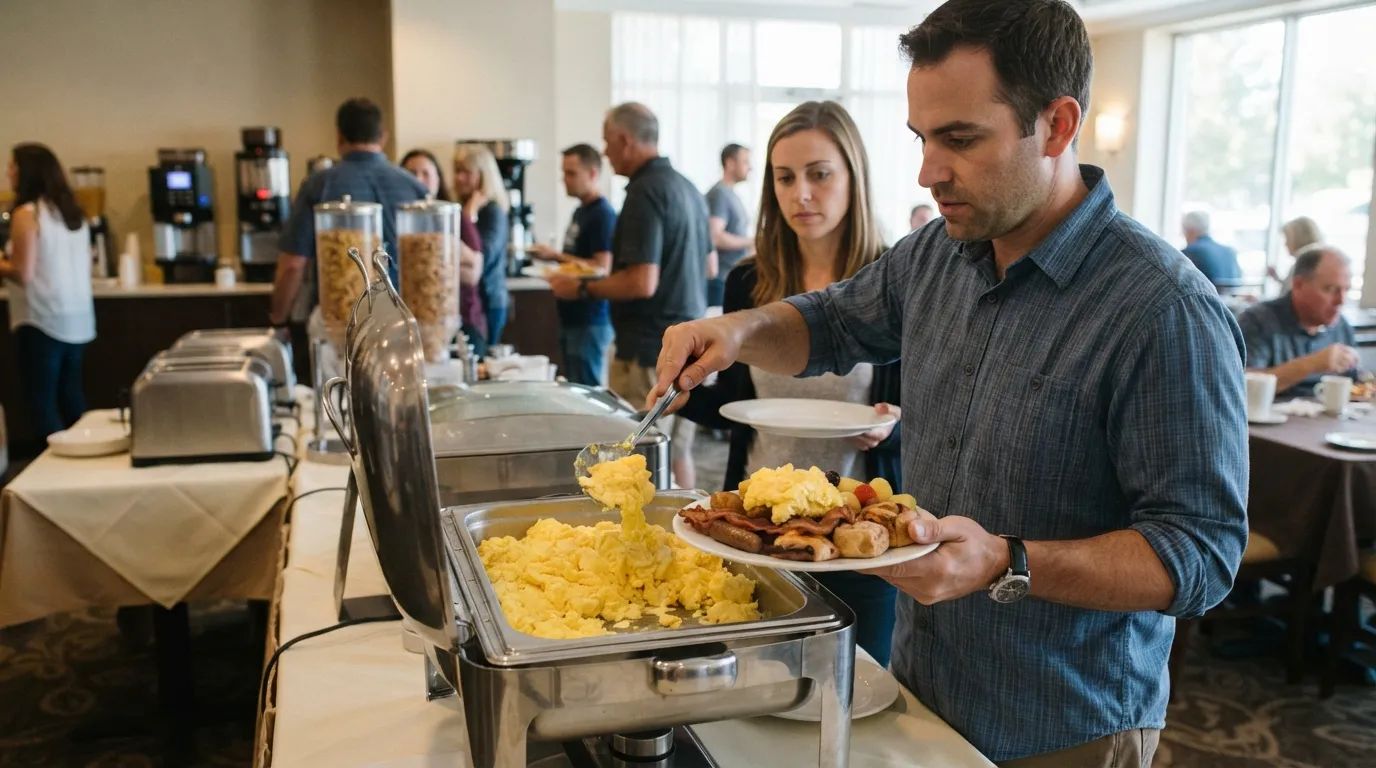
Managers say the real action happens between 7 and 10 a.m., over a chafing dish of scrambled eggs. That’s where guests reveal the most about themselves, usually without realizing anyone is watching.
Managers in one roundup say the hardest guest to forgive is the one who simply doesn’t care, because that guest usually comes back the next morning and does it all over again. It’s a mindset more than any single habit. The guests who get the most out of breakfast treat it as a shared space, not a personal buffet built just for them.
Most of these habits aren’t crimes. They’re small, automatic choices that look harmless from the guest’s side and very different from behind the buffet. Piled plates, pocketed muffins, and hovering at the waffle iron all share one root: treating a shared room like a private one.
The fix is rarely complicated. Take what you’ll eat, use the tongs, give the chef some space, and show up on time. Somewhere behind the eggs, someone is noticing, and they’ll remember the guest who made their morning easier.