You’d think the scary part of a 2,000-mile RV trip is the highway. Veteran long-haul owners say the costly mistakes often happen after the engine shuts off, in the first ten minutes at the campsite, when a cord, hose, or valve gets connected too fast. These are the 16 checks they run before they touch a single hookup.
The strange part is how ordinary most of them look. A rig that survived days of interstate can still be hurt by one tired pedestal or one over-pressured spigot. And a couple of these checks have nothing to do with plugging in at all.
#16 – The Slow Lap That Catches Problems Before the Tires Do

Veterans walk the site on foot before they ever touch the steering wheel. Plenty of campsites look fine from the driver’s seat and aren’t. Low branches, a tight turn, a stump, or a hidden dip often show up only at walking height.
Long-haul owners look up, down, and sideways. They check overhead clearance for the roof, air conditioner, and antenna. They also note where the pedestal, water spigot, and sewer inlet sit relative to the RV’s door side. A branch you didn’t see can tear an awning arm or crack a roof vent in a single pass.
- Look up: branches, wires, and awnings of neighbors
- Look down: ruts, soft edges, and drainage dips
The next check is about distance, and it trips up more rigs than you’d expect…
#15 – The Tape-Measure Trick That Stops a Hookup Disaster
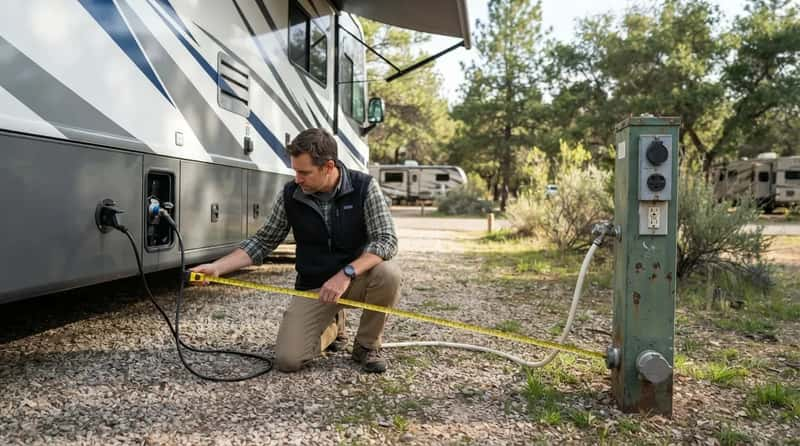
A site can be “full hookup” and still be awkward. Pedestals and sewer inlets aren’t always where your RV’s connections happen to be. A cord stretched tight or a hose pulled at a sharp angle is a failure waiting to happen.
Seasoned travelers compare the site layout with their own rig before they park. They know their power cord length, hose length, and sewer hose reach by heart. A strained cord or hose can put stress on the RV’s inlet, and the damage often doesn’t show up until later. Some owners carry an extension or a second hose just for odd layouts.
Worth Knowing
- Measure from the RV’s power inlet to the pedestal, not from the bumper
- Sewer inlets are often on the opposite side from the water spigot
- Leave slack in every line so it can curve gently instead of kinking
- Write your cord and hose lengths on a card in the glove box
Next up is the ground itself, and it changes more than just how level you sit…
#14 – Why “Looks Flat” Is the Most Expensive Guess in Camping
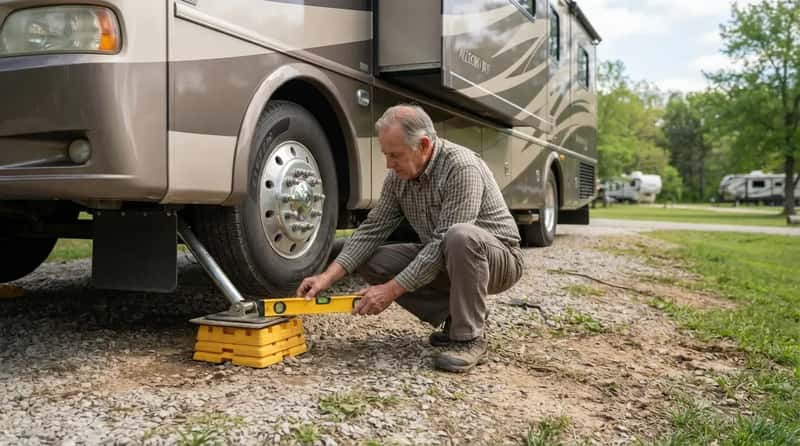
Your eyes are bad at judging slope. Long-haul owners often use a small bubble level or a phone level app before committing to a spot. They check left-to-right tilt and front-to-back tilt, because both matter.
Soft ground is the other worry. After rain, gravel pads can hide mud, and grass can swallow a jack pad. Many owners put blocks or boards under jacks and tires, and they adjust before any hookups go on. Moving a rig after everything is connected means tearing it all back down, and that’s when cords and hoses get yanked.
But leveling means nothing if the rig can roll…
#13 – The Ten-Second Chock Habit That Veterans Never Skip
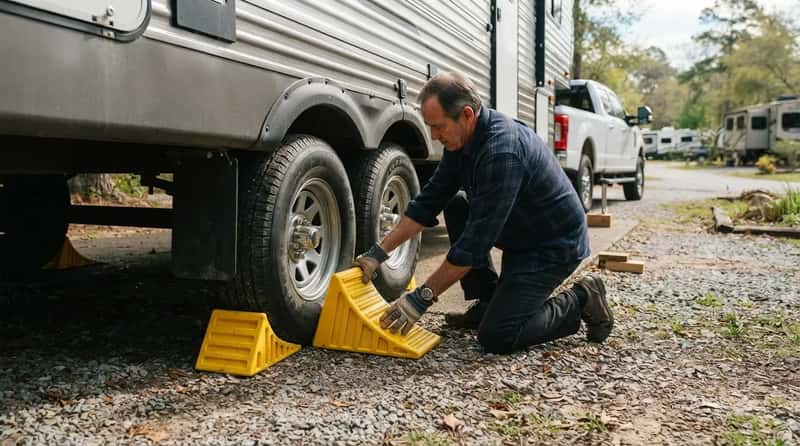
Parking brakes alone don’t earn every owner’s trust. Many veterans chock the wheels first, then unhitch or level, because a rig on a slight grade can move once the tow vehicle is gone. Stories of rolling trailers turn up on RV forums for a reason.
The usual advice is to chock before you unhook and before you raise any jacks. Tongue jacks and stabilizers are for steadying, not for holding a vehicle in place. Stabilizer jacks aren’t designed to lift or support the weight of the RV, so using them that way is a classic mistake. Good chocks are sized for the tires and sit snug on both sides.
Quick Compare
- Wheel chocks: physically block the tires from rolling, so they go on first
- Parking brake: a useful backup, but not a complete plan on its own
- Stabilizer jacks: they cut wobble, and they don’t hold the rig in place
Now for the part most people rush: the power pedestal…
#12 – The Pedestal Inspection Most Campers Never Bother With
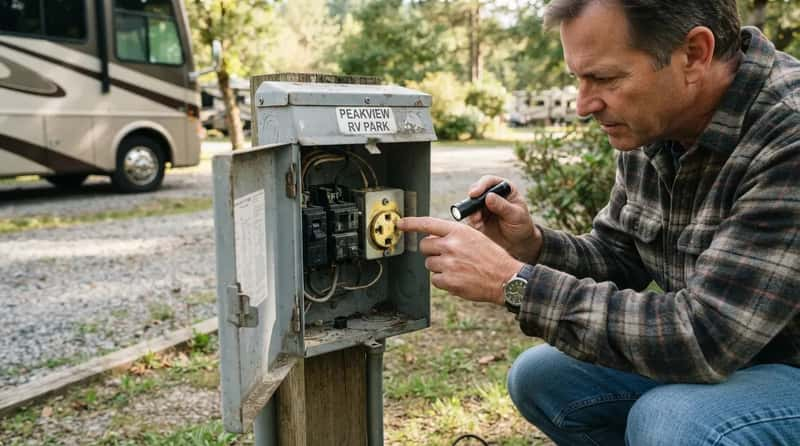
A campground pedestal looks like a dumb metal box, but it’s the first link between your RV and the grid. Before plugging in, careful owners look at it closely. They check for cracked covers, loose outlets, scorch marks, melted plastic, and signs of water getting inside.
They also make sure the breaker for the outlet is off, so they aren’t plugging into live power. A discolored or loose outlet can signal a poor connection, and a poor connection can generate heat. If it looks bad, they ask the office for a different site rather than gambling.
Even a healthy pedestal can be the wrong match…
#11 – 30 Amp or 50 Amp? The Plug Mix-Up That Fools Rookies
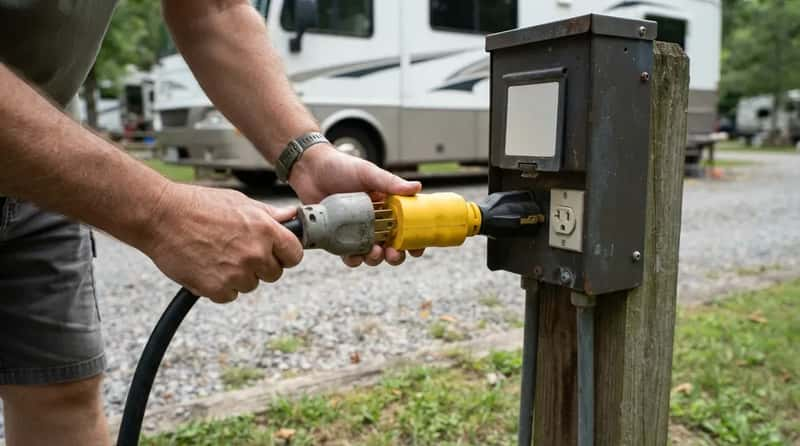
A 30-amp and a 50-amp RV are very different electrical animals. The plugs look different for a reason. Adapters let you connect one to the other, but they don’t magically change how much power is actually available.
A 50-amp RV plugged into a 30-amp outlet through an adapter can only draw what that 30-amp circuit allows. Owners learn to manage loads accordingly, like not running two air conditioners and a microwave at once. That “dogbone” adapter doesn’t add power, it only changes the shape of the plug.
- Know your rig’s amp rating before you arrive
- Carry the right adapter and keep it in good shape
Before you trust any of it, there’s a small gadget worth knowing about…
#10 – The Little Plug-In Tester That Veterans Treat Like Insurance
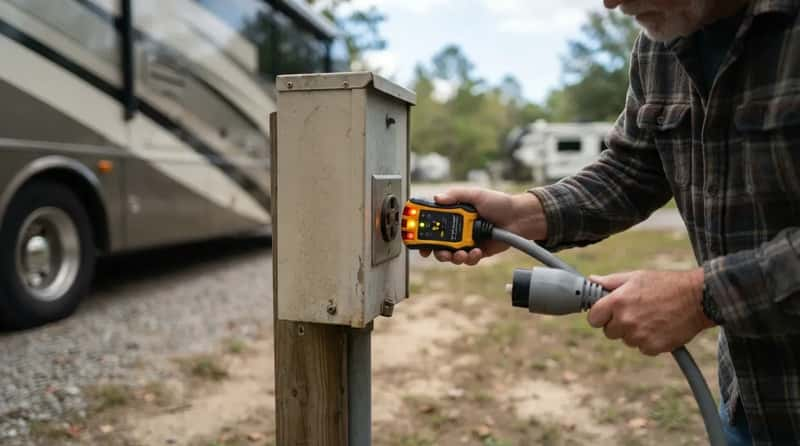
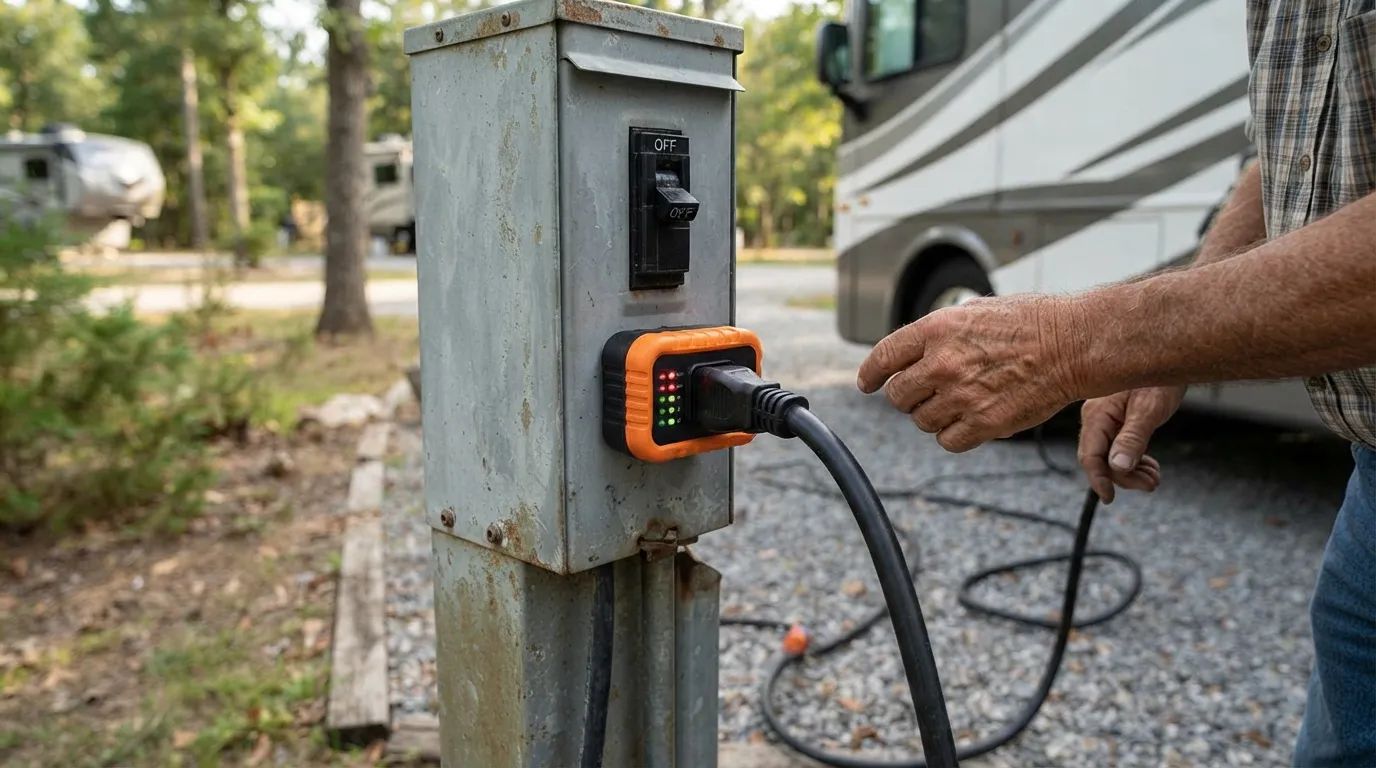
Many long-haul owners carry a simple outlet tester made for RV plugs. Its lights flash in patterns that reveal wiring faults like reverse polarity, an open ground, or an open neutral. It takes seconds, and it happens before your RV ever touches the power.
Here’s the catch. A tester checks wiring, not voltage, so it’s only one part of the picture. A pedestal can pass a basic wiring test and still deliver power outside a safe voltage range. That’s why many owners also use a voltage check or a protective device.
The next check goes beyond wiring and into what the power is actually doing…
#9 – The Voltage Reading That Can Save an Air Conditioner
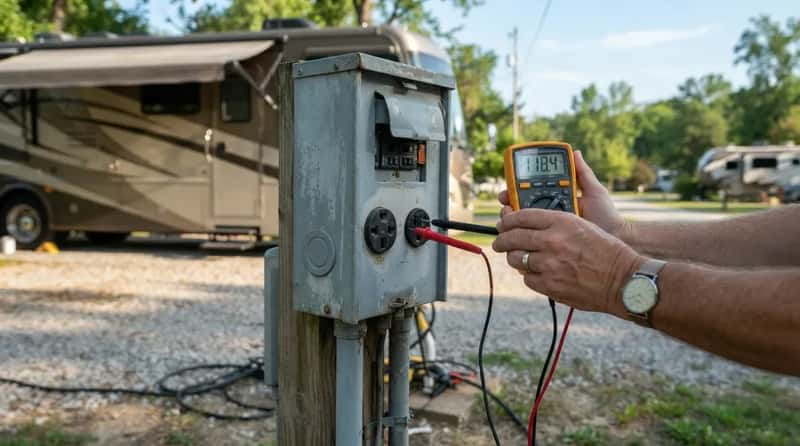
Voltage isn’t a fixed number at a campground. When dozens of rigs run air conditioners on a hot afternoon, the voltage at the pedestal can sag. Low voltage makes motors work harder and run hotter.
That’s why some owners check voltage with a meter at arrival and again at peak times. Many electrical protection devices are set to cut power when voltage dips into the low 100s or climbs above roughly 130 volts. Low voltage can quietly stress compressors and motors without any obvious warning. Smart owners look up their rig’s acceptable range in the manufacturer’s information.
At a Glance
- A standard RV outlet is nominally 120 volts
- Protective devices often trip below the low 100s or above roughly 130
- Check once on arrival, then again on a hot late afternoon
- A plug-in meter takes only seconds to read
That leads to one of the most debated purchases in RVing…
#8 – The Surge Protector Debate That Splits the Campground
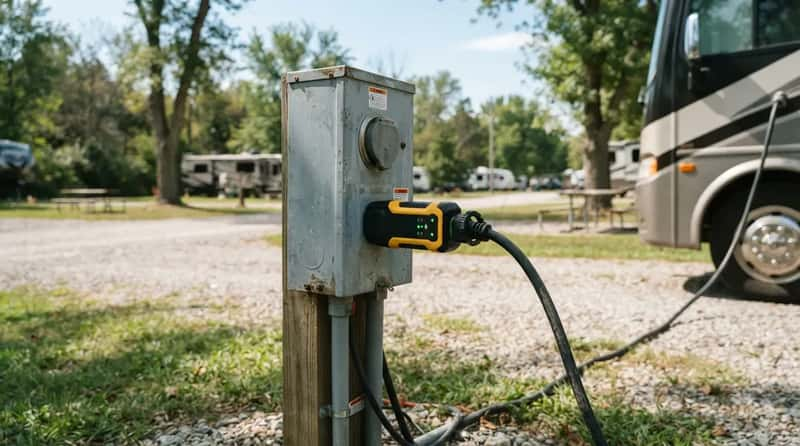
Here’s where campground conversations get heated. Many experienced owners argue a bare-bones surge protector isn’t enough, since a basic unit may handle spikes but not wiring faults or voltage swings. Others say a simpler device is fine for occasional trips.
The reasoning comes down to cost versus risk. An air conditioner, converter, or control board is far more expensive than the device guarding it. Portable units can be unplugged and stolen, so some owners choose hard-wired versions or use a lock. Whichever you choose, it goes in first, and it gets to finish its startup check.
Power is only half the story, and the water side has its own traps…
#7 – The Hose Label That Quietly Protects Your Drinking Water
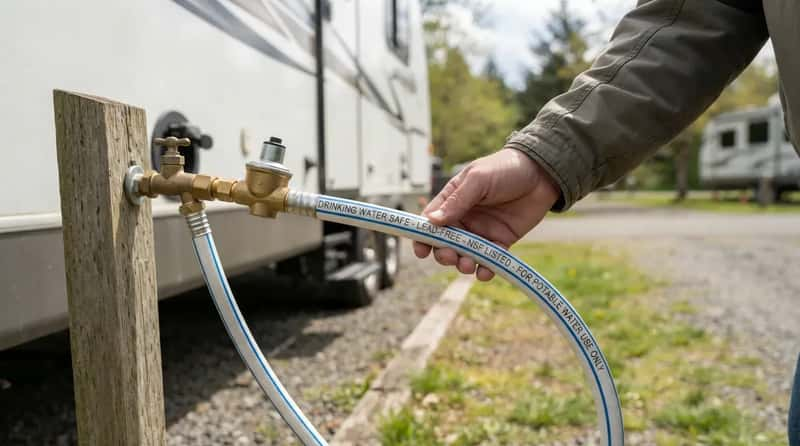
Not all hoses are equal. Drinking-water hoses are made from materials rated for potable use, and they’re typically labeled that way. Ordinary garden hoses may not be, and owners tend to avoid them for the RV’s fresh line.
Many travelers keep a dedicated hose for fresh water and never use it for anything else. They also store sewer gear far away from it. Tossing the fresh hose in a bin with sewer fittings is a mistake that spreads contamination you can’t see. A cap on each end keeps dirt out between stops.
And before that hose touches your RV, there’s a small brass piece that matters even more…
#6 – The Pressure Regulator Most Campers Learn About Too Late
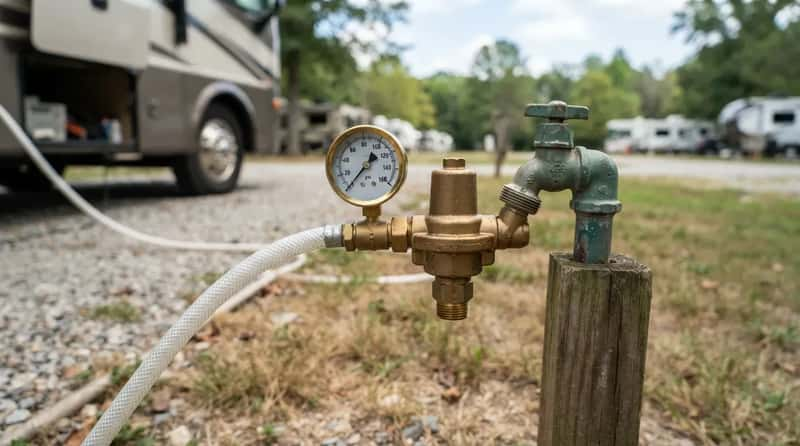
Campground water pressure is not standardized. Many RV plumbing systems are built for moderate pressure, roughly 40 to 60 psi, while some spigots can deliver considerably more. Excess pressure can stress fittings, lines, and water heater connections.
So experienced owners attach a regulator at the spigot, before the hose. Some also add a gauge so they can see what’s coming out. A burst line inside a wall can flood a rig before you notice, and the damage stays hidden until later. Opinions differ on whether the regulator belongs at the spigot or at the RV, but nearly everyone agrees you need one.
Next comes the part of the water routine that surprises first-timers…
#5 – Why Pros Run the Spigot Before They Connect a Single Hose
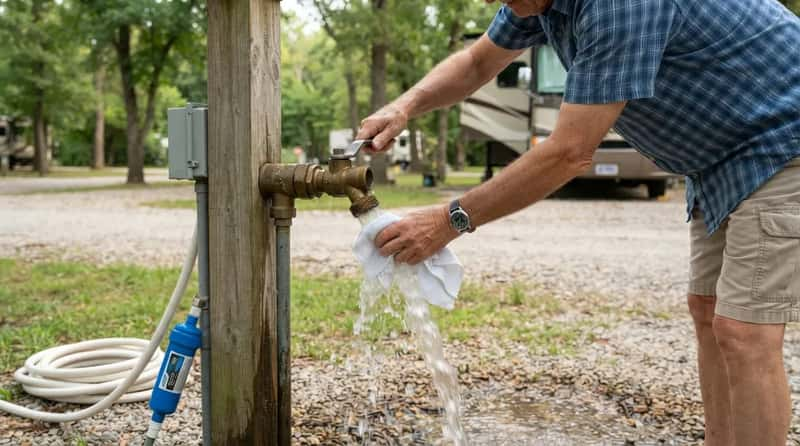
The first water out of a campground spigot isn’t always clean. It may have sat in the pipe or baked in the sun. Many owners let the spigot run for a moment and wipe the connection before attaching anything.
They often add an inline filter to catch sediment and improve taste. A filter doesn’t make every water source safe, but it can help with particles. Water that sat in a hot hose or pipe can pick up off tastes and carry grit into your system. If a campground posts a warning about its water, careful owners follow it.
Now for the check nobody enjoys, but everyone eventually learns…
#4 – The Sewer Connection That Smells Like a Lesson
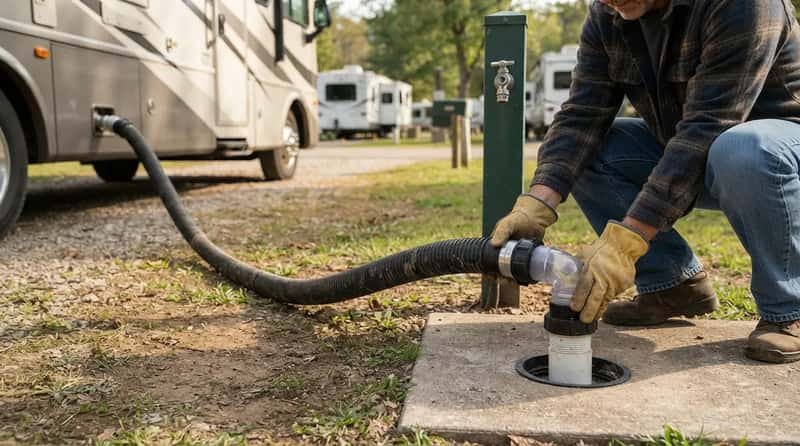
Sewer hookups reward patience. Long-haul owners inspect the hose for cracks, check the fittings, and make sure the connection to the campground inlet is snug. A loose seal is a quick way to turn a quiet evening into a cleanup job.
They also confirm the tank valves are closed before connecting. Many RVers advise keeping the black tank valve closed until the tank is fairly full, so solids flush out with liquid. A hose that sags can trap waste and cause backups, so a steady downhill slope matters. Gloves and a clear hose adapter make the job less stressful.
But the check that worries safety experts most is hiding in plain sight…
#3 – The Soapy-Water Test That Reveals What Your Nose Can’t
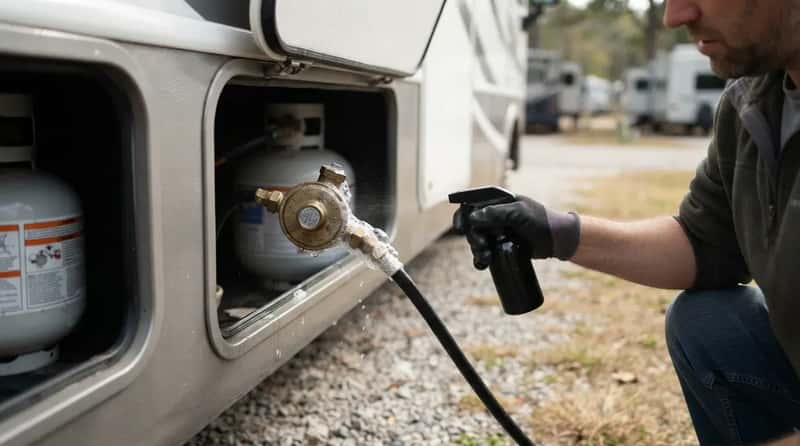
Propane is the one hookup that never gets plugged into a campground. But after a long haul, vibration can loosen things. Many owners check connections with soapy water and watch for bubbles.
They also test their propane and carbon monoxide detectors, and replace units that are past their listed lifespan. Detectors don’t last forever, and the date on the back is often ignored. If you smell gas, the usual advice is to shut off the supply, get everyone out, and avoid sparks or switches.
Then comes a walk-around that veterans do at every single stop…
#2 – The Underbelly Walk That Catches What the Highway Did
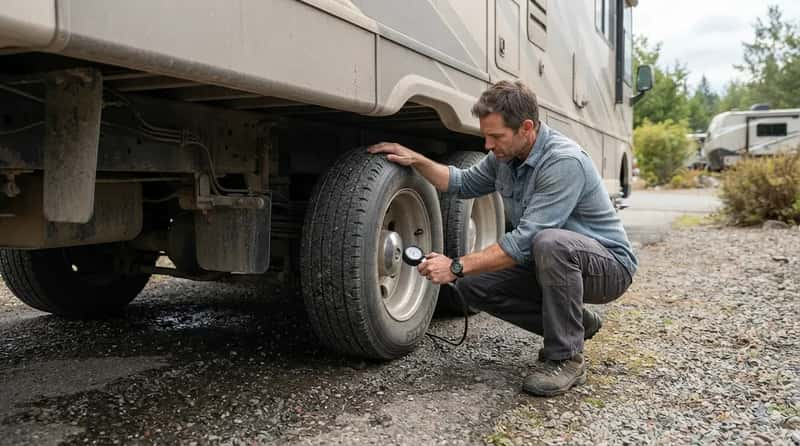
A long drive is hard on every part of a rig. After arriving, many owners walk the whole perimeter and glance underneath. They look for fluid drips, hanging wires, loose panels, and anything dragging.
Tires get special attention, because tires are a leading worry for RV travelers. Owners look for bulges, cracks, uneven wear, and low pressure. A tire that looks fine from the driver’s seat can show sidewall damage only when you crouch down. Many also follow their manual’s schedule for checking lug nut torque.
Fast Facts
- Tires are warm right after a long drive, so pressure readings run higher than cold numbers
- A four-digit DOT code on the sidewall gives the build week and year
- Many tire makers suggest closer inspection after about five years and replacement by about ten, whatever the tread looks like
- Sidewall bulges and cracks matter more than tread depth on a long-parked rig
All of these checks come down to one habit, and it’s the one that holds the rest together…
#1 – The Connection Order That Turns Every Check Into a Safety Net
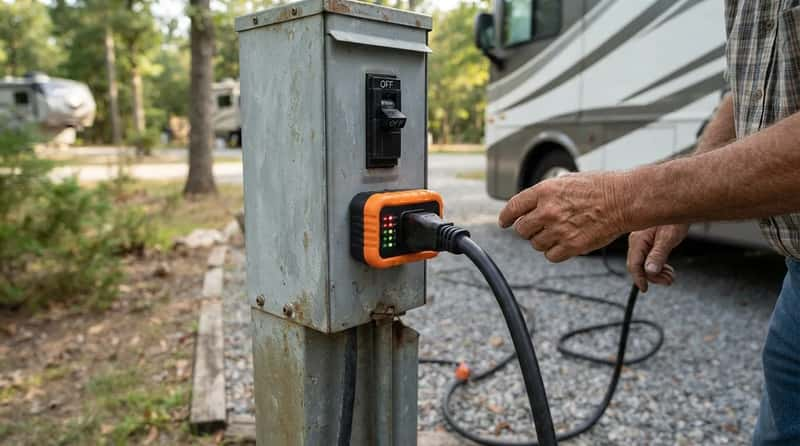
The best owners don’t just do checks, they do them in a sequence. The pedestal breaker is off and the RV’s main breaker is off. The protective device goes in first, then the RV’s cord plugs into it.
Only then do they switch the pedestal breaker on, wait out the protection device’s startup check, and finally turn the rig’s main breaker on. Unplugging happens in reverse. Plugging into a live outlet or pulling a loaded plug can cause arcing, which wears connectors and creates risk. It feels slow, and some people call it overkill. Long-haul owners call it cheap protection.
The most surprising thing about these checks is how little time they take. A walk around the site, a tester, a meter, a regulator, and a fixed order of steps can fit into a quarter of an hour. Yet the repairs they help prevent, from a fried air conditioner to a flooded wall, can wreck a trip.
Long-haul owners aren’t being paranoid. They’ve learned that the highway is only half the journey, and that the arrival is where a good trip can quietly go wrong.