Most people picture a motorcoach tour as the easy way to travel after 70. You sit down, watch the scenery, and let someone else handle everything. That’s true, but it’s only the part you can see. Behind it, seasoned guides and drivers make dozens of tiny adjustments for older passengers, and they almost never say a word about them.
No speeches, no labels, no “we saved you a seat.” Just a hand that appears at the bottom step, a water bottle that shows up “because it’s hot,” and a schedule that suddenly makes sense. Once you know what to look for, you can’t unsee it. And the first courtesy starts with a seat you probably thought you got by luck.
#16 – The Front Seats That “Just Happen” to Stay Open
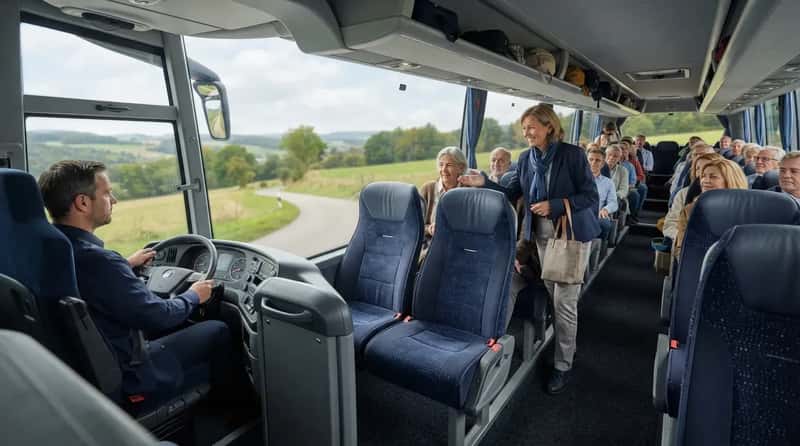
The best seats on the coach are rarely left to chance. Many guides quietly keep the first rows free for passengers who move more slowly. That means fewer steps down the aisle and a shorter walk to the door at every stop.
There’s a comfort angle too. A clear view of the road can ease queasiness, which is why many riders who get carsick prefer the front. Plenty of travelers think the back row is the fun zone, but it’s often the bumpiest part of the ride. The seat you assume was a lucky draw is often a decision someone made on day one.
But the next courtesy happens right at the door, and most passengers never notice it.
#15 – The Steady Hand at the Bottom Step
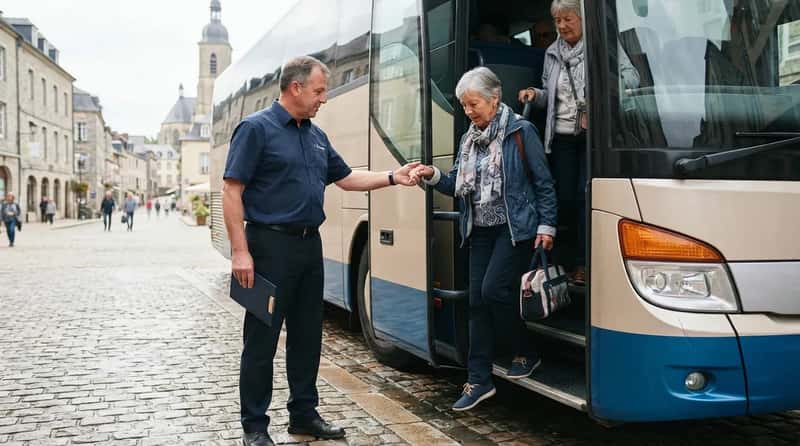
Coach steps are steeper than most people remember. Watch the driver or guide at boarding time and you’ll often see an arm extended, casually, to every passenger. It looks like good manners, but it’s really fall prevention.
The CDC reports that more than one in four adults aged 65 and older falls each year. A steep step, a heavy bag, and a wet surface are exactly where that can happen. Offering the hand to everyone means no one gets singled out. Nobody is told “you look unsteady,” and nobody has to ask.
And what happens once everyone is aboard might be the cleverest move of all.
#14 – The Headcount That Doubles as a Wellness Check
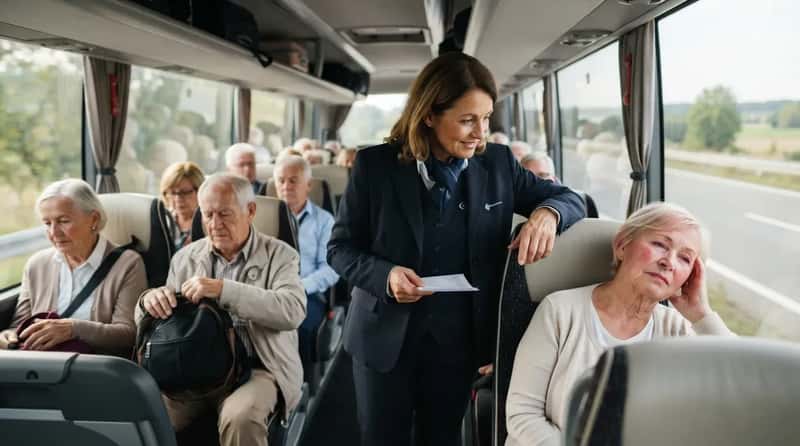
Every guide counts heads before the coach rolls. That is standard practice. What veteran guides also do is read faces during the count. Someone quiet, flushed, or leaning against the window gets a closer look.
The guide may drift past that row with a casual “everything good back here?” It sounds like small talk. It’s actually a quick screening for heat, fatigue, or dizziness before the next long stretch. It takes five seconds and spares everyone a bigger problem later.
Worth Knowing
- The CDC lists dizziness, headache, nausea, cramps, and unusual tiredness among the signs of heat exhaustion.
- Skin can turn cold and clammy, with a fast, weak pulse.
- Moving somewhere cool and sipping water is the standard first step.
- Vomiting, or symptoms that worsen or last longer than an hour, call for medical help.
The next courtesy is about timing, and most travelers never connect it to their own comfort.
#13 – Restroom Stops Timed Before Anyone Has to Ask
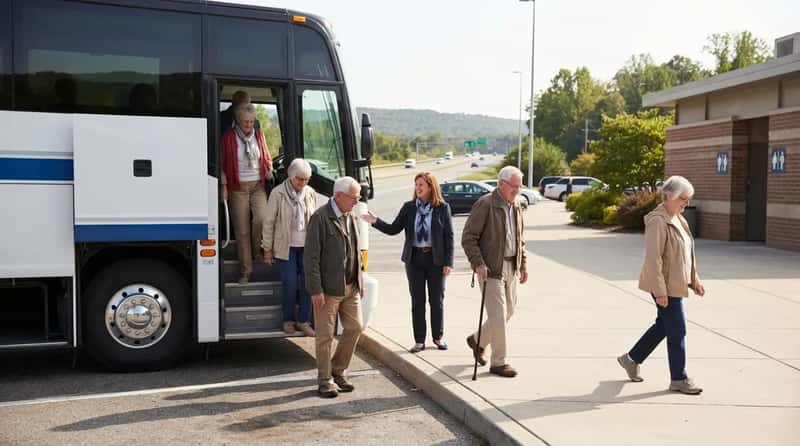
Ask a first-time tour guest what they dread, and many will say asking the driver to pull over. Good guides remove that problem. They plan stops so nobody has to raise a hand and feel like the reason for a delay.
Movement matters for health, too. The CDC’s travel guidance on blood clots says to take breaks to walk around during long road trips, roughly every two to three hours. The “quick stretch stop” on your itinerary is often a health measure disguised as a coffee break. Smart guides also pick stops with easy access and short walks to the facilities.
Wait until you hear what guides do with the microphone, though.
#12 – The Microphone Habits That Help Hearing Aid Wearers
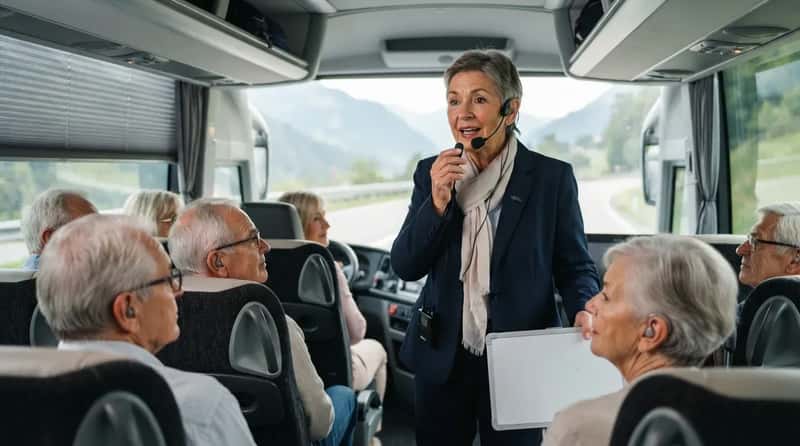
Hearing loss is common among older travelers. The National Institute on Deafness and Other Communication Disorders says about one in three adults aged 65 to 74 has it. A coach is a tough room: engine hum, road noise, and a speaker system that crackles.
Experienced guides adapt without saying why. They face the group when speaking, repeat the key details, and write the meeting time on a card or whiteboard. The “let me say that one more time” line you hear is rarely about forgetfulness. It is for the people who missed it the first time and would never say so.
But the paper in your hand has a secret too.
#11 – The Schedule Printed Big Enough to Actually Read
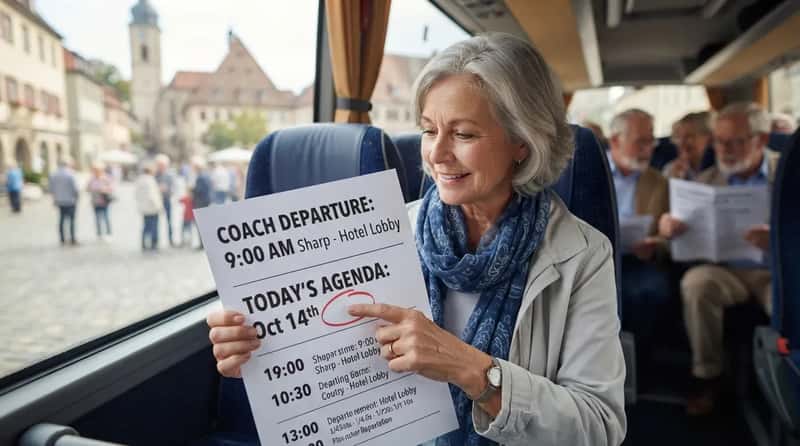
Some guides hand out printed schedules with large type, bold times, and a clear meeting point. It’s a small thing. It also solves the most common tour problem: nobody is quite sure when the coach leaves.
Phone-only itineraries can fail older travelers in a few ways. Batteries die, screens are small, and apps can be confusing. A single sheet of paper with the departure time circled prevents more missed buses than any announcement. The best guides also repeat the plan at dinner, so it’s heard twice.
Next comes a courtesy that shapes every walking tour, and it isn’t what the brochure promises.
#10 – The Walking Pace Set by the Slowest Shoe
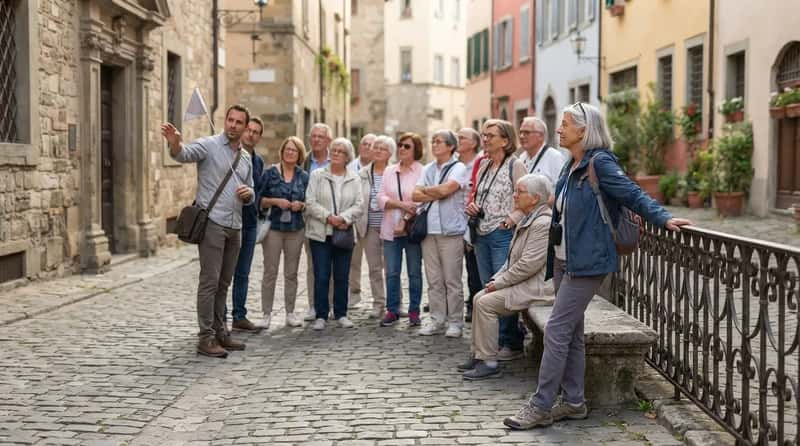
Watch a good guide lead a walking tour. The pace is slower than the group’s fastest walker and often slower than the guide’s own. Stops are built in, usually near benches, shade, or a handy railing.
Guides often disguise these breaks as storytelling. A pause to explain a building doubles as a rest for tired legs. Some travel advisors argue that “moderate walking” is the vaguest phrase in any brochure, since cobblestones and hills change everything. The guide who scouts the route in advance is usually the one who knows exactly where the hill is.
The next courtesy happens while you’re still asleep.
#9 – Luggage That Moves Without Anyone Mentioning It

Many multi-day coach tours include baggage handling. That means your suitcase goes from the coach to your hotel room without you hauling it. The guide coordinates it, and most travelers never see the effort.
Look closer and you’ll spot a few extras. A guide may check that a bag with medication isn’t buried in the hold, or that a heavy case doesn’t end up at the top of a staircase. The moment a bag appears at your door is the result of a list the guide checked before you were even awake. It also saves hotel lobbies a lot of chaos.
But where you sleep might matter even more.
#8 – Hotel Rooms Placed Near the Elevator
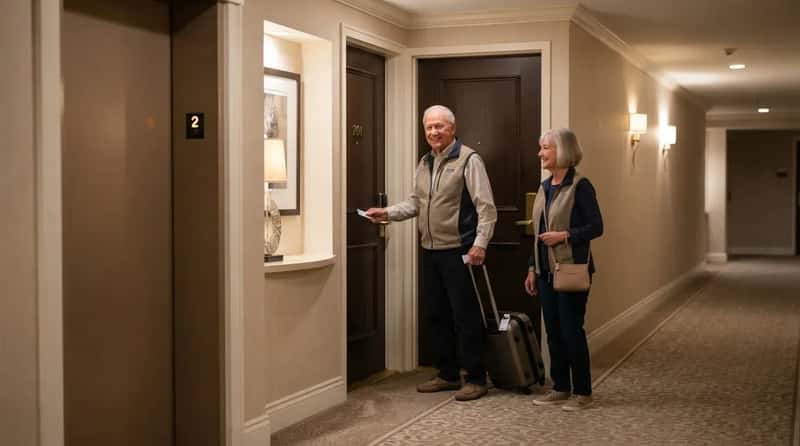
A long hallway at the end of a tiring day is a real obstacle. When operators and guides have a say in room assignments, many try to place older guests on lower floors or close to elevators. They rarely explain it at the front desk.
This is often arranged in advance, through the rooming list. A request noted at booking is far easier to honor than one made at 6 p.m. with forty people waiting. Smooth check-ins are usually decided weeks before the coach arrives. Guides who do this well make it look like luck.
Quick Compare
- Request at booking: It goes on the rooming list, so the room is ready when the coach pulls in.
- Request through the guide the day before: Often workable, but it depends on what’s still open.
- Request at the front desk: You’re competing with the whole group, and the easy rooms may already be taken.
The next item involves paperwork you will probably never see.
#7 – The Lift Request Handled Behind the Scenes
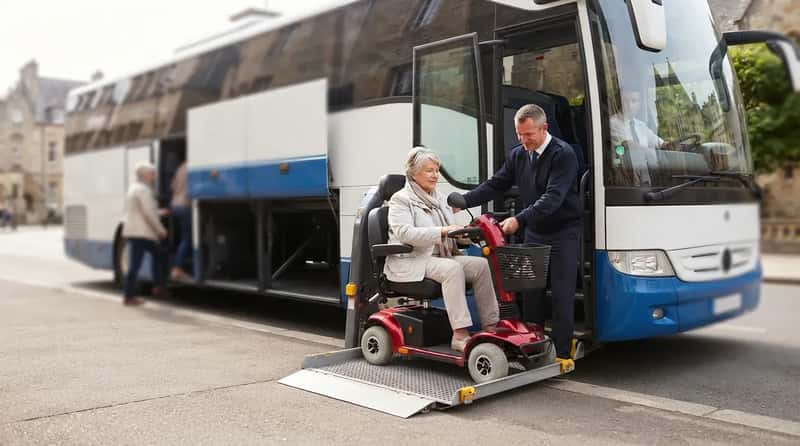
Travelers who use wheelchairs or scooters depend on advance coordination. Federal rules for over-the-road buses require operators to provide accessible boarding, generally with advance notice. A good guide treats that paperwork as part of the job, not a favor.
The courtesy is in what the passenger doesn’t have to do. They don’t chase down details at the curb, and the group isn’t left waiting while someone sorts it out. The best accessibility work is the kind nobody on the coach ever notices. It just looks like a smooth morning.
But the next courtesy comes in a plastic bottle.
#6 – The Water Bottle Handed Out “Because It’s Hot”
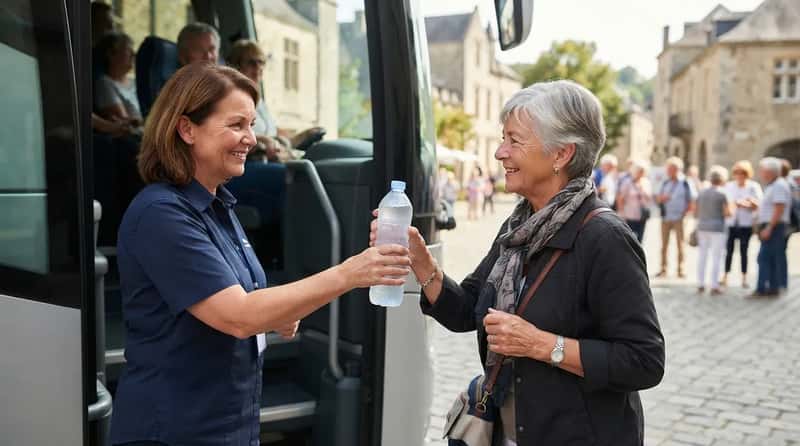
Guides often hand out water bottles at the start of the day. The reason given is usually the weather. The real reason is more specific: older travelers are more likely to get dehydrated without noticing.
The National Institute on Aging notes that the sense of thirst can fade with age. That means feeling fine is not proof of being hydrated. “Have some water, it’s on the house” is often a polite way of saying “please drink.” Many guides keep a cooler stocked for exactly this reason.
Now for the seating courtesy that divides tour fans.
#5 – The Seat Rotation That Quietly Skips Certain Riders
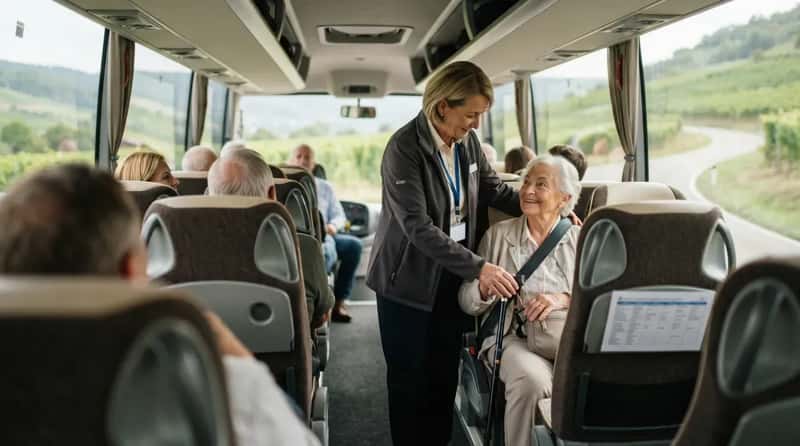
Many tours rotate seats daily so everyone gets a turn at the front. It sounds fair. Experienced guides, however, often bend the rule for people who struggle with steps, motion, or long walks down the aisle.
Some travelers call that unfair. Others say it’s the only sensible way to run a bus. The rotation chart is a guideline, and the guide’s judgment is the real rule. Done well, nobody has to explain themselves or ask for an exception.
Dinner reveals the next one.
#4 – Restaurant Tables Chosen for Quiet Corners and Short Walks
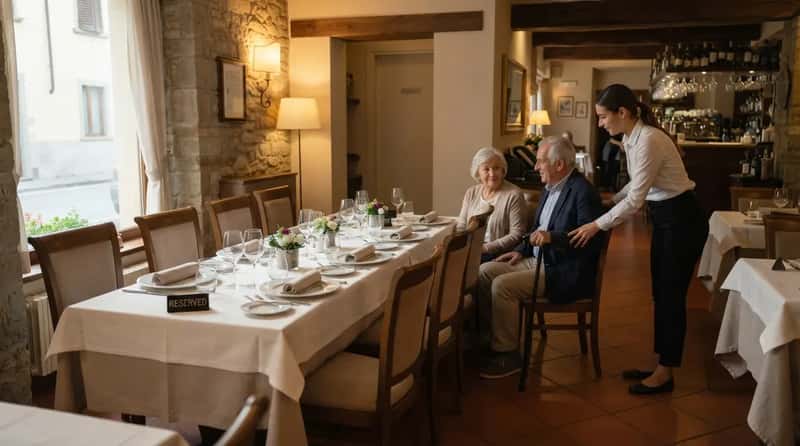
When groups eat together, guides often handle seating before anyone sits. Tables near the entrance, away from loud speakers, and close to restrooms tend to go to guests who need them. It looks like casual seating. It’s actually careful planning.
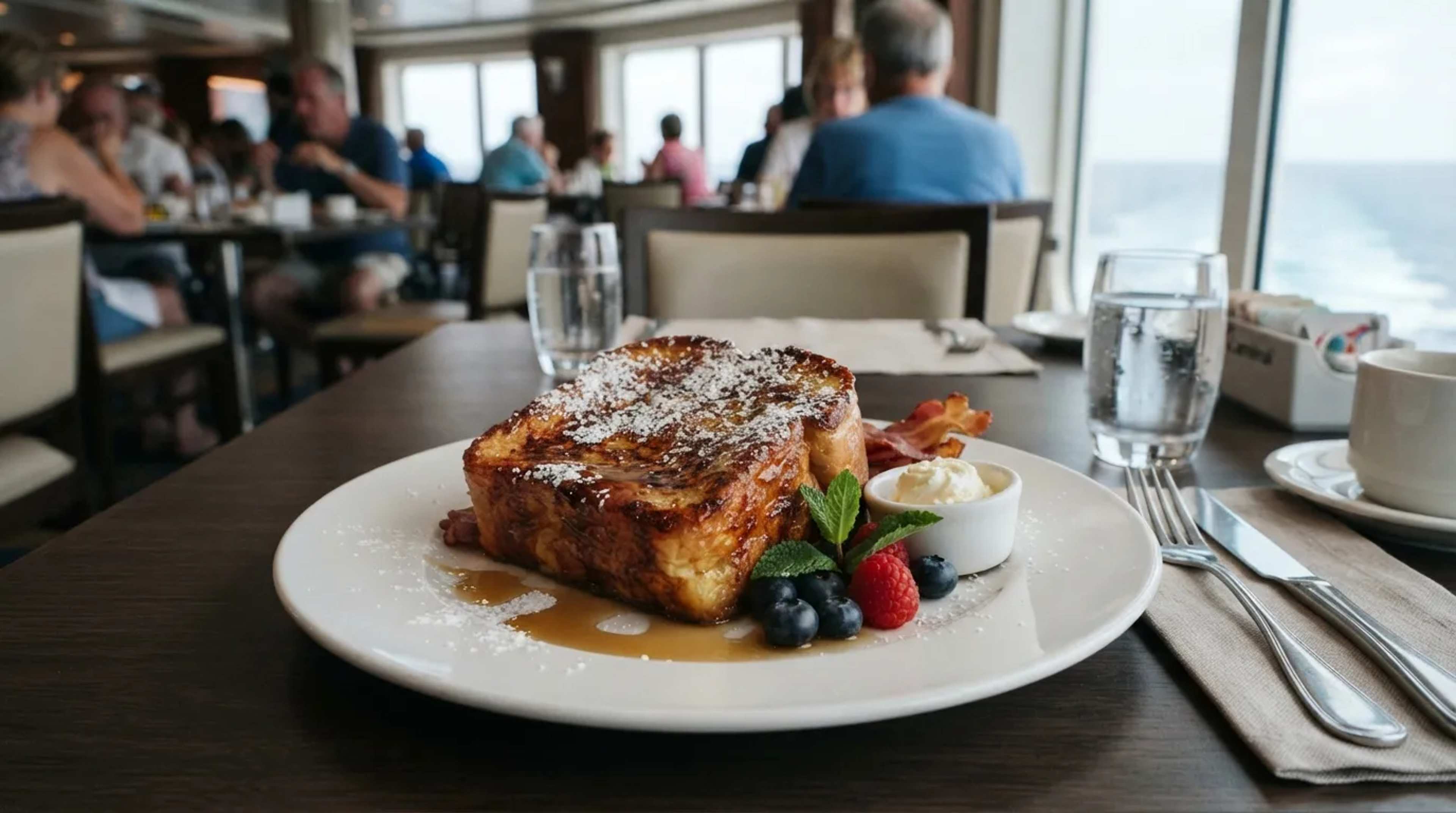
Menus are part of it as well. Many group meals are pre-ordered, which lets guides pass dietary needs along to the kitchen. The reason your meal arrives without a hitch is often a note the guide sent days earlier. Noise matters too, since a hearing aid in a loud room just amplifies the chaos.
Why It Stands Out
- The best tables are claimed before the group walks in.
- Dietary notes travel ahead of the coach, not after the complaint.
- Quiet corners help hearing aid wearers join the conversation.
- A short path to the restroom means no one has to weave through a crowded dining room.
The next courtesy is the one that makes “optional” mean something.
#3 – The “Optional” Excursion That’s Actually Optional
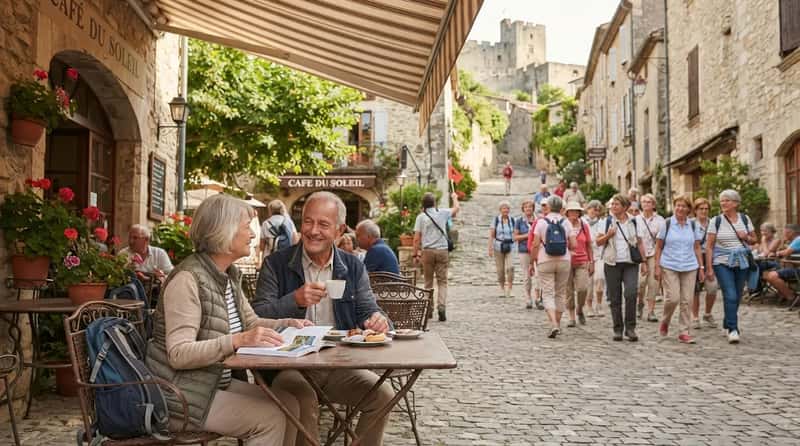
Every tour has activities labeled optional. Good guides make that word honest. They offer a real alternative, like free time in town or a quiet afternoon at the hotel, and they never make anyone feel they missed out.
Tired travelers often push through anyway, afraid of seeming boring. Guides who understand this present the rest option as a perfectly good choice, not a consolation prize. The traveler who sits out one stop often has the most energy for the best stop the next day. That’s pacing, and it’s one of the most underrated skills a guide has.
But none of this works without the person behind the wheel.
#2 – The Driver Who Brakes Like There’s a Full Cup in Every Hand
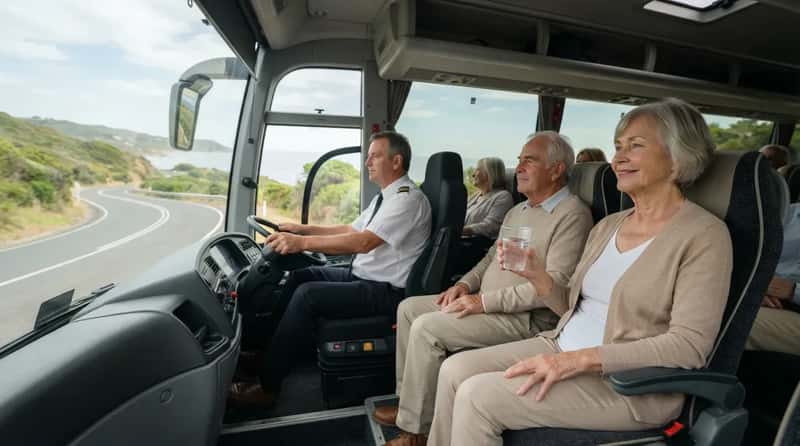
Coach drivers are rarely credited as courtesy providers. They should be. A driver who accelerates gently, brakes early, and takes curves wide is looking after every passenger who is standing or making their way down the aisle.
Federal rules also shape the day. For passenger-carrying drivers, the Federal Motor Carrier Safety Administration limits driving to 10 hours after eight consecutive hours off duty. That cap is why a good itinerary builds in breathing room rather than racing the clock. A relaxed driver is a safer driver, and passengers feel the difference.
The last courtesy happens after the coach is parked, and it’s the one people remember longest.
#1 – The Quiet Check-In After Dinner Nobody Asked For

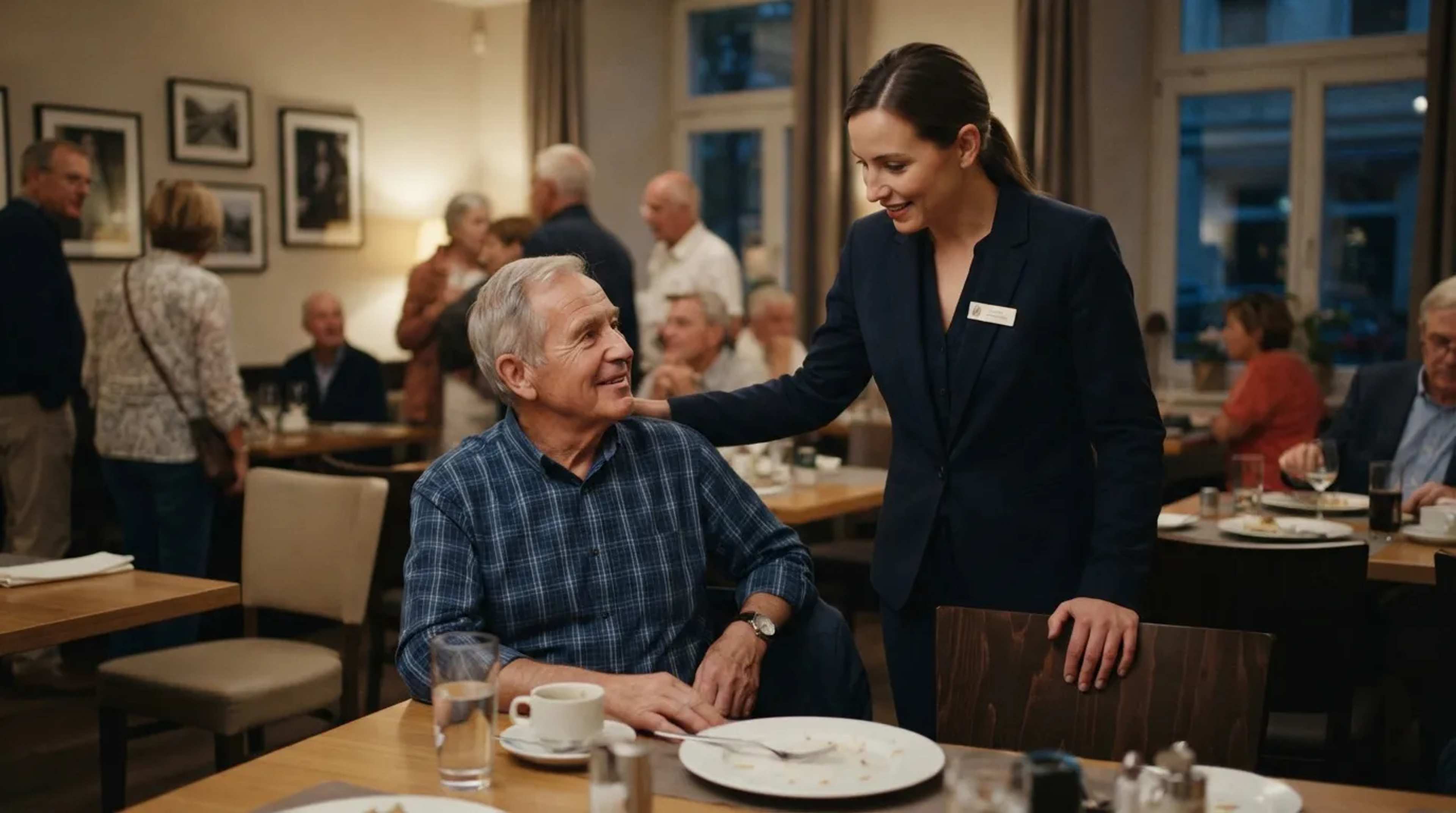
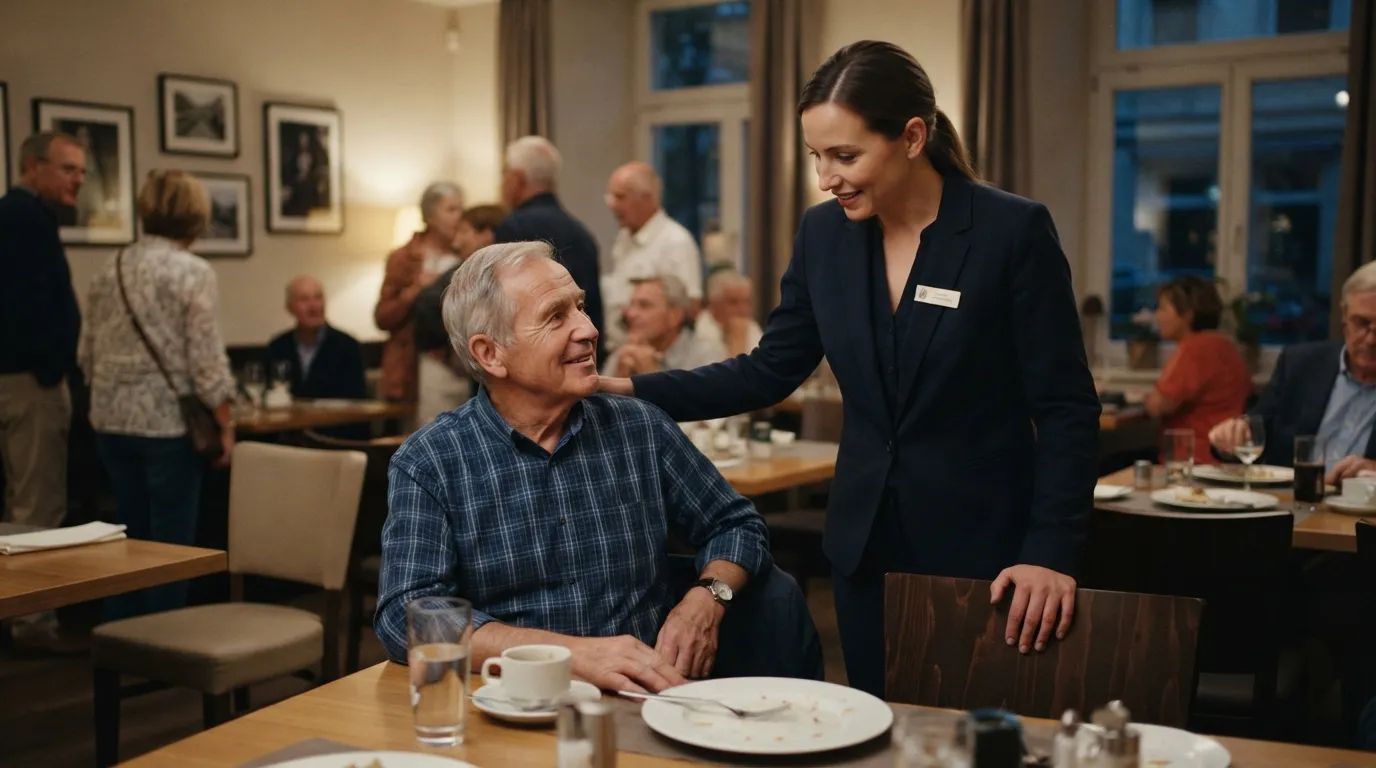
Here is the courtesy no itinerary lists. After the meal, a good guide stops by a table and asks how the knee is holding up. They remember who skipped breakfast and who looked tired on the last hill.
It lasts about thirty seconds and sounds like small talk. It’s actually how guides learn who needs a slower morning, a different seat, or a shorter walk tomorrow. It also tells a traveler something they rarely hear on a trip: someone noticed.
The best courtesies on a coach tour are the ones you never see. A steady hand at the step, a seat held near the door, a time said twice, a cold bottle of water, and a driver who brakes with care all add up to a trip that feels effortless.
Most passengers over 70 would never ask for any of it, which is exactly why good guides don’t wait to be asked. Next time you board a coach, watch the small moves. Somebody planned every one of them.