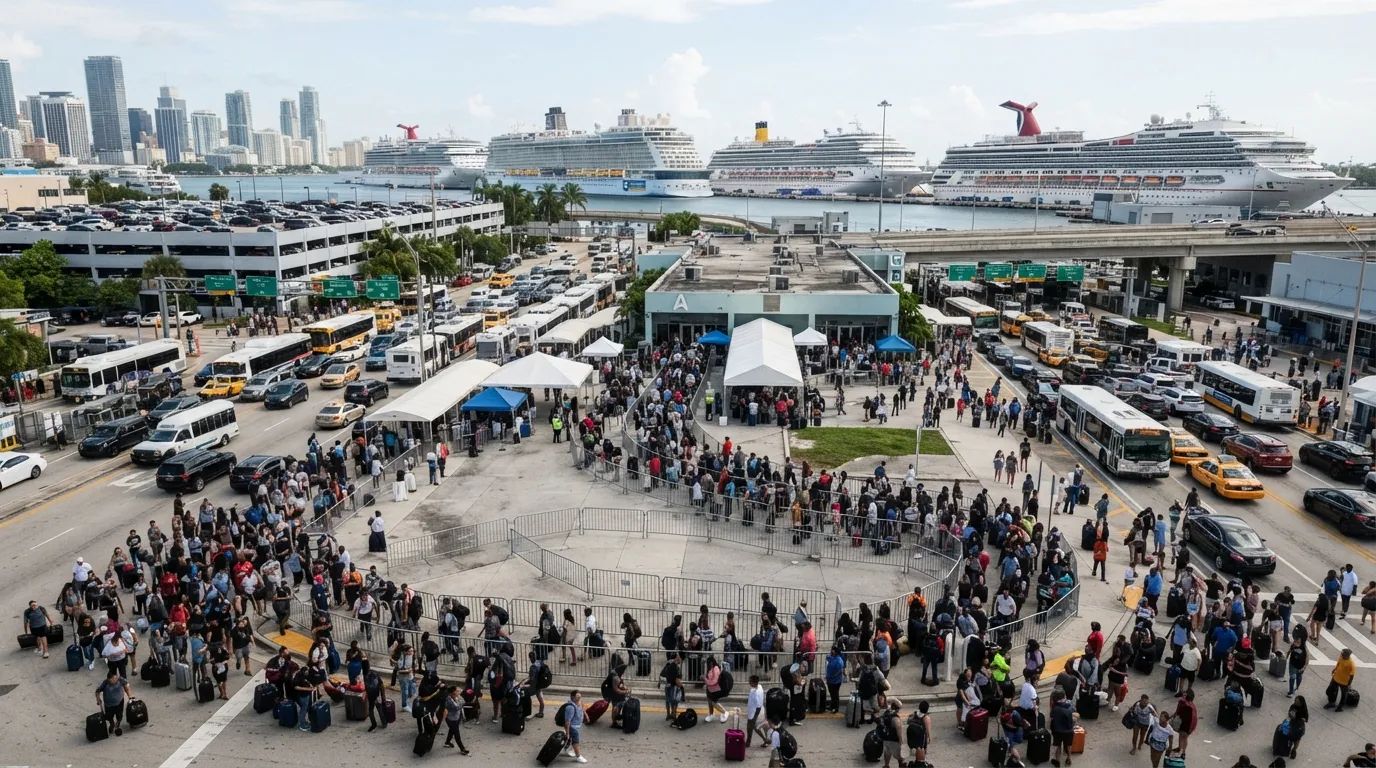
Two terminals can hand you the same boarding pass and give you completely different mornings. At one, you glide onto the ship before lunch. At the other, the first half of your vacation disappears into a parking-garage-and-hallway endurance test. Most people blame the cruise line, but the terminal you’re standing in matters just as much.
No port publishes an official average boarding time, so nobody can hand you a stopwatch ranking. This list is an editorial judgment built on passenger volume, how many ships turn around at once, how hard each terminal is to reach, and what port officials and cruise-planning guides actually report. We go from the smoothest to the slowest. The surprise is that the culprit often isn’t the line at all.
#16 Charleston: The Small Homeport Where One Ship Means One Line
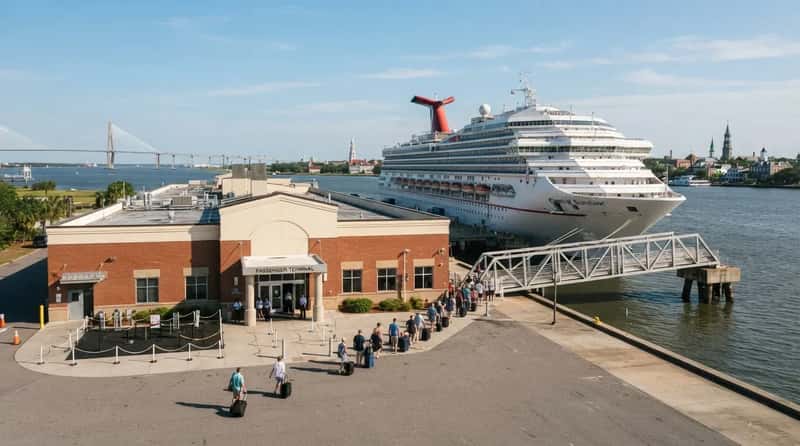
Charleston is the kind of port where the whole terminal serves a single ship. That’s the biggest secret to fast boarding. Fewer sailings per day means fewer strangers fighting for the same security lane and the same check-in desk.
Smaller homeports like this tend to feel closer to a quick airport check-in than a stadium entrance. You park, you walk in, and you’re on the ship before the day has really started.
Here’s the catch. A smooth terminal can’t rescue a bad arrival time. If you show up after check-in has closed, even by a few minutes, you likely won’t be allowed to board. The quick terminals punish lateness exactly as hard as the slow ones do.
#15 Jacksonville: The Drive-To Port With a Brand-New Fan Base
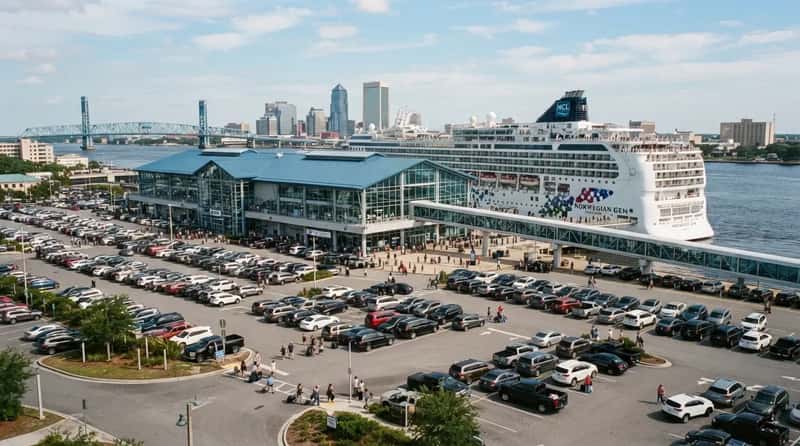
Jacksonville has become a favorite for people who would rather load the car than book a flight. Norwegian Cruise Line announced it would sail from the port for the first time, offering seasonal Bahamas and Eastern Caribbean cruises each year through 2028, starting in November 2025. A new brand arriving doesn’t automatically mean chaos. It usually means a manageable crowd at a terminal that isn’t juggling five ships.
The upside is that drive-up passengers skip the airport-to-pier transfer entirely. The Norwegian Gem covers the 2025–2026 season, and the Norwegian Dawn takes over for 2026–2027. That keeps daily volume modest compared with the Florida giants. A drive-to port with one big ship at a time is about as forgiving as American cruising gets.
At a Glance
- New arrival: Norwegian’s first Jacksonville sailings began in November 2025.
- Commitment: Seasonal Bahamas and Eastern Caribbean cruises each year through 2028.
- Ships: Norwegian Gem for 2025–2026, then Norwegian Dawn for 2026–2027.
- Boarding upside: Fewer simultaneous ships, and no airport transfer if you drive.
#14 Baltimore: The Easy Ride Everyone Forgets to Credit
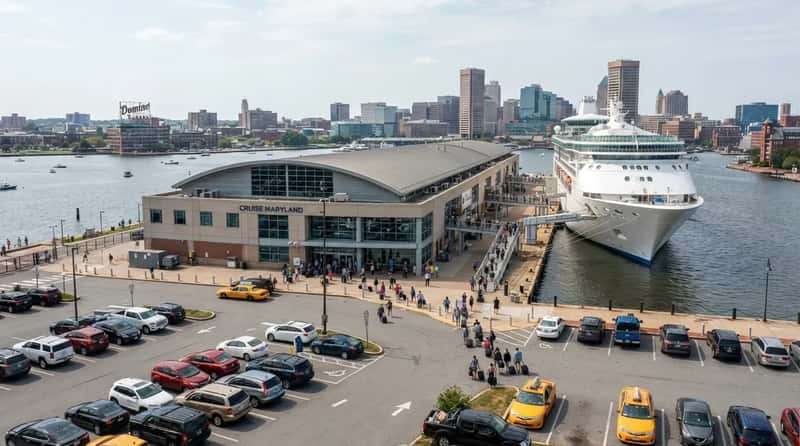
Baltimore doesn’t get the glamour treatment. It also doesn’t get the crowds that make Florida terminals feel like a theme park queue. As a drive-to port for the mid-Atlantic, it sees many guests arrive by car instead of in airport shuttle waves. That spreads arrivals out more evenly through the morning.
The honest caveat is that boarding speed still depends on your assigned window. Royal Caribbean’s app assigns specific check-in slots, and arriving outside yours can shuffle you into a later group. Follow the slot and a mid-size terminal like this tends to move quickly. Ignore it and you’ve built your own delay.
#13 Tampa: Where the Real Wait Happens Before You Reach the Ship
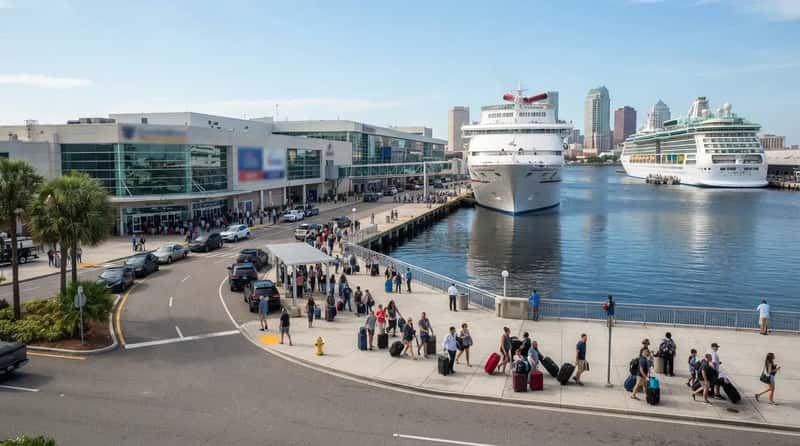
Tampa is a multi-terminal Gulf Coast port that hosts several big cruise brands. Boarding itself is usually unremarkable. What catches people off guard is the shuffle: finding the right terminal, handing off luggage, then clearing the lines your cruise line sets up.
Mix-ups between terminal assignments are a classic way to lose time before you’ve even met a staff member. A wrong turn at a multi-terminal port can cost more minutes than any line. Tampa still ranks on the quick side of the list, but only if you know which door you’re aiming for.
#12 Seattle: A Seasonal Rush That Compresses Everything
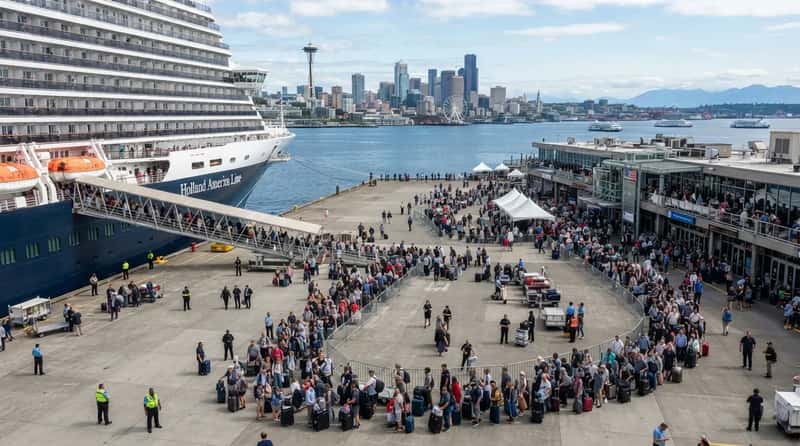
Seattle’s cruise business is built around the Alaska season. That means big ships, full cabins, and a lot of turnarounds packed into a few months. Outside that window, the port is quiet. Inside it, the pressure is intense.
Thousands of passengers leave, thousands more arrive, and the ship has to be cleaned and restocked in between. That turnaround is the hidden rule of every embarkation day. Show up too early and you may wait, especially if the previous cruise’s passengers are still disembarking. Seattle guests who arrive at dawn often discover the ship simply isn’t ready for them.
#11 Vancouver: The Alaska Gateway Where Documents Are Actually the Bottleneck
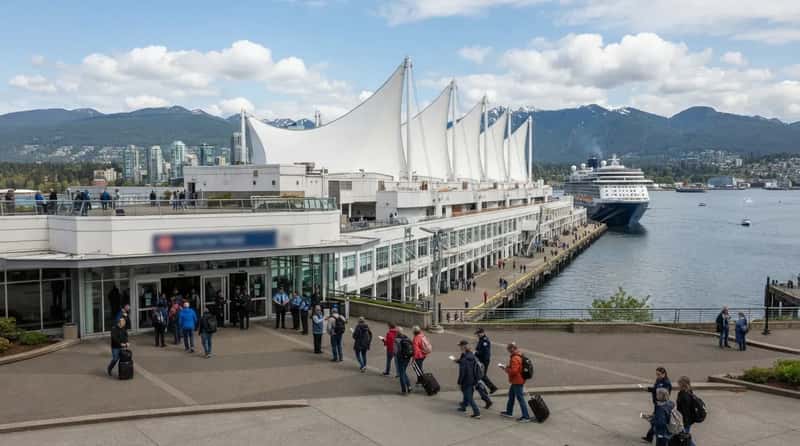
Canada Place sits right on the downtown waterfront, which makes arrival feel effortless. It’s also an international departure for many travelers, so travel documents get a closer look than at a domestic port. A missing passport can end your trip in a single moment. Document trouble is a bigger risk here than any line.
Be careful with advice that says “just show up early,” because arriving before your window can mean standing outside anyway. Check your cruise line’s document requirements for your exact itinerary before you leave home. The ship will wait for almost nothing, and it certainly won’t wait for a forgotten passport.
#10 Los Angeles: The Long Drive That Hides the Real Delay
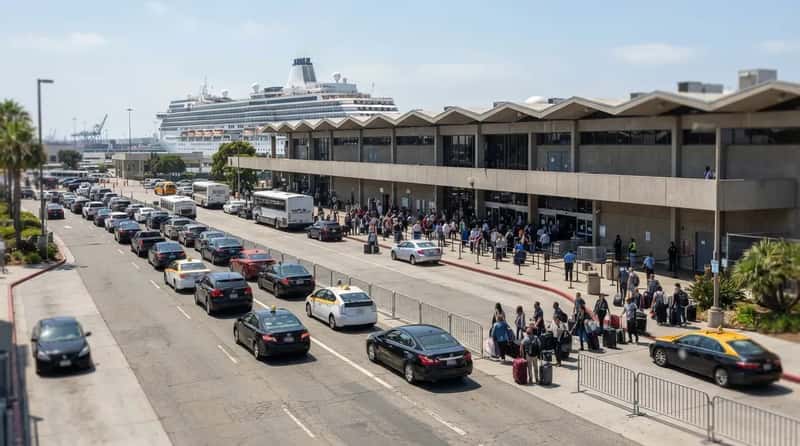
Los Angeles cruise passengers board in San Pedro, and the bigger story is often the trip to get there. Southern California traffic can eat more of your morning than the terminal ever will. Once you’re inside the building, the process looks like any other major turnaround: security, check-in, and a wait for your boarding group.
The twist is that guests often leave extra early for the freeway and arrive far too soon. Most major lines now assign boarding windows rather than open boarding. Arriving two hours ahead of yours doesn’t speed anything up. It just moves your waiting from the freeway to a curb.
Worth Knowing
- Location: Ships board in San Pedro, not downtown Los Angeles.
- Biggest variable: The freeway drive, not the terminal itself.
- Inside the building: Security, check-in, then a wait for your boarding group.
- Early-bird myth: Beating your assigned window rarely gets you on the ship sooner.
#9 Cape Liberty: New York’s Quiet Back Door With a Surprise Cutoff
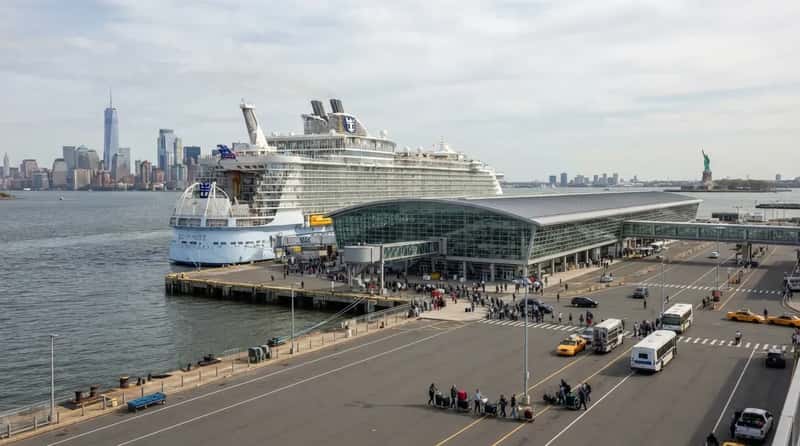
Cape Liberty in Bayonne, New Jersey, serves the New York area without the Manhattan street grid. For many guests it means a smoother drive and a calmer drop-off than the city terminals. There’s a wide approach and room to stage cars and luggage, which makes the whole morning feel less frantic.
Here’s what people overlook. Every cruise line sets a hard cutoff tied to your ship’s departure. Royal Caribbean requires guests to be fully checked in no later than 90 minutes before the published sail time. That means a 4 p.m. ship really wants you at the pier by 2:30 p.m.
#8 Brooklyn: The Skyline View That Costs You a Traffic Gamble
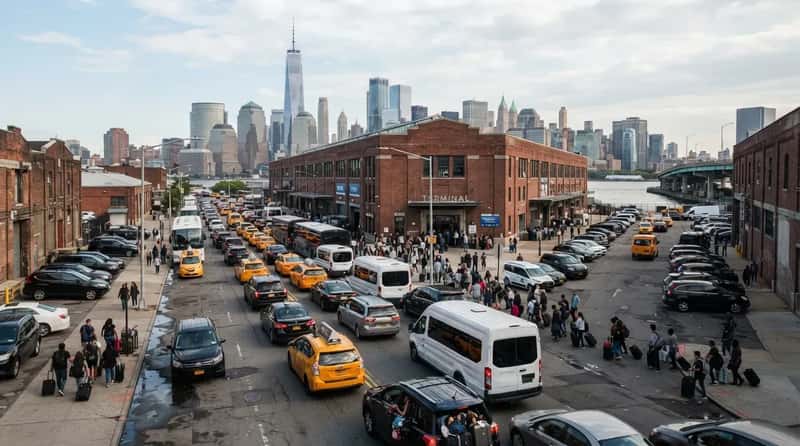
Brooklyn’s Red Hook terminal delivers a skyline view and a headache getting there. Streets around it are tight, and a single backup can wreck a plan. One cruise-transfer guide describes a scenario where an arrival at JFK involves 90 minutes clearing immigration, 30 minutes at baggage claim, and 60 to 90 minutes in traffic to Red Hook.
The boarding process itself isn’t the slow part. The surrounding streets are. The terminal isn’t the bottleneck here; the borough is.
#7 Manhattan: The Terminal That Tests Your Patience Before You Reach the Door
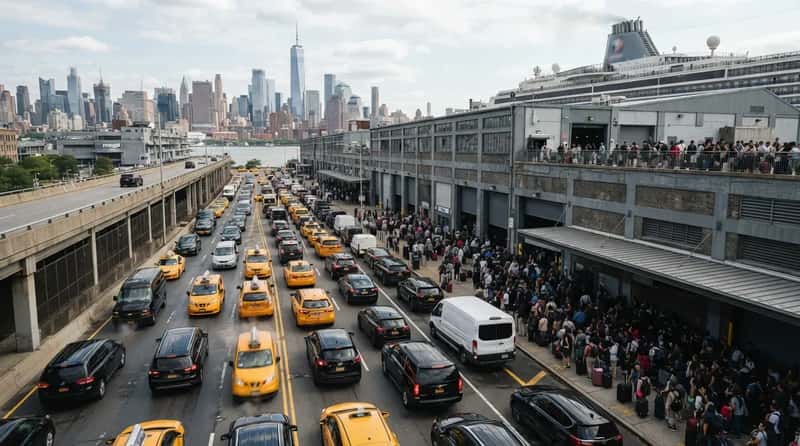
Manhattan’s cruise terminal puts you minutes from Midtown. That sounds like the fastest start imaginable. It’s also a congested stretch of the West Side where taxis, rideshares, and luggage vans all converge on the same few blocks. A short mileage can still produce a long ride.
Plenty of travelers argue the smartest move in New York is arriving the day before and treating embarkation morning as a short stroll. That’s an opinion, but it fits how unforgiving the cutoffs are. Show up at 3:15 p.m. for a 4 p.m. departure and you may find the gangway already closed.
Quick Compare
- Manhattan: Minutes from Midtown, but every car and van fights for the same West Side blocks.
- Brooklyn: A skyline view, plus tight Red Hook streets where one backup can wreck the plan.
- Cape Liberty: Bayonne’s wide approach leaves room to stage cars and luggage, so drop-off feels calmer.
#6 New Orleans: A Million-Plus Passengers and a Surprisingly Tight Schedule
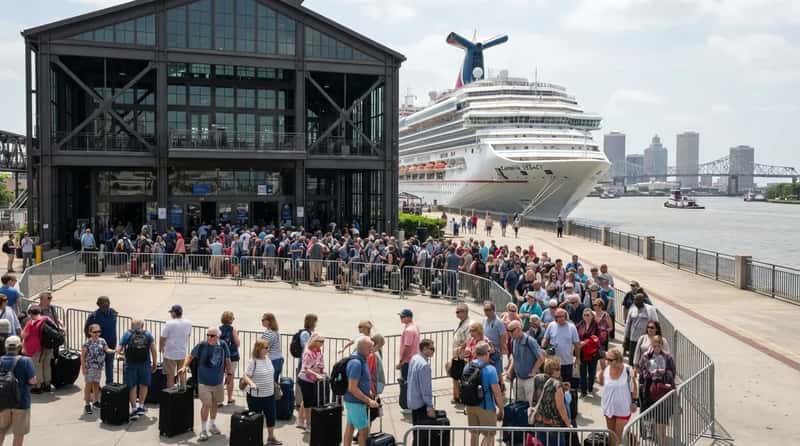
New Orleans is no small-time port. It handled 1,067,407 cruise passengers in 2025, enough to put it among the busier ports in the country. The terminals sit near the city’s riverfront, so hotel guests often walk or take a short ride.
Volume here is modest next to the Florida giants, which is why New Orleans lands in the middle of the ranking. It isn’t slow because it’s overwhelmed. It’s slow when everyone decides to stroll over at the same time.
#5 Galveston: The Port Where Published Times and Real Times Don’t Match
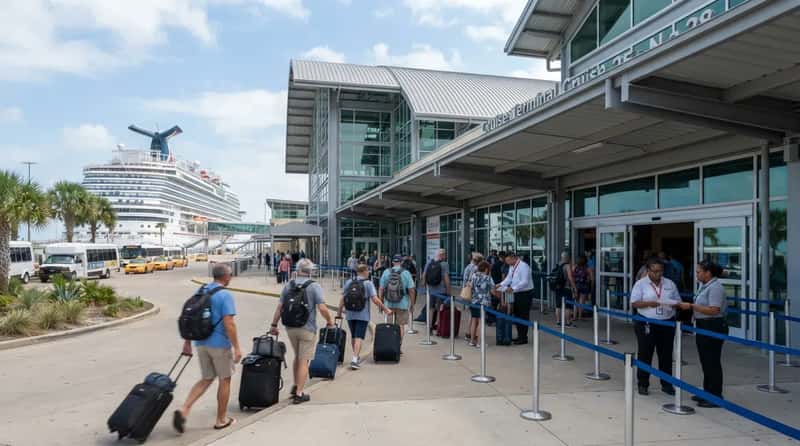
Galveston is one of the few ports where official numbers and real-world numbers can be compared side by side. One guide notes Carnival’s published boarding start is 12:30 PM, but boarding at Galveston typically begins well before that, around 11:00 to 11:30 AM. That gap is a gift for people who read the fine print. It’s a trap for people who don’t.
The same guide estimates the line wait at 10 to 20 minutes at the optimal time and 30 to 60 minutes at the noon-to-2 p.m. peak. Another source puts the full process at about 45 to 60 minutes. Add Saturday-morning traffic on I-45 from Houston, and the clock gets tighter before you ever see the ship.
#4 Port Everglades: The Busy Neighbor That Keeps Getting Busier
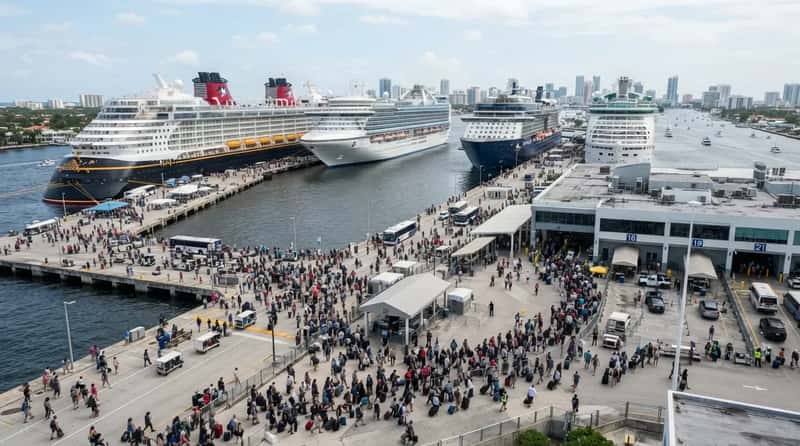
Port Everglades in Fort Lauderdale doesn’t get Miami’s headlines. It has the numbers, though. The port handled about 4,773,873 cruise passengers in fiscal year 2025, up 16% from the previous year. More passengers means more ships, and more ships mean more overlapping check-ins.
Growth is the story here. When a port adds ships faster than it adds terminal space, boarding stretches out, especially on peak days. That’s why Port Everglades sits on the slower end of this list.
#3 Port Canaveral: The World’s Busiest Port Still Has a Weak Spot
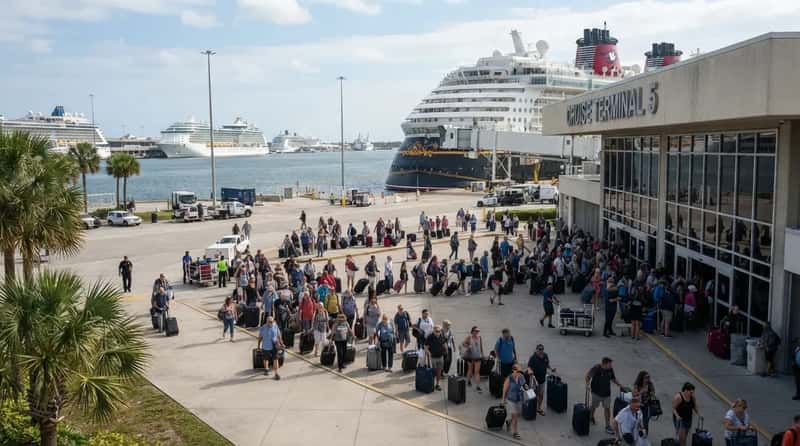
Port Canaveral grabbed the title of the world’s busiest cruise port. It welcomed 8,602,047 cruise passengers in fiscal 2025, up from 7,592,535 in 2024. It homeports 18 ships across 7 cruise lines, with more than 1,000 sailings scheduled annually. That’s a lot of people moving through one channel.
The port is building to keep up. The Terminal 5 expansion will nearly double that terminal’s footprint, from 90,000 to 170,000 square feet. Until projects like that land, the port has more passengers than some of its older buildings were designed for. That’s the reason it ranks near the top of the slow list.
#2 PortMiami’s Terminal AA: Built for Speed, Tested by Scale
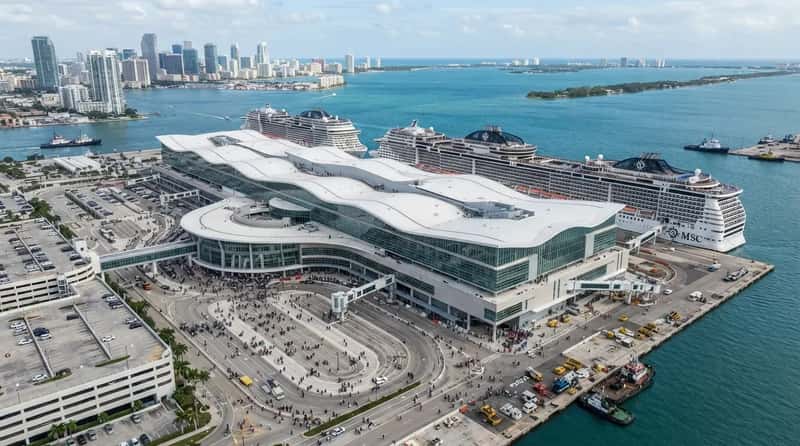
MSC’s Terminal AA is a giant. It opened as the world’s largest cruise terminal, at 492,678 square feet, designed to handle three MSC ships at once and up to 36,000 embarking and disembarking passengers a day. A building that size is meant to prevent bottlenecks. That’s the idea, at least.
Many travelers assume a newer terminal automatically means a faster morning. Capacity and speed aren’t the same thing. A terminal can be spacious and still have a long wait when every ship fills at once.
#1 PortMiami on a Turnaround Sunday: The Slowest Morning in American Cruising
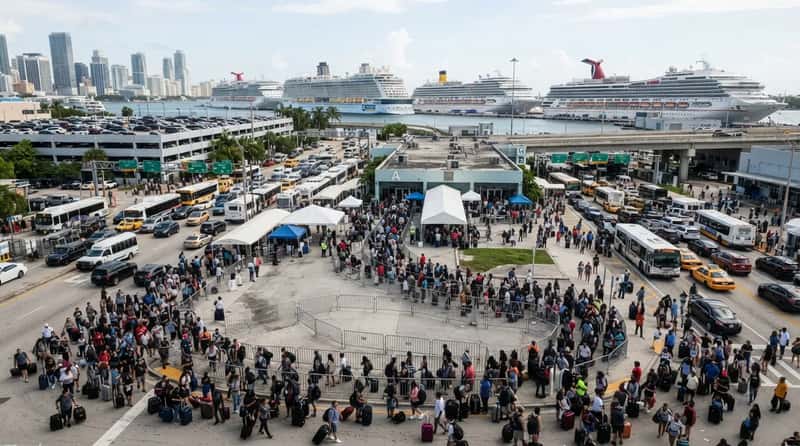
PortMiami is the biggest test of boarding patience in the country. On Sunday, November 30, 2025, it set a daily record of 75,201 passengers, with ten cruise ships in port that day. Picture all of them moving through the same few square miles before late afternoon.
The lines aren’t the only drag. Parking garage access and terminal shuttle logistics can add 20 to 30 minutes on busy embarkation days. Meanwhile, Royal Caribbean Group is building a new Terminal G for its largest ships. The strain is real, and so is the investment.
No terminal on this list is secretly terrible. The biggest difference between a quick morning and a long one is usually when you arrive, not where you sail. Stick to your assigned window, finish check-in early, and leave a cushion for the roads around the port.
Because the first hour of a cruise is the only part nobody posts a photo of, and it quietly sets the mood for everything after it. Which terminal has tested your patience the most?