Airlines print hundreds of rules, and you have probably watched several of them get ignored in real time. Some get a shrug from crew every single day, while a handful are backed by federal agencies with zero sense of humor.
The trouble is that nothing on your boarding pass tells you which is which. That confusion costs passengers money, comfort, and sometimes their seat.
Air travel runs on two very different rule books: federal law, and the airline’s own contract of carriage, the fine print you agree to when you buy a ticket. Count down all 16 and you’ll see why the last rule quietly controls everything else on this list.
#16 – The “One Carry-On, One Personal Item” Rule
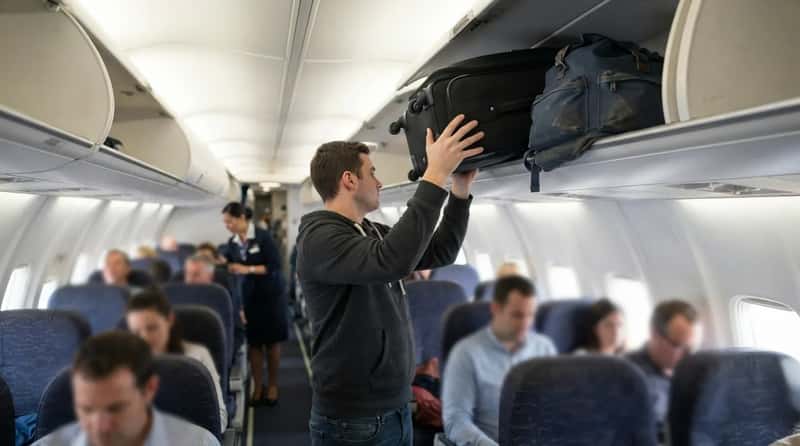
You have probably seen it on your last flight: a passenger hoisting a full-size roller bag and a bulging backpack into the overhead while nobody blinks.
Most airlines allow one carry-on plus one personal item per passenger. Reddit threads are full of complaints about why the rule exists at all, including stories of flight attendants watching passengers stow two large roller bags without a word.
On flights that aren’t full, the count is often overlooked. Enforcement tends to kick in only when the overhead bins are actually running out of space, which makes this a rule of convenience, not consistency.
Ultra-low-cost carriers are the exception, because bag fees are part of their business model. Spirit and Frontier, for example, charge extra for a full-size carry-on, so their gate agents tend to look much harder.
But that’s nothing compared to what airlines let slide with #15…
#15 – Carry-On Size Limits
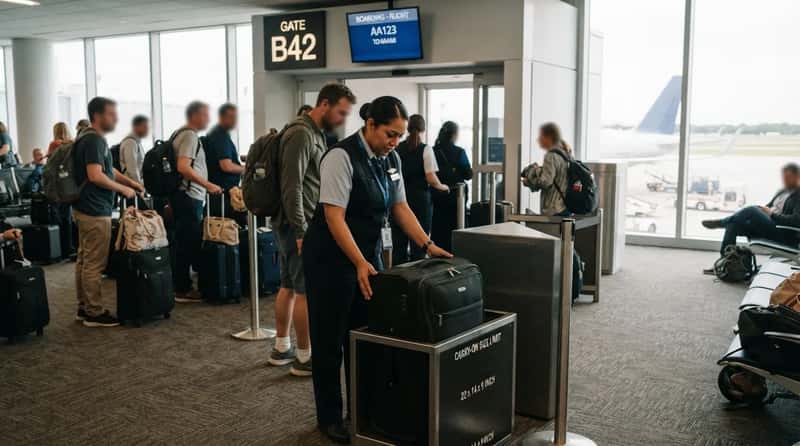
Every major airline publishes a maximum carry-on size. Virtually none enforce it consistently at the gate.
The common U.S. standard is 22 x 14 x 9 inches, including wheels and handles. Some airlines are testing automated scanners that measure bags on the spot, but that technology is still far from universal.
At most airports, agents judge bags by eye. A roller that’s a couple of inches over the limit rarely gets flagged unless it visibly won’t fit in the sizer box.
So the real test is simpler than any tape measure. If it closes in the overhead bin, nobody will say a word.
But wait until you see what airlines say about #14…
#14 – Dress Code Enforcement
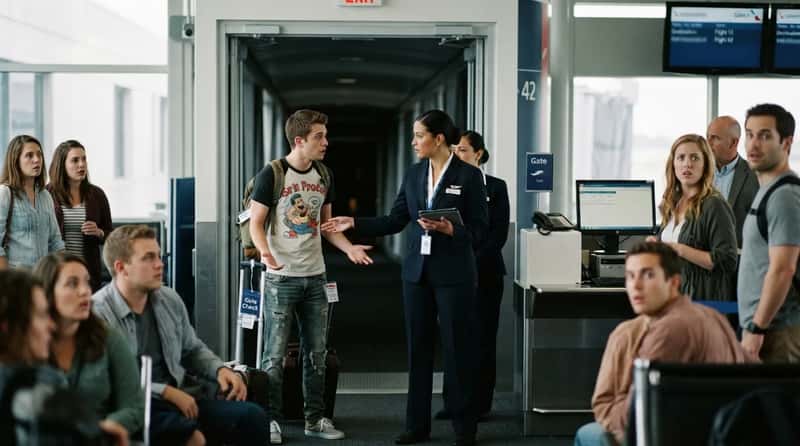
Yes, airlines have dress codes. No, they almost never use them, until they suddenly do.
There is no single, universal dress code. Carriers like United, American, Delta, and Spirit all have contract language that lets them refuse passengers over attire they consider offensive or inappropriate.
Because the standard is so subjective, gate agents and crew members make the call. What looks fine to one passenger can cross the line for staff, especially if another passenger complains.
At a Glance
- Who has the language: United, American, Delta, and Spirit all reserve the right to refuse inappropriate attire.
- Who decides: A gate agent or crew member, on the spot.
- What usually sets it off: A complaint from another passenger, not a routine check at the door.
- Where to find it: The refusal-of-transport section of the airline’s contract of carriage.
That fuzziness has fueled viral disputes, including passengers who said they were pulled from Spirit flights over crop tops. These stories keep landing in the news because the contract leaves so much to one employee’s opinion.
But #13 is where enforcement gets even more unpredictable…
#13 – The Hygiene and Odor Clause
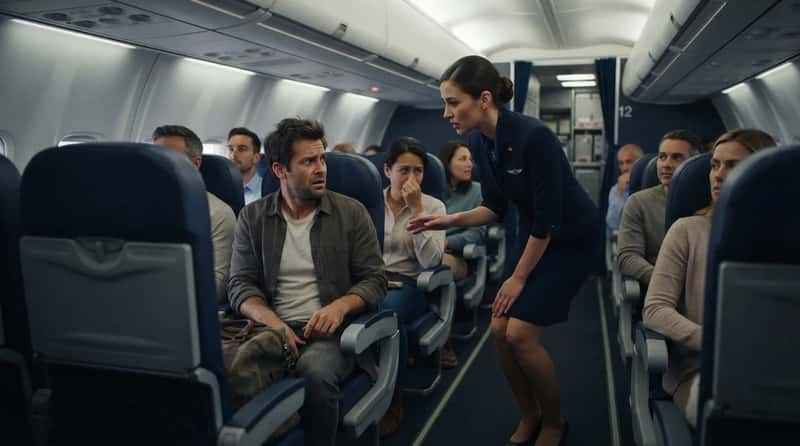
Most passengers have never heard of this one, yet it sits in almost every major carrier’s contract.
Delta’s contract of carriage, for example, lets the airline refuse or remove a passenger whose conduct, attire, hygiene, or odor creates an unreasonable risk of offense or annoyance to others. Other carriers have similar language.
In practice, flight attendants almost never invoke it. The clause demands a subjective judgment call and can easily spark confrontations or discrimination complaints.
It exists as a last resort, not a front-line tool. That means it comes out only in genuinely extreme cases, usually after other passengers have complained.
But #12 shows that even rules passengers expect to be enforced aren’t always…
#12 – Boarding Zone Order
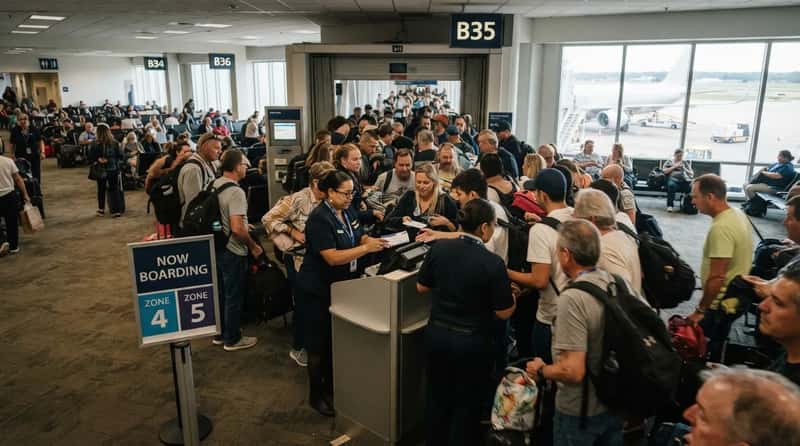
Every airline assigns boarding zones, and plenty of passengers ignore them completely.
If you’re in Group 9, cutting the line is technically against the rules. Some airlines have added gate scanners that sound an alert when someone boards before their zone is called, but the more common sight is a crowd hovering at the gate, a habit with its own nickname: “gate lice.”
Gate agents often let early birds slide rather than cause a scene. During a tight turnaround, speed matters more than order.
The irony: the people who lose the most are the late-boarding coach passengers, because the early crowd has already claimed the bin space.
And #11 has a fascinating enforcement blind spot…
#11 – Seat Selection After Boarding
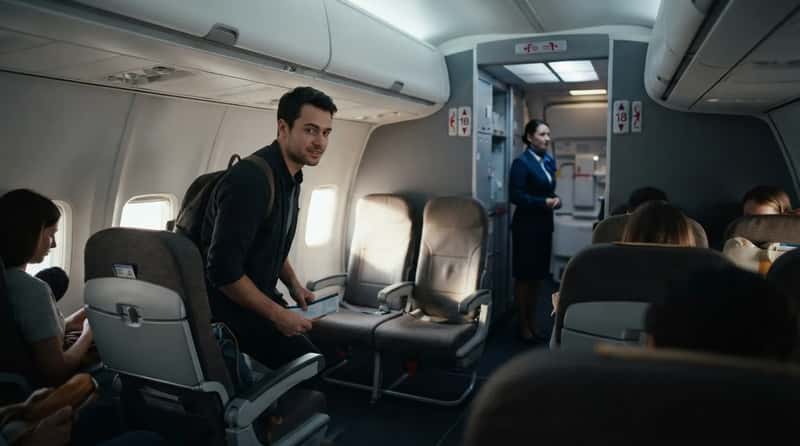
You paid for seat 24B. The moment the door closes, you eye that empty exit row.
Airlines technically require you to sit in your assigned seat. Moving to a better one, like an exit row or premium economy, without paying is against the rules.
In reality, on flights with plenty of empty seats, crew often give a quiet nod to switchers once the door is closed. It’s especially common on long routes, where a comfortable passenger means fewer call-button requests.
Worth Knowing
- Exit-row passengers must be willing and able to help during an evacuation.
- Passengers under 15 can’t sit in an exit row.
- Crew may ask you to confirm you qualify, and can move you if you don’t.
- Paying extra for the seat doesn’t waive those requirements.
The unspoken rule is to ask the crew quietly instead of just moving, and never to slide into business class uninvited. On smaller planes they may say no anyway, because where passengers sit can affect weight and balance.
But the next rule is one passengers can use against airlines, and usually get away with it…
#10 – The 24-Hour Cancellation Rule (and Its Fine Print)
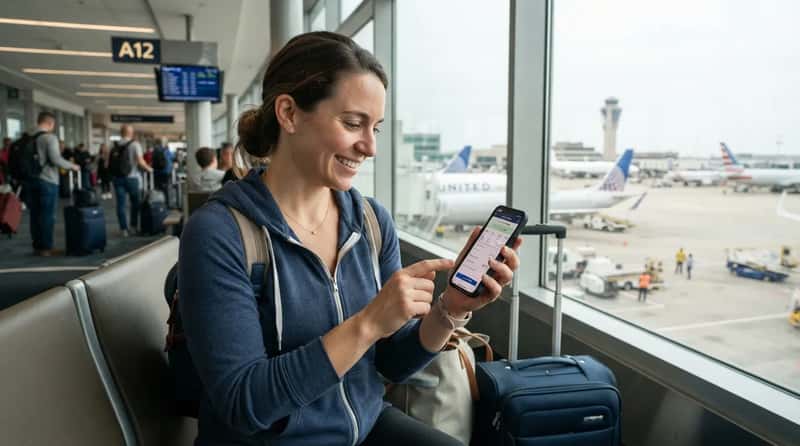
You’ve probably heard that you can cancel any flight within 24 hours of booking for a full refund. That’s mostly true, but the fine print matters.
The Department of Transportation requires airlines to let you cancel within 24 hours for a full refund, or to hold the reservation at the quoted fare. It applies only to tickets bought at least seven days before departure, and tickets from third-party sites can come with different terms.
Airlines routinely honor these refunds without pushback. It’s one of the rare rules that works in passengers’ favor, but it only helps if you know to ask.
A newer DOT rule also requires automatic refunds when an airline cancels a flight or makes a significant change and you decide not to travel. That includes domestic delays of three hours or more and international delays of six hours or more.
But #9 involves a rule that almost everyone on every flight breaks…
#9 – Electronics in “Airplane Mode”
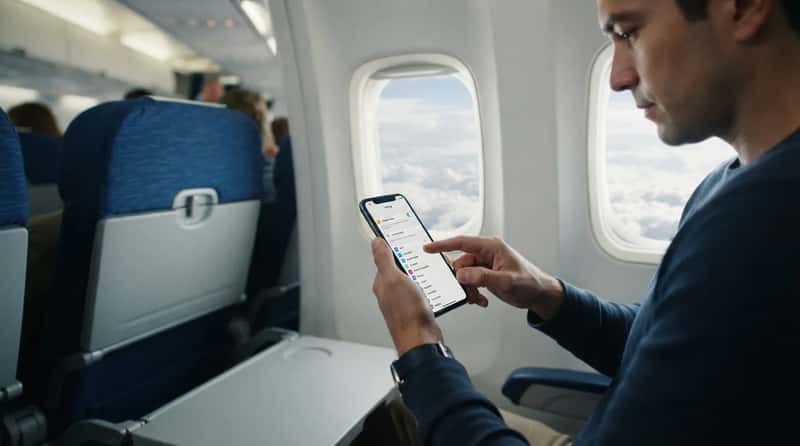
Flight attendants announce it before every departure. Plenty of passengers don’t fully comply, and almost none are ever caught.
Federal rules expect passengers to switch their phones to airplane mode or otherwise turn off cellular service. The requirement dates back to old worries about radio interference with cockpit systems.
In 2013, an FAA advisory committee concluded that most commercial airliners can tolerate the radio signals from personal devices. The rule stayed on the books anyway, and airlines still ask you to follow it.
Airlines have no practical way to verify compliance seat by seat. Enforcement rests on the honor system and whatever a flight attendant happens to see.
The bottom line: the rule exists, but the enforcement mechanism basically doesn’t.
But #8 is a rule that trips up frequent flyers and casual sippers alike…
#8 – Alcohol Limits on Board
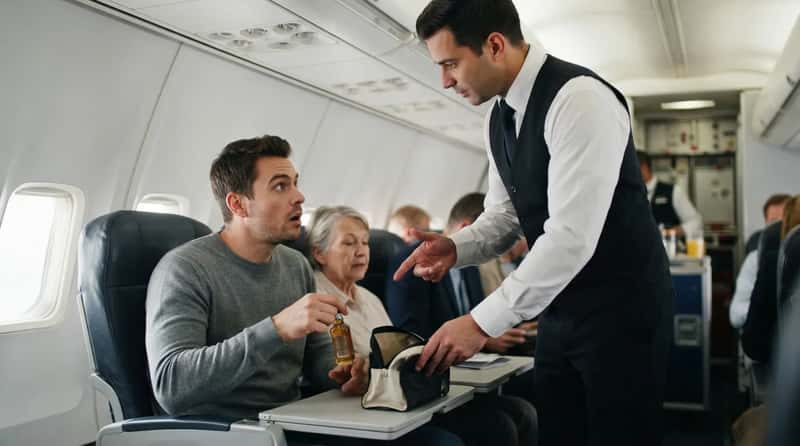
Federal rules bar airlines from serving alcohol to anyone who appears intoxicated. Yet crew on busy flights often avoid confrontations, and passengers who pre-game in airport bars are rarely assessed before boarding.
Separate federal hazmat rules cover the bottles you pack. Drinks at 24% alcohol by volume or less are unrestricted, while stronger ones up to 70% are capped at five liters per passenger in checked bags, in unopened retail packaging.
The wrinkle most people miss: you can’t drink your own alcohol on board, even if you bought it duty-free. Federal regulations say alcohol must be served by the airline.
Enforcement varies wildly by carrier and crew. Flight attendants tend to step in when someone is loud, pouring from a bottle in plain view, or bothering the people around them.
But #7 is a rule where the enforcement gap has a real cost to passengers…
#7 – Gate Change Notification Obligations
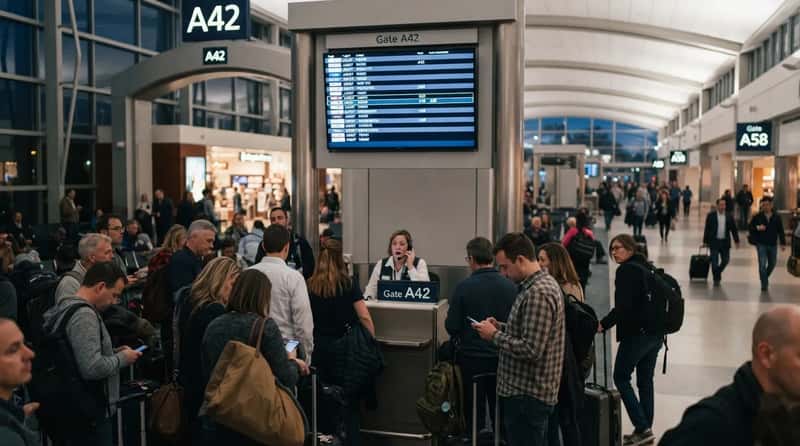
Airlines are supposed to notify passengers of gate changes promptly and clearly. In practice, the standard is loose and largely self-policed.
Most of those promises live in each airline’s own rules, which aren’t government regulations and don’t carry the same force. The DOT accepts complaints, but airline rules are not typically enforced by the federal government.
Gate changes are a known source of missed flights. Yet a passenger who misses a connection because of a poorly communicated switch has limited formal recourse under U.S. law.
The duty to notify exists in most contracts of carriage, but the teeth behind it are minimal. Passengers rarely pursue formal complaints because the effort usually outweighs the payoff.
But #6 is where things get legally interesting…
#6 – Overbooking and Voluntary Bumping Sequence
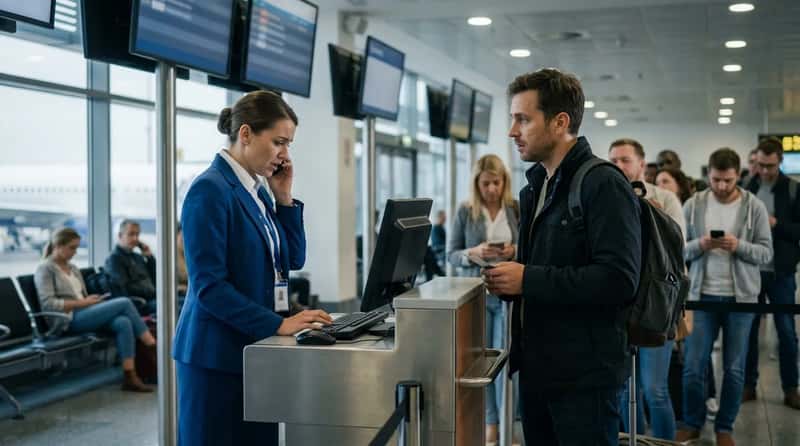
You know airlines overbook. What most people don’t realize is that a specific legal sequence applies before they can bump you against your will.
Overbooking isn’t illegal, and airlines do it to make up for no-shows. When a flight is oversold, DOT rules require the airline to ask for volunteers and offer compensation before bumping anyone involuntarily.
Skipping that step is one of the few places where airlines face real federal scrutiny. The issue exploded into public view in 2017, when a passenger was dragged off a United flight in Louisville after refusing to give up his seat.
Quick Compare
- Rebooked within 1 hour of original arrival: no compensation owed.
- 1 to 2 hours late (domestic): 200% of your one-way fare, up to $1,075.
- Over 2 hours late (domestic): 400% of your one-way fare, up to $2,150.
- How it’s paid: cash or check on request, and you can decline a voucher.
The rule airlines actually follow: volunteers first, always. Involuntary bumping is a last resort, because the compensation required by law makes it expensive.
But #5 reveals the biggest gap between what’s written and what’s real…
#5 – Compensation for Flight Delays
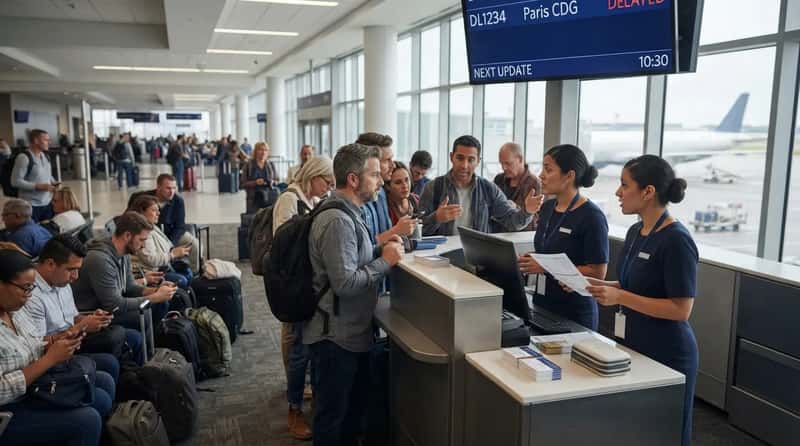
Here’s a rule that surprises almost everyone: in the United States, no federal law requires airlines to compensate you for a delayed flight.
Europe works differently, where passengers can claim set payouts of up to 600 euros for long delays in many circumstances. The U.S. has no such system, only refunds and whatever the airline chooses to offer.
If your flight is canceled or significantly changed and you don’t want the alternative, you’re entitled to a refund, not a payout. Meal credits, hotel rooms, and vouchers are up to the airline unless its own commitments say otherwise.
The DOT keeps a public dashboard showing which airlines promise meals or hotels for delays they cause.
This is one of the biggest gaps between what passengers assume and what the law provides. Many travelers accept a voucher without realizing they were owed cash under the refund rule for canceled flights.
But #4 is a rule enforced with zero flexibility…
#4 – Tarmac Delay Time Limits
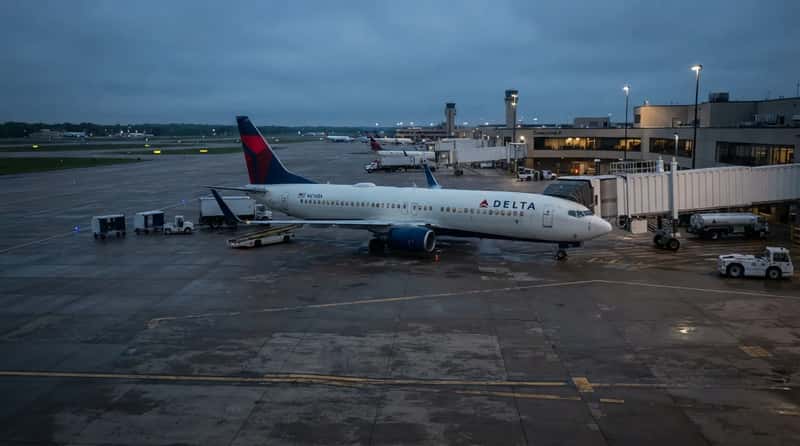
This is one rule airlines genuinely cannot ignore. The DOT enforces it with fines big enough to sting even major carriers.
DOT rules limit tarmac delays to three hours for domestic flights and four hours for international ones. After that, the airline must let passengers off, unless safety, security, or air traffic control says otherwise.
The rule grew out of horror stories about passengers trapped on grounded planes for hours. One 2009 incident in Rochester, Minnesota, left passengers stuck overnight for roughly six hours, and the public outrage helped push the rule into law.
Unlike most airline rules, this one has real teeth. Airlines now watch the clock closely and will sometimes cancel a flight rather than risk a violation.
But #3 is enforced more visibly and aggressively than almost anything else…
#3 – Crew Interference: A Federal Crime, Not an Airline Rule
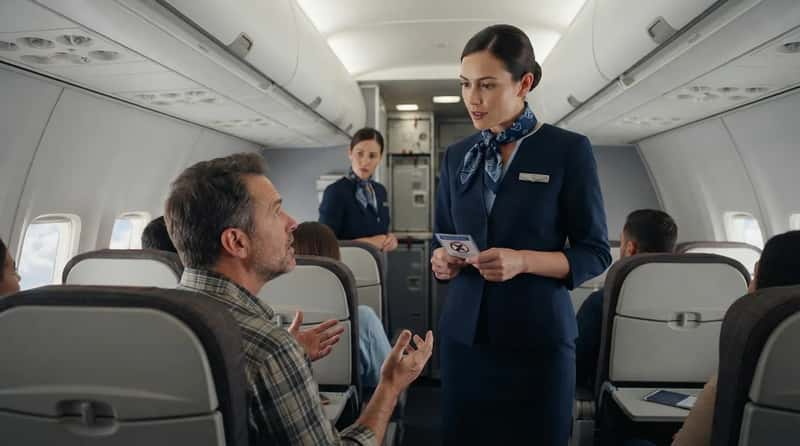
Passengers who argue with flight attendants sometimes learn this the hard way: interfering with a crew member isn’t just an airline rule, it’s a federal offense.
Federal regulations prohibit assaulting, threatening, intimidating, or interfering with a crew member doing their job. The FAA can propose civil fines of up to $43,658 per violation, and a single incident can rack up more than one.
In 2021, the FAA received a record 5,973 unruly passenger reports and adopted a zero-tolerance approach to enforcement. Interfering with a crew member can also be a federal crime, with prison time on the table.
This is the clearest line between discretionary rules and rules with federal weight. Airlines don’t have to think twice about enforcing this one, because federal law does it for them.
But the final two are the ones airlines and agencies never let slide, and #1 may surprise you…
#2 – Prohibited Items: TSA Security Rules
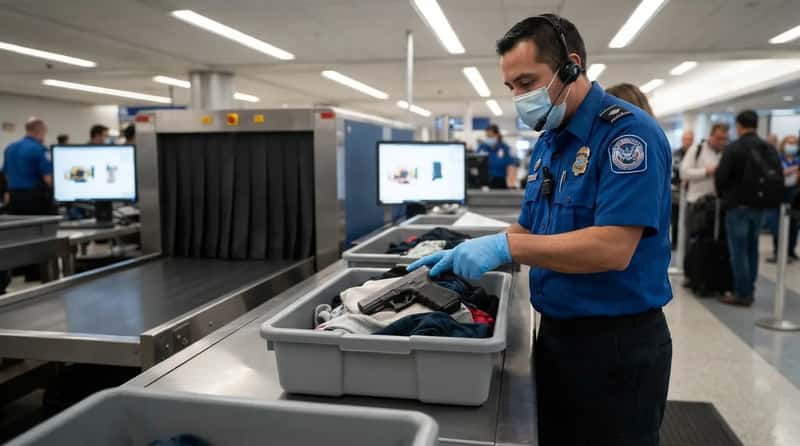
This is the enforcement area with the least ambiguity of any rule in aviation.
Firearms are banned from carry-on bags, period. They must be unloaded, locked in a hard-sided case, declared, and checked.
TSA officers found more than 6,500 firearms at checkpoints in both 2022 and 2023, and the large majority were loaded. Those travelers face civil penalties and can lose PreCheck eligibility, even when they say they forgot the gun was in the bag.
Fast Facts
- 2023: a record 6,737 firearms stopped at checkpoints.
- 2024: 6,678 firearms, or about 18 per day.
- Loaded: roughly 94% of the 2024 total.
- The price: civil penalties up to $14,950, plus at least five years without PreCheck.
Liquids are limited to containers of 3.4 ounces (100 ml) or less, packed in a clear quart-size bag, with exceptions for medical and baby items. Anything over the limit is typically tossed at the checkpoint.
The TSA handles security screening while the FAA handles aircraft safety, and that split is why airline staff discretion barely matters here.
And now, the rule most passengers assume is optional, but airlines always enforce…
#1 – The Contract of Carriage: The Rule That Overrides Everything
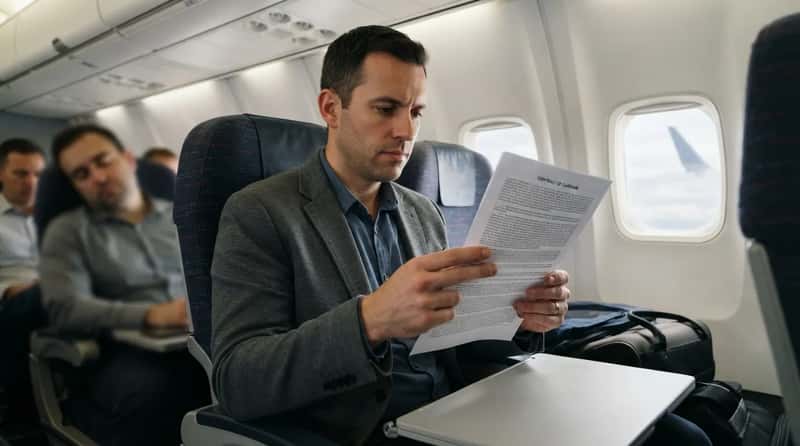
Here’s the one rule most passengers have never read, yet it controls almost every dispute they could ever have with an airline.
When you buy a ticket, you agree to the airline’s contract of carriage, a legal contract between you and the company. It’s posted on the airline’s website, and most of us have never read it front to back.
This is the document airlines cite when they deny you a seat, remove you from a flight, or refuse to compensate you. It almost always holds up.
The DOT can penalize an airline for breaking its own contract, but passengers rarely sue because the cost usually outweighs the possible award. Airlines know this, and they count on it.
The Bottom Line
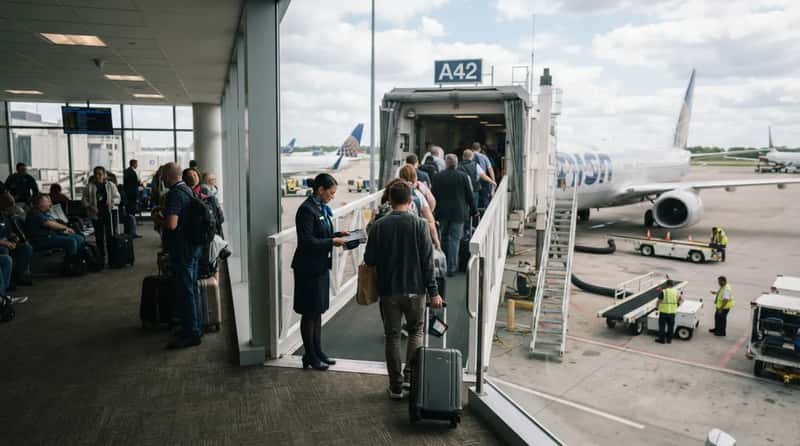
The gap between airline rules on paper and rules in practice is enormous. Knowing which is which is the only real edge a passenger has.
Carry-on counts, seat switches, and boarding order bend whenever it’s convenient. Tarmac limits, crew interference laws, and TSA security rules do not.
Air travel runs on two rule books: federal law, which gets enforced, and the airline’s own fine print, which gets enforced when it helps the airline.
So read the contract before you need it. The passengers who come out ahead are the ones who already know which rules bend and which ones bite.
Bonus: The Insider Trick Nobody Tells You
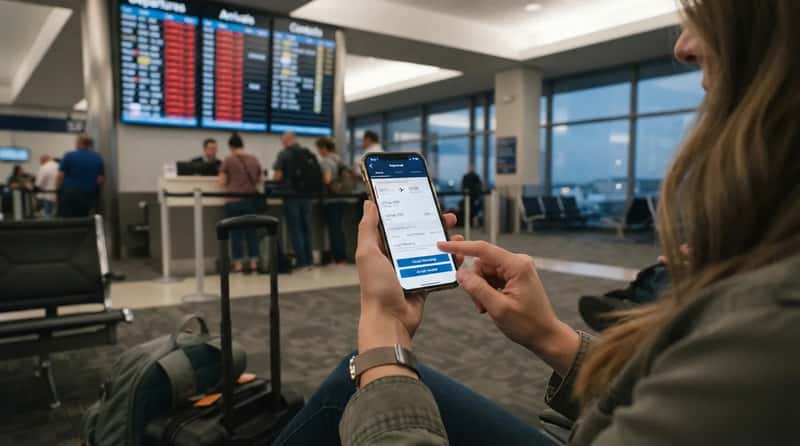
When your flight is canceled or badly changed, don’t tap “accept” on a voucher or a rebooking you don’t want. Under the DOT’s automatic refund rule, if you turn down the alternative, the airline owes you your money back in the original form of payment.
This applies even to non-refundable tickets, and the cause of the disruption (weather, mechanical, or staffing) doesn’t change it. Here’s how to make it stick:
- Check that it qualifies: a cancellation, a delay of 3+ hours (domestic) or 6+ hours (international), a different airport, an added connection, or a downgrade in your class of service.
- Decline in writing: reply to the airline’s email or screenshot your app choice, and note the date. The refund clock starts when the airline learns you rejected the alternative.
- Know the deadline: 7 business days for credit card purchases, 20 calendar days for other payment methods.
- Ask for the extras too: fees for seat selection or Wi-Fi you never got are refundable when the service wasn’t provided through no fault of yours.
If the deadline passes with no money, file a complaint with the DOT’s Aviation Consumer Protection office and attach your screenshots and receipts. That paper trail is what turns “we’ll send a voucher” into cash.