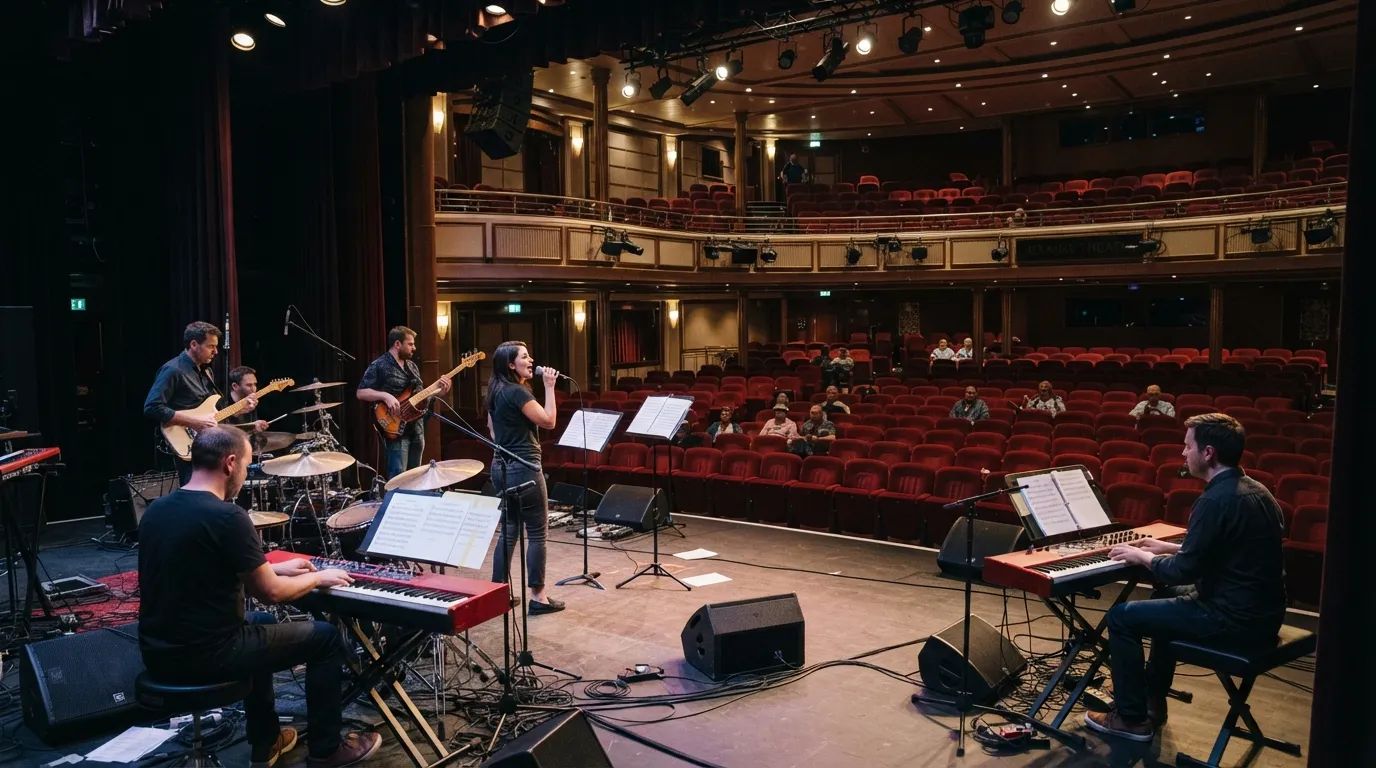
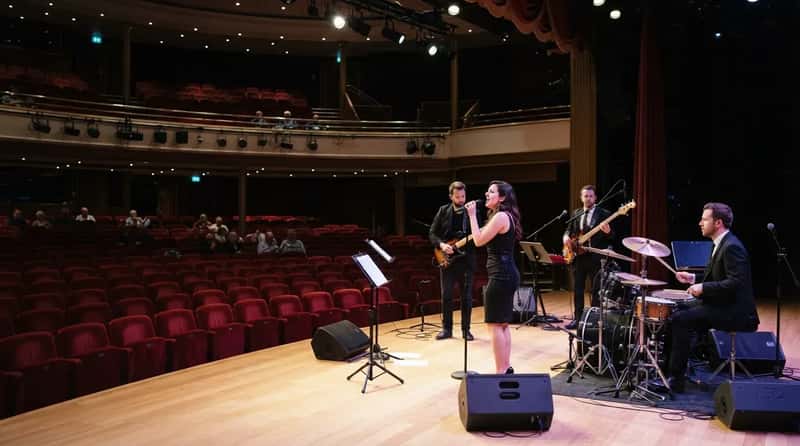
Picture the scene: the lights drop, the overture kicks in, and the theatre is barely half full. Most passengers assume the band quietly checks out. Turns out, it’s usually the opposite. Cruise musicians play the same room night after night, so a thin crowd is just another Tuesday, and what they do about it is stranger, tougher and more human than you’d guess.
The real story involves dinner seatings, sunburned port-day stragglers and a hallway rule that follows musicians everywhere. Some of these habits will make you rethink every empty row you’ve ever sat behind. And the last one explains why none of it ever slows the band down.
#16 – They Play the Show Exactly as Written, Empty Seats and All
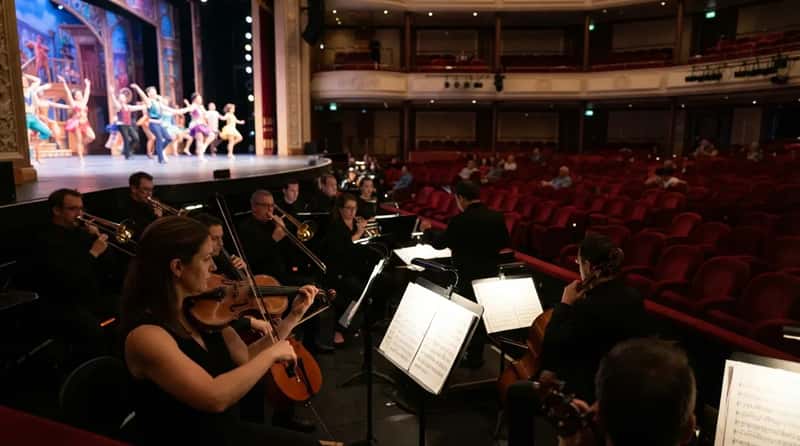
Most people figure a sparse house means a lazy performance. But theatre orchestra musicians typically play different shows every night with limited rehearsal, often about an hour in the afternoon before two evening shows. That schedule leaves almost no room for freelancing.
In a production show, the music is tied to lights, dancers and sound cues. If the band trimmed a number for a quiet room, the whole timeline could wobble. So the charts stay as written. A row of empty seats doesn’t change a single bar of the score.
#15 – They Read the Room Before the First Note
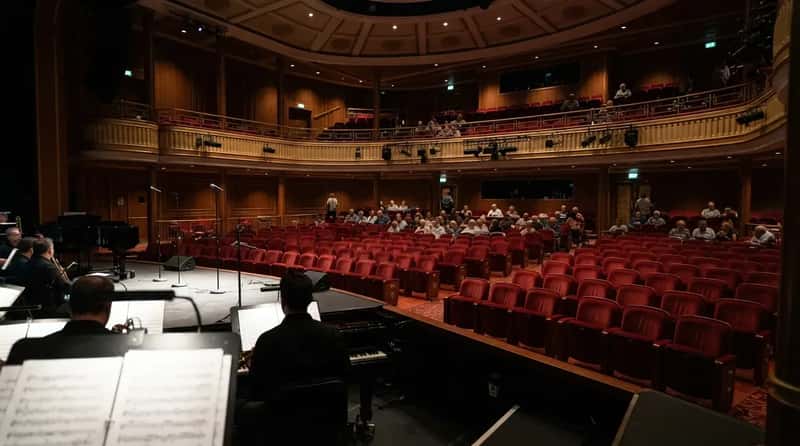
Musicians know the crowd size long before the downbeat. Seats on nearly all cruise ships are first-come, with no reserved seating, so the house fills in a visible pattern. Veterans learn to read that pattern from the pit or the wings.
A half-empty room isn’t a mystery to them. They’ve watched how port days, sea days and dinner times shape a crowd. Many can guess the headcount from the day’s itinerary alone. The surprise isn’t the empty seats. It’s how little they rattle anyone onstage.
At a Glance
- Seating is first-come on nearly all ships, so crowds build in patterns.
- Front rows and side balconies often fill last.
- Sea days, port days and dinner times all shift the headcount.
- The itinerary is the band’s crystal ball.
#14 – They Blame the Dinner Schedule, Not the Passengers
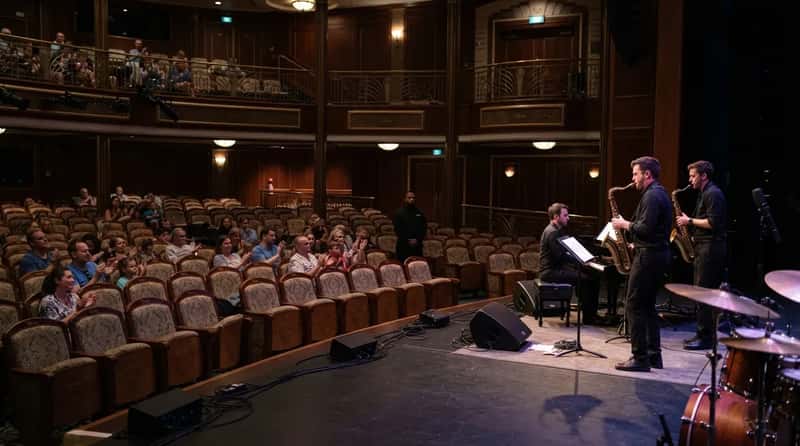
When seats go empty, the dining room is often the real culprit. On Disney ships, two performances run each evening, timed as the inverse of the main dining seatings. If you eat early, you see the late show, and vice versa.
That means every house is split on purpose. Half the guests physically can’t be in the room for any given show. Musicians understand this math. A thin early crowd isn’t a verdict on the music. It’s a seating chart.
#13 – They Quietly Argue Over Which Show Has the Better Crowd
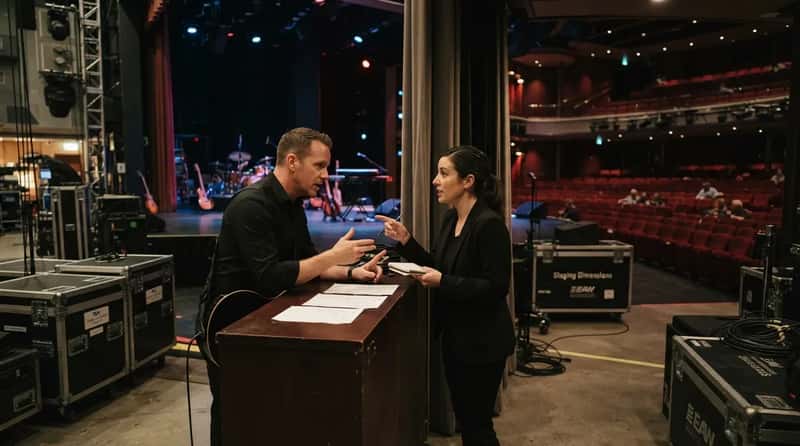
Here’s an opinion that starts arguments backstage. Some performers say the late slot is the better gig. On a Princess forum, one cruiser noted the later show tends to be less competitive because families with children often consider it too late.
Fewer kids can mean a calmer, more focused room. Others disagree and insist a packed early house gives the best energy. So which crowd is actually better? Working players are split, and it depends on the ship. Either way, the late show is the one most likely to be half empty.
#12 – They Watch the Front Rows Stay Empty Until the Last Second
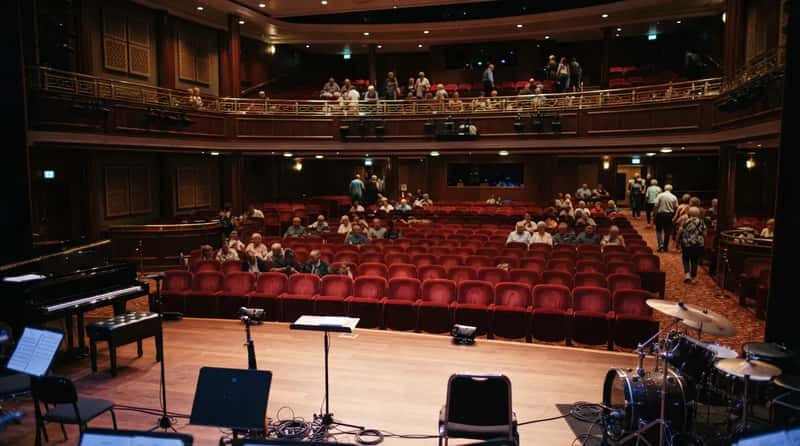
A half-empty theatre often isn’t half empty for long. One veteran cruiser noticed that the front rows seem to stay pretty empty until the beginning of the show. Side balcony seats can also fill slowly.
From the stage, that creates a strange picture. The first look at the house can seem thin, then guests drift in right as the lights dim. Musicians learn not to judge the crowd until the show is actually underway.
#11 – They Talk Straight to the People Who Showed Up

When a room is sparse, the distance between stage and seat feels shorter. Hosts, singers and bandleaders often lean into that. A small crowd can be spoken to, rather than performed at.
This doesn’t mean changing the show. It means a more personal tone between songs, a nod to a birthday table, a joke aimed at the front row. A half-empty house can feel more intimate than a sold-out one. Passengers who stay often remember it that way.
#10 – They Lean on Each Other Instead of the Crowd
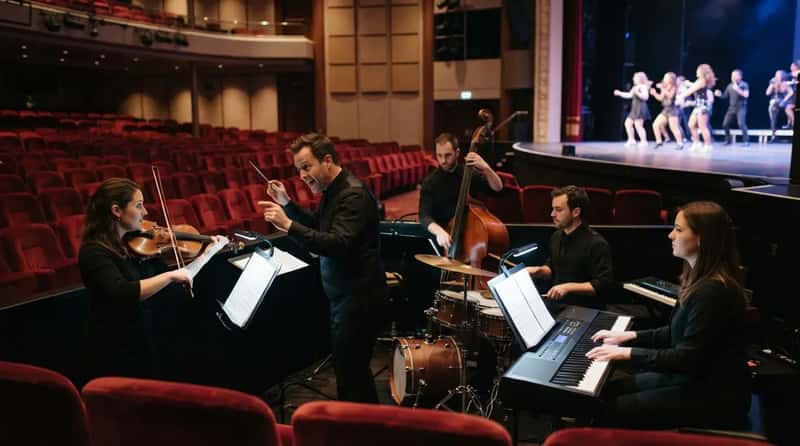
Ship theatre bands often come together quickly and rehearse briefly. Without a roaring audience to feed off, they feed off each other. Eye contact, count-offs and small nods carry the show.
Since theatre orchestra players typically handle different shows each night with limited rehearsal, trust inside the band matters more than applause. A quiet room can expose how tight a band really is. The best ones sound just as sharp either way.
#9 – They Secretly Treat a Thin House as Low-Pressure Practice
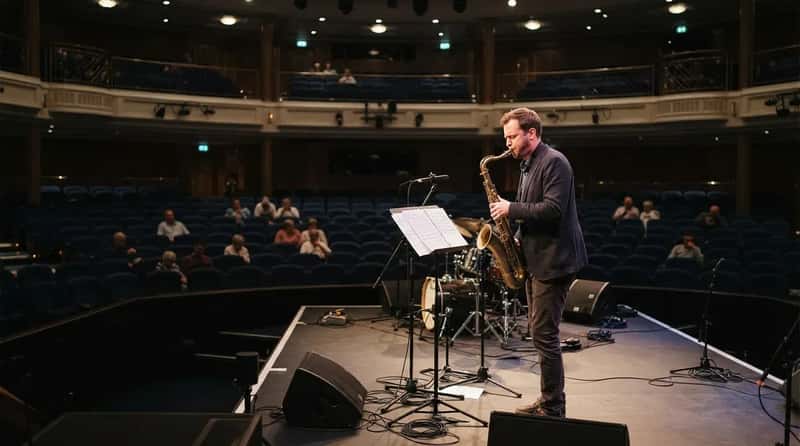
A musician who spent six months aboard says the repertoire can be repetitive, with plenty of Hey Jude and Dancing Queen. After a few contracts, the learning curve flattens. A quieter room gives players space to experiment within the part.
That might mean a slightly different fill, a cleaner transition or a sharper entrance. It’s subtle, and passengers will never notice. For some players, a half-empty house is the only time the gig feels like a rehearsal instead of a routine.
Worth Knowing
- The repertoire can lean on crowd-pleasers that players have repeated many times.
- Production shows stay tied to cues, so any experimenting happens inside the written part.
- Think a cleaner transition, not a rewritten solo.
- Most passengers will never hear the difference.
#8 – They Keep a Straight Face Because Someone Is Always Watching
Crew rules don’t switch off when the house is thin. Guidance for ship musicians has long stressed being on time for rehearsals and shows, and dressing professionally in guest areas.
So a bored shrug or a sloppy entrance isn’t an option. Passengers could be anywhere, and the officers and entertainment team notice too. There’s no “off night” in a job where the audience can walk right past you in the hallway.
#7 – They Feel the Room Sound Different Before Anyone Says a Word
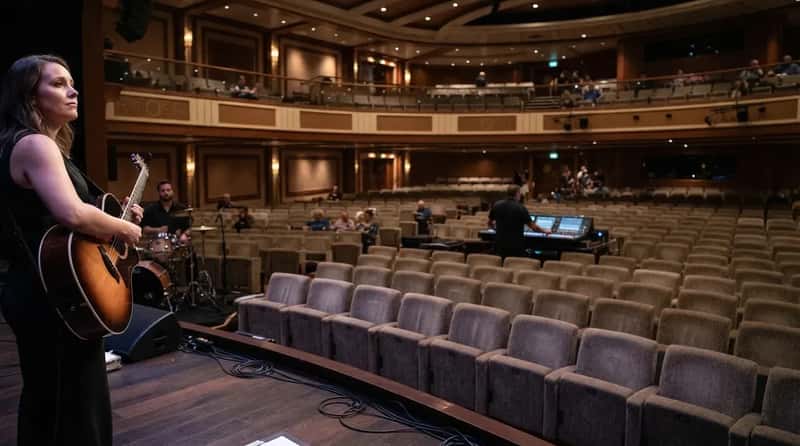
A theatre doesn’t sound the same full and half empty. Bodies absorb sound, so when fewer people fill the seats, the room can respond differently to the band. Hard surfaces get a little more say.
That’s one reason sound engineers pay close attention to the house. Monitors and levels may be tuned as the audience arrives. Musicians can often feel the change from the stage before the first chorus. The goal is to make the show sound the same for the people who are there.
#6 – They Use the Short Gap Between Shows to Reset Fast
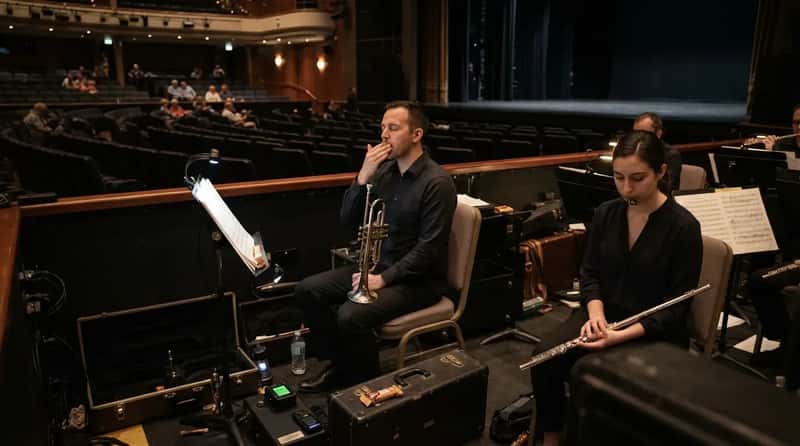
A typical theatre night has two shows, perhaps at 8 pm and 10 pm. The gap between them is short. Musicians eat, rest their hands, retune and get ready for a second audience.
If the first house was thin, the second may be different. They can’t know until they see it. So the break isn’t about recovering from disappointment. It’s about being ready for either outcome.
#5 – They Back Headliners Who Are Staring at the Same Empty Seats
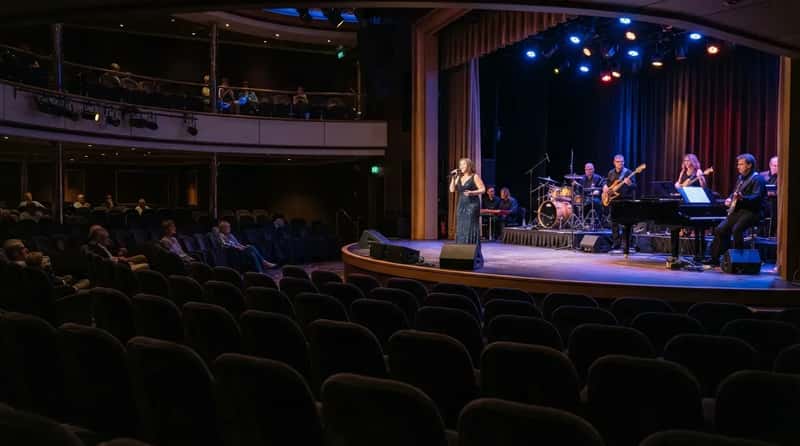
Guest entertainers sometimes fly in for short stays. Headline contracts can last anywhere from one night to a couple of weeks, with one or two shows in the main theatre. These performers don’t know the room or the crowd patterns.
The house band does. When a headliner steps into a half-empty room, the musicians behind them are the steady ones. Rehearsals for these acts are usually short, with two hours often cited as the ceiling. The band holds the show together, whatever the crowd size.
Quick Compare
- Headliner: a stay of one night to a couple of weeks, with one or two main theatre shows.
- House band: aboard for months, and it already knows the room.
- Rehearsal: short for guest acts, with two hours often cited as the ceiling.
#4 – They Know the Itinerary Doomed the Crowd Before Sail-Away
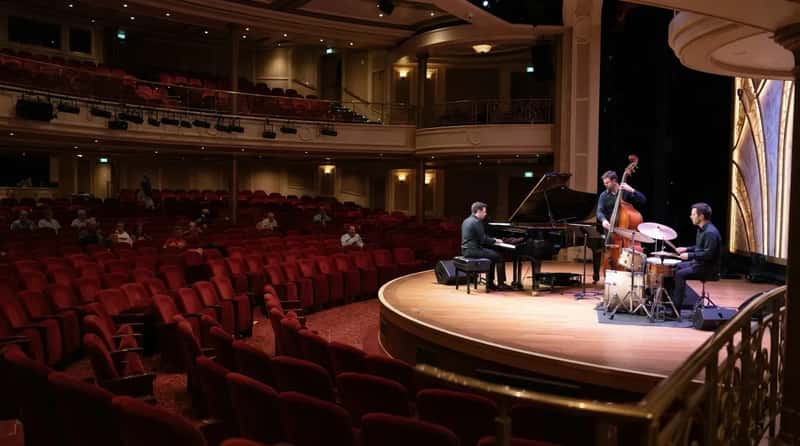
Sea days and port days produce very different audiences. Reports about ship venues say shows tend to fill up quickly on sea days. On busy port days, guests may return late, tired or sunburned and skip the theatre.
Seasoned musicians glance at the itinerary and predict the night. They often know a thin crowd is coming before they leave their cabin. That foresight turns disappointment into routine.
#3 – They Keep Playing While Latecomers Stumble In Mid-Song
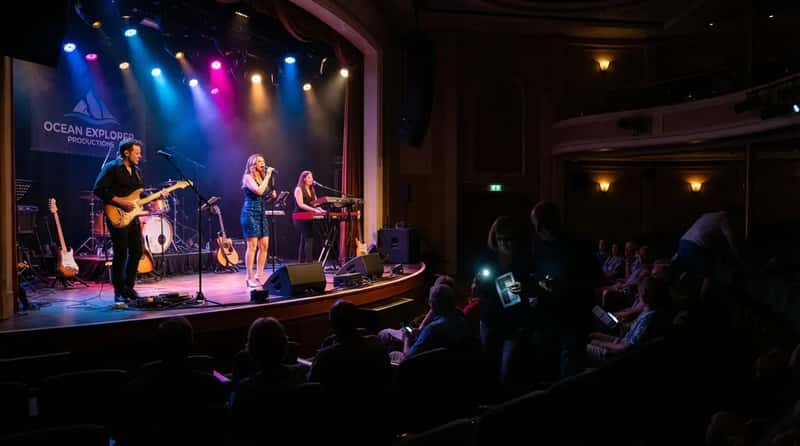
A half-empty theatre can turn into a scramble once the show starts. One passenger complained about constant interruptions from late arrivals trying to find seats in the dark. Doors sometimes open only about 30 minutes before showtime, so many people hold off until the last minute.
The musicians can’t stop. They play through every shuffle, whisper and cell phone glow. To the stage, a wave of late arrivals is just part of the show’s background noise. The band keeps going, and the room fills as if nothing happened.
#2 – They Play Hardest for the Few Who Stayed
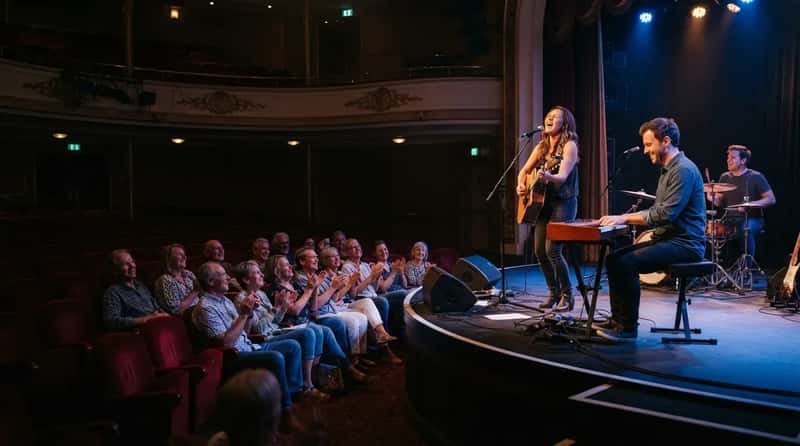
Every thin house has a loyal core. These are the people who came early or stayed late, or who simply love live music. They’re often the ones who clap longest and linger near the stage afterward.
Musicians remember them. A small, warm crowd can feel better than a distracted packed room. Some performers say these are the nights they actually remember months later. The empty seats fade, and the faces up front stay.
Why It Stands Out
- The audience that remains is usually there on purpose.
- Applause comes from people paying attention, not people passing time.
- Fans who linger near the stage make the moment personal.
- Small rooms create the memories players keep.
#1 – They Show Up Tomorrow and Do It All Over Again
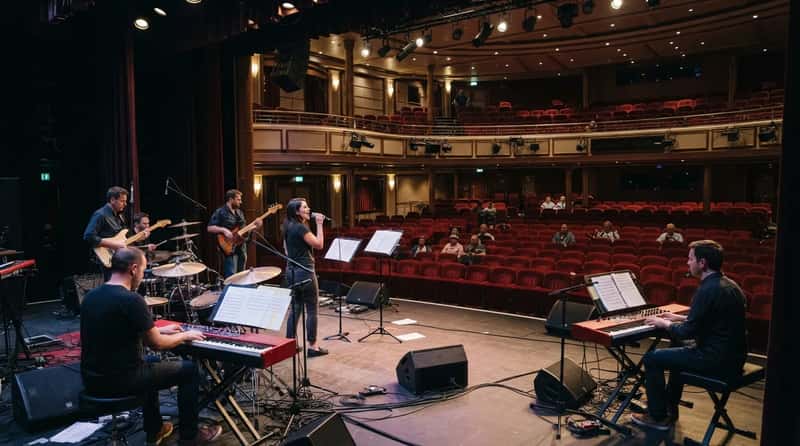
This is the part most passengers never see. Contracts commonly run for months, and one musician reports that days off are rare, and some contracts gave none at all. A thin house on Tuesday is followed by another show on Wednesday.
There’s no time to sulk and no encore tour to make up for it. The ship moves on every night, and so does the band. The next theatre might be packed, and the same charts will be waiting. That’s the quiet discipline behind every half-empty room.
So the next time you slide into a row with plenty of space around you, look up at the stage. The band isn’t disappointed, and they haven’t checked out. They’re doing the same job they’d do for a full house, at sea, for a few people who chose to stay.