Most people picture lounge perks as a velvet-rope club, where the good stuff goes to whoever flashes the fanciest card. The reality is quieter and more human. A lot of the upgrades that matter most come from a person at the desk deciding to help, and the ones below are real.
There is no official “senior lounge menu,” and 65 isn’t a magic number. These are accessibility and comfort services that happen to fit what many older flyers need. The twist is what actually unlocks them, and it isn’t the date on your license. Stick around, because the last entry is the one that makes every other one work.
#16 – The Quiet Corner Where You Can Finally Hear the Boarding Call

Lounge staff often know which seats sit far from speakers, espresso machines and the loudest conversations. That’s exactly the seat a guest with hearing aids wants. No sign in the room will ever tell you it exists.
Background noise in a major airport is tiring, especially when announcements come out muffled. A calmer corner lets you catch the boarding call without straining. Try saying, “Could I sit somewhere quieter? I’m wearing hearing aids.” Staff can usually answer yes or no on the spot. But that’s nothing compared with what a quiet morning can do, as in #15…
#15 – The Door That Opens Early on a Quiet Morning
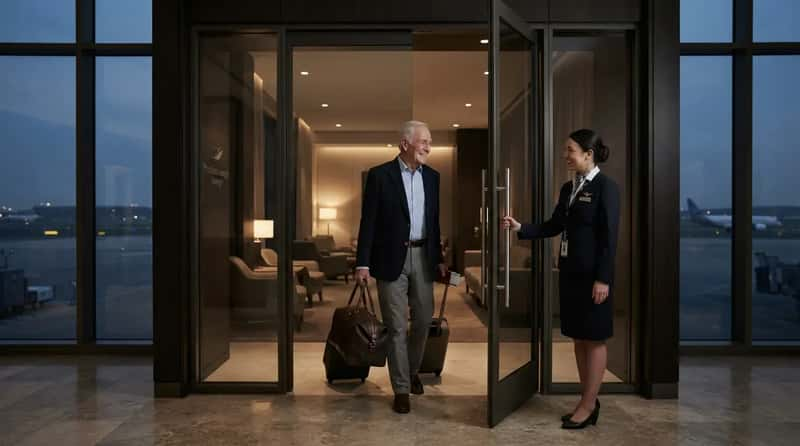
The door looks locked to a lot of people, so they never ask. On quiet mornings, though, staff sometimes have discretion to let guests in a little early. Asking politely at the door is often all it takes.
It’s a courtesy, not a rule, and it depends on the airline and how busy the room is. Still, a calm start beats an hour of standing in a crowded gate area. Expect a “yes” more often when the room is nearly empty than during a rush.
#14 – The Chair Built for Standing Up Again

Low, deep sofas look cozy, but they can feel like quicksand when you try to leave them. Firm chairs with arms and a higher seat are far easier on stiff knees and hips. Once you notice the difference, you can’t unsee it.
Lounge staff can point you to those chairs if you mention it. Try “I’d like a chair with arms, if you have one.” Most rooms mix seating styles, so the right chair is often already there, just not in the middle of the room. Nobody has to know why you asked.
Quick Compare
- Low, deep sofa: lovely to sink into, a real effort to rise from.
- Firm chair with arms: gives your hands something solid to push off.
- Higher seat: less bend at the knees and hips, so standing feels smoother.
#13 – The Coffee That Gets Carried to Your Table
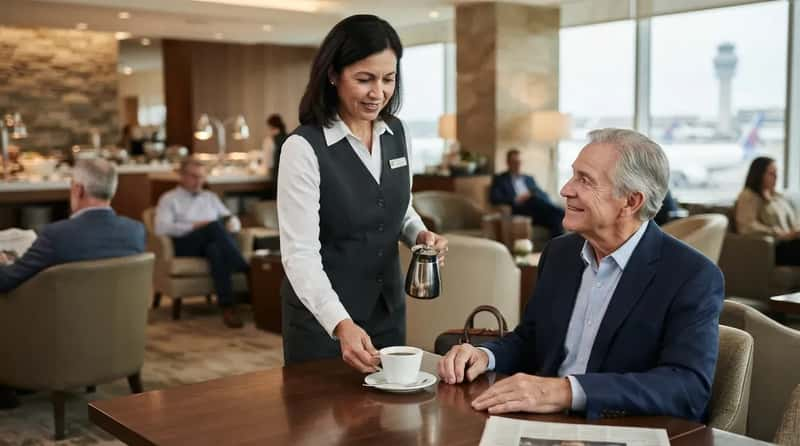
Buffets are a hidden hurdle. Balancing a hot bowl and a drink on the way back to your seat is harder than it looks. Some lounge teams will bring items over if you ask kindly.
At staffed lounges, experienced attendants often keep a quiet eye on older guests, offering refills and checking in. That makes your ask easier to hear. Try “Would you mind bringing me a coffee while I keep an eye on my bags?” It’s a small favor, not a given. But the next perk grows out of that same habit of noticing…
#12 – The Gentle Tap on the Shoulder Before Boarding

Missing a boarding call because you dozed off is a very real fear. A good attendant can keep an eye on the clock for you. It’s one of those small kindnesses that people rarely think to request.
When the room is calm, experienced staff are often happy to note your flight time and flag when boarding is close. Make it easy for them. Tell them your gate and departure time when you sit down, and ask for a gentle reminder. Keep your phone alarm set anyway, since staff help is a bonus, not a guarantee. And when a flight goes wrong, a different perk may open up in #11…
#11 – The Courtesy Pass That Appears After a Long Delay
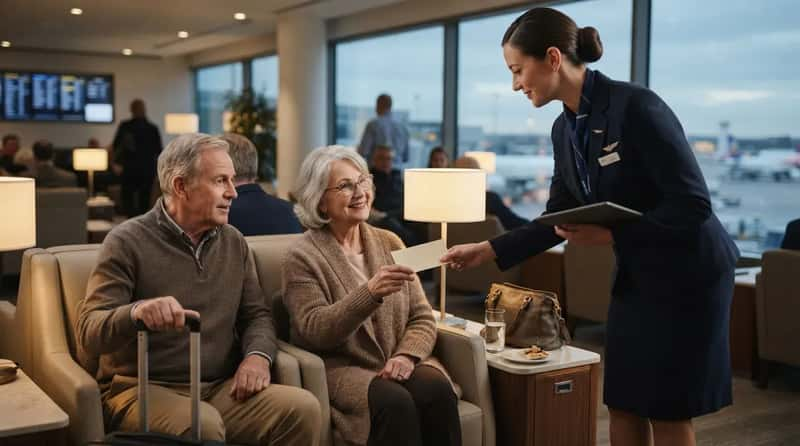
This one runs against the usual advice that lounges are only for elite members. Delays can change the rules. Some airlines have, on occasion, offered lounge access or meal vouchers during long disruptions, especially when health or comfort concerns come up.
Note the words “on occasion.” It isn’t a right, and it varies by airline and airport. The best approach is calm and specific, not demanding. Ask the gate agent what’s possible, and explain why you need somewhere to sit. That detail matters more than you’d think, as #10 shows…
#10 – The Short Explanation That Can Open the Lounge Door
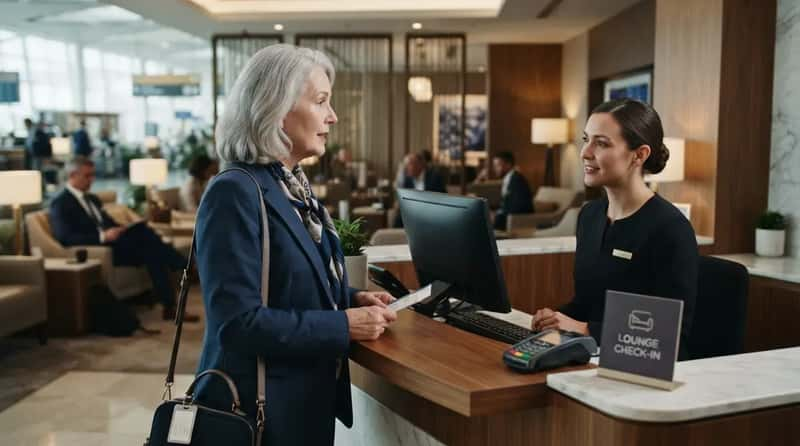
Many older travelers never say the real reason they want a quieter room. They assume it’s private, or that it won’t matter. Yet travelers with medical considerations can sometimes gain lounge access simply by explaining their needs at check-in.
Worth Knowing
- Name the need, not the diagnosis. “I tire quickly” is plenty.
- One honest sentence beats a long backstory.
- Ask calmly at check-in or the desk, not in the middle of a line.
- If the answer is no, ask what is possible instead.
Note “sometimes.” It isn’t guaranteed, and nobody is owed a lounge pass. What helps is a short, honest line, like “I tire quickly and need somewhere to rest between flights.” Skip the life story, because staff can only act on what they hear. Then there’s the part many travelers get wrong about proof…
#9 – The Help You Don’t Need a Doctor’s Note For
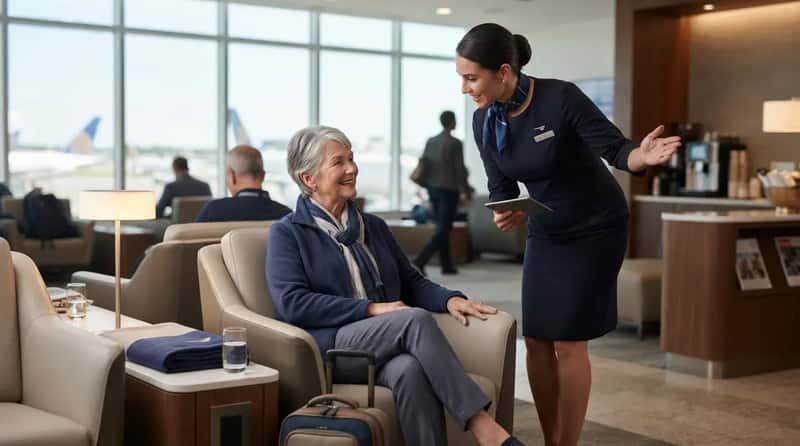
Plenty of older travelers hold back because they think they’ll have to prove something. One recent accessibility guide points out that airlines generally can’t demand proof of disability for basic accommodations like wheelchair assistance or priority boarding. That surprises a lot of people.
So lounge staff can often point you to the right desk or call ahead for you. The usual advice is to request wheelchair service when booking, or to call the airline about 48 hours before departure. If you didn’t, ask anyway, since last-minute requests are often still possible.
#8 – Boarding Early, Before the Jet Bridge Jam
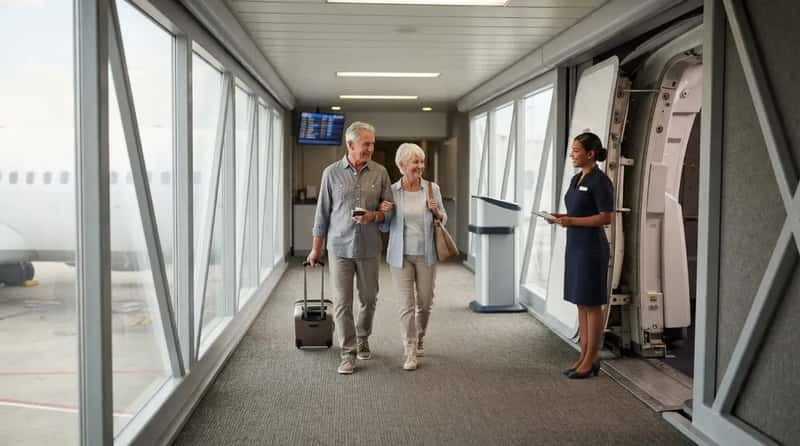
The lounge desk or gate can set this up, and it’s free. If you tell a gate agent before boarding begins that you need extra time, you can usually board early. No doctor’s note is needed.
It’s about time, not age. Say “I’d like to preboard, I need extra time to get to my seat.” Skipping the shoulder-to-shoulder crush in the jet bridge is a real comfort. Some travelers feel awkward asking when their need isn’t visible, but it also keeps the aisle clearer for everyone. Next, a perk that matters when plans change…
#7 – The Ride to the New Gate When Everything Changes
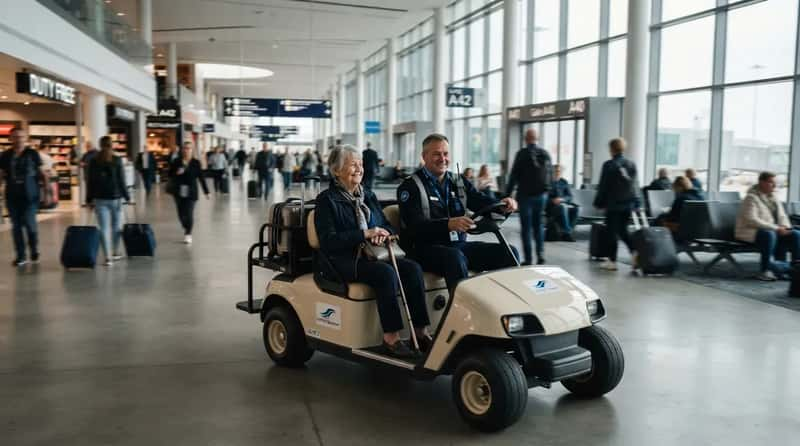
A sudden gate change can turn a calm layover into a long, tiring walk. The announcement comes, and suddenly the gate is a terminal away. Many travelers don’t realize you can ask for help on the spot.
At a Glance
- When to ask: the moment you hear about the change.
- Who to ask: lounge staff or the nearest gate agent.
- What to request: terminal transport to the new gate.
- Keep in mind: carts aren’t available at every airport, and they can take time.
Request terminal transport to the new location, so a long hike doesn’t wear you out before the flight. Lounge staff can often radio or call the right team. An airport cart isn’t available everywhere, and it can take time, so ask the moment you hear about the change. But the room itself holds an even better secret in #6…
#6 – The Rest Zone Most Guests Walk Right Past
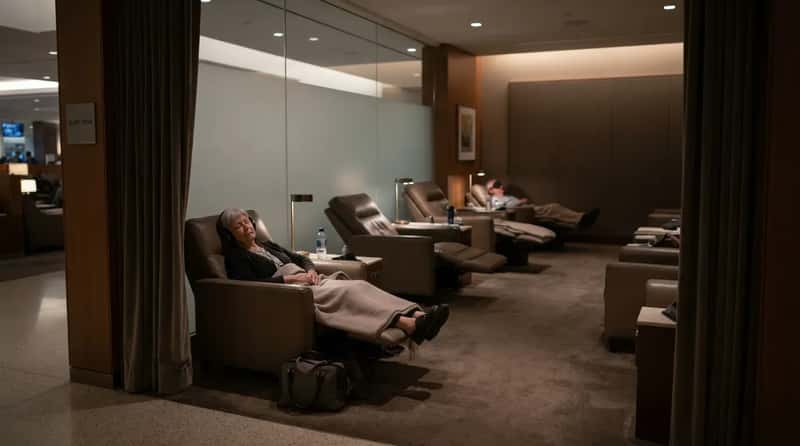
Some lounges have reclined seating or a separate quiet area that most guests never notice. Ask, and experienced staff can guide you to a designated rest area. It can feel like finding a hidden room in a house you thought you knew.
It’s worth the ask on a long layover. Lounge layouts vary a lot, so not every place has one. Even a dim corner away from the buffet can help. Try “Is there a quieter spot where I could rest for an hour?” The answer might surprise you.
#5 – The Seat Beside the Outlet That Saves Your Boarding Pass
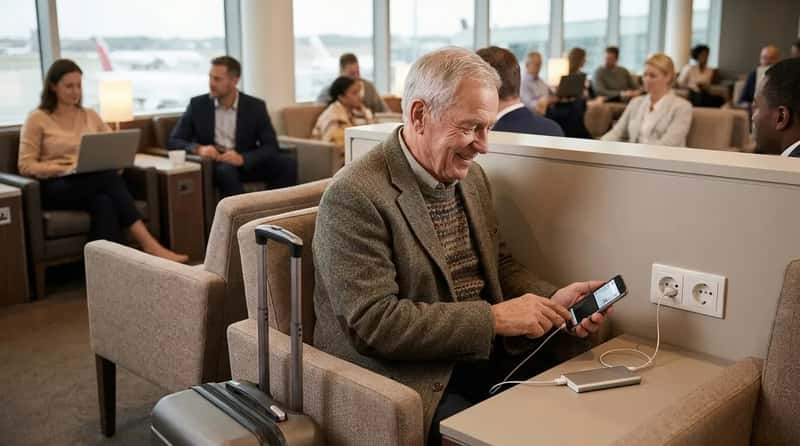
A dead phone can mean a dead boarding pass, and a dead link to family waiting on the other end. Many lounges have more outlets than you’d guess. They just aren’t always beside the best seats.
Mention that you need to charge, and staff can steer you. Schiphol’s lounge areas, for example, are described as having accessible seating and power outlets. If you travel with a power bank, bring it. A seat near the wall also means cords reach without tripping anyone. Next up, a basic need that’s easy to overlook…
#4 – The Accessible Restroom That Isn’t in the Guest Guide
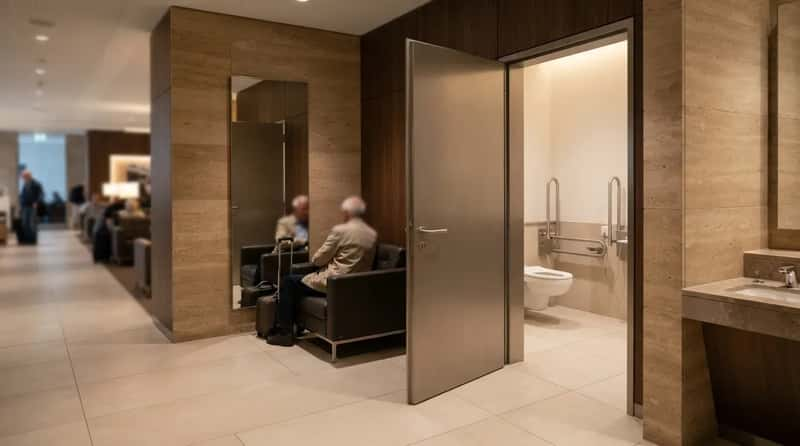
Restrooms are the unspoken deciding factor for many older travelers. Some lounges have adapted facilities that never show up in the welcome pamphlet. Frankfurt’s Lufthansa Senator Lounge, for example, is described as offering adapted restrooms and seating areas.
You can simply ask the front desk where the nearest accessible restroom is. Not every lounge has one, and layouts differ wildly. Some are tucked behind a corner, which is why asking first saves a long walk. It’s a small detail that can shape a whole layover.
#3 – The Buffet Plate That Actually Fits Your Diet

Buffets aren’t built for everyone. Softer foods, low-salt picks and simple options can be hard to spot among the labels and steam trays. Staff often know what’s freshest, which is where a quiet question pays off.
Ask “What’s the mildest thing here?” or “Is there something without nuts?” A lounge kitchen can’t promise special meals, so don’t count on one. If a food allergy is serious, say so clearly, and never skip medical advice just to be polite. Next comes the question that may matter most to some guests: who gets to walk in beside you.
#2 – The Helper Who Gets to Walk In Beside You
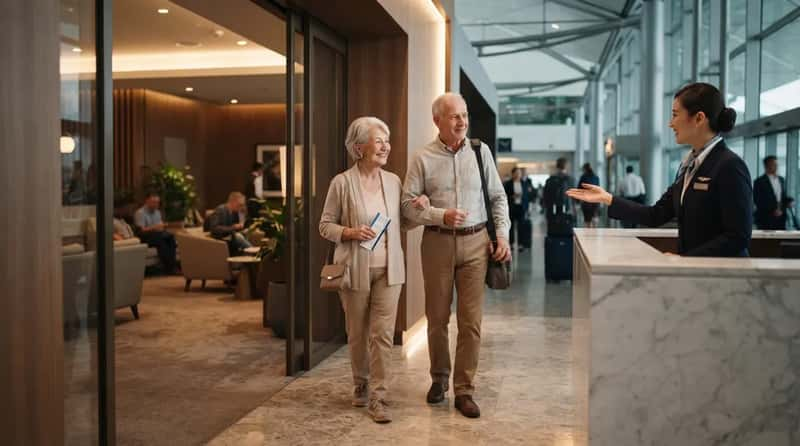
If you travel with a spouse, friend or caregiver, the guest rules can feel strict. They’re set by each airline or lounge, so there’s no single answer. Some staff will make an exception if the companion is helping with mobility or care.
Why It Stands Out
- Guest rules vary by airline and lounge, so it’s always worth asking.
- Real mobility or care help is the strongest reason for an exception.
- A warm, direct request lands better than a demand.
- Gate passes for helpers are a separate system, but they show companions are often accommodated.
Be direct, and keep it warm. Say “My husband helps me get around. Could he come in with me?” Ask with a smile, not as a demand. Airports and airlines also sometimes let companions get gate passes so they can help a traveler through security. That’s a different system, but it shows how often helpers are accommodated. And now, the one that makes all the others work…
#1 – The Way You Ask

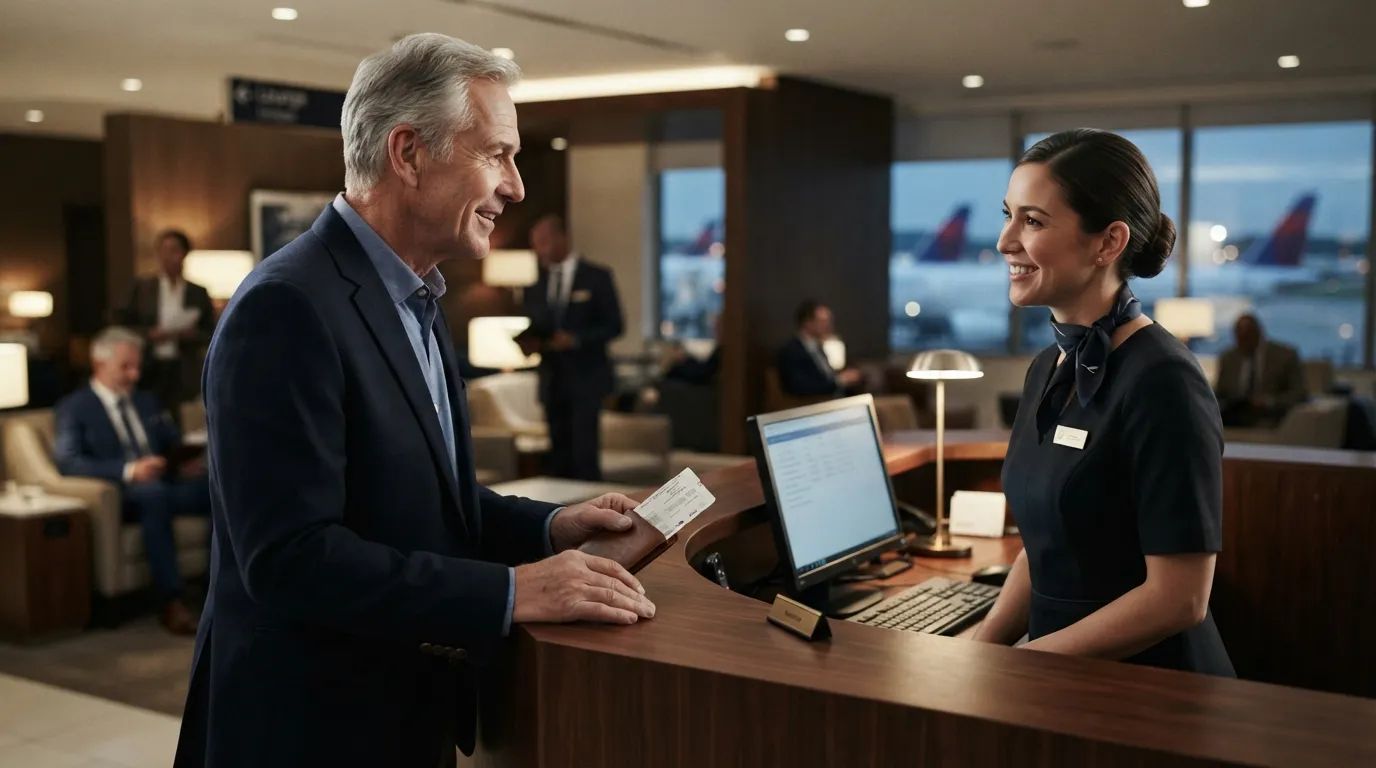
Every upgrade above starts with a request. Staff usually can’t offer what they don’t know you need. Much of what an agent can do has to be asked for out loud, on the day.
Be short, specific and kind. Name the need, not your age: “I need a quieter seat” works better than “I’m over 65.” Smile, say thank you, and accept a no without a fuss. Lounge teams tend to remember the guests who make their job easier, and it costs you nothing.
None of these upgrades is an official senior benefit. They’re small, discretionary kindnesses, and they tend to go to guests who explain a real need clearly and politely. Some of the biggest surprises are the simplest: the quiet corner, the early door, and the fact that no doctor’s note is needed for standard help like preboarding.
Age doesn’t unlock any of it. A calm, specific question often does, and it can turn a long layover into something gentler.