Most drivers think packing snacks and mapping the route counts as real road trip prep. It doesn’t.
Only 19% of drivers actually check that their car is road-ready before hitting the highway, and a separate AAA survey found that 35% of U.S. motorists skip or delay basic maintenance altogether. Usually it’s cost, time, or the quiet belief that it can wait one more trip.
The result shows up in the roadside data: dead batteries, flat tires, and lockouts make up nearly two-thirds of all emergency calls, and almost every single one was preventable.
Mechanics see the same avoidable disasters roll into their lots week after week, and they’ve got a very specific list of what actually matters. Here’s what they wish every road tripper checked before backing out of the driveway.
16. Tire Pressure – Check It Cold, Not After You’ve Already Driven
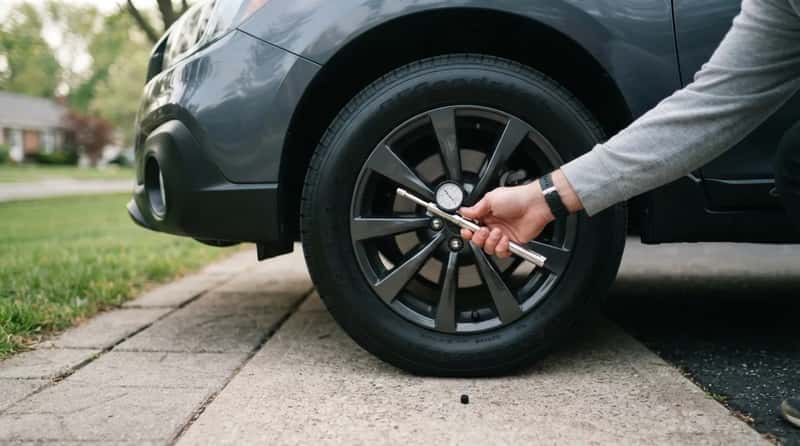
Checking tire pressure is one of those tasks almost everybody thinks they do correctly, and almost nobody actually does.
Nearly 20% of vehicles on the road have at least one tire that’s significantly underinflated, which raises blowout risk and quietly kills fuel efficiency. The mistake most road trippers make is checking pressure after they’ve already been driving.
Heat from driving inflates the reading artificially, so you’ll think you’re fine when you’re not. Check tires cold, and compare the number to your manufacturer’s recommended PSI, not the number stamped on the tire’s sidewall.
Those are two different numbers, and confusing them is one of the most common mistakes mechanics see. The correct PSI is usually printed on a sticker inside the driver’s door.
Fast Facts
- Nearly 1 in 5 vehicles has at least one significantly underinflated tire
- Always check pressure cold, before the car has driven anywhere that day
- Use the automaker’s recommended PSI from the driver’s door sticker, not the sidewall number
- The spare tire needs a pressure check too, not just the four in use
Don’t forget the spare, either. Most road trippers never think about it until they’re standing on the shoulder needing it, and by then it’s too late to fix.
Pressure is only the beginning of what your tires are trying to tell you. The next check is the one that ends trips permanently.
15. Tread Depth and Sidewall Cracks
Your tires are the only part of the car actually touching the road, and on a long trip they’re doing hard labor every second. Heat, speed, road debris, and worn tread can turn a manageable drive into a white-knuckle one fast.
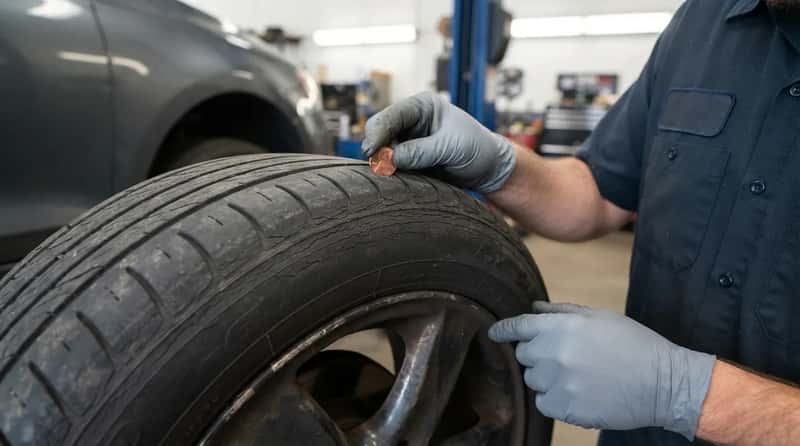
Mechanics check for tread depth, sidewall cracks, and uneven wear, because bald or damaged rubber loses traction fastest on hot pavement or wet roads. A tire with a slow leak might feel fine around town but fail catastrophically at highway speed on a hot afternoon.
The classic penny test still works. Insert a penny into the tread with Lincoln’s head pointing down; if you can see the top of his head, the tire is legally worn out and needs replacing.
Visible cracks, bulges, or exposed cords mean replace those tires immediately, not after the trip. That’s not a maybe.
Tires and spare are handled. Now what about the system that actually stops you? Mechanics say this is the one drivers take least seriously.
14. Brake Pads, Rotors, and Brake Fluid
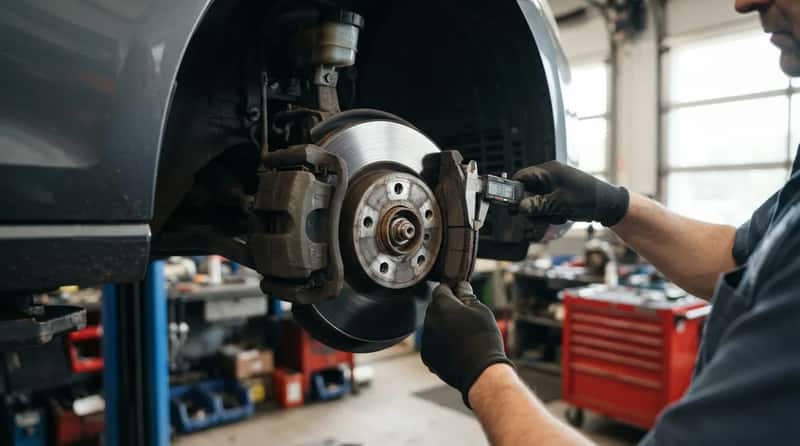
Brakes get overlooked because drivers adjust to declining performance gradually. The pedal feels a little softer, stopping takes a beat longer, and nobody notices because it happens slowly.
On local roads, people get used to it. On a road trip, that complacency catches up fast.
A mechanic-approved check covers pad condition, rotor wear, and fluid level and quality. Grinding, pulsation, pulling, or a pedal that suddenly feels different are not “keep an eye on it” symptoms.
Brakes under sustained load, like a long mountain descent, generate serious heat, and heat accelerates wear in ways flat highway driving never does. This matters even more if your route includes mountains, heavy traffic, or towing.
Brakes confirmed. Fluids come next, and there are more of them than most drivers realize.
13. All Six Essential Fluids, Not Just Oil
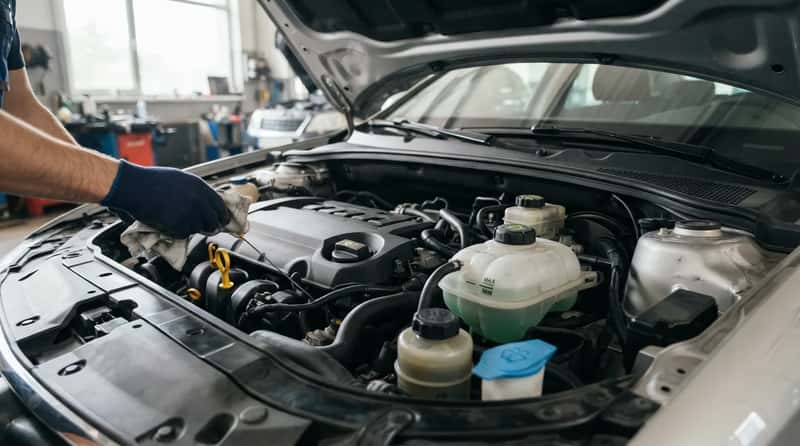
Most road trippers check their oil. That’s it.
Mechanics check six: oil, radiator, brake, power steering, transmission, and windshield washer fluid. Each one protects a different system, and every system works harder than usual on a long highway drive.
At a Glance
- Oil – lubricates the engine; dark, sludgy oil signals an overdue change
- Radiator (coolant) – prevents overheating, the top cause of engine failure on trips
- Brake fluid – operates the braking system under load
- Power steering fluid – keeps steering responsive, not heavy or noisy
- Transmission and washer fluid – smooth shifting and clear visibility, respectively
Dark, sludgy oil is your engine telling you it’s been running on dirty lubricant, and that problem compounds with every mile. Leaking coolant or low brake fluid should be fixed before departure, not monitored during the trip.
While you’re checking, look under the car for pooling liquid. A puddle in the driveway the morning of a big trip isn’t something to explain away.
Six fluids are the baseline. But the cooling system deserves its own conversation entirely, and it’s next.
12. Coolant Level and Cooling System Integrity
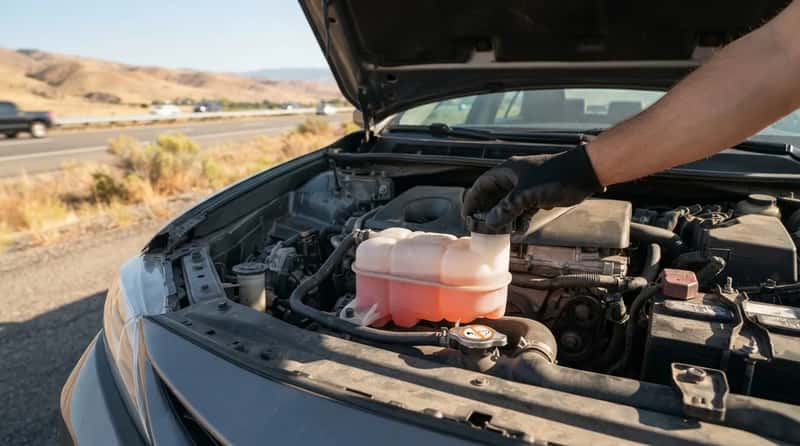
Coolant keeps your engine from overheating, and transmission fluid keeps things running smoothly under it. Both matter, but coolant causes the most dramatic and expensive roadside failures.
Check the reservoir only when the engine is cool. Low coolant contributes to overheating, especially in hot weather, towing, or heavy traffic.
Overheating is the number one cause of engine failure on road trips, and it almost always follows the same pattern: low coolant, ignored warning light, pulled onto the shoulder, warped head gasket, enormous bill. Never open a hot radiator cap, no matter how urgent it feels.
Heat can also cause tires to expand and strain the battery, especially when oil or coolant are already running low. Everything under the hood is connected more than drivers assume.
The cooling system is secure. Now let’s talk about what’s actually powering the whole car.
11. Battery Health and Terminal Corrosion
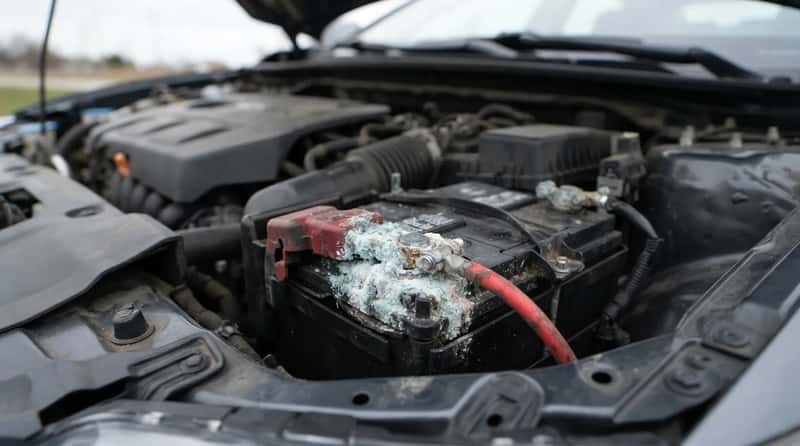
Car batteries can fail with almost no warning, especially in extreme heat or cold, which is exactly why it’s worth testing before a long trip. Most drivers don’t think about the battery until the car won’t start, and by then they’re already stranded.
Battery corrosion looks like a white or bluish powder on the terminals, and it creates resistance that slowly kills the battery’s ability to deliver current. A battery over three years old is a legitimate red flag.
Long hours of driving and summer heat put extra strain on any battery. Many parts stores and shops run free battery checks, so there’s genuinely no excuse to skip this one.
If there’s corrosion, disconnect the battery and clean the connectors with a wire brush before you leave. It takes five minutes.
Battery’s good. Now look at what physically holds the engine together under the hood.
10. Belts and Hoses
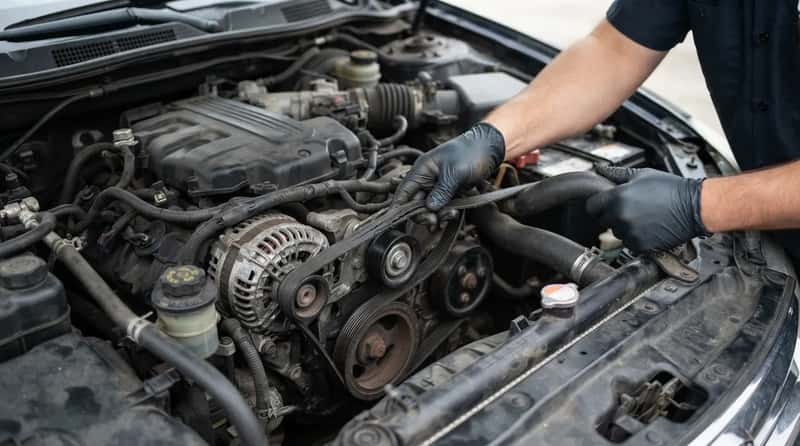
Belts and hoses are unglamorous, which is exactly why road trippers ignore them. Mechanics never do.
A serpentine belt drives multiple systems at once: the alternator, power steering pump, water pump, and air conditioning compressor. When it snaps, all of those systems fail simultaneously, not one at a time.
Look for fraying, cracking, or soft spots on belts, and check hoses for hardness where they should still feel pliable. Rubber degrades from the inside out, so a hose can look fine on the outside and be days away from splitting.
A busted belt or hose can promptly spoil your road trip and your engine along with it. Any sweet smell, oily residue, or puddle under the vehicle deserves investigation before departure, not after.
Belts and hoses checked. Now on to what keeps your engine breathing.
9. Engine Air Filter and Cabin Air Filter
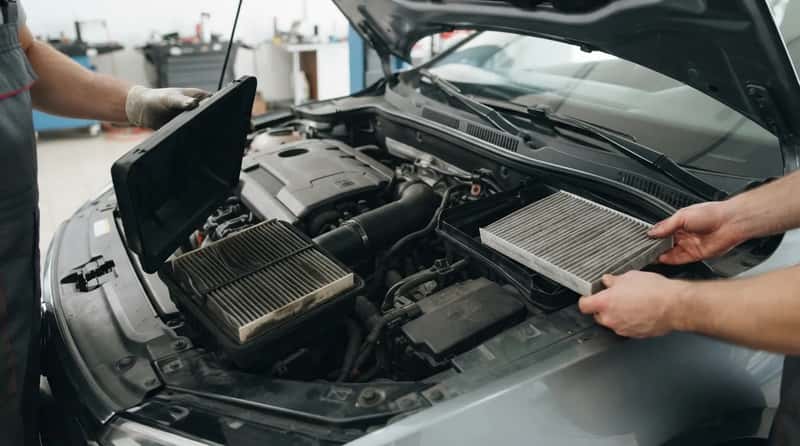
Two filters. Most road trippers check zero of them.
A clean engine air filter boosts fuel economy and power, while a fresh cabin filter helps you breathe easier on dusty or pollen-heavy routes. Without clean airflow, your engine works harder and can even contribute to overheating.
A severely clogged air filter can drop fuel economy by as much as 10%. On a long road trip, that’s real money burned for nothing.
The cabin filter also affects how well your HVAC pushes air through the vents, and a dirty one can cause unpleasant odors. That matters a lot when you’re eight hours into a summer drive.
Two quick swaps, neither expensive. The next check costs nothing at all.
8. Every Exterior Light and Signal
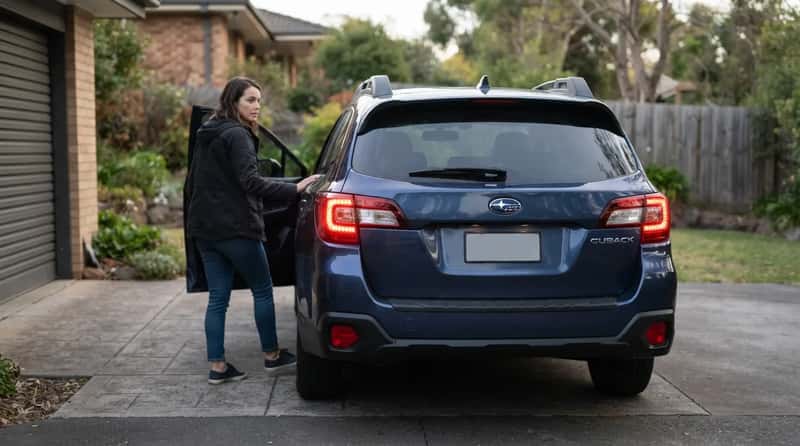
Check the headlights, taillights, brake lights, turn signals, and reverse lights. Most drivers have never once walked behind their own car while pressing the brake pedal, which is the only real way to know it’s working.
A burned-out brake light is invisible to the driver. It’s completely visible to the car behind you, and to every highway patrol officer you pass.
Driving at night with a burned-out headlight cuts your visibility range in half, and most drivers only find out when another driver flashes them. Headlight lenses also oxidize and yellow over time, which can reduce output even when the bulb itself is fine.
Worth Knowing
- A dead brake light is invisible to you but obvious to everyone behind you
- One burned-out headlight roughly halves your effective visibility range at night
- Yellowed, oxidized lenses can dim output even with a perfectly good bulb
- The full walk-around test takes about five minutes and covers every light
Test every turn signal too. It’s a five-minute walk-around that mechanics always do and drivers almost never do.
Lights confirmed. Next: the thing standing between you and everything the road throws at your windshield.
7. Wiper Blades and Washer Fluid
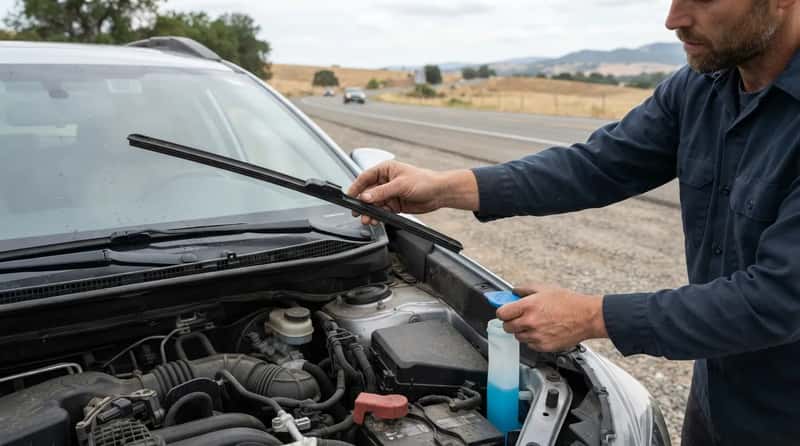
No one wants to discover their wiper blades are finished in the middle of a rainstorm. And yet that’s exactly when most people find out, watching the blade smear instead of clear and turn oncoming headlights into a kaleidoscope.
Run your finger along the rubber edge of the blade. If it feels stiff or brittle instead of soft and flexible, it needs replacing, and every six months is a reasonable rule of thumb.
Washer fluid matters more than people assume. Water alone won’t cut through insect splatter at highway speed the way proper washer solution will, and an empty reservoir in dry, dusty conditions is a real visibility hazard.
If the wipers still streak after new blades, check the motor tension too. Replacing the blades doesn’t always fix the problem on its own.
Wipers sorted. Next up is the system that keeps your passengers comfortable, and in extremes, actually safe.
6. Air Conditioning and Heating System
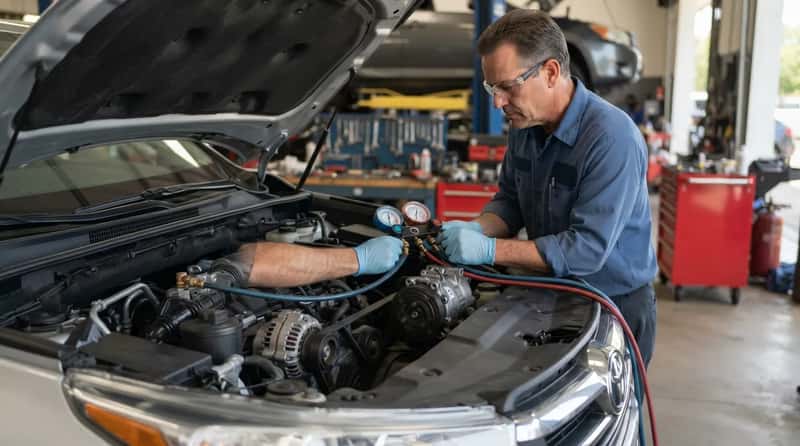
This one gets dismissed as a comfort issue. Mechanics categorize it differently.
Driving in a hot car is uncomfortable and genuinely unsafe, especially for children or pets. On a summer trip through the Southwest or the South, a failing AC system stops being an annoyance and becomes a real health concern over multiple hours.
Test the AC before departure, not at the first rest stop two states from home. It may not leave you stranded, but a miserable cabin for eight hours will feel like it did.
The AC compressor also uses a belt to operate, and a failing compressor can seize and snap that belt, taking out multiple systems at once. “Comfort item” and “mechanical risk” aren’t always separate categories.
Climate control is ready. Now look at what’s steering the entire machine.
5. Steering Response and Suspension Condition
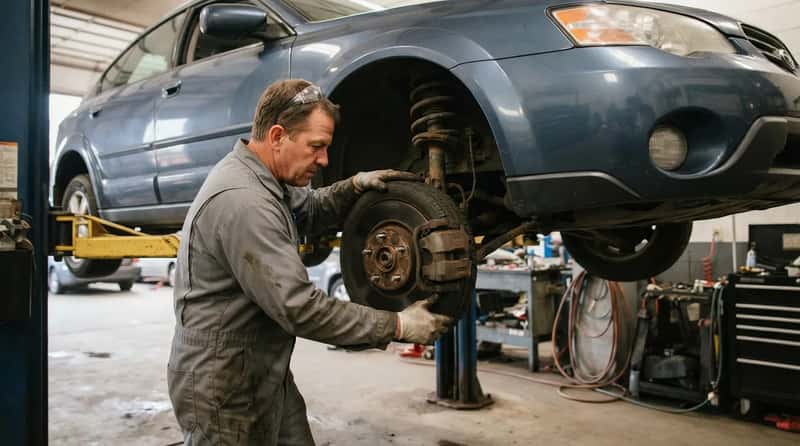
This is the check road trippers almost never think of, and the one that makes mechanics genuinely nervous when it’s skipped. Steering and suspension wear happens so gradually that drivers lose track of what “normal” even feels like.
By the time a problem is obvious, it’s usually serious. Uneven tire wear often points to alignment or suspension issues that shouldn’t be ignored before a highway trip.
Test this before you leave: at low speed on a quiet street, feel for looseness, wandering, or vibration in the wheel. A car that needs constant small corrections to track straight has an alignment or suspension issue, and at 70 mph on a four-hour interstate stretch, that becomes exhausting and dangerous.
Power steering fluid is part of this system too. If the wheel has felt heavier than usual, or you hear a whine when turning, that fluid may be low or contaminated.
Steering covered. Coming up: the item that could end your trip on the very first flat.
4. The Spare Tire, Jack, and Lug Wrench
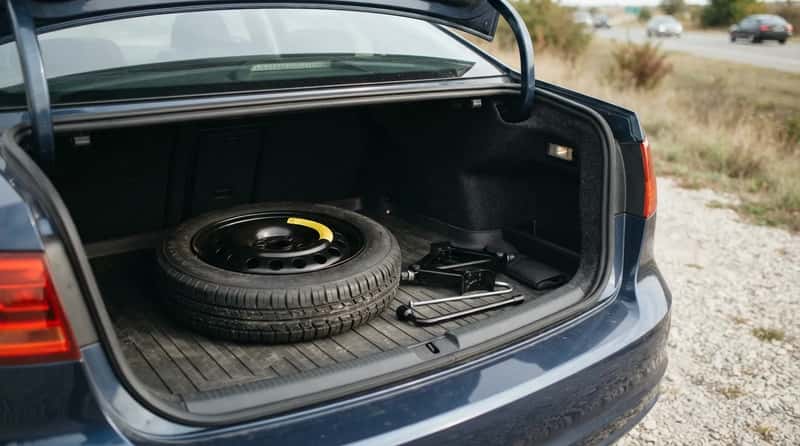
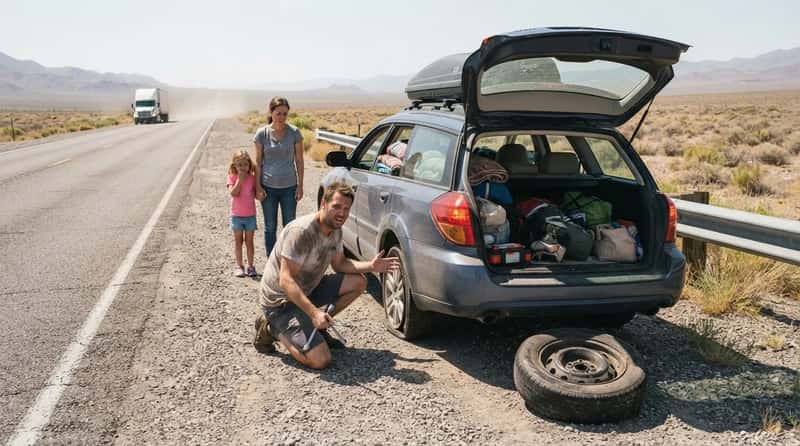
Here’s the situation mechanics dread hearing about: a driver gets a flat, pulls over safely, opens the trunk for the spare, and finds it flat, missing, or unusable because the jack or wrench is gone.
A spare tire that’s flat is basically a decorative circle. Confirm it’s inflated, and that the jack and tools are physically in the car, not just assumed to be there.
Quick Compare
- Compact donut spare: max 50 mph, good for roughly 50 to 70 miles, temporary use only
- Full-size spare: no special speed cap, drives like a normal tire until you can replace the flat
- Either type: useless without a working jack and a lug wrench that actually fits your bolts
Compact “donut” spares have a maximum speed of 50 mph and shouldn’t be driven more than 50 to 70 miles. Treating a donut like a real tire and hitting the highway at 80 mph turns one breakdown into two.
Also verify the lug wrench actually fits your wheel bolts. Some vehicles have been refitted with aftermarket wheels that need a different size entirely.
Spare confirmed. Next comes something that’s been sitting right in front of drivers without them acting on it.
3. The Check Engine Light You’ve Been Ignoring
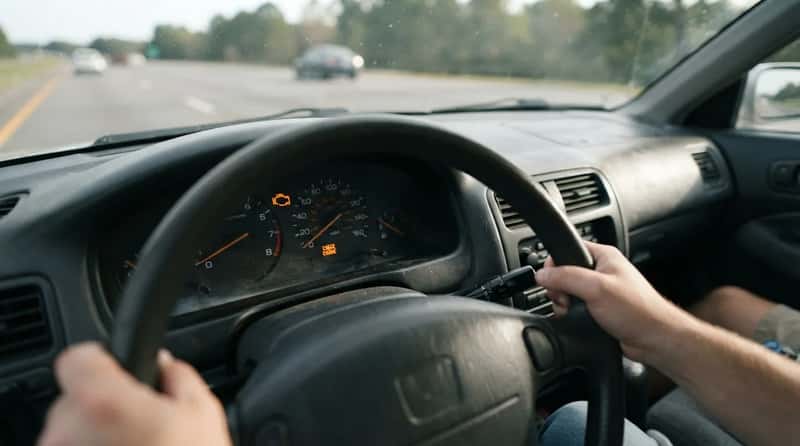
Most road trippers see the check engine light and decide it’s probably nothing. Mechanics see it and know it could be anything, including something that ends the trip.
The check engine light doesn’t have a severity scale visible to the driver. A solid light could mean a loose gas cap or a misfiring cylinder, and you can’t tell the difference just by looking at the dashboard.
That’s what the diagnostic scanner is for, and most auto parts stores will read the code for free. Driving long distances with an unresolved engine problem can turn a minor fix into a breakdown or costly damage.
Unusual smells or sounds count too. A squeal when the AC kicks on can point to a slipping belt, while a sweet chemical smell inside the cabin can mean a leaking heater core.
One more stop before the most important check of all.
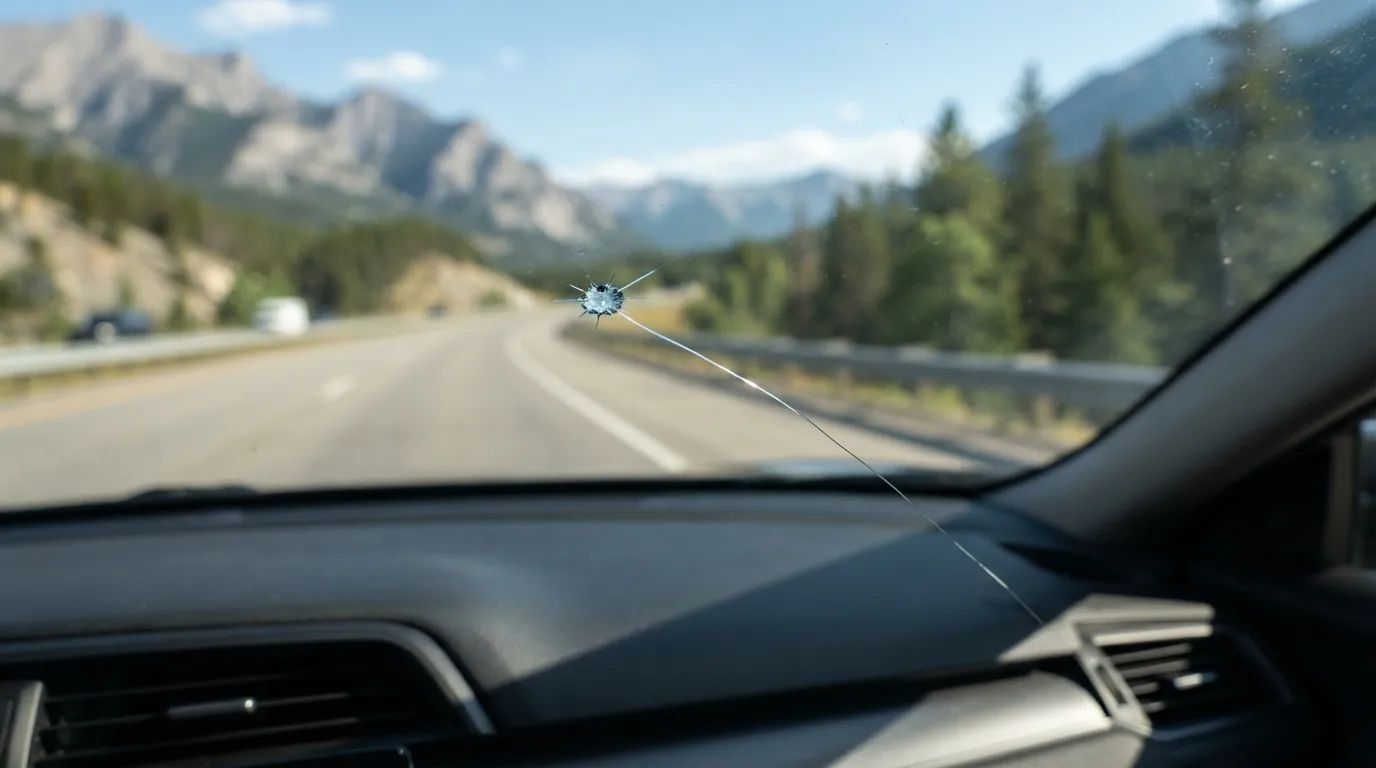
2. Windshield Chips, Cracks, and Glass Condition
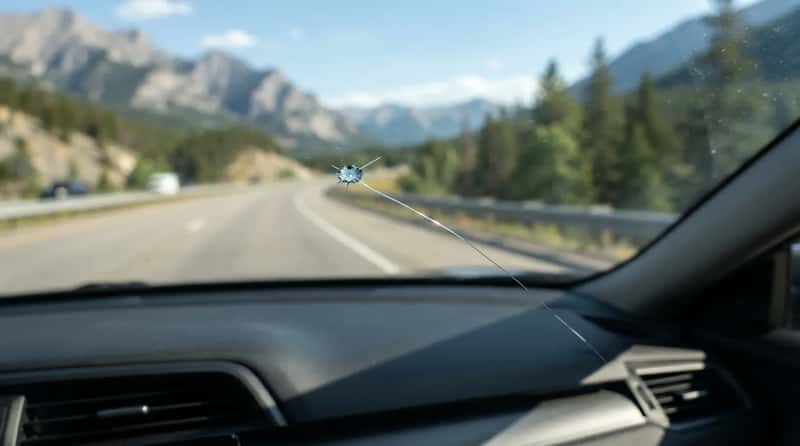
A small chip in your windshield is manageable on your daily commute. On a road trip, it’s a timer counting down to a full crack.
Temperature swings are the enemy of chipped glass. Driving from a cool morning into afternoon heat, or from cold mountain air back to lowland warmth, can propagate a crack in a single afternoon.
A stitch in time saves nine.
Common repair-shop wisdom, still true for windshields
Many auto insurance policies cover windshield repair at no cost to the driver, which means most people are paying nothing to keep delaying a free fix. Call your insurer before you leave.
Clean the inside and outside of the glass and adjust your mirrors while you’re at it. A clean windshield reduces glare fatigue significantly over long hours of driving.
Now for the check mechanics say almost nobody does, and the one that catches problems a full inspection can miss.
1. A Full Pre-Trip Test Drive With Focused Attention

Every other item on this list can be checked on a lift, under a hood, or with a gauge. This one requires you to actually drive the car and pay deliberate attention, which is different from just driving it to work.
You know your car better than anyone, so take it for a quick spin to see if something feels off. But the key word is deliberate: windows down, radio off, listening for anything that changes with speed, braking, turning, or acceleration.
Brake from 60 mph on an empty road and feel for pulling, pulsation, or a pedal that travels too far. Turn at low speed and listen for clicking or grinding, then accelerate hard and note whether the transmission shifts smoothly.
A sound or sensation that only shows up under specific conditions, like load, speed, or heat, will never be caught sitting still in a parking lot. That’s exactly why this step gets skipped, and exactly why mechanics say it matters most.
Why It Stands Out
- It’s the only check that catches problems only visible under real driving conditions
- Worth booking a professional inspection if you’re traveling over 500 miles
- Same goes for older vehicles, heavy towing, or mountain-heavy routes
- Skip it if you’ve had a lift inspection within the last six months
A road trip breakdown carries two costs: the repair itself, and the disruption, the tow truck wait, the unfamiliar shop, the whole schedule upended. A professional pre-trip inspection is worth booking if you’re traveling over 500 miles, driving an older vehicle, towing heavy loads, crossing mountain ranges, or haven’t had a lift inspection in the last six months.
The Bottom Line
Mechanics aren’t frustrated that drivers skip these checks because it creates business. They’re frustrated because every one of these failures is preventable.
Most roadside breakdowns are preventable with a 30-minute inspection before you go. Tires, brakes, battery, fluids, lights, belts, filters, the spare, and a focused test drive don’t require special tools or professional knowledge to start with.
The checks that actually save road trips aren’t complicated. They’re just consistently skipped.
The spare tire sitting flat in the trunk, the check engine light dismissed for three weeks, the wiper blades that looked fine in the driveway – those are the things that turn a 500-mile trip into a 500-mile ordeal.
Go through this list before your next departure. Your mechanic won’t be surprised you did it. They’ll just be glad you finally did.
#17 – The Bonus Check Mechanics Save For Last
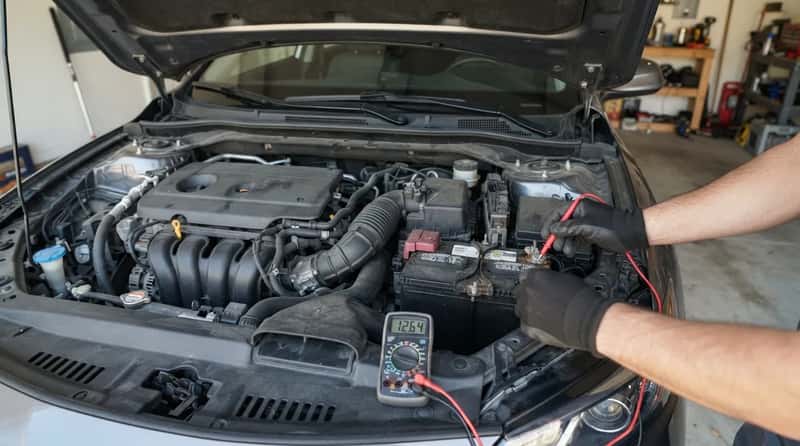
Corrosion and age tell you a battery might be weak, but a simple voltage test tells you exactly how weak your charging system really is, and it takes about two minutes with a $10 multimeter.
- With the engine off and the car untouched for at least an hour, touch the multimeter probes to the battery terminals; a healthy resting battery should read close to 12.6 volts.
- Start the engine and measure again; a properly working alternator should push that reading up to roughly 13.5 to 14.5 volts.
- If the running voltage stays below 13 volts, or it climbs above 15, the alternator or voltage regulator is likely on its way out, even if the battery itself tests fine.
- Do this test the same morning you check tire pressure, before any driving, so both readings reflect the car at rest.
This one check catches the failure mode that strands people hours from home: a battery that passed inspection but was never actually getting recharged. Most shops will run it for free, but doing it yourself in the driveway means you already know the answer before you ever ask.