Most people picture a reserved seat like an airline seat: your number, your spot, end of story. On trains, that picture falls apart fast. A ticket, a reservation and a seat number are three different things, and the rules change from country to country.
Mix them up and you can end up standing in a packed aisle, locked in a polite standoff with a stranger, or paying twice. Rail crews watch it happen every day. Here are the 16 things they wish you knew before you board, starting with the mix-up behind most seat arguments.
#16 – A Ticket Isn’t a Seat, and That Mix-Up Starts Most Arguments
Having a valid ticket gets you on the train, not necessarily into a chair. A valid ticket permits you to travel, but you may not be guaranteed a seat. On most trains in Great Britain you can travel without a reservation, but you might have to stand.
Germany works the same way. A standard second-class ticket there doesn’t include a seat reservation, and a reservation is the only way to guarantee you’ll sit. Even more surprising, not all UK Advance tickets come with a seat reservation.
But that’s nothing compared to what “reserved” actually means on Amtrak in #15…
#15 – On Amtrak, “Reserved” Doesn’t Always Mean You Get a Seat Number
You can hold a “reserved” Amtrak ticket and still have no idea where you’ll sit. On Amtrak’s all-reserved trains, the train is sold out once the seats are sold, but seating is first-come, first-served rather than tied to a specific number. The Northeast Regional, for example, offers daily all-reserved service, usually at least every hour.
The wording trips people up. One long-time forum answer explains that “reserved” on Amtrak means there will be a seat for you on a specific train. Assigned seat numbers exist on the Acelas and in Northeast Regional business class. So a reservation can guarantee you a place on the train without pinning you to a seat.
Fast Facts
- All-reserved trains sell out once every seat is sold.
- Standard coach seating is first-come, first-served.
- Acela seats come with assigned row and seat numbers.
- Northeast Regional business class also has assigned seats.
But the little paper slip above the seat tells you even more, as #14 shows…
#14 – The Tiny Paper Slip Above Your Head Is Doing Heavy Lifting
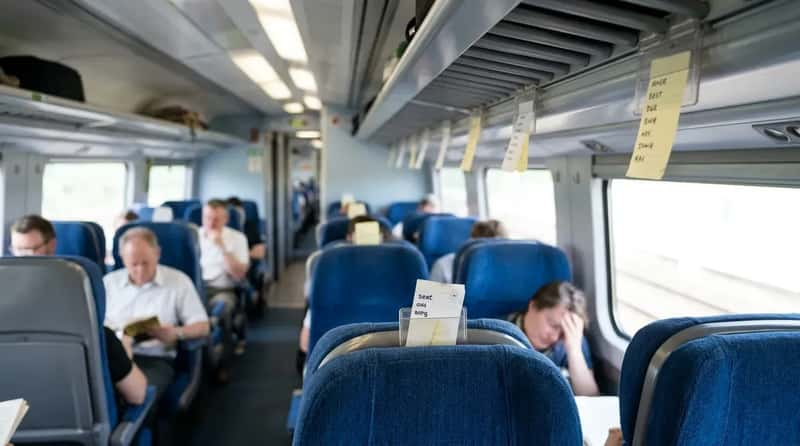
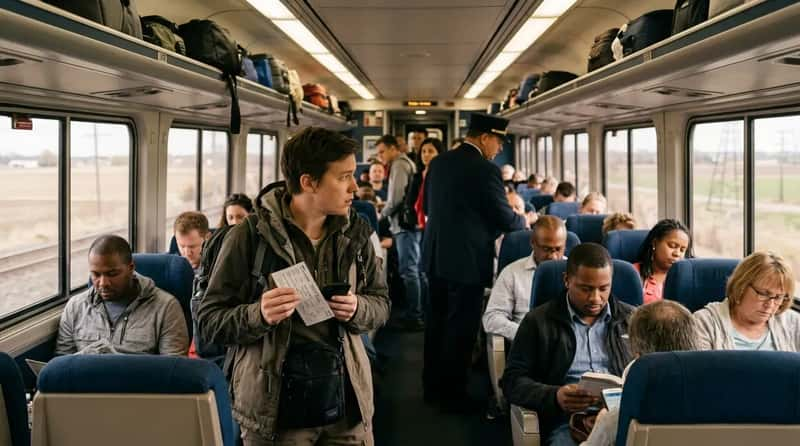
That scrap of paper is how crews run a whole coach without a seating chart. Conductors place a small slip above a passenger’s seat that lists their final destination. Riders are told to look for seats without people in them or without “seat checks” above them.
- Slip above the seat means it’s taken.
- No slip and nobody in it means it’s open.
When the passenger leaves the train, the seat check comes off and the seat is available again. Treating it as decoration is a classic mistake.
Germany tackled the same problem with screens, and #13 explains how to read them…
#13 – The Two City Names on a German Seat Display Reveal the Trick
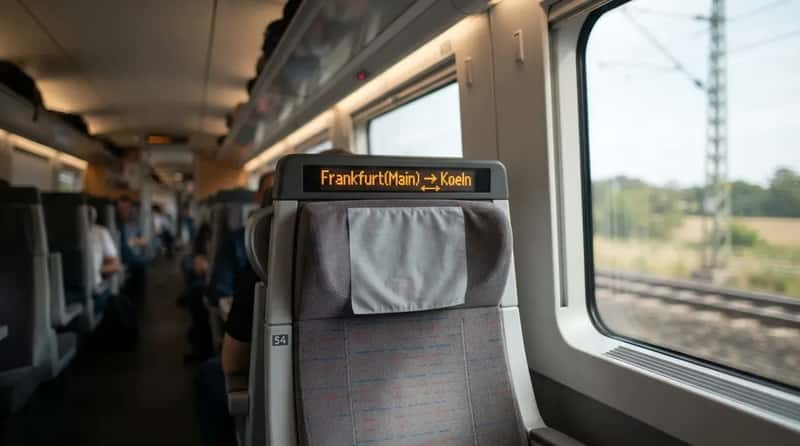
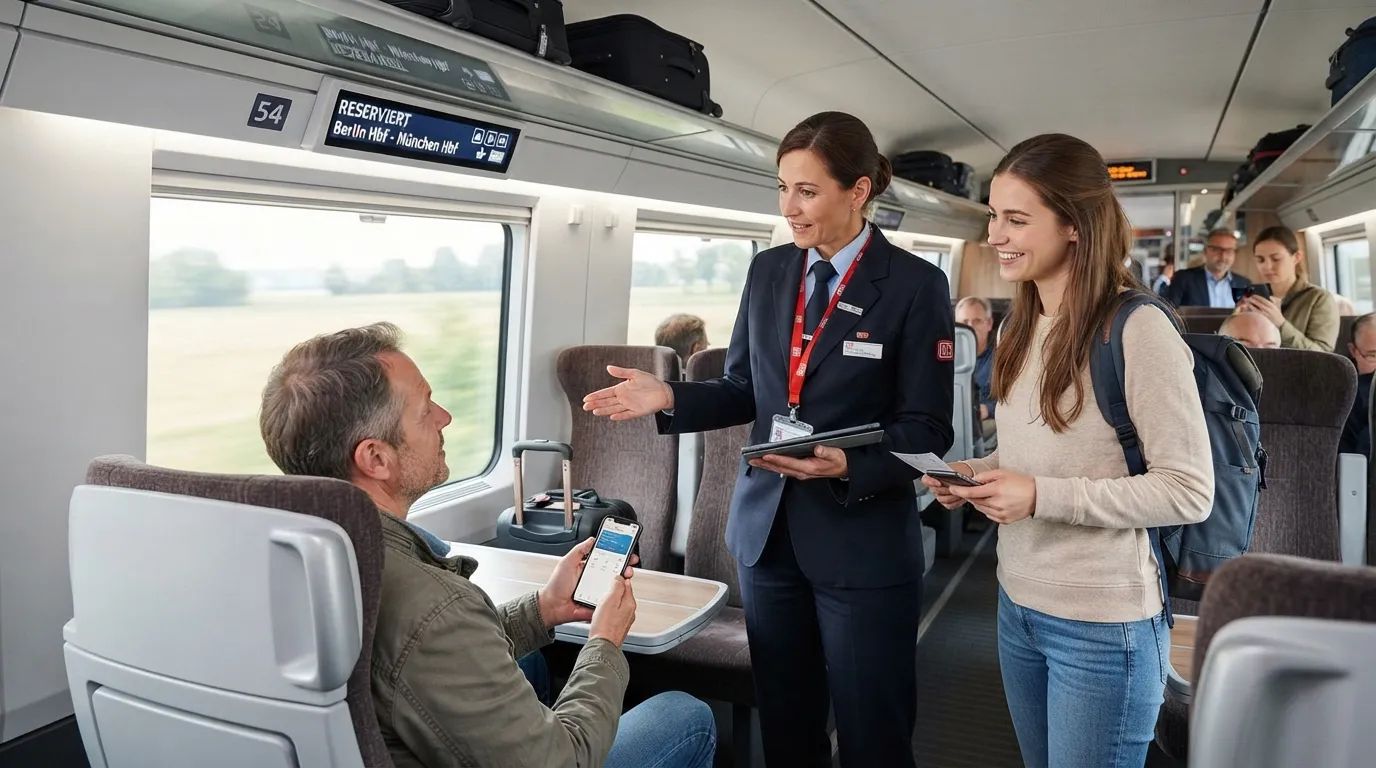
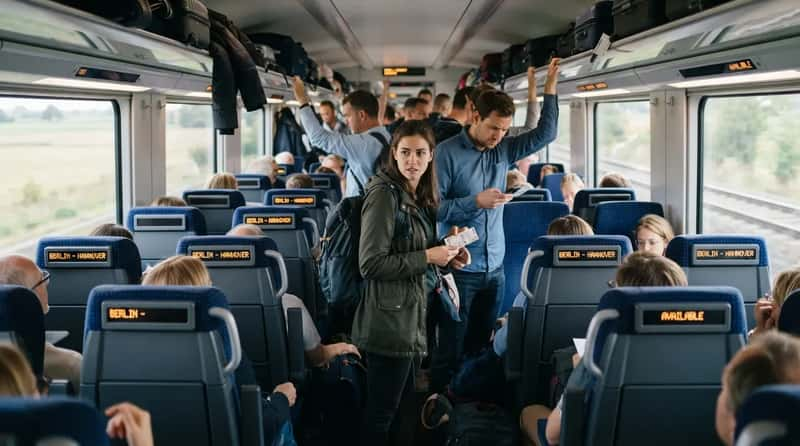
Look up on a German ICE and you’ll spot a small screen that most tourists ignore. Above each seat is a small digital display, and a message like “Hamburg – Berlin” means the seat is reserved for that portion of the journey.
Those two cities are a time window, not a permanent claim. If the display reads “Frankfurt(Main) -> Koeln,” a passenger booked that seat only between those stations, and before Frankfurt and after Koeln it’s free for anyone. A “reserved” seat can be perfectly fair game for part of your ride.
Next comes a German phrase that sounds official but promises nothing, in #12…
#12 – “ggf. freigeben” Sounds Official, but It’s Not a Promise
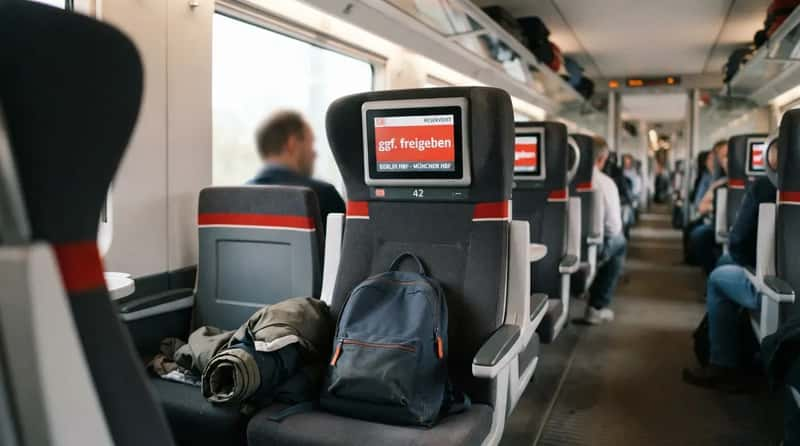
A blank display and a “ggf. freigeben” message both look like an invitation to sit. Blank or “ggf. freigeben” (release if necessary) means you’re free to sit there. But there’s a catch.
It means “possibly released” or “free if unclaimed,” and it isn’t a guarantee the seat stays free the whole way. A seat can look free, then become taken as the train fills. Plenty of seasoned riders sit anyway and simply move if someone shows up.
But missing your train changes everything about a reservation, as #11 reveals…
#11 – Miss Your Train and Your Seat Reservation Stays Behind
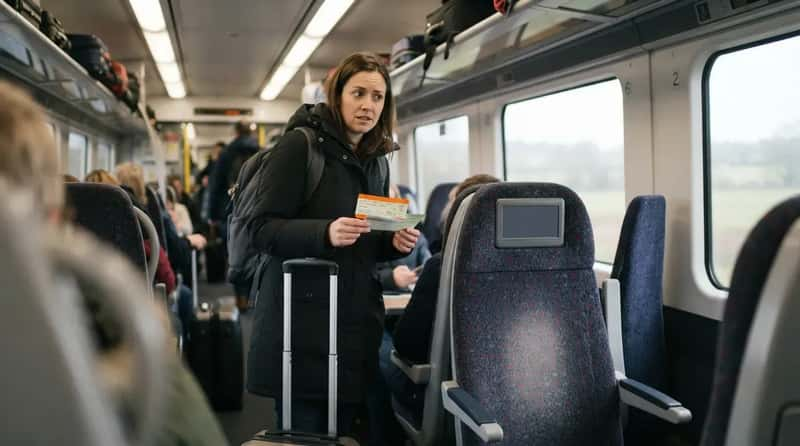
This is the one that catches British travelers out. A flexible ticket may remain valid after you miss a train, but the reserved seat normally applies only to the original service. Your ticket might travel on. Your seat won’t.
Off-Peak or Anytime tickets are valid on later trains, but a seat reservation only applies to one train at a time. An Advance ticket is only valid on the booked train. Some riders argue reserving is pointless if your timing is uncertain, since a reservation can go to waste when you’re unsure you’ll make the train. Others say a reservation on a packed train is worth the risk.
Quick Compare
- Off-Peak or Anytime ticket: valid on later trains if you miss yours.
- Advance ticket: valid only on the train you booked.
- Seat reservation: applies to one train, no matter the ticket.
Germany adds a ticking clock, and #10 is where it gets strict…
#10 – Germany Gives You Just 15 Minutes to Claim Your Reserved Seat
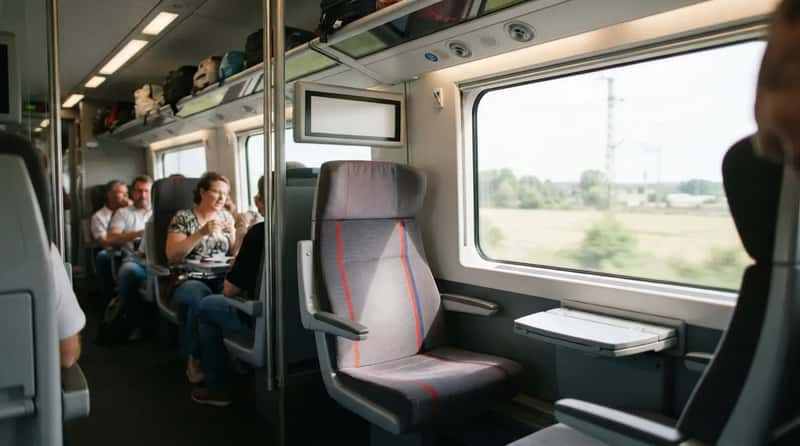
A German reservation has an expiry date measured in minutes. You’re entitled to your reserved seat if you take it within 15 minutes of departure, and after that the entitlement expires and others can use it.
One forum explanation puts it bluntly: a reserved seat not occupied by its holder 15 minutes after departure is free for everyone else and can’t be claimed back. Linger on the platform or in the café car at the start of your trip, and the seat you paid for can legally become someone else’s.
Britain has its own version of a vanishing reservation in #9…
#9 – In Britain, Missing Seat Cards Can Quietly Cancel Reservations
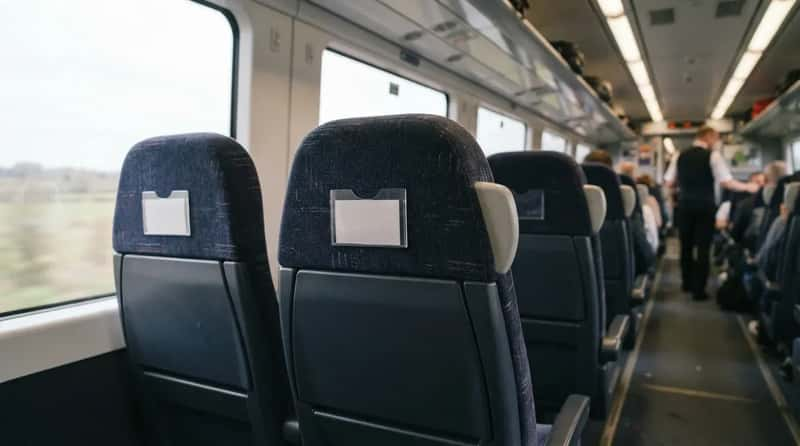
An empty seat with no marker may mean the reservation never made it onto the train. On card-in-the-seat systems, if the cards haven’t been put out because the inward service was late, reservations are in effect cancelled. The same goes when the reservation system isn’t working or reservations haven’t been marked.
Disruption can cause it, such as a train that didn’t start at its normal station. Your reservation can effectively disappear before you even board. The advice: take any available seat, and speak to staff if you can’t find one.
And some reservations don’t include a seat at all, which brings us to #8…
#8 – The “Counted Place” Is a Reservation With No Seat Number
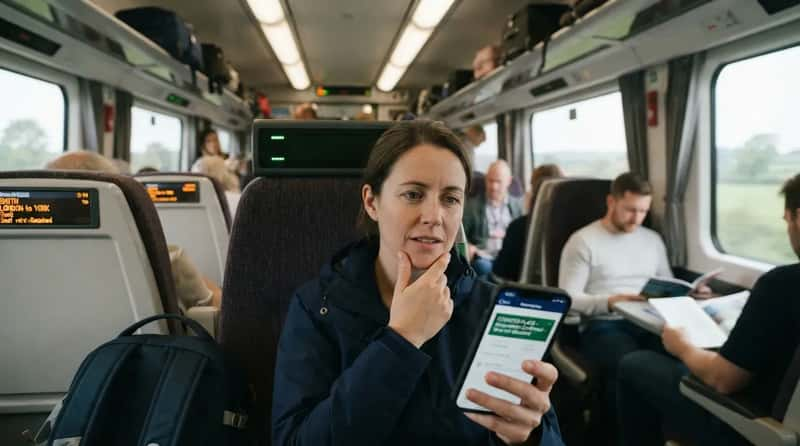
Some passengers get a reservation and still can’t find a seat number on it. That’s known as a counted place: a reservation with no specific seat reserved. The operator is counting you in, not choosing for you.
Booking late can trigger it too. If you book an Advance ticket very close to departure, there may be no specific seat reserved for you. Operators also differ: LNER and Avanti West Coast let you pick the carriage and seat, while Lumo allocates one based on preferences like a window seat. Whether you get a say depends on who runs the train.
Next, why a conductor might ask you to move even when you’re comfortable, in #7…
#7 – Why the Conductor Moves You, and the Platform Is the Reason
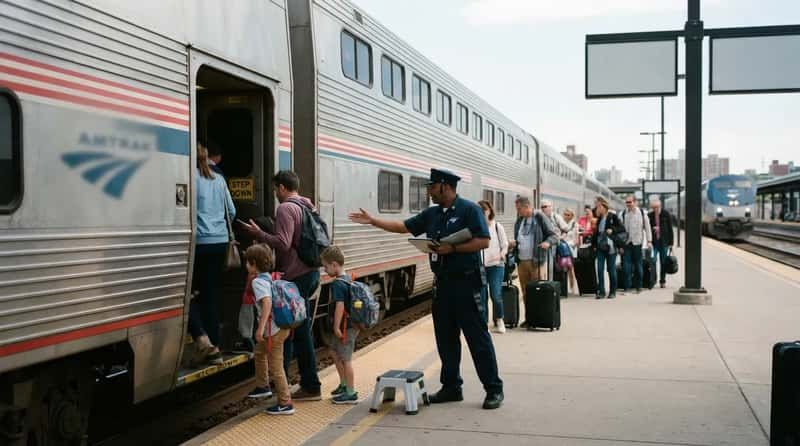
Being asked to switch seats isn’t personal. Conductors may assign specific seats or cars, especially to group passengers. On long-distance Amtrak trains, seats aren’t assigned in advance, but staff will assign you one when you board.
There’s a practical logic behind it. One rider notes the conductor tries to put disembarking riders into a car that will stop at the platform with its door open. Sorting by stop keeps the exit line short. Arguing over a window seat can cost the whole train time.
But the cost of a reservation varies wildly, as #6 shows…
#6 – A Reservation Can Be Free in Britain and a Fee in Germany
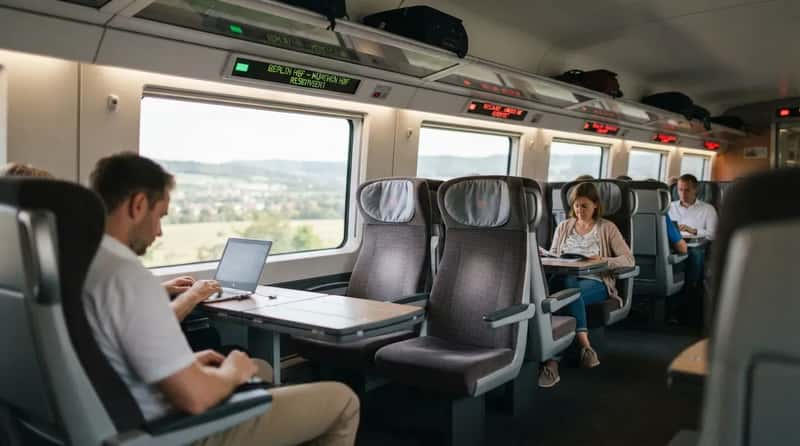
Price is where the systems really split. In Britain, seat reservations are normally free if made with your booking, and for most other companies you can show your ticket at a ticket office and request one free.
Germany charges. A reservation costs EUR 4.90 in second class and EUR 5.90 in first class, according to Deutsche Bahn’s international FAQ. On trains that require reservations, you get one free when you book your ticket. Buy it later and you pay the fee. Whether that fee is worth it is a real debate among riders on busy routes.
Then there’s a high-tech feature that people routinely misuse in #5…
#5 – Don’t “Check In” to a Seat You’re Not Actually Sitting In
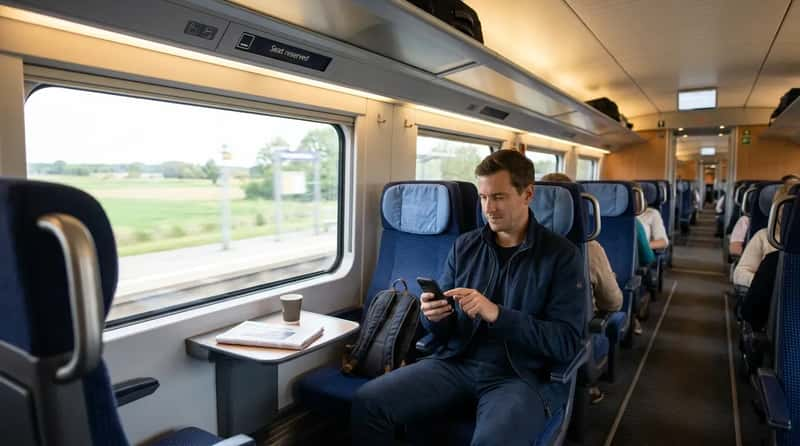
Germany’s app tool is built for convenience, not for staking claims. Komfort Check-in lets you check in via the DB Navigator app once you sit down, so inspectors can see your ticket is validated and won’t need to disturb you.
Here’s the part people miss. Your entitlement to a seat doesn’t depend on Komfort Check-in. Deutsche Bahn asks passengers to check in only once they’ve actually taken their seat. You can also check in to a reserved seat if the reservation doesn’t overlap with your journey.
Worth Knowing
- Check-in happens in the DB Navigator app.
- It shows inspectors your ticket is already validated.
- It’s not what earns you the seat; your reservation does.
- Tap it after you sit, not while you hover in the aisle.
Amtrak’s fastest train handles all of this differently, as #4 proves…
#4 – The Acela Treats Every Seat Like an Airline Seat
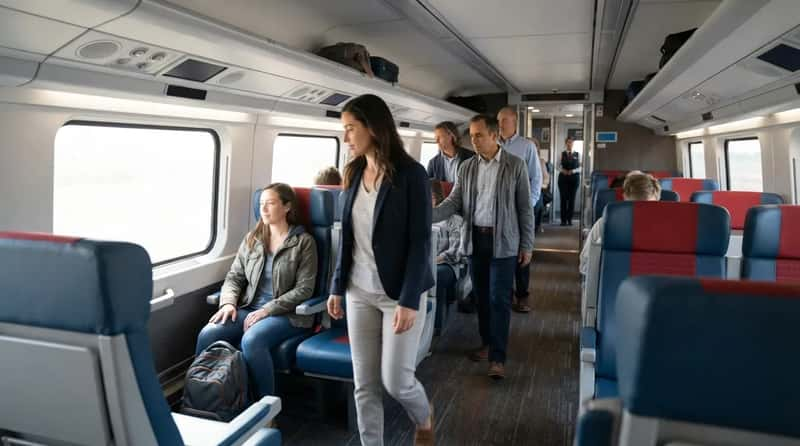
Amtrak’s flagship doesn’t play the first-come game. According to rail enthusiasts, all Acela seats are assigned, with row and seat numbers but no on-seat reserved indicators. Amtrak’s app allows seat selection during booking on all Acela trains and in Business Class on the Northeast Regional, Palmetto, Vermonter and Carolinian.
Fans say it changes the whole boarding mood. One rider says knowing your seat makes boarding far less stressful than rushing to get a decent one. Plenty of riders argue assigned seating is the best thing Amtrak could roll out everywhere, though coach loyalists still like the flexibility.
But what happens when your guaranteed seat falls through? That’s #3…
#3 – If Your Reserved Seat Falls Through, You May Be Owed Something
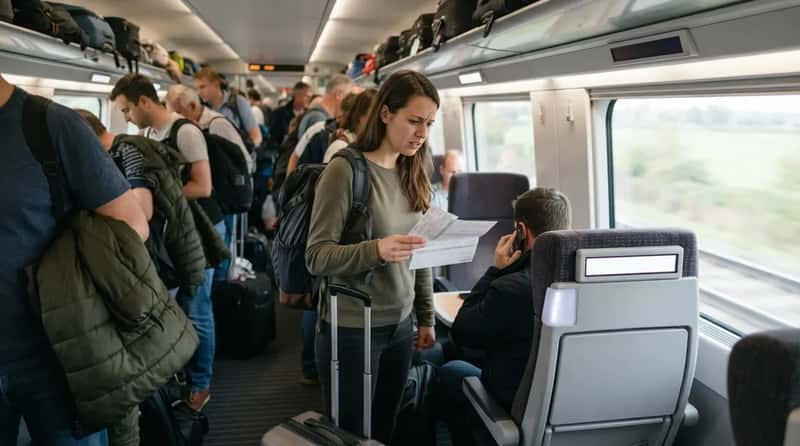
Many passengers never ask, and they should. Deutsche Bahn says if reserved seats couldn’t be allocated, kept available or used because of train delays, you’re entitled to a refund of the reservation fee. That includes bicycle spaces too.
Britain has similar safety nets. Some rail operators have a seat guarantee scheme, so you might get a refund if you had to stand. You may be owed money simply because a train was crowded or disrupted. Details vary by operator and fare, so check the exact terms.
And when someone is sitting in your seat, there’s a smarter move than confrontation in #2…
#2 – Someone in Your Seat? Staff Can Often Fix It Faster Than You Can
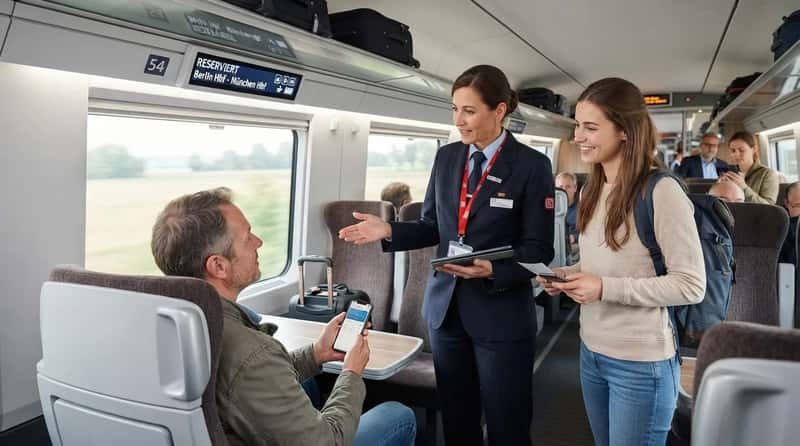
Before you start a stand-off, double-check the basics. A reservation display shows the reserved segment, and your ticket or app shows yours, so match them. A wrong car or date is a more common mistake than people admit.
If it really is your seat, bring in the crew. In Germany, the train staff can reassign you to an equivalent free seat. In Britain, speak to a member of staff if you can’t find a seat. Standing your ground feels satisfying, but involving staff avoids a scene and usually gets you seated sooner.
At a Glance
- Check your car and date first.
- Match the seat display’s segment to your ticket or app.
- Germany: staff can move you to an equivalent free seat.
- Britain: speak to a member of staff.
The last one is the quiet trap behind countless seat swaps in #1…
#1 – That Empty Seat Beside You Might Belong to Someone Boarding Later
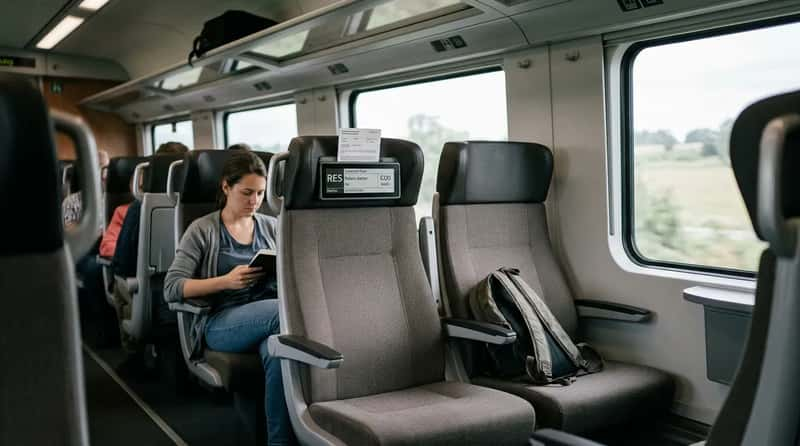
Here’s the truth most passengers learn the hard way: an empty seat isn’t always a free seat. An unclaimed seat in your compartment may actually be reserved for someone boarding at another stop.
That makes casual seat swapping risky. One forum reply warns that your travelling companion may lose the seat to the next person who reserved it from a stop further down the line. A friendly swap can leave you without any seat at all.
It’s a small detail, but it explains nearly every seating dispute you’ll ever see.
So here’s the whole story in a breath: a ticket isn’t a seat, and “reserved” can mean a place on the train rather than a numbered chair. A reservation can cover just part of your trip, expire within minutes, or vanish if you miss your train or the markers never get put out.
What do rail crews wish you knew most? Read the marker, ask staff early, and keep your proof. The seat that looks like yours might be, until the train fills up and someone with the right display walks down the aisle.