Most travelers assume a second trip to a national park is just the first trip with fewer photos. Ranger station staff see something very different from behind the counter. Repeat visitors walk in differently, ask sharper questions, and dodge mistakes that trip up first-timers within the first ten minutes.
The National Park Service recorded more than 323 million recreation visits in 2025, so the front desk has seen every version of a vacation. The surprising part is that the best tells have little to do with gear. Some are practical, some are a little emotional, and the last one tends to catch even longtime travelers off guard.
#16 – They Ask “What’s Different Now?” Before They Ask Anything Else
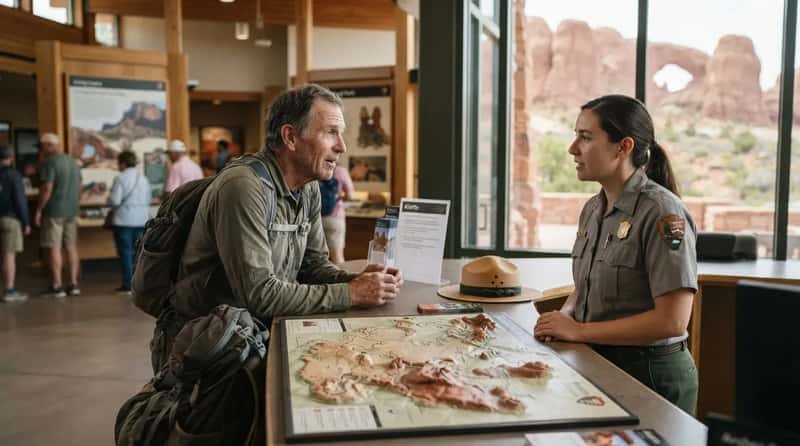
The first question a returning traveler asks is rarely about the map. It’s usually some version of “what changed since last time?” That instinct pays off, because park rules keep moving. Arches lifted its timed entry requirement on February 18, 2026, ending a pilot that began in spring 2022. Mount Rainier, Zion, Glacier and Yosemite were also listed among parks that dropped timed entry for 2026.
A traveler working from a 2023 memory can show up holding a reservation they no longer need. Or they skip one they still do. Old blog posts keep both mix-ups alive. The returning visitors who ask first sidestep the whole mess.
But the next habit shows up before they even reach the desk…
#15 – They Arrive at the Gate With the Pass Already in Hand
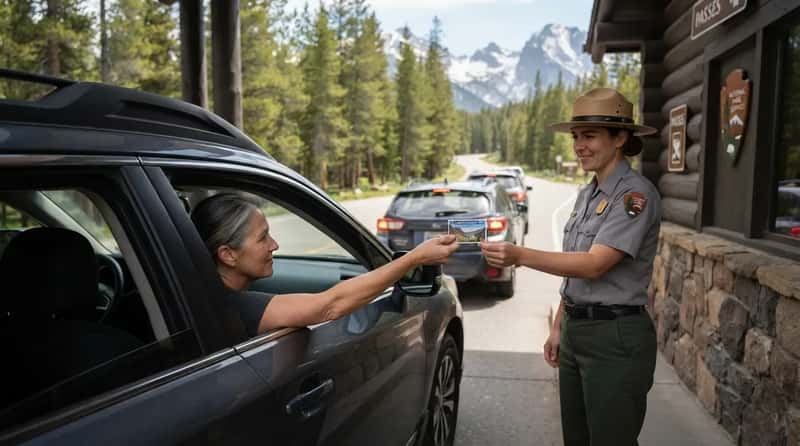
Returning travelers rarely fumble for a wallet at the entrance. They already did the math. U.S. citizens and permanent residents can buy the annual America the Beautiful Pass for $80. At vehicle-based sites, it covers the passholder and passengers in a private vehicle.
The discounts are the part many people miss. U.S. citizens and permanent residents ages 62 and older can buy an annual pass for $20 or a lifetime version for $80. Seniors, military, visitors with a permanent disability, and families with a 4th grader can qualify for a free or discounted pass. Some sites also don’t accept cash at all, so the veterans show up ready.
- Senior annual pass: $20
- Senior lifetime pass: $80
Still, the habit that really separates veterans comes down to what time they show up…
#14 – They Treat Midday at the Famous Overlook Like a Rookie Trap
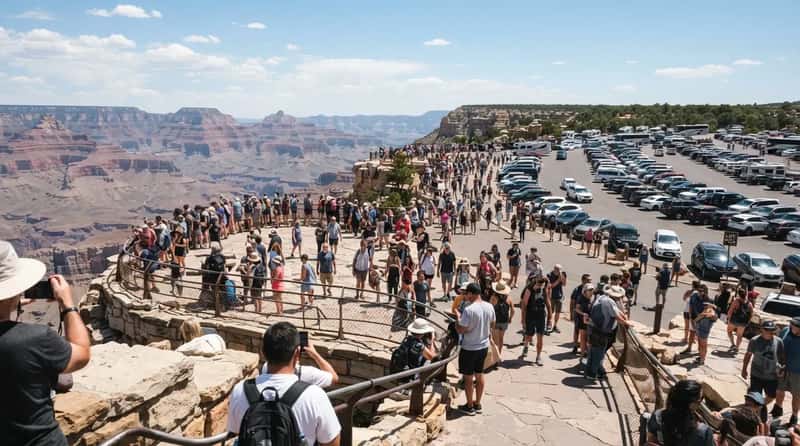
The crowds aren’t random, and repeat visitors know it. Visitation across the National Park System peaks during the summer months. Even without timed entry, parking lots can fill. So experienced travelers push their big stops to the edges of the day.
Here’s the opinion that starts arguments. While most travelers still plan their headline stop for noon, many seasoned visitors argue that midday at a famous July overlook is the worst use of a vacation day. They’d rather spend those hours somewhere quiet and come back when the light is softer and the lot is emptier.
But that’s nothing compared to the planning trick coming up in #13…
#13 – They Book the Strange Little Reservation First
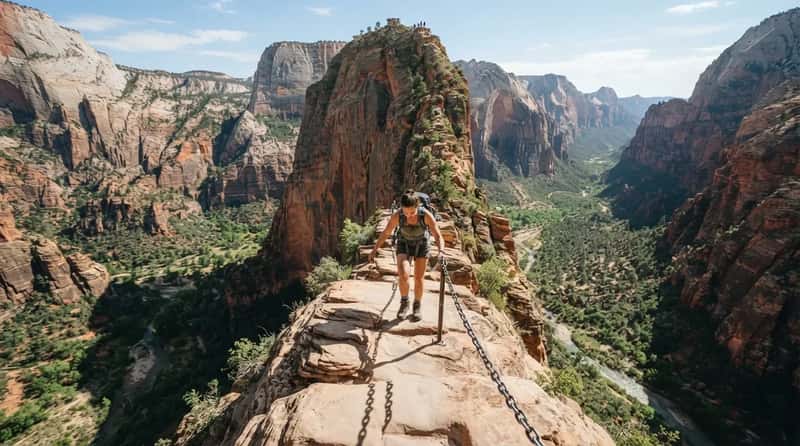
First-timers book the hotel. Veterans book the permit. The bottleneck at many parks isn’t the front gate. It’s the one signature experience everyone wants. Haleakala requires a reservation to enter for sunrise, between 3am and 7am. Acadia requires a vehicle reservation for the Cadillac Summit Road only, May 20 through October 25.
Every hiker on Old Rag Mountain in Shenandoah must get a day-use ticket before entry. And here’s the one that surprises people. Zion Canyon itself doesn’t need a timed-entry reservation, but the Angels Landing chain section requires a lottery permit. Miss that detail and a bucket-list hike can simply vanish.
And yet “no reservation required” has its own catch, as the next item shows…
#12 – They Know “No Timed Entry” Doesn’t Mean “No Line”
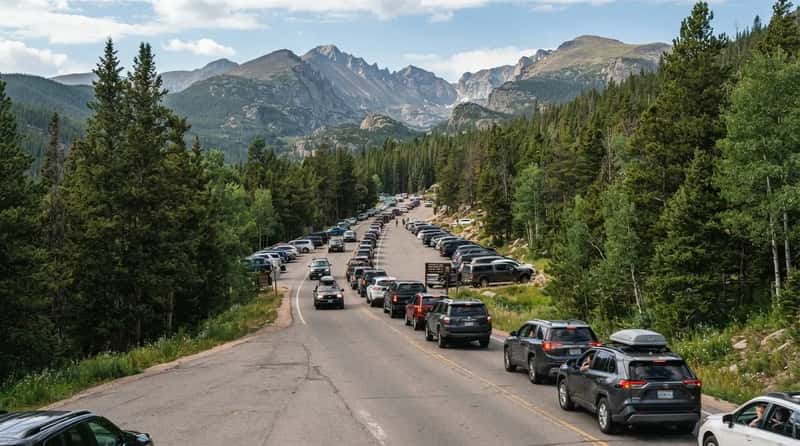
When parks drop reservations, headlines make it sound like the crowds vanished. Repeat visitors don’t buy it. No timed entry does not mean unlimited access, because parking lots can fill and traffic can be managed temporarily. The cars don’t disappear. They just arrive without a schedule.
Rocky Mountain is the interesting counterexample. It still requires a timed entry reservation from 9am to 2pm daily, May 22 through October 12. One guide says its data showed the permits worked, with overcrowding dropping on Trail Ridge Road and at Bear Lake. Some veterans call reservations the only thing keeping busy parks livable. Others say they lock out spontaneous travelers. Both camps have a point.
Quick Compare
- Dropped: Arches ended timed entry on February 18, 2026.
- Still required: Rocky Mountain, 9am to 2pm daily, May 22 through October 12.
- Only one road: Acadia’s Cadillac Summit Road, May 20 through October 25.
- Only one sunrise: Haleakala’s summit, between 3am and 7am.
That debate pales next to where repeat visitors choose to go instead…
#11 – They Skip the Giant and Pick the Second-Most-Famous Park
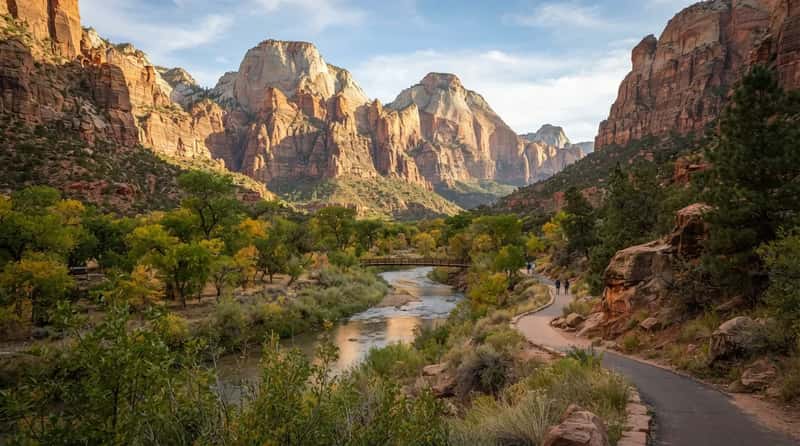
Returning travelers often drift away from the headline name. The numbers explain why. Great Smoky Mountains drew 11,527,939 recreation visits in 2025, more than twice second-place Zion at 4,984,525. That total dwarfs the ten least visited parks combined.
At the other extreme, Kobuk Valley in Alaska had just 7,786 visits. While most travelers rank the Smokies as a must-do, many repeat visitors now argue the traffic makes it a poor use of a short weekend. That’s an opinion, not a rule. But it explains why second trips so often go somewhere less obvious.
Next comes a stop that veterans treat very differently than rookies do…
#10 – They Use the Visitor Center as a Planning Desk, Not a Pit Stop
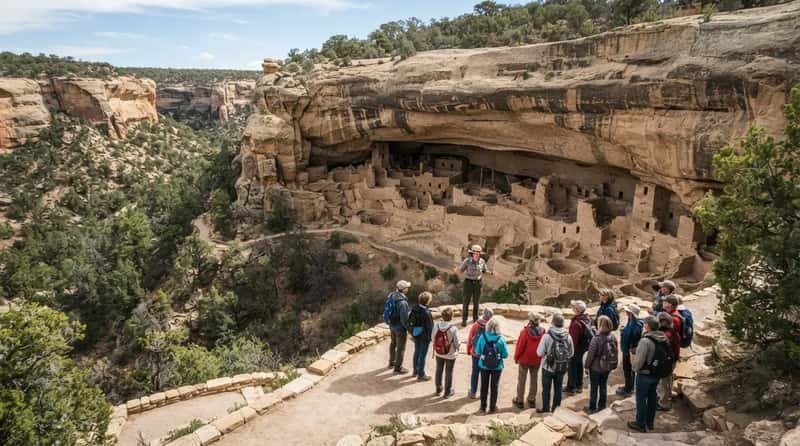
First-timers often treat the visitor center as a restroom and a map pickup. Returning travelers use it to plan. Ranger programs can unlock places you can’t reach on your own. The clearest example is Mesa Verde. Iconic cliff dwellings like Cliff Palace are only open on ranger-led tours that require timed-entry tickets, and those often sell out in summer and school breaks.
The lesson goes beyond one park. Many sites offer ranger talks, guided walks and special access that never show up on a generic itinerary. Veterans learn to ask what’s running this week. It’s the cheapest upgrade in the whole trip.
Worth Knowing
- Cliff Palace at Mesa Verde is open only through ranger-led tours.
- Those tours need timed-entry tickets.
- Summer and school breaks are when they tend to sell out.
- The easiest ask at any desk: “What’s running this week?”
But the best question to ask at that desk isn’t about programs at all…
#9 – They Ask About Today’s Conditions, Not the Brochure
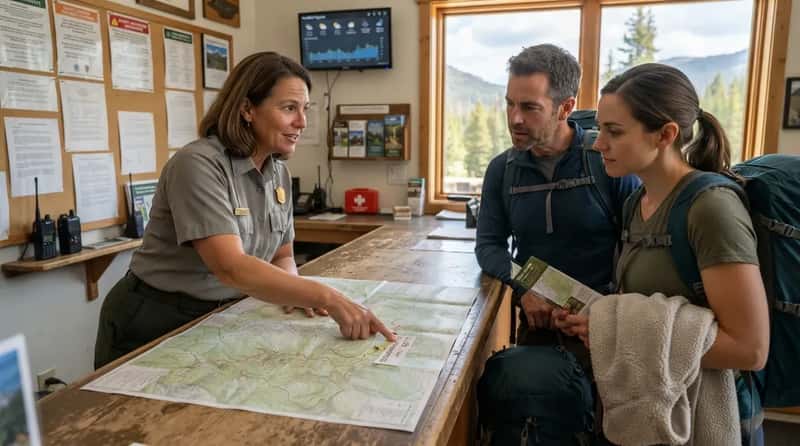
A brochure tells you what a trail is. A ranger tells you what it is right now. Snow can linger on high routes. Smoke can settle into a valley. A road that was open last year may be closed this year. Returning visitors know the difference and ask about it directly.
Here’s the twist. The people most likely to skip that question are repeat visitors, because they feel they already know the place. A great memory of a trail is a snapshot, not a forecast. The ones who pause and ask anyway are the ones who save their day.
And that overconfidence shows up in one more place, starting with the weather…
#8 – They Pack for the Temperature Swing Nobody Mentions
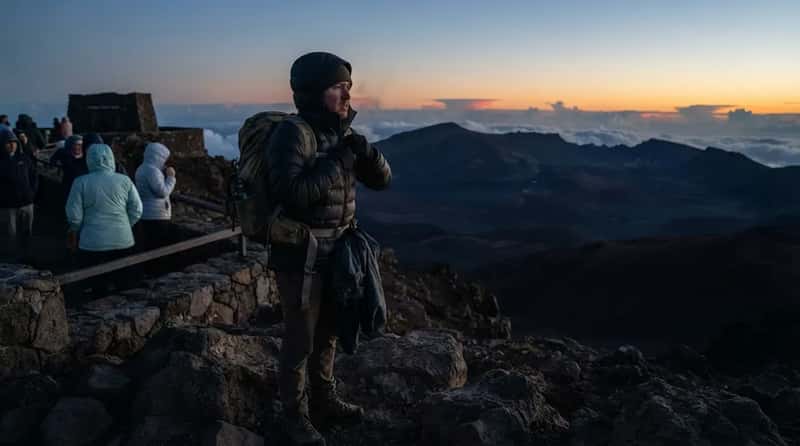
Return visitors learn that the number on the weather app isn’t the number at the trailhead. High country runs colder, and it changes fast. Haleakala’s sunrise reservation window runs from 3am to 7am, which means standing at a summit in the dark. Veterans bring layers. First-timers bring a camera and regret.
The same lesson applies at any high-elevation road, like Rocky Mountain’s Trail Ridge Road. A warm parking lot can sit far below a freezing summit. A cheap extra layer in the daypack is the quiet signature of someone who’s been burned before.
But the next item involves something far more dangerous than a cold summit…
#7 – They Keep a Respectful Distance From Wildlife
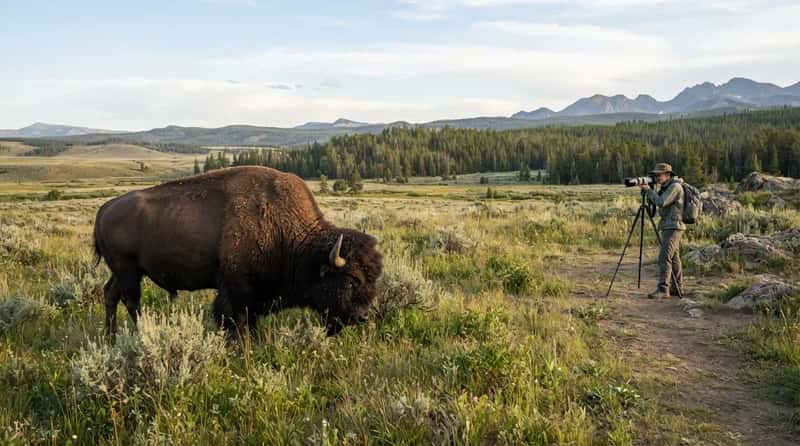
Every season, park staff watch the same scene. A traveler spots an elk or a bison and walks closer for the photo. Returning visitors tend to do the opposite. They zoom in with a lens and stay put. Park guidance commonly asks visitors to stay at least 25 yards from most wildlife and 100 yards from bears and wolves.
The reason is simple. Wild animals don’t treat a crowded roadside like a zoo. They’re unpredictable and fast. Veterans have either seen a close call or heard about one. They’d rather keep the story boring and the photo slightly grainy.
- Most wildlife: 25 yards
- Bears and wolves: 100 yards
The next habit has nothing to do with animals, and everything to do with staffing…
#6 – They Remember the Shutdown and Check What’s Actually Open
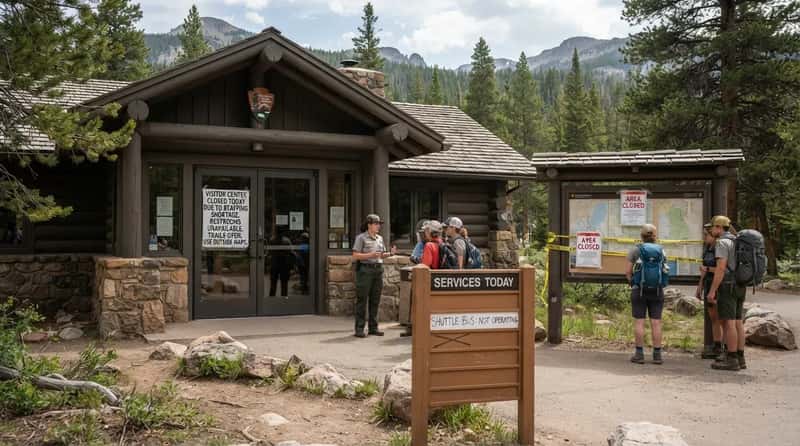
Some returning travelers have scars from the 2025 closures. The National Park Service worked to keep parks open despite a 43-day partial government shutdown, the longest ever. Many sites were forced to partially or fully close to visitors as staff were furloughed.
Even outside shutdowns, pressure remains. Packed marquee parks, staffing shortages and long-running infrastructure needs still leave many parks struggling to keep up. So veterans ask a practical question first. Which services are actually running this week?
But the biggest planning shock hits a very specific group of travelers, covered next…
#5 – International Repeat Visitors Already Know the $100 Math
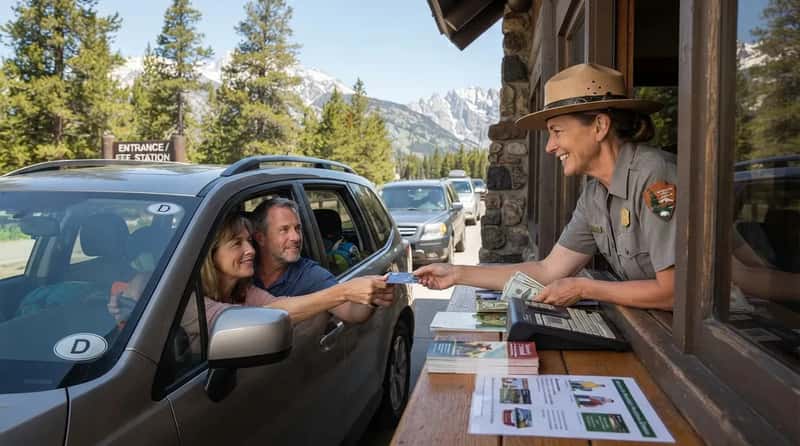
Travelers from abroad who’ve been here before are often the best-prepared at the booth. They learned the rules changed, and they run the numbers before they reach the gate.
At a Glance
- $100 surcharge per nonresident age 16 and older, on top of the regular entrance fee.
- It applies at 11 listed parks.
- An annual or America the Beautiful Pass lets them skip it.
- The new nonresident annual pass costs $250.
The break-even point is debated. One guide says the pass wins by your second fee park. Another says a solo traveler breaks even on the third. Also new: free entrance days are now for U.S. citizens and residents only. Returning visitors learned that the hard way.
Now for something that surprises even longtime visitors: the “quiet” places aren’t quiet anymore…
#4 – They Come Back to a “Hidden” Spot That’s Now Setting Records
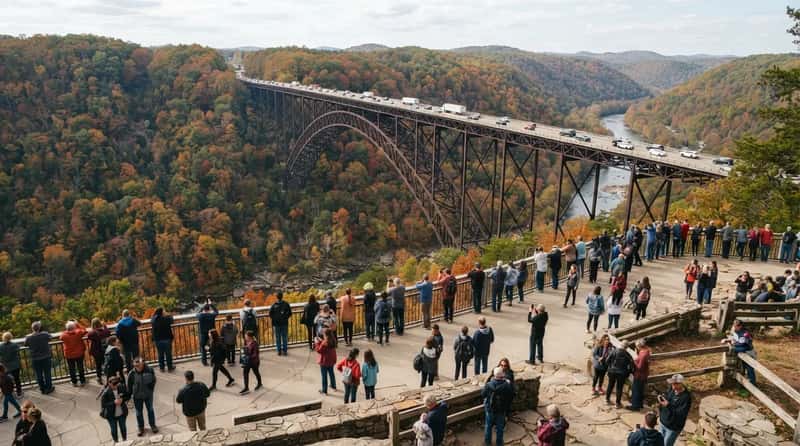
One of the most common reactions from returning travelers is a double take. The place they loved because it was empty is suddenly busy. New River Gorge saw record visitation in 2025, one of 26 parks to set new annual records.
That happened even in a slightly softer year overall. Total visits fell 2.7% from the record year in 2024. The Appalachian Trail was counted in the ranking for the first time, and its National Park Service lands logged 6.2 million visits, making it the ninth most visited park. Quiet spots are getting discovered fast. Veterans notice before the newcomers do.
But this next one is where the trips turn sentimental…
#3 – They Bring Kids Who Already Know the Junior Ranger Routine
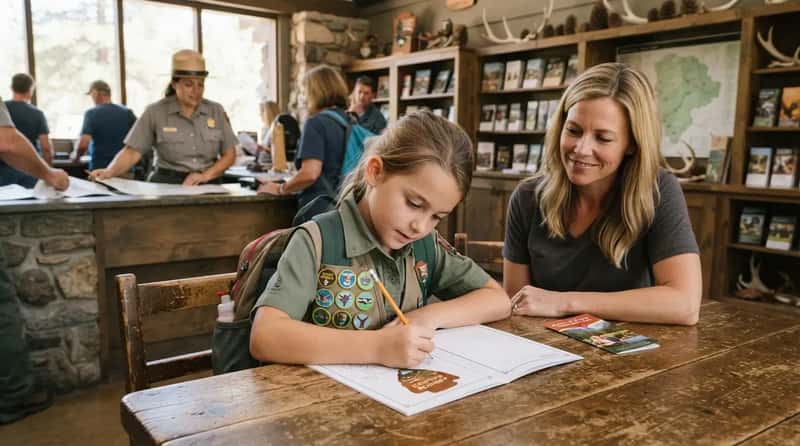
Some returning travelers aren’t returning for themselves. They’re bringing the next generation. Many parks run Junior Ranger programs, where kids complete activities and earn a badge. A child who earned one on a previous trip often wants the next one immediately.
There’s a money angle too. Families with a 4th grader can be eligible for a free or discounted America the Beautiful pass. Parents who’ve been through it once tend to plan a whole trip around that school year.
The next habit is the quiet one, and it might be the most admirable…
#2 – They Quietly Pack Out Trash That Isn’t Theirs
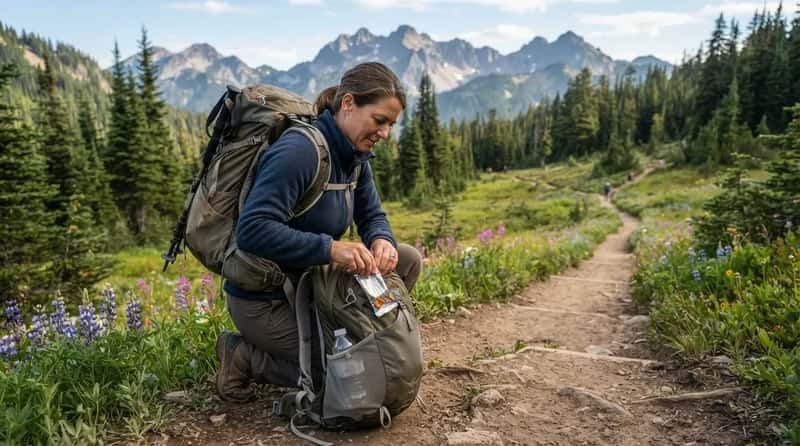
Ask any staff member what separates the visitors who respect a place from the ones who don’t, and the answer is often small. A wrapper picked up from the trail. A water bottle carried out in a daypack. Returning travelers do this without announcing it.
They also stay on the marked path. One worn shortcut invites the next hiker, and the next. Over a few seasons, a single shortcut can turn into a scar. Veterans have watched that happen at places they love. This year, the Park Service is celebrating 250 years of American freedom, and protecting these places is part of what keeps that story going.
And the strongest tell of all has nothing to do with gear or rules…
#1 – They Stand at the Same Overlook and Go Quiet
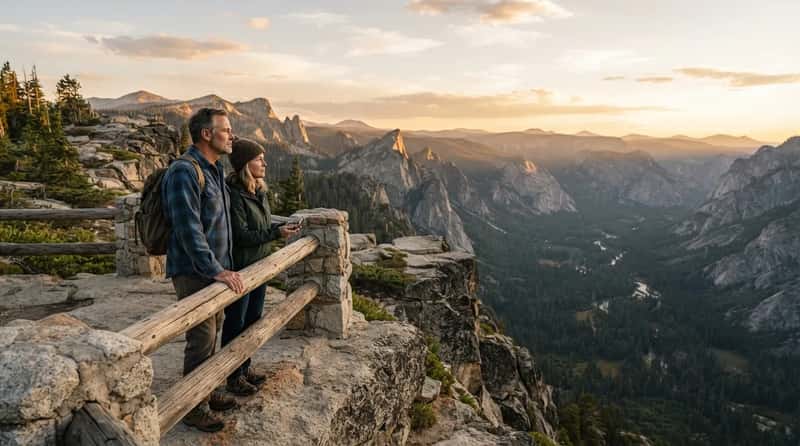
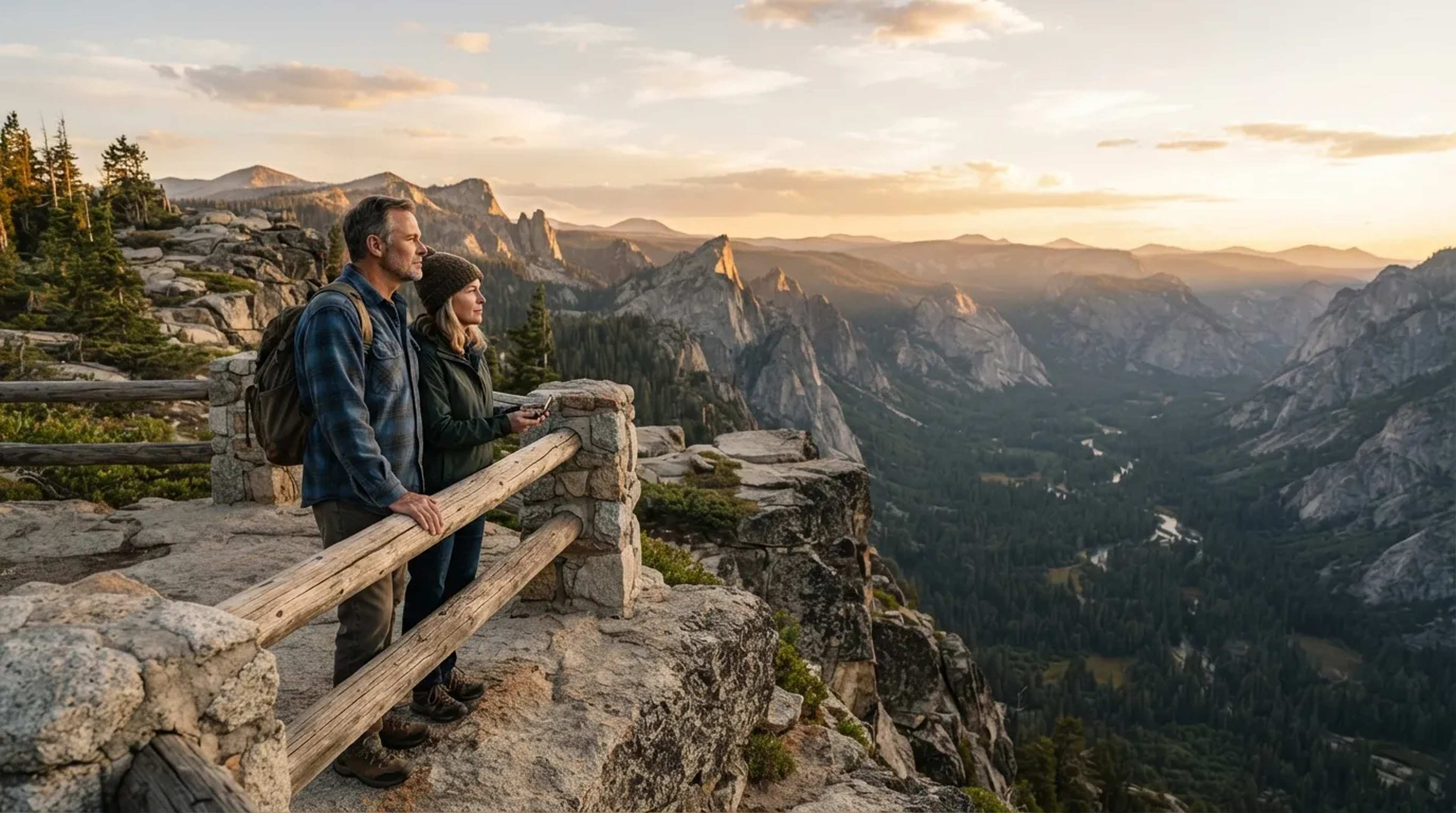
The clearest sign of a returning visitor is a pause. They reach the spot they first saw years ago and stop talking. Some take out an old photo to match the angle. Some point out where the trail used to run.
It’s common to see people tell the story of their first trip to whoever is standing next to them. That’s the hidden truth behind every item on this list. Repeat travelers aren’t just better prepared, they’re emotionally invested. They check the rules, respect the place and bring the next person along because it already mattered to them once.
Returning travelers aren’t magically smarter. They’ve simply learned what changes, what sells out, what closes and what quietly fills up. With 323 million visits in 2025 after a record 2024, these places are busier than ever, and the people who come back are adapting.
But the best habit on this list is the simplest one. The place changed, and so did they, and they came back anyway for the feeling, not just the view.