Most people walk into a hotel lobby thinking staff see them as just another check-in. The truth is, hotel employees size you up from the moment you step through the door – and the quiet judgments they make in those first few seconds follow you all the way to checkout. It’s their job to know as much about their guests as possible, yes. But they’re also making their own private determinations about what kind of person you are. And some of those reads are surprisingly, uncomfortably accurate.
Here’s what nobody warns you about: it’s rarely the big, obvious stuff that gets you flagged. It’s the small, thoughtless habits – the phone at check-in, the towel on the floor, the entitled upgrade demand – that follow you into the break room conversation. Some of these will make you rethink your last stay. A couple near the end might genuinely change how you travel. These are 16 things hotel staff are judging you for right now, straight from the people who actually work the front desk, the housekeeping carts, and everything in between.
#16 – Walking In on Your Phone Mid-Check-In

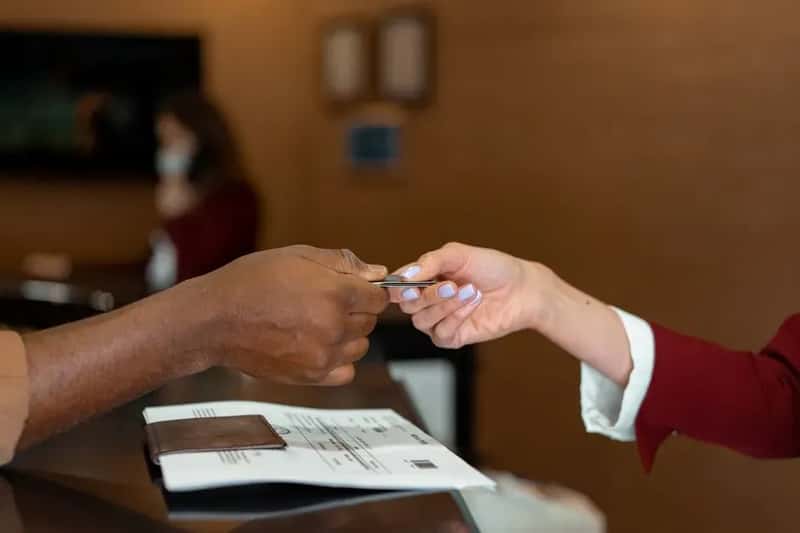
One of the fastest ways to earn silent contempt at the front desk costs you absolutely nothing to avoid. Front desk workers call out guests who answer their phone during check-in and proceed to have a full conversation while staff are trying to hand over critical information. The same guests are almost always the ones calling back ten minutes later asking how to connect to the Wi-Fi or what time breakfast starts. It’s a loop hotel workers recognize instantly.
Think about what that moment actually looks like from behind the desk. A staff member is running through room details, key card instructions, and parking info – and you’ve got your back half-turned, laughing into your phone. That single gesture signals to everyone in earshot that your time matters and theirs doesn’t. The front desk agent will stay professional, but the mental note is already written. First impressions at hotels stick harder than most guests realize, because staff share information about difficult guests across departments.
At a Glance
- Check-in takes roughly 3 to 5 minutes – the most info-dense window of your entire stay.
- Key card instructions, room location, amenity hours, and parking details all get delivered in that window.
- Missing any of it means a callback – which puts you on staff radar before you’ve even reached your floor.
- Staff routinely share notes on distracted or difficult guests with other departments before you arrive.
#15 – Demanding an Early Check-In Like It’s Owed to You
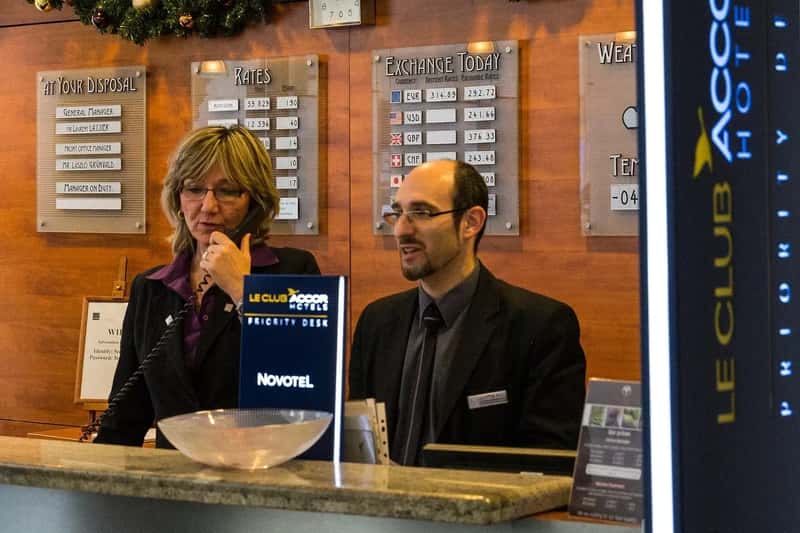
Showing up at 8 a.m. and expecting a room ready is one of the most reliably exhausting things front desk staff deal with. Guests arrive hours before official check-in and demand a room on the spot – they don’t want to hear about housekeeping schedules, maintenance checks, or the fact that the previous guests haven’t even left yet. The entitlement isn’t just annoying; it puts staff in an impossible position while accomplishing nothing.
What most guests don’t realize is that a hotel isn’t sitting on piles of empty rooms waiting to be unlocked. Each one has to be turned over carefully, cleaned thoroughly, and checked for damage or missing items. The guests who push hardest for early rooms are often the same ones who leave the worst reviews. Asking politely is completely fine – the industry expects it. But the moment you treat early check-in as a right instead of a favor, every staff member in earshot takes note.
#14 – Cutting the Line at the Front Desk
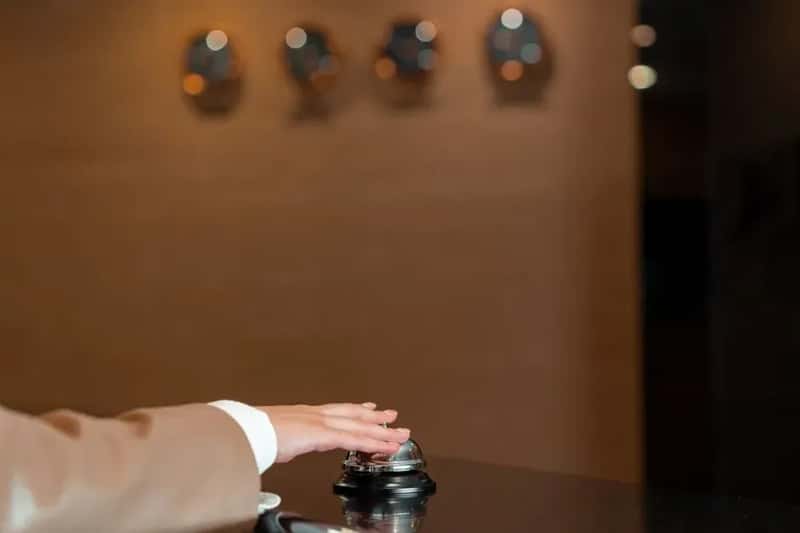
Hotel staff can usually tell within seconds what kind of guest someone will be based on whether they respect a queue. The classic move: one person marches straight to the desk announcing, “I just have a quick question.” The thing is, everyone always has just a quick question. It was never about the question being short – it was about not respecting the fact that everyone else in that line paid for the same service and was waiting their turn.
Line-cutting at a hotel isn’t just bad manners – it’s a personality test that staff grade in real time. Hotels with high-volume check-ins, like large resorts, can process thousands of guests in a single day. Every person in that queue deserves the same attention you do. Staff handle these moments with a professional smile, but the guest who cuts is already filed under “watch this one.” That reputation has a quiet way of following you through the rest of your stay.
#13 – Snapping, Whistling, or Waving to Get Attention
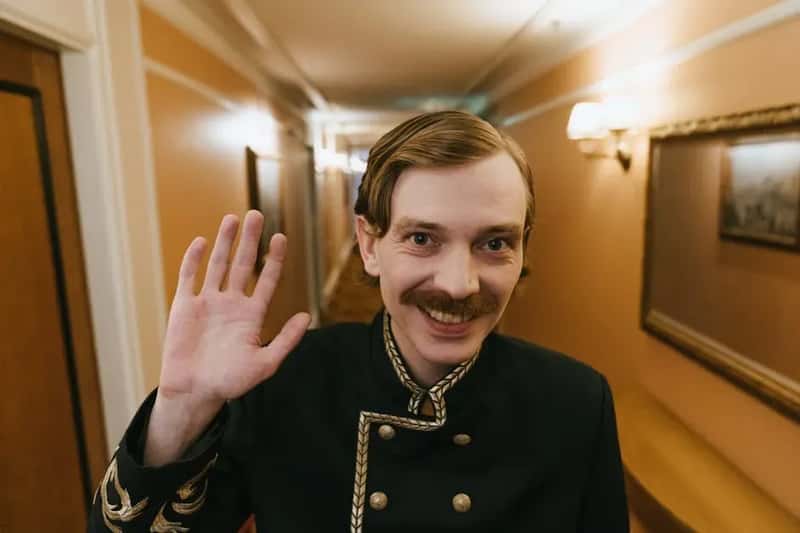
This one goes beyond annoying. It lands somewhere closer to genuinely dehumanizing. Some guests actually snap their fingers or whistle to get a staff member’s attention – others wave their hands dramatically as though the employee couldn’t see them standing three feet away. Longtime hospitality workers describe these gestures as cutting deeper than most insults, because they reduce a person’s role to something less than human, more like a servant who exists only to respond on command.
The snap-and-whistle combo is the single fastest way to ensure you receive exactly the minimum required service for the rest of your stay. Hotel staff are trained to stay composed, but they are not trained to forget. Word travels between departments – the concierge, the housekeeping supervisor, the restaurant host. Being known as “the snapper in room 412” is not the kind of reputation that gets you upgraded.
#12 – Screaming About a Problem Instead of Reporting It Calmly

Raising your voice at a front desk agent is one of those behaviors that feels powerful in the moment and backfires immediately. Hotel workers are emphatic on this: they are far more willing to help when treated like human beings. It becomes genuinely difficult to advocate for a guest internally when that guest is screaming about a room floor assignment or a minor inconvenience. The irony is that the guests who yell the loudest are the least likely to get what they want.
Protocol is protocol – staff have to follow it regardless of how someone behaves. But discretionary upgrades, room moves, and complimentary gestures? Those go to people who ask with a calm voice and a little grace. Beyond the immediate interaction, hotels keep notes on difficult guests in their property management systems – and those notes don’t disappear at checkout. Future visits to the same chain can surface exactly how you behaved last time.
Quick Compare
- Calm complaint, real time: Staff can actually fix the problem and often add a goodwill gesture on top.
- Loud complaint, real time: Staff will follow protocol – but the discretionary extras disappear.
- Silent complaint, saved for checkout: Too late for a fix, and the review helps no one, including you.
- Online review only: Management sees it, but the window for any resolution is permanently closed.
#11 – Repeating Your Loyalty Status Over and Over
Mentioning your rewards membership once at check-in is completely normal. Dropping it four times in five minutes while fishing for a free upgrade is a very different story. Front desk workers hear this script dozens of times a day, and they can identify the entitled version of it within about three sentences. The energy shift is immediate – and it moves things in the wrong direction.
Former front desk workers describe status-flaunting guests as some of the most exhausting to deal with – and the least likely to actually receive the extras they’re angling for. The same workers say they were always happy to surprise genuinely friendly frequent guests with something nice at check-in. But when guests expected to be treated like royalty before they’d even been handed their keys, that goodwill evaporated on the spot. The guests who get real upgrades are usually the ones who never asked for them at all.
#10 – Blaming the Front Desk for a Third-Party Booking Error
Booking through a discount travel site is perfectly fine – until something goes wrong and you unload on the one person who literally cannot fix it. The agent standing in front of you did not set your rate, did not process your booking, and has no access to a third-party system they are not connected to. What they can do is help – if you give them a reason to. What they cannot do is override a system that belongs to a completely different company.
Front desk agents don’t make third-party reservations, so it’s on guests to triple-check their confirmation before arriving. If there’s a problem, being kind to the agent means they’ll likely do their best to sort it out creatively. This is one of the most common and most avoidable frustrations in the entire hotel industry. The fastest path to a resolution is a calm tone and a copy of your booking confirmation – not an accusation aimed at someone who had nothing to do with the error.
#9 – Sneaking In Extra People or Unauthorized Pets
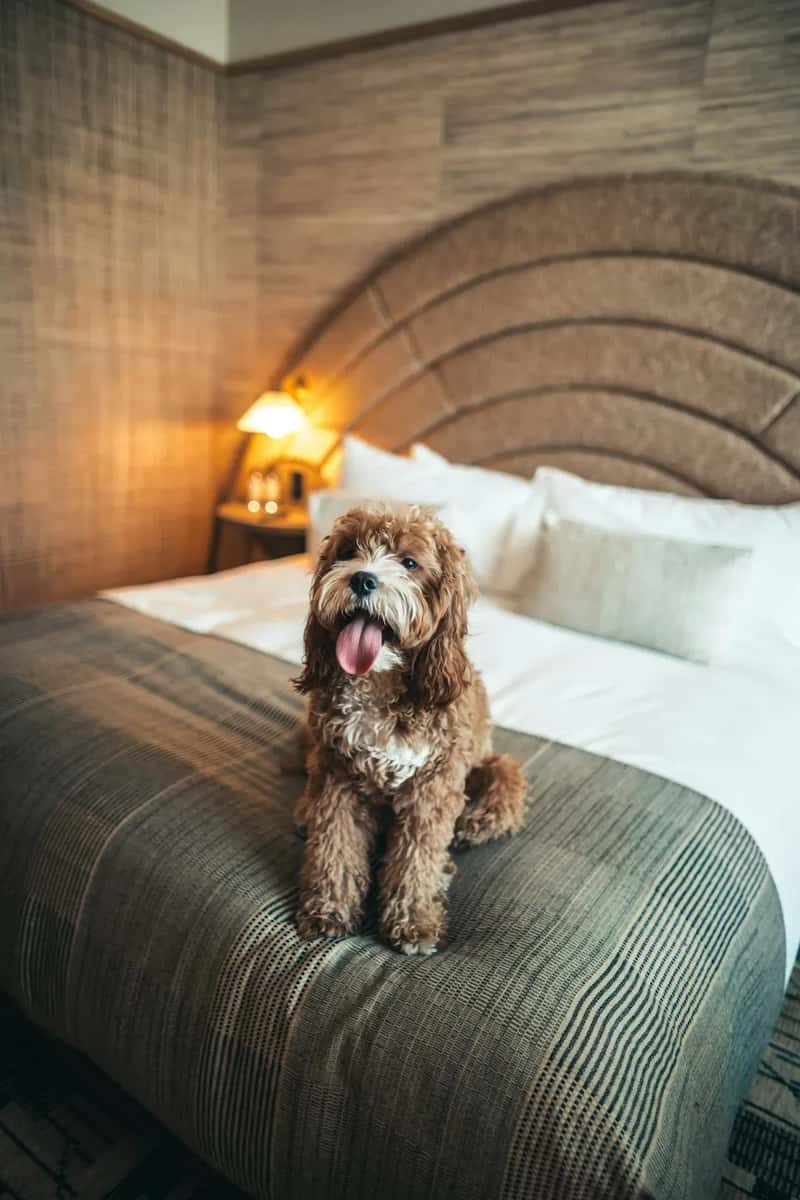
Hotels aren’t naïve. Staff know the difference between “one guest, two keys” and a family of five quietly shuffling through the lobby in shifts. You might get away with it – but getting caught is more likely than guests assume. Housekeeping counts the towels used, the toiletries depleted, and the number of beds disturbed. It all adds up to a picture that tells a very clear story, and staff are experienced readers.
Pet policies exist for real reasons, and sneaking in a dog without paying the pet deposit is a clear violation that housekeeping will almost certainly discover. Pet hair clings to bedding, paw prints show up on upholstery, and food or litter evidence is hard to miss. When that room gets flagged, so does the guest’s profile. Many hotel chains share guest notes across properties within the same brand – that sneaked-in dog in Denver could quietly follow your reservation to Miami.
Worth Knowing
- Housekeepers count used towels, toiletries consumed, and beds slept in – an extra body leaves a clear paper trail.
- Pet hair on bedding and upholstery is one of the most reliable tip-offs housekeeping reports to management.
- Most major hotel chains link guest notes across all properties in the brand, not just the one you’re at.
- Unauthorized pet fees and damage charges can be applied retroactively after checkout once the room is flagged.
#8 – Leaving the Room in an Unreasonable State

Nobody expects you to mop the floors before checkout. But there’s a wide and significant gap between “normal mess” and what housekeeping staff find in some rooms. Cleaners say it becomes nearly impossible to properly service a room when clothes, electronics, luggage, and leftover food are covering every surface – and the same guests who create that chaos are often the ones complaining their room wasn’t cleaned well. That combination earns the most withering judgment in the break room, every time.
The average hotel housekeeper is expected to clean between 12 and 20 rooms in an eight-hour shift, allowing only about 20 to 30 minutes per room – and that’s before accounting for restocking the cart and travel time between floors. Leaving food ground into carpet, trash scattered instead of binned, and wet towels piled on soft furniture isn’t just inconsiderate – it eats directly into that already razor-thin window. That context changes the calculus entirely.
#7 – Not Tipping Housekeeping (Especially After a Messy Stay)

This is the one that divides travelers more than almost any other hotel behavior – and the one housekeeping staff quietly track the most closely. Out of sight, out of mind. Housekeeping is often ignored in the tip department precisely because the work involves less face-to-face contact. But many workers describe it as frustrating when guests leave behind disaster-level messes without even a small gratuity to acknowledge the extra effort.
The general guidance: $5 to $10 per night, left in an obvious spot like the nightstand with a note indicating it’s for housekeeping. Leaving a daily tip rather than a lump sum at the end of a stay is the better approach – staff schedules rotate and people take days off, so this ensures the person who actually cleaned your room receives it. The guests who leave nothing after trashing a room are remembered by name. That’s not an exaggeration – housekeepers talk, and the worst offenders become recurring characters in staff conversations long after checkout.
Fast Facts
- Recommended tip: $5 to $10 per night, left daily – not as a lump sum at checkout.
- Daily tipping matters because housekeeping assignments rotate; the person who cleaned Monday may not be there Friday.
- A note with the tip reading “For Housekeeping” removes any ambiguity about who it’s for.
- According to UNITE HERE, hotel housekeepers have an injury rate 40% higher than other service-sector workers – the physical cost of the job is real.
- Bureau of Labor Statistics 2024 data puts the median hourly wage for hotel housekeeping cleaners at $16.66 – well below the all-occupation median of $23.80.
#6 – Shaving and Leaving the Mess Behind
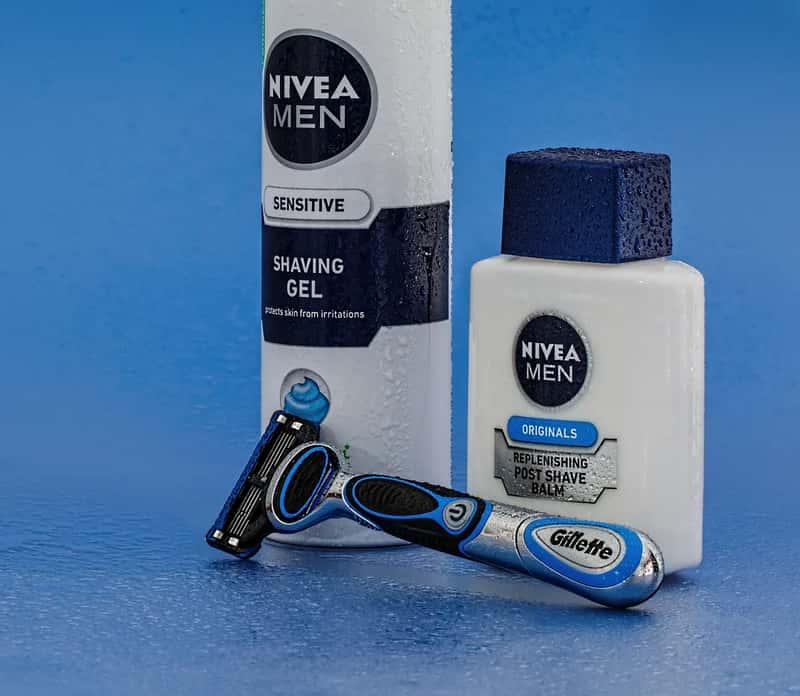
This one comes up on virtually every housekeeping complaint thread, every hotel worker forum, and every insider account of the job – and it still surprises most guests to hear it ranks this high. Whether it’s beard trimmings coating the sink or body hair spread across the bathroom floor, housekeepers consistently say shaving messes are among the most frustrating and time-consuming discoveries in any room. The specific, clinging nature of tiny hairs means multiple rounds of cleaning, eating directly into an already compressed turnaround window.
A surprising number of guests apparently treat a hotel room as the ideal place to shave extensively and then make absolutely no effort to clean up afterward. A thirty-second wipe-down of the sink and floor costs nothing – but skipping it can cost a housekeeper ten extra minutes she doesn’t have. There’s a reason this behavior earns its own entry in practically every hotel worker confessional ever written. It’s one of those small acts that quietly reveals a lot about how someone thinks about other people.
#5 – Abusing the “Do Not Disturb” Sign, Then Complaining the Room Wasn’t Cleaned
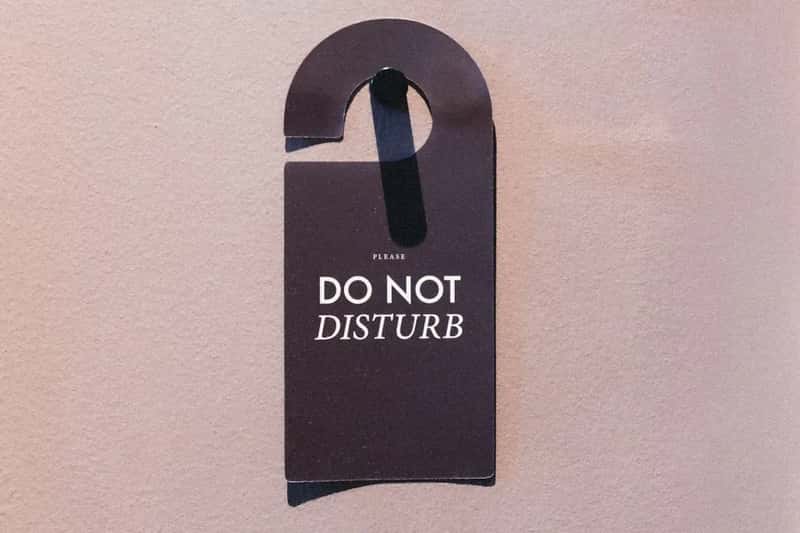
This is the hotel guest contradiction that staff find the most genuinely maddening – and it happens constantly. Some guests hang the sign at arrival and never remove it, letting trash and dirty towels accumulate until the room looks like it was abandoned mid-emergency. When staff are finally able to enter for a deep clean, they find pizza boxes stacked like Jenga towers and enough empty bottles to start a recycling drive. The room was protected from service, not just privacy.
Then there’s the passive-aggressive version: hanging the sign specifically when housekeeping is spotted approaching, then removing it an hour later and complaining the room hasn’t been serviced. This specific behavior – actively blocking service and then filing a complaint about the lack of service – is considered by many hotel workers to be the single most baffling guest move they encounter. It also occasionally generates a formal note in the guest file, which means the next property in the chain may already know what to expect before you even check in.
#4 – Hoarding Toiletries or Raiding the Housekeeping Cart
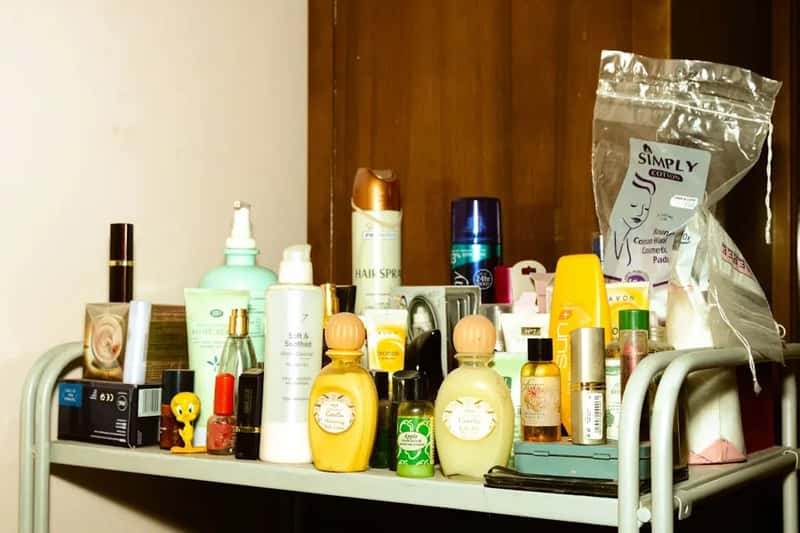
Taking the mini shampoo and lotion? Completely expected – it’s practically an unspoken agreement between hotels and travelers. Treating the housekeeping cart in the hallway like a personal supply depot is an entirely different category. Some guests call down multiple times in a single day requesting more amenities, accumulating enough mini bottles to stock a small salon. Staff notice the pattern quickly, and it is not subtle.
Among the behaviors flagged most often in guest satisfaction surveys on both sides: taking items that aren’t meant to leave the room – decorative pieces, coat hangers, towels, robes. The small amenities are generally yours to take. Reusable coffee pods, bathrobes, and decorative items are not. If you genuinely love a product, ask the front desk if it’s available for purchase – many hotels now sell branded bedding and bathrobes directly. That’s how you actually get to own the thing, without becoming the guest whose room gets quietly cross-checked against inventory at checkout.
At a Glance: What You Can and Can’t Take
- Fair game: Mini shampoo, conditioner, lotion, soap, shower cap, sewing kit, pen, notepad.
- Not yours: Bathrobes, towels, coat hangers, decorative items, reusable coffee pods, glassware.
- Gray area: Unused toiletry refills left in bulk – ask before pocketing extras.
- Better move: Ask the front desk if branded items are for sale – many hotel lines sell their signature products directly.
#3 – Letting Your Kids Run Completely Unchecked

Nobody at the hotel dislikes children. Every hotel worker, however, has a story about the parents. Hotel employees make immediate judgments about how controlled or chaotic children are in public spaces – the lobby, the pool, the restaurant – and that judgment flows directly back to the adult in charge. The child is the data point. The parent is the subject. Staff are watching both, and they know how to read the relationship within about 90 seconds.
Just because you’re on vacation doesn’t mean your parenting takes one too. Kids running unsupervised through hallways at midnight or treating the elevator like a personal playground don’t just annoy staff – they annoy every other guest who paid for the same experience. The hotel industry’s open secret is that rooms associated with young children and inattentive parents are flagged for extra damage inspection at checkout. That’s not discrimination – it’s pattern recognition built from years of experience. The parents who actively manage their kids are noticed and genuinely respected. The ones who don’t are remembered for a different reason entirely.
#2 – Saving All Your Complaints for Checkout (or a Review)
This is the behavior hotel staff almost universally agree is the most frustrating and the most avoidable – and yet it happens on a daily basis. Workers describe guests who never mentioned a single problem during their stay, then unloaded at checkout or simply posted a scathing review afterward. A non-working cable can be fixed in under five minutes. A guest says nothing, checks out, and leaves a one-star review about it. That gap between the in-person experience and the online post is something staff find genuinely baffling and quietly demoralizing.
If you wait until the last five minutes of checkout to describe how miserable your stay was, you’re too late for any of it to be fixed – and staff know it. Presenting a laundry list of grievances at the door is only useful if you gave them the chance to address those issues as they happened. The guests who complain calmly, in real time, and accept the fix are the ones staff go out of their way to impress for the rest of the stay. The ones who silently stockpile frustration for a review end up with neither a solution nor any goodwill.
#1 – Treating Hotel Staff Like They’re Invisible

Every single thing on this list funnels back to this one. And it’s the one hotel workers remember longest – in both directions. The guests who make eye contact, say thank you, use someone’s name when they see it on a name tag – those people get noticed in an entirely different way. Staff members are far more willing to go the extra mile for guests who treat them like people. That late checkout, that room upgrade, that table at the fully booked restaurant – it flows toward the guests who show up like human beings, not managers.
People will forget what you said, people will forget what you did, but people will never forget how you made them feel.
Maya Angelou
The person who cleaned your bathroom this morning did it in under 30 minutes, while in physical pain, and will do it again a dozen or more times today. A UNITE HERE survey of over 600 hotel housekeepers found that 91% reported work-related pain, and 77% said that pain interfered with their ability to do their job. The best hotel etiquette isn’t really about etiquette at all. It’s about whether you see the people around you as people. That distinction – small as it sounds – is exactly what separates the guests everyone quietly roots for from the guests everyone talks about after the shift ends.
The through line across all 16 of these is simpler than it looks: hotel staff are not background scenery. They track patterns, share notes, and remember names – both the good ones and the difficult ones. The behaviors that earn the most judgment aren’t dramatic. They’re small, quiet signals that say I don’t see you as a person. And the ones that earn genuine loyalty and extra effort are equally small – a calm tone, a daily tip left on the nightstand, a thank-you that doesn’t feel transactional. Next time you check in, it’s worth thinking about which list you want to be on.