You’ve probably heard that hotel perks go to the biggest spenders or the loudest complainers. The quieter truth is that many of the most useful favors for older travelers cost a hotel almost nothing.
Some of the sixteen upgrades below are simple courtesies a manager can grant in seconds. A few are legal rules most guests never realize they can lean on, and the last one changes how you read the whole list.
One caveat first: room requests depend on availability at check-in, and almost none of these are reserved only for guests over 65. They’re simply the asks older travelers tend to benefit from most.
#16 – The Corner or Higher-Floor Room That Costs Nothing Extra
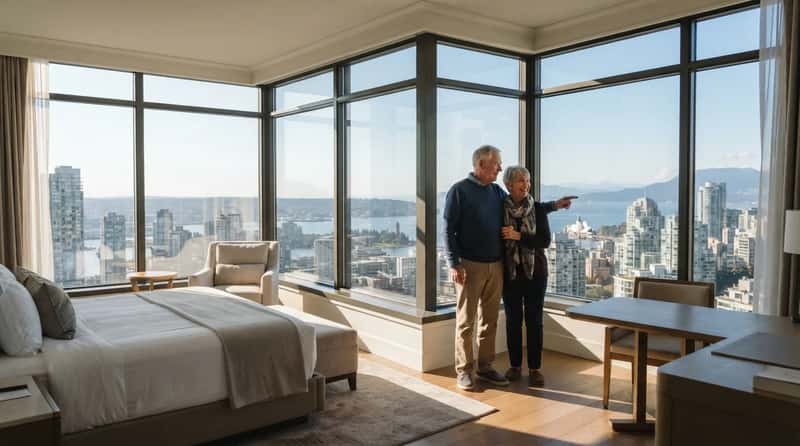
The cheapest upgrade in the building is a better room at the same rate. Guests can often land a better view by asking for a higher floor or a corner room.
Corners tend to have more windows and extra square footage. That matters when you plan to spend real time in the room.
Here’s the catch: a high floor is not automatically an upgrade for older guests. A lower floor can work better if you dislike long elevator waits.
So say what you actually want. Something like ‘a corner room, if you have one, on a floor that’s easy to get to’ gives the desk a clear job to do.
A good room only helps once you can get into it. The next request fixes a problem that starts before your room is even ready.
#15 – Bag Storage Before Your Room Is Ready

Your room may not be ready, but your day doesn’t have to wait. Guests can ask the hotel to hold their bags before check-in.
This matters most after early arrivals. Travelers coming off red-eye flights often reach the hotel by lunchtime, yet can’t get a key until mid-afternoon.
The delay isn’t personal. Standard check-in times exist mainly to give housekeeping time to prepare rooms.
Dragging luggage around a city for hours wears anyone down, and it’s worse when you’re already tired. Storing your bags lets you walk, eat and sit somewhere comfortable with your hands free.
At a Glance
- The ask: “Could you hold our bags until the room is ready?”
- The reason for the wait: housekeeping needs time to prepare rooms.
- The payoff: hands-free walking, lunch and rest before check-in.
- The habit: keep your claim tag in your wallet, not a suitcase pocket.
Keep the claim tag somewhere safe, like your wallet. The next request goes a step further.
#14 – Extra Pillows, Towels and Toiletries
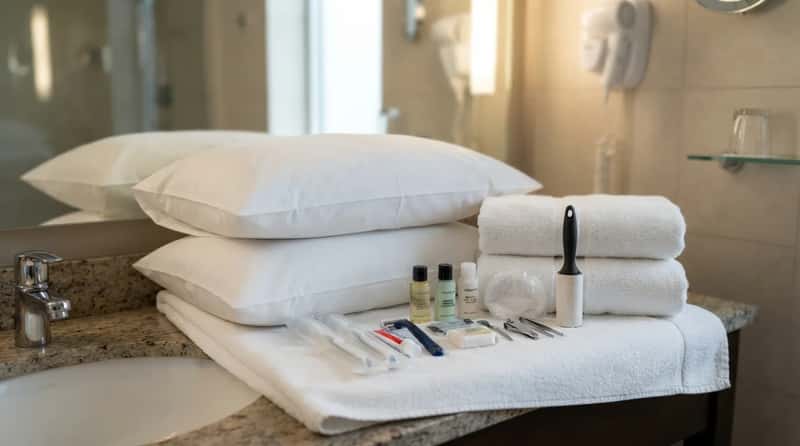
The front desk keeps more supplies than most guests realize. Many hotels keep a stash of complimentary toiletries behind the desk and hand it over if you simply ask.
Toothbrushes, razors and shaving cream are the basics. Some brands go further: Kimpton guests can get items like nail clippers, tweezers and a lint roller.
Extra towels and pillows are routine asks, not special favors. The best timing is right after check-in, once you see what’s actually in the room.
A forgotten razor or a flat pillow can sour a first night. The fix is a thirty-second phone call.
Extra pillows help you rest, but only if the room is quiet. That’s where the next request comes in.
#13 – A Room Away From Ice Machines, Stairwells and the Pool
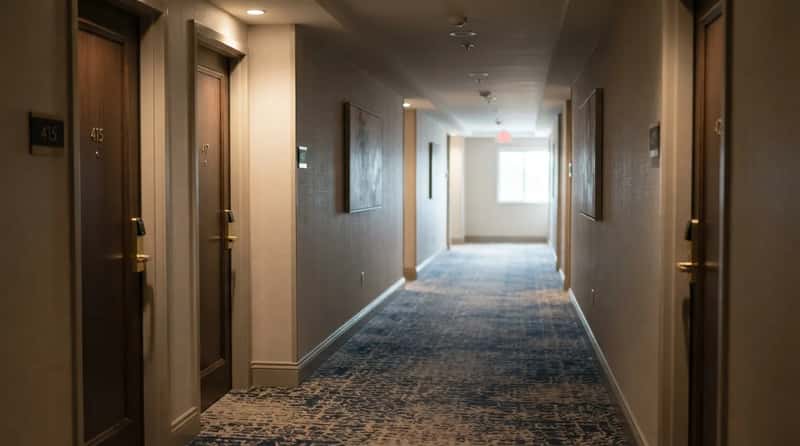
A quiet room is the one perk that pays off every single night. Quiet usually means a room away from elevators, stairwells, ice machines and swimming pools.
Most people don’t ask until it’s too late. It usually hits around two in the morning, when an ice machine rumbles through the wall or a group thunders down the hall.
Noise, not price, is what ruins many hotel stays. A room next to the service elevator, the pool bar or a late-closing restaurant can turn a restful trip into an exhausting one.
That gap between request and result is why specifics matter, and we’ll get to the fix shortly. First, two requests about the clock.
#12 – Early Check-In
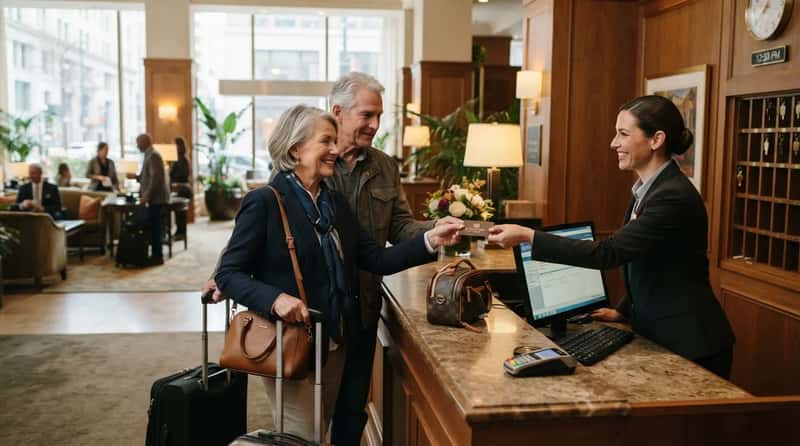
Early check-in is the perk hotels rarely advertise. If your room is already cleaned and inspected, hotels can and do release it early when occupancy allows.
The limit is usually housekeeping, not policy. That makes it a scheduling question, so it’s often quick for a manager to settle.
None of this requires elite loyalty status or special negotiating skill. You’re simply asking whether the room is ready before the clock says it should be.
If the answer is ‘not yet,’ ask the desk to call or text you when it clears. That way you can go have lunch instead of hovering in the lobby.
Arriving after a long trip with somewhere to rest is a real upgrade. The mirror-image request is even easier to get, and most guests wait too long to ask.
#11 – Late Checkout

Late checkout is one of the simplest yes answers a desk can give. Standard checkout hovers around 11 a.m. or noon at most properties.
Housekeeping schedules and same-day arrivals don’t always require every room to be empty at that exact moment. Depending on occupancy, an extra hour or two can sometimes be granted at no charge.
The common mistake is waiting until the last morning. Front desk staff advise asking as soon as you check in.
The payoff is practical. No rushed packing, and no sitting in a lobby with your suitcase while you wait for an evening flight.
Timing is only half of comfort. The next request is about where your room sits, and that decision splits the experts.
#10 – A Room Below the 10th Floor
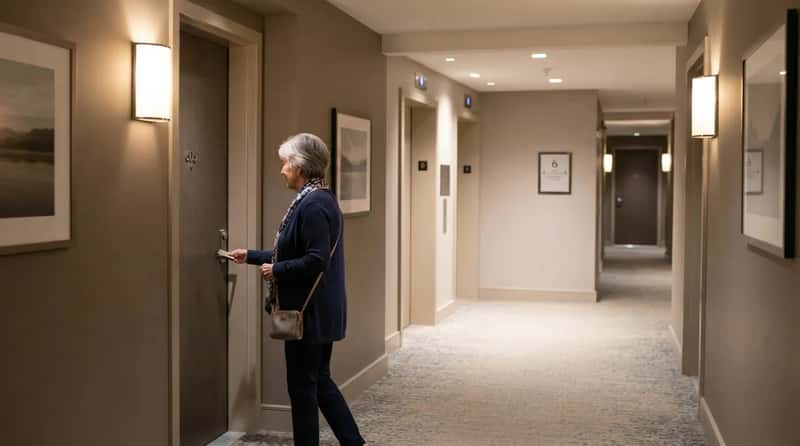
Some guests quietly ask for one number: ten. Safety-minded travelers sometimes request a room below the 10th floor, reasoning that lower floors are easier for emergency crews to reach.
There’s a convenience angle too. Lower floors mean shorter elevator rides and, in a pinch, fewer flights of stairs.
Not everyone wants to be at street level, though. For some, the ground floor feels too close to the real world, and a couple of floors of separation is preferable.
Tell the desk why you want the floor. ‘I’d like a lower floor because long elevator waits are hard on me’ gives them something specific to solve.
Floor choice is only part of the map. Where you sit relative to food matters more than most people expect.
#9 – A Room Close to the Elevator and Dining Areas
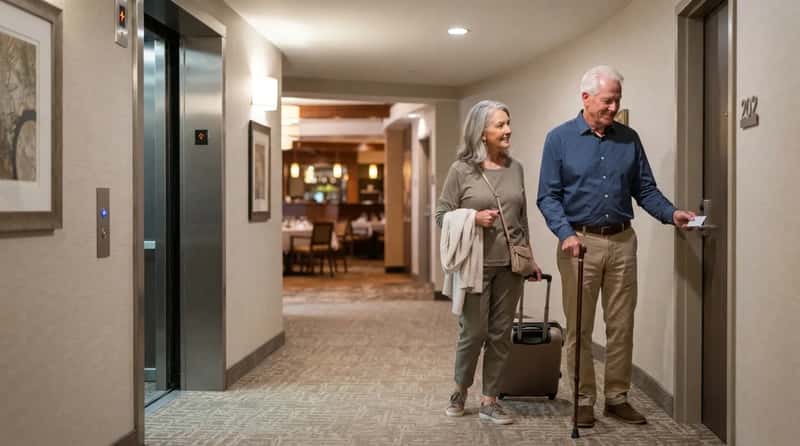
Shorter walks make a stay easier, and the desk can arrange them. Seniors should not hesitate to request rooms closer to elevators or dining areas.
Here’s the tension nobody mentions. Close to the restaurant can also mean close to the noise, especially near the late-night crowd.
Many experts would rank ‘near the elevator’ as the smartest request, while others call it a recipe for hallway noise. The truth is that you have to choose your priority.
Quick Compare
- Near the elevator: shorter walks, but more hallway traffic.
- Near dining: easy meals, but a possible late-night crowd.
- Away from both: quieter nights, but a longer walk each way.
Don’t stack unrelated preferences behind the main one. If quiet matters most, make that obvious, and if short walks matter most, say that instead.
Speaking of short walks, the next option is the one most articles get wrong.
#8 – The First-Floor Room (With a Catch)
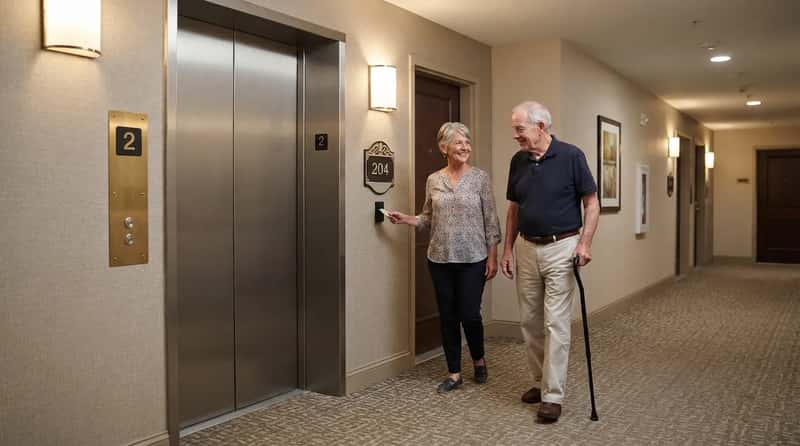
Avoiding stairs is a legitimate reason to ask for a specific floor. Requesting a first-floor room can help when stairs are a problem.
Now the controversial part. One elder-law firm warns seniors to stay away from ground-floor rooms, where they might be more vulnerable to window break-ins.
Many travelers still treat the ground floor as the obvious senior-friendly pick. The firm’s compromise is a second- or third-floor room close to the elevator, in a hotel with good security.
If you do end up on the ground floor, check that the windows and any patio door latch properly. It takes a minute and settles the question.
Whichever floor you get, you’ll want it to stick. The next item is how you make sure it does.
#7 – A Room Note That Survives Shift Changes

A request only works if the person on duty knows about it. The more precise you are, the more likely reception can match the room, and they can flag it in the booking notes so it survives any staff handover.
Call the hotel’s local front desk one to two days before arrival, not the national reservations line. Give your confirmation number and keep the request short.
A vague note is the most common reason a room request quietly disappears. ‘Low floor, close to the elevator, away from the pool’ beats ‘a nice quiet room’ every time.
Repeat the request politely at check-in, even if it’s in the notes. A second mention takes ten seconds and catches the handover that fell through.
Once the room is settled, there’s the question of the price. The truth here surprises a lot of people.
#6 – The Senior Rate That Isn’t Always the Best Rate
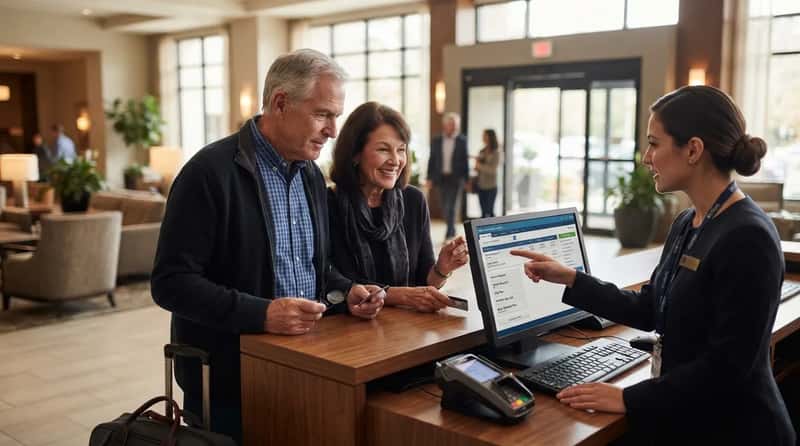
Senior rates are real, but they may not be the cheapest option. A room labeled ‘senior rate’ isn’t necessarily the cheapest room available.
Minimum ages differ by chain and change over time. Published listings have put Best Western at 55, Choice and Wyndham at 60, Marriott and Hyatt at 62, and Hilton at 65.
The real mistake is not comparing. A loyalty-member, AAA, AARP or promotional rate could still be cheaper, especially when senior discounts and off-season pricing overlap.
Ask the desk plainly whether it’s the lowest rate they can offer you. Then let them check.
The senior rate has a lesser-known feature that helps traveling families. It’s next.
#5 – A Second Room at the Same Discount
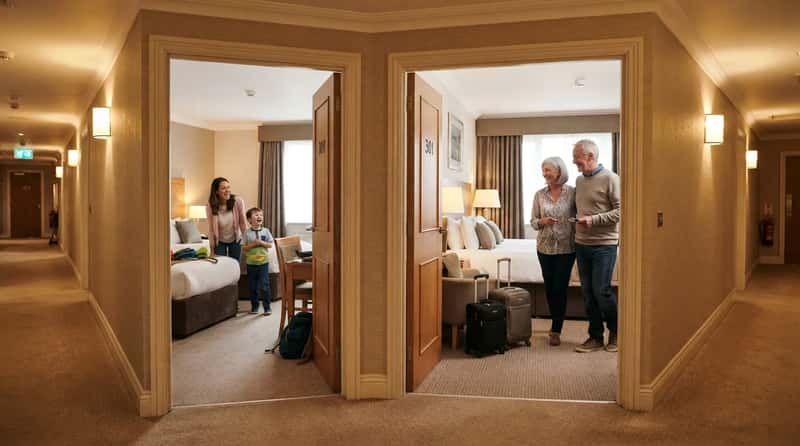
Traveling with a spouse, sibling or grown child? The discount can sometimes cover two rooms. Marriott offers reduced rates on up to two rooms, as long as the person booking is eligible.
The other guests sharing the rooms do not need to meet the age requirement. That’s a detail few families ever use.
Hilton’s rate for guests 65 and older also allows a maximum of two rooms. The rate follows the person who books, not everyone in the group.
Worth Knowing
- Room cap: two rooms at Marriott and at Hilton’s 65+ rate.
- Who must qualify: the person who makes the booking.
- Proof: expect the desk to ask for government-issued ID.
- Best move: book both rooms under the eligible guest’s name.
That can help a grandparent booking two rooms for a family visit.
Keep that ID handy, because the next item starts the moment you walk into your room.
#4 – A Staff-Assisted Safe and Room Check
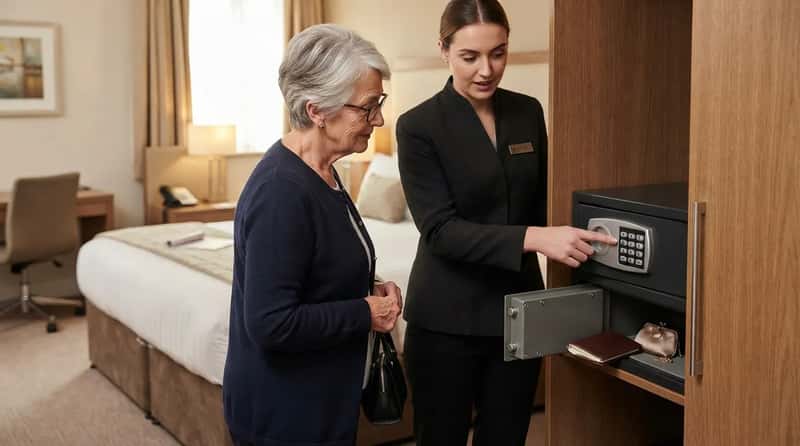
The hotel room itself is not automatically a secure space. Older adults are targets for theft and fraud, whether traveling alone or in a group.
Guests should check whether the room has a safe and confirm the code works before placing belongings inside. Testing right away prevents discovering a malfunction only when you try to retrieve your things.
Ask the front desk whether someone can help you check the safe and the room’s basics. The best time to find a faulty safe is before your passport is inside it.
Security is one layer of comfort. The next request covers a need the desk hears about far less often.
#3 – A Communication-Accessible Room
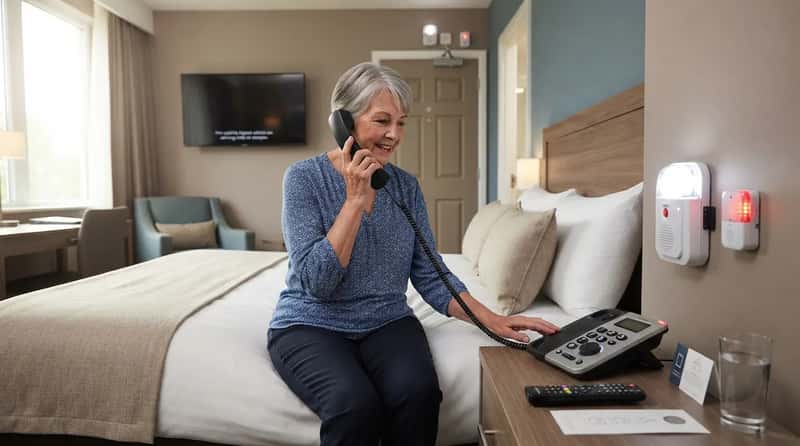
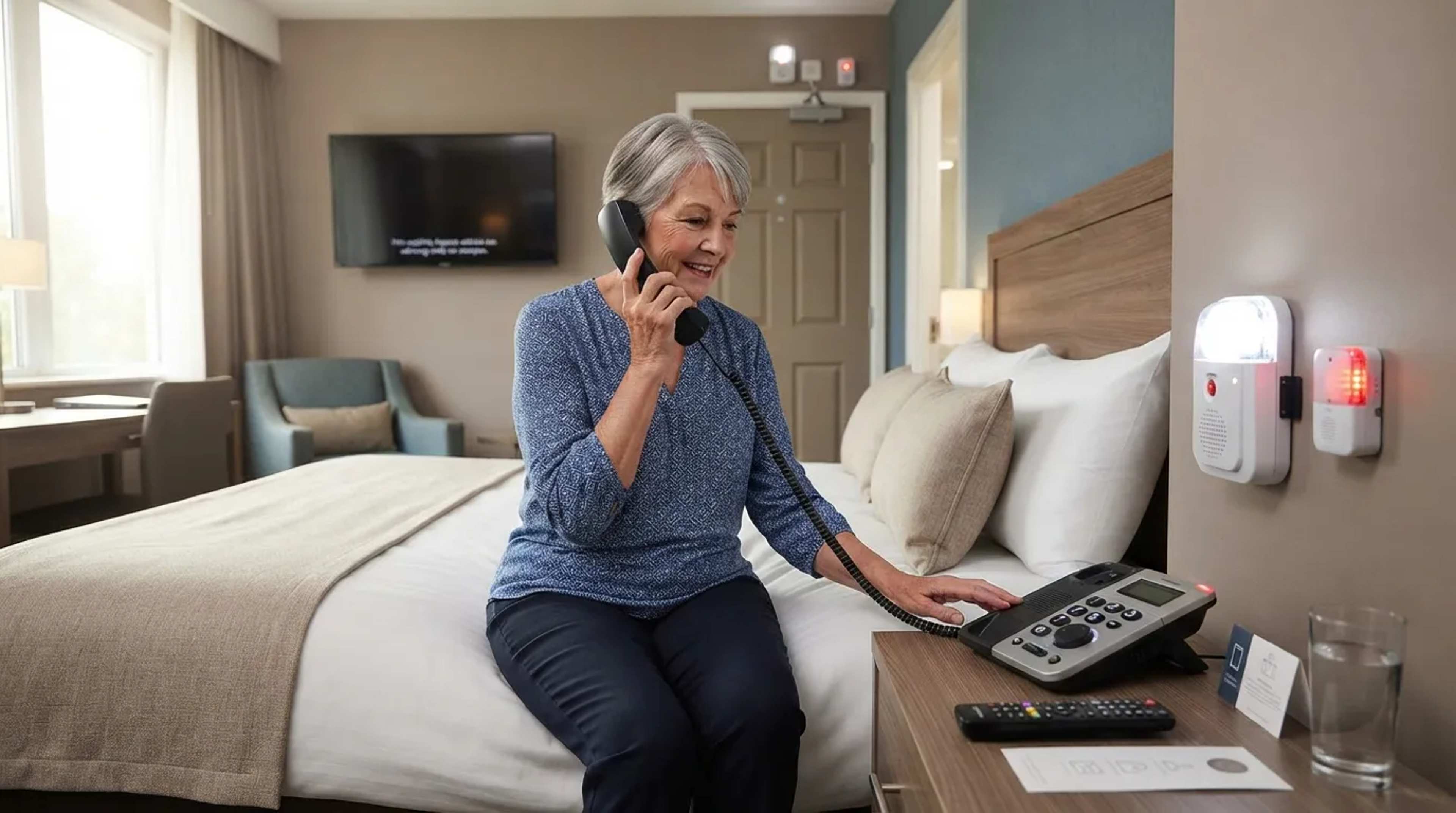
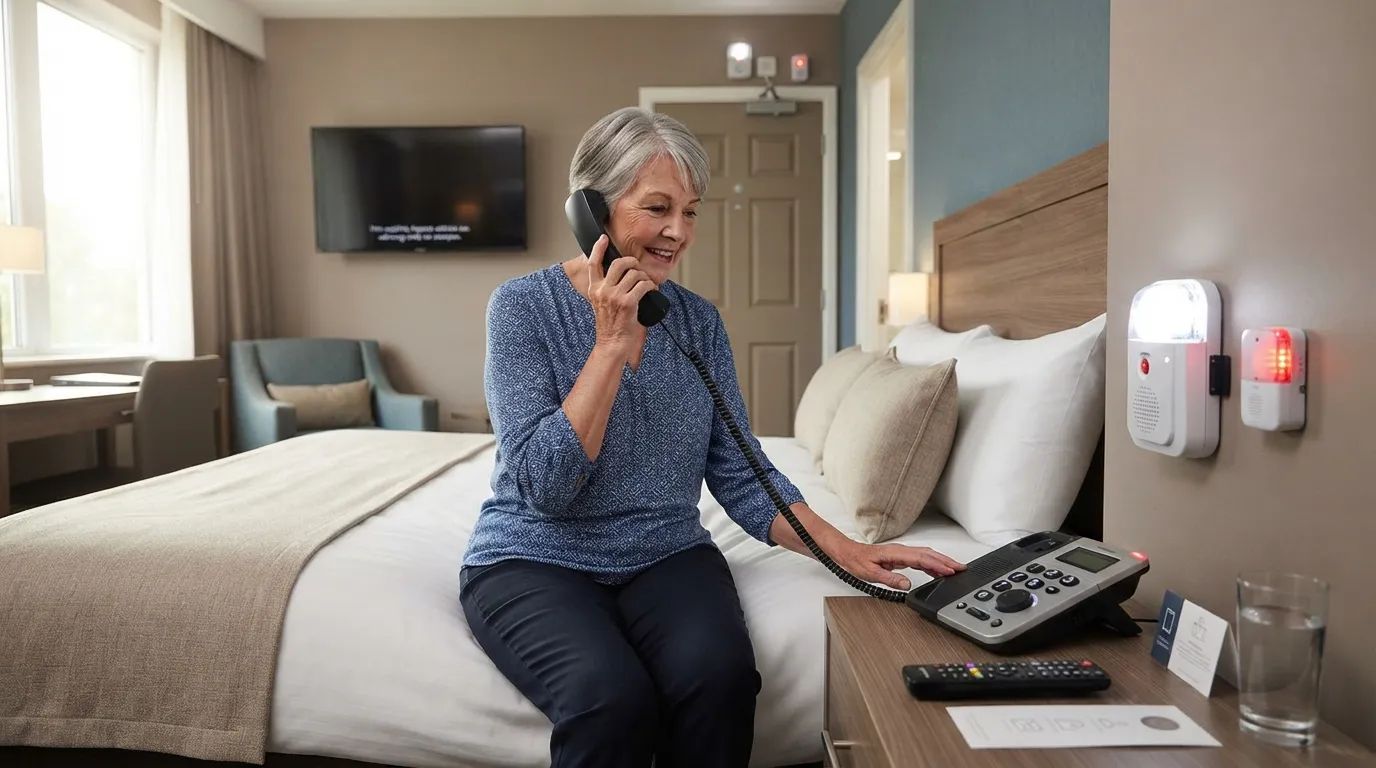
Hearing changes are common with age, and hotels have equipment for them. Communication-accessible rooms have visual alarms, visual notification devices for doorbells and phone calls, and telephones with volume control.
Most guests never ask because they assume the feature list is for someone else. It’s actually there for anyone who needs it.
Hotels are expected to describe specific features, such as visual alarms. If a room listing only says ‘accessible,’ call the property and ask what’s actually in the room.
When you call, ask whether those features are in the room you’ll be assigned, not just somewhere on the property. That one question separates a promise from a room.
Now we’re getting close to the requests that matter most. The next one is about the room where a wet floor is the biggest worry.
#2 – A Safer Bathroom Setup
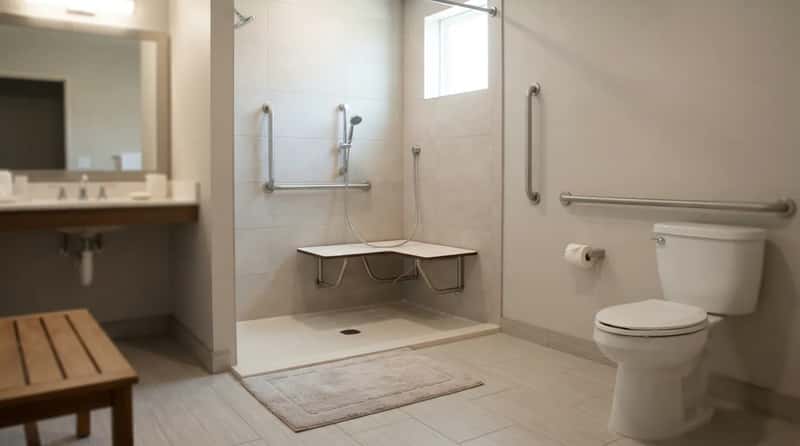
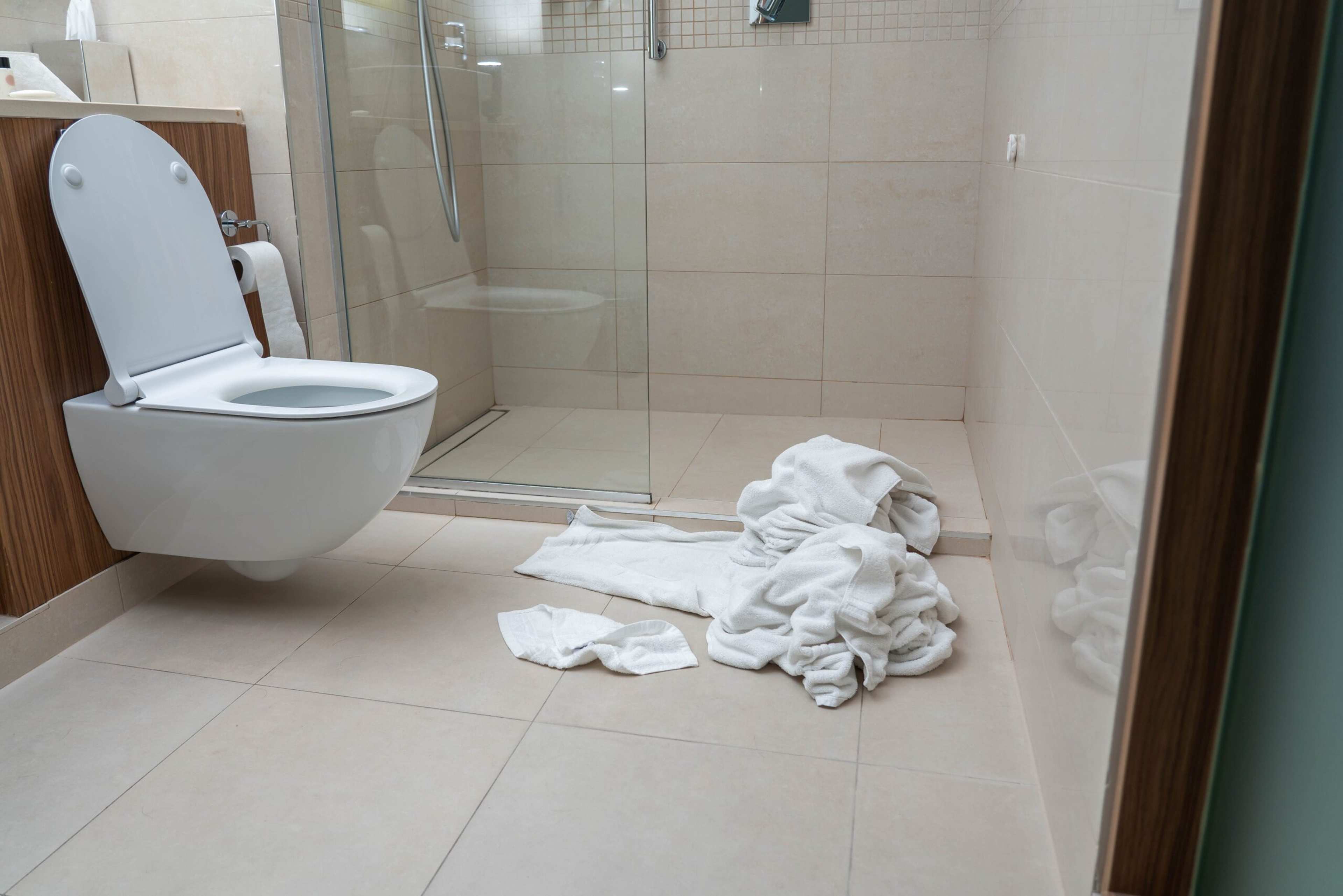
The bathroom is where hotels quietly differ the most. The ADA requires a mix of bathing options, including curbless roll-in showers and accessible tubs with grab bars, a seat and a hand-held spray.
Grab bars are mandatory in accessible bathrooms, and the measurements are specific. Here are the numbers worth knowing.
Fast Facts
- Toilet seat height: between 17 and 19 inches above the floor.
- Rear wall grab bar: at least 36 inches long.
- Side wall grab bar: at least 42 inches long.
- Bar mounting height: 33 to 36 inches above the floor.
Many older travelers assume these rooms are only for wheelchair users. Yet accessibility rules cover a range of needs, not just wheelchair use.
Some properties list a shower chair as ‘available on request.’ Ask before you arrive, so it’s waiting instead of being hunted down at 9 p.m.
The next and final item is the one hotels have the least discretion over.
#1 – An Accessible Room at the Same Price
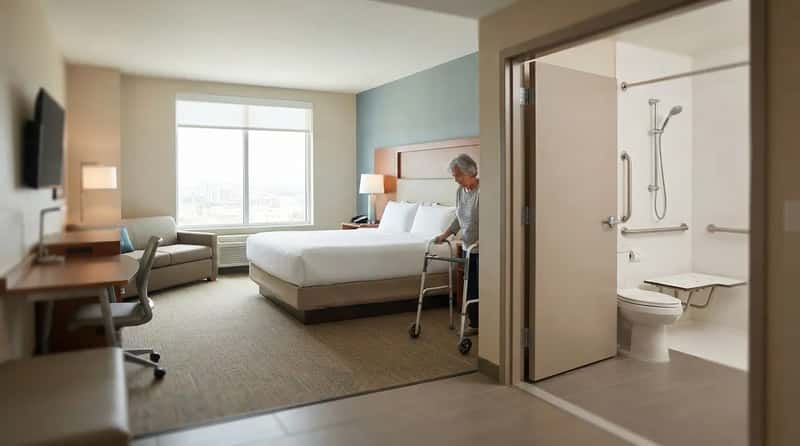
The strongest ‘upgrade’ on this list isn’t a favor at all. Hotels must offer accessible rooms at the same price as standard rooms of the same type.
Hotels cannot charge extra for accessible rooms. They also must not rent them to guests without disabilities until all other rooms of that type are sold out.
A hotel can’t block accessible rooms from general inventory and then claim none are available. When a guest books a specific accessible room type, the hotel must guarantee that specific room.
Not every room lives up to its label. Some wheelchair users arrive to find that the accessible room they booked doesn’t match what they requested, which is why that first phone call matters.
The Bottom Line

The requests that cost hotels the least are usually the easiest to get. Room location, timing, extra supplies and a well-placed booking note top that list.
Senior rates need comparison shopping, because they aren’t always the lowest price. Accessible rooms are different: hotels can’t add a surcharge for them.
The biggest upgrade, in the end, is knowing what you can ask for before you reach the desk. Which of these did a hotel actually grant you, and which did they turn down?
Bonus: The Two-Minute Call That Makes Every Other Request Stick

Most guests ask the wrong person at the wrong moment. Here’s the sequence that puts your requests in front of someone with the authority to approve them.
- Call the hotel’s local number 1 to 3 days before arrival. Ask for the front office manager or the manager on duty, not the general reservations line.
- Lead with one priority and one fallback. For example: ‘My priority is a room near the elevator. If that’s taken, a quiet floor away from the ice machine is my second choice.’
- Offer something in return. Say you’re flexible on bed type or view if it helps them match the room. Flexibility gives a manager an easy way to say yes.
- Ask for it in writing. Request a short email confirming the note on your reservation, and bring it on your phone.
At check-in, ask the agent to read the note back before assigning your room. If the room doesn’t match, stay polite and ask, ‘Could the manager on duty take a quick look?’
A specific, reasonable request made to the right person before you arrive is far harder to lose than anything you ask for at a busy counter.