The senior train discount looks simple on the checkout screen: one line, one percentage, done. In reality it’s a patchwork of age cutoffs, tick boxes, and pass rules, and plenty of it never shows up unless you go looking. Some discounts start at 60, some at 65, and one famous program once made men wait five years longer than women.
We went through the fine print from Amtrak, VIA Rail, Britain’s Senior Railcard, and Europe’s Interrail pass. A few perks are bigger than you’d expect, a few are smaller, and one near the end may be worth more than every percentage on this list.
#17 – The Tiny “Senior” Tick Box That Decides Whether You Get 10% Off

Amtrak travelers 65 and over are eligible for a 10% discount on most trains. The catch is that you have to select “Senior” as your traveler type. The price you see first may not include it, and if you leave the box on “Adult,” you simply pay more.
There are limits, too. The discount excludes sleeping-accommodation charges, the Auto Train, and weekday Acela trains. A valid photo ID proving your age is required at purchase and on board. Some riders say 10% is thin for a perk built around age, and honestly, that’s a fair complaint.
#16 – The Cross-Border Amtrak Rate That Quietly Starts Five Years Early
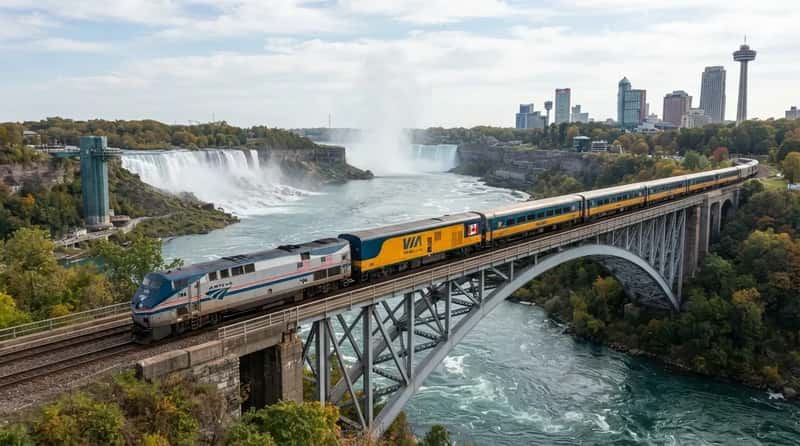
If you’re 60, you may already qualify for something. On cross-border Amtrak and VIA Rail Canada service, the senior discount applies from age 60. One recent FAQ names the Maple Leaf, which links New York and Toronto, as an example.
Here’s the twist: the domestic cutoff moved. Amtrak’s eligibility age is now 65, not 62, and one report says it was raised without much announcement. A friend who got the discount at 62 a few years back may be working from outdated information. The fix is simple: check the age on your specific route before you assume anything.
Quick Compare
- Amtrak, domestic: age 65+, 10% off most trains
- Amtrak and VIA, cross-border: senior rate starts at 60
- VIA Rail: age 65+, 15% off select fares
- Interrail: age 60+, 10% off the pass
- Britain’s Senior Railcard: age 60+, a third off most fares
#15 – The Extra Legroom Amtrak Pitches to Seniors (and the AARP Card That Does Nothing)
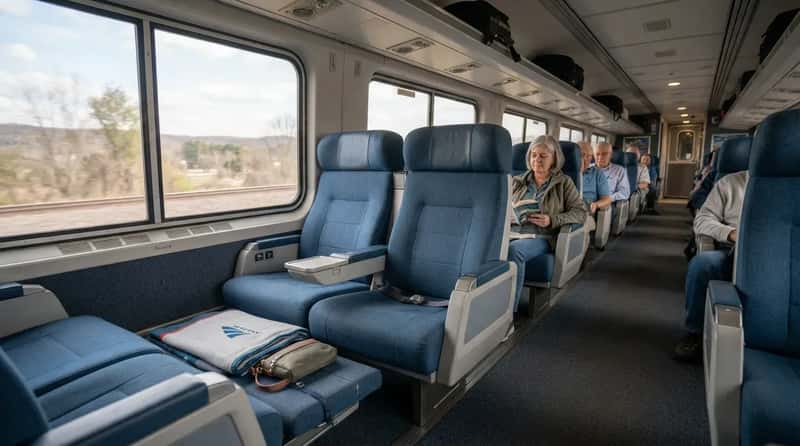
Not every perk is a discount. Amtrak’s seniors page points out that long-distance train travel comes with wide seats and extra legroom. Anyone can sit in those seats, but the railroad chose to pitch them to older travelers.
Here’s the part that surprises people holding a membership card. AARP membership gets you nothing extra on Amtrak, because the senior discount is based on age alone. Another guide notes that sources on AARP-specific rail promotions have been inconsistent. The only thing that reliably counts is your birthday and a photo ID.
#14 – VIA Rail’s 15% Senior Deal Comes With a Ticking Clock

Canada’s national railway is currently ahead of Amtrak on percentage. Passengers 65 and over can get 15% off Economy Plus, Business, and Business Plus fares, any day of the week, on all VIA Rail routes. You need to book at least 30 days in advance and select the passenger type “Senior (65+).”
Then comes the deadline. Booking runs through January 5, 2027, for travel between September 9, 2026, and April 30, 2027. VIA itself calls it a limited-time offer. Older guides still list a 10% discount starting at 60, so the age and the percentage you read elsewhere may be out of date.
#13 – The VIA Rail Boarding Help Almost Nobody Mentions
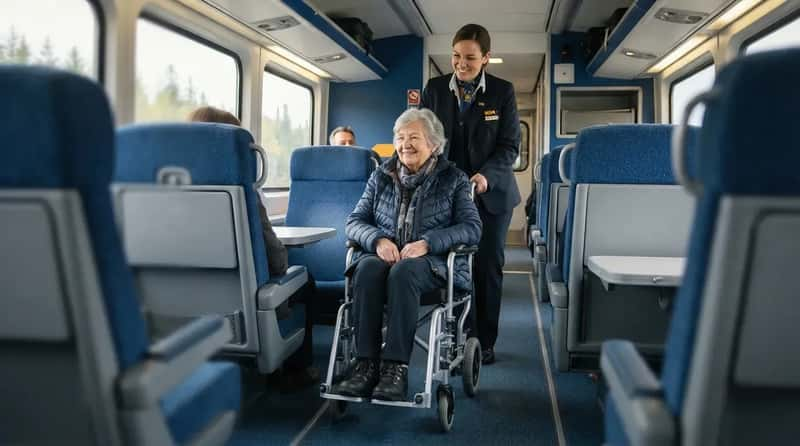
A Canadian health directory lists VIA’s services for seniors and passengers with special needs. They include priority boarding and additional assistance, plus trains equipped with wheelchair tie-downs and grab bars in washrooms. That’s the kind of detail that rarely makes it onto a fare page.
One item stands out: VIA lists narrow wheelchairs for boarding, detraining, and reaching the washrooms. On a tight train aisle, that’s the difference between a manageable trip and an exhausting one. The directory entry isn’t VIA’s own page, so treat it as a lead and confirm the current details before you travel.
#12 – Interrail Counts Your Age on Day One, Not at Checkout

Interrail’s senior page says it plainly: get a 10% discount with the Interrail senior pass if you’re 60 or over. The pass covers comfortable train journeys across 33 countries, so one purchase replaces a pile of separate tickets.
The surprise is how age gets counted. You need to be 60 or older on the first day of your trip, not on the day you buy the pass. If you turn 60 between purchase and departure, you still qualify. A 59-year-old planning ahead can still land the senior price.
#11 – First Class Doesn’t Cost You the Senior Discount

Some travelers assume the senior rate only covers the cheap seats. It doesn’t. One guide says the discount applies to both Global Passes and One Country Passes in first and second class. Interrail’s own page nudges seniors toward 1st class for the most comfortable ride.
Be realistic about the price. First class runs roughly 25–30% higher. One guide estimates a one-month continuous first-class senior pass works out to about $31 a day of unlimited European rail travel. That’s a hard number to match when a single long-distance ticket can run well past it.
Worth Knowing
- The senior discount covers Global Passes and One Country Passes.
- It applies in both first and second class.
- First class costs roughly 25–30% more than second.
- A one-month first-class senior pass averages about $31 a day, by one guide’s estimate.
#10 – The Regional Trains With No Seat Fee (and the Fast Ones That Still Charge You)

An Interrail pass doesn’t always mean extra paperwork. Reservations are usually not required for local and regional trains. One guide adds that reservation-free countries like Germany and Austria are where a pass tends to pay off. You can hop on and off without planning every hour.
Now the fine print. Seat reservations on high-speed and overnight international trains cost extra, and age doesn’t waive them. Separate seat reservation fees must still be paid regardless of age. Some travelers claim a ticket office will waive them if you ask. That’s a courtesy from one agent on one day, not a rule.
#9 – Spain’s Gold Card Can Beat Everyone Else on Percentage

Spain’s Tarjeta Dorada, or “Gold Card,” is for older travelers, and its percentages dwarf Amtrak’s. One 2026 fee guide lists it at up to 40% off eligible fares, and 25% off AVE, Spain’s high-speed network. Few booking pages lead with that.
The key words are “eligible fares.” Up to 40% does not mean 40% on every ticket. The size of the cut depends on the train type and the day. Check the terms for your route and date on the operator’s site before you plan around a number you read in a blog.
#8 – Britain’s Senior Railcard Lives on Your Phone and Saves £25 Over Three Years
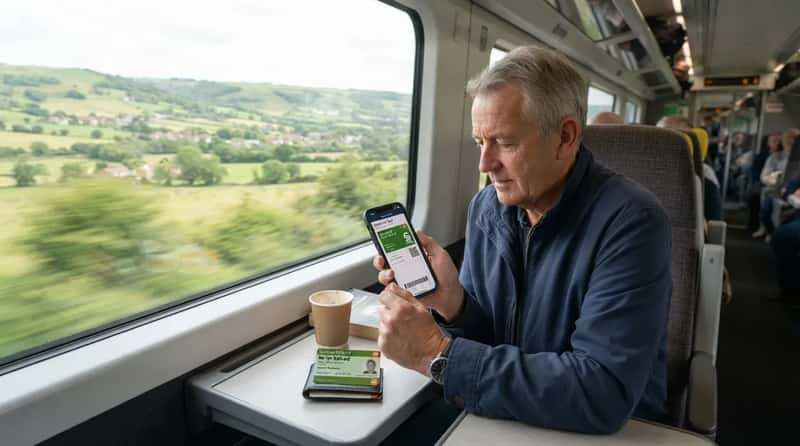
Britain’s Senior Railcard gives anyone 60 and over a third off most fares. It costs £35 for one year or £80 for three years. It comes as a digital or physical card, so you can skip the paper and keep it on your phone.
Do the math on the three-year option. Three one-year cards would cost £105, and the three-year card costs £80. That’s a £25 saving. Prices rose on 2 March 2025 from £30 and £70, so older, cheaper rates are gone. Locking in three years also protects you from the next increase.
At a Glance
- Age: 60 and over
- Discount: a third off most fares
- 1-year card: £35
- 3-year card: £80, versus £105 for three separate years
- Format: digital or physical
#7 – First Class at a Third Off, Which Surprises Almost Everyone
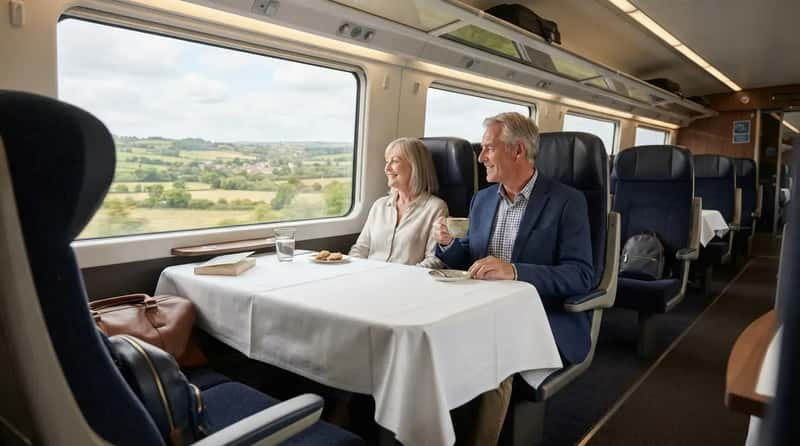
Most people picture the Railcard as a standard-class tool. In fact it gives a 1/3 discount on Standard and First Class Anytime, Off-Peak, and Advance fares. The upgrade to a quieter, roomier seat gets cheaper, too.
The same discount applies whether you sit in standard or first. On a long trip to visit family, the gap between the two can shrink noticeably once a third comes off both. It’s one of the few places a senior perk changes the comfort level, not just the price.
#6 – The Couples’ Railcard for When Only One of You Has Hit 60

Age gaps in a couple can wreck a discount. The Senior Railcard only covers the cardholder, so a younger partner pays full fare. That’s where the Two Together Railcard comes in: a third off rail fares for two named adults travelling together.
A comparison guide notes it’s especially useful if one or both passengers aren’t yet eligible for the Senior Railcard. The one-year price is listed at £35 for both cards. The tradeoff is that you must travel together, so it won’t help if you take separate trips. Check which travel pattern actually matches yours.
#5 – The Senior Railcard Used to Make Men Wait Until 65
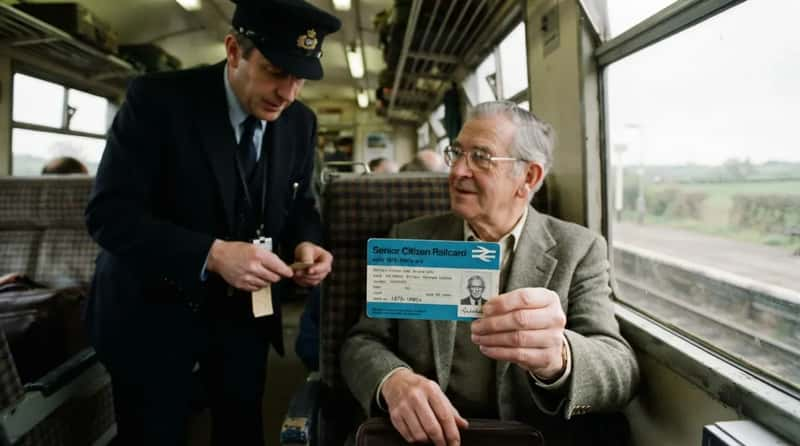
This one is pure nostalgia. The first Senior Citizen Railcard, valid throughout Britain, arrived on 1 April 1975. By the start of 1980, the rule was at least 60 for women or 65 for men.
It took a few more years to fix. From 30 March 1984, anybody aged 60 or over could hold one. It was renamed the Senior Railcard in May 1990. The age-60 rule you see today is a leftover of a decision made more than 40 years ago.
#4 – The Railcard Perk That Quietly Reaches the Tube
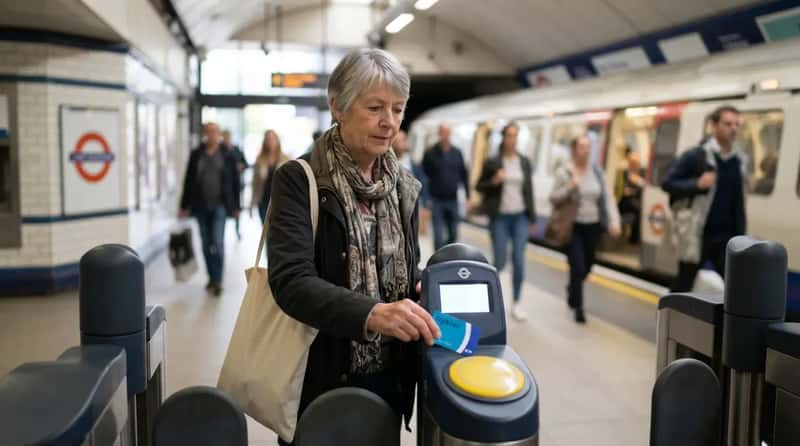
The Railcard isn’t just for intercity trains. One guide says it’s also valid for TfL integration, meaning you can link it to an Oyster card for 1/3 off off-peak pay-as-you-go fares in London. That’s a daily-life discount hidden behind a national-rail name.
The guide specifically mentions the Tube, DLR, or Overground for off-peak travel. For an over-60 who lives in or visits London, that stretches the card well beyond the occasional train trip. It can turn a long-distance card into a city one. The trick is that it’s tied to off-peak hours, so timing matters.
#3 – Free Boarding and Luggage Help That Isn’t Tied to a Fare
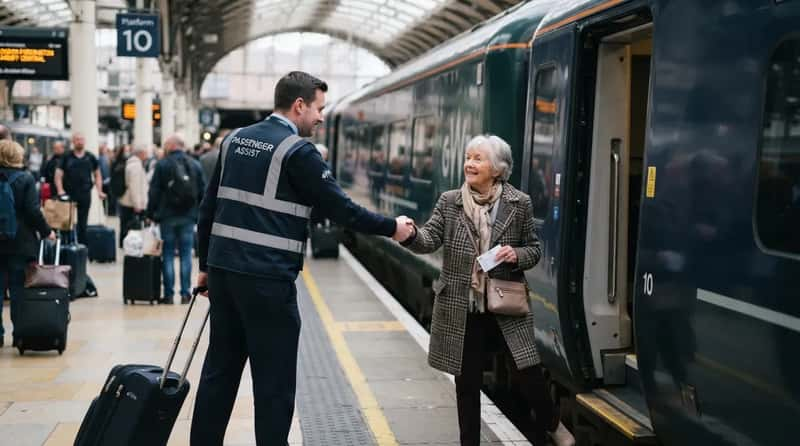
Britain’s rail network runs a free service called Passenger Assist. Staff can help you board, carry bags, and find your seat. It isn’t restricted by age, so it won’t appear on a senior fare page, but plenty of older travelers rely on it.
The surprise is how rarely anyone mentions it at booking. Help is free, but it works best when it’s arranged ahead of time. The Railcard site and most booking pages say nothing about it. If a long platform walk worries you, ask for assistance when you buy the ticket, not when you arrive.
#2 – The £35 Card That Can Pay for Itself in One Trip
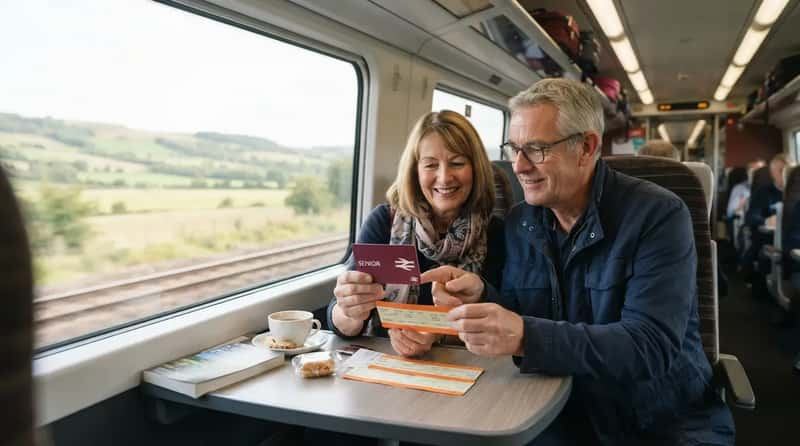
Here’s a real-world example. A London to Edinburgh off-peak return can cost around £120 last-minute. With a Railcard, you’d save roughly £40 on that one trip alone. That’s more than the cost of the card.
Another guide says you’ll likely recoup the cost of your Railcard within your first couple of journeys. One long trip can cover the whole year’s price. Compare that with the 10% Amtrak offers, and you can see why UK pensioners treat it as a must-have. One caution: that £120 figure is a last-minute worst case, so your savings will be smaller on cheaper tickets.
#1 – Grandchildren Ride Free on a Senior Pass

This is the one that changes the math for families. Interrail’s senior page lists a perk to bring the grandchildren along for free, with 2 kids per senior. A grandparent can take two grandchildren across Europe on one adult-priced pass.
There are rules. Children aged 4 to 11 get a free Child Pass, up to two per accompanying adult, youth aged 18 or over, or senior. Two kids free can outweigh every percentage discount on this list. Seat reservations still cost extra, so the pass price isn’t the whole bill. But if you’ve been quietly wondering how to take the grandkids to Europe by train, this might be how.
Fast Facts
- Who rides free: children aged 4 to 11 with a free Child Pass
- How many: up to two per accompanying senior
- Who pays: the senior buys the adult pass, with a 10% discount from age 60
- Still extra: seat reservations on high-speed and overnight trains
Most of these perks stay hidden for the same reason: the booking page shows one price, and the real savings depend on a box you tick, an age you hit, or a question you ask. Little of it is secret. It’s just scattered across tick boxes, pass rules, and pages most people skip.
Birthdays matter more than most people think. A single year can move you from full fare to a third off, or from paying for two grandkids to riding along free.