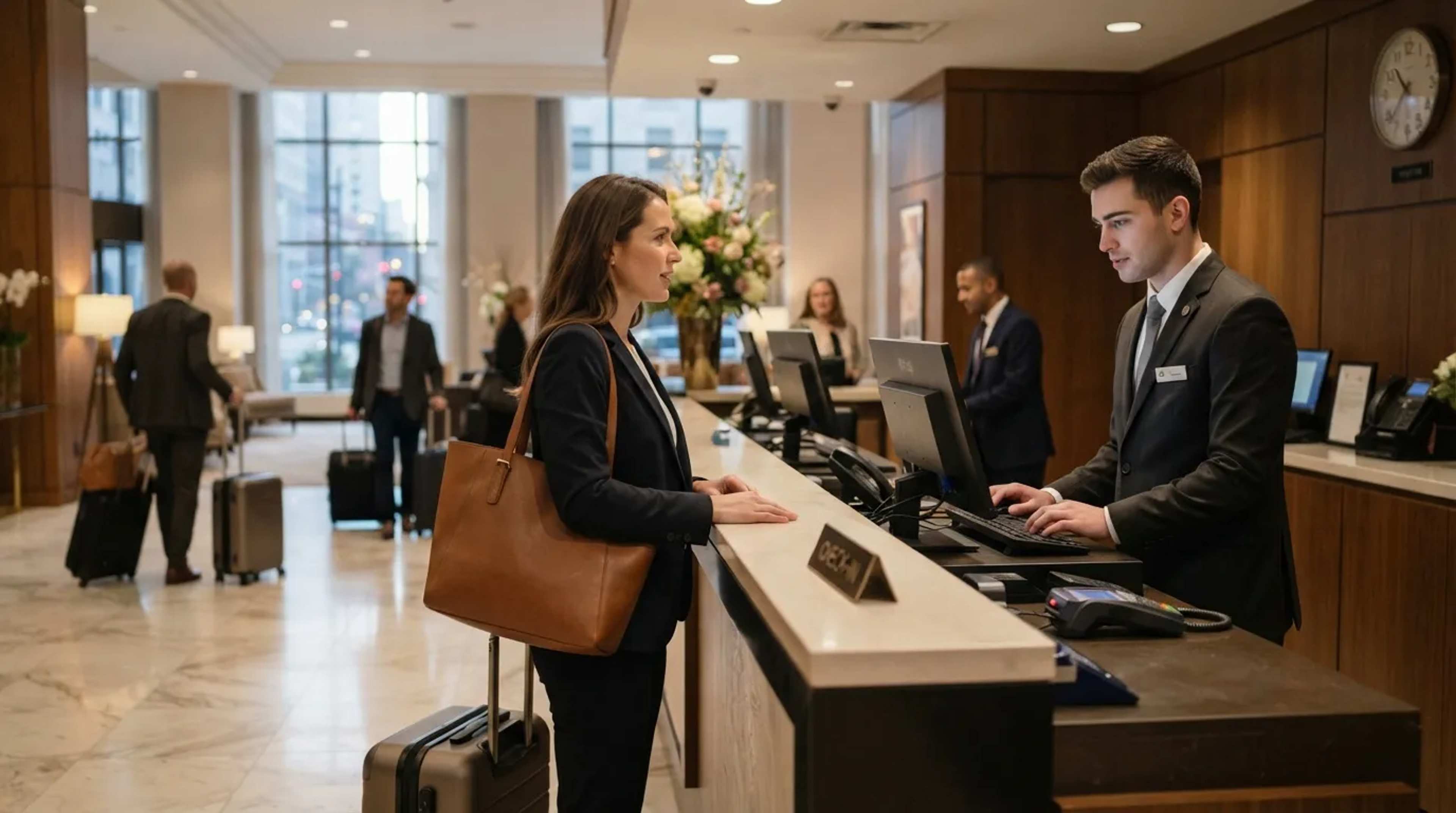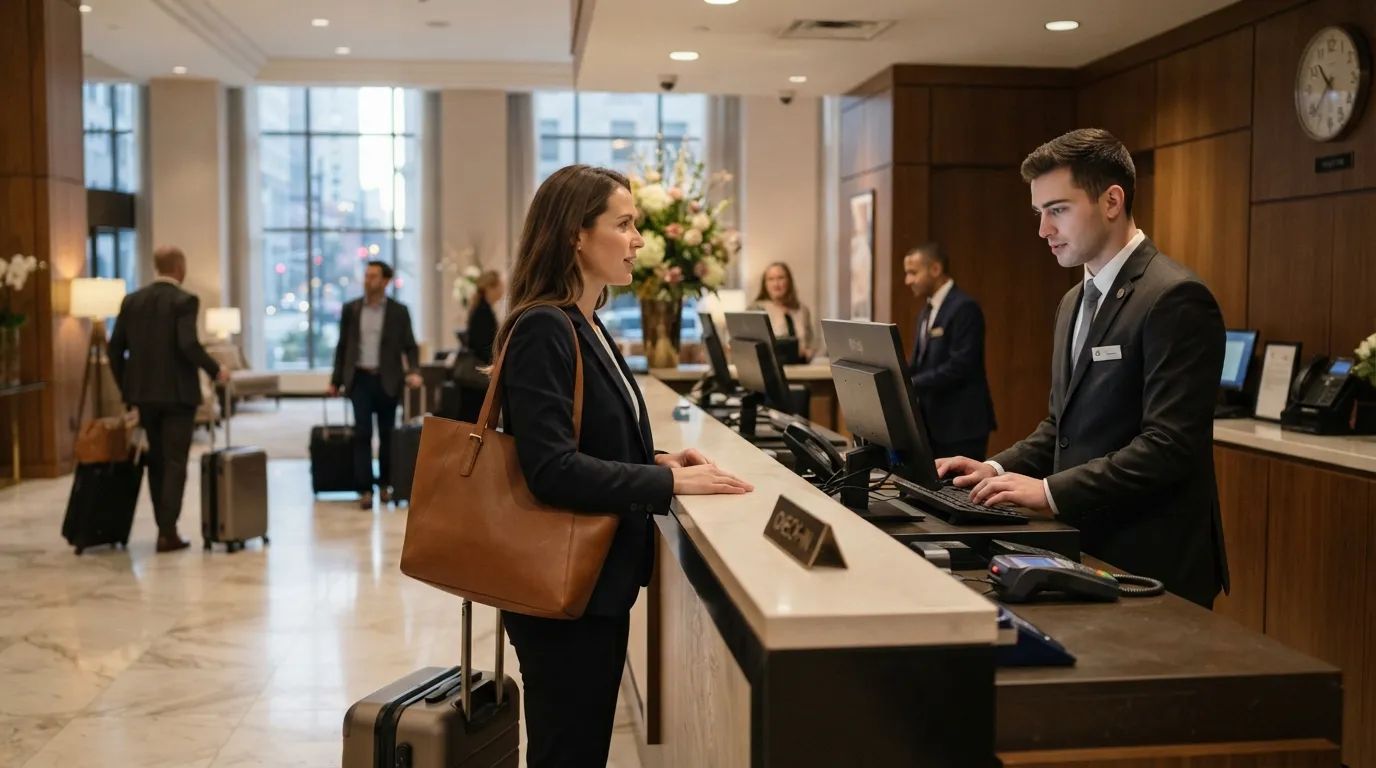
Picture the moment: you slide your ID across the counter, smile, and wait to see whether the universe hands you a better room. It feels like a coin flip, a friendly face, a slow night, a lucky key card. But before check-in, the front office reviews upcoming arrivals, occupancy and available inventory to decide which reservations get the best available rooms. By the time you reach the counter, you may already have been sorted.
Nobody at the desk will read you the list. But the factors that tilt the odds show up again and again in what front desk veterans and travel experts describe. Some are about you. Some are about the building. A few have nothing to do with you at all. And one is about a promise on your status card that has quietly gotten smaller, which is waiting at #1.
#17 – The Booking Channel Gives You Away Before You Say a Word

Your reservation carries a label you never see: how you booked it. The hotel’s own system shows the front desk exactly how a booking was made, and that feeds into upgrade decisions on arrival day. A direct booking and a third-party booking can look very different on that screen. Two guests in the same line can be read very differently before either one speaks.
The business logic is simple. One 2026 guide says hotels favor direct bookers because they avoid online travel agency commissions of roughly 15 to 25% of the room rate. A guest who costs the hotel less may be treated as the more valuable guest. That’s an industry-wide pattern, not a promise at every property.
#16 – The Status You Earned May Not Even Show Up on the Screen
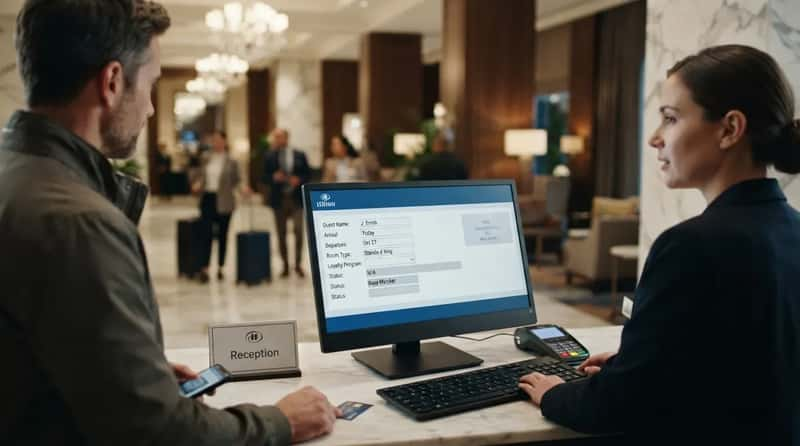
Here’s a quiet trap. Elite members who book through an online travel agency can end up with a reservation that doesn’t carry their benefits. One guide warns that a Hilton Gold member booking through Expedia may not have status applied automatically. The guest walks in feeling like a VIP while the screen shows a stranger.
If the desk can’t see your tier, the desk can’t prioritize you. The judgment is made on what the screen shows, not on what’s in your wallet. Guests who skip a quick check of their profile sometimes find out only at the counter, when it’s too late to fix.
#15 – The Desk Can’t Tell Card-Granted Status From Road-Warrior Status
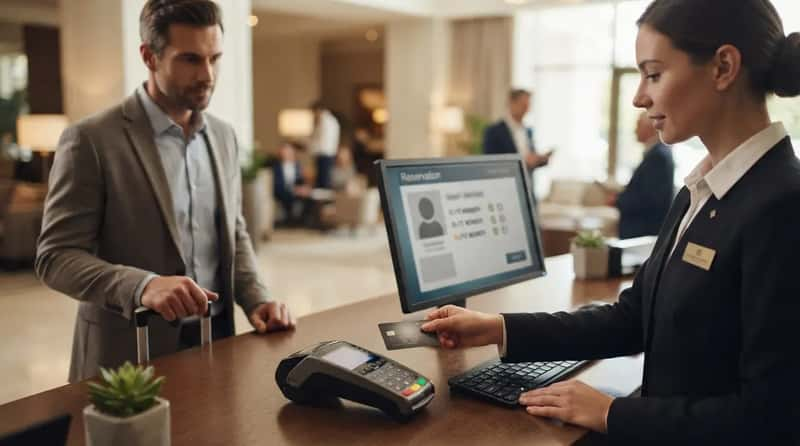
Plenty of travelers assume the desk looks down on status that came from a credit card. Turns out the system doesn’t know the difference. Status from co-branded cards shows up in the reservation system exactly like earned status.
That makes it a quiet equalizer. Several premium cards grant elite status at one or more hotel chains with no qualifying stays. A guest with zero nights can be sorted alongside a road warrior who has slept in the brand’s beds for years. Some travelers find that unfair. The software doesn’t care.
Quick Compare
- Earned status: built through qualifying stays, and it appears as a tier on the reservation.
- Card-granted status: comes with certain premium cards, needs no qualifying nights, and appears as a tier on the reservation.
- What the screen shows: the same tier label either way.
#14 – The Room You Booked Quietly Sets Your Ceiling
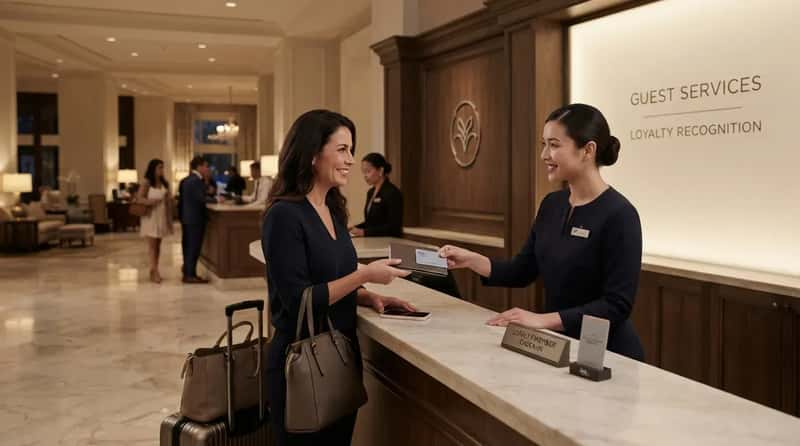
Upgrades usually go up one step, not three. Guests who book higher room types are often better positioned for an upgrade, because they start closer to the good stuff. A guest in the cheapest category is rarely the first candidate for the top suite.
There’s a pattern in how desks work through inventory. Many hotels prioritize an upgrade to the next room category first. That means “I got bumped” often means “I got moved up one notch.” Anyone expecting the corner suite is usually reading the benefit too generously.
#13 – You Might Be Standing in Line Behind 150 Other VIPs
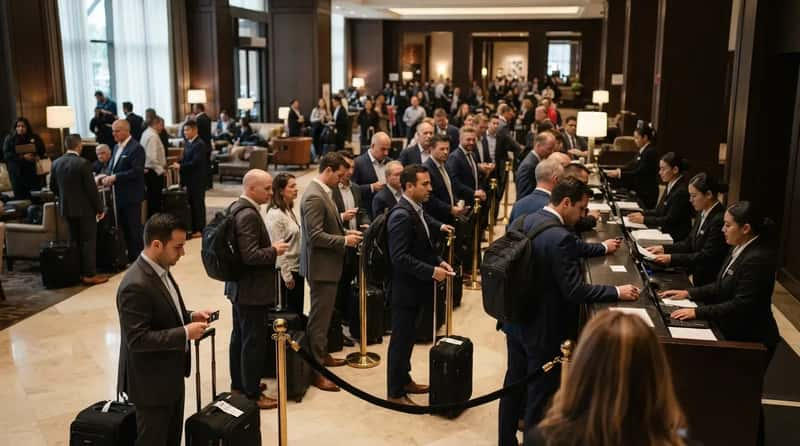
You may be competing with more elites than there are rooms. One analysis imagines a 300-room hotel with 20 suites and 150 elite members arriving the same night. No ranking system could satisfy that demand, no matter how fair it was.
This is called elite inflation, and the desk lives with it daily. At a vast majority of hotels, more elite members are eligible for suite upgrades than suites are available. Sometimes you aren’t being judged at all. You’re just standing in a long line.
#12 – Your Brand May Have Ruled Out Upgrades Before You Booked
Some loyalty members arrive expecting a perk the brand never promised. Hilton Honors elites technically get no upgrades at nine brands, including Embassy Suites, Hampton by Hilton and Home2 Suites. The desk knows that. The guest often doesn’t, and the disappointment lands at the counter.
The same goes for Marriott’s exclusions. Its Platinum upgrade doesn’t apply at certain properties, such as Ritz-Carlton Reserve and several vacation club brands. In some cases, the verdict is in before you check in, because the brand rules said no.
Worth Knowing
- Hilton Honors elites get no upgrades at nine brands.
- Embassy Suites, Hampton by Hilton and Home2 Suites are on that list.
- Marriott’s Platinum upgrade skips properties like Ritz-Carlton Reserve and several vacation club brands.
- The brand’s fine print can settle the question before the desk ever sees you.
#11 – A Sold-Out Night Beats Even the Shiniest Status
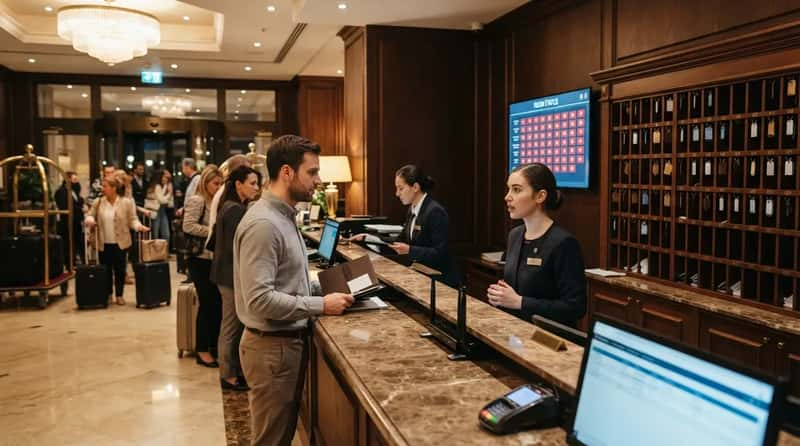
On a sold-out night, status can’t create a room. One 2026 analysis notes a Marriott Titanium member at a sold-out property gets the same room as a guest with no status: the one they booked. Rank doesn’t conjure space that isn’t there.
Revenue management software also sets how many rooms are even open to upgrade. Revenue algorithms determine availability, status creates conditional priority, and inventory limits outcomes regardless of tier. The best-looking status in the world loses to a full house.
#10 – The Clock on the Wall Changes How Much Patience the Desk Has

Mid-afternoon is a pressure cooker. One former front desk employee warns that early afternoon is busy with checkouts and early arrivals, so asking for early check-in plus an upgrade is a bad pairing. The agent is juggling housekeeping, a line and a ringing phone all at once.
Quieter windows can help. One guide suggests early morning or late evening arrivals give agents more flexibility than the mid-afternoon peak. An agent with time to look around may find an option that a rushed agent never sees. Timing doesn’t guarantee anything, but it changes the mood at the counter.
#9 – The First Ten Seconds of Your Tone Can Make or Break It
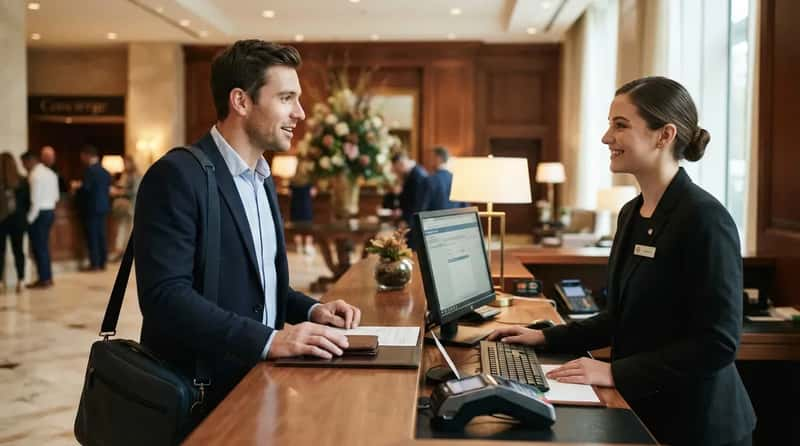
The desk reads the person, not just the profile. Front desk staff have discretionary authority over available rooms, and a pleasant interaction is reason enough to use it. That cuts both ways.
A guest who arrives frustrated or demanding gives the agent an easy reason to stick to the book. Upgrades are discretionary, based on what’s genuinely free that night, and the agent decides at check-in. Nobody is required to like you, but everybody is allowed to.
#8 – Whether You Look Like Someone Who Will Come Back
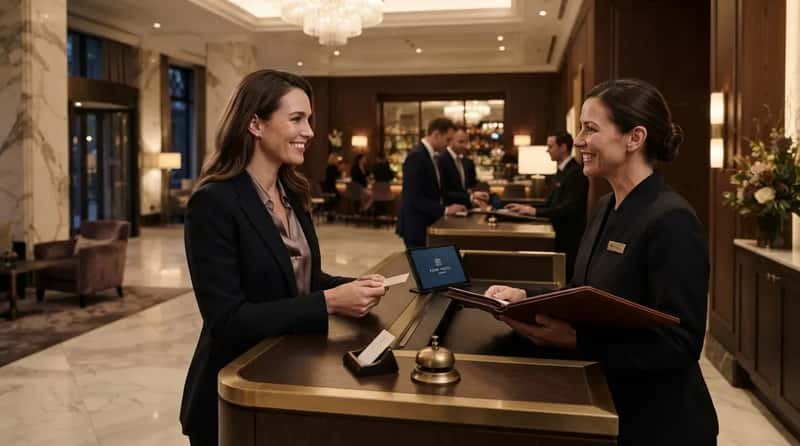
At high-end properties, upgrades are partly an investment. Upgrades at luxury hotels tend to flow toward guests seen as likely to return, spend on property and generate goodwill. That’s a business bet, not a favor.
Another source puts it in similar terms. Luxury hotels use upgrades to reward loyal guests, recognize VIPs and build relationships with travelers likely to return. So a guest with a repeat history at the property can outrank a higher tier with no history. Not every hotel works this way, but many do.
Why It Stands Out
- The upgrade works like an investment in a future stay.
- Likelihood of returning counts for more than a tier badge.
- Spending on property and goodwill both get noticed.
- A repeat history at one hotel can beat a bigger status elsewhere.
#7 – Some Hotels Keep Upgrades Locked Away Unless They Have To
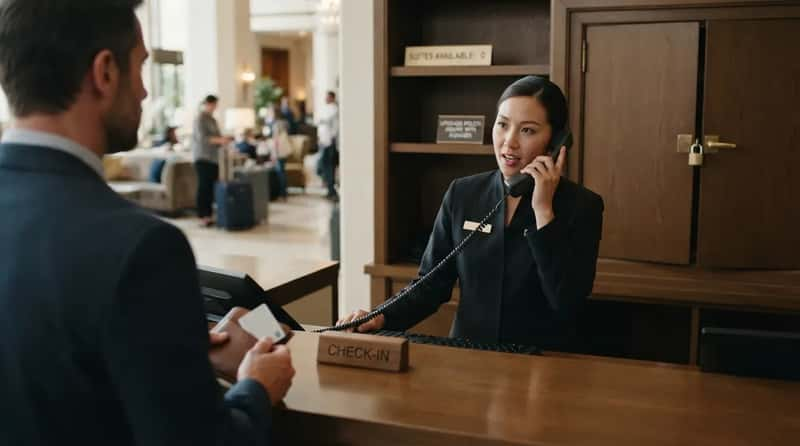
Some properties don’t hand out upgrades unless they have to. The Points Guy has cautioned that some hotels have internal policies to give upgrades only when required, or to selected guests. Two hotels in the same chain can behave very differently.
Marriott is a well-known case. One veteran blogger notes that Marriott lets individual properties opt out of elite benefits more regularly than other programs do. Your tier is a request. The hotel decides whether it’s honored.
#6 – A Birthday or Anniversary Can Reshuffle the Whole Deck

Occasions matter more than most guests realize. One industry resource says telling the desk about an anniversary or birthday raises the odds of an upgrade, because staff are empowered to reward guests. It gives the agent a reason beyond the spreadsheet.
The key is saying it early and sincerely. A note on the reservation reads better than a pitch at a crowded counter. Hotels, at heart, are in the business of memorable moments, and a moment is easy to build around when you’ve handed them one.
#5 – Some Guests Get Sized Up as a Sale Instead of a Reward

Not every guest is judged as a candidate for a free room. One 2026 roundup says hotels often offer day-of-arrival upgrades for roughly fifty to one hundred fifty dollars, though prices vary. That’s real revenue sitting in the room you were hoping to get for nothing.
Many travelers feel this puts the free perk in direct competition with the paid one. One commenter on a prominent points blog suspects some hotels hold back upgrades because people will still pay for them. That’s speculation, not policy. But the incentive is real, and agents know it.
#4 – The Human Behind the Counter Can Overrule the Computer
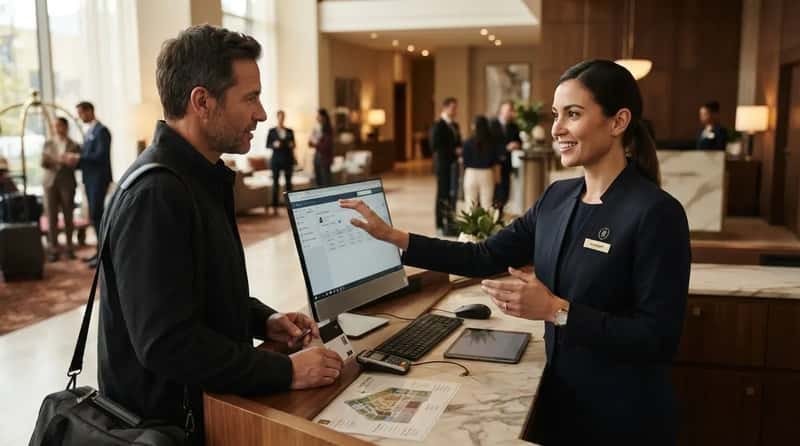
The software suggests. The people decide. Hotels assign upgrades in tier order, though individual properties can override system recommendations for high-value guests or service recovery.
That second category deserves attention. A guest whose last stay went wrong, or whose room isn’t ready, can jump the queue. The best-treated person at check-in is sometimes the one the hotel owes an apology. It’s one of the few cases where bad luck turns into a better room.
At a Glance
- Default order: upgrades are assigned in tier order.
- Override one: high-value guests can be moved ahead.
- Override two: service recovery can bump a guest up the list.
- Who decides: the individual property, not the software.
#3 – The Best Rooms May Be Gone Before Your Alarm Even Goes Off
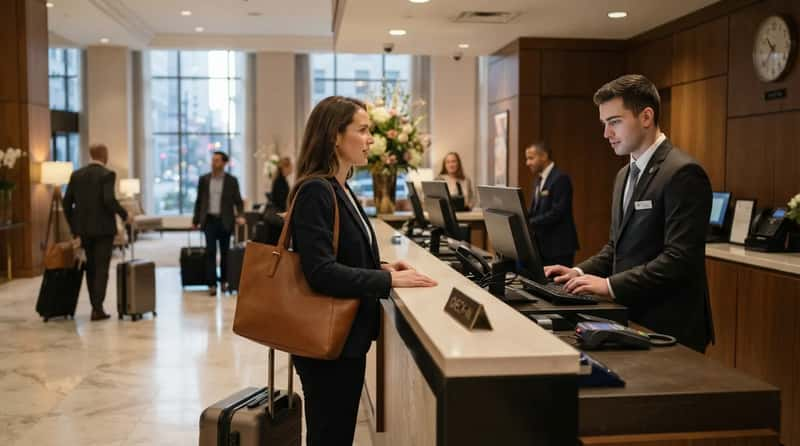
Most guests assume upgrades happen at the counter. By the time you reach the desk, many complimentary upgrades have already been assigned. The decision may predate your arrival by days.
Hilton makes this formal. It’s the only major program with a formal automated upgrade process in advance, though Marriott and Hyatt apps sometimes show upgrades before arrival too. If you’re not upgraded in the app, the best rooms may already be spoken for.
#2 – The Line Between a Confirmed Upgrade and a Polite Maybe
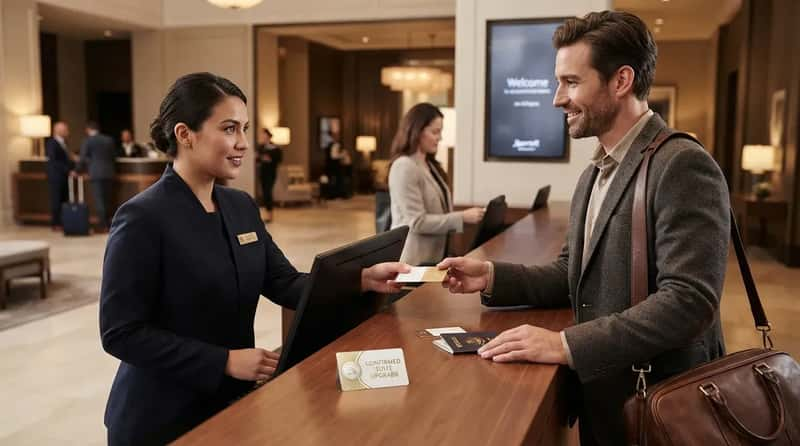
The biggest divide at the desk is between “confirmed” and “if available.” Marriott’s choice benefits let members at 50 or 75 elite nights pick five nightly upgrade awards that can confirm a suite starting three to five days before arrival.
Hyatt’s top tier sits in a stronger spot, too. Hyatt Globalists receive unlimited space-available suite upgrades at check-in. A guest with a confirmed award usually skips the whole guessing game. Everyone else is waiting to see what’s left.
#1 – The Promise on Your Status Card Quietly Got Smaller
This is the truth most elites don’t hear. In 2025, Marriott’s terms shifted. Platinum members and above had been promised an upgrade to the “best available room.” That wording was replaced with a plain upgrade subject to availability.
The change may be less dramatic than it sounds. The upgrade can still include suites, but the terms no longer say an available suite must go to the elite. Hilton’s wording is similarly loose, and its policy is described as intentionally vague. The real judgment, then, belongs to the hotel, and the program’s fine print leaves it plenty of room.
So the desk isn’t scoring your loyalty so much as sorting a scarce supply with plenty of discretion. You can improve your odds by booking direct, confirming your status shows up, and arriving when the agent has time to look. Beyond that, the key was never fully in your hands.
The next time a room comes back better than the one you booked, it’s probably the result of a dozen small judgments you never saw. And when it doesn’t, that’s usually not a verdict on you.