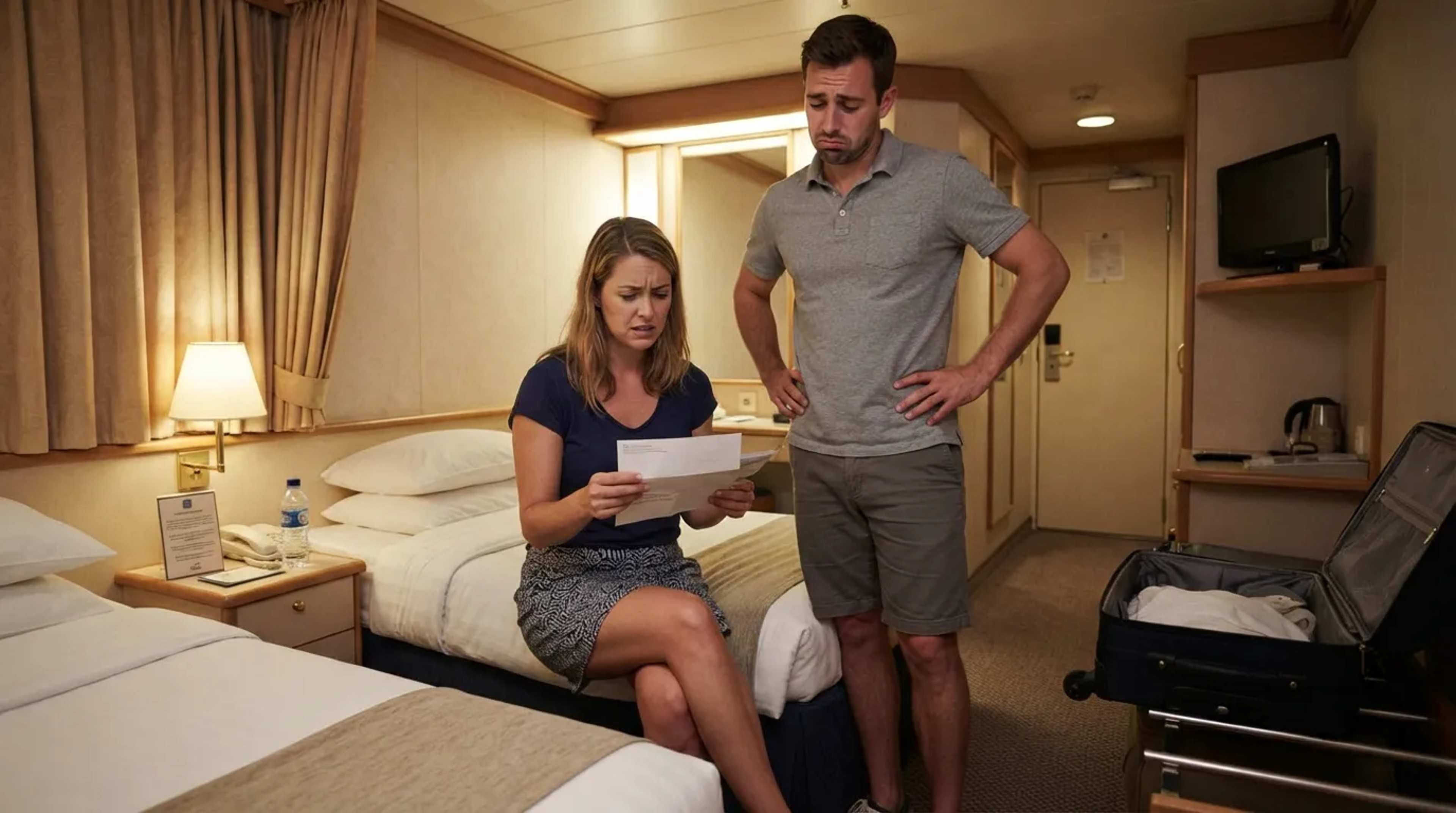
The cabin photo on the booking page looks calm, spotless, and a little like a spa. Nobody mentions the thumping bass overhead at midnight, the power strip waiting to be confiscated at the terminal, or the balcony door that slams like a gunshot. That gap between the brochure and the real room is exactly where first-time cruisers get caught, and these 17 mistakes show where.
Here’s the twist: the mistakes that sting most are rarely the expensive ones. They’re a $15 charging setup, a deck-plan detail nobody zoomed in on, or a problem reported on day four instead of day one. Some fixes cost nothing at all. A couple can quietly eat a whole vacation day, and the one waiting at #1 hides inside a bargain price.
#17 – The Cheapest Cabin Has a Secret Neighbor You Can’t See on the Booking Page

Two cabins in the same price category can feel like two different vacations. The category tells you about size and view, and almost nothing about what sits directly above or below the room. Booking sites sell you square footage, not a soundtrack.
Experienced cruisers open the deck plan before they click “book” and check the decks on both sides of their room. A cabin under the pool deck can mean scraping lounge chairs at dawn. A cabin above a club can mean bass through the floor at midnight. The quiet sweet spot is usually a room sandwiched between other cabins.
#16 – Picking the Front or Back of the Ship and Feeling Every Wave

A ship’s ends move more than its middle. The same swell that feels like a gentle sway midship can feel like a slow elevator at the bow or stern. That’s physics, not bad luck.
Cruisers who get queasy tend to book low and near the middle, where motion is usually less noticeable. A far-forward or far-aft cabin with a great price may be cheap for a reason. The “bargain” can come with a free side of seasickness. That’s a rough thing to discover on day two of a week-long trip.
Fast Facts
- Low and midship cabins usually feel the least motion.
- Bow and stern cabins tend to feel swells more.
- Higher decks can amplify the sway, even near the middle.
- If you’ve ever felt seasick, motion should outrank view.
#15 – The Power Strip That Gets Confiscated Before You Even Board
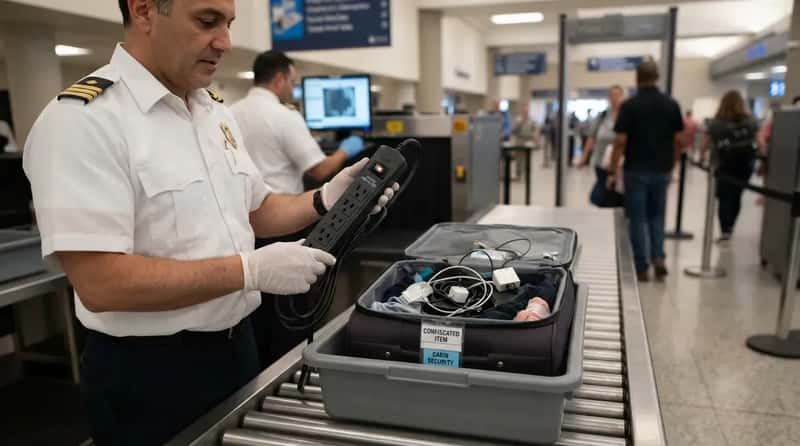
Even people who have cruised before get caught by this one. A power strip that sailed through one terminal can be taken away at the next, because the rules differ from line to line. You usually find out at security, with a bag already open.
Surge-protected strips are the usual target, and some lines restrict extension-style strips altogether. Carnival’s help center, for example, says power strips are allowed as long as they have no surge protector. Check your own line’s current list before you pack. The terminal is a miserable place to lose your whole charging setup.
#14 – Expecting Outlets by the Bed That Simply Aren’t There
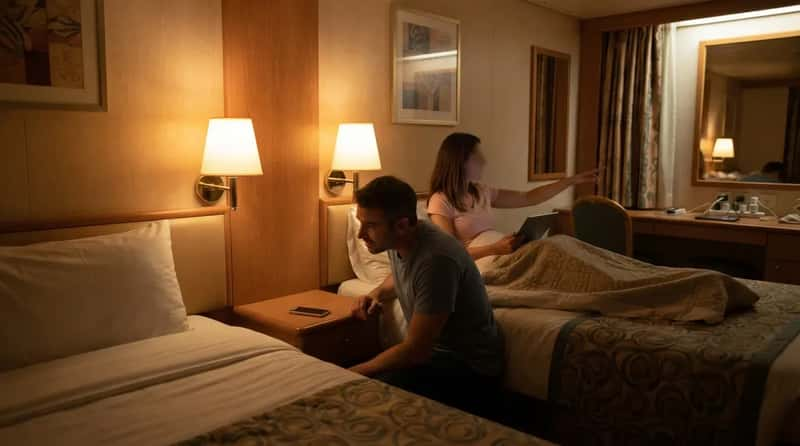
Cabins were designed for sleeping, not for five devices at once. Many have only a couple of outlets, and they’re often tucked near the desk or vanity. Couples with phones, watches, and tablets find this out fast, usually around 11 p.m.
Some cabins also include a European-style outlet that won’t fit your U.S. plugs, so look before you plug anything in. Newer ships often add built-in USB ports, which makes a compact multi-port USB block your best friend. Decide on a charging plan before you board. Otherwise you’ll be rotating devices like musical chairs.
#13 – The Wrinkled Shirt Fix That Security Takes Away

Everyone wants a crisp outfit for formal night. Clothing irons and garment steamers are on the prohibited list for many cruise lines. In a tiny cabin, they’re a fire risk.
Royal Caribbean’s official policy lists irons and steamers among its prohibited items, and staff can take them at the terminal. Experienced guests hang wrinkled clothes in the bathroom during a hot shower instead. Some ships also offer pressing services or self-service laundry rooms, so find out what’s on yours. Wrinkle-release spray takes up almost no space and is far less likely to cause trouble.
#12 – The Balcony Door Left Open Until the Wind Takes Over
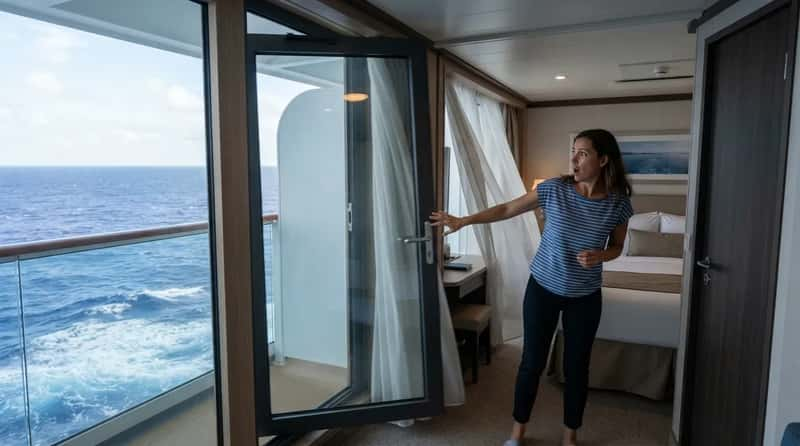
It feels wonderfully relaxing to leave the balcony door open. Then a gust catches it and slams it shut, right where someone’s hand might be. Cruise brochures never show this part.
A moving ship pushes wind across the decks, and a crosswind can also make the hallway door suddenly harder to handle. A slam can damage the door or injure a guest. Experienced cruisers keep the balcony door closed unless they’re standing right beside it. It’s an easy habit to start on day one.
#11 – Skipping the Door Decoration and Losing Your Own Cabin in a Sea of Identical Doors
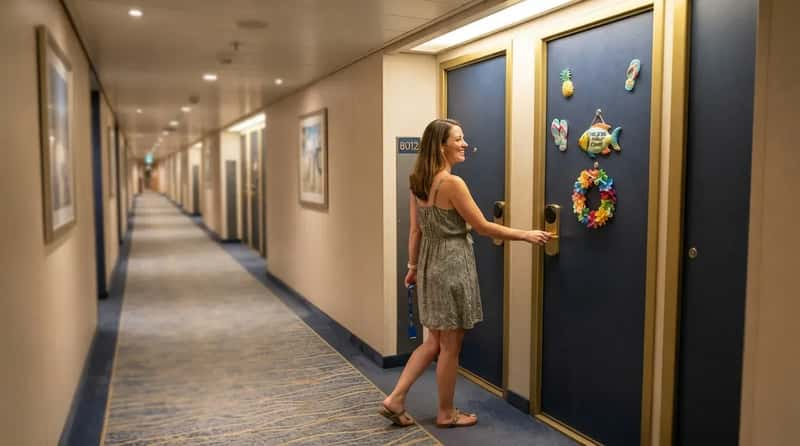
Every hallway looks the same: long, carpeted, and lined with identical doors. First-timers regularly stand at the wrong one, tapping a keycard that will never work. A simple marker saves you the embarrassment.
Many cruisers hang a magnet or small sign so they can spot their door from down the hall. Policies vary by line, and some restrict door decorations, so check before you buy anything cute. Skip adhesive tape and anything that could mark the paint. A little planning beats wandering the wrong corridor in flip-flops.
#10 – The “Ocean View” Window That Mostly Shows a Lifeboat
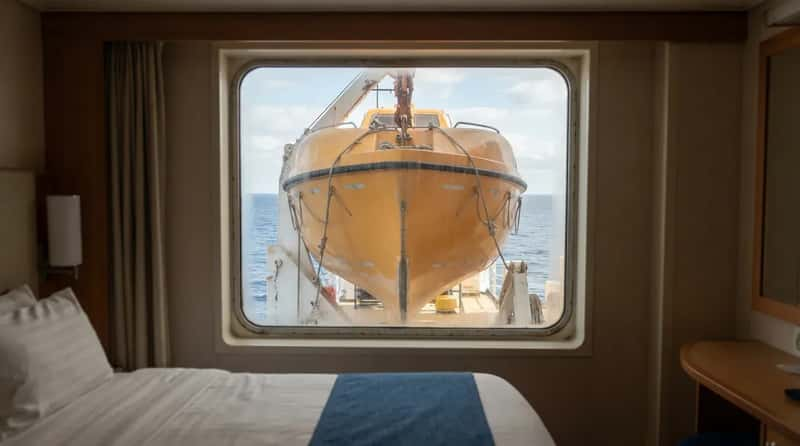
The listing says “ocean view.” The window may actually look at the side of a lifeboat or a support beam. The cabin is real, but the view is mostly blocked.
Cruise lines usually label these rooms “obstructed” or “partially obstructed” on their deck plans, and they’re often cheaper for that reason. Some guests happily take the discount and use the window just for daylight. If watching the sea was the whole point, though, the trade isn’t worth it. Read the fine print on the cabin listing before you commit.
#9 – Treating the Cabin Steward Like a Hotel Housekeeper Instead of Your Best Resource

Most guests barely say hello. Experienced cruisers know the steward can solve problems before you have to ask twice. A friendly chat on day one goes a long way.
On many ships, stewards can help with extra pillows, ice, or a different bed setup. Share your preferences early, such as when you’d like the room serviced. Learn their name and use it. That small gesture tends to pay off over a whole week.
Worth Knowing
- Introduce yourself on the first day, not after a problem shows up.
- Ask about bed configuration, extra pillows, and ice early.
- Mention any service-time preferences once, clearly, and kindly.
- Tipping practices vary by line, so check yours before you sail.
#8 – Never Unpacking and Living Out of a Suitcase in a Room the Size of a Closet
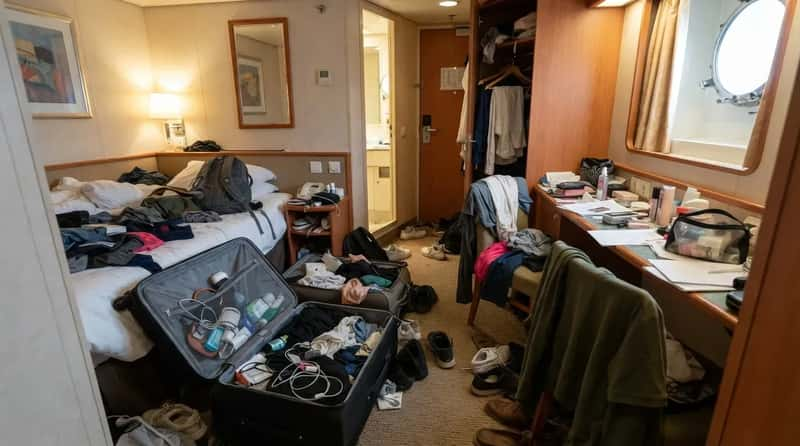
Floor space vanishes quickly. A half-open suitcase can turn a small cabin into an obstacle course. Experienced guests unpack within the first hour.
Many ships have drawers, shelves, and hanging space that are easy to overlook. On many ships, empty suitcases slide beneath the bed, though it’s worth checking yours before assuming. Over-the-door hooks and the bathroom are great for things you grab often. A tidy cabin feels noticeably larger.
#7 – Packing Everything Important in Checked Bags That Show Up Hours Late
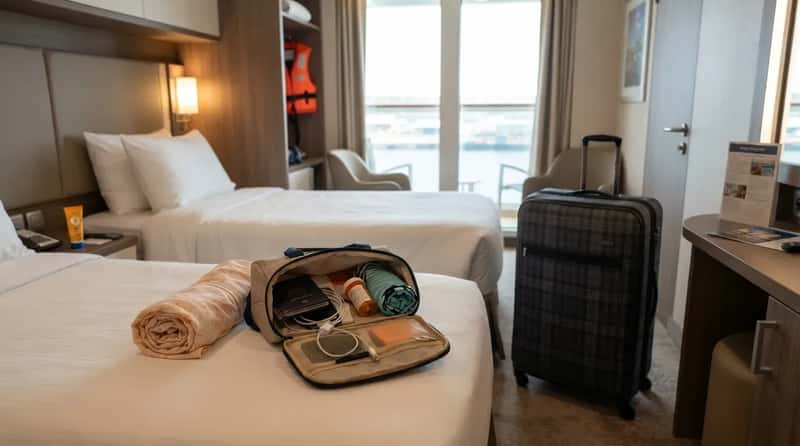
Your bags won’t be waiting at the door when you walk in. On embarkation day, luggage often reaches cabins well after you board. That leaves guests without swimsuits, sunscreen, or even medication.
Experienced cruisers carry a small bag with the essentials. It should hold medications, documents, chargers, and a swimsuit. That way you can head straight to the pool or lunch like you planned. Your vacation shouldn’t have to wait for a suitcase.
At a Glance
- Must keep with you: medications, passports, and boarding documents
- Smart to add: swimsuit, sunscreen, and a phone charger
- Nice extra: a light change of clothes for dinner
- Rule of thumb: if losing it would ruin day one, carry it on
#6 – Leaving Your Phone on Roaming and Letting the Ship Ring Up the Bill
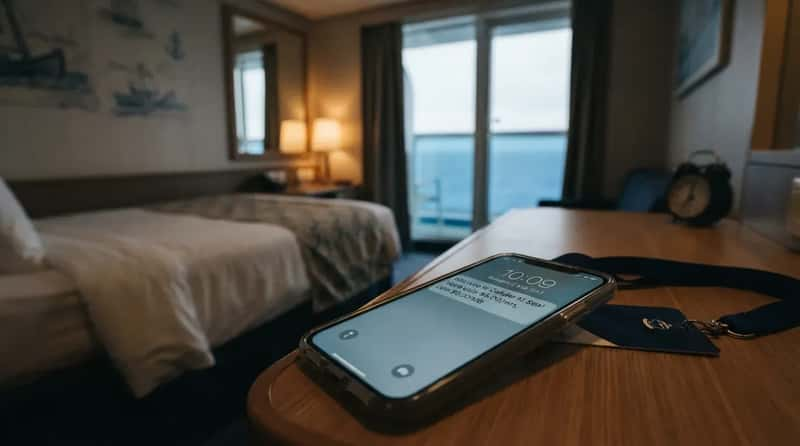
Your phone doesn’t know it’s on a ship. It can quietly connect to an expensive maritime network without asking you. The bill shows up later, when the vacation glow is gone.
Ship time can also differ from port time, so your phone clock may jump around. Put your phone in airplane mode at sea, then turn Wi-Fi back on if you’ve bought a plan. Check your carrier’s cruise policy before you board. Set a real alarm too, so a time-zone shuffle doesn’t make you miss your excursion.
#5 – Booking the Cabin Next to the Elevator Because It’s “So Convenient”
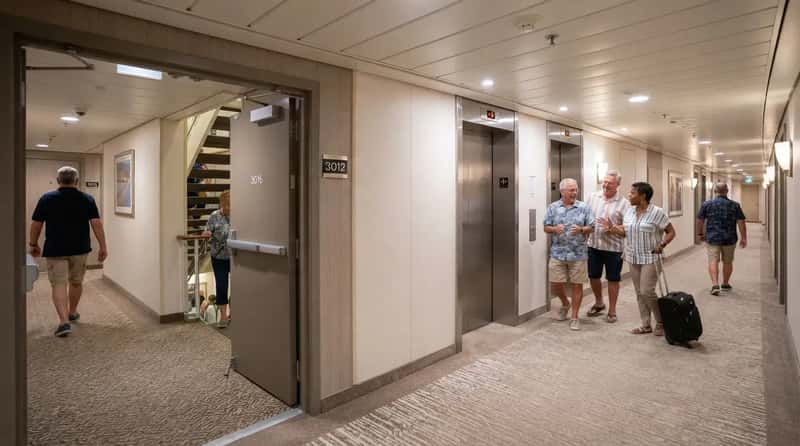
Short walks sound ideal. But elevator lobbies and stairwells bring a steady stream of footsteps, chatter, and door slams. The convenience has a cost.
Experienced cruisers study what’s near the cabin on the deck plan. Elevators, stairs, laundry rooms, and crew doors can all add noise. A few extra steps often buy you a quieter night. The best location is a short walk from the action, not in the middle of it.
Quick Compare
- Next to the elevator: shortest walk, but constant chimes and foot traffic
- Near the stairwell: easy access, but heavy doors and echoing voices
- A few doors down: a slightly longer walk, with a noticeably calmer hallway
#4 – Sleeping Through Everything in an Interior Cabin With No Window

An interior cabin has no window at all. Turn the lights off and it gets pitch dark, with no clue whether it’s noon or midnight. Plenty of guests oversleep on the first morning.
These cabins are popular because they cost less and are great for sleeping. But without daylight, it’s easy to lose track of time. Set an alarm before your shore excursion. Some people love the darkness and others find it unsettling, so know which kind of sleeper you are before you book.
#3 – Paying Extra for a Balcony You’ll Barely Use

The balcony is the dream cabin for many first-timers. But plenty of seasoned cruisers argue it’s the most overpaid upgrade on the ship. Some sailings keep you busy in port from morning until evening.
On cold or windy itineraries, the balcony may sit empty. On a port-heavy trip, you might only use it for a few minutes a day. It can be well worth the money on scenic routes or on sea days. Think honestly about how you’ll spend your time before paying more.
#2 – Waiting Until Day Four to Mention the Broken Air Conditioning

Small problems feel too minor to report. But the longer you wait, the fewer options you have. Early fixes are usually easier than late ones.
Test the lights, the thermostat, the toilet, the shower, and the TV on day one. If something’s wrong, contact guest services right away. A ship may be full, so a cabin swap is often easier early in the voyage. Take photos in case you need to explain the problem later.
#1 – Booking a “Guarantee” Cabin and Letting the Cruise Line Pick Your Room

The price looks like a steal. But with a guarantee fare, you may not know your exact cabin until shortly before sailing. That’s the tradeoff behind the discount.
With most guarantee fares, the cruise line assigns a cabin in your category or better. It could be wonderful, or it could land above the nightclub or at the far end of the ship. Cruisers who care about location often pay a bit more to choose. Picking your own room is the surest way to dodge many of the mistakes above.
Most cabin regrets have little to do with size. They come from a loud neighbor, a banned plug, a blocked view, or a problem nobody reported. The experienced cruisers who avoid them simply checked the deck plan, read the rules, and spoke up early. Which of these would have caught you off guard?