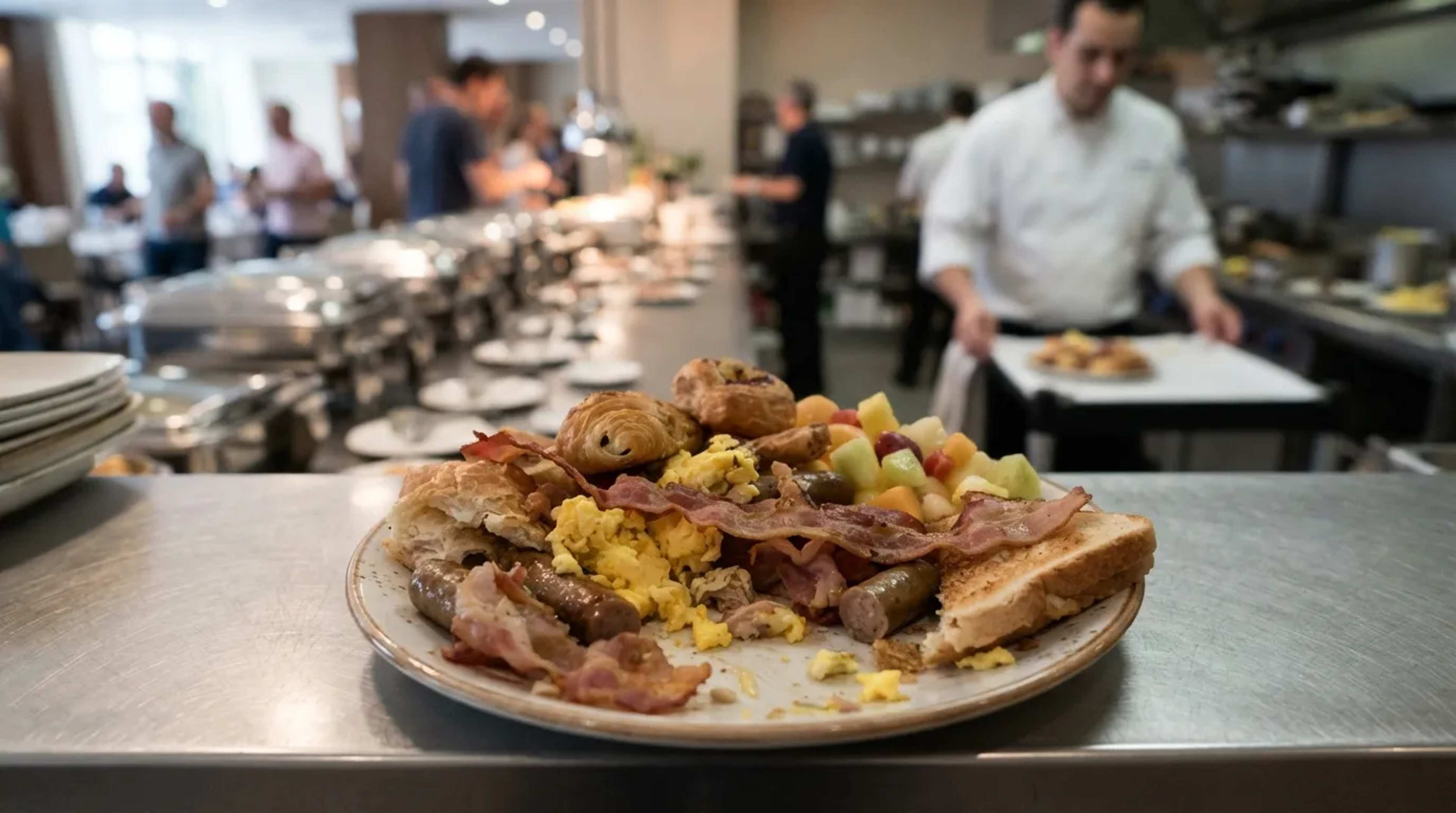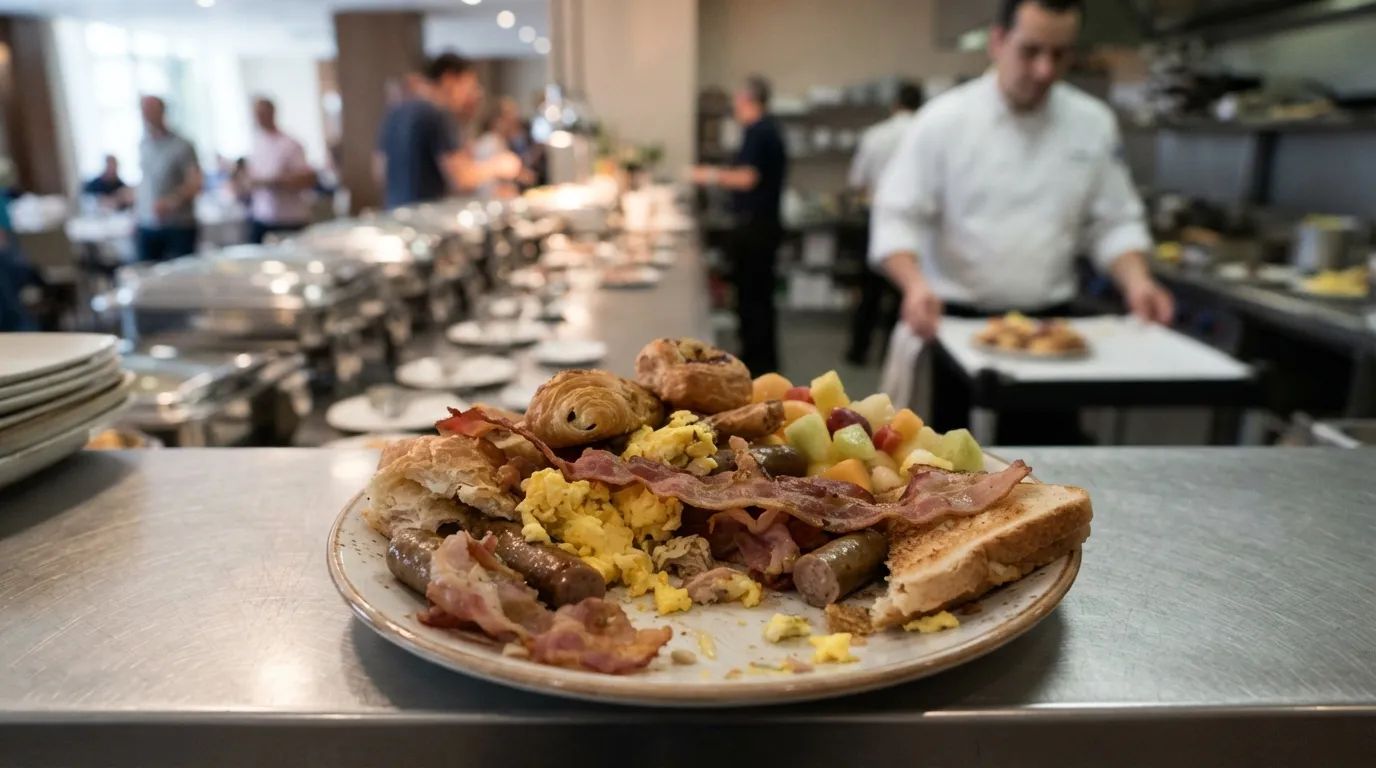
You pile your plate at the hotel buffet and picture a line cook back there cracking eggs, flipping bacon and pouring batter just for you. That picture is often wrong, and the real routine behind the swinging door is stranger than most guests ever guess.
Some of it is clever. Some of it is a little unsettling. And a few of the biggest surprises have nothing to do with the food itself. Start with the eggs, because that’s where the first jaw-drop happens.
#17 – The Scrambled Eggs Often Never Meet a Shell
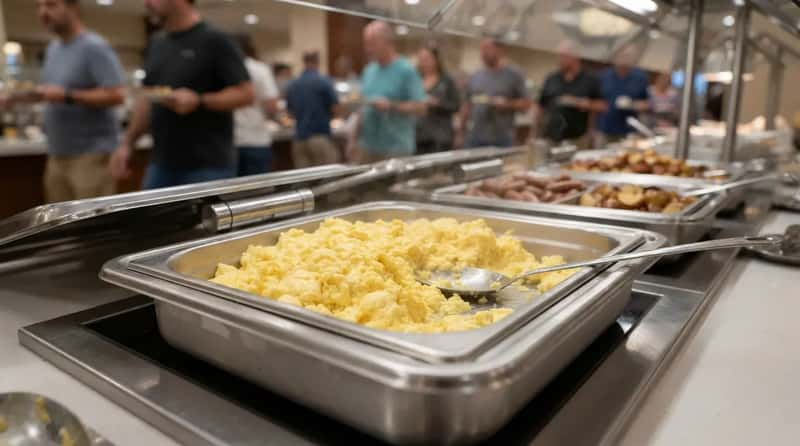
The golden pile in the warming pan was probably not cracked by hand this morning. Most hotels build their staple dish from dehydrated or liquid eggs. The color is often a pale, slightly dull shade rather than a bright yellow. That odd color is the clue many guests notice without knowing why.
The reason is mostly speed. Cracking and beating the number of eggs a full buffet needs would eat up a huge chunk of a short morning shift. Premade products solve that in minutes. But the way some hotels turn that liquid into breakfast is even stranger, and it’s waiting at #16.
#16 – Some Eggs Arrive in a Sealed Bag and Get Microwaved
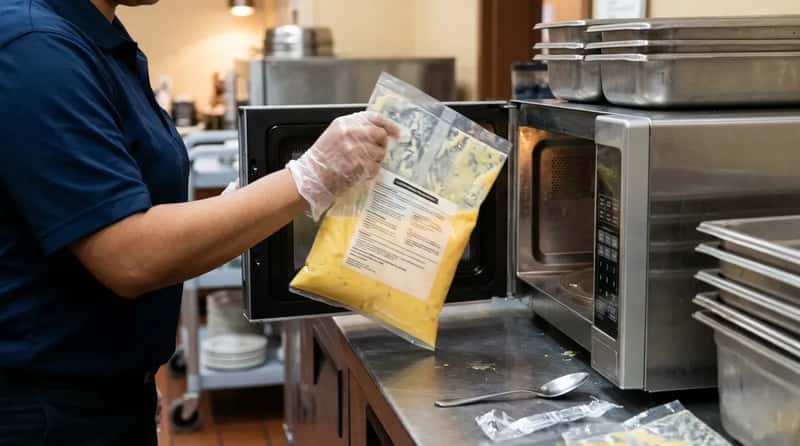
At some hotels, the “scramble” starts as a solid slab inside a plastic bag. A hotel worker at a limited-service property filmed herself placing a sealed commercial bag of pre-blended egg mixture in a microwave. She then cut the bag open, dumped the contents into a buffet pan and broke it apart with a wire masher.
The video pulled in a huge audience, and viewers split fast. Some were disgusted, while others said they didn’t care and just wanted their free breakfast. Both reactions make sense. Still, the powdered version of the story may be the wildest of all, and that’s #15.
#15 – Powdered Eggs Can Outlast Almost Everything in the Pantry
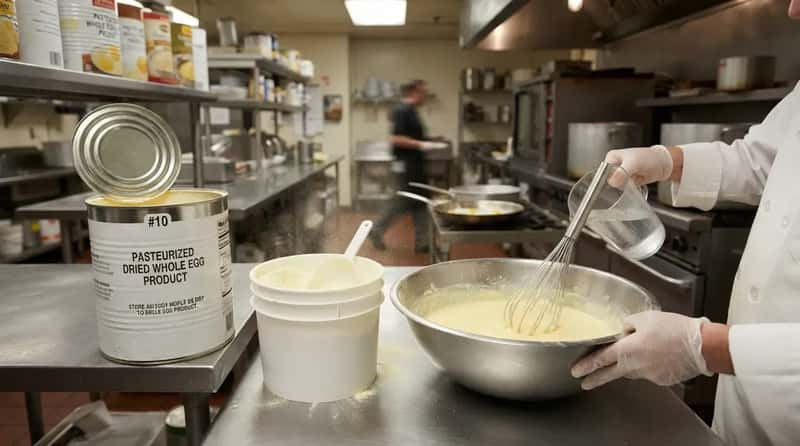
Dried egg can sit on a shelf for years. The process starts with fresh eggs that are beaten and pasteurized to reduce the risk of salmonella. Spray-drying then turns the liquid into tiny droplets, and the water evaporates in a drying chamber.
Quick Compare: Three Ways Eggs Reach the Buffet
- Liquid: Pasteurized and poured from a carton, then cooked in bulk.
- Powdered: Spray-dried, shelf-stable and mixed with water on site.
- Bagged: Pre-blended, heated inside the bag and broken up in the pan.
That long life is the whole point. Powdered eggs last at least a year, and some brands are shelf-stable for up to 25 years. Versions built for longer storage may have preservatives added. So that “fresh” tray may have started as an ingredient older than the hotel’s carpet. But there’s also a legal reason hotels lean on all this, and it comes next at #14.
#14 – Health Rules Quietly Push Kitchens Toward Liquid Eggs
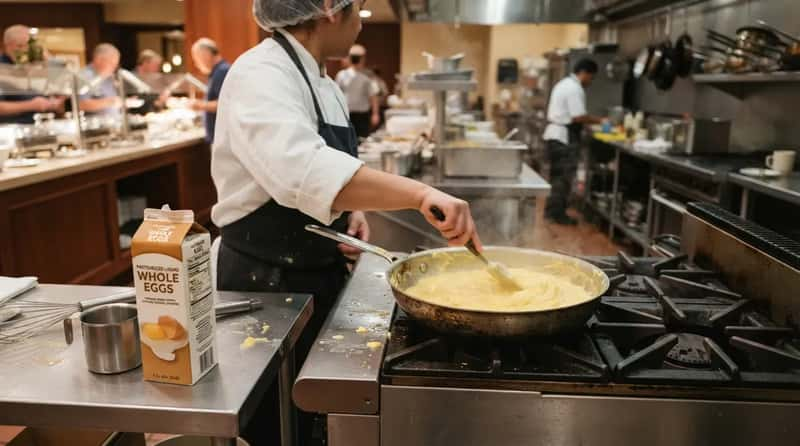
Sometimes the carton isn’t laziness. It’s compliance. A corporate executive chef told Reader’s Digest that some resorts use pasteurized liquid eggs at buffets to follow local health department rules. That makes the product a safety choice as much as a cost one.
The rules don’t stop once the carton is open. Processed eggs still have to be cooked to a safe internal temperature before they ever reach the buffet. That’s one reason they can come out firm and a bit dry. Next, one chef has a blunt way to tell whether you’re getting the real thing, at #13.
#13 – The Chef’s Tell: A Hot Pan Versus a Live Station
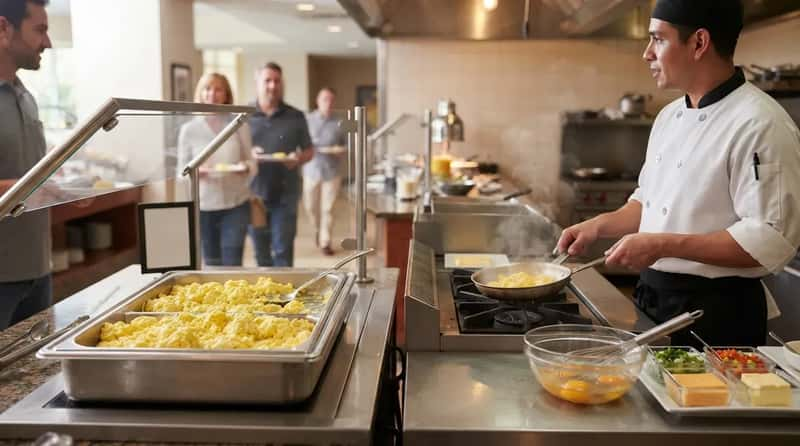
One veteran chef argues that a pan of premade scrambled eggs is the wrong thing to grab. Chef Maricel Gentile suggests looking for an egg station where a cook makes your order fresh. She says no high-end buffet would put out a hotel pan full of scrambled eggs.
That’s a debatable opinion, and plenty of guests happily love the free hot pan anyway. Even at a station, she says it’s worth asking whether the cook is using a liquid or powder product. Don’t assume the person at the burner is cracking anything. And what if the hotel doesn’t have a real kitchen at all? That’s #12.
#12 – Plenty of Hotels Have No Full Kitchen Behind the Buffet
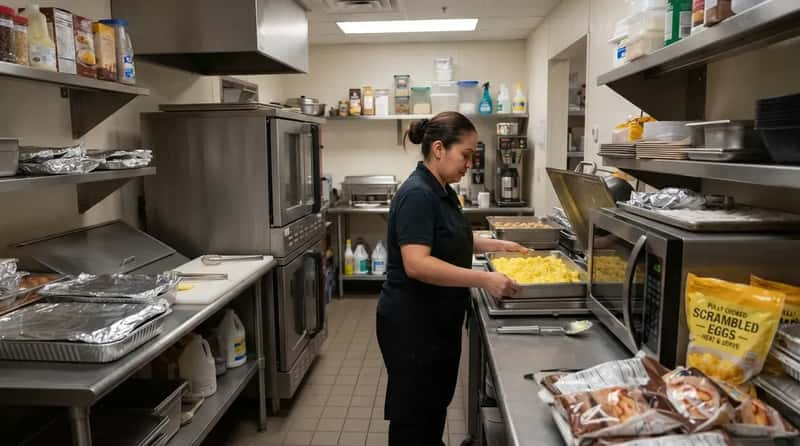
“Hot breakfast” can mean reheated, not cooked. The worker in the viral clip was at a limited-service property, the kind of hotel built around a small prep area. One viewer noted that the bagged eggs are made for hotels that serve hot breakfast but don’t have a full kitchen.
That setup explains a lot. Without a range, hood and trained line, the menu leans on items that heat quickly and hold well. Ovens, microwaves and warming trays do the heavy lifting. The bacon has its own backstage trick, and it’s at #11.
#11 – The Bacon Is Usually Cooked in Bulk, Not Strip by Strip
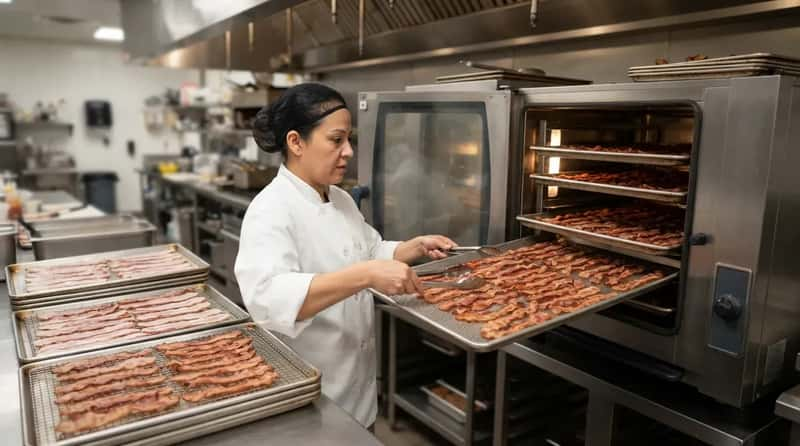
Nobody is frying a hundred strips in a skillet at 6 a.m. Large kitchens commonly use sheet pans and ovens, and many buy bacon that is already partly or fully cooked. That gives them even color, fast refills and far less grease splatter. The trade-off is bacon that can be crisp at the edge and chewy in the middle.
Consistency is the real goal. A kitchen serving a full house can’t afford a batch that burns or runs out. Most diners never think about that math. The waffle machine hides a similar compromise, and it’s #10.
#10 – The Waffle Station Runs on Mix and Timers
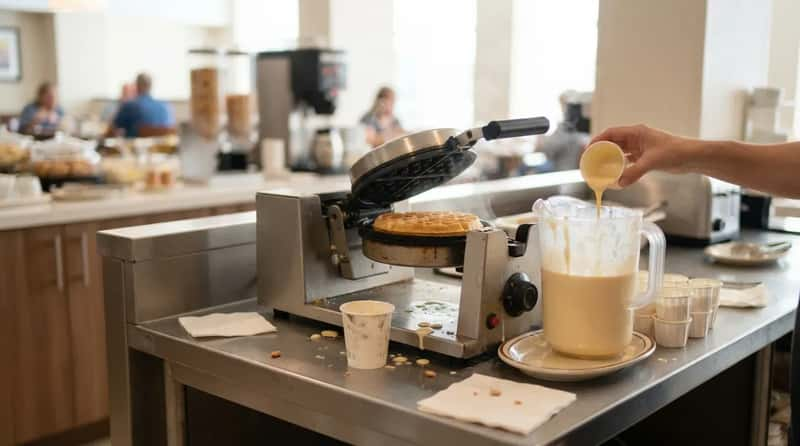
The self-serve waffle maker is a small production line, not a kitchen showpiece. Hotels often supply ready-made batter or mix, so guests only pour, flip and wait for the beep. Batter is typically portioned in cups so one pour fills the iron. That cuts mess and keeps the line moving.
Why It Stands Out
- Guests do the cooking, so the kitchen needs no extra staff at the station.
- Pre-portioned cups keep batter from overflowing and the counter from turning sticky.
- The timer and flip routine make results nearly identical from guest to guest.
- The smell of hot batter does the “made fresh” marketing on its own.
It’s also a smart bit of design. Guests do the cooking, the hotel controls the ingredients, and the “made fresh” feeling comes free. Honestly, it might be the cleverest station in the room. The pastry basket is another story, and it’s at #9.
#9 – Those “Fresh-Baked” Pastries May Have Arrived Frozen
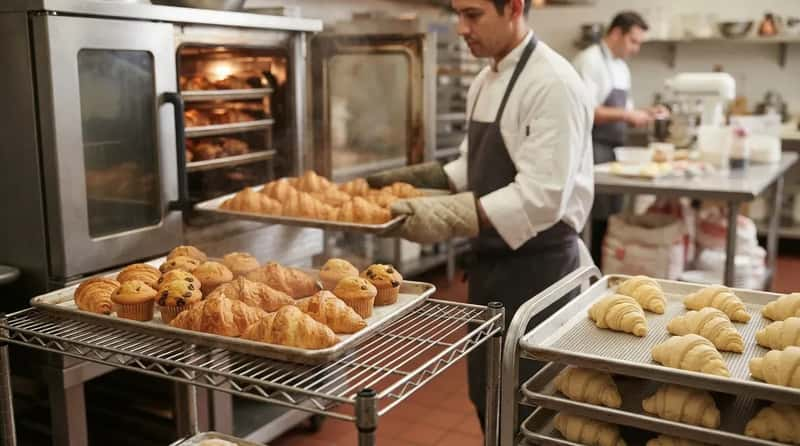
Many hotel muffins and croissants are finished in the oven, not made from scratch. Plenty of kitchens buy them frozen or par-baked, then bake them in batches during service. This is common across food service because it saves labor and gives predictable results. It doesn’t mean the pastries are bad, only that the bakery isn’t on site.
Timing matters more than origin. A tray refreshed every few minutes beats a basket that sat under a lamp for an hour. And a ticking clock rules everything back there, starting at #8.
#8 – Every Hot Tray Is Racing a Food-Safety Clock
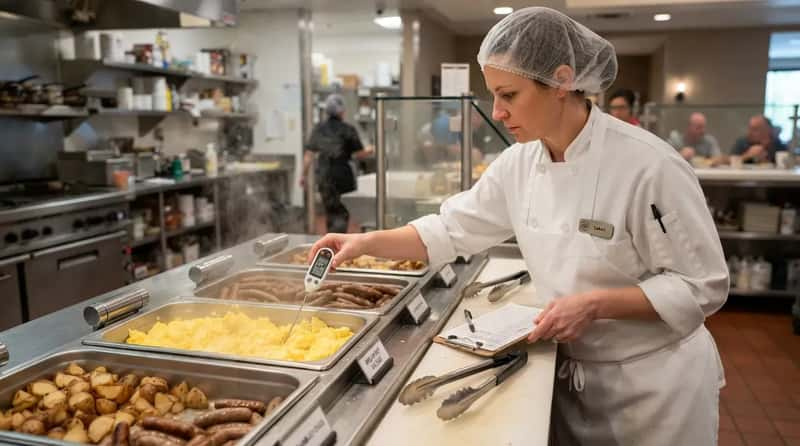
Buffet food isn’t just sitting there. It’s being watched. Under the FDA Food Code, hot food is meant to be held at 135°F or above and cold food at 41°F or below. Many kitchens check temperatures on a schedule and swap out trays that have run too long. That’s why a pan can vanish and come back full a few minutes later.
From the guest’s side, the cycle looks random. Behind the scenes, it’s a routine staff follow closely. The next secret is about what you see on the tray, not what’s in it, at #7.
#7 – A Full Tray Is Part of the Show
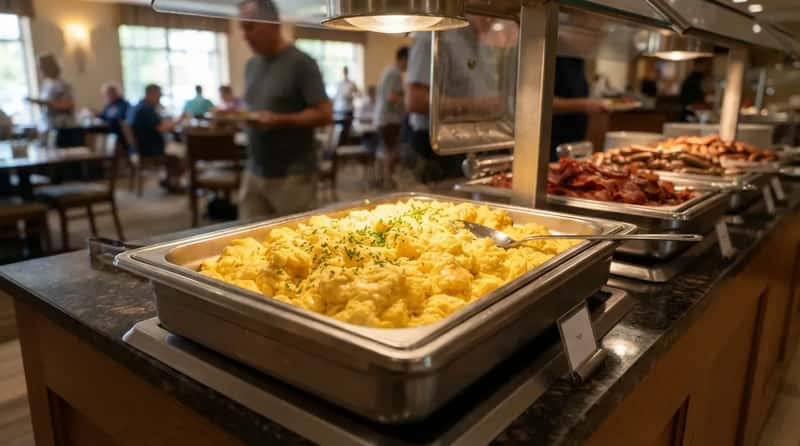
The overflowing pan is designed to look that way. Buffet trays have to look full for the last guest in line, which means some food will never be eaten. A half-empty tray feels like scarcity, even when the kitchen has plenty in reserve.
Kitchens are caught between two bad options. Refill too slowly and guests complain. Refill too fast and good food ends up in the bin. That tension connects to the biggest reveal of all at #1, but first, the beverage station has its own surprise at #6.
#6 – The Juice Often Comes From a Machine, Not a Squeezer
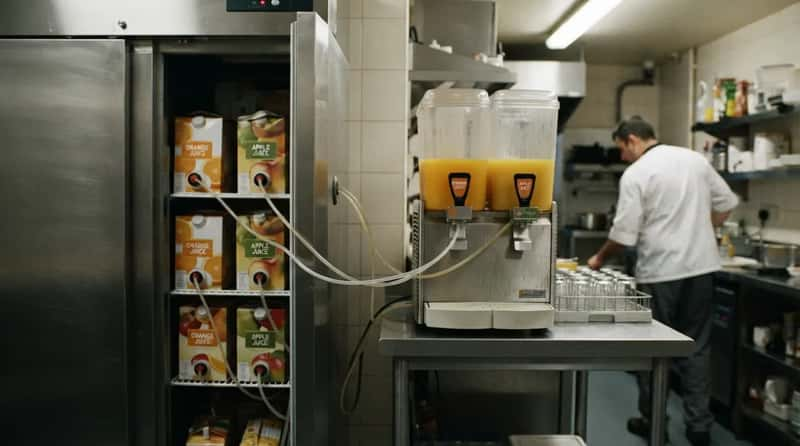
That chilled dispenser usually isn’t fed by someone juicing oranges. Many hotel dispensers mix concentrate with water or draw from sealed bag-in-box supplies kept in the fridge. It’s cheap, consistent and easy to refill. The label on the box, not the glass, tells you what’s inside.
Fresh-squeezed does exist, but it usually costs extra or shows up at upscale properties. Still, the dispenser is a reasonable answer to a hard problem. A hundred glasses an hour can’t depend on one juicer. Next up is the question that makes kitchen staff the most nervous, at #5.
#5 – Allergy Questions Are the Scariest Part of the Morning
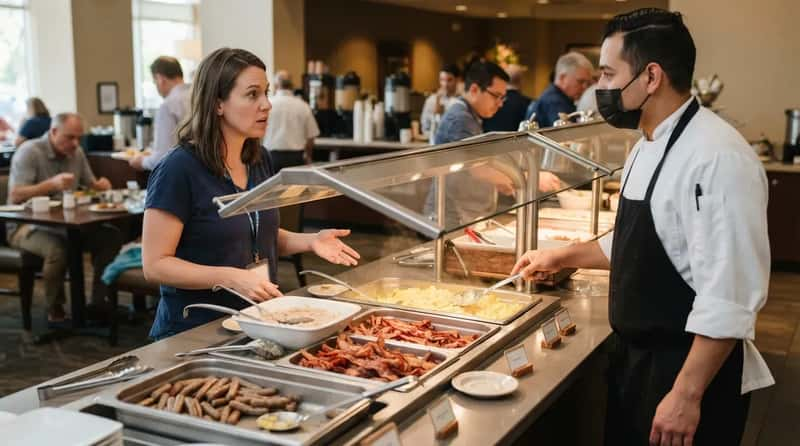
A buffet is a nightmare for anyone avoiding a major allergen. The FDA lists nine major allergens: milk, eggs, fish, crustacean shellfish, tree nuts, peanuts, wheat, soybeans and sesame. Breakfast is packed with milk, eggs and wheat. Those foods sit side by side in shared pans.
Worth Knowing
- Sesame became the ninth major U.S. allergen on January 1, 2023.
- Milk, eggs and wheat show up in pancakes, pastries, scrambles and French toast alike.
- One serving spoon moved between pans can carry an allergen from dish to dish.
- Asking for an ingredient list is a normal request, and careful kitchens expect it.
The risk is often one spoon. A guest grabs the wrong utensil, and a “safe” dish isn’t safe anymore. Kitchen staff know this, which is why careful hotels keep ingredient lists on hand and encourage guests to ask. And the people handling all this start work earlier than you’d guess, as #4 explains.
#4 – The Breakfast Crew Often Starts Before Dawn
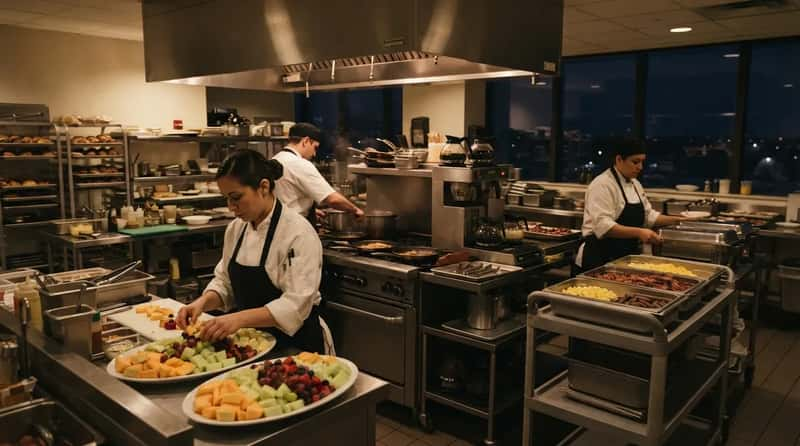
By the time you wake up, the kitchen has often been working for hours. In many hotels, ovens heat, coffee brews and trays fill well before sunrise. Fruit is cut, pans are staged and warmers are switched on. By the time the first guest wanders in, the best-prepared kitchens look calm.
It’s relentless work for a meal many guests treat as an afterthought. A single missed step, like a broken warmer, can ripple through the whole service. But few things have changed guest attitudes like one short video, at #3.
#3 – One Viral Video Changed How Millions See the Buffet
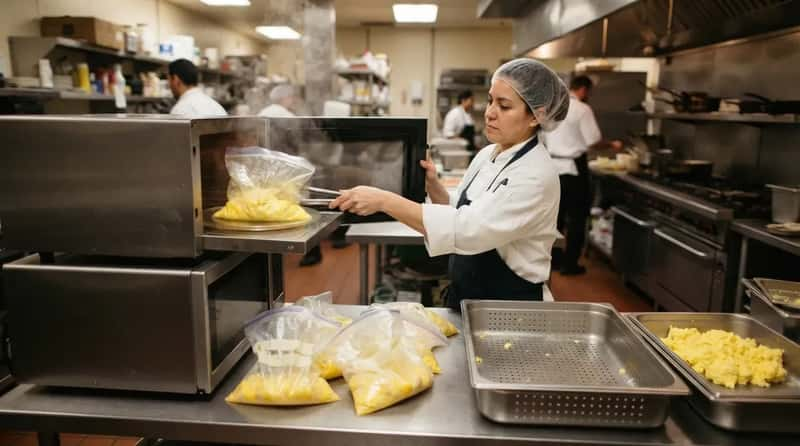
A single clip from a hotel kitchen racked up more than ten million views. TikToker Liz’s video passed 10.8 million views. It showed the bag-and-microwave method and set off a flood of reactions.
The comments reveal how little guests know about the process. One viewer admitted they never thought someone was back there scrambling hundreds of eggs. Others shrugged and kept eating. The real shock wasn’t the eggs. It was how rarely anyone asks. And the research on guest behavior is next, at #2.
#2 – Researchers Gave Buffet Overloaders a Name
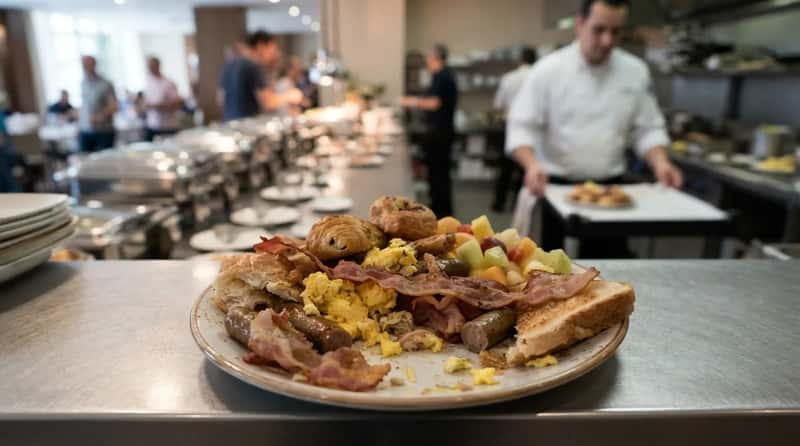
Academics now have a label for guests who pile on to “get their money’s worth.” A 2025 study in the International Journal of Hospitality Management interviewed hotel managers and chefs about breakfast buffet waste. Staff pointed to guest behavior as a main cause and used the term “pay riders.”
It’s a revealing finding because it comes from the people on the other side of the pass. They see the plates come back. And the waste they see adds up to a number that stops people cold, at #1.
#1 – The Buffet Throws Away More Than Double What a Menu Does
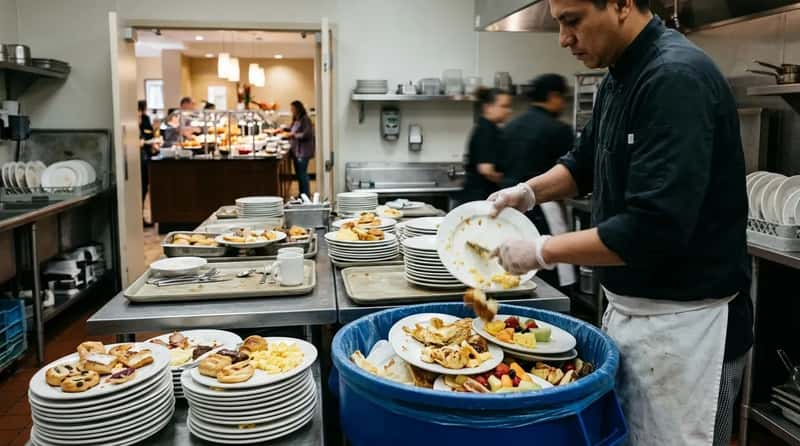
The biggest hidden cost isn’t the eggs. It’s the waste. Breakfast buffets generate more than double the waste of à la carte meals, at roughly 300 grams per person compared with 130 grams. Much of it is built into the format.
Chefs notice it personally. To the people who prepared it, wasted food feels personal. Most guests never see the scraping that happens out of view. That’s the part the kitchen can’t hide, no matter how full the trays look.
The hotel breakfast kitchen is less about cooking and more about logistics. Many eggs come as liquid, powder or a bagged slab. Pastries, bacon and batter often arrive ready to finish, and every tray is racing a safety clock. The surprise isn’t that shortcuts exist. It’s how much planning it takes to feed hundreds of people before most of them are awake.
The biggest cost hides in the bin, not the pan. Which of these would change how you approach your next hotel buffet?