
Most people assume family road trips got better once GPS, DVD players, and climate control took over. But ask anyone who grew up piling into a wood-paneled station wagon in the 1970s, and they’ll tell you the opposite is true. Something got lost when the trips got easier.
Back then, a vacation wasn’t planned with an app. It was negotiated with a paper map, a cooler of warm soda, and a dad who refused to stop for directions. Here’s what people who actually lived through those summers still say made those trips impossible to forget.
#17 – The Station Wagon “Way-Back” Seat Free-for-All
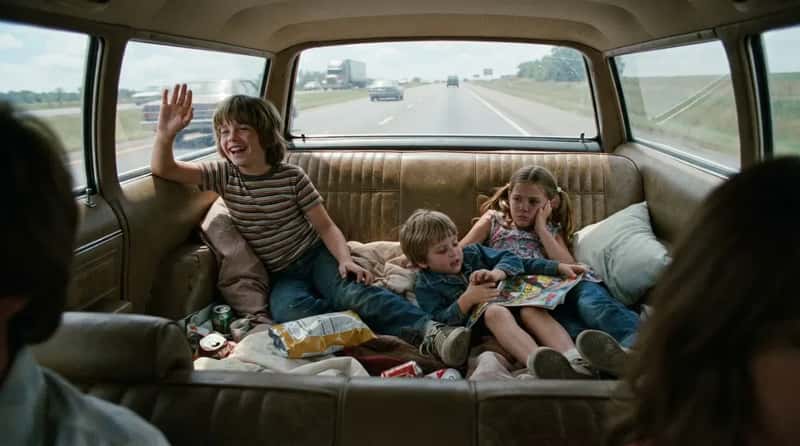
Before minivans existed, the family station wagon’s rear-facing third row was basically a lawless zone. Kids fought over who got to lie down back there, wave at truckers, and watch the road disappear behind them. There were no seatbelts required in that seat at all, and almost nobody thought twice about it.
Parents up front couldn’t see what was happening in the way-back, which meant snack theft, sibling wrestling matches, and the occasional shoe thrown at a stranger’s car went completely unpoliced. Kids treated it like a clubhouse on wheels. It’s one of the rituals nostalgic adults bring up first, and safety experts today would never sign off on it.
#16 – Paper Maps Unfolded Across Dad’s Lap
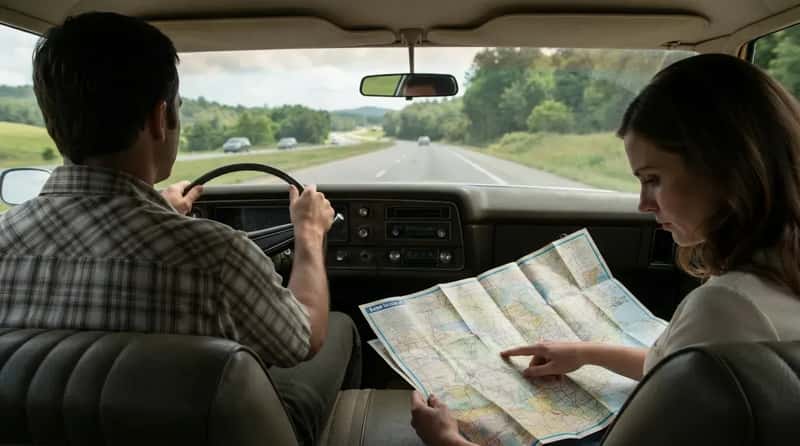
Every 1970s road trip started the same way: a giant, crinkling Rand McNally atlas spread open on the front seat, refusing to fold back the way it came. Dad navigated by squinting at tiny highway numbers while driving 55 miles an hour, no phone to bail him out. Wrong turns weren’t an inconvenience so much as the whole adventure.
Mom usually became the co-pilot by default, tracing routes with her finger and calling out exits seconds too late. Wrong turns sometimes added hours to a trip, and nobody complained out loud. Gas station attendants became emergency navigators whenever the map failed completely, which was often.
#15 – The CB Radio Chatter That Turned Kids Into Co-Pilots
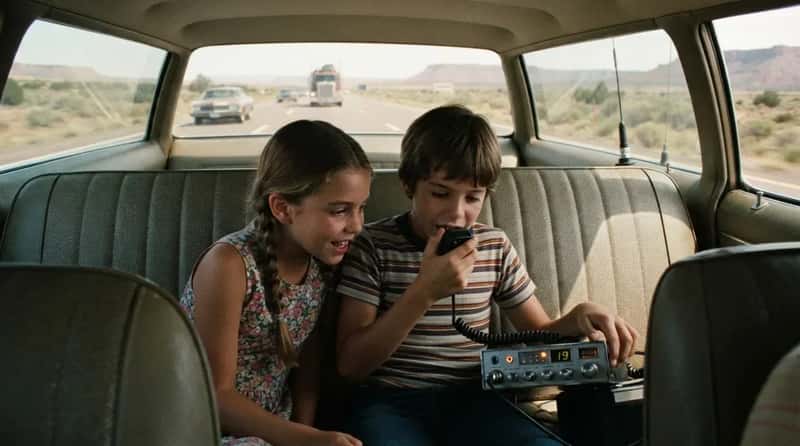
By the mid-1970s, a CB radio wasn’t a gadget, it was a family member. A nationwide 55 mile-per-hour speed limit had forced new attention onto trucking, and CB culture exploded almost overnight. Kids in the backseat learned trucker slang faster than their multiplication tables.
Families picked out their own CB handles before a trip even started, and hearing a trucker’s voice crackle through static felt like eavesdropping on a secret society. By 1977, more than 20 million CBs were in use across the country. Listening for speed traps became a shared family mission, with kids treating it like actual detective work.
Fast Facts
- Channel 19 became the unofficial highway channel truckers relied on for speed traps and road conditions nationwide
- The 1973 oil crisis paired with the new 55 mph limit is what pushed CB radios from a hobbyist toy into essential highway gear
- Early CB sets only had 23 channels before demand forced the FCC to expand the band to 40
- Movies like “Smokey and the Bandit” turned CB slang into a nationwide pop culture moment
#14 – Punch Buggy and License Plate Bingo Turned Boredom Into Battle
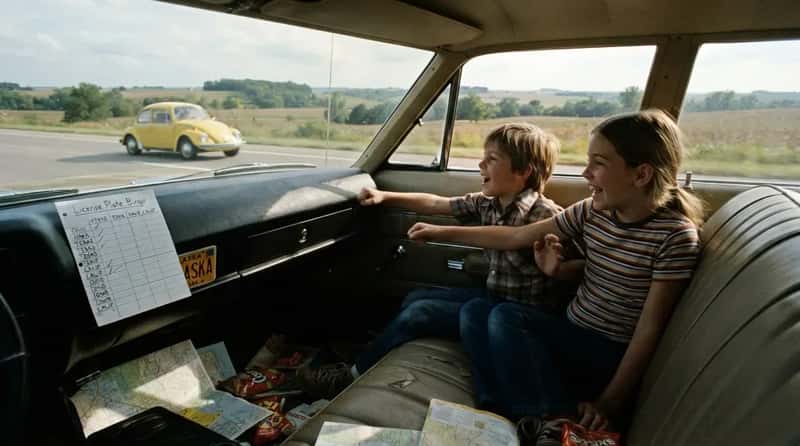
Long before phones existed to entertain bored kids, backseat games were mandatory survival tools. Punch Buggy turned every yellow Volkswagen into a minor family crisis, complete with disputed rules about how hard a punch was actually allowed.
License plate bingo stretched across state lines for entire summers, with some families keeping a running tally taped to the dashboard. Finding a plate from Hawaii or Alaska on a Midwest highway felt like winning the lottery. These games filled hours that today’s kids would spend staring at screens, and somehow nobody minded the boredom in between.
#13 – The 55 MPH Crawl That Made Everyone a Backseat Lawyer
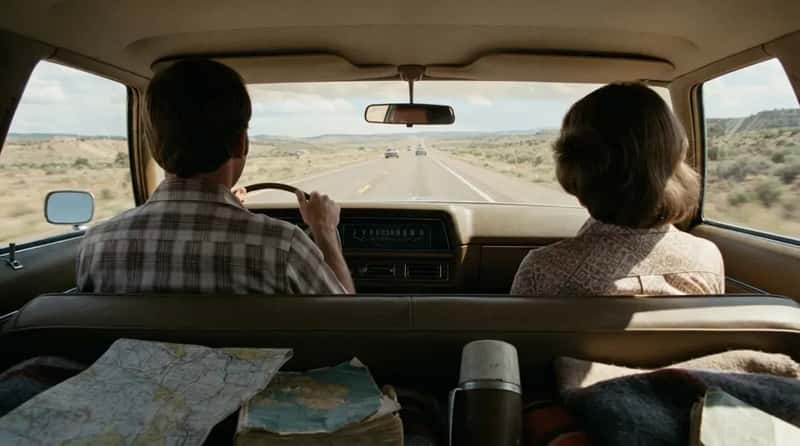
Nothing tested a 1970s family’s patience like the national speed limit. The 1974 Emergency Highway Energy Conservation Act had set a maximum of 55 miles per hour for passenger vehicles nationwide. Dad grumbled the entire trip, convinced he was losing hours of vacation to a rule nobody asked for.
Studies on compliance found the vast majority of drivers weren’t actually sticking to the limit, even with steep penalties on the books. Most families secretly cheated whenever they figured a state trooper wasn’t watching. Kids became lookouts, scanning the horizon for cop cars while parents debated whether five miles over even counted as breaking the law.
#12 – Stuckey’s Pecan Log Rolls as the Ultimate Bribe
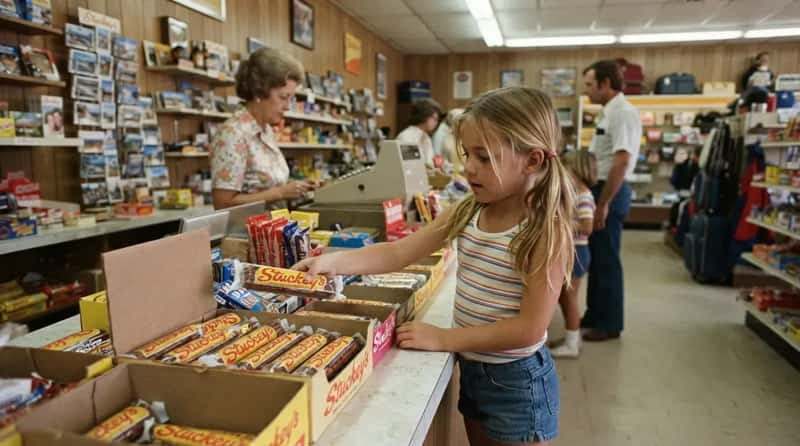
Stuckey’s roadside stores were less a pit stop than a checkpoint every family had to pass through. The candy-striped roof promised souvenirs, cheap sunglasses, and that unmistakable pecan log roll wrapped in plastic. Just spotting the sign from the highway could quiet a whole backseat.
Parents used a Stuckey’s stop as leverage for good behavior hundreds of miles before ever reaching one. Kids would negotiate an entire state’s worth of quiet time just for a shot at that candy counter. The stores dotted highways across the South and Midwest, turning a boring stretch of interstate into something worth behaving for.
#11 – No Air Conditioning Meant Wind-Whipped Hair Was the Only Relief
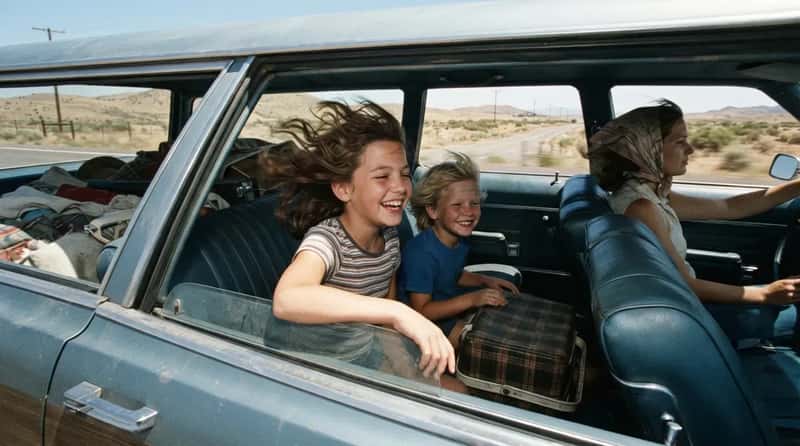
Plenty of 1970s family cars didn’t have working air conditioning, so the only relief on a summer trip was rolling every window down at once. Vinyl seats turned into skillets by noon, and kids learned fast to avoid touching bare skin to the door panel.
Wind roaring through an open car at 55 miles per hour made conversation nearly impossible, so families shouted or just gave up talking entirely. A wet washcloth kept in a cooler became the closest thing to climate control most families had. Somehow, sweating through a summer drive turned into one of the details people remember most fondly today.
#10 – The Cooler Wedged Between Everyone’s Feet
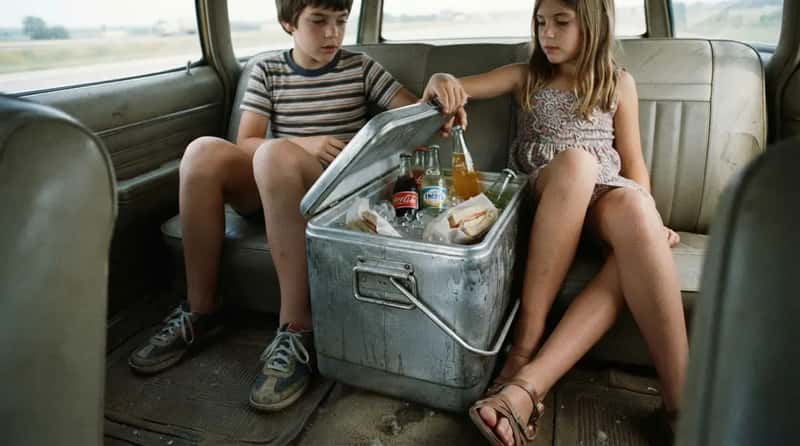
Fast food wasn’t the automatic default in the 1970s the way it is now, so most families packed a giant metal cooler stuffed with sandwiches, sodas, and melting ice. It sat wedged in the footwell, forcing kids to contort their legs around it for hundreds of miles.
Opening the lid released a blast of cold air that briefly interrupted the heat of a non-air-conditioned car. Warm soda by hour three was simply accepted as part of the deal. Running out of ice became its own small crisis, worth pulling off the highway to fix.
#9 – Howard Johnson’s 28 Flavors as the Nightly Reward
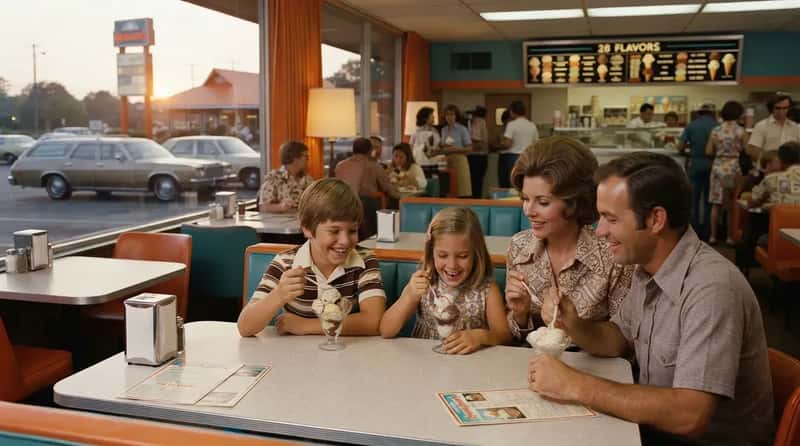
Howard Johnson’s orange roofs were a beacon on the interstate, promising a hot dinner and the famous ice cream counter boasting 28 flavors. Kids counted down the miles to the next one like it was a finish line, sometimes for hours.
Ordering ice cream became the nightly negotiation point, with siblings trading favors for first pick of flavor. Families often chose their entire overnight route based on which town had a Howard Johnson’s nearby. The chain’s orange-and-turquoise look became so recognizable that kids could spot one from the highway before the sign was even readable.
Why It Stands Out
- Throughout the 1960s and 1970s it was the largest restaurant chain in the country, with more than 1,000 combined company-owned and franchised locations
- The signature orange roof and cupola design made it recognizable from a moving car at highway speed
- The famous 28 flavors of ice cream became the chain’s defining marketing hook for generations of kids
- Many locations paired the restaurant with an attached motor lodge, so tired families could eat and sleep without leaving the parking lot
#8 – Postcards Mailed From Every Single Gas Station
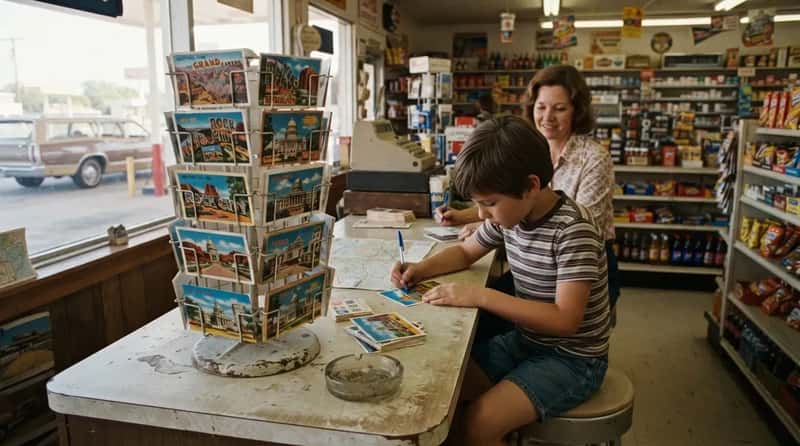
Long before social media, postcards were how families proved they’d actually gone somewhere. Gas station spinner racks were packed with cheesy images of roadside attractions, and kids picked their favorites to send back home.
Writing to grandparents or friends from a rest stop became a quiet ritual most parents insisted on. Some families mailed a postcard from literally every state they passed through, just to prove it happened. The shaky handwriting from a moving car and the race to see if the postcard beat the family home both became part of the memory.
#7 – The Motel Pool Sprint Before Bags Were Even Unpacked
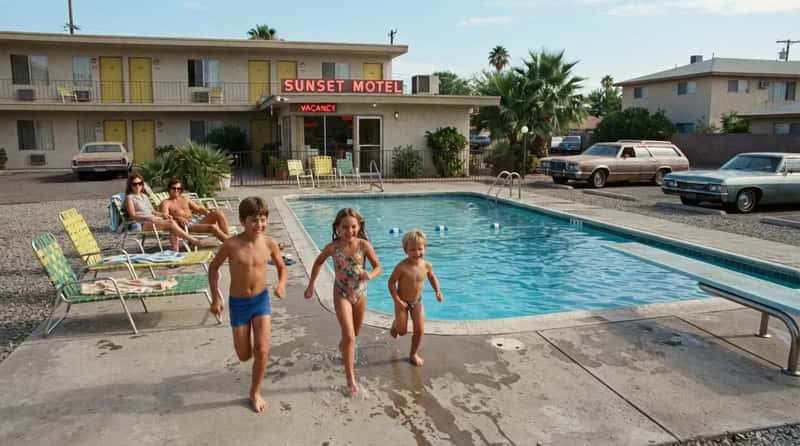
The second the car pulled into a motel parking lot, kids were already changing into swimsuits in the backseat. Bags stayed in the trunk while everyone sprinted for the pool, still glowing from the neon “Vacancy” sign out front.
Motel pools in the 1970s were rarely fancy, often just a rectangle of chlorinated water surrounded by concrete, but that never mattered. A pool with a working diving board could make or break which motel a family chose to stay at. Parents got their only quiet moment of the day watching from a lounge chair while kids swam until their fingers pruned.
#6 – Mad Libs and Travel Bingo Books Kept the Backseat Sane
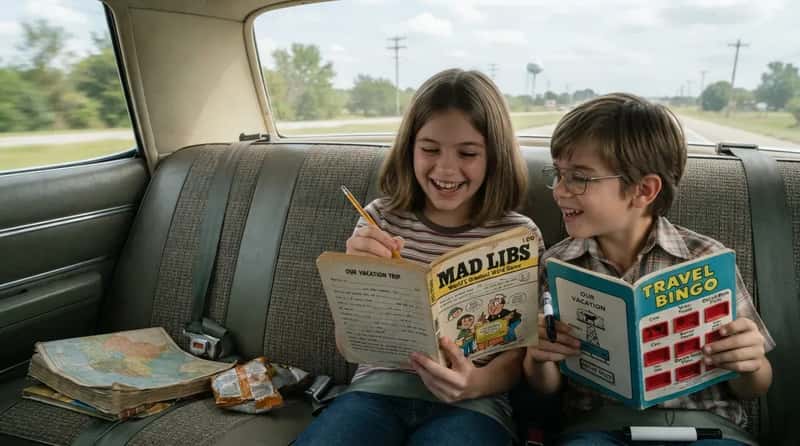
Paperback Mad Libs books were road trip currency, passed between siblings until the pages went soft from handling. One kid called out blanks, another filled them in without seeing the story, and the results were usually ridiculous enough to get read out loud twice.
Travel bingo books with pictures of cows, water towers, and out-of-state plates kept younger kids occupied for hours at a stretch. A single dog-eared Mad Libs book could survive an entire summer of family trips. These cheap paperbacks did the job screens do now, minus the batteries or the fights over a charging cord.
Quick Compare
- Mad Libs: Word-based and social, needed at least two kids working together, laughs came from absurd word choices
- Travel Bingo: Picture-based and solo-friendly, rewarded whoever spotted a rare item first
- Shared appeal: Both cost pocket change, needed no batteries, and could survive a spilled soda
#5 – Drive-In Restaurant Carhops as the Trip’s Big Splurge
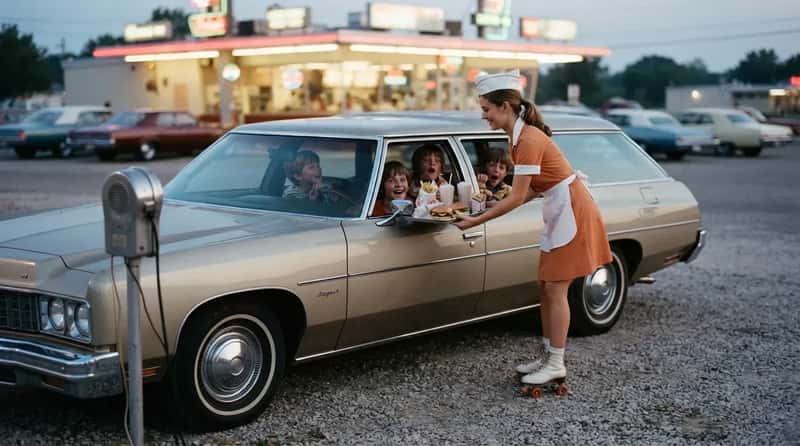
Stopping at a drive-in with carhops on roller skates felt like a genuine event, not just a meal. Kids pressed their faces to the window watching burgers and shakes glide over on a tray that clipped right onto the car door.
Ordering from the car speaker box was its own small thrill, with kids fighting over who got to press the button and shout the order. A drive-in stop was often saved as a reward for surviving a particularly long stretch of highway. The tray-on-the-window setup made the food taste better than it probably was, purely because of the show around it.
#4 – The 8-Track That Got Stuck on Repeat for Hundreds of Miles
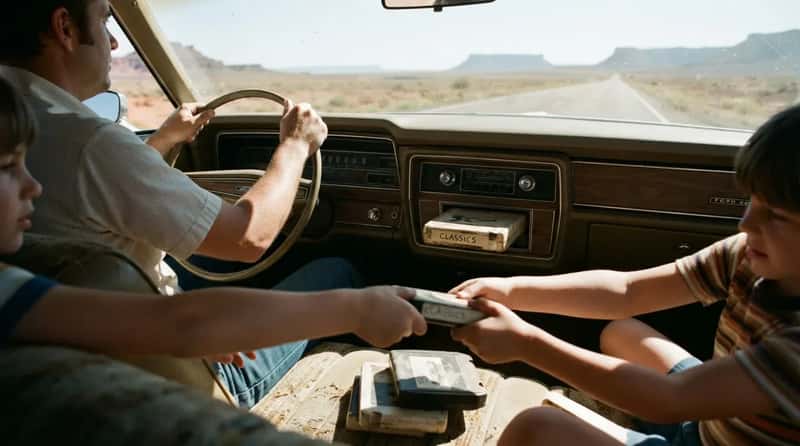
Every family had one 8-track tape that got played into the ground, whether or not anyone still liked it by day three. The tape’s infamous mid-song “click” as it switched programs became a sound kids of that decade never forgot.
Fights over which tape got played next were as common as fights over window seats. A single 8-track could loop for hundreds of miles simply because it was the only one anyone had thought to bring. Parents up front sometimes begged for silence, only to get outvoted by kids demanding one more replay of the same four songs.
#3 – The “World’s Largest” Roadside Detours Nobody Actually Regretted
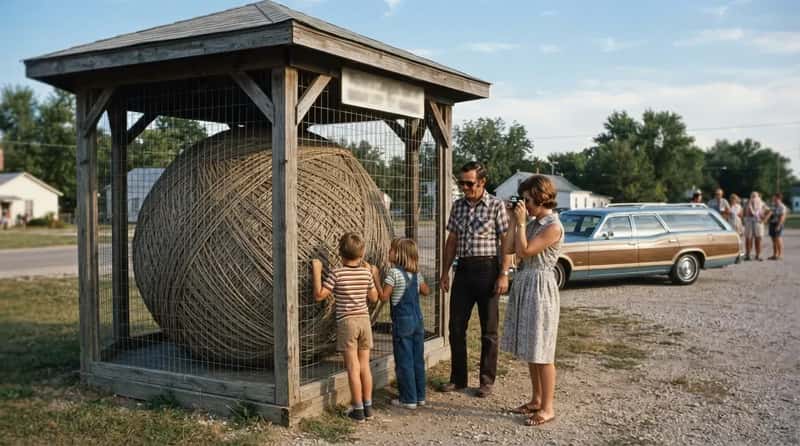
Billboards advertising the world’s largest anything, a ball of twine, a rocking chair, a thermometer, were basically an obligation to stop. Dad would groan about losing time, then still pull off at the exit every single time without fail.
These detours rarely lasted more than twenty minutes, but they became the stories families told for decades afterward. Many of these attractions still exist today, barely changed since the 1970s. Some travelers today call the stops a waste of a gas tank, but longtime road-trippers argue the detour was always the actual point of the drive, not the destination.
Worth Knowing
- Cawker City, Kansas’s famous ball of twine started as one farmer’s habit in 1953 and is still growing today thanks to visitors adding their own twine
- Many roadside giants were built specifically to pull highway traffic off the road and into small-town main streets
- Some of these attractions now draw an annual crowd for community events built entirely around the oddity itself
- Plenty of these stops have outlasted the decade that made them famous, still standing along the same highways today
#2 – Camping Under the Stars at a KOA
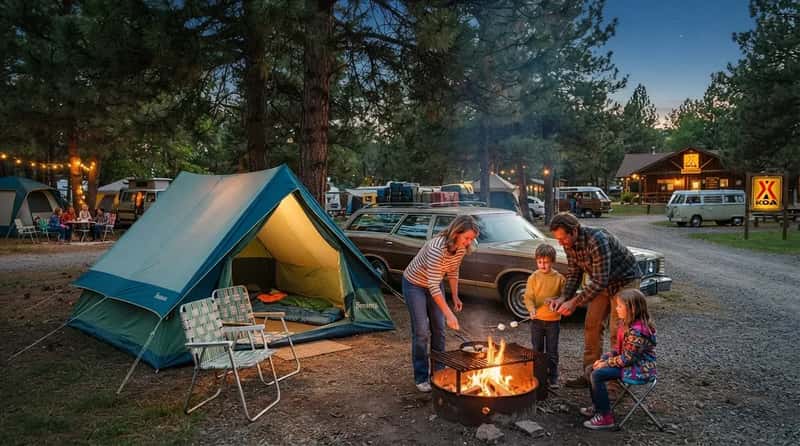
For families who couldn’t afford motels every night, a KOA campground was the fallback, and often the unexpected highlight of the whole trip. Setting up a tent as a team, cooking over a campfire, and hearing crickets instead of traffic felt like a completely different kind of vacation.
Campground pools, playgrounds, and shared bathhouses turned strangers into temporary neighbors for a single night. Kids often remember these campground nights more vividly than any motel stay from the same trip. The simplicity of a sleeping bag on hard ground somehow beat air conditioning and a real mattress, according to plenty of grown-up former road-trip kids.
#1 – The “Are We There Yet” Chant That Somehow Never Got Old
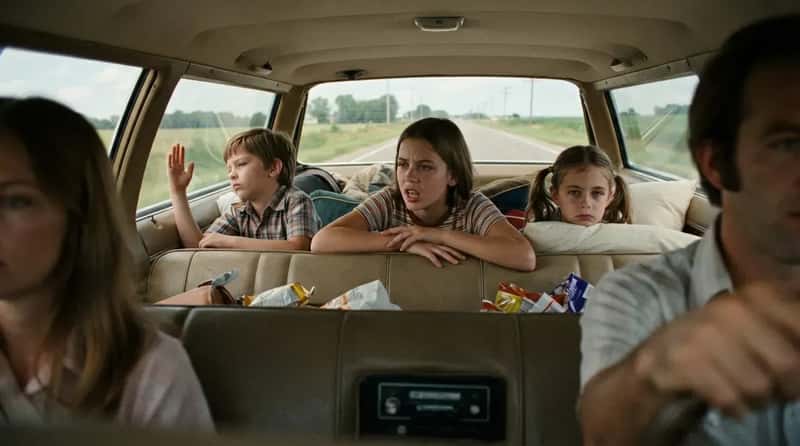
No ritual defined the 1970s family road trip more than the relentless chorus of “are we there yet” from the backseat. It started an hour into the drive and never really stopped, no matter how many times a parent answered.
Parents developed elaborate deflection tactics, promising a Stuckey’s stop, starting a game, or simply turning up the 8-track louder. The phrase became such a universal joke that entire families still repeat it decades later as an inside gag. It wasn’t annoying so much as it was the heartbeat of the whole trip, the thing that made everyone feel like they were in it together, mile after restless mile.
Looking back, none of these rituals were designed to be memorable. They were just how families got from one state to another with limited money, no technology, and a car full of restless kids. And yet those unplanned, slightly chaotic moments, the pecan log bribes, the CB handles, the pool sprints, are the exact details people still bring up at reunions fifty years later.
Maybe the lesson isn’t that road trips were better back then. It’s that boredom, a little friction, and zero distractions forced families to actually be present with each other. What’s the one road-trip ritual from your childhood that nobody would believe today? Drop it in the comments.