Yes, a few things really do come free once you hit 62, but they aren’t the ones most people picture. Nobody slides a free breakfast across the lodge counter. The federal Senior Pass doesn’t cover food or lodging, and most lodge deals are percentages off, not freebies.
The twist is that the best-known “freebie” isn’t free, and the biggest discount can get refused at the exact desk where you’d use it. The most generous deal on this list doesn’t involve a bed at all. Some of these perks are one question away at check-in, and others only work if you live in the right state. Here’s the countdown from #17, with the sneakiest ones saved for last.
#17 – The “Free” Gate Pass That Costs $20 (or $80) Up Front
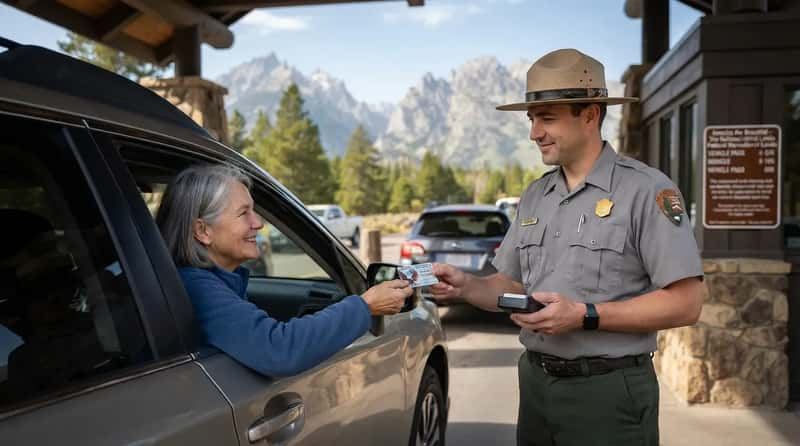
It’s sold as the great gift of turning 62, and it isn’t free. U.S. citizens and permanent residents age 62 and older pay $20 for an annual Senior Pass or $80 for a lifetime one. Many big-name parks charge $30 to $35 per vehicle at the gate, so the card can pay for itself in just a few visits.
Plenty of lodges sit on or beside federal land, so this is often the first “free” thing you’ll actually use. But it opens the gate, not your room door, and it does nothing to your nightly rate. You’ll need proof of age and of citizenship or residency to get one.
#16 – Everyone in Your Car Gets In Without Paying Too
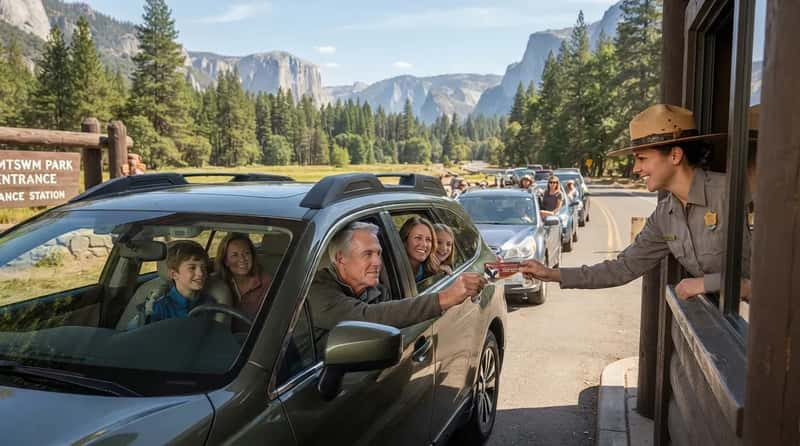
One senior card can carry a whole back seat. At sites that charge per vehicle, the pass covers the holder and everyone riding in the same vehicle. A younger spouse, a friend or a carful of grandkids rolls in on your card without another dollar changing hands.
At sites that charge per person, the rule shifts: the pass admits the holder plus up to three additional adults. Kids under 16 get into federal sites free anyway, so the real value goes to the grown-ups in your group. On a lodge road trip with the whole family, that’s money that never leaves your wallet.
#15 – Four $20 Passes Quietly Turn Into a Free Lifetime Pass
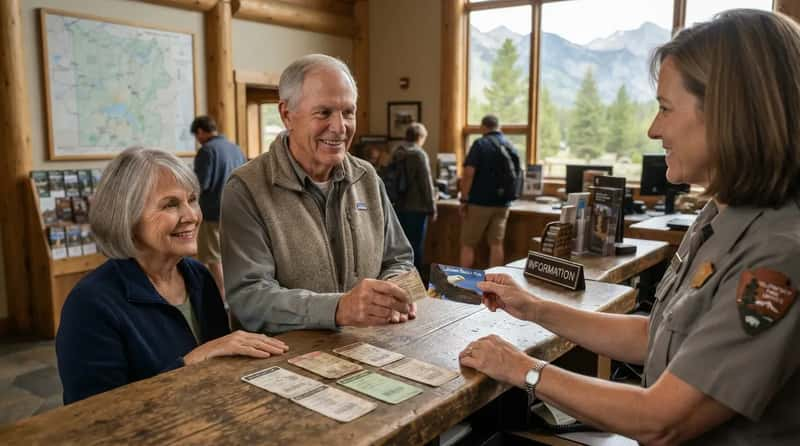
Here’s the loophole that makes people grin. Each annual Senior Pass you turn in takes $20 off the $80 lifetime price, even if the annual has expired. Trade in four and the lifetime pass costs nothing extra.
That’s why the card in your junk drawer matters. Annual passes you’ve already thrown away can’t be traded in, so keep every one, even the expired ones. It quietly rewards the people who weren’t sure they’d keep visiting, and then did.
#14 – The 50% Camping Cut That Is Not Actually Free
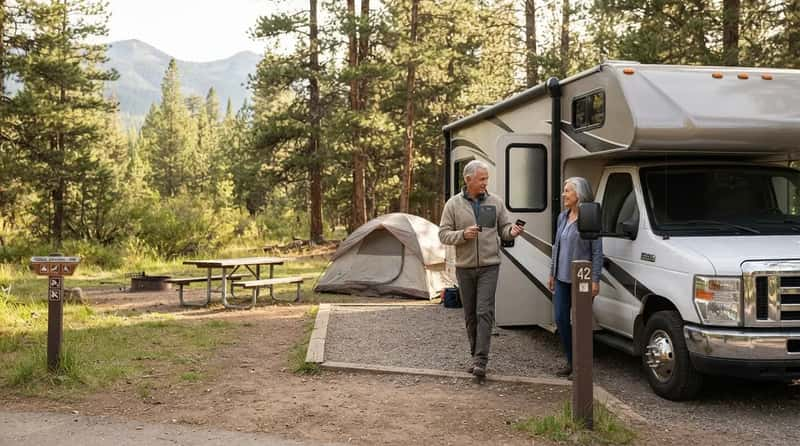
Half off sounds like a jackpot until you read the fine print. The federal card may provide a 50 percent discount on some amenity fees, such as camping, swimming and boat launches. The word “some” does a lot of work in that sentence, because not every site qualifies.
Lodge guests who also tent-camp or park an RV nearby get the most out of it. A federal campsite can drop to half price, yet the same pass does nothing for a room key. It’s worth knowing about, just not the free ride the word “senior” suggests.
At a Glance
- Annual Senior Pass: $20. Lifetime Senior Pass: $80.
- Open to U.S. citizens and permanent residents age 62 and older.
- Entrance fees are covered, and some amenity fees drop by 50%.
- Private concessioner fees generally fall outside the discount.
#13 – Specialized Ranger Programs Can Be Half Off, Not Free
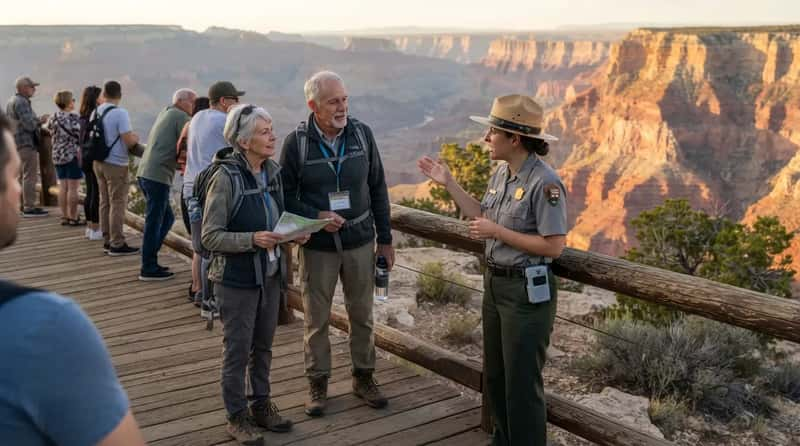
Ranger programs sound like the perfect senior perk, and the truth is a little smaller. Plain ranger talks are often free for everyone anyway, so seniors aren’t getting a special gift there. The pass can reduce fees for specialized interpretive services, according to the National Park Service, and that’s where the half-off lives.
The catch is who’s running the tour. The Senior Pass generally doesn’t cover fees charged by concessioners, so a private tour company inside a park can still charge full price. Ask before you book whether the park itself runs the program.
#12 – The Park Lodge Where Your Senior Card Hits a Wall
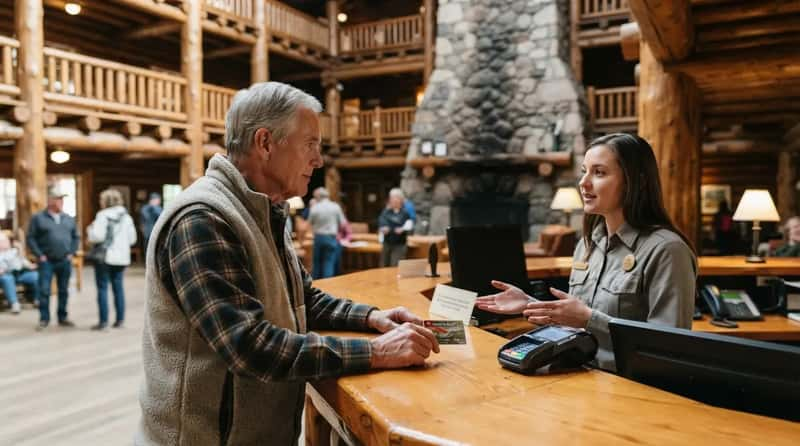
This is the moment that stings. Many in-park lodges are run by private companies, and the 50% discount usually doesn’t apply at concessionaire-run sites, like Aramark’s in Yosemite or Xanterra’s in Death Valley. Even Yellowstone’s lodging page limits the pass to campgrounds, with a 50% discount at Bridge Bay, Canyon, Grant and Madison.
So the card that glided you through the entrance gate can be politely refused at a lodge desk a few miles later, inside the same park. It’s a gap that catches plenty of hopeful travelers off guard. One question prevents it.
#11 – Tennessee’s Lodge Discount Also Comes With Dinner
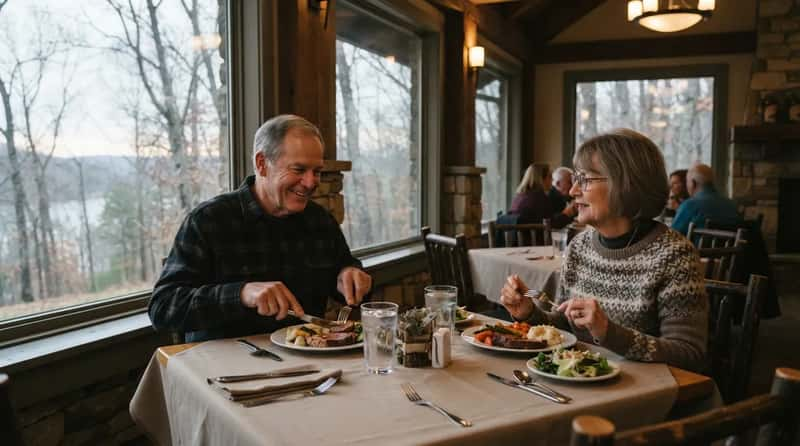
Few states pair a room deal with a restaurant deal. Tennessee State Parks says seniors 62 and older may receive 10% off a state park lodge stay and 10% off a restaurant meal. It’s a discount, not a freebie, but it trims two of the biggest line items of a trip at once.
An older fee page described bigger seasonal rates: 25% off lodge rooms from March through November and 50% from December through February at certain lodges. Premium rooms were excluded, and those terms may have changed, so confirm before you book. If the winter rate still holds, a half-price room with a view of bare trees is a pretty good deal.
#10 – Kentucky Hands Out 10% Without Making a Fuss
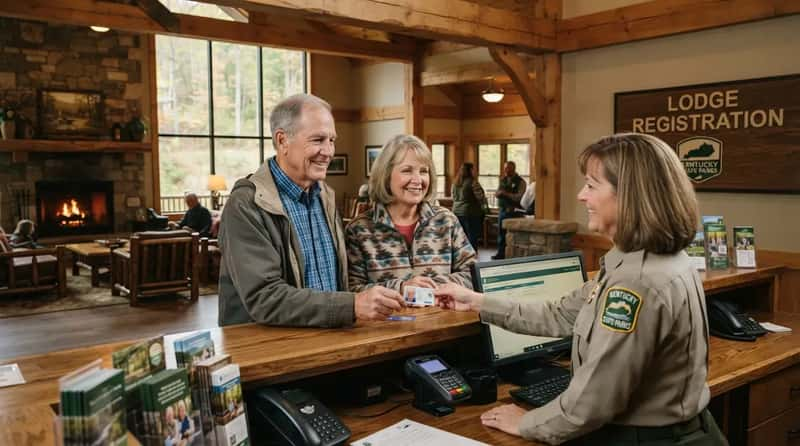
Some discounts exist only if you open your mouth. Kentucky State Parks lists a 10% discount on eligible lodging and camping for seniors 62 and older. Another roundup describes 10% off for eligible seniors who stay overnight in a Kentucky state park.
It’s modest, and nobody at the park is likely to mention it before you check out. Say your age when you reserve, and bring ID. Over a few nights, even 10% can cover a good dinner.
Quick Compare
- Kentucky: 10% off eligible lodging and camping at age 62+.
- Tennessee: 10% off a lodge stay, plus 10% off a restaurant meal.
- Alabama (next up): 15% off overnight stays, applied daily.
#9 – Alabama’s 15% Is One of the Bigger Percentages Around
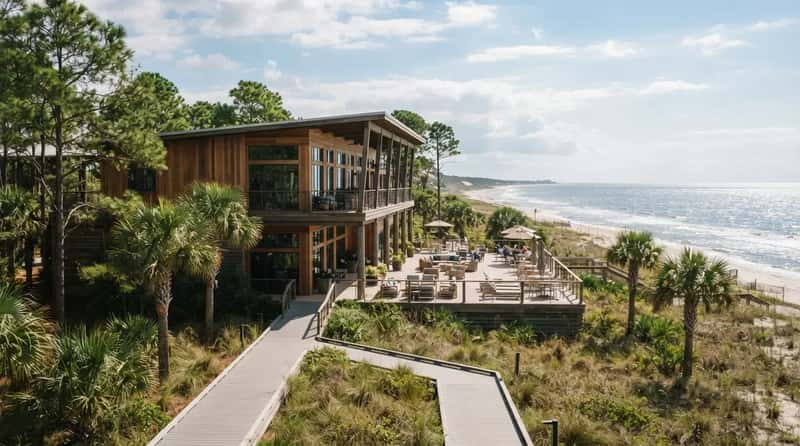
A coastal lodge stay can cost noticeably less after 62. Alabama State Parks offers a 15% daily discount on overnight accommodations for seniors age 62 and older. A roundup says that includes Gulf State Park, right on the Gulf Coast.
Because the discount is daily, a longer stay gets cheaper every night, not just once. State policies change, so check the current terms when you book.
#8 – Oklahoma Rewards Seniors Who Travel on Weeknights
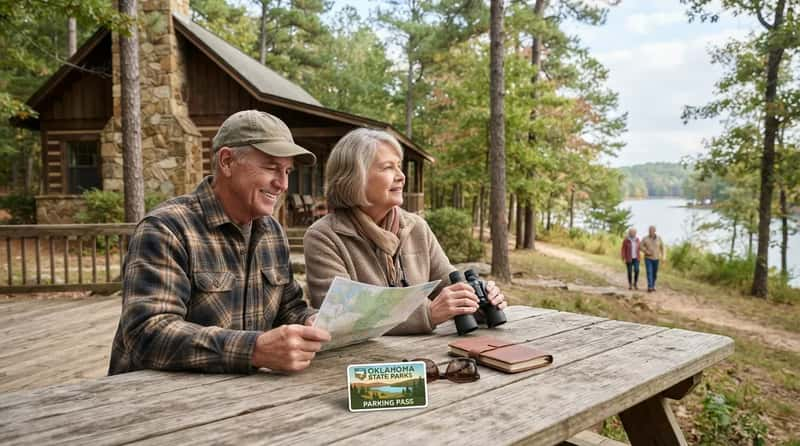
Your calendar can matter more than your birthday. Oklahoma lists a 10% discount on lodge rooms and cabins Sunday through Thursday nights, excluding holidays, during peak season, and on any night in the off-season. A summer weekend stay doesn’t qualify.
There’s also a real freebie hiding here, but it’s for locals. Oklahoma residents 62 and older and their spouses can receive a free state parks parking pass. That one actually costs nothing.
#7 – New York’s Free Weekday Gate Is a Rare True Freebie
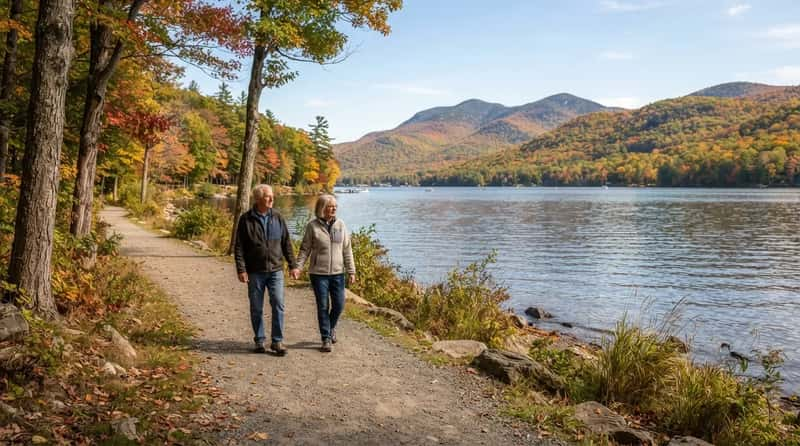
This one really is free, if you live there. New York’s Golden Park Program lets residents 62 or older into state parks at no charge on non-holiday weekdays. No lodge room gets discounted, but it saves money on every day-use visit around your stay.
The catch is residency and the weekday rule. Out-of-state visitors don’t qualify, and holiday weekdays are excluded. A Tuesday walk by the water can cost nothing, while the same walk on a Saturday won’t.
#6 – Louisiana’s $3 Gate Is Free for Seniors Who Know to Ask
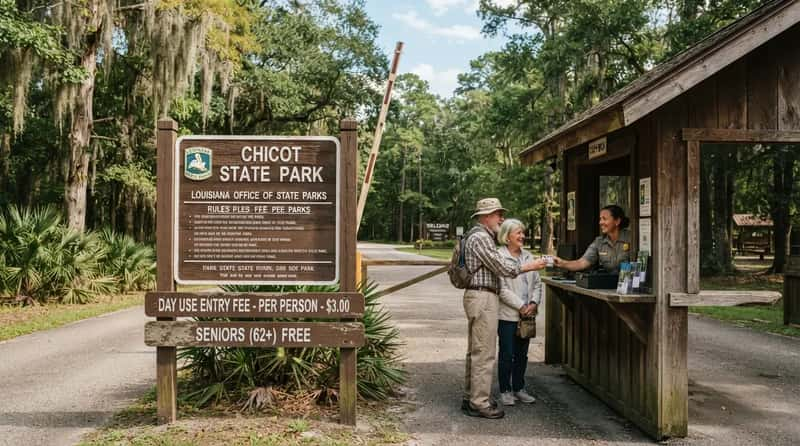
The saving is small, but it’s real. Louisiana State Parks lists day-use entry at $3 per person, free for seniors 62 and older. Walk up with ID in hand and the gate fee disappears.
The bigger prize is a program called 62PLUS, which offers a 50% discount off campsite stays for customers 62 and older. Three dollars won’t change your budget. Half-off camping can, if you’re staying more than a night or two.
#5 – California’s Senior Perk Is $1 Off (Yes, Really)
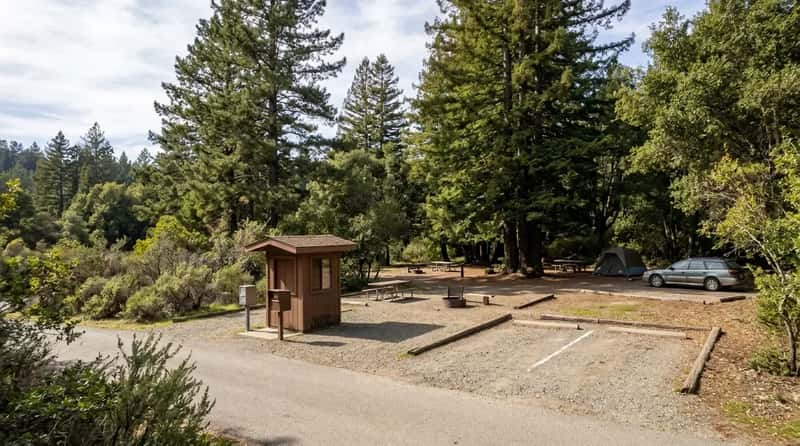
Is a one-dollar discount even worth mentioning? California State Parks gives visitors 62 and older $1 off vehicle day use and $2 off per night for family camping at most state-operated units. That’s the full list.
Given what lodging costs in California, it’s arguably the most underwhelming senior perk on this list. It’s real, but it won’t move the needle on a trip budget.
#4 – North Carolina Skips the Percentage and Takes $6 Off
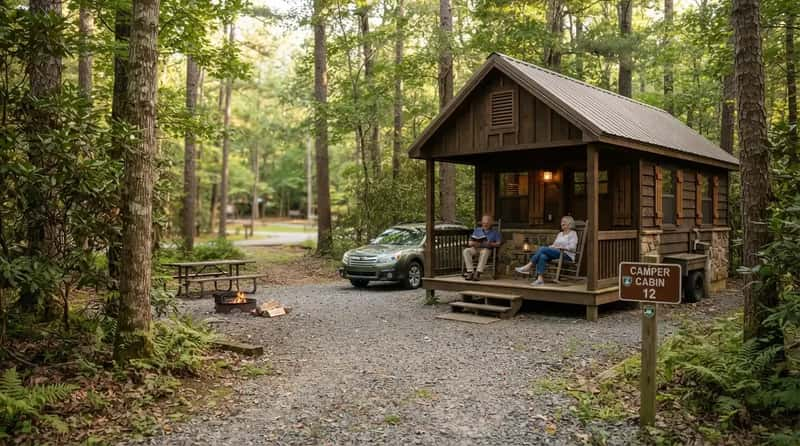
A flat-dollar discount works differently from a percentage. North Carolina offers $6 off per night on certain campsite reservations for seniors, veterans and military, with seniors needing to be 62 or older. It applies to camper cabins only in some cases.
The word “certain” matters here. Some cabins are excluded entirely, so check the fee page before you count on the savings. On a cheap campsite $6 is a real chunk, but on a pricey cabin it barely registers.
#3 – Maryland’s $10 Lifetime Card Is the Cheapest Deal on the List
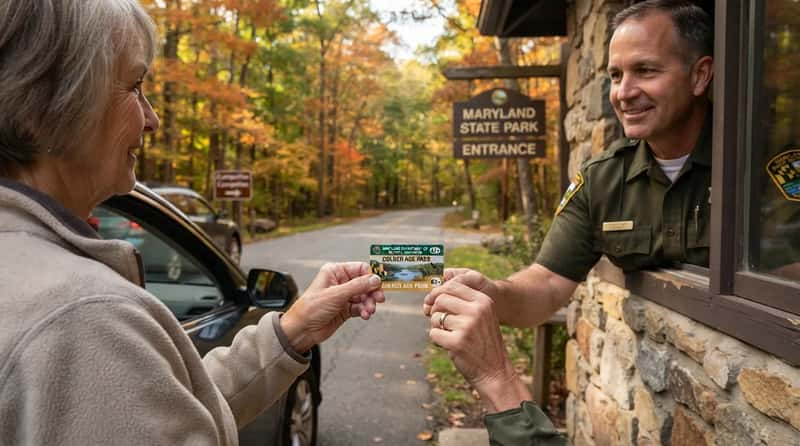
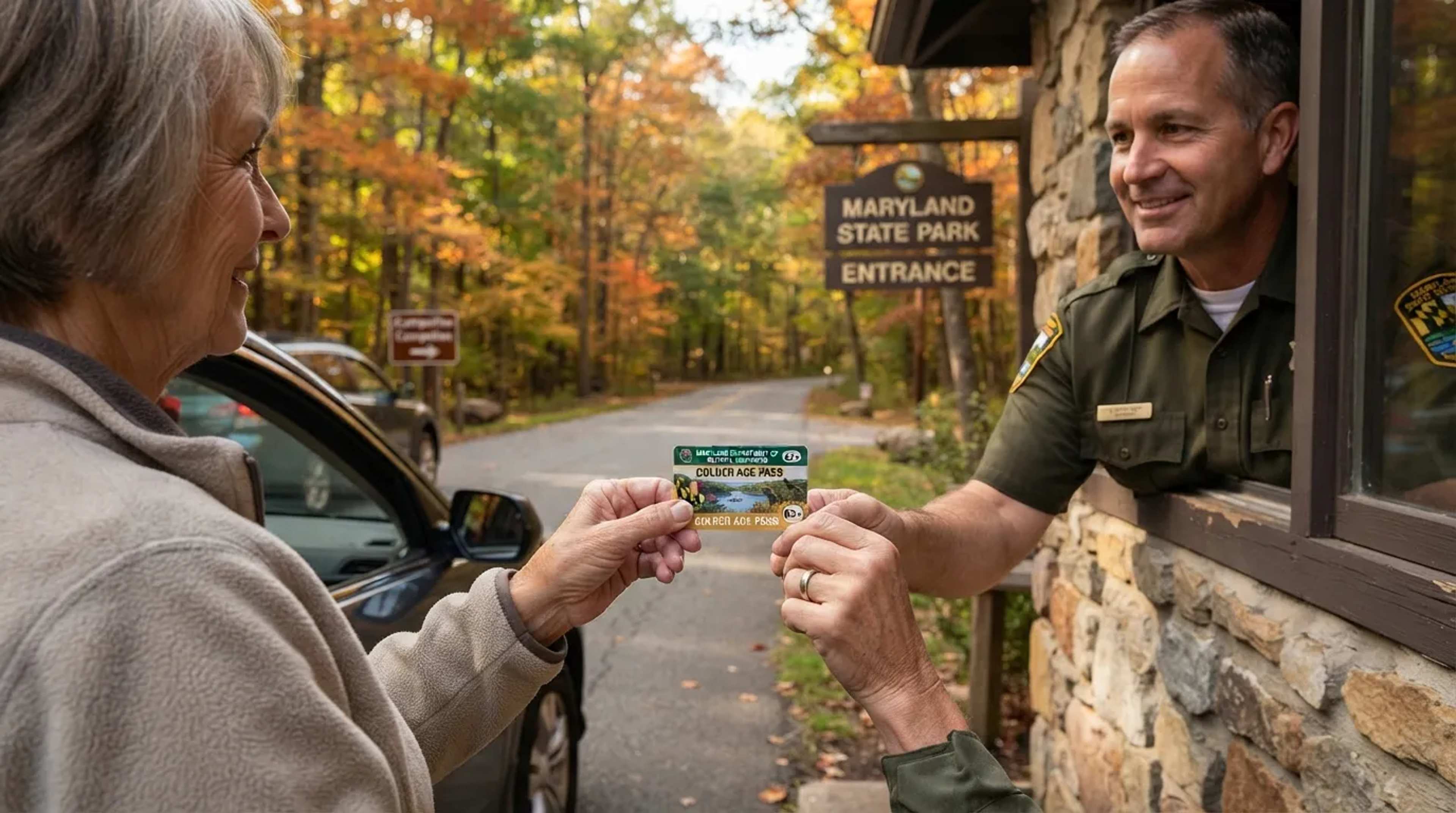
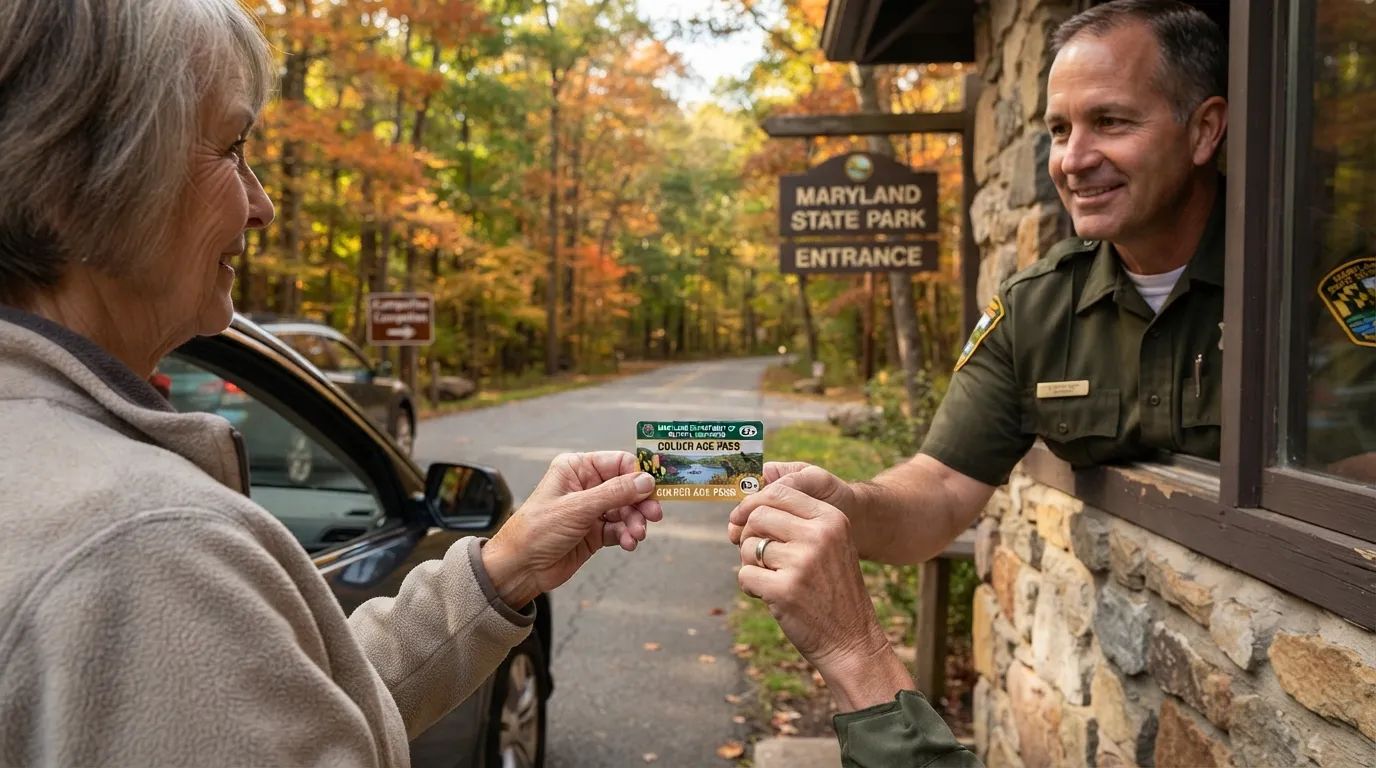
Ten dollars, once, for life. Maryland’s Golden Age Pass is listed at $10 for people 62 and older. Reported benefits include free access to state parks and 50% off camping on Sunday through Thursday nights.
That’s a fraction of the federal pass price. But the state version only works in state parks, so it won’t help at a federal lodge. Check Maryland’s current eligibility rules before you count on it.
#2 – Washington’s Income-Based Pass Includes Free Day-Use Parking
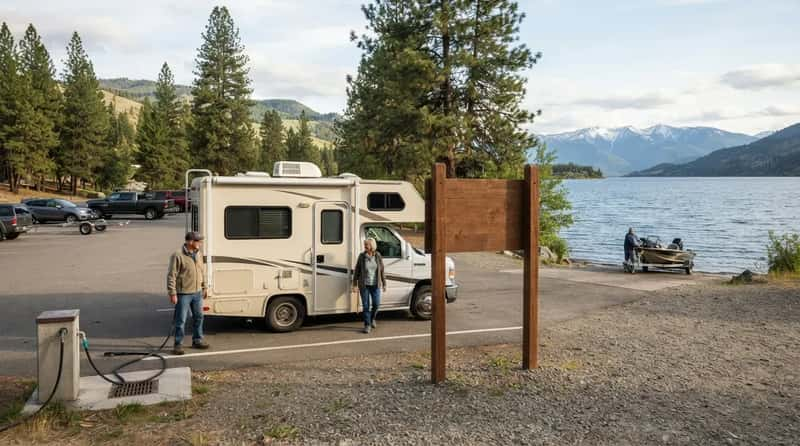
Not everyone qualifies, but those who do get real value. For people 62 and older with a household income of $40,000 or less, the Senior Citizen Limited Income Pass gives 50% off standard camping and moorage. It also includes free day-use parking, boat launches and trailer dump services.
That list matters for RV owners, because free dump services are a perk many people never think to look for. Eligibility details can change, so check with Washington State Parks. And the biggest freebie on this list is in the same state.
Fast Facts
- Age: 62 or older.
- Household income cap: $40,000 or less.
- Discount: 50% off standard camping and moorage.
- Free extras: day-use parking, boat launches and trailer dump services.
#1 – Washington’s Off-Season Pass Means Six Straight Months of Free Nights
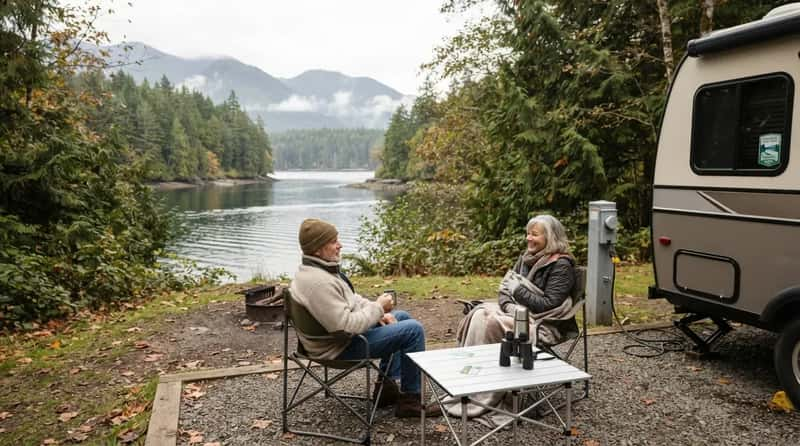
This is the biggest true freebie on the list. For anyone 62 and older, the Off-Season Senior Pass offers free camping and moorage from October 1 through March 31, plus weekday nights in April. It also gives access to $10-per-night electric hookups at campsites that offer them. Check Washington State Parks for current pass terms before you plan around it.
It covers camping, not lodge rooms, so it isn’t quite a lodge perk. But six months of free nights beats every percentage deal here. Cold-weather camping isn’t for everyone, yet the price is hard to argue with.
So no, lodges rarely hand anything over for free to guests over 62. The federal Senior Pass handles the gate, and percentage discounts of 10% to 15% are the norm at state lodges. The genuine freebies are mostly entry fees, parking passes and off-season camping, and many depend on residency or income. Private concessionaires inside national parks often fall outside the deals entirely.
The best senior perk at most lodges is still the cheapest one: asking, “Do you have an age discount?” before you hand over your card. Sometimes the answer is no. Sometimes it’s the first thing you’ve gotten for free in years.