You probably think a gate agent’s job starts when they pick up the microphone. It doesn’t. While you’re hunched over your phone beside the charging pole, a screen behind the podium may already be sorting you: who can be moved, whose bag is at risk, and who is next in line for an empty seat.
So yes, the title is right. A lot gets decided before anyone says a word. But the surprise isn’t that agents are judging you. It’s how little of it is personal, how much is a clock and a rulebook, and which small habits the agents notice anyway. One of the later items has nothing to do with status, and it may change how you act at your next gate.
#17 – Your Name Is Already Sitting Next to Codes You’ll Never See
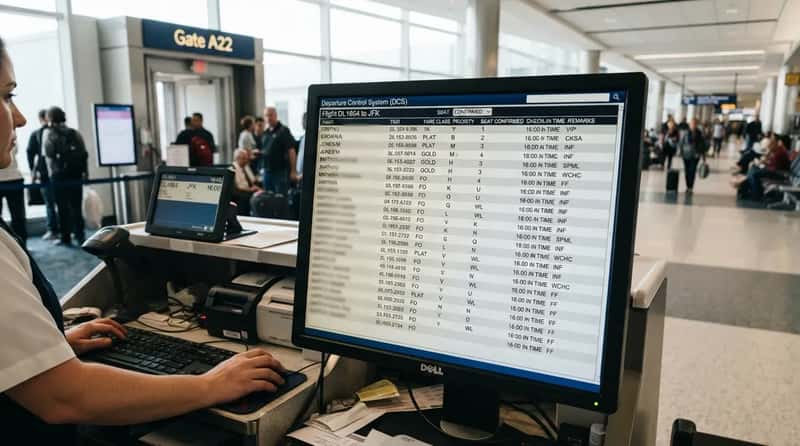
Before you reach the podium, the agent has already seen a version of you that you can’t see. Airlines keep upgrade priority lists inside their departure control systems. Frequent flyer tier usually sits at the top. Below that, a flexible or full-fare ticket generally outranks a deeply discounted one. The airline is protecting revenue it has already banked.
At a Glance
- Elite status tier usually carries the most weight.
- Fare type comes next: flexible tickets tend to beat deep discounts.
- Travelers on the same record can be tied together.
- Remarks and notes vary by airline and by system.
The monitor you see at the gate is a simplified picture. Frequent-flyer forum posts describe an agent’s screen with extra notes, such as a remarks column for things like a medical situation. That’s an informal account, and each airline’s system differs. Still, the pattern is clear: you’re a row of data before you’re a face. But the first thing agents judge by eye isn’t your status. It’s what you’re dragging behind you, and that’s #16.
#16 – The Bag That Gets Judged From Thirty Feet Away
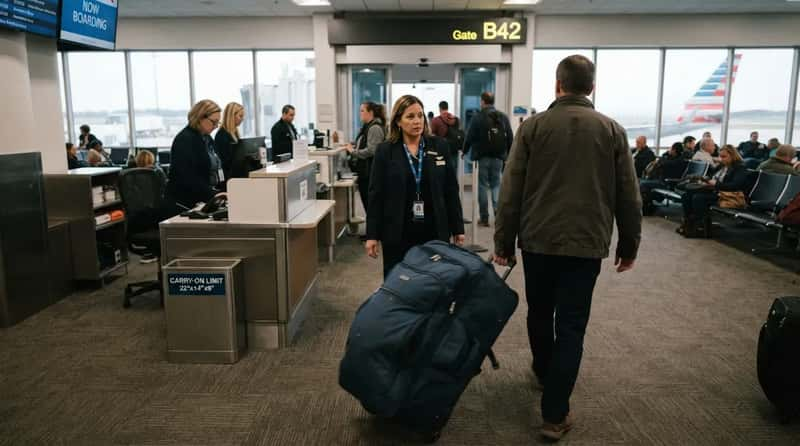
Agents often spot the problem bag before its owner reaches the boarding lane. They don’t need a tape measure. They watch how the bag is carried, how hard it’s being shoved forward, and whether the zipper is losing the fight.
The limit is clear on paper. Several major U.S. airlines list 22 x 14 x 9 inches as the standard carry-on size, wheels and handles included. In practice, enforcement often comes down to the agent’s eye. A “personal item” that bulges like a loaf of bread is the one that gets noticed first.
But a bag can be perfectly legal and still get taken, because of a number printed on your boarding pass. That’s #15.
#15 – The Boarding Group Number That Decides Whose Bag Gets Taken
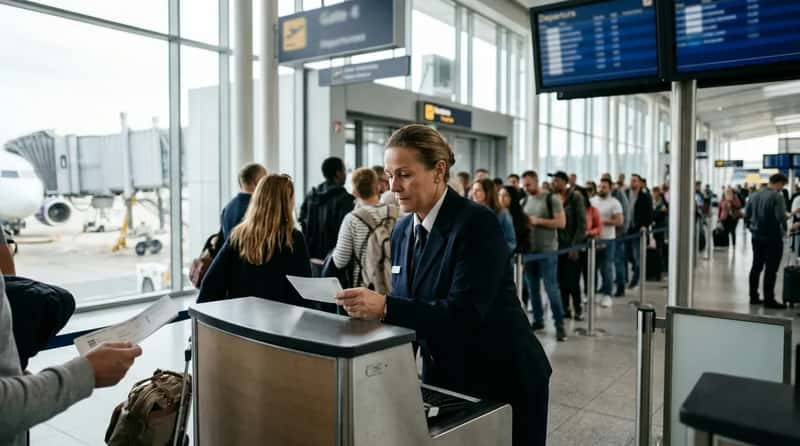
Your group number can matter more than your bag’s size. One travel site reports that gate agents start asking passengers to gate-check carry-ons somewhere around Group 8, because overhead bins are usually full by then. The agents are playing the odds. They aren’t looking at the bins.
That’s why some travelers board to a surprise. One viral Reddit post described being forced to check a bag, then finding half the overhead bins empty. A Delta spokesperson has said the airline asks customers in later boarding groups to check bags so earlier boarders will likely find open space. Critics call it a trick. Defenders call it crowd control. Either way, the decision was made about your group, not about you. But some passengers try to dodge the system entirely, and agents have a plan for them in #14.
#14 – The Passenger Who Tries to Board Out of Turn Gets Remembered
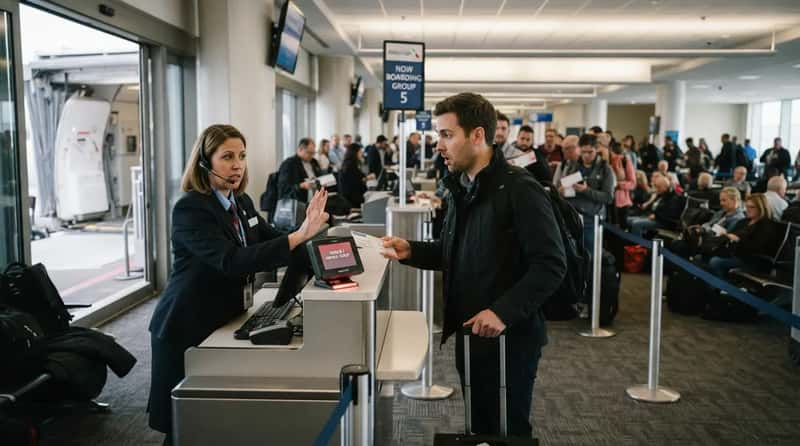
Skipping the line feels harmless until the scanner beeps. American Airlines has tested technology that sounds an audible tone when someone scans a boarding pass before their group is called. One widely shared account describes an agent warning that early boarders would have their carry-ons sent to the cargo hold.
Then there’s the hovering. Many travelers believe standing near the desk protects their overhead bin space. Plenty of agents would say it does the opposite. Your boarding group decides when you board, not how close you stand. The crowd at the podium is one of the most pointless rituals in air travel, and the agent still has to talk over it.
But the next quiet judgment is about who you’re traveling with, and it can decide your whole day. That’s #13.
#13 – Solo Travelers Are Quietly the Easiest to Move
Traveling alone makes you more flexible in the system’s eyes. When economy is oversold or a seat has to be freed, most airlines work down a priority list. Loyalty tier comes first, then fare class, then whoever is easiest to move, which often means a solo traveler.
Groups tend to be kept together. Companions on the same record locator can be added to the airport upgrade list based on the highest-priority traveler. That means the family of four in line isn’t competing with you on equal terms. A solo passenger with a flexible schedule is exactly who agents ask first. That’s not personal. It’s math.
But your ticket type can quietly remove you from the list altogether, as #12 shows.
#12 – The Fare Type That Locks You Out of Standby
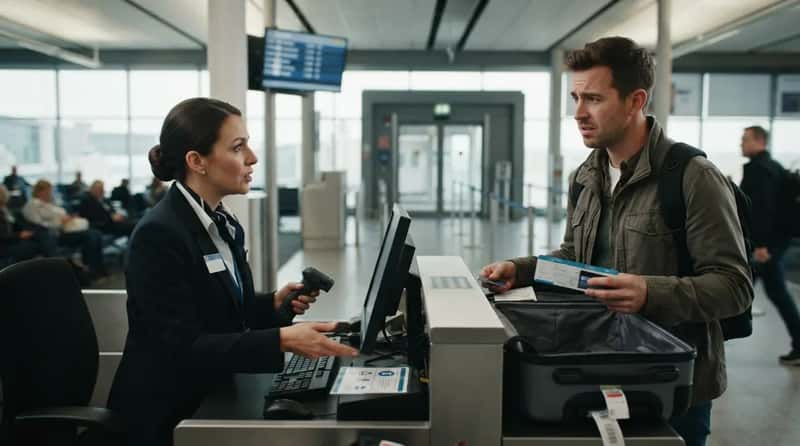
The cheapest ticket often comes with the quietest limits. One airline-travel explainer says many carriers exclude basic economy ticket holders from standby, regardless of loyalty status. You may never see a sign saying so. You find out when you ask.
The gate is also where basic fares can get pricey. Some carriers charge extra at the gate when a basic fare doesn’t include the bag you’re holding, and the agent is the one who collects it. They didn’t invent the rule, but they enforce it. Fare class tells them who has flexibility and who doesn’t, sometimes before a word is spoken.
Even so, nothing outranks one thing on the list, and it’s #11.
#11 – Your Status Tier Does the Talking
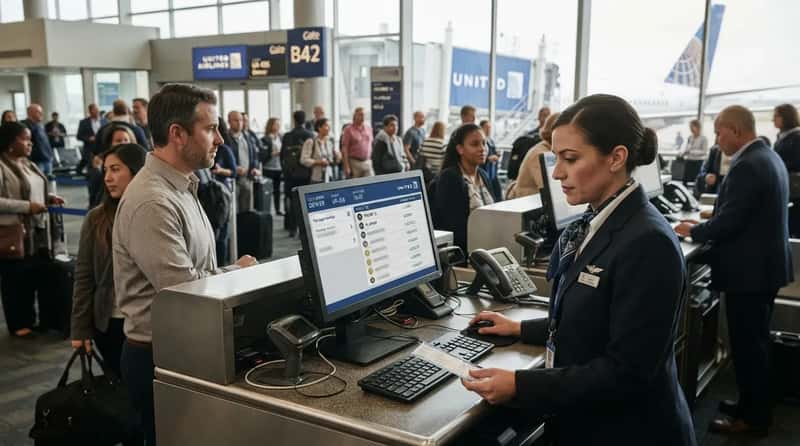
Loyalty status is the loudest signal in the system. United’s published upgrade order runs through Global Services, PlusPoints and upgrade awards, Premier status, fare class, cardmember tiers, then request time. Notice where “asked nicely” falls: nowhere.
The gate is often the second stage, not the first. United’s system processes upgrade requests until about three hours before departure, then gate agents take over. At American, upgrades to empty seats can clear automatically about 40 minutes before departure. The agent doesn’t even have to get involved. If a premium seat opens late, gate agents may come onboard to offer upgrades to the next people on the list.
That raises the question everyone asks: does dressing the part change any of this? Look at #10.
#10 – The “Dress Up for an Upgrade” Myth, Quietly Debunked
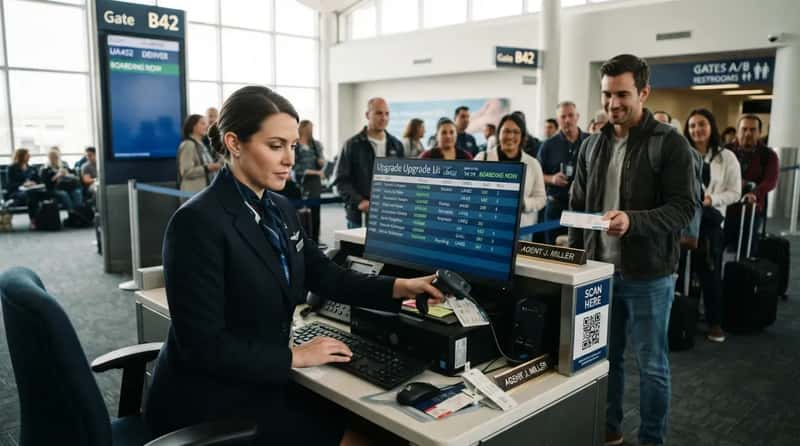
Most people believe a blazer and a smile move you up the list. The truth is less flattering. No airline lists clothing, jewelry or a birthday as an upgrade criterion, and the agent is usually working from a system-generated list.
Quick Compare
- The myth: a polished outfit and a big smile bump you ahead.
- The list: status, fare class and request time set the order.
- The gray area: agents may have a little wiggle room, but it isn’t policy.
Agents do sometimes have a little wiggle room. One frequent flyer’s account describes a gate agent who skipped over him and upgraded the next four passengers on the list. The same writer wondered whether agents ever go out of order to help someone with a sob story. That’s speculation, not policy. The list is usually the list. Your outfit isn’t on it. But the gate has a second list that runs on different logic, and it’s #9.
#9 – The Standby List Is Cleared by Hand, Not by Magic
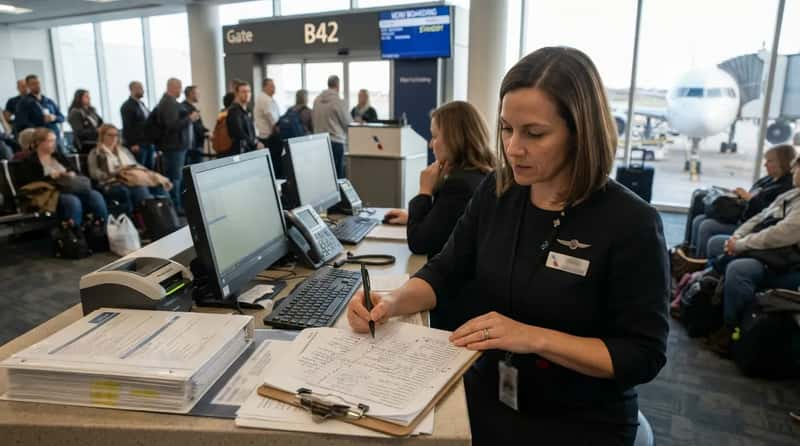
Upgrades often clear automatically, but standby is more hands-on. Not everyone on the list actually shows up, so agents may have to call names and confirm people still want the flight. Miss that call and you can be skipped.
The ranking isn’t simply first come, first served. One guide says airlines weigh fare class, frequent flyer status and check-in time. Passengers who lost their original flight through no fault of their own are often given priority. Everyone else waits behind them.
And yet there’s one group that jumps the line without even asking, and #8 explains why.
#8 – The Missed-Connection Passenger Who Jumps the Line
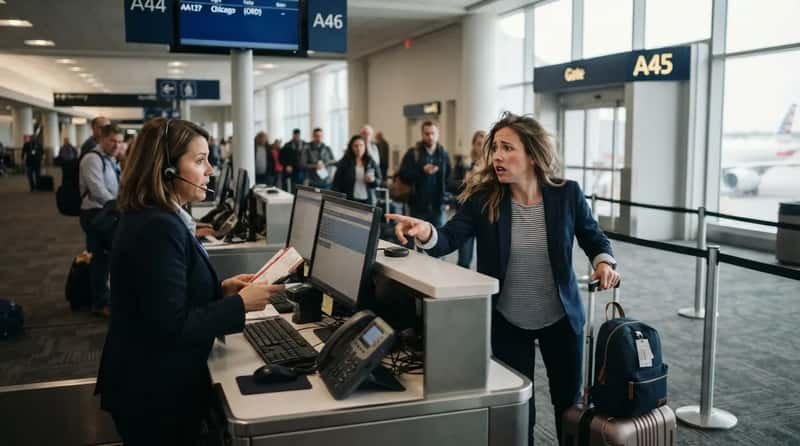
Not every passenger on the standby list is treated the same. A traveler whose last flight was canceled or overbooked is a different case from someone who just wants an earlier flight home. Standby priority has historically been tied to status, check-in time and travel disruptions, though how much each factor counts varies by airline.
That’s why the agent glances at why you’re there, not just that you are. Agents have limited room to improvise, and travelers with genuine urgency, such as a missed connection, can sometimes ask for consideration. The key word is “sometimes.” Still, the traveler sprinting in from a delayed flight often gets treated more urgently than the person who’s simply bored. The harder decision arrives when the flight is oversold, and that’s #7.
#7 – Who Gets Asked to Give Up a Seat Long Before You Hear the Announcement
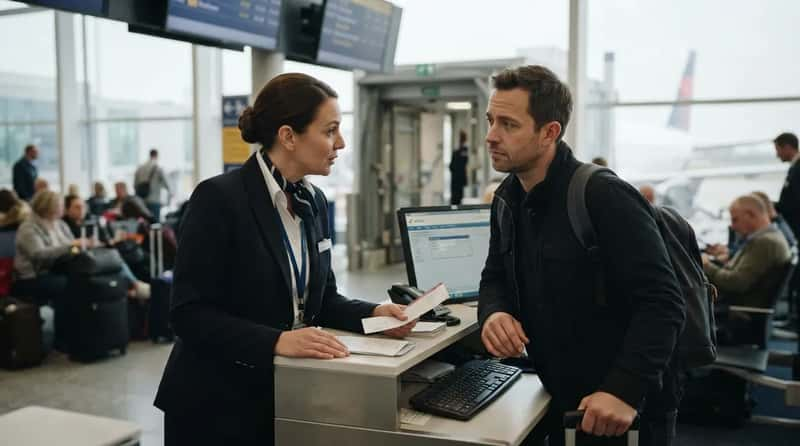
On an oversold flight, the agent’s first move is required by federal rules. Carriers must ask for volunteers before bumping anyone involuntarily. The announcement you hear is often step one of a plan that was quietly drawn up earlier.
The stakes can be real. Involuntarily bumped passengers with short delays generally get double their one-way fare, capped at $1,075. Longer delays pay four times the one-way fare, capped at $2,150. Carriers are expected to tell you about that compensation rather than wait for you to ask. Volunteers often negotiate for more.
But some passengers never get as far as the seat map, because of what an agent notices at the podium. That’s #6.
#6 – The Red Flags Agents Spot Before You Say a Word
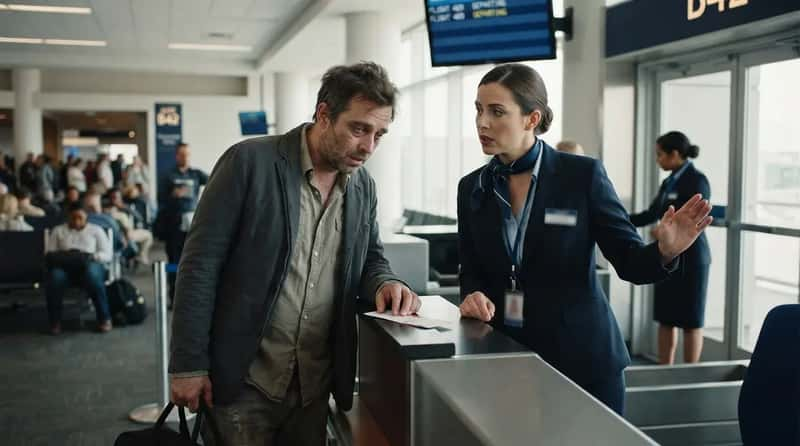
An agent can refuse to board you without any ticket problem at all. Airlines can refuse travel over behavior or intoxication. Federal aviation rules also bar airlines from letting a person who appears intoxicated board.
Fast Facts
- Federal rules also bar airlines from serving alcohol to anyone who appears intoxicated.
- Slurred speech, unsteady walking and an aggressive tone are the usual tells.
- Being refused for behavior is a different category from an oversold bump.
- The call is about cabin safety, not seats or status.
Agents learn to read the little signs. Slurred speech, unsteady walking, or an aggressive tone can all get a passenger pulled aside. That decision often happens before you’ve scanned your pass. It’s one of the few calls that isn’t about seats or status at all. It’s about safety, and about the agent’s responsibility for the whole cabin. But another kind of problem stops people cold at the door, and it’s #5.
#5 – The Document Check That Ends Trips at the Podium
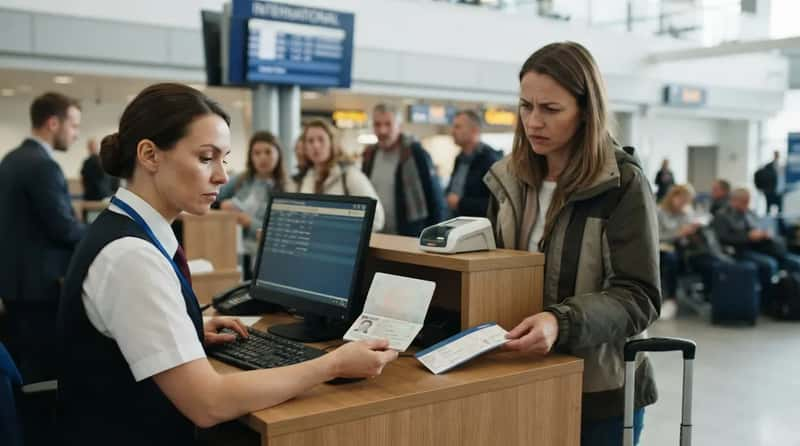
On international flights, the agent isn’t just a seat-giver. They’re a checkpoint. A passport that’s expired, a missing visa, or a name that doesn’t match the ticket can end a trip right there, long before the plane is open for boarding.
Agents are strict because airlines can face government penalties for flying passengers who lack proper documents. That puts pressure on the agent to say no, even to a sympathetic traveler. Agents often can’t override a rule that carries a fine for the airline. The traveler stuck at the desk is often as frustrated as the person waiting behind them. The next judgment is a quieter one, and it’s #4.
#4 – The Passenger Who Needs Help Gets a Quiet Flag
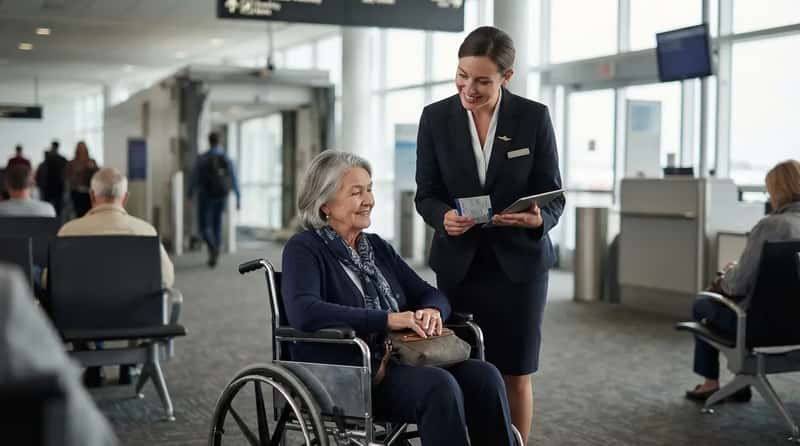
Passengers who need assistance are often flagged in advance. A wheelchair request, a mobility need, or a note on the record can show up in the system before the person ever arrives. That helps the team plan before the gate gets crowded.
Federal law requires airlines to provide assistance and pre-boarding on request. The agent’s real job is timing. Pre-boarding lets those passengers get settled before the aisle fills up. When a flight is running tight, agents have to juggle those needs against the clock. It’s one of the quieter forms of triage at the gate, and it rarely gets credit. But another seat-by-seat decision could involve you directly, and it’s #3.
#3 – The Exit Row Question You Didn’t Know You Were Being Asked
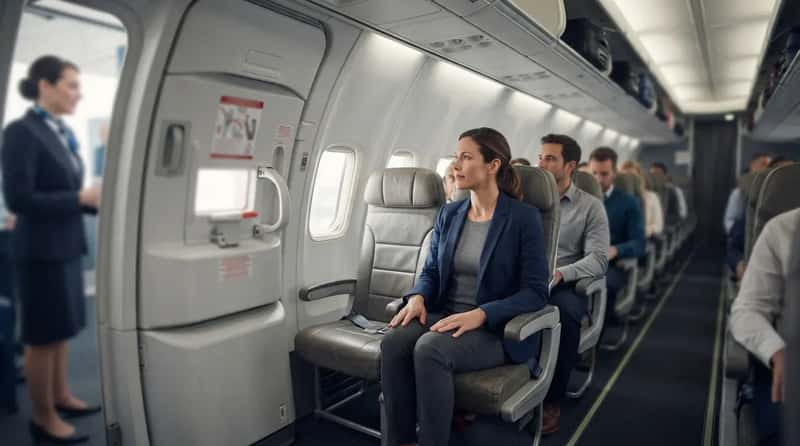
That extra legroom comes with a job. Exit-row passengers must be willing and able to help in an emergency. If an agent has doubts, they can reseat you. That includes passengers who can’t understand the instructions or physically can’t open the door.
Most travelers treat exit-row seats like a perk. Agents see them as a safety assignment. A passenger traveling with a young child or who needs assistance can’t sit there, even if they paid for the seat. It can be a surprise at the gate, but the rule exists for a reason. The final two are the ones that can end your trip, and #2 comes down to a clock.
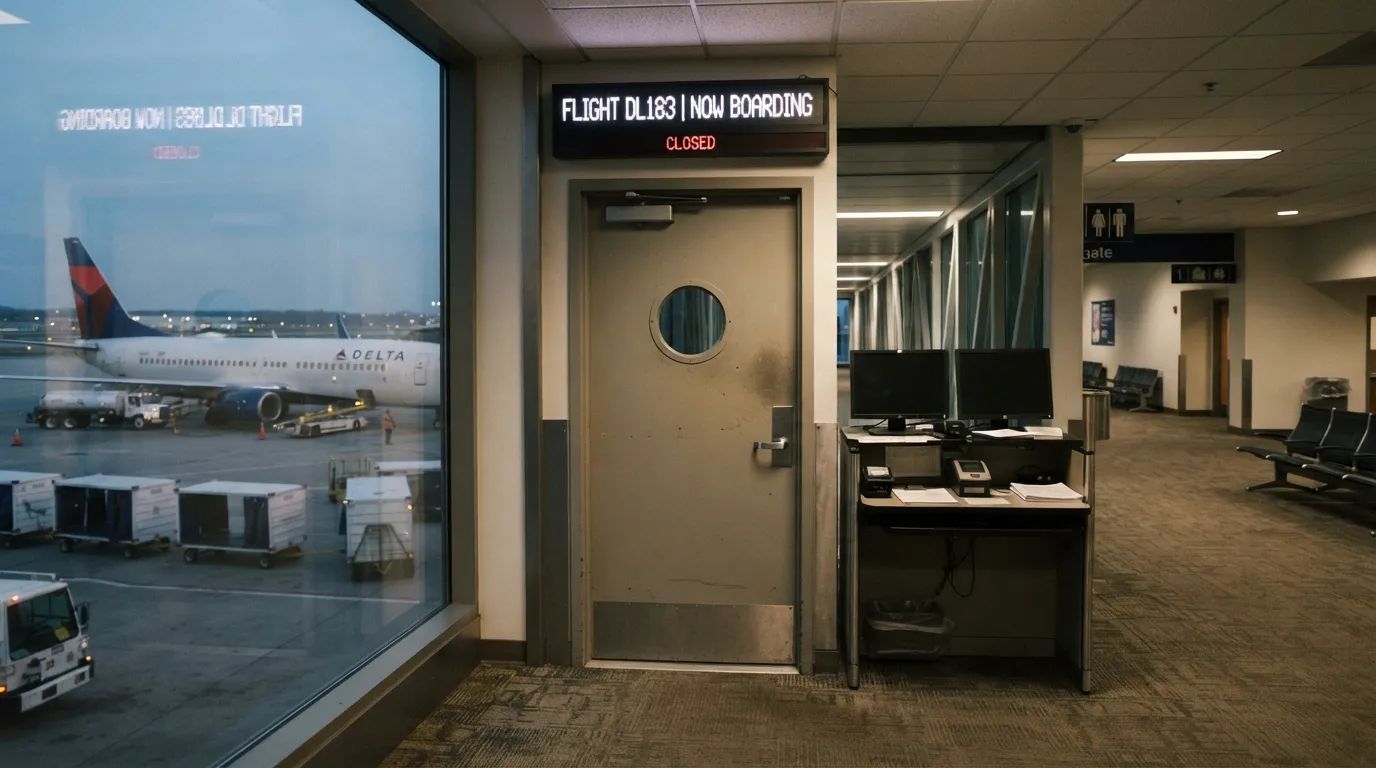
#2 – The Silent Countdown That Starts Before You Even Show Up
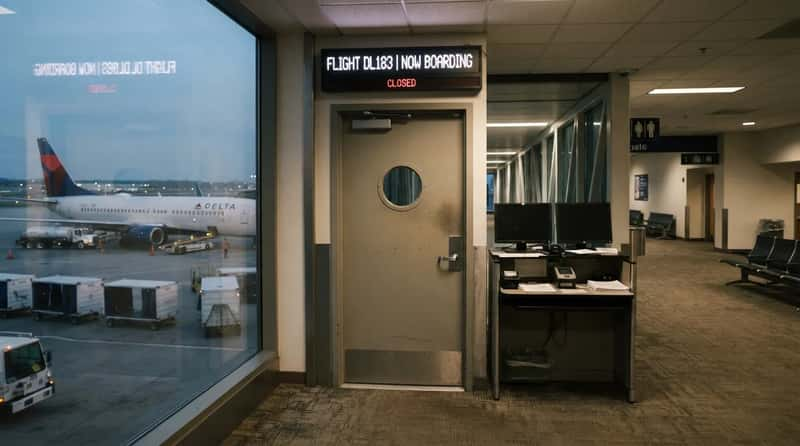
Agents know exactly when the door closes. Many airlines shut it roughly 10 to 15 minutes before departure, though the exact cutoff varies by airline. After that, your seat can be handed to someone else.
That’s the real reason some passengers get left behind with a boarding pass in hand. A late arrival can be treated as a no-show, and the seat can go to standby. Even the standby side has tight windows. One guide says American’s airport listing window ends at least 45 minutes before departure. The agent isn’t being cold. They’re working against a pushback time that matters to the airline. But the last item has nothing to do with seats, and it might be the most important of all. It’s #1.
#1 – How You Sound When the Plan Breaks Is the Verdict That Sticks
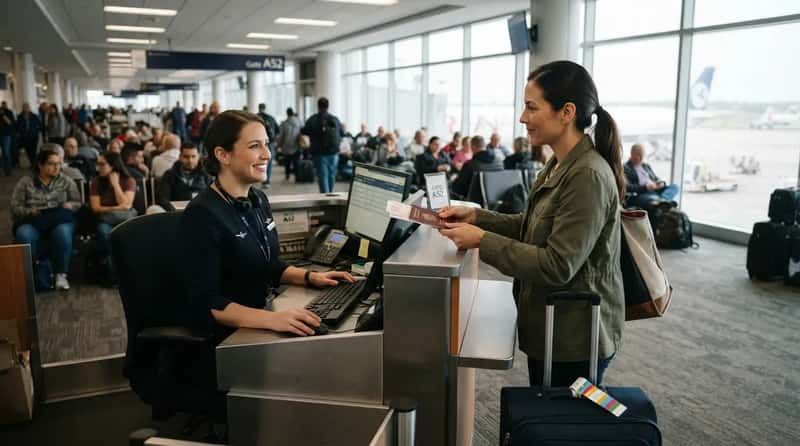
The quietest judgment of all is about tone. Agents face delays, rebookings, and angry crowds all day. They have limited room to reshuffle things, but when a close call comes up, they often lean toward the person who’s easy to work with. One report says gate agents are told to use judgment and err toward the customer on close calls about bags.
Courtesy won’t override a priority list. We saw that in #10. But it can change what happens in the gray areas. The friendliest treatment often goes to passengers who offer to gate-check before anyone asks. The passenger who stays calm and asks once is the one agents remember kindly. The agent can’t fix the plane, the weather, or the bins. They can only decide how hard to work for you.
Worth Knowing
- Tone can’t move you up a priority list, but it can help in gray areas.
- Offering to gate-check a bag before being asked often goes over well.
- Asking once, calmly, tends to land better than asking five times.
- Agents can’t control weather, aircraft or bin space.
The biggest surprise is how much is decided by the system, not the person behind the desk. Status, fare type, boarding group, and check-in time quietly rank you. Behavior, documents, and the door-close clock can end a trip. Most of what feels like an agent’s mood is really a screen, a clock, and a rulebook.
So the next time you’re stuck in a gate crowd, remember that the line you’re standing in matters less than the one you’re already on.