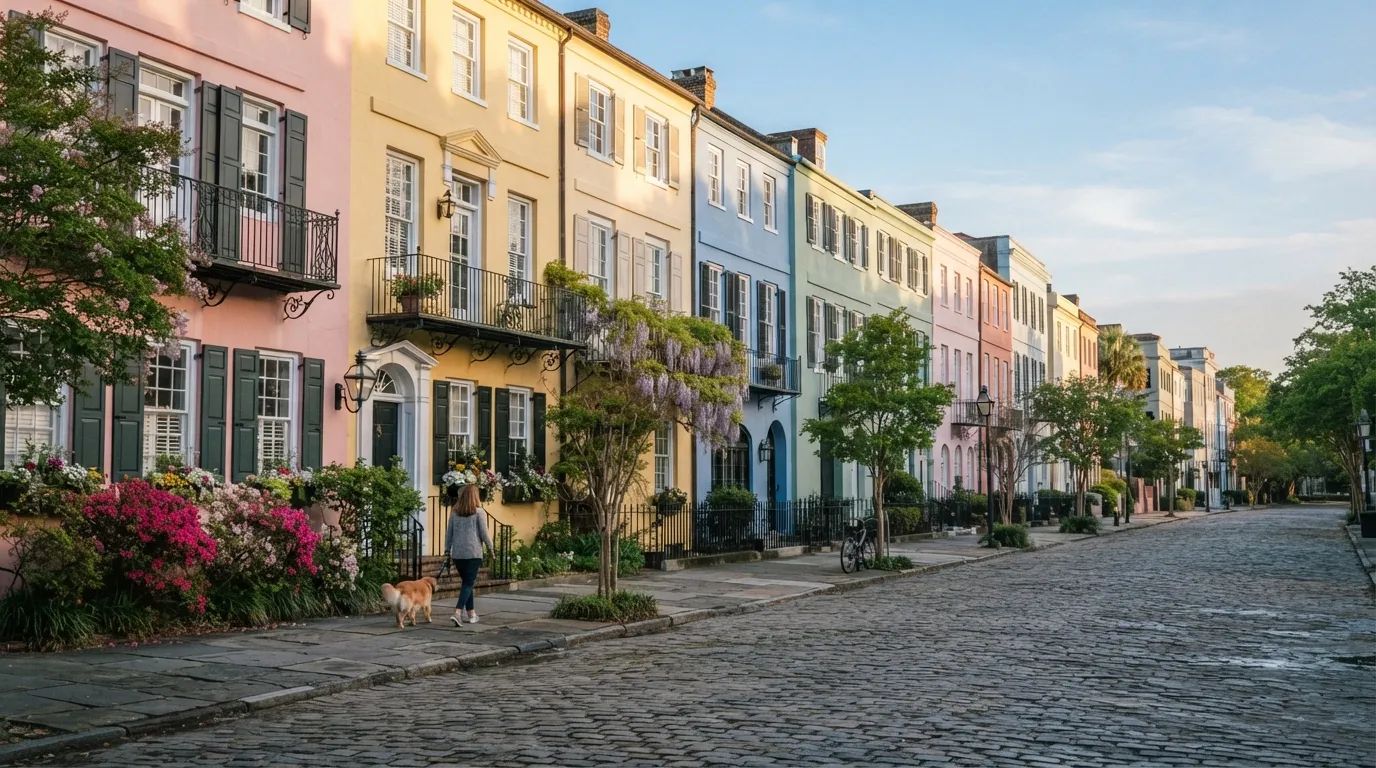
You picture a slow, pastel-colored Southern weekend: blooming gardens, carriage rides, one long and lazy dinner. Then you land in Charleston in spring and meet the real version. It has a yellow-dusted rental car, a dinner wait measured in weeks, and a hotel bill that looks like a typo. The city really is a postcard, but the logistics behind it tell a different story, and the details below come from local guides and the city’s own notices.
Some of these surprises are just annoying. A few could rearrange your whole trip. And one of them has nothing to do with weather, crowds, or money, which is why the countdown saves it for the end.
#17 – The Yellow Film That Takes Over Your Car, Your Porch, and Your Photos
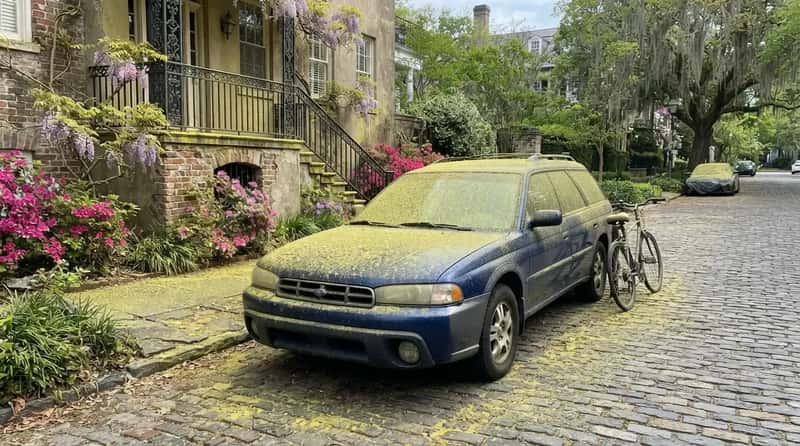
Spring in Charleston comes with a coating. Locals know that pollen peaks in spring, and yellow dust settles over porches, cars, and cobblestones for several weeks. One travel guide says the pollen is heavy enough to turn parked cars yellow.
The catch is timing. The sneezing season lines up with the exact weeks everyone is taking bloom photos. Allergy medication shows up as a standard tip in spring planning guides, right next to restaurant reservations, so pack it before you need it.
But a yellow car is cheap compared to what the hotel will charge you…
#16 – The “Perfect Weather” Surcharge Nobody Mentions in the Photo Captions
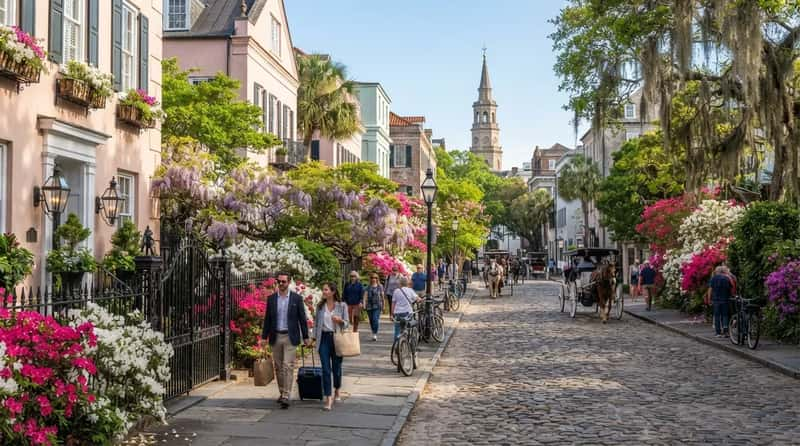
Charleston’s best weather is also its most expensive. Hotel rates in April are the highest of the year, and one local guide puts typical spring rates at $300 to $500 a night. That’s a rough guide, not a quote, so check live prices before you fall in love with a date.
Winter looks very different. The same guide says rates can run 40% to 50% cheaper than spring. Spring tops most “best time” lists, yet paying peak prices for a Saturday night may be the costliest first-timer move in the city.
And if the room is hard to get, the dinner table is worse…
#15 – The Dinner Table That Needs a Month’s Notice
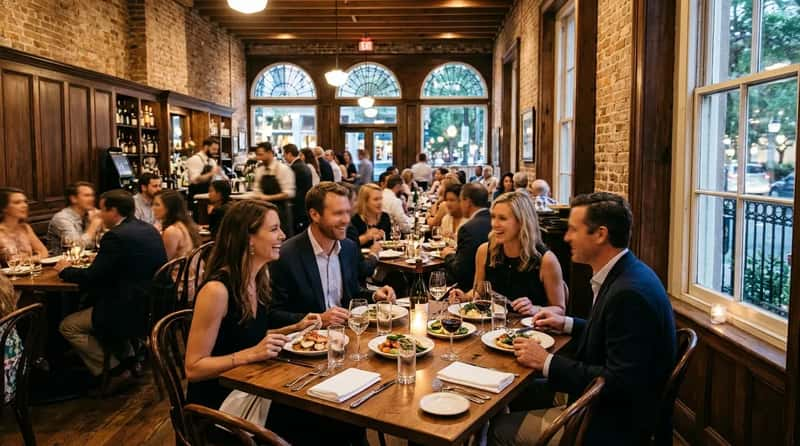
Charleston’s restaurants don’t do spontaneous in April. One guide says dinner reservations in peak spring take weeks of advance planning. Another advises booking hotels and popular restaurants well ahead during festival season.
Here’s the proof of how seasonal it is. Restaurants that need four weeks’ notice in April take walk-ins in the quiet winter months, according to one seasonal guide. The food didn’t change. The crowd did.
Quick Compare
- Peak spring dinner: weeks of advance planning, and about four weeks at the busiest spots.
- Quiet winter dinner: walk-ins are often possible at the same restaurants.
- Spring hotel rates: roughly $300 to $500 a night, per one local guide.
- Winter hotel rates: about 40% to 50% cheaper, per the same guide.
Part of the reason the tables vanish is how many events pile into the same weeks…
#14 – Four Festivals Quietly Stacked Into One Spring
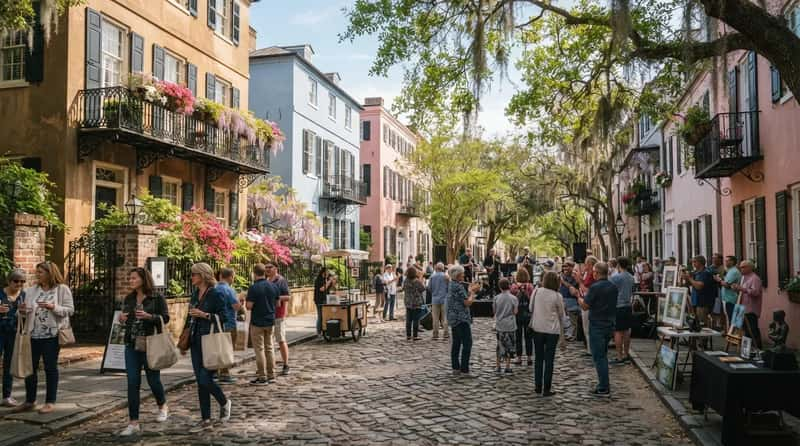
Spring in Charleston isn’t one event. It’s a pileup. In 2026, Charleston Wine + Food ran March 4 to 8 for its 20th anniversary, and the Charleston Festival of historic houses and gardens followed, running March 18 to April 11.
The Charleston Jazz Festival came next, April 13 to 19, then Art Charleston in late April and Spoleto in late May. One spring guide notes these festivals significantly influence hotel availability, which is why the calendar can matter more than the forecast.
One of those spring events can shut down your morning without warning…
#13 – The Morning 40,000 Runners Take Over the Bridge

The Cooper River Bridge Run isn’t a small local jog. The 2026 edition was set for March 28, drawing tens of thousands of runners to one of the nation’s largest 10K races. A planning guide lists 40,000+ participants and an 8 a.m. start.
The course runs from Mount Pleasant over the Ravenel Bridge and ends in Marion Square downtown. If you’re staying nearby, expect crowds and barricades. Packet pickup isn’t offered on race day, so runners have to handle it in the days before.
And that same day, another crowd was heading to a different part of town…
#12 – The Same-Day Tennis Crowd Nobody Connects to the Bridge Run
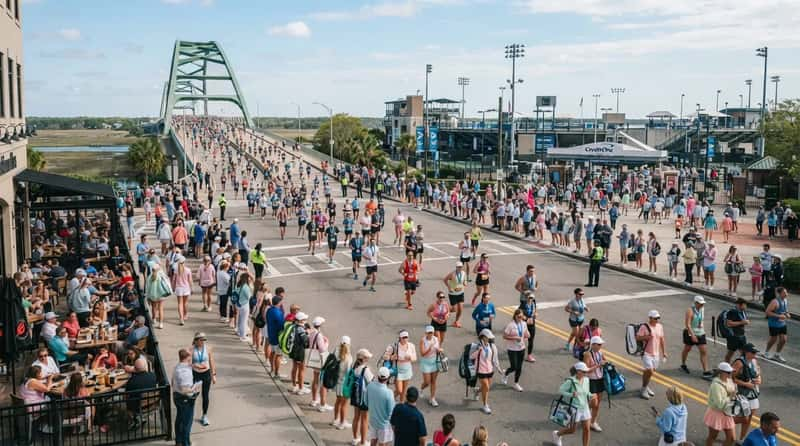
In 2026, the Bridge Run landed on March 28. That was also opening day of the Credit One Charleston Open, which ran March 28 to April 5. Two big crowds, one city, one Saturday.
The tournament is no small affair. It’s described as the largest women’s-only professional tennis tournament in North America, drawing nearly 90,000 fans over nine days. Most visitors planning a “quiet spring weekend” never check the sports calendar, and the visible consequence is full restaurants and full parking.
Fast Facts
- The date: Saturday, March 28, 2026.
- Crowd one: the Bridge Run, with 40,000+ participants and an 8 a.m. start.
- Crowd two: opening day of the Credit One Charleston Open, which ran through April 5.
- The result: one Saturday, two major events, and a lot of people competing for the same tables.
Speaking of getting around, your shoes may have the loudest opinion of all…
#11 – The Cobblestones That Quietly Ruin the Wrong Shoes
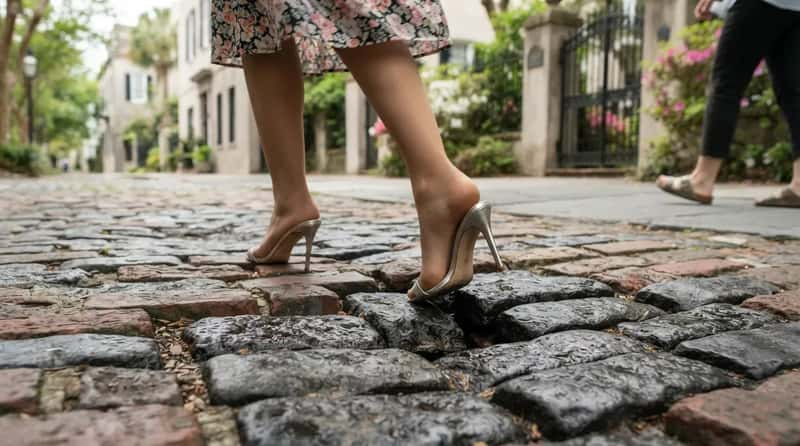
Charleston photographs well in heels. It walks terribly in them. One travel guide calls the historic cobblestones and uneven brick sidewalks notoriously punishing on heels.
Here’s the blunt version: skip the thin heels, even for dinner. Uneven brick and cobblestone can hide gaps that catch a slim heel, and you’ll be walking more than you expect. Charleston’s best spots sit in a walkable historic district, so your feet will be doing the work.
Once your feet are sorted, the next problem is where to put the car…
#10 – The King Street Parking Rule That Catches Dinner Guests Off Guard
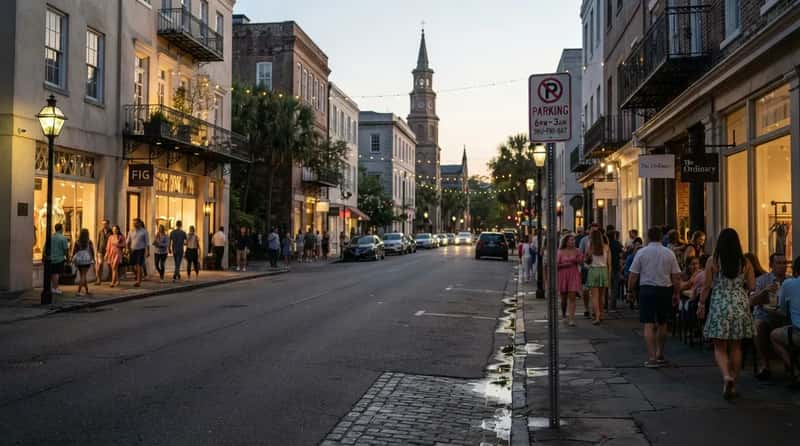
That open curb space on King Street may not stay legal. One visitor guide notes that street parking is prohibited on King Street between Spring and John streets on Thursday, Friday, and Saturday from 6 p.m. to 3 a.m. That’s exactly dinner hours.
The same guide recommends using a legal garage instead of assuming a daytime curbside space will still work after dark. The restriction kicks in just as the evening crowds arrive, so a space you found at 4 p.m. can become a problem by 7. Check current city signage before you walk away from the car.
But parking is a minor headache next to what the water can do to a street…
#9 – The Streets That Flood on a Bone-Dry Day
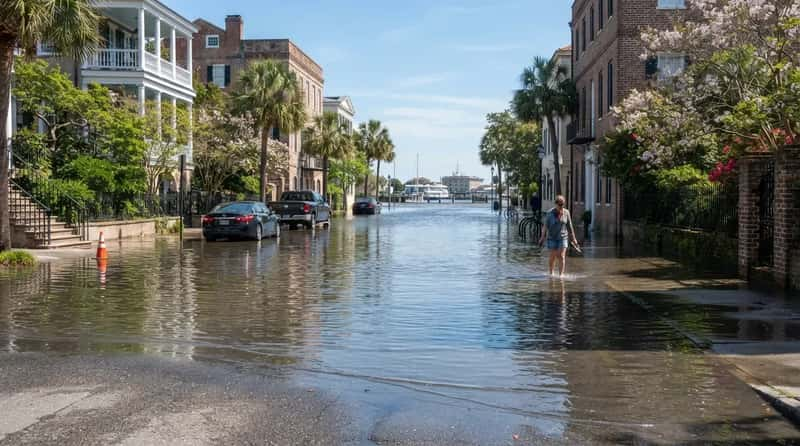
It doesn’t have to rain for Charleston’s streets to flood. The city has warned residents about tidal flooding even when little to no rain is forecast, because elevated tides can flood low-lying areas. Spots like Washington Street near Union Pier are among the usual suspects locals know to avoid.
Visitors often assume flooding means a hurricane. In reality, a high tide plus a little wind can close roads under blue skies. The city runs a tool called TideEye for road closures, and it’s worth checking before you drive.
And then there’s a crowd problem that has nothing to do with water…
#8 – Easter, Spring Break, and Wedding Season Share Your Sidewalk
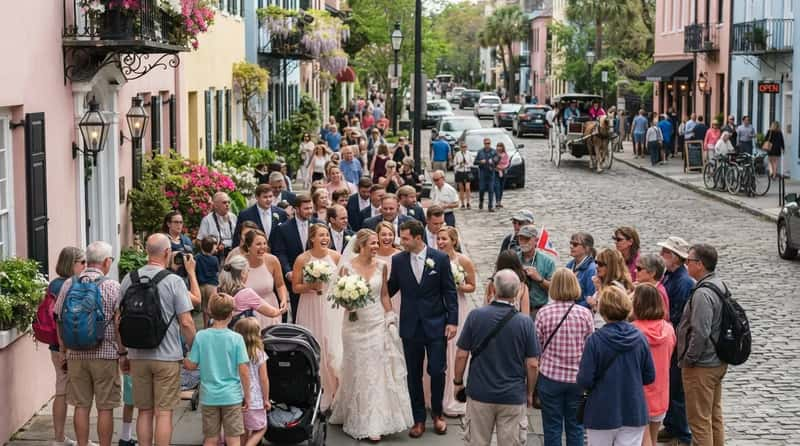
Three crowds hit Charleston at once in spring. U.S. News says to expect high hotel rates and hordes of tourists, especially around Easter. A local tour company adds that spring break travelers and wedding visitors make the city even more crowded.
That’s the part most “best time to visit” lists skip. Wedding parties, families, and tour groups can all end up in the same few blocks. If you want the weather without the shoulder-to-shoulder feel, the weekend you pick matters more than the month.
At a Glance
- Easter: the peak for high rates and heavy tourist traffic.
- Spring break: families and student travelers add to the crush.
- Wedding season: guests and wedding parties fill hotels and sidewalks.
- Calmer option: a midweek stay can ease both the crowds and the rates.
Still, plenty of travelers will tell you the flowers are worth the chaos. But are they reliable?
#7 – The Bloom Window That’s Shorter Than the Brochures Suggest
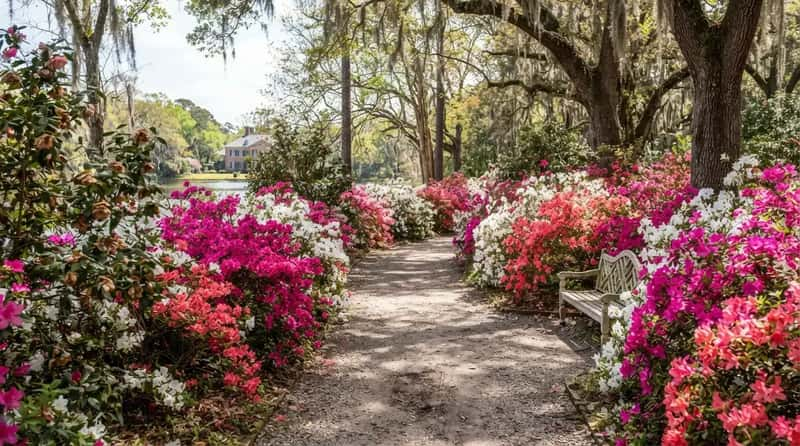
Azaleas aren’t a guaranteed backdrop all spring. One local guide notes that azaleas bloom soon after the camellias fade. Another says flowers appear at Magnolia and Middleton Place from late March.
That makes timing the bloom a bit of a gamble. The dates that look perfect one year can be early or late the next, depending on the weather. Check the gardens’ own bloom updates before you commit to a flight.
And the weather isn’t as predictable as the postcards suggest, either…
#6 – The Week Spring Quietly Turns Into Summer
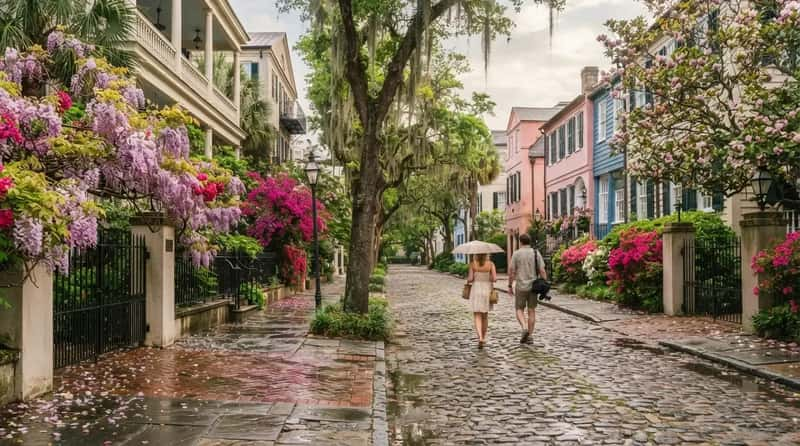
April is the sweet spot. One guide lists April averages at 76°F for highs and 59°F for lows, with about 2.8 inches of rain. By June, it’s 87°F and 73°F, with about 5.8 inches of rain.
So late spring can feel like a different season from early spring. The rain average roughly doubles between April and June, according to those same figures. If you’re traveling in May, bring both a rain plan and a sun plan.
And late spring has its own headliner…
#5 – The Arts Festival That Takes Over the Calendar in Late May
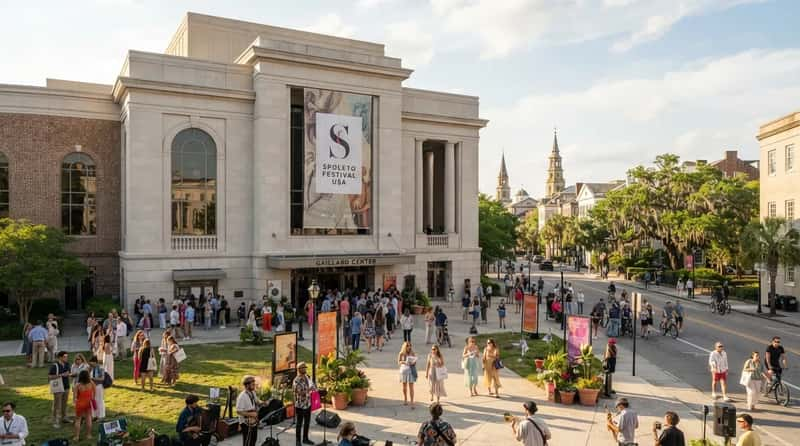
Late spring isn’t a quiet shoulder season. Spoleto Festival USA ran May 22 to June 7 in 2026, and a local guide places it in late May through early June.
Many travelers don’t see this coming. A trip you book for “late spring” can land right on top of one of the city’s biggest arts events. That’s wonderful if you want performances. It’s less wonderful if you wanted calm.
Worth Knowing
- 2026 dates: May 22 to June 7, which is 17 days of programming.
- The overlap: it begins just as late-spring heat and rain averages start to climb.
- The upside: performances give you indoor options on hot or wet days.
- The trade-off: the same dates can mean fuller hotels and busier dinner service.
All of this adds up to one number that explains everything…
#4 – The 7 Million Visitors Who All Read the Same “Best Time” Lists
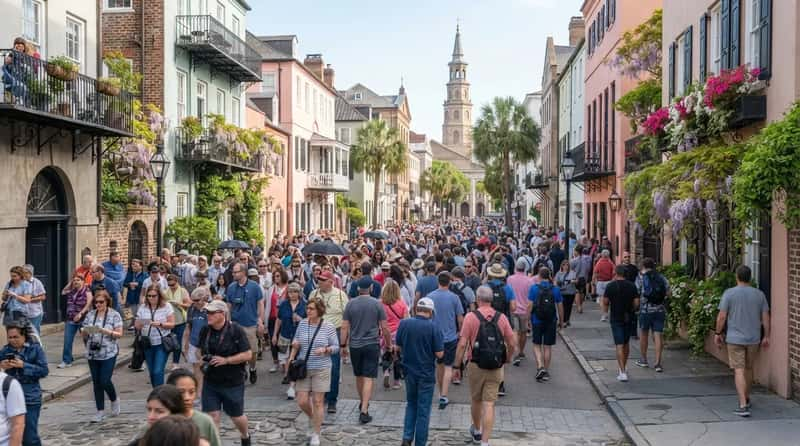
Charleston isn’t a hidden gem anymore. One local guide says the city sees over 7 million visitors annually, and spring is where many of them cluster.
Guides keep calling spring Charleston’s busiest tourist season. The “perfect weather” label is exactly what brings the crowds. That’s the catch nobody puts in the headline.
Which raises an awkward question about spring itself…
#3 – The Case That Spring Isn’t Even the Best Season
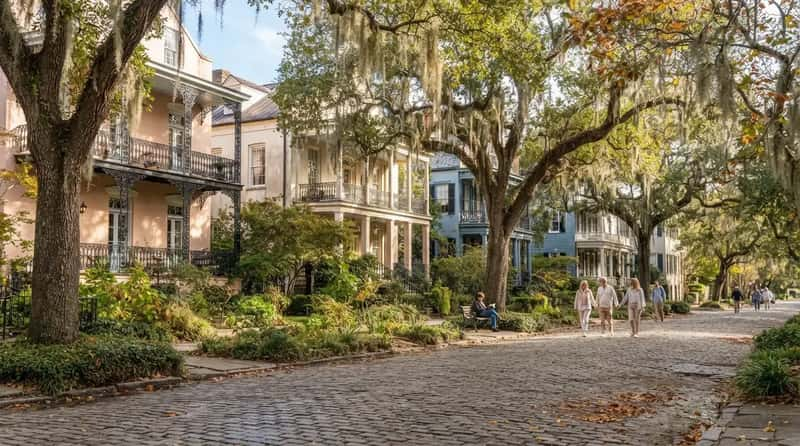
Here’s the plot twist. While spring tops most lists, other guides point to fall. One says September through November works best for food and mild weather, and U.S. News lists both March to May and September to November as the best windows.
Spring wins on gardens. Fall may win on value and breathing room. Some travelers who want the best of Charleston may be booking the wrong season for what they actually want. Whether that’s a hot take or common sense depends on what you came for.
But the stop that stays with people longest has nothing to do with the season…
#2 – The Museum That Turns a Rainy Day Into the Trip’s Heaviest Hour
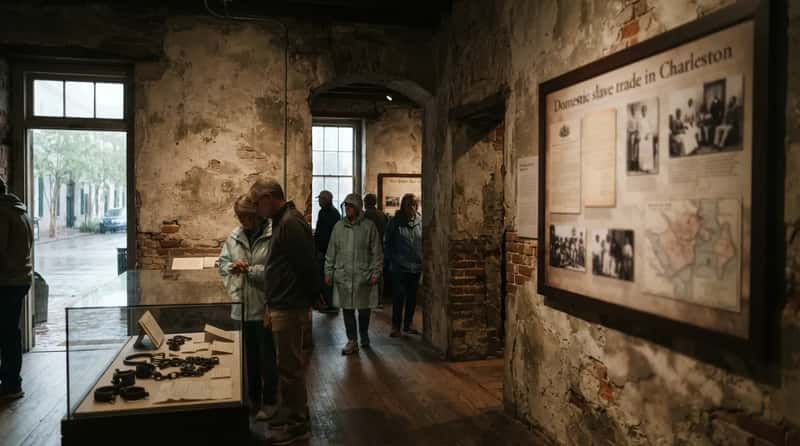
The most memorable stop may not be a garden. U.S. News lists the Old Slave Mart Museum among its rainy-day options, along with Drayton Hall and the Aiken-Rhett House. The museum examines Charleston’s role in the domestic slave trade.
It sets the whole city in a different light. The Aiken-Rhett House is known for preserving its original urban slave quarters, which adds hard context to the pretty facades outside. Spring photos show the surface, and these stops show the history underneath it.
And the last surprise is the simplest, and it costs nothing…
#1 – The Hours Most Visitors Sleep Through Are the Best Ones
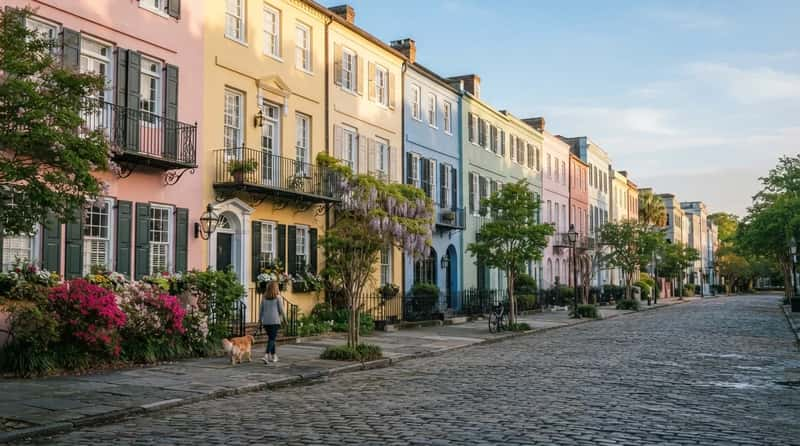
The Charleston people rave about often exists before the crowds arrive. One guide suggests moving your longest walk to the morning on hot days. In spring, that’s also when the lanes are quieter and the light is softer.
Picture Rainbow Row, the pastel-painted line of historic houses on East Bay Street. Early on, it can feel like a real street instead of a stage set. The city looks the same at 8 a.m. and 2 p.m., but it doesn’t feel the same.
The Bottom Line: Spring in Charleston is real, and so are the catches. The pollen, the pricey rooms, the month-ahead dinners, and the stacked festivals are all documented. Some of the best moments cost nothing: a quiet morning walk, a hard-earned museum visit, a tide you checked in time.
The city doesn’t hide any of this. Most visitors just never look. Which of these would have changed your trip the most?