Most people treat the hotel breakfast buffet like an afterthought – grab a plate of rubbery eggs, gulp some coffee, rush out the door. But watch someone who’s logged 200+ nights in hotels this year, and you’ll notice something strange: they move through that breakfast room like it’s a chess match, not a meal. They’re scanning the room, timing their entrance, reading the staff, sizing up the fruit bowl like it owes them money.
They’re not being weird. They’ve just learned, usually the hard way, exactly which habits separate a smooth travel day from a wasted morning of cold coffee and missed connections. Here’s what those veteran travelers actually do differently at breakfast – and why the rest of us keep walking right past it.
#17 – They Scope Out the Breakfast Room Before They Even Check In
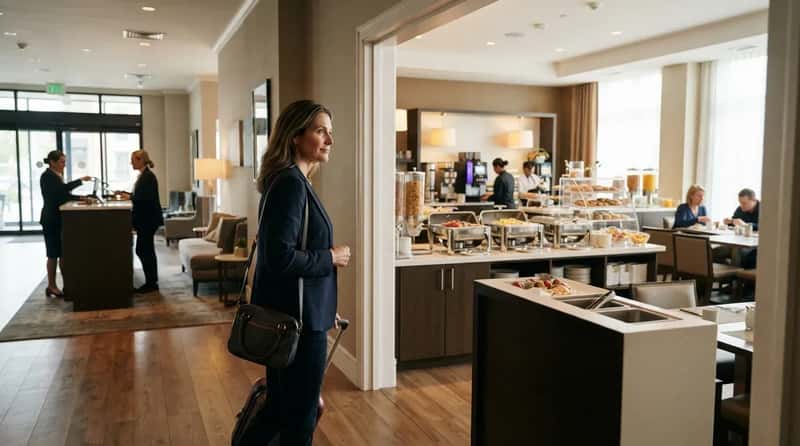
Seasoned travelers walk past the front desk slowly, on purpose, glancing straight into the breakfast area before they say a word to the receptionist. They’re clocking the setup fast: is it a real hot buffet with chafing dishes, a grab-and-go cart with sad granola bars, or three muffins wilting under a glass dome? That thirty-second glance tells them more than any hotel listing ever will, and they know it.
It matters because online descriptions routinely blur the line between “continental breakfast” and a full hot spread, and that gap can wreck a morning if you’re expecting bacon and eggs and get stale croissants instead. Veterans confirm it visually before they commit to a wake-up time, because a weak breakfast setup means they need a backup coffee-and-protein plan somewhere else in the neighborhood.
Fast Facts
- Continental breakfast usually means pastries, cereal, and coffee only
- A “hot buffet” typically includes eggs, breakfast meats, and hash browns
- “Grab-and-go” service is often just prepackaged muffins and a coffee urn
- Some properties quietly switch service types depending on the day or season
#16 – They Never Trust the Hot Buffet After the First Hour
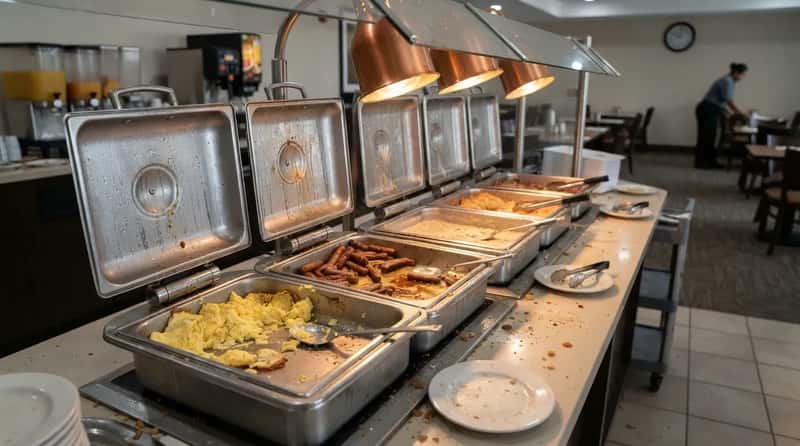
There’s a reason experienced travelers rarely show up in the last 30 minutes of breakfast service. Food safety guidelines generally advise that perishable hot foods shouldn’t sit at room temperature for more than two hours, yet hotel buffets running for three or four hours don’t always swap trays as often as they should. Veterans know the eggs and sausage that have been sitting under a heat lamp since 6 a.m. are a very different product by 9:15.
Instead, they aim for the first wave, right after doors open, when trays are freshly filled and the line is short or nonexistent. It’s a small window most guests never think twice about, but it’s the difference between a hot, safe plate and a lukewarm gamble nobody warned you about.
#15 – They Bring Their Own Mug, and It’s Not About the Coffee
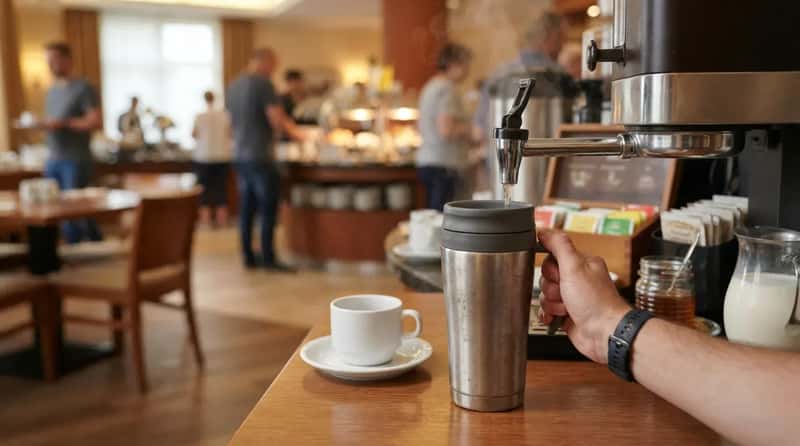
It looks like a quirky habit, but frequent travelers carry a collapsible or insulated mug for a very specific reason: hotel coffee cups are often tiny, which means refilling means standing in line all over again mid-meal. A bigger mug means fewer trips, more coffee, and more actual time sitting down instead of shuffling back and forth.
There’s a second reason too, and it’s the sneaky one. Many travelers use that same mug later for hot water from the breakfast station to make tea or instant oatmeal back in the room, stretching one buffet visit into two meals. It’s a tiny move, but on a five-night stay it quietly saves both time and money.
#14 – They Ask One Question That Exposes Every Hidden Fee

Instead of asking “is breakfast included,” veteran travelers ask the front desk directly: “Is breakfast the full hot buffet, or just coffee and pastries?” That single rephrasing forces a specific answer instead of a vague nod, because “included” can legally mean almost anything from a five-star spread to a basket of granola bars and a carafe of burnt coffee.
This habit comes from getting burned by resort fees and “breakfast included” packages that turn out to be a $5 voucher toward a $22 menu. Asking the sharper question up front avoids an awkward, expensive surprise at the table when the bill shows up.
#13 – They Sit Facing the Door, Not the Window
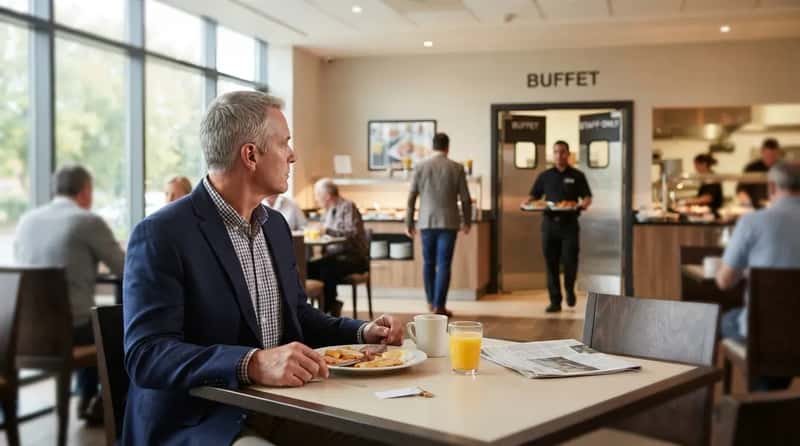
It sounds almost tactical, but frequent hotel guests instinctively pick seats with a clear view of the buffet entrance and the kitchen pass-through. That seat lets them see exactly when a fresh tray comes out, so they can time their second trip perfectly instead of guessing and getting the scraped-bottom leftovers.
It also means they notice the second a tour group or conference crowd starts filing in, giving them a few extra minutes to grab what they need before 40 people descend on the waffle station at once. Positioning is everything when breakfast service is limited and the clock is ticking toward checkout.
#12 – They Skip the Made-to-Order Eggs Line on Purpose
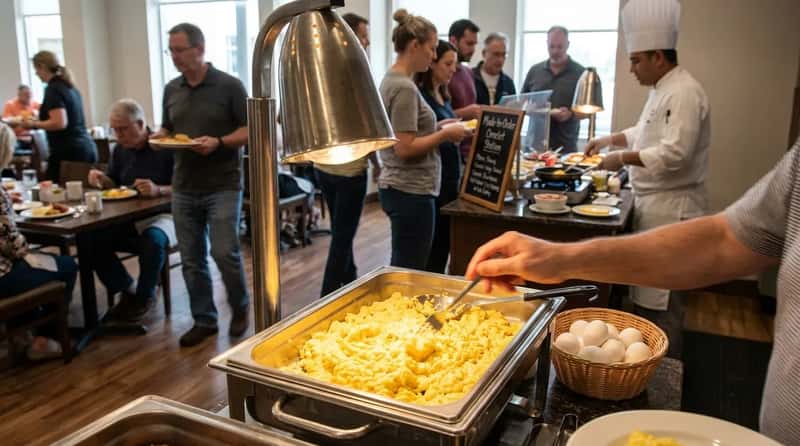
This one surprises people: many veteran travelers deliberately avoid the omelet station, even when it’s technically the best thing on the buffet. The line moves painfully slowly, often 10 to 15 minutes during peak hours, which eats directly into a morning schedule when you’re racing to catch an early flight or a tour departure.
They’ll take the pre-scrambled eggs or a hard-boiled option instead, prioritizing speed over a slightly better meal. It’s a trade-off between convenience and quality that most casual guests never even realize they’re allowed to make on purpose.
#11 – They Treat the Fruit Bowl Like a Trust Test
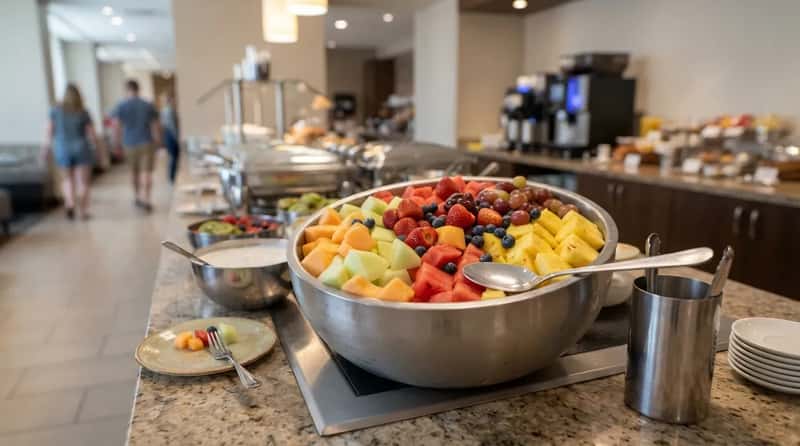
Fresh fruit at a buffet is one of the easiest ways to judge how seriously a hotel takes its breakfast. Veteran travelers check whether the fruit looks freshly cut that morning or has clearly been sitting since the day before, because that one detail often predicts the quality of everything else on the spread.
A soggy melon or a browning banana isn’t just a minor letdown – it’s a warning sign. Experienced guests use it to decide whether to trust the hot items too, or whether to cut their losses, grab the coffee, and skip the rest entirely.
Worth Knowing
- Browning fruit or wilted garnish often signals slow tray turnover
- Empty ice bins under the fruit display suggest staff are stretched thin
- Sticky serving spoons left sitting out usually mean low attention that morning
- A cold, well-stocked fruit station is often a quiet preview of the rest of the buffet
#10 – They Grab a Second Portion for Later, Not for Seconds
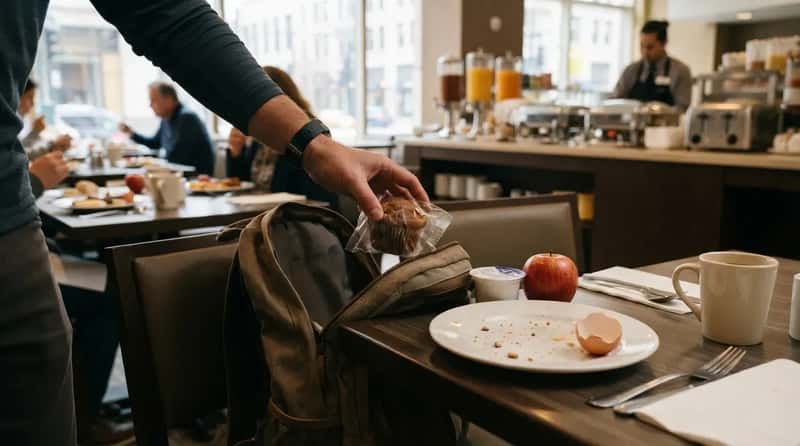
Here’s a genuinely controversial habit: some veteran travelers quietly pack a piece of fruit, a muffin, or a small yogurt to eat later, especially on travel days with no guaranteed lunch stop. Hotels rarely advertise this as okay, and it toes an ethical line that plenty of travelers argue against loudly.
Supporters say it’s a smart hedge against overpriced airport food and long, delayed layovers. Critics call it taking advantage of a shared amenity meant for one sitting, not a personal snack bar. Either way, it’s far more common among frequent travelers than most people ever realize.
#9 – They Know the Exact Minute the Kettle Runs Dry
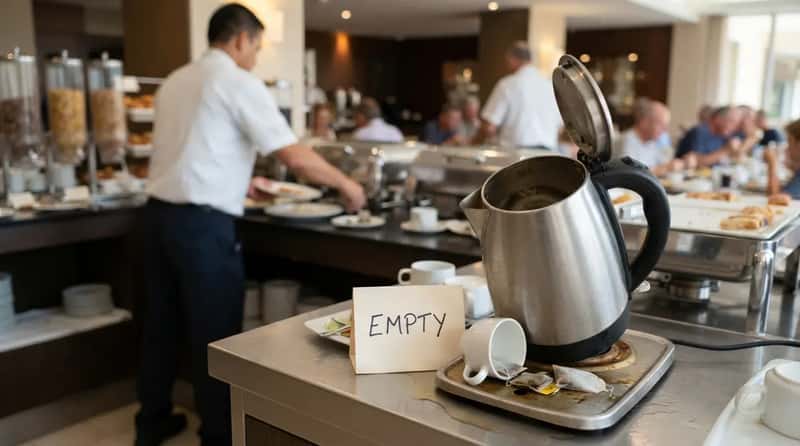
Tea and hot water stations are notoriously under-monitored compared to the coffee machines, and veteran travelers have learned to grab hot water early rather than late. By the last 30 minutes of service, the kettle is often lukewarm at best, refilled less frequently because staff are already focused on breaking down the hot buffet for the day.
It’s a small annoyance that adds up fast on a multi-week trip. Experienced guests build their hot-water routine into their earliest minutes at breakfast instead of leaving it as a lazy afterthought and getting stuck with tepid tea.
#8 – They Never Ask “What’s Good Here” – They Ask This Instead
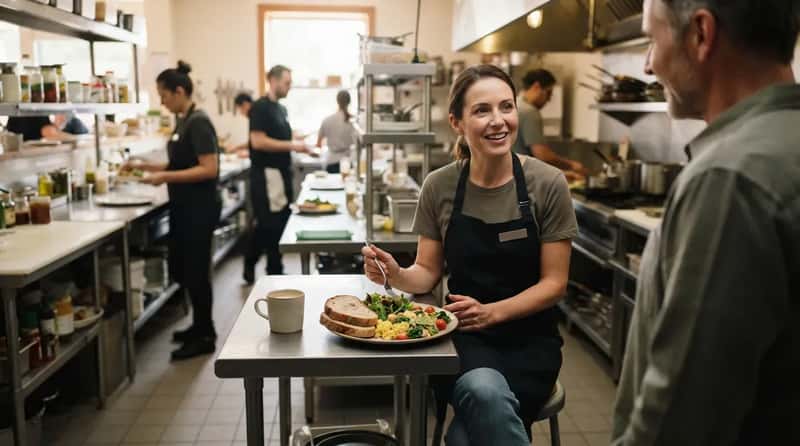
Instead of the generic “what do you recommend,” seasoned travelers ask breakfast staff, “What do you eat before your shift?” It’s a sharper, more specific question that tends to get an honest, unscripted answer instead of a rehearsed pitch toward the most expensive menu item.
Hotel and restaurant staff often eat the same food guests do, just at different hours, and their personal picks are usually the freshest or most consistently well-made items in the kitchen. This one question regularly leads to better food than anything printed on the laminated buffet card.
#7 – They Time Their Entrance to the Minute
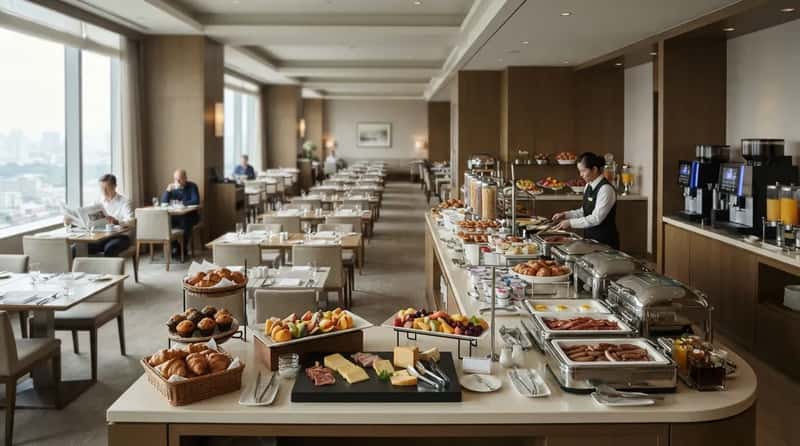
Veteran travelers rarely wander down “whenever.” Many aim for the first 15 minutes after breakfast opens, when trays are fully stocked and the room is nearly empty, or they target a quiet lull later in the morning, after the early rush clears but before the cutoff panic sets in.
The absolute worst window, according to frequent hotel guests, is when business travelers and families with kids collide at the same three toasters. Avoiding that overlap alone can save real time otherwise lost just standing in line for a cup of coffee.
At a Glance
- Best window: first 15 minutes after breakfast opens, when trays are fully stocked
- Good backup: the lull around 9:15 to 9:30, after the early rush clears
- Worst window: 8:00 to 8:45 on weekdays, when business travelers and families collide
- Avoiding peak overlap can save 20 minutes of standing in line for coffee alone
#6 – They Watch the Staff’s Plates, Not the Guests’
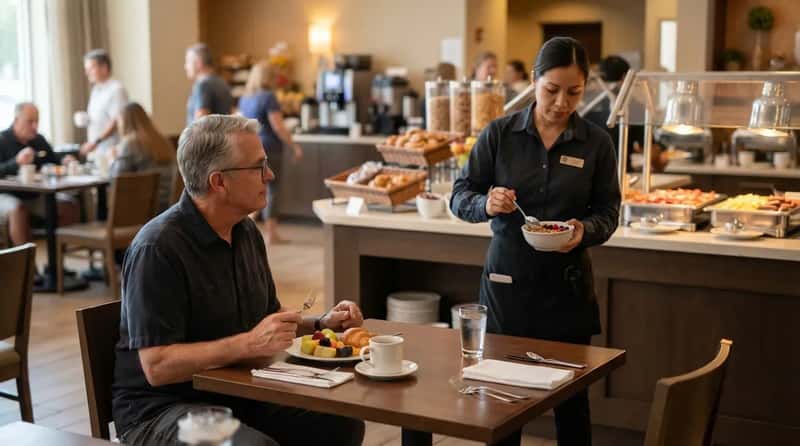
This is one of the stranger but more reliable habits: some travelers glance at what hotel employees grab for their own breakfast during a shift changeover, if they happen to eat in the same space. Staff tend to avoid the weakest items on the buffet, because they know exactly how long everything has actually been sitting out under those heat lamps.
It’s an unofficial quality signal that no menu card will ever give you. If the staff are steering clear of the sausage tray and reaching for the yogurt instead, that tells you something the guests in line haven’t figured out yet.
#5 – They Turn Down the “Free” Breakfast More Than You’d Think
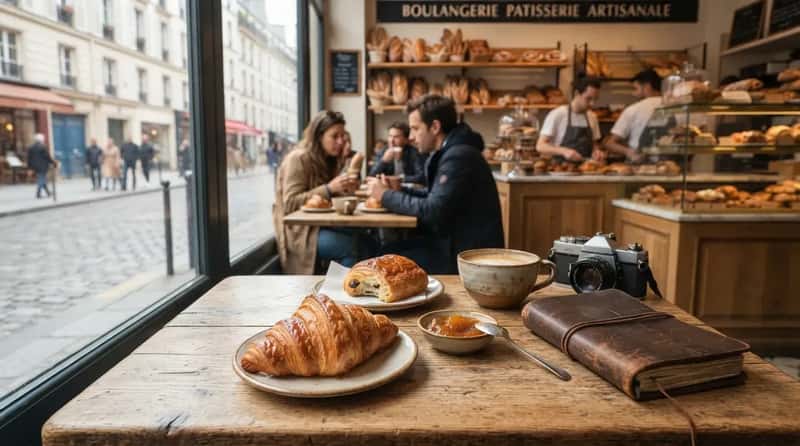
Here’s the genuinely controversial one: a growing number of frequent travelers skip the included hotel breakfast entirely, even after they’ve already paid for it, in favor of a local bakery or diner nearby. It sounds wasteful on paper, but many argue the “free” breakfast is a sunk-cost trap designed to keep you inside the hotel instead of out exploring the actual place you traveled to.
They’d rather spend $8 on something memorable, like a real croissant or a diner plate of hash browns, than eat mediocre eggs just because it’s technically included in the room rate. It’s a small rebellion against the idea that included always means better.
#4 – They Keep a Zip-Top Bag in Their Pocket for a Reason
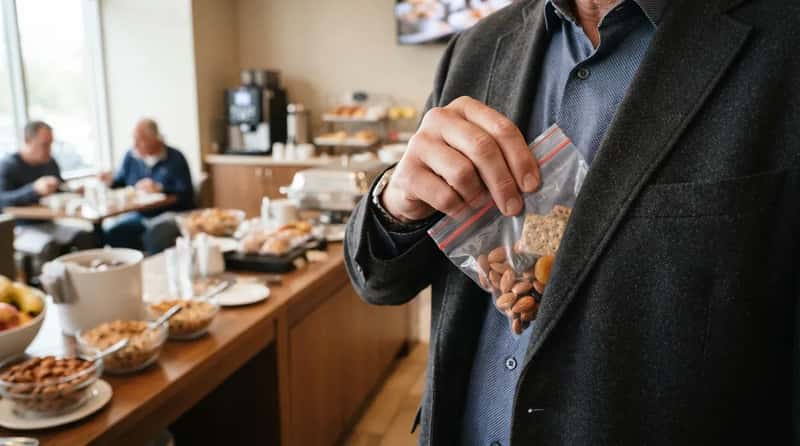
This habit shows up constantly among road-trippers and business travelers alike: a small zip-top bag tucked into a jacket pocket, ready for a handful of almonds, a packet of crackers, or a leftover piece of toast. It’s not really about the free food – it’s about never getting stuck hungry at a gas station three hours later with nothing but candy bars and gas-station coffee.
Veteran travelers treat snacks as insurance against long drives, delayed flights, and meetings that run straight through lunch. The habit looks small and slightly odd from the outside, but it solves a very real, very common travel problem before it even starts.
#3 – They Order the One Thing Never Listed on the Buffet
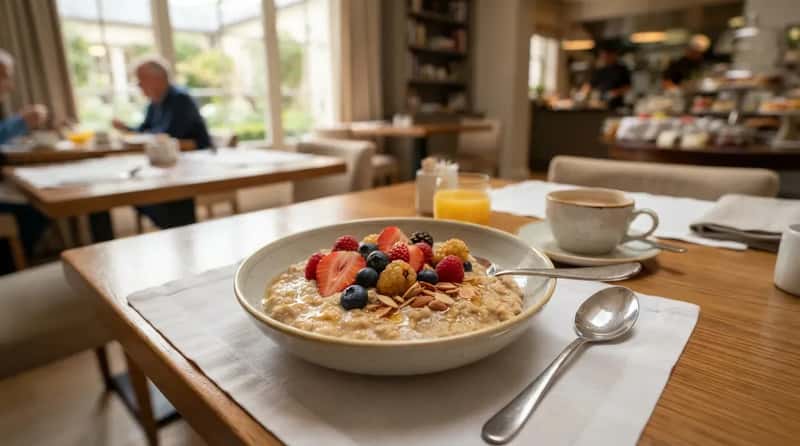
Many hotels, especially independent or boutique properties, will make a simple item off-menu if you just ask, like plain oatmeal with fresh fruit instead of the pre-packaged instant kind, or eggs cooked a specific way the buffet doesn’t offer. Veteran travelers know that buffet spreads are often a compromise designed to please the average guest, not the best version of what the kitchen can actually produce.
Asking politely for something slightly off-script frequently gets a yes, especially at smaller hotels where the kitchen staff has more flexibility than a chain’s rigid buffet template allows. It costs nothing to ask, and the upgrade in quality is often shockingly noticeable.
#2 – They Sit With Strangers on Purpose

This is the habit that surprises people most: frequent solo travelers deliberately sit near other guests, especially at smaller inns or breakfast rooms with communal tables, instead of hiding in a corner with their phone. Conversations over coffee routinely produce better restaurant tips, traffic warnings, and local advice than any travel app has ever managed to give them.
It flips the usual instinct to eat fast and leave. Veteran travelers have learned that breakfast is often the only unstructured social moment of a trip, and skipping it means skipping information nobody bothered to write down anywhere online.
Why It Stands Out
- Local tips from strangers often beat generic advice from travel apps
- Communal tables tend to surface real-time info, like closures or new restaurant openings
- A five-minute conversation can save an entire afternoon of guesswork
- It turns a solo breakfast into the most valuable planning session of the day
#1 – They Treat Breakfast as the Real Start of the Trip, Not a Pit Stop
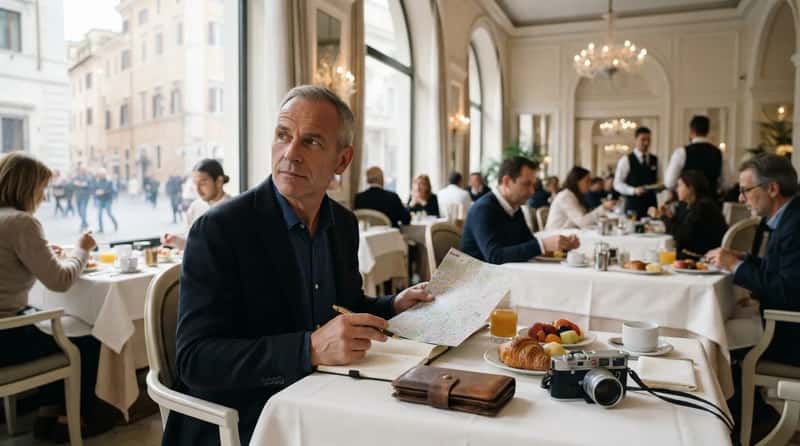
For most people, breakfast is fuel before the “real” day begins. For veteran travelers, it’s already the day. They use it to read the room, plan the next move, and gauge the hotel’s overall quality before checking anything else, because how a property handles its most repetitive daily task usually says everything about how it handles the rest of your stay.
It’s a mindset shift more than a single trick: breakfast isn’t a box to check, it’s the first data point of the day. Get it right, and everything after tends to go smoother too.
Travel is intensified living – maximum experience per minute.
Rick Steves
None of these habits are secret rules written down anywhere – they’re just patterns picked up after enough missed flights, cold eggs, and lukewarm coffee. The travelers who’ve been burned enough times stop leaving breakfast to chance, and start treating it like part of the itinerary instead of a freebie to rush through.
So next time you’re standing in a hotel breakfast line, take a look around. Somewhere in that room, someone’s already three steps ahead of you – and they probably grabbed the good coffee mug first.