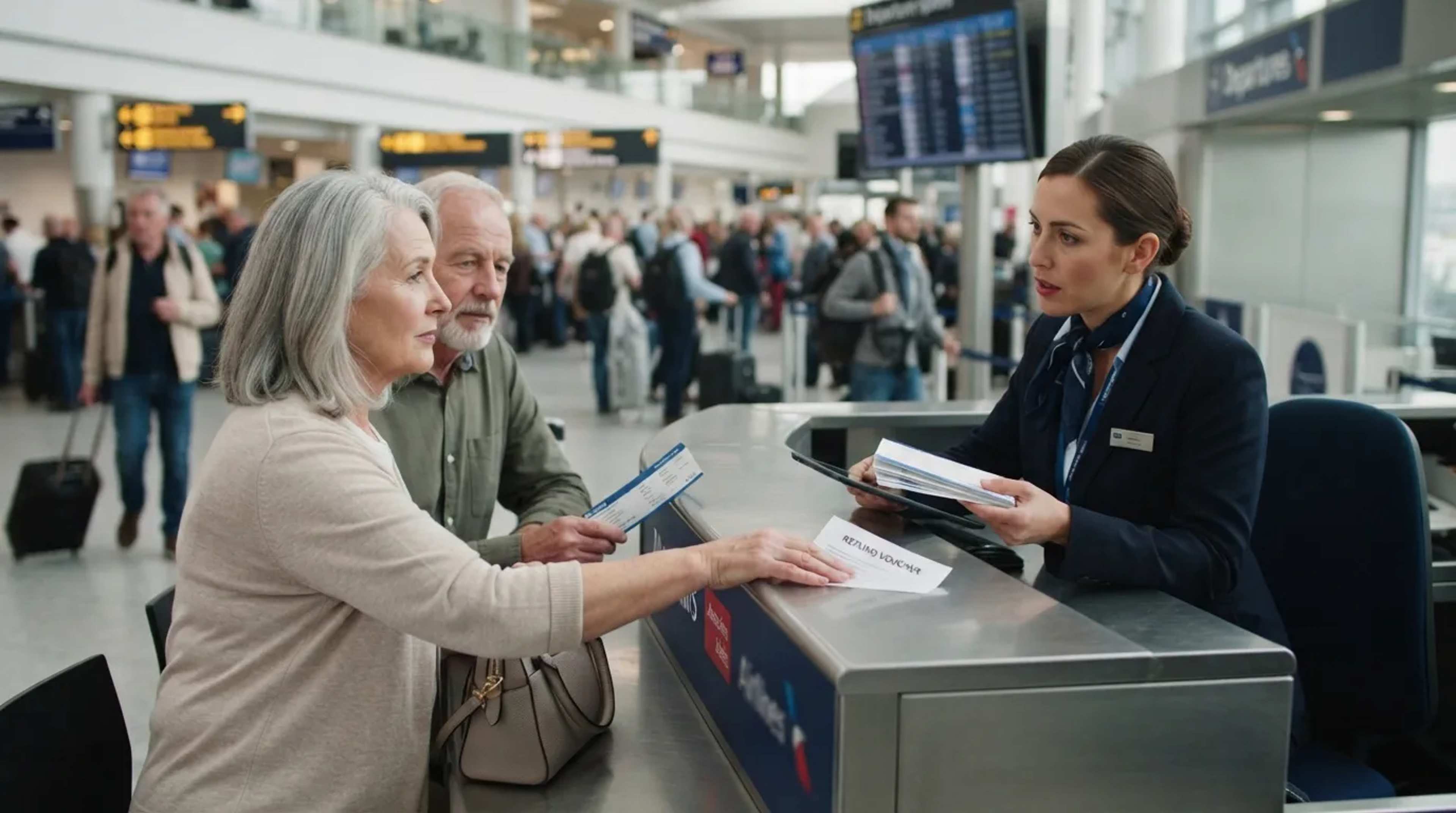
You’d think turning 60 would come with a laminated card and a warm smile at the gate. It doesn’t. What older travelers actually carry is stranger and more useful: a stack of federal rules, accessibility rights, and refund deadlines that airline staff almost never read aloud.
Here are 18 of them, counting down from small checkpoint relief to payouts that can reach four figures. Some will make you wonder why nobody ever told you. The last one is the entitlement most people hand back across the counter without realizing it was theirs.
#18 – The 24-Hour Window That Lets You Walk Away From a Bad Booking

Booked the wrong date? You may have a full day to undo it. Under federal rules, airlines must either hold a reservation at the quoted fare for 24 hours or let you cancel within 24 hours without penalty. The catch is that you must book at least seven days before departure.
Many older travelers book months ahead for a wedding, a cruise connection, or a grandchild’s graduation. Then they spot a better schedule the next morning. Agents rarely bring this up because nobody asks. Airlines choose how they honor the rule, so check which version your carrier uses.
But the next entitlement used to be an age-based perk, and it just vanished at the airport checkpoint…
#17 – The Shoes-On Perk That Quietly Stopped Being a Perk
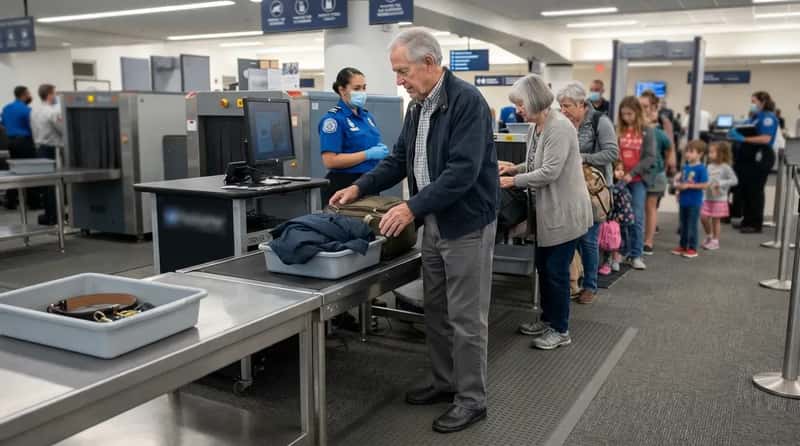
For years, turning 75 meant you could keep your shoes on at security. Children 12 and under and passengers 75 and older were exempt from the shoe-removal policy. Then TSA ended its shoe removal mandate on July 8, 2025.
That makes this a rare case where an age perk was swallowed by a rule change. Checkpoint rules move fast, so don’t trust a perk you read about three years ago. Confirm current procedures on tsa.gov before you fly.
Still, the checkpoint has a better-kept secret for travelers who can’t stand for long, and it’s next…
#16 – Seated Screening When Standing Is the Hard Part
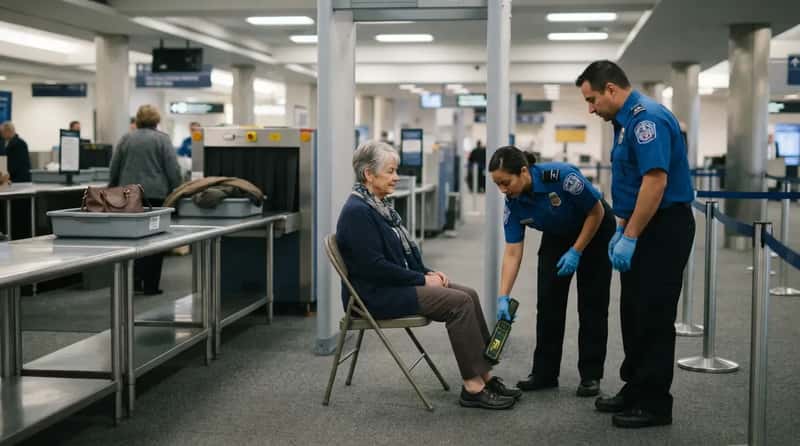
You don’t have to push through a checkpoint on sheer willpower. Travelers who can’t stand for screening can be screened using alternative methods, including while seated. TSA also offers private screening on request, and you can ask for it at any point.
Hearing aids, joint replacements, and medical devices set off alarms more often than most people expect. Officers can adapt the process, but only if they know early. Waiting until the pat-down starts makes everything slower and more stressful. It’s an accommodation, not a favor.
And if you’d rather sort all of this out before you leave the house, there’s a phone number for that…
#15 – A TSA Helpline Most Travelers Have Never Dialed
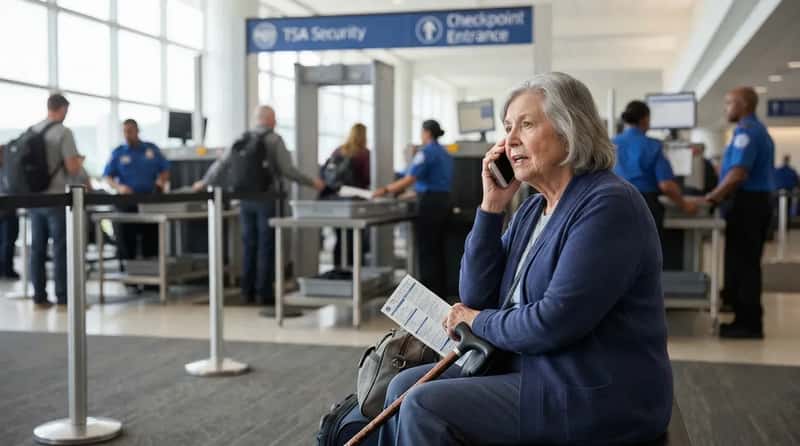
TSA runs a helpline called TSA Cares for travelers with disabilities, medical conditions, or other needs. It’s reachable at 855-787-2227. The agency recommends calling about 72 hours before your flight. A specialist can explain what to expect at the checkpoint.
In some cases they can arrange for a passenger support specialist to meet you at security. Airline staff almost never mention it, because it isn’t their department. It’s especially useful after a surgery, with a new mobility aid, or on a first flight in years. A five-minute call can replace an hour of dread.
Fast Facts
- Helpline: TSA Cares, 855-787-2227
- Best timing: about 72 hours before departure
- Who it’s for: travelers with disabilities, medical conditions, or other needs
- Possible perk: a passenger support specialist meeting you at security
Next up: the medical gear rule that saves you from a bad surprise at the gate…
#14 – Your CPAP Isn’t Taking Up Your Carry-On Allowance
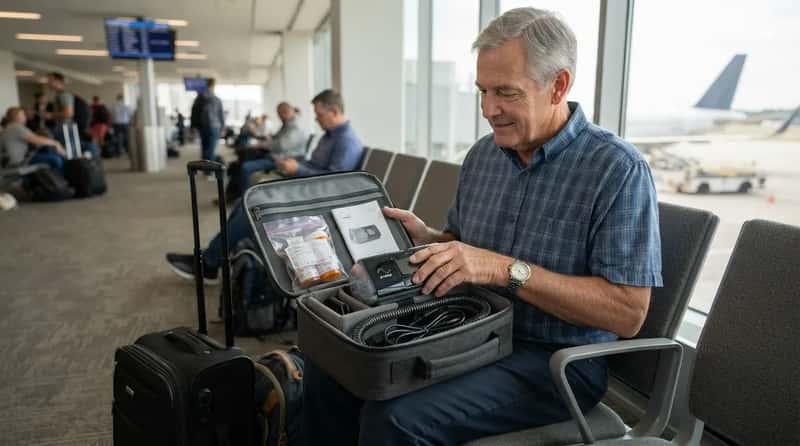
Gate agents sometimes treat a medical device bag like any other carry-on. It isn’t. Under U.S. accessibility rules, medical devices such as CPAP machines and portable oxygen concentrators generally don’t count toward the carry-on limit. You shouldn’t have to gate-check them or pay a bag fee.
The same logic shows up at security. TSA allows medically necessary liquids and gels in reasonable quantities above the usual 3.4-ounce limit. You just need to declare them at the start of screening. Pack the device so it can be pulled out quickly, and keep prescriptions in their original labeled containers.
Here’s a small request that sparks big arguments at the airport: bringing someone along to the gate…
#13 – The Gate Pass That Lets a Helper Walk You All the Way In

Normally, only ticketed passengers get past security. But travelers who need help can often arrange for a companion to come through to the gate. Airlines commonly issue a gate pass for this. It’s usually discretionary, and policies vary by carrier and airport.
That matters if you’re flying with limited mobility or a medical condition, and your spouse or adult child would otherwise have to say goodbye at the curb. Ask the airline at check-in or by phone ahead of time. Expect to show ID, and expect the helper to go through screening like everyone else.
You’ll want to know about the boarding option that follows, because it’s even less advertised…
#12 – Preboarding Is on the Menu, but Nobody Reads It Aloud

Many travelers assume preboarding belongs only to families and elite members. Federal accessibility rules say otherwise. Airlines must offer preboarding to passengers who identify themselves as needing extra time or help to get seated. Age alone doesn’t qualify you, but needing extra time does.
The boarding bridge can be long, the aisle narrow, and the overhead bins high. Getting seated before the crowd arrives can be the difference between a calm start and a stumble. You’re not required to explain your medical history, and you can simply say you need extra time.
And if the walk to the gate is the real problem, here’s what almost nobody realizes they can request…
#11 – Free Wheelchair Help for Just the Long Terminal Stretch
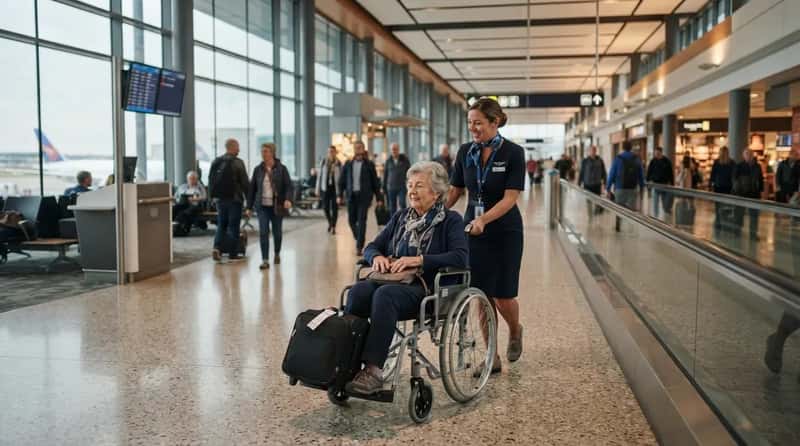
Airlines can’t charge for wheelchair assistance. You also don’t have to use a wheelchair for the entire trip. Many travelers walk fine at home but not across a sprawling hub in a tight connection. You can request help for the airport portion only and walk onto the plane yourself.
Here’s a take that will split the room: pride, more than policy, is what keeps many older travelers from using this service. Missing a connection after a 20-minute trek is usually costlier than accepting a ride. Most basic assistance doesn’t require advance notice, though a few complex services do. Request it when you book.
Next, a seating request that can make or break a long flight…
#10 – The Aisle Seat With an Armrest That Actually Moves
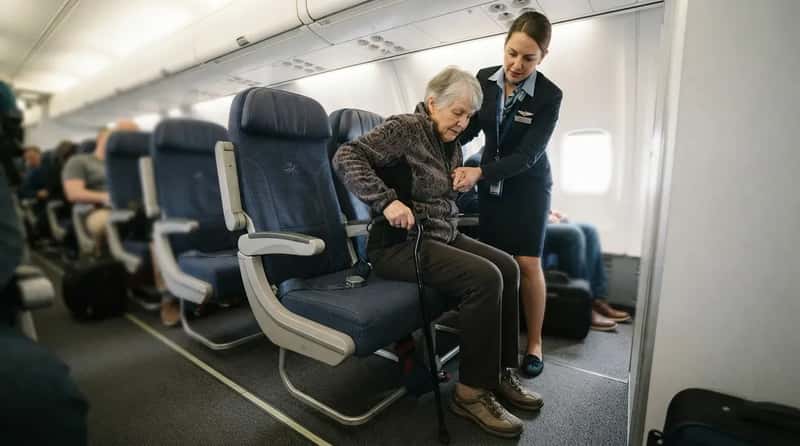
Some aisle seats have armrests that lift out of the way. Under accessibility rules, travelers who need that feature to transfer into a seat can request it, where the aircraft has such seats. It’s a practical fix for people with hip, knee, or balance issues.
The problem is timing. Those seats can be assigned early, and not every plane has many of them. Request the accommodation when you book rather than at the gate. Even if a basic-fare ticket normally blocks seat selection, accessibility seating requests are handled separately, so don’t stay quiet.
But a money entitlement is next, and it hides inside a rule most people never read…
#9 – Pay for a Seat or Wi-Fi You Never Got? That’s Refundable

Paid extras used to vanish into the airline’s pocket when something went wrong. Now a DOT rule strengthens protections for refunds of ancillary service fees, such as Wi-Fi, when the service isn’t provided. That includes extras bought for a flight that’s later canceled or changed in a significant way.
Older travelers often pay for extra legroom or a preferred aisle seat to protect their comfort. If that seat falls through, the fee is not a gift to the carrier. The rule requires refunds to be automatic, prompt, in the original form of payment, and in the full amount paid. Review your receipt for seat fees after any disruption.
Worth Knowing
- Covered extras include Wi-Fi and paid seat upgrades when the service isn’t delivered
- Refunds should be automatic, so you shouldn’t have to chase them
- Money goes back to your original form of payment
- The refund should be the full amount you paid
The next one has a stopwatch attached, and airlines hope you’ll forget to start it…
#8 – The 12-Hour Clock on a Missing Suitcase
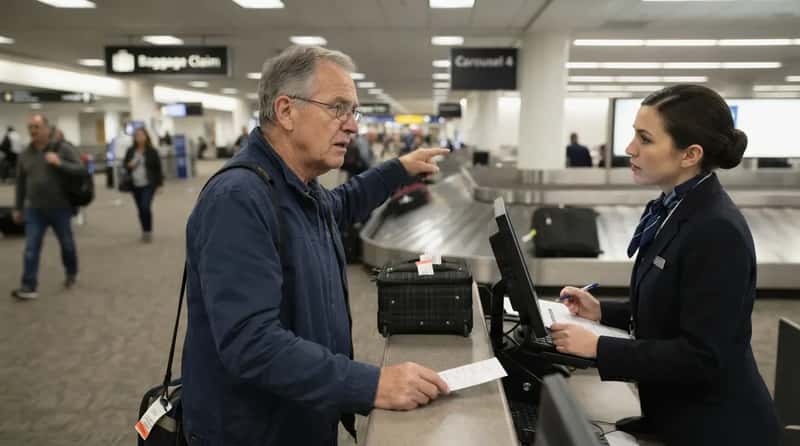
Lost luggage is bad enough without losing the bag fee too. Passengers get a refund of the checked bag fee if the bag isn’t delivered within 12 hours of a domestic flight arriving at the gate. International flights get 15 to 30 hours, depending on length.
The key detail is filing the report. You need to file a mishandled baggage report with the operating airline. Do it at the airport before you leave baggage claim. Walking out and hoping the airline notices doesn’t create a paper trail.
If the bag never shows up at all, a different dollar figure comes into play…
#7 – The $4,700 Figure Hiding Behind “We’re Sorry About Your Bag”

When an airline loses or damages a bag on a domestic trip, there’s a federal liability floor. The limit U.S. carriers may impose for mishandled baggage in domestic air transportation rose from $3,800 to $4,700. That rule took effect on January 22, 2025.
That’s the maximum an airline can cap its liability at, not a guaranteed payout. Compensation depends on what you can document. Airlines also commonly exclude fragile or high-value items, so read the carrier’s contract of carriage before you pack medications, jewelry, or electronics. Keep receipts and photos of your bag’s contents.
At a Glance
- New domestic liability limit: $4,700, up from $3,800
- Effective date: January 22, 2025
- It’s a ceiling, not a guaranteed check
- Your best proof: receipts and photos of what you packed
Now for a rule that applies the moment you’re stuck on the ground with no way out…
#6 – The Tarmac Rule That Forces Food, Water, and an Exit Plan

Being trapped on a parked plane is a nightmare, especially with medications due and a long wait for a bathroom. Federal rules limit tarmac delays to three hours on domestic flights and four hours on international ones, with some safety and security exceptions. Airlines must also offer food and water after two hours.
Lavatories must stay working, and medical attention must be available if needed. Crews rarely recite the timeline unprompted. Knowing it gives you a polite, firm question to ask: how long have we been on the ground, and what’s the plan?
If a flight goes wrong and you need a human with real authority, there’s a title worth learning…
#5 – Ask for the Complaint Resolution Official by Name
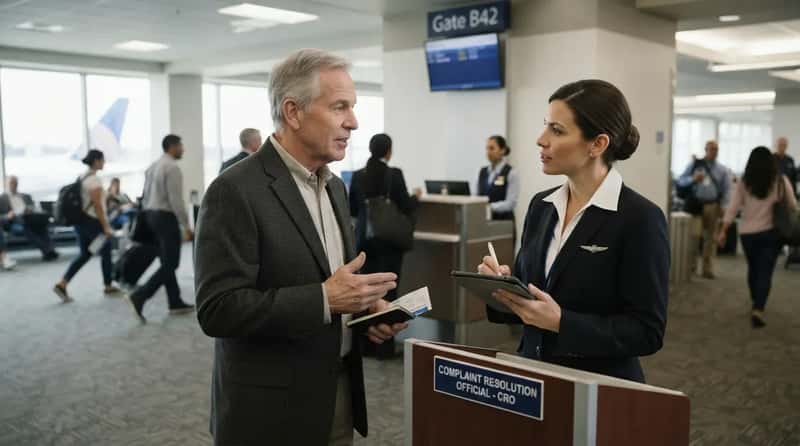
Airlines must have a Complaint Resolution Official, often called a CRO, available during operating hours. You can reach one in person or by phone. A CRO has authority to resolve accessibility problems on the spot. A gate agent often doesn’t.
Saying “I’d like to speak with a CRO” signals that you know how the system works. That alone can change the tone of the conversation. Afterward, written complaints about disability-related treatment are supposed to get a written response within 30 days. Take notes with names, times, and flight numbers while memories are fresh.
Why It Stands Out
- A CRO can be reached in person or by phone during operating hours
- The role exists to resolve accessibility problems, often on the spot
- Written complaints are supposed to get a written reply within 30 days
- Notes with names, times, and flight numbers make your case stronger
And if an agent says no, there’s a paper trail you can demand…
#4 – A “No” From an Airline Is Supposed to Come in Writing

If an airline refuses to provide a service you requested because of a disability, you can ask for the reason in writing. Federal rules require a written explanation within 10 days. It must cite the specific basis for the refusal.
Verbal refusals have a way of changing once the airline knows it has to put them on paper. Ask politely at the time: “Can you note that and send me the explanation?” The request also creates a record if you later file a complaint with the Department of Transportation. A calm paper trail beats a loud argument at the gate.
Next, a protection aimed at one of the most infuriating things that can come off a plane…
#3 – Wheelchairs Are Supposed to Arrive Intact
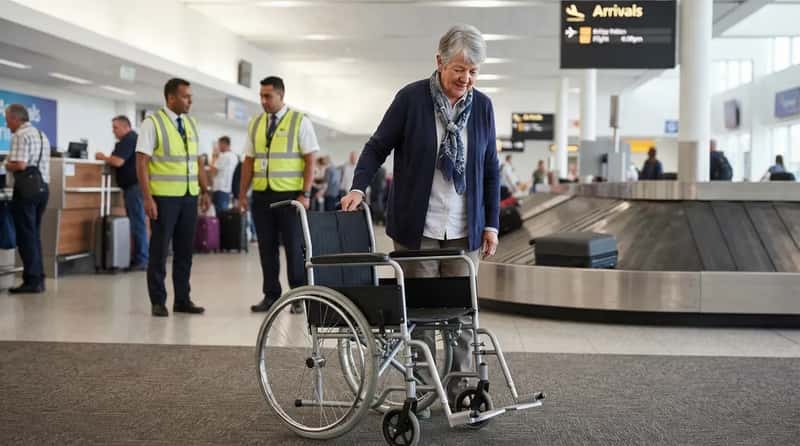
For many travelers over 60, a wheelchair or scooter is a lifeline, not luggage. Mobility devices generally don’t count against baggage allowances. In late 2024, the Department of Transportation finalized rules aimed at curbing mishandling, covering trained handlers and the airline’s responsibility when a device is damaged.
If your chair or scooter is damaged, report it before leaving the airport and ask about repair, replacement, or refund. Take photos immediately. Specific compliance dates and details may shift, so check current DOT guidance. The principle is that a broken chair is the airline’s problem to fix, not yours.
Two entitlements remain, and both involve real money you may be giving away…
#2 – Bumped Against Your Will? The Airline Owes Cash, Up to $2,150

Overbooked flights are common. Involuntary bumping is not painless for the airline. DOT raised the compensation limits from $775 and $1,550 to $1,075 and $2,150. The change took effect in January 2025.
The amounts scale with your delay. Arriving 1 to 2 hours late domestically earns 200% of your one-way fare, up to $1,075. Longer delays earn 400%, up to $2,150. It must be paid in cash or check, not a voucher, unless you consent otherwise.
Here’s an opinion that will start arguments: for retirees with flexible schedules, volunteering for a bigger offer can be smart. Just never confuse a voluntary deal with the legal minimum.
The biggest one is saved for last, and it’s the one agents are most likely to steer you away from…
#1 – The Cash Refund They’d Rather Pay You in Vouchers
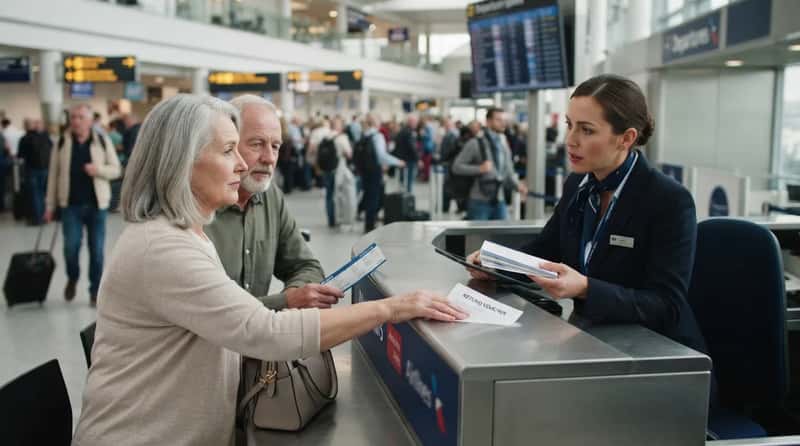
When an airline cancels your flight, an agent might offer a credit before you’ve decided anything. You don’t have to take it. Passengers are entitled to a refund if the flight is canceled or significantly changed and they don’t accept alternative transportation or travel credits.
“Significant” now has a real definition. It includes departure or arrival times more than 3 hours off domestically and 6 hours internationally, a different airport, added connections, a downgrade in class of service, or connections less accessible to a person with a disability. Refunds must arrive within 7 business days for credit card payments and within 20 calendar days for other forms of payment.
Age alone gets you very little in the U.S. airline system. The real leverage comes from rules that apply to everyone, plus accessibility rights that agents rarely read out loud. The biggest ones involve money: cash refunds, bumping compensation, and bag-fee refunds.
Learn three of these before your next trip and you’ll fly differently. Which of these did no gate agent ever mention to you?