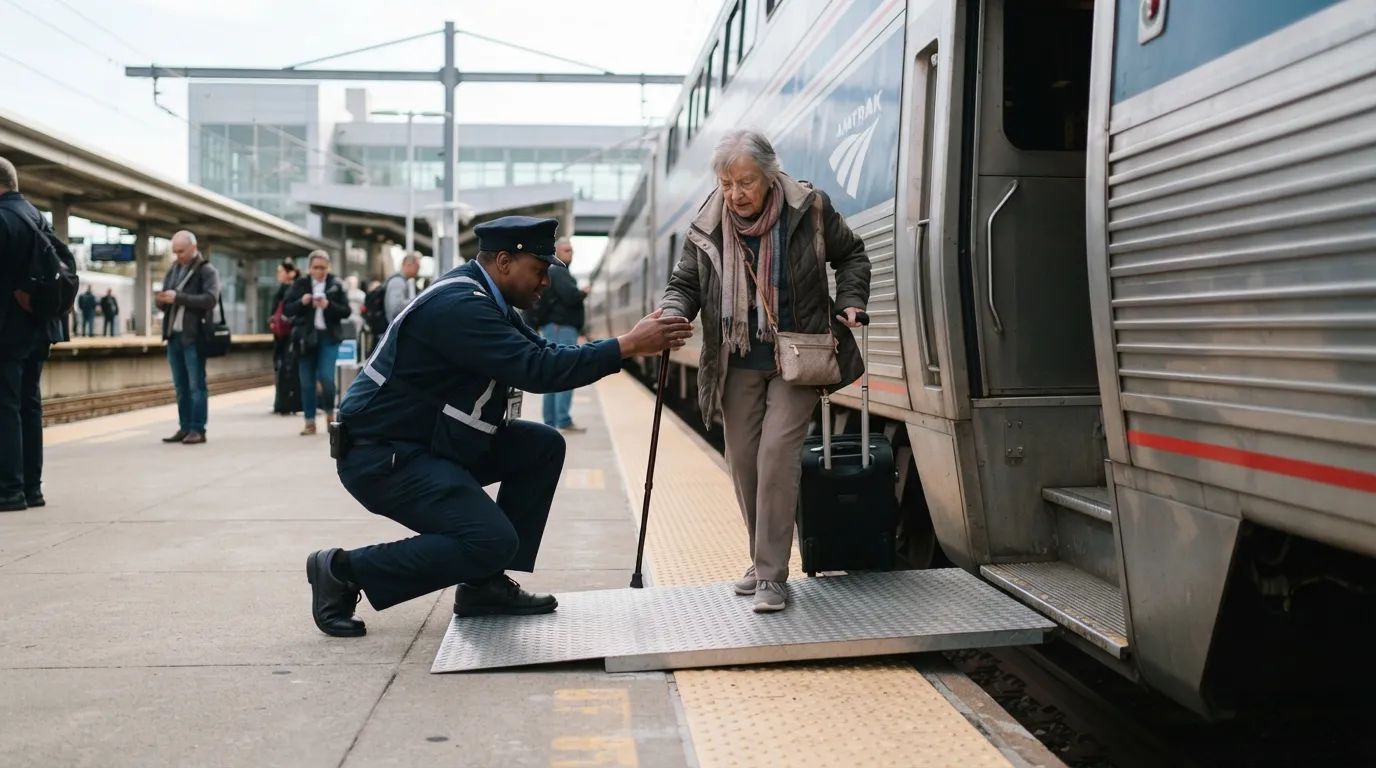
Most people over 70 assume a train ticket is all they need to roll out of the station. It isn’t. The real surprises show up before the doors open: the gap, the steps, the discount fine print, and the help that only shows up if someone knows to ask.
Everything below comes from Amtrak’s own published rules, federal accessibility standards and recent accessibility reviews. Some of it is small. Some of it, like a missed federal deadline and a stack of complaint numbers, is hard to unsee once you know it.
#18 – The Senior Discount Starts at 65, Not 62 Anymore

Plenty of longtime riders still remember a lower age on the senior fare. Amtrak now sets it at 65, and travelers 65 and over get 10% off most rail fares on most Amtrak trains. That’s a smaller perk than many remember.
There is one exception. On cross-border services run jointly by Amtrak and VIA Rail Canada, the 10% senior discount applies from age 60. Some riders say 10% is thin for a perk built around age. Either way, you only get it if you ask for it.
But the fine print on that discount hides a bigger letdown in #17…
#17 – The Discount That Skips the Priciest Part of the Ticket
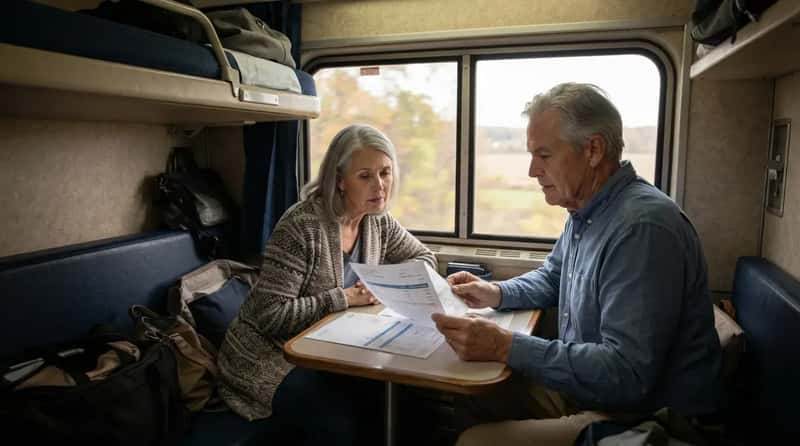
On an overnight trip, the room is usually the biggest cost. The senior discount does not apply to sleeping accommodation charges. It covers only the underlying rail fare, so the “10% off” banner can look far more generous than the final bill.
Other exclusions are easy to miss:
- The Auto Train and weekday Acela trains are excluded.
- Business and First class upgrades are also left out.
Check the total at checkout, not just the label.
And the next surprise has nothing to do with price…
#16 – Your ID Matters More Than Your Ticket
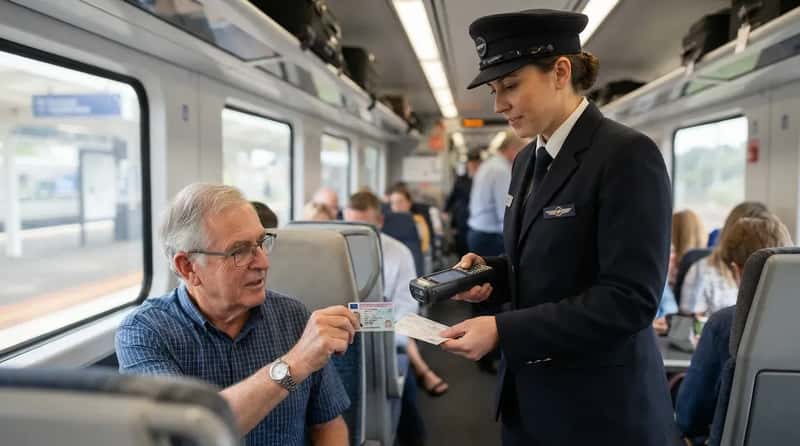
A senior fare can get questioned after you’ve already paid for it. A valid photo ID proving your age is required at purchase and on board, and the conductor may ask to see it while scanning your ticket. One guide warns that boarding can be denied if the details don’t match.
A government-issued photo ID with your date of birth is the safe choice. A driver’s license, passport or state ID card works. Keep it in your pocket, not buried in a suitcase in the overhead rack.
Now for something that could spare you a long wait in #15…
#15 – Seniors Are Actually on Amtrak’s Priority Boarding List
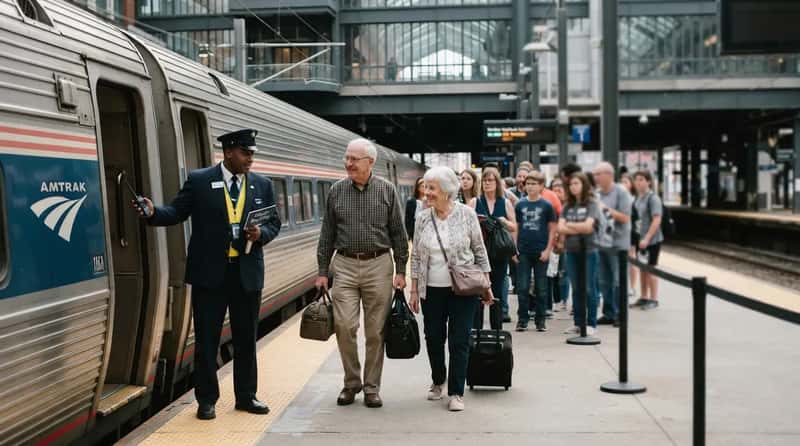
Many travelers never learn that standing in the long line may be optional. Amtrak offers priority boarding to select passengers at many stations across its network. The list includes senior citizens aged 65 and over, anyone needing assistance to board, and passengers in private rooms.
It is not a universal guarantee, and it depends on how each station runs boarding. At Boston South Station and Albany, eligible passengers are invited to move from the waiting area to the platform first.
But once you reach the platform itself, #14 is where things get risky…
#14 – Trains Stop Closer to the Edge Than Most People Expect
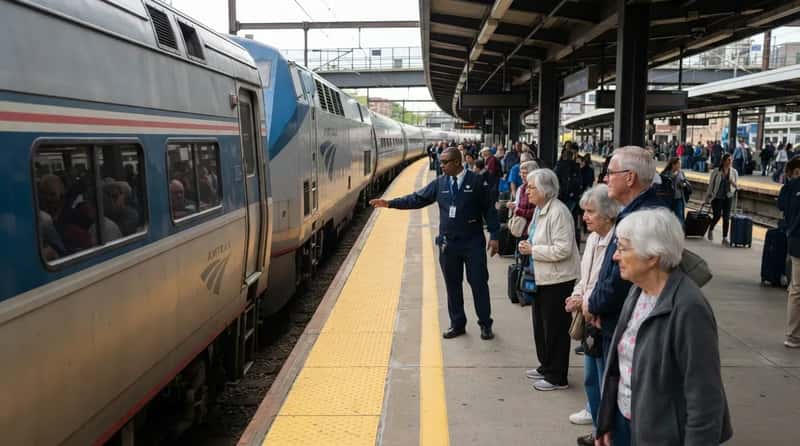
Most of us picture a wide safety cushion that often isn’t there. Amtrak says to stay behind the line and safety strip while waiting, because trains stop very close to the platform edge. At a crowded station, that painted line can feel like a suggestion. It isn’t.
There’s a second hazard. At some stations, not every train stops, and some roll straight through. A passing express can thunder by while you’re waiting for yours.
Next up is a helper most travelers walk right past…
#13 – The Free Red Cap Service Most Riders Never Use
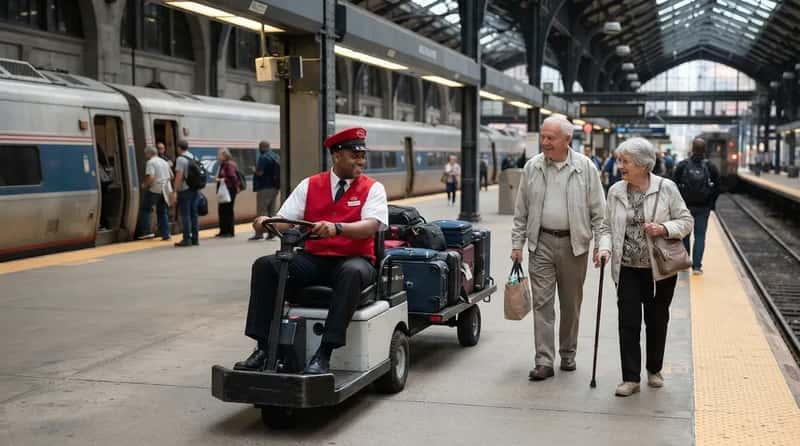
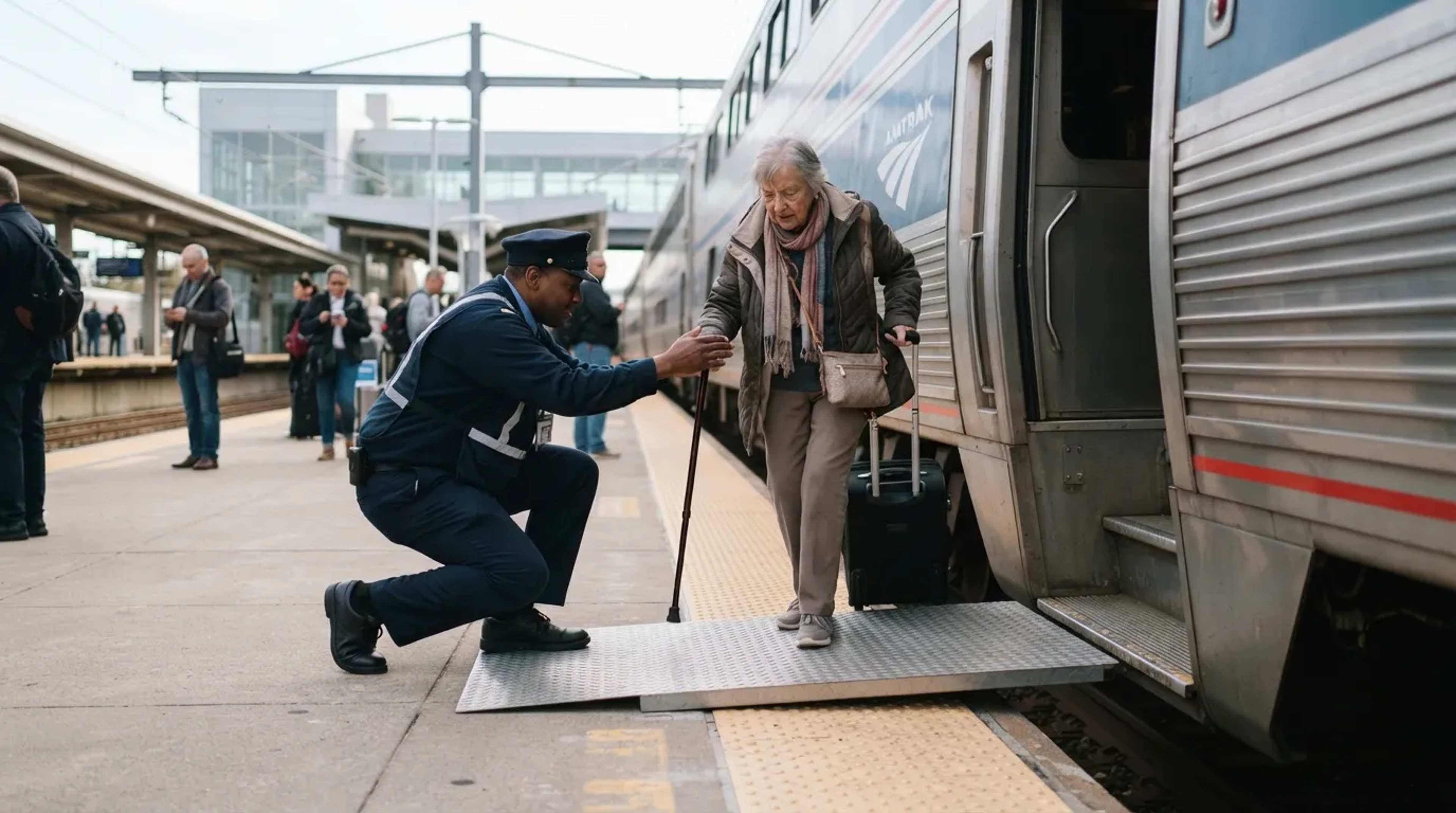
There’s a free pair of helping hands at many big stations, and it’s remarkably easy to miss. Red Cap Service is a complimentary program for passengers who may need extra support. It’s available at major stations, not everywhere, and Red Caps use motorized vehicles to move luggage so you don’t haul everything down steps or along long platforms.
They also help with boarding, and they’re trained to operate wheelchair lifts and ramps. One catch: priority boarding is not a guaranteed perk of using the service. Many travelers learn that one too late.
At a Glance
- Cost: Complimentary.
- Where: Major stations only, not every stop.
- What they do: Move luggage by motorized vehicle and help with boarding.
- The catch: Priority boarding isn’t guaranteed.
And the platform itself is the next problem…
#12 – Most Stations Don’t Have Floor-Level Boarding
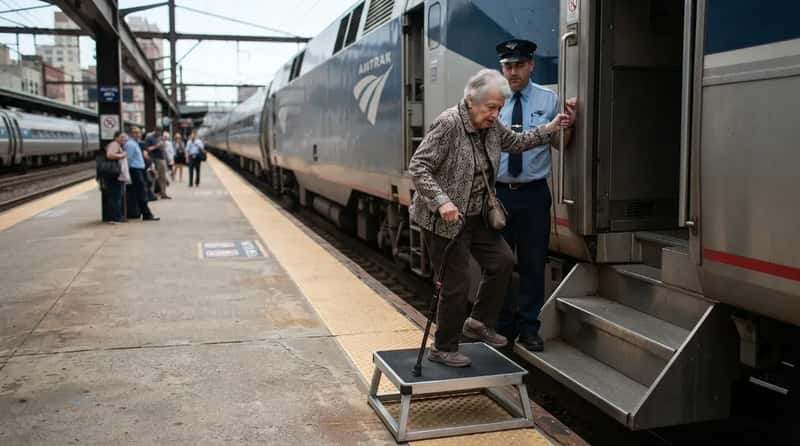
“Step up onto the train” is still the norm at many stops. Most stations have rail platforms at or below track level, while railcar floors typically sit 15 or 48 inches above the rails. Most passengers board using a step stool, which is a real climb with a cane, a walker or a heavy bag.
Advocates have long said Amtrak had decades to fix this. One disability-rights group argued the obstacles were ones Amtrak has had more than two decades to overcome. Whether that’s fair is still debated.
Even “level” boarding comes with a catch…
#11 – “Level” Boarding Can Still Leave a Gap You Can See
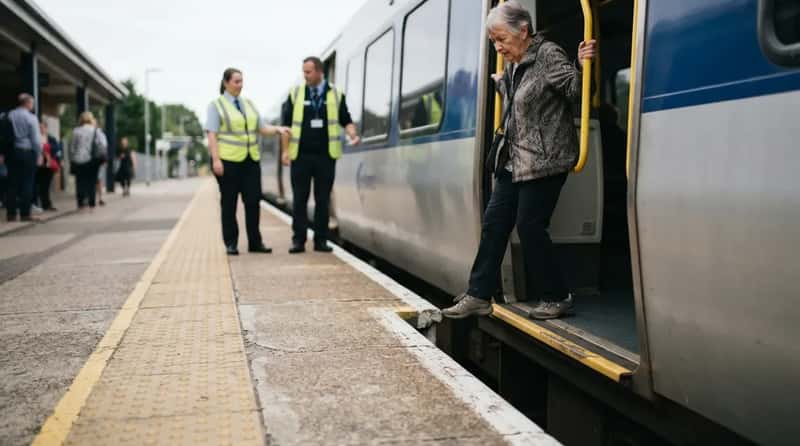
A level platform isn’t always a flush one. Federal guidance lets a level-boarding platform have a gap of up to 10 inches horizontally on straight track and 13 inches on curves. The maximum vertical gap is 5.5 inches. That’s far more space than many riders expect.
Where the gap is larger than certain limits, a bridge plate is typically used to let wheelchair users cross. If the gap makes you uneasy, say so. Staff can’t fix a problem they don’t know about.
How crews handle that gap matters just as much…
#10 – Bridge Plates, Lifts and Ramps Depend on the Platform
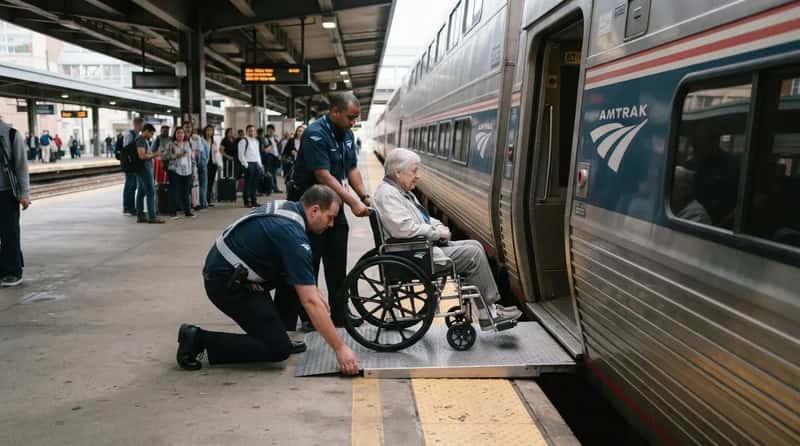
The kind of help you get depends on the kind of platform you’re standing on. On high platforms, Amtrak helps customers who use wheeled mobility devices across the gap with a bridge plate. On low-level platforms, it uses station-based mobile lifts. On bi-level trains, it provides a ramp or lift to reach the lower level.
Passengers who need help get some priority. Those who requested wheelchair lift assistance or need help boarding are pre-boarded at originating stations and given priority boarding at stops en route.
Quick Compare
- High platform: Bridge plate across the gap.
- Low-level platform: Station-based mobile lift.
- Bi-level train: Ramp or lift to the lower level.
That’s the policy. The seat you end up in is a different story…
#9 – The Lower-Level Seat Rule That Surprises Riders
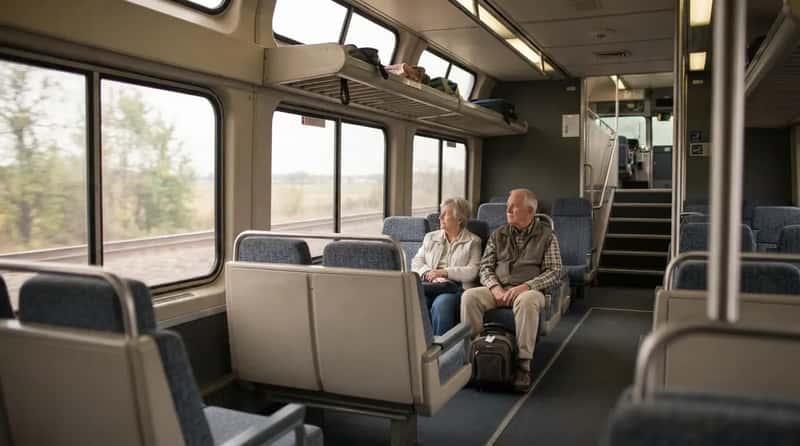
A Red Cap can get you to the train, but not necessarily to the seat you were hoping for. Long-distance bi-level Superliner cars put some seats downstairs. Rider forums describe a firm rule: signs say the lower-level seats are reserved for passengers with lower-level tickets only.
That advice comes from rider discussion, not an official Amtrak page. It still points to a costly mistake: waiting until boarding day. The best time to ask for a lower-level seat is when you book, not when you’re standing on the platform with your bags.
The sleeping car has its own rules, and they might change how you book…
#8 – Accessible Bedrooms Exist, but You Have to Request Them
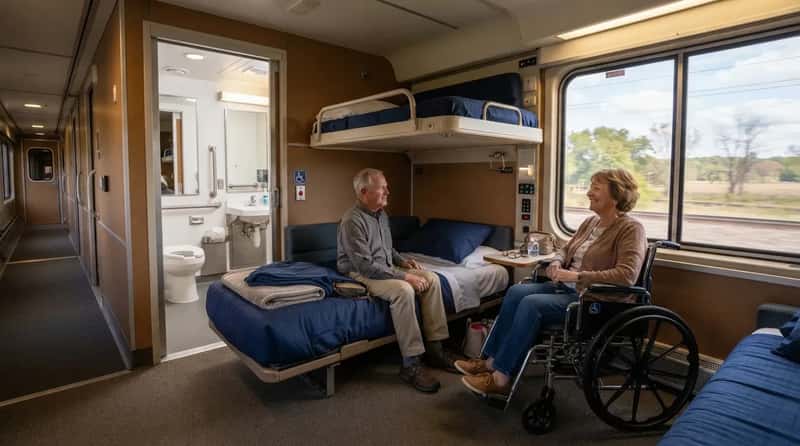
A standard roomette isn’t the only way to sleep aboard. For First Class customers with a disability, Accessible Bedrooms are on the train’s entry level and have ample room for a wheelchair. They’re designed for two adults, with an accessible private toilet and sink. That’s a world away from climbing a narrow stair to an upper room.
Booking matters here. One guide says you must specify that you need the accessible features and suggests asking about 14 days ahead. Treat that timing as a rule of thumb, and confirm it with Amtrak.
The booking form itself holds a trick that’s easy to overlook…
#7 – A Checkbox in the Booking Form Triggers the Help

The system can’t see your needs unless you tell it. When you book online, a disability assistance questionnaire appears after you check a particular box. It asks about your wheelchair or cane setup and your seating preference. On reservable trains, you’re automatically assigned the accessible seating choice you picked.
Prefer the phone? Amtrak’s Access Desk is reachable at 1-800-USA-RAIL, option 3. One guide suggests arriving 30 to 45 minutes early to allow time for boarding assistance.
But even with every box checked, the research behind the next one is sobering…
#6 – The Help Is Promised, but Complaints Show It’s Uneven
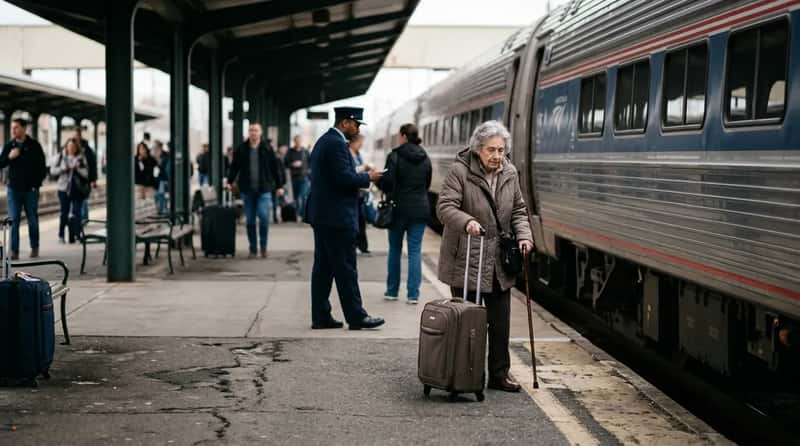
Not every station delivers what the policy describes. A 2025 review found accessibility complaints centered on service at the station. Of 708 accessibility-related complaints, 273 (39 percent) concerned poor assistance at stations and with boarding and deboarding. Another 155 (22 percent) involved insensitive staff interactions.
Training gaps are part of the story. In the most recent training cycle, 512 of Amtrak’s 5,732 customer-facing employees had not completed required accessibility training. That doesn’t mean every trip goes badly. It does mean confirming your help ahead of time is smart.
The good news is that stations are changing…
#5 – Dozens of Stations Are Getting Rebuilt Right Now
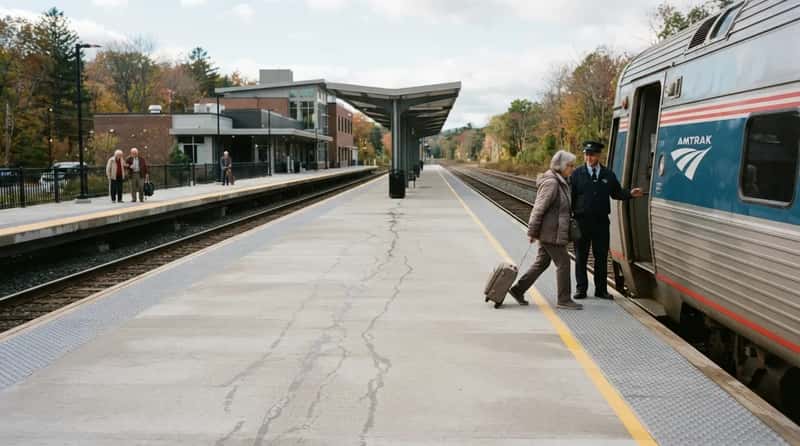
Some of the biggest changes are happening where you can’t see them yet. Across the network, 19 stations were brought into ADA compliance in fiscal year 2025, with another 50 targeted for fiscal 2026 at a forecast investment of $311 million. That’s real money aimed at the exact problem many older riders face.
One example is Saratoga Springs, New York. It is getting a new 600-foot level boarding platform with a snow melt system, so customers will no longer need steps to get on or off the train.
More upgrades are already finished, and a few are in small towns…
#4 – Colorado, Pennsylvania and Vermont Just Got New Platforms
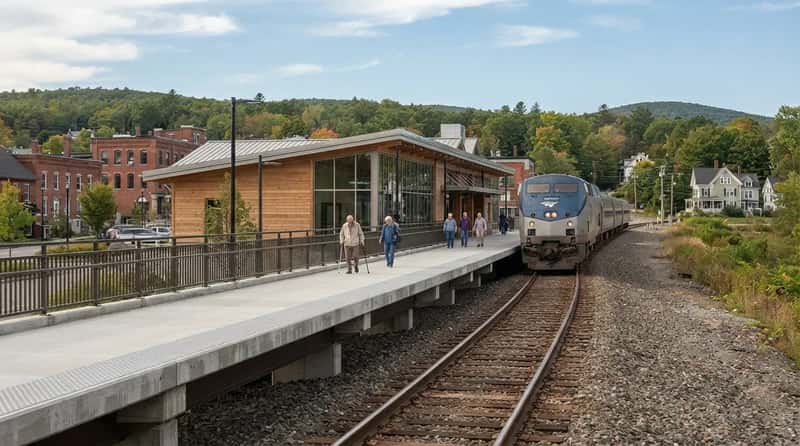
If you’ve avoided a small-town stop, the picture may have changed. Amtrak recently added new level boarding platforms, accessible walkways and new signage at three stations. Fort Morgan, Colorado, now has 480- and 600-foot concrete platforms at about $7 million, and Granby has an 827-foot concrete boarding platform.
Vermont got a win as well. Brattleboro’s new station has a 345-foot level boarding platform set 48 inches above the top of the rail. Those are the kinds of details worth checking before you pick a boarding station.
Fast Facts
- Fort Morgan, CO: 480- and 600-foot concrete platforms, about $7 million.
- Granby, CO: One 827-foot concrete boarding platform.
- Brattleboro, VT: A 345-foot level platform, 48 inches above the top of the rail.
- The upgrade package: Level boarding, accessible walkways and new signage.
So why did all this take so long? The answer is next…
#3 – Amtrak Missed a Federal Deadline by Years
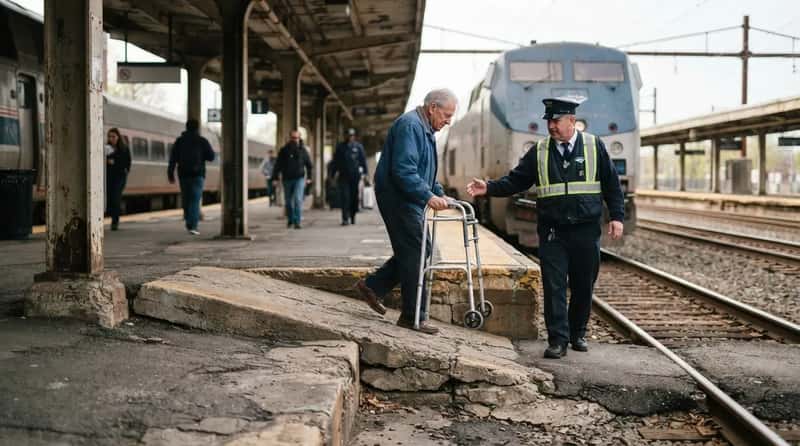
This fix was supposed to be finished more than a decade ago. Amtrak failed to comply with the ADA by the July 26, 2010 deadline, which gave it 20 years from when the law passed in 1990. A 2020 settlement with the Department of Justice followed.
The settlement included money for affected riders. A $2.25 million fund opened for claims from people with mobility disabilities who couldn’t access its stations. That history explains why the rebuild list is so long today.
And even a new platform doesn’t solve everything…
#2 – Full-Length Level Boarding Isn’t Always Possible
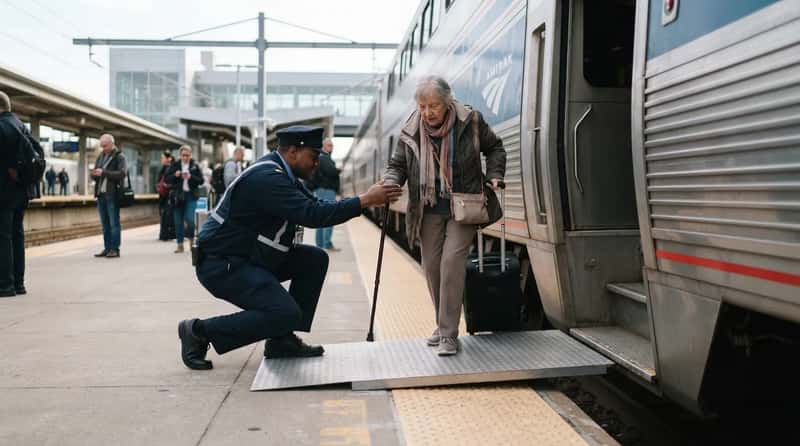
Even a brand-new platform can have limits. A 2011 federal rule requires full-length level-boarding platforms in new and substantially rebuilt Amtrak and commuter stations. But where that is infeasible, such as when freight trains run on the adjacent track, site-specific alternatives are acceptable with U.S. DOT approval.
In plain terms, some stops will keep lifts or bridge plates for a long time. Amtrak is working on a “platform gap” solution for stations where full-length level boarding isn’t feasible. Don’t assume a stop is fully level just because it’s newly built.
Which brings us to the biggest lesson of all…
#1 – Same Ticket, Totally Different Experience by Station
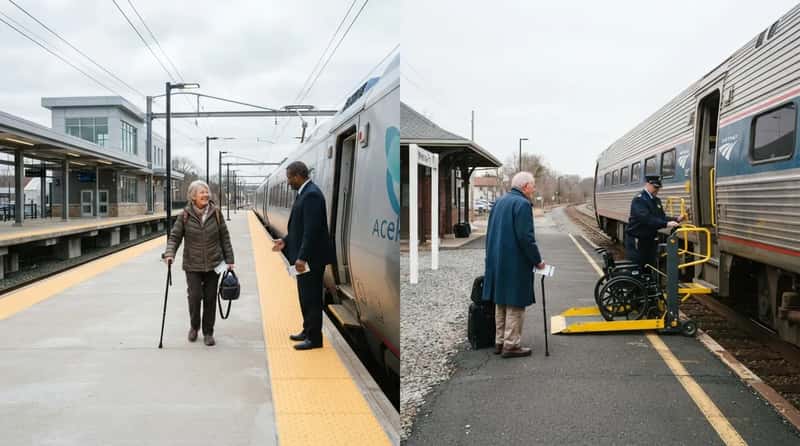
The single most important detail is the one nobody prints on the ticket. Accessibility can vary by route, station and train equipment, and available help may differ with location and staffing. Two riders with identical tickets can have very different mornings. One steps onto a level platform. The other waits for a mobile lift.
Some stations are still waiting for fixes. In February 2026, Rhode Island indicated plans to apply for a $6.5 million federal grant for mini-high platforms at Westerly. If awarded, they would be done by August 2029.
Put it all together and the pattern is clear. The discount is just 10%, it starts at 65, and it skips sleepers. Platforms can mean steps, lifts, bridge plates or a gap of up to 10 inches. And a 2025 review found 39 percent of accessibility complaints involved help at the station.
Stations are being rebuilt, but not all at once. Until then, the smoothest trips usually belong to the people who made one phone call before they left home.